
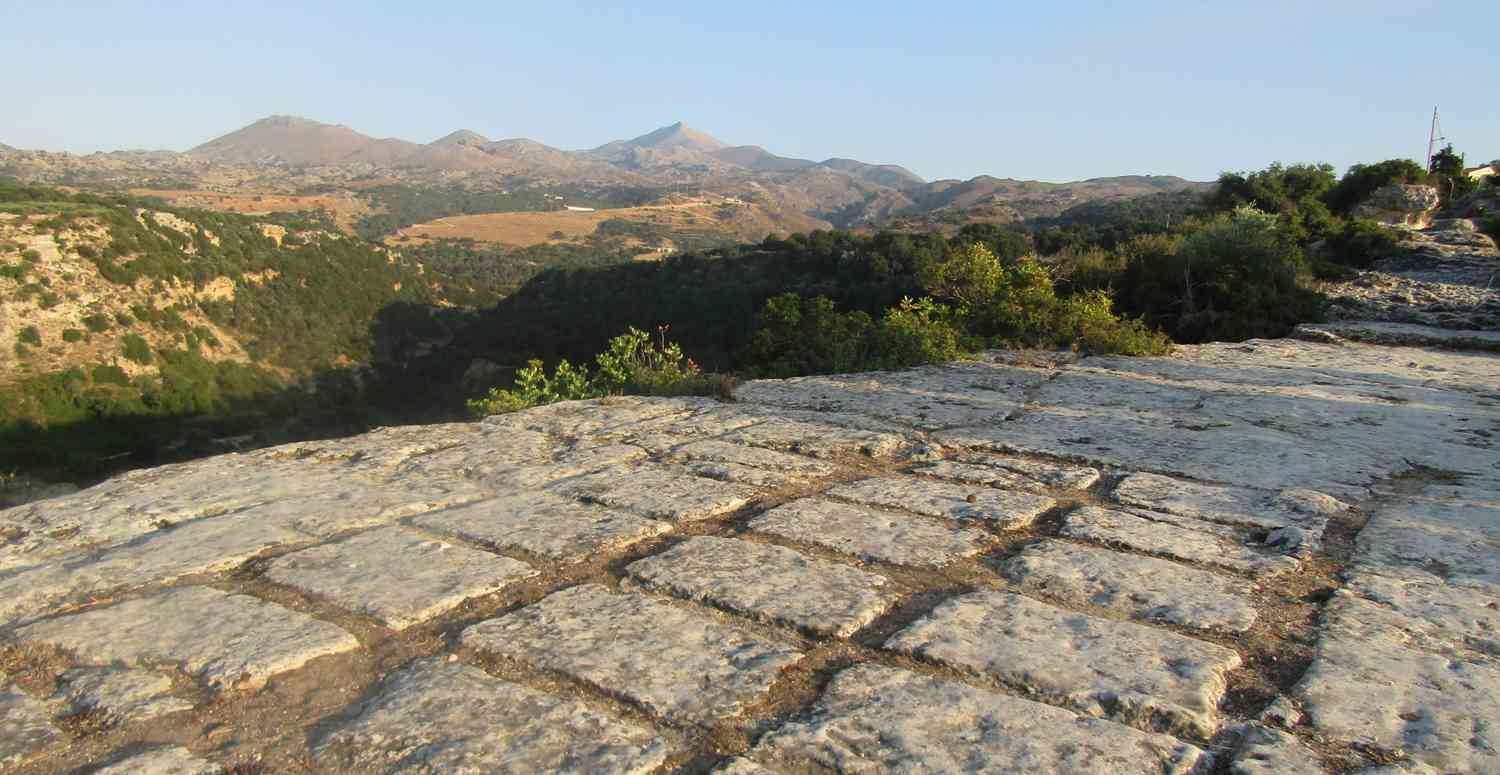
Ancient Eleutherna stands on the north-western slopes of Mount Ida in the Rethymno region, offering one of Crete’s most thoroughly excavated archaeological sites. Founded by Dorian Greeks, this city flourished continuously from the Dark Ages through Archaic, Classical, Roman and Byzantine periods. The rich necropolis has yielded gold jewellery, weapons and evidence of Homeric burial rites, now displayed in the pioneering on-site museum. Visitors explore acropolis towers, a stone bridge, cisterns and an early Christian basilica across a quiet ridge far from coastal crowds. Plan your visit with My Greece Tours.
Eleutherna provides a rare continuous narrative of Cretan life after the fall of the Minoan palaces, set in peaceful hill country near the villages of Margarites and Arkadi. The on-site museum was the first of its kind on Crete, purpose-built to showcase finds from this single location. The sections below cover the site’s history, museum highlights, key ruins, practical visitor information and regional context. For broader island exploration, consult our Crete travel guide to discover complementary destinations across the region.
What is the historical significance of Eleutherna in Crete?
Eleutherna was founded by Dorian Greeks and flourished from the Dark Ages through Byzantine times. It ranks among Crete’s most thoroughly excavated cities, offering continuous evidence of post-Minoan Cretan civilization across multiple epochs.
Eleutherna occupied a strategic acropolis ridge on Mount Ida’s north-western slopes, controlling inland routes in the Rethymno region. The Dorian Greeks established the settlement during the Dark Ages, and it grew into a prosperous city-state through the Archaic and Classical periods. Unlike coastal settlements vulnerable to pirate raids, Eleutherna’s elevated position provided natural defences and access to fertile upland valleys. The city minted its own coins, maintained trade networks and participated in pan-Hellenic affairs. Roman conquest brought new prosperity, with monumental construction projects transforming the urban landscape. Byzantine Christians later built an impressive basilica, demonstrating the site’s enduring importance.
Eleutherna’s long occupation makes it invaluable for understanding how Cretan society evolved after the Minoan palace collapse, filling gaps in the island’s historical record.
The necropolis discovered at Eleutherna has revolutionized understanding of early Greek burial customs. Excavators uncovered gold jewellery, bronze weapons, pottery and skeletal remains that illuminate Homeric-era funerary practices. Cremation urns, elaborate grave goods and warrior burials match descriptions in ancient epic poetry, providing tangible evidence for literary traditions. The finds demonstrate that Eleutherna’s elite commanded substantial wealth and maintained connections across the Mediterranean. Ceramic imports from mainland Greece, Cyprus and the Near East reveal extensive trade networks. The continuity of occupation through Roman and Byzantine periods left stratified deposits that archaeologists can precisely date and interpret.
This unbroken sequence allows scholars to trace cultural transformations over more than a millennium, making Eleutherna essential for reconstructing post-Minoan Crete’s development and its integration into broader Greek civilization.
What can visitors see at the Eleutherna Archaeological Museum?
The on-site museum, the first purpose-built archaeological museum on Crete, displays gold jewellery, weapons, pottery and skeletal remains from the necropolis. Exhibits trace the city’s evolution from the Dark Ages through Byzantine times with finds from the excavations.
The museum building sits adjacent to the archaeological site, allowing visitors to examine artefacts in their original geographical context. Display cases present the spectacular gold jewellery recovered from elite burials, including intricate necklaces, earrings and decorative plaques that demonstrate sophisticated metalworking techniques. Bronze weapons, helmets and armour illustrate the martial culture of Archaic Crete. Ceramic vessels range from simple domestic wares to elaborate painted amphorae imported from Athens and Corinth. The museum’s chronological arrangement guides visitors through successive periods, with explanatory panels describing how Eleutherna adapted to changing political circumstances. Skeletal remains and cremation urns provide direct evidence of burial practices, while architectural fragments hint at the monumental buildings that once crowned the acropolis.
The collection represents decades of systematic excavation and offers insights unavailable at older museums.
Interactive displays and reconstructions help visitors visualize daily life in ancient Eleutherna. Scale models show how the acropolis appeared during different periods, with towers, gates and public buildings reconstructed from archaeological evidence. Photographs document the excavation process, revealing how patient fieldwork uncovered stratified deposits spanning centuries. The museum also addresses broader themes, explaining how Dorian colonization transformed Crete after the Bronze Age collapse and how Eleutherna participated in pan-Hellenic cultural developments. Temporary exhibitions showcase recent discoveries, ensuring that the museum remains current with ongoing research. The facility serves both scholarly researchers and casual tourists, making complex archaeological data accessible through clear presentation.
Visiting the museum before exploring the ruins provides essential context, while the things to do in Crete extend far beyond this single remarkable site.
What are the main archaeological features at the Eleutherna site?
The ruins spread across a long acropolis ridge and include defensive towers, a stone bridge, water cisterns and an early Christian basilica. The necropolis area yielded the rich burial finds now displayed in the museum.
The acropolis ridge stretches across the landscape, with defensive towers marking key points along its length. Ancient builders constructed these fortifications from local limestone, creating walls thick enough to withstand siege warfare. The stone bridge, an engineering achievement, connected different sections of the city and allowed movement across natural ravines. Water cisterns carved into bedrock collected rainwater, ensuring supplies during summer droughts and sieges. The early Christian basilica dominates the eastern end of the ridge, with column bases, mosaic fragments and architectural elements still visible. Excavated residential quarters reveal house foundations, storage rooms and workshops where craftsmen produced pottery and metalwork. Streets paved with stone slabs connected different districts, and public buildings clustered near the agora.
The site’s layout reflects typical Greek urban planning adapted to Crete’s mountainous terrain.
The necropolis lies outside the main settlement area, following Greek customs that separated the living from the dead. Excavators uncovered chamber tombs cut into hillsides, cremation burials and simple pit graves spanning different periods and social classes. Elite burials contained the gold jewellery and bronze weapons now displayed in the museum, while modest graves held only basic pottery vessels. The variety of burial practices demonstrates social stratification and evolving religious beliefs. Visitors walking the site can identify different functional zones: fortifications protecting vulnerable approaches, residential areas on terraced slopes, public spaces for civic gatherings and sacred precincts for religious rituals. Interpretive signs mark significant features, though much remains unexcavated beneath olive groves and scrubland.
The nearby village of Margarites maintains traditional pottery-making traditions that echo ancient crafts practiced at Eleutherna.
How do I visit Eleutherna and what should I know before going?
Eleutherna lies in the Rethymno region near Margarites village and Arkadi Monastery. The site and museum are open to visitors, with pathways connecting major features. Comfortable walking shoes are essential for exploring the acropolis terrain.
Reaching Eleutherna requires a car or organized tour, as public transport to this inland location is limited. The site sits approximately thirty kilometres south-east of Rethymno town, accessible via well-maintained roads that wind through olive groves and hill villages. Visitors typically combine Eleutherna with nearby attractions: the historic Arkadi Monastery lies just a short drive away, and the pottery workshops of Margarites village offer opportunities to purchase traditional ceramics. The museum opens during standard hours, though schedules may vary seasonally. Admission fees are modest, and combination tickets sometimes include other regional sites. The acropolis terrain is uneven, with rocky paths, exposed bedrock and minimal shade. Summer visits require sun protection, water and appropriate footwear.
Spring and autumn offer more comfortable temperatures for extended exploration.
Guided tours provide valuable context that enhances understanding of the complex archaeological remains. Knowledgeable guides explain how different structures relate to one another and describe daily life in ancient times. Self-guided visitors should allocate at least two hours to tour both the museum and the main site features. Photography is generally permitted, allowing documentation of the impressive setting and architectural details. The site’s relative isolation means fewer crowds than at major coastal attractions, creating a contemplative atmosphere for those interested in archaeology and history. Nearby Rethymno offers accommodation, dining and additional cultural attractions, making it an ideal base for exploring this region.
Eleutherna represents one of the hidden gems in Crete, rewarding visitors who venture beyond the standard tourist circuit with exceptional insights into the island’s layered past.
Why is Eleutherna important for understanding Crete after the Minoans?
Eleutherna provides rare continuous evidence of Cretan civilization from the Dark Ages through Byzantine times, filling the gap after Minoan palace collapse. The stratified deposits and rich finds illuminate how Dorian Greeks reshaped the island’s culture.
The collapse of Minoan palace civilization around the twelfth century BCE left Crete in a poorly documented Dark Age. Eleutherna’s archaeological record begins precisely in this obscure period, documenting how new populations arrived and established communities. The Dorian Greeks who founded Eleutherna brought different languages, burial customs and social structures, gradually transforming Cretan culture. Excavations reveal this transition through changes in pottery styles, architectural techniques and settlement patterns. The necropolis burials, with their Homeric-era grave goods and cremation practices, demonstrate connections to mainland Greek traditions rather than earlier Minoan customs.
The city’s prosperity during Archaic and Classical times shows how Crete participated in broader Greek cultural developments, adopting alphabet writing, minting coins and building temples in recognizable Greek styles. This evidence counters outdated views of post-Minoan Crete as isolated or backward.
Roman conquest brought Eleutherna into the Mediterranean-wide empire, and archaeological evidence documents this integration. Roman building techniques, imported pottery and Latin inscriptions appear in the stratified deposits. The early Christian basilica represents yet another transformation, as Crete adopted Christianity and Byzantine political structures. The unbroken occupation sequence allows archaeologists to date finds precisely and trace gradual cultural changes rather than abrupt breaks. Contrast this with sites like Knossos, where Minoan remains dominate and later periods receive less attention. Eleutherna’s importance lies in illuminating the long centuries between Bronze Age palaces and modern times. Scholars studying Greek colonization, Archaic society, Roman provincial life and early Christianity all find essential evidence here.
The site complements the Minoan focus of Heraklion museums, presenting a fuller picture of Cretan history across three millennia of continuous human occupation.
Frequently Asked Questions
Can I visit both Eleutherna and Arkadi Monastery in one day?
Combining Eleutherna and Arkadi Monastery in a single day is entirely feasible and highly recommended, as the two sites lie within a short drive of each other in the Rethymno region. Arkadi Monastery, famous for its role in Cretan resistance during the Ottoman period, offers a contrasting historical perspective to Eleutherna’s ancient ruins. Most visitors allocate two to three hours for Eleutherna’s museum and archaeological site, then drive approximately fifteen minutes to reach Arkadi. The monastery’s impressive Venetian-style church, museum and peaceful courtyards require another hour or two to explore properly. Starting early allows comfortable exploration of both locations without rushing, with time for lunch in a nearby village.
The pottery workshops of Margarites lie conveniently between the two sites, offering opportunities to observe traditional ceramic production and purchase souvenirs. This combined itinerary provides a rich cross-section of Cretan history, from ancient Greek civilization through Byzantine Christianity to Ottoman-era struggles for independence, all within a compact geographical area that showcases the island’s layered cultural heritage.
What makes Eleutherna’s museum different from other archaeological museums in Crete?
Eleutherna’s museum was the first purpose-built archaeological museum on Crete designed specifically to display finds from a single excavation site in their original geographical context. Unlike older museums in Heraklion or Chania that collect artefacts from across entire regions, this facility focuses exclusively on Eleutherna’s history, creating a coherent narrative from the Dark Ages through Byzantine times. The museum’s location adjacent to the archaeological site allows visitors to examine objects and then walk directly to the places where they were discovered, strengthening the connection between artefacts and their original contexts. Modern display techniques, interactive elements and clear chronological organization make complex archaeological data accessible to general audiences.
The building itself represents contemporary museum design, with climate-controlled galleries protecting delicate objects while maximizing natural light. Temporary exhibitions showcase ongoing discoveries, reflecting the active research programme that continues to reveal new aspects of Eleutherna’s past. This integrated approach, combining museum, active excavation and accessible ruins, serves as a model for archaeological presentation and distinguishes Eleutherna from traditional museum experiences elsewhere on the island.
What is the best time of year to visit Eleutherna?
Spring months from April through early June and autumn months from late September through October offer the most comfortable conditions for visiting Eleutherna’s exposed archaeological site. Temperatures during these periods remain mild enough for extended outdoor exploration, while wildflowers in spring add colour to the surrounding landscape. Summer visits from July through August are possible but require early morning arrival to avoid midday heat, as the acropolis ridge offers minimal shade and the rocky terrain reflects intense sunlight. Winter visits from November through March bring cooler temperatures and occasional rain, though the site remains accessible and crowds disappear entirely. The museum provides climate-controlled shelter regardless of season, making it a comfortable refuge during weather extremes.
Weekdays generally see fewer visitors than weekends, allowing more contemplative exploration of both ruins and exhibits. The site’s inland location means it escapes the intense coastal tourism that affects beach destinations, maintaining a peaceful atmosphere even during peak summer months. Coordinating your visit with regional festivals or cultural events in nearby villages can enrich the experience, though Eleutherna itself remains a quiet, scholarly destination focused on archaeology rather than entertainment.