
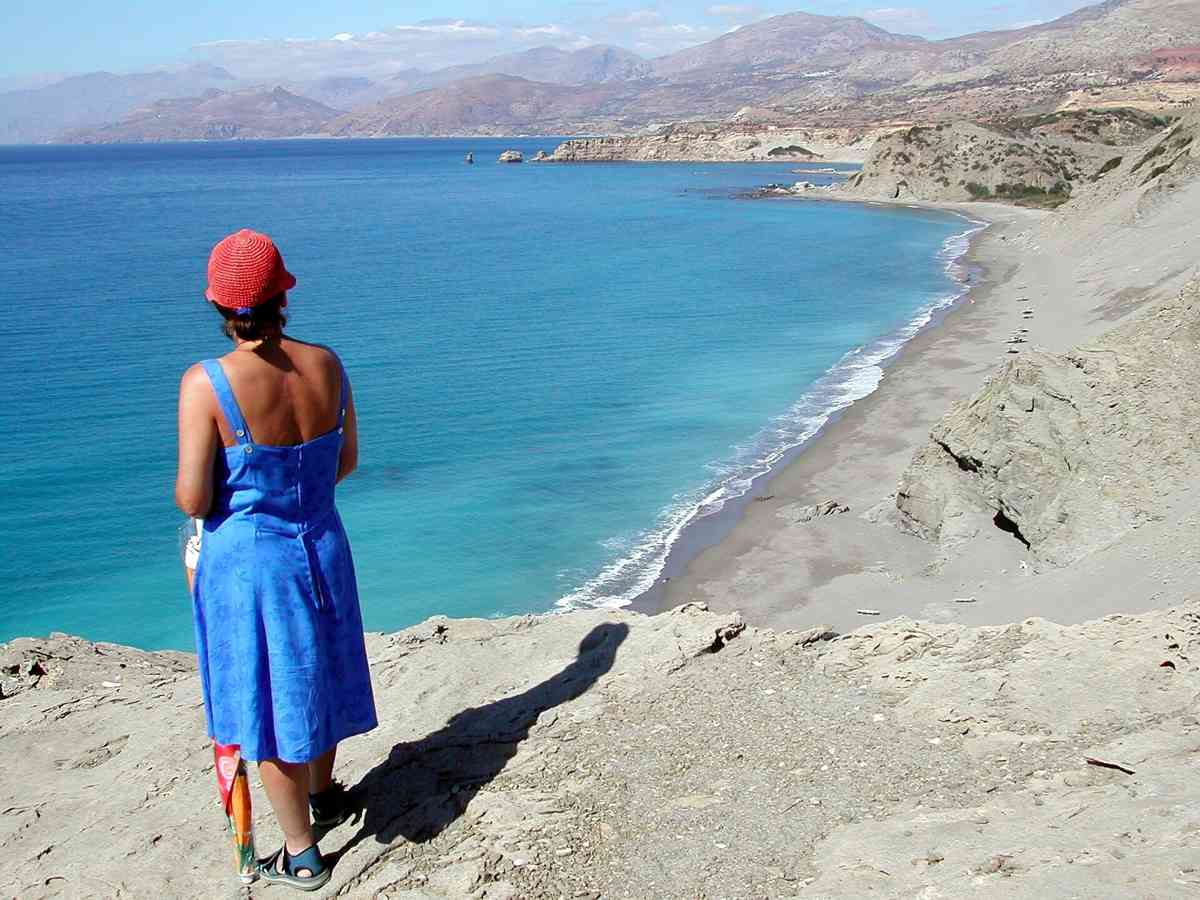
Triopetra unfolds along the remote southern shore of Rethymno, where pale sand stretches beneath low cliffs and three tall rock stacks rise from the Libyan Sea. The name translates directly as ‘three rocks’, marking this quiet double cove below the mountain village of Akoumia. Clear water laps the exposed shoreline, a handful of tavernas dot the beach, and development remains minimal. Sunsets draw photographers to the western headland, while steady breezes attract windsurfers on exposed days. The neighbouring sand dunes of Agios Pavlos lie within walking distance, and winding mountain roads descend from Preveli and the Amari valley above. Plan your visit with My Greece Tours.
Triopetra keeps an away-from-it-all atmosphere that appeals to yoga retreats and travellers seeking space beyond the busier northern resorts. Two coves divide the long sandy stretch, each offering shallow entry and room to spread out. Tavernas serve grilled fish and Cretan salads, while simple rooms provide overnight stays for those who want to watch the sun drop into the Libyan Sea. The sections below cover access routes, beach layout, nearby attractions, and practical tips for this southern Rethymno hideaway. For broader island planning, consult our Crete travel guide.
Where is Triopetra beach and how do you reach it in Crete?
Triopetra sits on the south coast of Rethymno, below the village of Akoumia. A winding mountain road descends from the Amari valley and Preveli countryside, connecting to the main north-south routes through central Crete.
The drive from Rethymno town takes roughly one hour, following the main road south toward Spili before branching west through Akoumia. Signposts mark the final descent, a narrow asphalt ribbon that switchbacks down the hillside with views over the Libyan Sea. The road surface remains paved but tight in places, requiring attention on blind corners. Parking spreads informally behind the beach, with space for dozens of cars on compacted gravel. Public transport does not reach Triopetra directly, so rental cars or taxis provide the most practical access. The isolation that defines the beach begins with this winding approach, filtering out casual day-trippers and preserving the calm that makes it one of the hidden gems in Crete.
Travellers staying in Plakias can reach Triopetra by driving east along the coast road, then turning inland at the signed junction. The route climbs briefly before descending again to the shore. Those based in Agia Galini approach from the opposite direction, heading west through Akoumia. Both journeys take thirty to forty minutes. The mountain roads offer glimpses of olive groves, chapels, and terraced slopes, rewarding the effort with scenery that shifts from highland green to coastal blue. Fuel stations cluster in the larger villages, so fill the tank before the final descent. Mobile signal weakens near the shore, adding to the sense of remoteness that defines this corner of the south coast.
What makes the three rocks and beach layout distinctive?
Three tall rock stacks rise from the sea at the western end of the beach, giving Triopetra its name. The shoreline divides into two coves separated by a low headland, each offering pale sand, clear water, and space to spread out.
The western cove, known locally as Big Triopetra, extends for several hundred metres beneath low cliffs. Pale sand slopes gently into the sea, and the water remains shallow for the first dozen metres. The three rock formations stand just offshore, their vertical faces weathered by wind and salt. Photographers gather in late afternoon to frame the stacks against the setting sun, which drops directly into the Libyan Sea during summer months. Tamarisk trees provide scattered shade behind the sand, and a handful of sunbeds cluster near the tavernas. The eastern cove, Small Triopetra, curves around the headland and offers a quieter stretch with fewer facilities.
Both coves catch wind on breezy days, creating choppy conditions that appeal to windsurfers but require caution for swimmers. The same open coast runs west to the quiet sands of Ligres below the hill villages.
The beach remains largely undeveloped, with no organised watersports, no lifeguards, and no commercial clutter, which is part of why it draws yoga retreats to its quiet shore. A dirt track connects the two coves, passable on foot in five minutes. Low cliffs frame the sand, their pale rock layered and fractured by geological time. The exposed position means waves can build during southerly winds, and the shore steepens quickly in places. Snorkelling around the rock stacks reveals clear water and occasional fish, though the seabed consists mostly of sand and scattered stone.
The simplicity of the layout, combined with the dramatic rock formations, places Triopetra among the most photogenic Crete beaches for travellers who value natural beauty over resort amenities.
Which facilities and tavernas serve visitors at Triopetra in Crete?
A handful of tavernas line the western cove, serving grilled fish, Greek salads, and cold drinks. Simple rooms and studios provide overnight accommodation. Facilities remain basic, with no large hotels, no beach bars, and minimal commercial development beyond the essentials.
The tavernas operate from mid-morning through sunset, offering shaded terraces with sea views. Menus focus on traditional Cretan dishes: fresh fish grilled over charcoal, dakos topped with tomato and feta, and fried courgettes with tzatziki. Prices stay moderate, reflecting the local clientele and the absence of resort markup. Service moves at island pace, unhurried and friendly. A small shop sells bottled water, sunscreen, and snacks, though selection remains limited. Visitors planning a full day should bring extra supplies. The tavernas rent sunbeds and umbrellas, but most beachgoers spread towels on the open sand. Showers and basic toilets stand near the parking area, functional but not luxurious.
The lack of infrastructure suits the remote character of the place, attracting travellers who prioritise tranquillity over convenience.
Accommodation consists of a dozen rooms and studios scattered behind the beach, most family-run and bookable directly or through online platforms. Expect simple furnishings, air conditioning, and small kitchenettes rather than resort amenities. Yoga retreats book entire properties for week-long sessions, drawn by the quiet and the space for outdoor practice. The nearest fuel station, pharmacy, and supermarket sit in Akoumia, a fifteen-minute drive uphill. Mobile signal reaches the beach intermittently, and Wi-Fi in the tavernas can be slow. The minimal facilities filter out crowds, preserving the calm that defines Triopetra and making it a counterpoint to busier destinations on the list of things to do in Crete for independent travellers.
What nearby attractions and beaches complement a visit to Triopetra?
Agios Pavlos, a sheltered cove with sand dunes, lies a short walk or drive west. Preveli beach, famous for its palm forest and river, sits thirty minutes east. The Amari valley and mountain villages offer inland exploration above the coast.
Agios Pavlos curves into a protected bay where low dunes roll down to the water. The cove attracts families and swimmers seeking calmer conditions than the exposed Triopetra shore. A coastal path links the two beaches, winding over rocky headlands with views across the Libyan Sea. The walk takes twenty to thirty minutes, manageable in sturdy sandals. Drivers reach Agios Pavlos by retracing the road uphill and following the signed junction. Tavernas and a small hotel cluster around the cove, and the sheltered water remains clear and inviting. The dunes shift with the wind, creating miniature ridges and hollows that children explore.
Snorkelling around the eastern rocks reveals more marine life than at Triopetra, with small fish darting through the shallows.
Heading east, Preveli beach offers a dramatic contrast: a freshwater river flows through a palm grove before meeting the sea, creating a lush microclimate. The drive takes thirty to forty minutes along winding coastal and mountain roads. Inland, the Amari valley spreads across highland plateaus, dotted with stone villages, Byzantine chapels, and olive groves. The village of Akoumia provides the nearest shops and fuel, while Spili, further north, offers a larger selection of tavernas and a famous Venetian fountain. Combining Triopetra with these inland and coastal destinations creates a varied itinerary that balances beach time with cultural and natural exploration across the southern Rethymno region.
When should you visit and what practical tips help at Triopetra?
Late spring and early autumn offer warm weather with fewer crowds. Summer brings heat and occasional wind. Bring cash, extra water, and snorkelling gear. Check wind forecasts, as exposed conditions can create choppy seas unsuitable for weak swimmers.
The beach season runs from May through October, with water temperatures climbing from cool in spring to bath-warm by August. July and August see the highest visitor numbers, though Triopetra never approaches the density of northern resort beaches. Sunsets in summer months drop directly into the sea, creating golden light that photographers prize. Wind picks up on exposed days, particularly in July and August, when the meltemi blows from the north and wraps around the coast. Choppy conditions make swimming challenging but attract experienced windsurfers. Calmer mornings offer the best water clarity for snorkelling. Temperatures in late spring and early autumn hover in the mid-twenties Celsius, comfortable for beach time without the peak summer heat.
Overnight stays allow visitors to experience the beach at dawn, when the sand lies empty and the light turns soft.
Practical preparation matters at this remote location. Bring sufficient cash, as card machines can be unreliable and the nearest ATM sits in Akoumia. Pack extra drinking water, snacks, and sun protection, since the shop selection remains limited. Snorkelling gear reveals the underwater landscape around the rock stacks, though currents require caution. A windbreak or beach tent provides shelter on breezy days. Mobile signal weakens near the shore, so download maps and information before descending. The dirt track between the two coves can be rough; wear shoes that handle uneven ground. Respect the quiet atmosphere that defines the beach, keeping music low and litter minimal.
The combination of natural beauty, space, and simplicity makes Triopetra a memorable stop for travellers exploring the less-visited corners of the island.
Frequently Asked Questions
Is Triopetra beach suitable for families with young children?
Triopetra can work for families who value space and natural surroundings over organised facilities, though the exposed conditions and limited amenities require preparation. The western cove offers shallow entry for the first several metres, allowing children to paddle and play in the shallows when the sea stays calm. Tamarisk trees provide scattered shade, and the wide stretch of sand gives room for games and exploration. The lack of lifeguards, watersports operators, and commercial distractions means parents must supervise closely. Wind and waves can build quickly on exposed days, creating choppy conditions unsuitable for weak swimmers. The eastern cove, Small Triopetra, tends to be quieter but offers even fewer facilities.
Nearby Agios Pavlos provides a more sheltered alternative, with calmer water and a protected bay that suits younger children. Families planning a day at Triopetra should bring extra water, snacks, sun protection, and entertainment, since the remote location limits options for restocking supplies. The tavernas serve child-friendly dishes, and the simple atmosphere appeals to families seeking a break from crowded resort beaches.
Can you camp or stay overnight directly at Triopetra beach?
Organised camping does not exist at Triopetra, and Greek law prohibits wild camping on beaches. Overnight accommodation consists of a handful of family-run rooms and studios scattered behind the shore, bookable directly or through online platforms. These simple properties offer air conditioning, basic kitchenettes, and sea views, catering to travellers who want to wake up steps from the sand. Yoga retreats and small groups sometimes book entire buildings for week-long stays, drawn by the quiet and the space for outdoor practice. The nearest official campsite sits near Plakias, roughly thirty minutes by car along the coast road.
Travellers with campervans occasionally park overnight in the informal lot behind the beach, though facilities remain minimal and the practice exists in a legal grey area. The tavernas close after dinner, and the beach empties by nightfall, leaving the shore to the sound of waves and the glow of stars. Staying overnight allows visitors to experience sunrise over the Libyan Sea and to explore the coast at dawn, when the light turns soft and the sand lies undisturbed.
How does Triopetra compare to other south coast beaches in Rethymno?
Triopetra stands out for its wide, pale sand, dramatic rock formations, and minimal development, offering more space and simplicity than neighbouring beaches. Preveli, thirty minutes east, draws larger crowds with its palm forest and river, creating a lush, sheltered environment that contrasts with Triopetra’s exposed shoreline. Agios Pavlos, a short walk or drive west, provides a more protected cove with sand dunes and calmer water, appealing to families and swimmers who prefer shelter from wind. Plakias, further east, functions as a small resort with hotels, tavernas, and organised beach facilities, trading remoteness for convenience. Agia Galini, to the southeast, offers a harbour town atmosphere with a pebble beach and waterfront promenade.
Triopetra attracts travellers who prioritise natural beauty, quiet, and the away-from-it-all feel over amenities and accessibility. The three rock stacks and the double cove layout create a distinctive visual identity, while the lack of commercial clutter preserves the sense of discovery. Combining Triopetra with these neighbouring beaches allows visitors to experience the variety of the south Rethymno coast, from sheltered coves to exposed stretches, from developed resorts to untouched sand.