
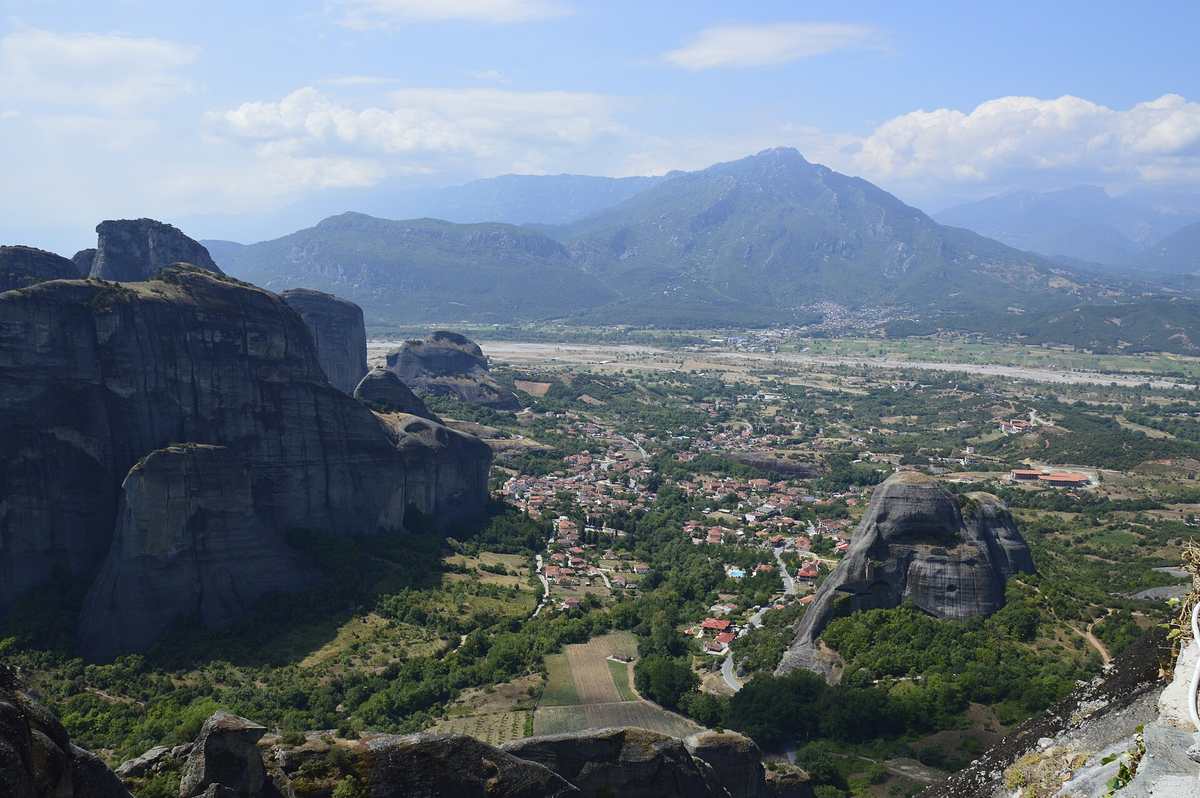
St Nicholas Anapausas is a small monastery perched on a narrow rock pillar above the village of Kastraki in central Greece. It stands as the first monastery reached on the winding road up from Kastraki toward the Meteora complex. The monastery holds an intimate scale that sets it apart from its larger neighbours. Its katholikon shelters some of the finest post-Byzantine frescoes in the country, painted by a celebrated Cretan master. Travellers value its calm atmosphere and rewarding climb. This guide explains what makes the monastery distinct, how its unusual structure took shape, and how to plan a respectful visit with My Greece Tours.
St Nicholas Anapausas rewards visitors who want art, history, and quiet in one compact stop. The monastery sits at the base of the ascent, making it an easy first landmark on any route through the rocks. Our Meteora travel guide places the site within the wider network of pillars and cloisters. The sections below cover the monastery’s identity and position, its vertical multi-level design, the famous frescoes by Theophanes the Cretan, practical visiting details, and its role on the Kastraki route. Each answer stays factual and grounded in well-documented history. Read on to prepare a confident, informed visit.
What is St Nicholas Anapausas and where does it stand in Meteora?
St Nicholas Anapausas is a small monastery on a slender rock pillar above Kastraki. It stands as the first monastery reached on the road climbing from the village into the Meteora complex of central Greece.
St Nicholas Anapausas honours Saint Nicholas, and its name reflects a benefactor associated with the site’s early history. The monastery occupies a narrow spur of rock rising directly above Kastraki. Its position at the foot of the ascent gives it a natural role as the gateway to the rest of the pillars. Travellers heading up from the village encounter it before the larger, more famous cloisters. The monastery forms part of the broader group of Meteora monasteries that crown the sandstone towers of Thessaly. Its compact footprint contrasts sharply with the grand terraces of the sites higher along the road, giving it a distinct and personal character that visitors remember.
The monastery belongs to the monastic tradition that flourished on these rocks across several centuries. Monks sought solitude on the pinnacles, and each community adapted its buildings to the shape of its own pillar. St Nicholas Anapausas shows this principle in its purest form, since its rock offered almost no flat ground. The site remains active and open to the public on most days of the week. A short but memorable climb brings visitors from the roadside up to the entrance. Guided Meteora tours frequently begin here, using the monastery as a clear and accessible introduction to the geography, faith, and artistry that define the entire region.
Why is St Nicholas Anapausas built vertically on stacked levels?
The monastery rests on a very narrow rock with almost no flat surface. Builders responded by stacking rooms vertically on several small levels, one above another, rather than spreading the complex horizontally like larger sites.
The pillar beneath St Nicholas Anapausas offered barely enough space for a modest footprint. Builders solved this constraint by growing upward instead of outward. The result is a compact tower of stacked chambers connected by internal stairs and passages. Each level serves a specific purpose, from the entrance and reception areas to the church, the refectory, and the monks’ quarters higher up. This vertical arrangement gives the monastery a layered, almost house-like feel. Visitors climb through it floor by floor rather than walking across open courtyards. The design stands in clear contrast to spacious neighbours such as Varlaam Monastery, which spreads its buildings and terraces across a much broader summit.
The stacked layout shapes the entire visitor experience. Rooms feel snug, ceilings sit close, and windows frame sudden views of the surrounding pillars. The katholikon occupies one of these tight levels, which explains its unusual, compressed proportions. Every metre of the rock earns its keep, a reminder of how monastic builders worked with the terrain rather than against it. This resourcefulness mirrors the effort demanded of anyone tackling hiking in Meteora, where paths thread between the same towers that the monasteries crown. The vertical structure of St Nicholas Anapausas remains one of the clearest lessons in adaptation found anywhere across the region’s remarkable rock formations.
Who painted the celebrated frescoes of St Nicholas Anapausas?
Theophanes the Cretan, also known as Theophanes Strelitzas, painted the frescoes in the katholikon during the sixteenth century. His wall paintings rank among the finest post-Byzantine works surviving in Greece today.
Theophanes the Cretan brought the mature Cretan school of painting to the rocks of Thessaly. His frescoes cover the walls of the church of Saint Nicholas with scenes drawn from scripture and the lives of the saints. The figures show controlled expression, balanced composition, and a refined sense of colour. Art historians treat this cycle as a landmark of its era. The paintings survive in a remarkable state, allowing visitors to study a complete decorative programme in a single small church. This artistic richness sets the monastery apart from many larger sites among the Meteora monasteries, where later restorations sometimes altered the original work more heavily.
The compressed space of the katholikon shapes how the frescoes read. Scenes wrap tightly around the visitor, drawing the eye upward through the narrative. This intimacy heightens the impact of Theophanes’ craftsmanship, since every surface carries meaning within arm’s reach. Many Meteora tours single out this church precisely for its artistic importance rather than its size. Guides often pause here longest, explaining the iconographic themes and the painter’s technique. The frescoes reward slow, attentive looking. They stand as the monastery’s greatest treasure and the main reason art lovers place St Nicholas Anapausas high on their itinerary, despite its modest scale and quieter reputation.
How do you visit St Nicholas Anapausas respectfully?
Visitors climb a flight of steps from the roadside to reach the entrance. Modest dress is required, the atmosphere stays quiet, and the monastery closes on one fixed day each week, so plan the visit accordingly.
A visit begins with a short climb up stone steps from the parking area near the road. The ascent is manageable for most travellers and delivers steady views of Kastraki below. Modest dress applies to everyone entering an active monastery. Shoulders and knees should stay covered, and long skirts are usually available at the entrance for those who need them. The interior demands quiet, since monks maintain the site as a living place of worship. The calm here feels deeper than at busier cloisters, which makes the visit especially rewarding. Consulting our Meteora travel guide before arrival helps travellers confirm dress expectations and general opening patterns for the wider complex.
The monastery closes one day each week, as do the other sites on the rocks, though the specific day varies between them. Checking current schedules ahead of the trip prevents disappointment. Early arrival helps visitors enjoy the frescoes without crowds, since the compact interior fills quickly once groups arrive. The quiet scale means only a limited number of people move comfortably through the church at once. Photography rules can differ inside sacred spaces, so respect any posted guidance. Combining the visit with a gentle walk suits those interested in hiking in Meteora, since footpaths link several pillars. Respectful behaviour honours the community that keeps this ancient tradition alive on the rocks.
How does St Nicholas Anapausas fit the Meteora route from Kastraki?
St Nicholas Anapausas sits first on the road climbing from Kastraki, making it the natural opening stop. From there the route continues upward to the larger monasteries strung along the pillars of the complex.
The road from Kastraki threads upward through the rock formations, and St Nicholas Anapausas marks its first monastic landmark. Starting here gives a trip a logical shape, moving from the smallest and quietest site toward the grander cloisters above. The monastery’s position lets travellers ease into the scale and atmosphere of the region before the busier stops. Many visitors pair it directly with Varlaam Monastery and the other large communities further along the road. This sequence builds a satisfying contrast, since the intimate art of the first stop sets up an appreciation for the sweeping terraces that follow higher on the pillars.
Planning the wider circuit works best with a clear picture of opening days and distances between sites. Each monastery keeps its own closing day, so a well-ordered route avoids arriving at a locked gate. Beginning at St Nicholas Anapausas suits both drivers and walkers, since the site connects to the footpaths that climb between the towers. Structured Meteora tours often follow this same logic, opening at the base and working upward. The monastery therefore serves as both a treasure in its own right and a gateway to everything above it, anchoring one of the most rewarding cultural routes in central Greece for travellers of every kind.
Frequently Asked Questions
Why is St Nicholas Anapausas built vertically?
The monastery stands on an exceptionally narrow rock pillar with almost no flat ground to build on. Builders responded by stacking the complex upward on several small levels, one above another, rather than spreading rooms across an open summit. Each floor holds a specific function, from the entrance up through the church, the refectory, and the monks’ quarters, all linked by internal stairs. This vertical solution let the community fit a complete working monastery onto a tiny footprint. The design gives the interior a compressed, layered character unlike the spacious terraces of the larger sites. Visitors climb through it floor by floor, gaining sudden framed views of the surrounding pillars at each level.
The stacked structure shows how monastic builders adapted their architecture to the exact shape of the rock beneath them, turning a severe spatial limit into a memorable and highly distinctive place that remains one of the region’s clearest lessons in resourceful construction.
Who painted the frescoes inside St Nicholas Anapausas?
Theophanes the Cretan, also recorded as Theophanes Strelitzas, painted the frescoes in the katholikon during the sixteenth century. He was a leading master of the Cretan school, and his work here ranks among the finest post-Byzantine wall paintings surviving in Greece. The frescoes cover the church of Saint Nicholas with scenes from scripture and the lives of the saints, showing balanced composition, refined colour, and controlled, dignified figures. The paintings survive in remarkable condition, letting visitors study a complete decorative programme within a single small church. The compact space wraps these scenes tightly around the viewer, which heightens their impact and draws the eye through the narrative.
Art historians treat this cycle as a landmark of its period and a key example of the painter’s mature style. The frescoes stand as the monastery’s greatest treasure and the main reason visitors interested in Byzantine and post-Byzantine art place this small site high on their Meteora itinerary.
Is St Nicholas Anapausas worth visiting?
St Nicholas Anapausas is well worth a visit, especially for travellers who value art, history, and a calm atmosphere. Its katholikon holds frescoes by Theophanes the Cretan that count among the finest post-Byzantine paintings in Greece, which alone justifies the stop. The monastery is quieter and less crowded than the larger sites, so visitors enjoy the interior at a gentler pace. Its position as the first monastery reached from Kastraki makes it an easy and logical opening point for any route through the rocks. A short climb up stone steps rewards travellers with steady views of the village below and the towering pillars around them. The intimate, vertical layout adds a distinctive character that many larger cloisters lack.
Modest dress is required, and the site closes one day each week, so checking the schedule ahead helps. For art lovers and first-time visitors alike, this small monastery delivers a rich, rewarding, and memorable experience within the wider complex.