
Kampos is a green village on the north coast of Ikaria, set among gardens and orchards a short drive west of Evdilos. The village rests on and around the site of ancient Oinoe, the island’s capital and main city in antiquity. Vineyards, fig trees and citrus surround the low houses, and a quiet sandy beach lies below the settlement. A small archaeological museum, ancient wall remains and one of the island’s oldest churches give Kampos a weight that its calm streets hide. Travellers who want history alongside slow coastal life find both here. Plan your route through the north coast and its ancient roots with My Greece Tours.
This page gathers the practical and the historical for anyone heading to Kampos. You get the setting of the village, the story of ancient Oinoe, the museum and the Byzantine church of Agia Irini, the beach and daily life, and a plan for combining the visit with the rest of the coast. Pair it with our wider Ikaria travel guide for ferries, base towns and the island’s rhythm. The sections below cover what Kampos is, its ancient past, its antiquities and church, its beach and village life, and how to reach it and link it into a north coast day.
What and where is Kampos in Ikaria?
Kampos is a small green village on the north coast of Ikaria, a short drive west of Evdilos. It sits among gardens and orchards, built on and around the ancient capital of the island.
Kampos spreads across a fertile shelf between the mountains and the sea on Ikaria’s north coast. The village name means “plain” in Greek, and the term fits the flat, watered ground that farmers have worked here for generations. Fig trees, vines and citrus grow in the surrounding plots, fed by streams that run down from the ridge above. Low stone and plaster houses stand along narrow lanes, with the church and the old settlement core near the centre. The coast road links Kampos to Evdilos in one direction and to the western villages in the other. Readers tracing the history of Ikaria find Kampos central, because the land here supported the island’s main ancient town.
The village functions as a quiet base rather than a resort. A handful of rooms, small tavernas and a shop serve visitors, and the pace stays slow through most of the year. Kampos sits close enough to Evdilos, the north coast port, to make day trips easy in either direction. The sea lies just below the houses, reached by a short walk or drive down to the shore. Green hills rise behind the settlement toward the interior villages. Kampos rewards travellers who value gardens, old stone and archaeology over nightlife. The combination of a lived-in farming village and a layered ancient site gives the place its particular character on the north coast.
What was ancient Oinoe and its history?
Oinoe was the ancient capital and main city of Ikaria, located at present-day Kampos. Its name ties to wine and the god Dionysus, and the island was known in antiquity for its vineyards.
Oinoe stood as the principal city of Ikaria through much of antiquity, and Kampos preserves its site. The name links to the Greek word for wine, and ancient sources connect the island with Dionysus, the god of the vine. Ikaria carried a reputation for its vineyards and its wine across the Aegean, and Oinoe sat at the centre of that trade. The city held its own coinage and civic life during the classical era, and its territory reached across the fertile north coast. Traders and travellers passing through the Aegean knew Oinoe as a stop tied to the wine of the island. The history of Ikaria runs through this settlement more than any other single place.
Oinoe kept its role as the island’s leading town across several eras before decline set in. Roman and early Christian phases left their mark on the site, and the later Byzantine period built directly on the old ground. Layers of settlement stack on one another at Kampos, which is why archaeology here reads as a long, continuous story rather than a single moment. The ancient city gave way over time to the smaller medieval and modern village, yet the walls and finds keep the earlier chapters visible. Visitors standing in Kampos look at the same ground that held the island’s capital for centuries.
The pull of Oinoe explains why this modest coastal village carries such historical weight in Ikaria.
What can you see at the museum and Agia Irini in Kampos?
Kampos holds a small archaeological museum with local finds, remains of ancient walls, and the Byzantine church of Agia Irini, one of the island’s oldest churches, standing on the site of an early Christian basilica.
The archaeological museum of Kampos gathers finds recovered from the site of ancient Oinoe and its surroundings. Pottery, inscriptions, sculpture fragments and everyday objects fill its rooms, giving a compact picture of life in the ancient capital. The collection stays small and readable, which suits travellers who want context without a long circuit. Remains of ancient walls survive near the village and the shore, marking the reach of the old city. Standing beside these stones connects the museum’s cases to the ground they came from. The site rewards a slow walk, and the exhibits reward a careful read. Anyone weighing things to do in Ikaria beyond the beaches finds Kampos among the island’s few concentrated archaeological stops.
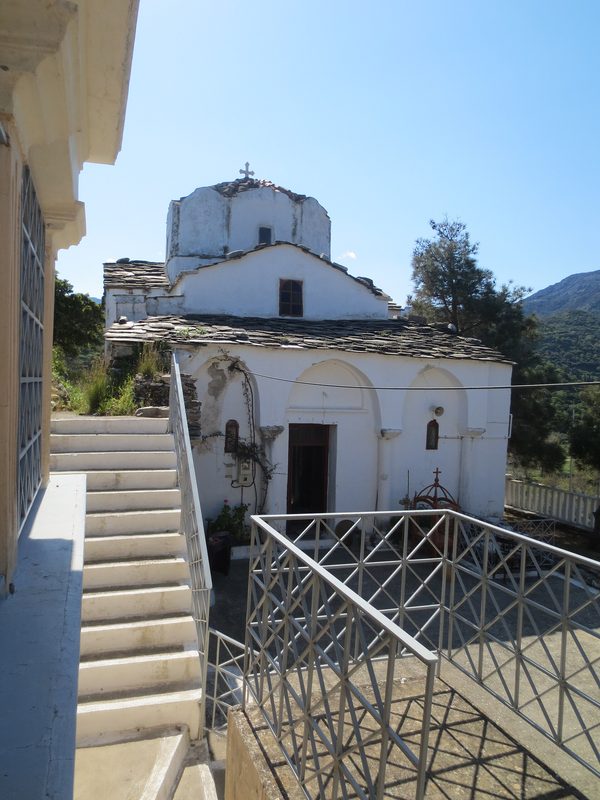
Agia Irini stands as the centrepiece of Kampos for many visitors. The Byzantine church counts among the oldest on Ikaria and rises on the site of an earlier Christian basilica, so its foundations reach back to the first Christian centuries on the island. Columns and building material from the older structure appear worked into the church, a common pattern where new churches rose on ancient ground. The building sits within the village core, close to the museum and the old settlement. Its plain, weathered stone speaks of long use rather than grand display.
Pairing the church with the museum and the wall remains gives a full sense of how ancient, early Christian and Byzantine phases layer at Kampos across the site.
What are the beach and village life like in Kampos?
A quiet sandy beach lies below the village, reached by a short descent to the shore. Gardens and orchards surround Kampos, and daily life stays calm, farm-based and slow through most of the year.
The beach below Kampos gives the village its swimming spot without the crowds of busier resorts. Sand runs along a sheltered stretch of the north coast, backed by greenery rather than concrete. The water stays clear, and the setting keeps a natural, unpolished feel that many travellers seek on the island. A short walk or drive from the houses brings you down to the shore. The calm here fits the character of the whole village, which never trades its farming roots for tourism. Those comparing Ikaria beaches place Kampos among the quieter, greener options on the north coast, suited to a relaxed swim and a slow afternoon rather than a scene.
Village life in Kampos turns on its gardens, orchards and small tavernas. Farmers still work the fertile plots that once fed ancient Oinoe, growing figs, grapes, vegetables and citrus. Meals at the local tavernas lean on this produce and on the island’s honest home cooking. The pace holds steady and unhurried, and evenings pass quietly under the trees. Ikaria’s wider reputation for long life and easy living shows clearly in a place like Kampos, where routines follow the land and the seasons. Visitors who stay a night or two settle into the rhythm quickly. The mix of a working village, a good beach and a deep archaeological past makes Kampos a rounded stop rather than a single-purpose one.
How do you visit Kampos and combine it with the north coast of Ikaria?
Reach Kampos by road from Evdilos, the north coast port, in a short drive west. A car or scooter works best, and the village pairs easily with Evdilos, nearby beaches and the coastal villages in one day.
Kampos sits a short drive west of Evdilos along the north coast road, which makes access simple once you reach the island. Ferries arrive at Evdilos and at the southern port, and most travellers pick up a car or scooter to move around, since bus service on Ikaria stays limited. The drive from Evdilos to Kampos runs along the coast with sea views for much of the way. Parking near the village core keeps the museum, the church and the old streets within an easy walk. Travellers basing themselves in Evdilos can slot Kampos into a half day with room to spare. A morning at the site pairs well with an afternoon swim below the village.
Kampos links naturally into a wider north coast route. String it together with Evdilos, the beaches along this shore, and the villages climbing toward the interior for a full day. The archaeological stop at Kampos balances the swimming and eating that fill the rest of the itinerary. Travellers planning a broader circuit use our Ikaria travel guide to fit the north coast into the island as a whole. A relaxed pace suits Ikaria, so leave time between stops rather than racing the map. Kampos rewards visitors who slow down, read the museum’s cases, walk the church and the walls, and then drop to the beach for the rest of the day.
Frequently Asked Questions
What is there to see in Kampos?
Kampos offers a small but layered set of sights on Ikaria’s north coast. The archaeological museum holds finds from the site of ancient Oinoe, including pottery, inscriptions and sculpture fragments that tell the story of the island’s old capital. Remains of ancient walls survive near the village and the shore, marking the reach of the classical city. The Byzantine church of Agia Irini ranks among the oldest on Ikaria and stands on the site of an early Christian basilica, with older building material worked into its stone. A quiet sandy beach lies below the settlement, reached by a short walk or drive.
Gardens and orchards of figs, vines and citrus surround the houses, giving the village its green setting. Visitors combine the museum, the church and the walls into a compact archaeological circuit, then finish with a swim. The mix of antiquities, an old church and slow coastal life makes Kampos a rounded stop.
What was ancient Oinoe?
Oinoe was the ancient capital and main city of Ikaria, and it stood on the site of present-day Kampos. The name derives from the Greek word for wine, and it reflects the island’s fame for vineyards and its ties to Dionysus, the god of the vine. Oinoe served as the island’s leading town through much of antiquity, holding its own civic life and coinage during the classical era, and its territory spread across the fertile north coast. Traders across the Aegean knew the city as a stop linked to Ikarian wine. Roman and early Christian phases followed, and the later Byzantine village rose directly on the same ground.
Settlement layers stack at Kampos as a result, which is why the site reads as a long, continuous history rather than a single period. The ancient city gradually gave way to the smaller modern village, yet its walls and finds keep the earlier chapters of the island visible today.
How do you get to Kampos?
Reach Kampos by road from Evdilos, the north coast port of Ikaria, which lies a short drive to the east. Ferries serve Evdilos and the island’s southern port, connecting Ikaria to Piraeus and to neighbouring Aegean islands. Renting a car or a scooter works best once you land, since public bus service on the island stays limited and infrequent. The drive from Evdilos to Kampos follows the coast road with sea views along much of the route, and it takes only a short time. Parking near the village core keeps the museum, the church of Agia Irini and the old streets within an easy walk.
Travellers basing themselves in Evdilos can fit Kampos into a half day and still have time for a swim below the village. The stop pairs well with the beaches and villages of the north coast, so many visitors fold it into a wider coastal day rather than a single dedicated trip.