
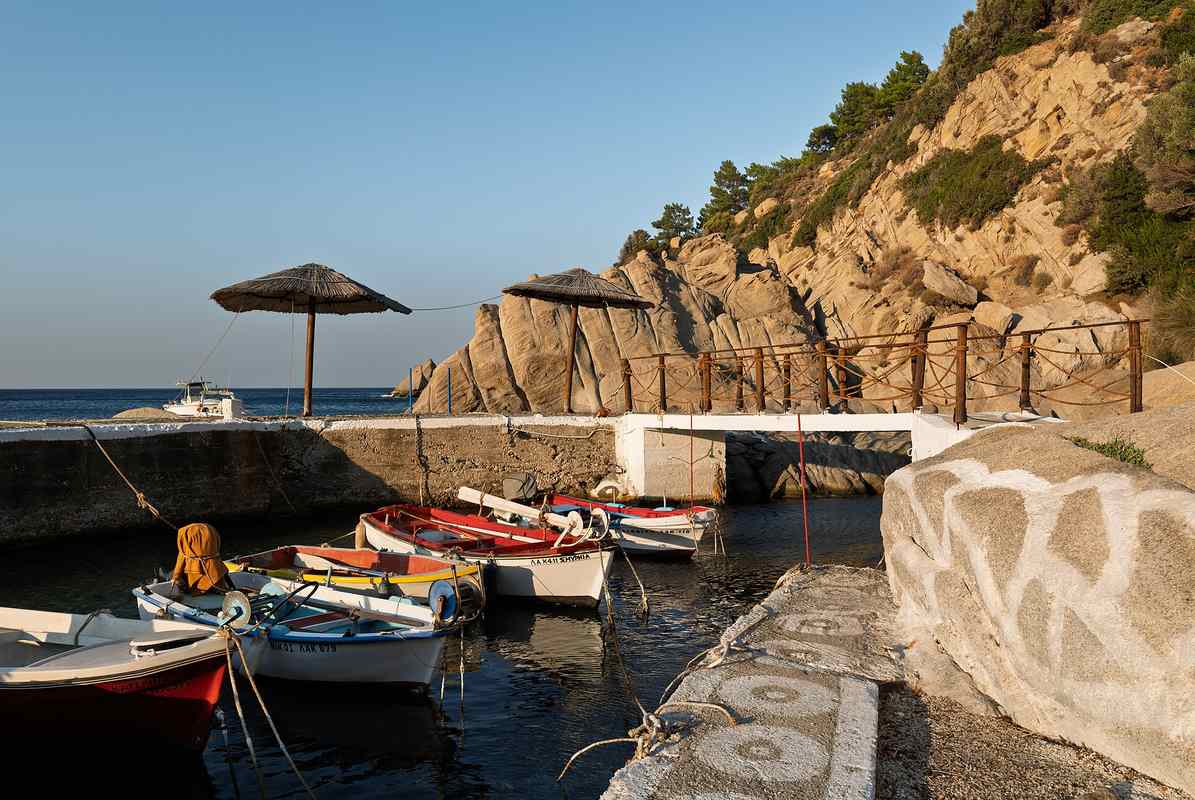
Manganitis is a small fishing village on the rugged south coast of Ikaria, in the north Aegean. The settlement sits under steep cliffs beside a tiny harbour, far from the busier resorts on the island’s north. A handful of tavernas serve fresh fish beside moored boats, and the pace here feels remote and unhurried. Travellers reach Manganitis by a scenic mountain road or by boat along the coastline. The village earns its fame as the closest settlement to Seychelles beach, one of the most photographed shores in Greece. Plan a calm, cliff-framed base on Ikaria’s wild southern edge with My Greece Tours.
This guide places Manganitis within the wider south coast and explains what makes the village worth the drive. The dramatic setting, the seafood harbour and the celebrated beach nearby define the appeal. Read this alongside our full Ikaria travel guide to plan a longer island trip. The sections below cover what and where Manganitis is, its cliff-bound setting, the Seychelles beach connection, the harbour and seafood, and practical access with the best times to arrive. Each section answers the common questions travellers ask before choosing this quiet corner of Ikaria over the northern coast.
What and where is Manganitis in Ikaria?
Manganitis is a small fishing village on the south coast of Ikaria, in the north Aegean. The settlement sits below steep cliffs beside a tiny natural harbour, roughly midway along the island’s rugged southern shoreline.
Manganitis occupies a sheltered inlet on the southern flank of Ikaria, a long mountainous island in the north Aegean. The village clings to the base of tall cliffs that drop toward a compact harbour. A cluster of stone houses, a chapel and a few tavernas form the whole settlement. The population stays small, and daily life revolves around the sea and the fishing boats moored below. The southern coast faces open water toward the Cyclades, giving Manganitis wide sea views and clear light. The mountain ridge behind the village separates it from the northern towns. That barrier keeps Manganitis quiet and distinct from the island’s main tourist areas near Armenistis and Agios Kirykos.
The village functions as a natural base for exploring Ikaria’s remote south. A narrow coastal road threads along the cliffs, linking Manganitis to nearby coves and the fishing village of Karkinagri further west. Travellers who want to understand the island’s wilder character start here. The setting suits walkers, photographers and anyone seeking calm away from crowds. Ikaria itself is known for longevity, thermal springs and a relaxed relationship with time, and Manganitis distils that spirit into a single quiet inlet. The village offers few services, so most visitors arrive on a day trip or stay in simple rooms nearby, treating Manganitis as a gateway to the dramatic southern shoreline.
What makes the setting and cliffs at Manganitis dramatic?
Steep cliffs rise directly behind Manganitis and plunge toward the sea, framing the harbour in bare rock. The exposed south coast, deep blue water and near absence of development create a stark, end-of-the-world atmosphere.
The south coast of Ikaria presents some of the most rugged scenery in the Aegean. Sheer cliffs of grey and ochre rock tower above Manganitis, streaked by the winter torrents that carve the slopes. The road that reaches the village hangs on these cliffs, delivering long views over the water on the descent. Small pebble coves punctuate the shoreline below, many reachable only by boat or on foot. The light here shifts through the day, turning the rock warm gold near sunset. The scale of the landscape dwarfs the tiny harbour, and the contrast between vertical stone and flat sea gives the setting its drama. Few settlements in Greece feel this remote while remaining reachable by road.
The exposure to open water shapes both the scenery and the mood. Waves break clear against the rocks, and the horizon runs unbroken toward distant islands. The absence of resorts, apartment blocks or bright signage keeps the view raw and elemental. Manganitis feels suspended between the mountains and the sea, a single human foothold in a vast natural frame. Walkers who follow the coastal paths find hidden inlets and sea caves along the cliffs. The rugged terrain also protects the area from mass tourism, preserving its stillness. This dramatic setting is the reason many travellers make the long drive south. The reward is a landscape that stays in the memory long after the visit ends.
How is Manganitis connected to Seychelles beach?
Manganitis is the nearest village to Seychelles beach, which lies a short distance along the same stretch of south coast. The famous cove of white pebbles and turquoise water sits between towering boulders near the village.
Seychelles beach ranks among the most celebrated shores in Greece, and Manganitis serves as its closest gateway. The cove hides between huge smooth boulders, floored with pale pebbles and washed by strikingly clear turquoise water. A short walk down a rocky path from the coastal road brings visitors to the sand and stone. The remoteness keeps the beach uncrowded compared with resort shores, and the dramatic rock formations give it a distinctive, almost sculptural look. Many travellers who reach Seychelles beach base themselves at or pass through Manganitis on the way. The village harbour and the beach share the same wild character, both shaped by the steep southern cliffs and the open Aegean.
The proximity ties the fortunes of the two places together. Visitors chasing the beach’s fame discover the quiet village beside it, and the village lends the beach its practical foothold. The path to the cove is steep in places, so sturdy shoes help on the descent. The water stays cold and clear, ideal for swimming on calm summer days. Manganitis gives arrivals a harbour, shade and a taverna table before or after the beach walk. The pairing of a famous beach and a near-untouched fishing village defines this corner of Ikaria. Travellers planning a south coast day often combine the two, treating the village as the anchor and the beach as the highlight of the excursion.
What can you find at the Manganitis harbour and seafood tavernas?
The tiny Manganitis harbour holds fishing boats and a few tavernas serving the day’s catch. Fresh fish, simple local dishes and calm sea views define the experience beside the moored boats and clear water.
The harbour forms the heart of Manganitis. Small fishing boats rest against the quay, and their catch supplies the village tavernas. Menus lean on whatever the sea provides, from grilled fish to octopus and local vegetables. Tables sit close to the water, giving diners a direct view of the boats and the cliffs beyond. The cooking stays simple and honest, matching the unhurried mood of the place. The harbour also shelters swimmers on calm days, its water clear and deep beside the rocks. A meal here feels tied to the rhythm of the fishermen, and the small scale means service is personal rather than polished. The setting rewards a slow lunch over a long list of courses.
The harbour doubles as a launch point for exploring the coast. Local boats sometimes carry visitors to nearby coves and the beaches that the road cannot reach. Travellers keen to see the shoreline from the water can look into Ikaria boat trips that trace the dramatic south coast. The sea route reveals sea caves, hidden inlets and the cliffs from an angle the road never offers. Back on land, the tavernas provide the main reason to linger. Those planning an overnight can review where to stay in Ikaria to pair simple south coast rooms with the island’s better-served northern towns. Manganitis suits a relaxed pace, with the harbour, a meal and a swim filling an easy afternoon.
How do you get to Manganitis and when should you visit Ikaria?
Manganitis is reached by a scenic mountain road from Agios Kirykos or the north coast, or by boat along the shore. Late spring through early autumn brings the calmest seas and reliable taverna openings.
The drive to Manganitis crosses Ikaria’s mountainous spine before descending the southern cliffs. The road from Agios Kirykos, the island’s main port, winds through high villages and offers long sea views on the way down. The route from the north coast takes longer and climbs over the ridge. The final descent to the harbour is steep and narrow, so a careful pace helps. A hire car gives the most flexibility, as public transport to the remote south stays limited. Boats also reach Manganitis along the coast, linking it with other southern coves. The journey itself becomes part of the appeal, since the mountain scenery and the coastal panorama reward the effort of the drive.
The season shapes the visit strongly. Late spring through early autumn brings warm, settled weather and calm seas suited to swimming and boat trips. Summer sees the tavernas fully open and the water at its warmest. The shoulder months of May, June and September offer quieter conditions and softer heat. Winter turns the south coast wild, with rough seas and many services closed. The exposed shoreline can catch strong wind, so a calm forecast improves any beach or boat plan. Travellers who value solitude prefer the edges of the season.
Manganitis rewards those who time the trip for settled weather, arrive with their own transport and allow a full unhurried day to enjoy the harbour, the tavernas and the nearby beach.
Frequently Asked Questions
Why visit Manganitis in Ikaria?
Manganitis rewards travellers seeking quiet, dramatic scenery and an authentic fishing village far from resorts. The settlement sits beneath towering cliffs on Ikaria’s rugged south coast, framing a tiny harbour where fishing boats supply the local tavernas. The remote setting delivers a rare stillness, with wide sea views and almost no development to break the landscape. The village serves as the nearest gateway to Seychelles beach, one of the most striking shores in Greece. A visit combines a scenic mountain drive, a slow seafood lunch beside the water and a swim in clear, deep sea. The pace suits walkers, photographers and anyone drawn to the wilder edges of the Aegean.
Manganitis distils Ikaria’s relaxed, unhurried spirit into a single inlet. Travellers who prefer solitude over nightlife and raw nature over polished facilities find the long drive south well worth the effort and the calm that waits at the harbour.
How close is Seychelles beach to Manganitis?
Seychelles beach lies a short distance from Manganitis along the same stretch of Ikaria’s south coast, making the village the beach’s nearest settlement. The famous cove sits between huge smooth boulders, floored with pale pebbles and washed by clear turquoise water. A short walk down a rocky path from the coastal road leads to the sand and stone, and the descent is steep in places, so sturdy shoes help. The remoteness keeps the beach far quieter than resort shores, and the sculptural rock formations give it a distinctive look prized by photographers.
Many visitors base themselves at or pass through Manganitis on the way to the cove, using the harbour for shade, a taverna table and a place to rest. The village and the beach share the same wild character, both shaped by steep cliffs and open sea. Combining the two fills a relaxed south coast day, with the village as the anchor and the beach as the highlight.
How do you get to Manganitis?
Manganitis is reached by a scenic mountain road that crosses Ikaria’s spine before descending the southern cliffs. The route from Agios Kirykos, the island’s main port, winds through high villages and offers long sea views on the way down. The approach from the north coast takes longer and climbs over the central ridge. The final descent to the harbour is steep and narrow, so a slow, careful pace helps on the tight bends. A hire car gives the most flexibility, since public transport to the remote south stays limited and infrequent. Boats also reach Manganitis along the shoreline, linking it with other southern coves that the road cannot access.
The drive itself forms part of the experience, with mountain scenery and a coastal panorama rewarding the effort. Travellers should allow extra time for the winding roads and aim for a calm-weather day. The journey delivers arrivals to one of the quietest corners of the island.