
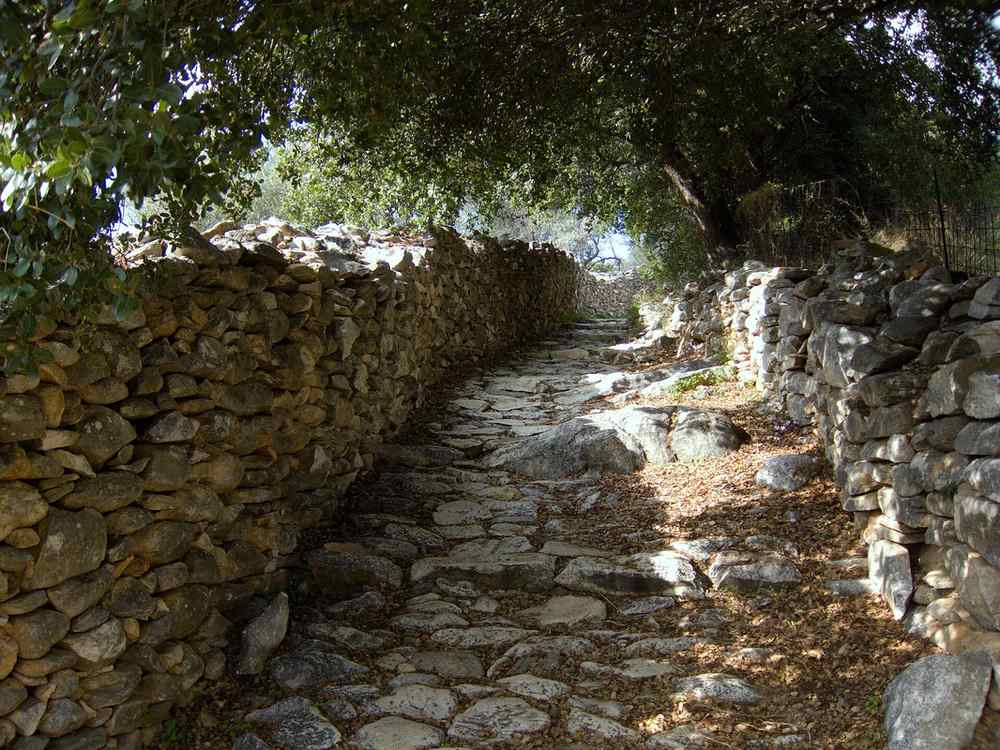
Keramoti sits deep in the northern interior of Naxos, one of the most isolated and unspoilt settlements on the island. Running water, plane trees and terraced gardens fill a green valley below the high peaks, and the village stays cool and shaded through summer. Stone houses cluster along narrow lanes, a single traditional taverna serves the community, and the atmosphere remains authentic and far from the coastal crowds. This is a place for walkers, nature lovers and travellers who want the quiet, watered heart of Naxos rather than its beaches. Plan the drive, the trails and the surrounding mountain villages with My Greece Tours.
Keramoti rewards the traveller who leaves the resorts behind and heads into the granite highlands. Our Naxos travel guide places the village within the wider mountain network of springs, footpaths and stone hamlets. The sections below cover where Keramoti lies and how to reach it, the green watered landscape that defines it, the walks and nature on its doorstep, everyday village life around the taverna, and the kind of visitor it suits best. Read on for a practical, grounded picture of one of the island’s last genuinely remote corners.
Where is Keramoti and how do you reach it?
Keramoti lies in the mountainous northern interior of Naxos, roughly 45 kilometres from Naxos Town by road. Reach it by a winding drive through the central highland villages, with a hire car strongly advised.
The road to Keramoti climbs from Naxos Town through the fertile Tragea plain and past the large village of Filoti, then twists higher into the granite peaks. The final approach narrows into a single serpentine lane that clings to steep green slopes above a stream. Drivers should take the bends slowly, sound the horn at blind corners and allow well over an hour from the coast. The setting grows lusher as the altitude rises, and the last kilometres pass under dense plane trees. A hire car gives the freedom this remote corner demands, since public transport barely reaches the highland hamlets and taxis are costly over such distance.
Keramoti pairs naturally with the other northern mountain settlements on any interior route. Continue north and you connect toward the marble-cutting village of Koronos and the emery valleys beyond. The network of stone hamlets is mapped in our overview of the villages of Naxos, which frames how these settlements link across the range. Fuel up before leaving Naxos Town, because petrol stations grow scarce inland. Carry water and a paper map as backup, since mobile signal drops out among the peaks. The drive itself ranks among the finest scenic routes on the island, threading gorges, springs and terraced fields the whole way up.
What makes the green watered setting so distinctive?
Abundant spring water defines Keramoti. Streams, channels and natural springs feed plane trees, terraced gardens and orchards, keeping the whole valley green and shaded through the driest months, a striking contrast to the arid Cycladic coast.
Water is the essence of Keramoti. Springs rise from the granite above the village and run down through stone channels that farmers have tended for generations. The flow supports towering plane trees whose canopies shade the lanes, along with walnut trees, fruit orchards and vegetable plots on carefully built terraces. The sound of running water follows you through the settlement, and the air stays noticeably cooler than the sun-baked shore. This green abundance is rare in the Cyclades, where most islands turn brown by midsummer, and it gives Keramoti a lush, almost alpine character that surprises first-time visitors expecting bare rock.
The terraced gardens below the peaks reveal centuries of patient mountain farming. Dry-stone walls hold the soil in place on slopes that would otherwise wash away, and each level channels the spring water down to the next. The village fits within the emery-mining highlands whose old ore road runs east toward the coast at Moutsouna, a reminder that this watered interior was once a working landscape, not a scenic backdrop. Bring a refillable bottle and drink from the village fountains, which pour cold, clean mountain water. The greenery peaks in spring and early summer, when wildflowers line the paths and the streams run at their fullest before the long dry season sets in.
What walks and nature surround Keramoti?
Keramoti serves as a trailhead for mountain walks into the high northern peaks. Marked and old cobbled paths lead through gorges, springs and terraced slopes, linking the village to neighbouring hamlets and remote highland viewpoints.
Keramoti is one of the best walking bases in the northern mountains. Old cobbled kalderimi paths radiate from the village, following the streams up toward the peaks and down through wooded gorges. These routes once carried mules between the highland settlements and remain walkable today, offering shade, running water and constant birdsong. Serious hikers use Keramoti as a launch point for longer traverses across the range, while casual walkers can simply follow a stream for an hour and turn back. Our guide to hiking in Naxos details the wider trail network and the seasons that suit each route.
The nature around Keramoti stays green and alive far longer than anywhere on the coast. Plane trees, oaks and chestnuts fill the ravines, and the constant water draws butterflies, frogs and a rich birdlife. Spring brings orchids and wildflowers across the terraces, while autumn turns the leaves gold. Walkers should wear proper boots, since the cobbles grow slick near the springs, and carry layers because the highland air cools quickly once the sun drops behind the peaks. Start early to beat the midday heat on exposed sections. The reward is a landscape of gorges, waterfalls and stone bridges that feels remote and untouched, unlike almost anywhere else in the Cyclades.
What is village life like in Keramoti?
Life in Keramoti is slow, traditional and genuinely non-touristy. A single taverna anchors the community, stone houses line quiet lanes, and residents tend gardens and orchards much as their families always have.
Keramoti keeps a rhythm shaped by farming and water rather than tourism. The stone houses, some centuries old, cluster along narrow lanes where chickens scratch and cats doze in the shade. A single traditional taverna serves as the heart of village life, cooking with vegetables, meat and cheese produced on the surrounding terraces. Meals here are simple, seasonal and generous, and the welcome is warm because so few outsiders arrive. Elderly residents gather in the shade of the plane trees, and the pace never hurries. This is village Greece as it was, unpolished and real, without souvenir shops or crowds.
The authenticity is the whole point of Keramoti. There are no resorts, no beach bars and no tour buses, only a working mountain community that happens to sit in a spectacularly green setting. Neighbouring highland villages such as Apeiranthos offer more services and marble-paved grandeur, but Keramoti trades on quiet and isolation instead. Respect that character: drive slowly, greet people, buy a meal at the taverna and leave the gardens and channels undisturbed. Cash is essential, since card payment is unreliable and cash machines are absent for many kilometres. Visitors who arrive with patience and curiosity find a village happy to share its shade, water and unforced hospitality.
Who does Keramoti suit as a destination?
Keramoti suits hikers, nature lovers and travellers craving authenticity and quiet. It rewards those willing to drive remote roads and skip beaches for springs, shade and unspoilt mountain life rather than resort comfort.
Keramoti is made for a specific kind of traveller. Walkers and nature lovers gain a green, watered base with cobbled trails at the door and cool air through summer. Photographers find plane trees, springs and terraced slopes that look unlike the rest of the Cyclades. Travellers tired of crowded beaches discover shade, silence and a taverna where the food comes from the surrounding gardens. This is not a place for nightlife, shopping or coastal lounging, and that is exactly its appeal. Come for a half-day drive-and-walk, or linger longer among the mountain villages if isolation suits you.
Anyone building an interior itinerary should slot Keramoti between the higher marble villages and the emery valleys for a full taste of highland Naxos. The remoteness that deters casual tourists is the very quality that rewards the curious, delivering a landscape and a way of life fast disappearing across the islands. Wear good shoes, carry water and cash, fuel the car early and give the winding roads the time they deserve. The village asks a little effort and returns a rare, genuine encounter with the green heart of the island. Plan your visit and tours through our Naxos travel guide.
Frequently Asked Questions
Is Keramoti worth visiting on a short Naxos trip?
Keramoti rewards travellers who value nature, quiet and authenticity over beaches and resorts. The green, watered setting stands apart from the rest of the Cyclades, with springs, plane trees and terraced gardens that stay lush through the hottest months. A visit works best as a half-day drive combined with a walk and a meal at the village taverna. The winding mountain road takes well over an hour each way from Naxos Town, so the trip demands commitment and a hire car. Travellers chasing sun-lounging and nightlife will find little here. Those drawn to remote landscapes, old cobbled trails and genuine village life will find the effort thoroughly repaid.
Pair Keramoti with the surrounding highland villages to justify the long drive and turn a single stop into a full day among the northern peaks, springs and gorges of interior Naxos, far from every coastal crowd.
How difficult is the drive to Keramoti?
The drive to Keramoti is scenic but demanding, and a hire car is essential. The route climbs from Naxos Town through the Tragea plain and the highland villages, then narrows into a serpentine single-lane road that clings to steep green slopes above a stream. Take the bends slowly, sound the horn at blind corners and allow well over an hour from the coast. The road stays paved but tight, so nervous drivers should travel in daylight and avoid meeting oncoming traffic on the sharpest turns. Fuel the car before leaving Naxos Town, because petrol stations grow scarce inland, and carry water plus a paper map since mobile signal fades among the peaks.
The final kilometres pass under dense plane trees and beside running water, making the approach one of the loveliest on the island. Patience and a steady pace turn the drive itself into a highlight rather than an ordeal for careful visitors.
What can you do around Keramoti besides walking?
Walking is the main draw, yet Keramoti offers more for the curious traveller. Sit under the plane trees and eat at the traditional taverna, where the food comes from the surrounding terraces and the welcome is genuine. Explore the stone lanes and old houses, drink from the cold village fountains, and watch water run through channels farmers have tended for generations. Photographers find endless subjects in the springs, gardens and gorges. Nature lovers can simply sit and absorb the birdsong, butterflies and shade that make the valley feel alive. The village also serves as a base for touring the wider northern mountains, linking easily to marble-paved highland settlements and the old emery road toward the east coast.
Bring cash, since card payment is unreliable this far inland. Above all, slow down and let the pace of the village set your own, treating the visit as a rest from the coast rather than a checklist of sights.