
Naxos is the largest of the Cyclades, and its size is exactly why on-island transport deserves a plan before you land. The distance from Naxos Town to the mountain village of Apeiranthos is around 26 kilometres, and the drive climbs from sea level to roughly 600 metres through hairpin bends. The southern beaches, the marble-carving villages, and the Tragaea valley are spread far apart, so how you move shapes what you can see. Whether you rent a car, ride the KTEL bus, or book door-to-door transfers, matching your transport to your itinerary saves both money and hours. Plan the practicalities and book your island tours in one place with My Greece Tours.
This page focuses purely on moving around once you have arrived; the ferry and flight logistics sit separately in our Naxos travel guide. Because Naxos rewards travellers who reach its interior and its far-flung sands, the right vehicle or bus timetable is central to a good trip rather than an afterthought. The sections below cover whether you actually need a car, how car and scooter hire works, the KTEL bus network and its routes, taxis and transfers, and the real driving times and road conditions across the island.
Do you actually need a car on Naxos?
For a beach-only stay near Naxos Town you can manage without one. To reach the mountain villages, marble hamlets and remote southern beaches independently, a car or scooter opens up the whole island.
Naxos is roughly 428 square kilometres, far bigger than Mykonos or Santorini, and its attractions are genuinely dispersed. If you base yourself in Naxos Town and only want the harbour, the Portara, and the long organised beaches of Agios Prokopios and Agios Georgios, walking plus the frequent local bus covers you comfortably. Most first-time visitors spend three or four days exactly like this and never miss a car. The town itself is walkable end to end in twenty minutes, and the nearest sandy beaches are a five to ten minute bus ride south.
The moment your list includes the emery-mining trails, the Tragaea olive valley, Mount Zas, or a quiet cove like Alyko, independence matters. The KTEL bus reaches the main villages but not the dirt tracks to the wilder beaches, and its timetable thins out sharply in spring and autumn. A car lets you chase weather and light, stop for a taverna lunch in Halki, and reach the villages of Naxos on your own schedule. For a week-long stay, most travellers hire a car for at least two or three of the days.
How does car, scooter and ATV rental work on Naxos?
Rental agencies cluster on the Naxos Town waterfront and at the port. A small car runs roughly forty to sixty euros a day in peak season, scooters from about twenty and ATV buggies from thirty-five, with a valid licence required.
Booking ahead in July and August is wise because the compact economy cars sell out first, and those are the ones you want for the narrow village lanes. Most agencies deliver the vehicle to your hotel or the ferry port, and most will take it back there too, which removes the awkward last-morning parking scramble. Read the fuel policy carefully: full-to-full is standard and fairest, while certain cheaper deals use full-to-empty pricing that quietly inflates the cost. Check the excess and whether the quote includes full damage waiver, because unpaved tracks to beaches like those on the beaches of Naxos coast are a common source of scratches and tyre claims.
Scooters and 125cc bikes are cheap and nimble for short hops. The long mountain climbs to the interior, though, are hard work on a small engine and exposed in the midday heat. Factor that in before committing to two wheels for a week. ATV quad buggies are popular and fun on the flatter southwest, yet they are slow, noisy, and genuinely uncomfortable for the 26-kilometre haul up to Apeiranthos. Petrol stations are plentiful around Naxos Town and Chora but scarce in the mountains, so fill up before heading inland and keep the tank above a quarter.
How good is the KTEL bus network on Naxos?
The KTEL bus network is reliable and cheap, running from the central station on the Naxos Town waterfront to the main beaches, the Tragaea villages, and mountain hubs, though frequencies drop steeply outside peak summer and evening services are limited.
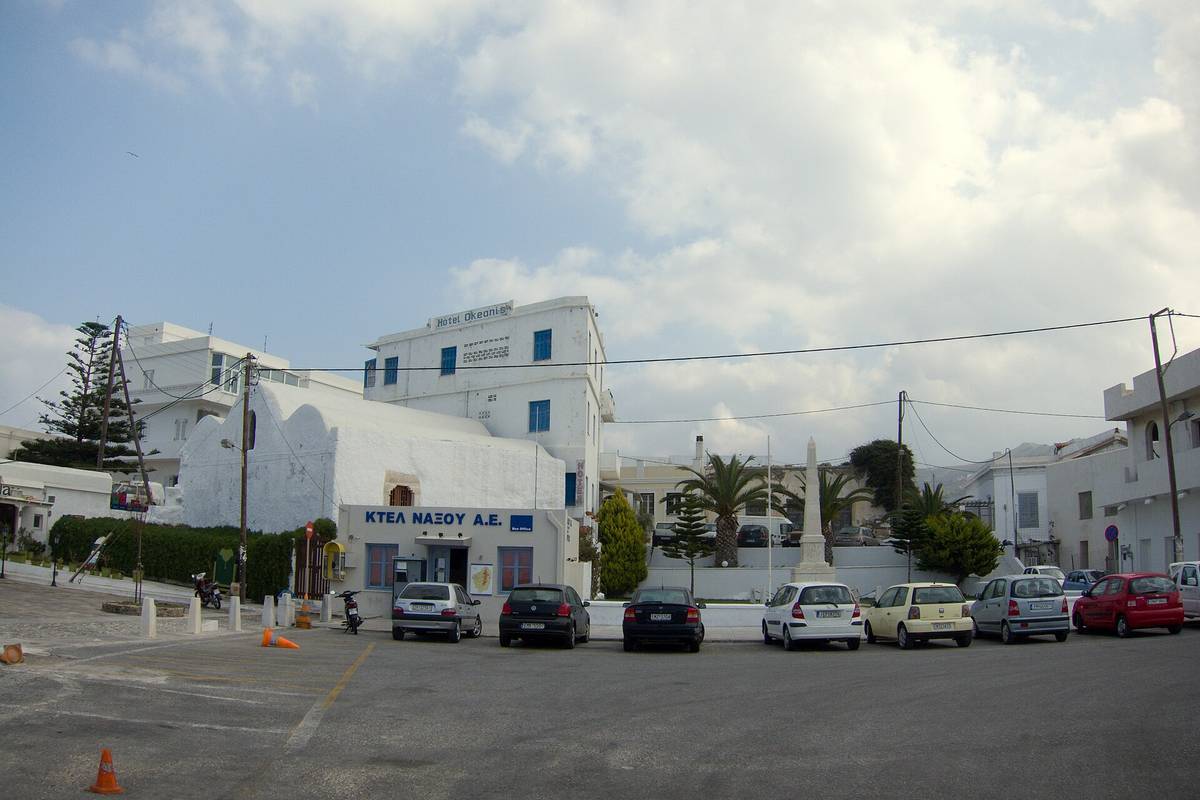
All routes radiate from the KTEL station beside the port in Naxos Town, where a printed timetable and a ticket kiosk make planning straightforward. In high summer the southern beach line to Agios Prokopios, Agia Anna, and Plaka runs very frequently, often every half hour, making a car unnecessary for a pure beach day. The village line into the interior serves Halki, Filoti, and Apeiranthos multiple times daily, letting you reach the marble-carving heartland and the trailheads for Mount Zas without driving those tight mountain bends yourself.
Tickets are inexpensive, bought at the kiosk or from the driver, and the drivers know the stops well even when signage is thin. The limitation is timing rather than reach: the last bus back from the mountains can leave in the late afternoon, so a leisurely dinner in a hill village usually means a car or a taxi. In April, May, and October the schedule contracts to a handful of daily departures, so always confirm the return time before setting out. Full route details also sit in our Naxos travel guide. Riders who prefer pedal power can plan routes through our guide to cycling in Naxos.
What about taxis and private transfers on Naxos?
Naxos has a modest licensed taxi fleet based mainly in Naxos Town, fine for airport-style port transfers and short hops but limited in number at peak times; pre-booked private transfers are the dependable option for early ferries and group logistics.
The island runs only a couple of dozen taxis, so during the August ferry surge or late at night you can wait, and hailing one in a mountain village is rarely possible. For a port pickup after a long crossing, or a guaranteed early-morning ride back to catch the first fast ferry off the island, booking a private transfer in advance removes the uncertainty. Fares for taxis are metered within town and typically negotiated as a flat rate for longer runs to villages or distant beaches, so agree the price before you set off if you are heading far.
Private transfers and small-group tours also solve the drink-and-drive problem for an evening in the hills and the parking problem in the crowded old town. Numerous visitors combine a couple of self-drive days with a guided tour of the interior, which pairs well with reaching hard-to-park spots and the villages of Naxos without navigating the switchbacks. If you plan to arrive by sea first, our page on how to get to Naxos explains the ferry connections that feed these transfers.
What are the real driving times, distances and road conditions?
Main roads are paved and in good order but winding. Budget about 35 to 45 minutes from Naxos Town to Apeiranthos and 25 minutes to Filoti, with extra care on the unpaved final stretches to remote beaches.
From Naxos Town the drive south to the beach strip at Plaka is a flat, easy 15 minutes. Heading inland, Halki in the Tragaea valley is about 20 minutes, Filoti roughly 25, and Apeiranthos on the eastern slopes around 35 to 45 minutes because the last section is a sustained climb of tight hairpins. The cross-island road to the north coast village of Apollonas takes a good hour and a half each way, so treat it as a full day out rather than a quick detour. Parking in central Naxos Town is genuinely difficult in peak season, so use the larger lots near the port rather than circling the old-town lanes.
Road surfaces on the main network are well maintained. A good number of the best beaches and a handful of remote hamlets sit at the end of gravel or dirt tracks. There a low hire car needs slow, careful driving. Drive on the right, watch for buses taking the centre line on blind mountain bends, and expect goats and the occasional rockfall after rain. Fuel up before long inland trips, since stations are concentrated near the coast. Plan your visit and tours through our Naxos travel guide.
Frequently Asked Questions
Is it easy to drive in Naxos as a first-time visitor?
Yes, driving in Naxos is manageable for most visitors, though it asks for patience rather than skill. The main roads are paved and well signposted, traffic outside Naxos Town is light, and Greeks drive on the right just as in most of Europe. The challenges are specific and predictable: the mountain roads to villages like Apeiranthos are narrow and full of hairpin bends, so you drive slowly and use the horn lightly on blind corners. Village lanes can be extremely tight, and a number end abruptly, so it pays to park on the edge of a village and walk in rather than pressing deeper.
Parking in the old town of Naxos Town is the single biggest headache in peak season, and using the larger lots near the port avoids fruitless circling. Watch for KTEL buses that hug the centre line on mountain bends, and for goats, cyclists, and rockfall after rain. Drive within your comfort on the gravel tracks that lead to the wilder beaches, and a low economy car copes fine at a gentle pace.
How much does it cost to rent a car or scooter on Naxos?
Prices vary with season and vehicle, but expect a small economy car to cost roughly forty to sixty euros a day in July and August, dropping noticeably in spring and autumn and for multi-day bookings. Scooters and small motorcycles start from around twenty euros a day, and ATV quad buggies from about thirty-five, though these rates climb at the height of summer when demand peaks. Booking ahead is strongly advised for July and August because the cheapest and most practical economy cars sell out first, and last-minute walk-up rates are higher.
Always check what the price actually includes: full damage waiver rather than a large excess, unlimited kilometres, and a full-to-full fuel policy, which is fairer than the full-to-empty deals that quietly overcharge. Most agencies deliver and collect the vehicle at your hotel or the ferry port at no extra cost, which is worth asking about because it removes the last-morning parking scramble. Fuel is a separate cost, and the winding mountain roads use more than the flat coastal runs, so budget a little extra for petrol if you plan to explore the interior.
Can you get around Naxos without renting a vehicle?
Yes, you can, especially if your trip centres on Naxos Town and the long sandy beaches immediately south of it. The KTEL bus network is cheap and reliable, running very frequently in peak summer from the waterfront station to Agios Prokopios, Agia Anna, and Plaka, so a pure beach holiday needs no car at all. The same network reaches the main interior villages, including Halki, Filoti, and Apeiranthos, multiple times a day, which is enough to sample the marble-carving heartland and the Mount Zas trailheads on a day trip. The catch is flexibility.
Bus frequencies fall sharply outside July and August, the last services back from the mountains often leave in the late afternoon, and the buses do not reach the dirt tracks to the wilder coves. Taxis fill part of the gaps but are limited in number and hard to find away from town. Most visitors strike a balance, using the bus for beach days and booking guided tours or a private transfer for the interior. That combination removes both the parking and the drink-and-drive problems while still reaching the hard-to-park hill villages.