
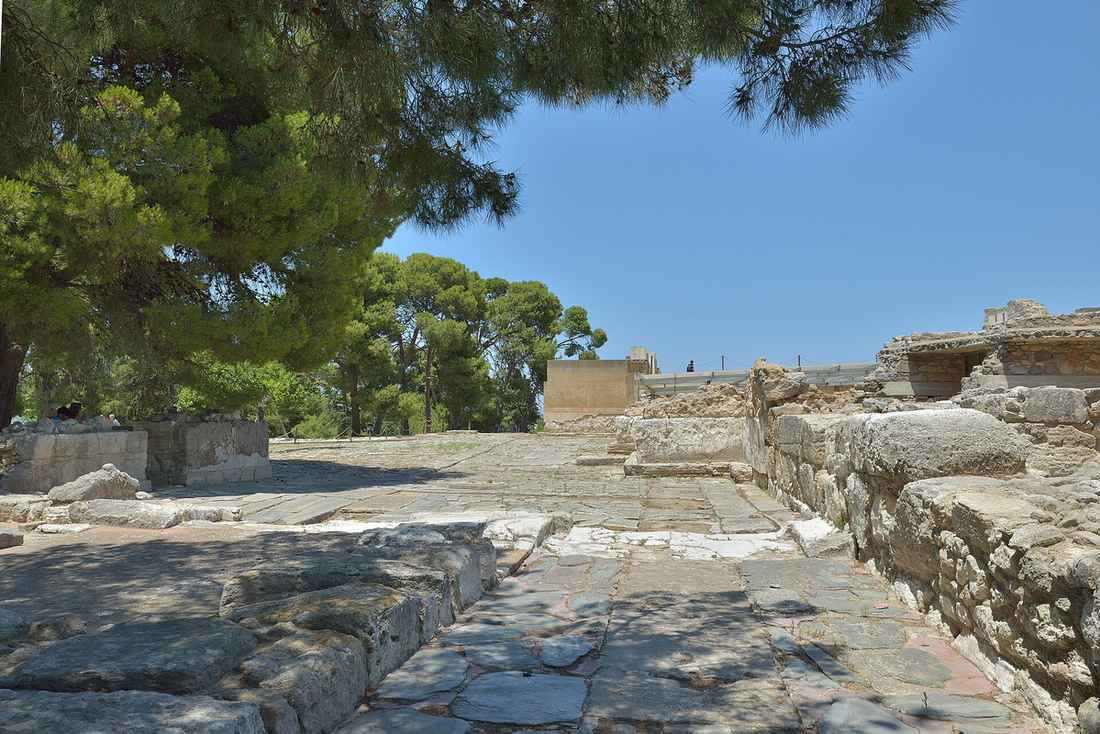
The drainage and water system of Knossos was one of the most advanced in the ancient world, with terracotta pipes, stone channels and an early flushing toilet. Plan tickets and tours through My Greece Tours.
The drainage and water system is among the most impressive engineering achievements of the Palace of Knossos. The sections below cover what it was, how it worked, the famous flushing toilet, where the water came from and how to see it.
What was the drainage system at Knossos?
The drainage system at Knossos was a network of terracotta pipes, stone channels and drains that supplied fresh water, removed waste and sewage, and carried away rainwater.
The drainage and water system at Knossos ranks as one of the earliest integrated water-management schemes known from the Bronze Age. It combined terracotta pipes, stone-built channels, drains and vertical shafts that ran through and beneath the palace. The network supplied clean water, removed used water and sewage, and led rainwater away from the multi-storey complex. Builders treated water as one connected problem rather than a set of separate fixes.
The scale of the scheme sets Knossos apart from earlier sites. Pipes and channels reached across the residential east wing, the central court and the surrounding storerooms. Sections of the original terracotta piping and stone drainage channels survive on the site today. These remains give visitors a direct view of engineering that stood far ahead of its age.
Three distinct jobs made up the system, and the Minoans handled each with its own network. Fresh spring water arrived through the supply pipes. Foul water from the toilets and washrooms left through sealed sewage drains. Rain from the roofs and courts drained through open and covered storm channels. Keeping these three flows apart marks the scheme as a planned whole, not a patchwork. That separation of clean, foul and storm water is the same principle that underpins modern sanitation. Our guide to the key features of Knossos covers the wider engineering, and the next section explains how the system worked.
How did the Minoan water and drainage system work?
The Minoan system used interlocking terracotta pipes, tapered so the water sped up and flushed out sediment, laid on gradients to keep it flowing by gravity.
The Minoan system ran almost entirely on gravity, without pumps. Builders laid the pipes and channels on measured gradients so that water flowed downhill from the source to each destination. Fresh water and waste water moved through interlocking terracotta pipes cast in standard sections that fitted snugly together. Each section tapered to a narrower end. That taper accelerated the flow through the constriction, which helped scour out sediment and keep the pipes clear.
Larger volumes needed larger conduits. The palace used open and covered stone channels and runnels to carry rainwater from the roofs, terraces and light courts. Sloping floors and gutters guided the runoff into these drains and away from the building. Waste water and sewage travelled through separate drains, which kept the clean supply apart from the dirty flow.
The detailing of the storm channels shows the same care as the pipes. Builders cut the channels with curved beds and parabolic bends that slowed the water at the corners. That shaping cut down splashing and erosion where the flow changed direction on a steep gradient. Small settling basins along the routes trapped grit before it reached the deeper drains. Each of these choices reflects direct experience of how water behaves in a fast conduit. The whole scheme reads as a designed system rather than a series of afterthoughts. Our guide to the Knossos layout covers the palace structure, and the next section covers the famous flushing toilet.
Did Knossos have a flushing toilet?
Yes, Knossos had what is widely called the earliest flushing toilet in the world, set in the royal apartments near the Queen’s Megaron.
The toilet sat in the royal quarters beside the Queen’s Megaron. It had a seat, originally of wood, set over a drain that joined the palace sewage network directly. A person flushed it by pouring a jug or bucket of water down the bowl. The water washed the waste into the drain below and carried it away through the sewers. In principle the action matched a modern flush, thousands of years before one existed elsewhere.
The design points to a clear concern for hygiene and comfort. The toilet stood next to the bathroom and the famous terracotta bathtub in the same royal suite. Together these fittings show a level of domestic sanitation that Europe would not match again for a very long stretch of history. Flush toilets of the same kind turn up at other Minoan sites, including Phaistos, Malia and Gournia, which shows the idea spread across Bronze Age Crete.
The plumbing behind the seat explains why the toilet worked year-round. A vertical clay pipe dropped from beneath the seat into a channel that fed the main sewer. Water poured through the opening carried the waste straight into that channel and out of the building. The connection ran independent of the rain, so an attendant or the user could flush it in the dry summer as easily as in winter. This detachment from the weather made the fitting reliable, which sets it apart from a simple rain-fed drain. Our guide to the Queen’s Megaron covers the royal bathroom, and the next section covers where the water came from.
Where did the water at Knossos come from?
The water at Knossos came from natural springs, piped to the palace through channels, and was supplemented by rainwater collected from roofs and courtyards.
Fresh water at Knossos came chiefly from natural springs in the hills around the site. The springs were tapped, and their water was led toward the palace through a run of pipes and channels that followed the natural slope of the land. Bringing a steady supply of clean spring water to the site formed the first stage of the whole scheme. That task alone demanded careful surveying, since the flow depended on an unbroken downhill gradient the whole way.
Rainwater made up the second source, which mattered in the dry Cretan summer. The flat roofs, terraces and open light courts of the palace gathered rain, which channels then directed into storage. Cisterns and storage features held reserves against the months without rain. This mix of piped spring water and harvested rainwater secured the volume that the baths, fountains, drainage and large resident population needed.
The two sources balanced each other across the year. Springs gave a steady base flow that held up through the long dry summer, when rain almost vanished. The roofs and courts then captured the heavy winter and spring rain, which refilled the cisterns for the months ahead. Storing that seasonal surplus turned an uneven rainfall into a dependable year-round supply. This grasp of the Cretan water cycle, and the design that answered it, marks the Minoans as careful managers of a scarce resource. Our guide to Minoan civilisation covers the wider culture, and the next section covers how advanced the plumbing was.
How advanced was Minoan plumbing compared with later eras?
Minoan plumbing at Knossos matched standards of sanitation that much of Europe did not reach again until the modern era, with piped supply, sewers and flush toilets.
The Knossos scheme brought together features that rarely appear as a set in the ancient record. It had a piped clean-water supply, an early flush toilet, separate sewage drains and storm-water channels that split rainfall from waste. Terracotta pipe sections joined with durable mortar, and the wider pipes ran to a notable bore, carrying waste from the toilets and washrooms toward the main drains. Few later civilisations combined all of these functions in one building.
The comparison with later eras is striking. The sanitary standard of the palace rivalled that of European and North American cities of the nineteenth century of our era. Rome later built grand aqueducts and public sewers on a far larger scale, yet the household comfort seen at Knossos predates Rome by more than a thousand years. The Minoans stand out as early masters of practical hydraulics.
The engineering knowledge did not survive the collapse of Minoan Crete. When the palaces fell, the skills that built the pipes, drains and flush toilets were lost across the region. Later Greek and Roman towns rediscovered piped water and sewers by their own routes, and private flush toilets stayed rare for centuries. Seen against that long gap, the plumbing of Knossos looks less like a first step on a steady climb and more like an early peak that the world took a very long time to reach again. Our guide to the Minoan civilization at Knossos covers their wider achievements, and the next section covers what you can see today.
Who uncovered the drainage system at Knossos?
Sir Arthur Evans uncovered the drainage system at Knossos during his excavations of the palace, which began in the year nineteen hundred of our era and continued for decades.
The pipes, drains and flush toilet came to light during the long excavation of Knossos led by the British archaeologist Sir Arthur Evans. His digging exposed the palace and its water features, and his reports drew wide attention to the flush toilet as the earliest of its kind. Evans read the plumbing as proof of a refined, comfortable court life. His enthusiasm shaped how the wider public came to see Minoan sanitation.
Later study has tested and refined those first claims. Careful survey of the pipes, gradients and drains has confirmed the core of the system while questioning some of the grander readings. The tapered self-scouring pipes and the separate storm and sewage lines hold up as genuine Minoan engineering. Some of Evans’s reconstruction in concrete, though, blurs the line between the original fabric and his own additions. A guide who knows this history can point out which parts are ancient and which were rebuilt. Our guide to Sir Arthur Evans and Knossos covers the excavation, and the next section covers what you can see today.
Can you see the drainage system at Knossos today?
Yes, you can see parts of the drainage and water system at Knossos today, including terracotta piping and stone channels around the royal apartments and courts.
The water and drainage system counts among the more surprising things to see on a visit. Surviving stretches of terracotta piping, with their distinctive tapered and interlocking sections, remain visible in parts of the site. Stone-built drainage channels run through the royal apartments and beside the courts. The area linked to the famous flushing toilet near the Queen’s Megaron draws steady interest from visitors who know its story.
The pipes and channels are easy to walk past without noticing them, so a guide or audio guide adds a great deal. A good guide points out the surviving elements and explains how the tapered pipes and separate drains actually worked. Understanding the water system changes how you read Knossos, since it reveals the Minoans as engineers as well as artists and traders. A visit early in the day gives a clearer view of the drainage features before the crowds arrive.
A short route links the water features into one walk. Start at the royal apartments in the east wing, where the drains and the flush toilet lie near the Queen’s Megaron. Move out toward the central court, where the storm channels edge the paved surface. Look for the tapered pipe sections where they sit exposed along the walls. Reading these remains in sequence shows how supply, sewage and rainwater met and parted across the palace. That walk turns a scatter of low stonework into a working system in the mind’s eye. Plan your visit and tours through our Palace of Knossos guide.
Frequently Asked Questions
How advanced was the drainage system at Knossos?
The drainage and water system at Knossos was remarkably advanced, and it ranks as one of the earliest and most complete water-management systems in the ancient world. It was an integrated network of terracotta pipes, stone-built channels, drains and shafts that supplied fresh water, removed waste water and sewage, and carried away rainwater for the multi-storey palace. The terracotta pipes came in standard interlocking sections, each tapered so that water accelerated through the constriction and flushed out sediment. The system worked by gravity on planned gradients, kept clean and dirty water largely separate, and even served what is often called the world’s earliest flushing toilet. Its sanitary standard rivalled that of nineteenth-century European cities.
Did Knossos really have a flushing toilet?
Yes, Knossos had what is widely described as the earliest flushing toilet in the world, set in the royal apartments near the Queen’s Megaron. It had a seat, originally of wood, over a drain that connected directly to the palace sewage network. A person flushed it by pouring a jug or bucket of water down the bowl, which washed the waste into the drain and away through the sewers, much like a modern flush. Combined with the bathroom and the famous bathtub in the same royal suite, it shows a concern for sanitation that Europe would not match again for a very long time. Similar flush toilets survive at other Minoan sites, including Phaistos, Malia and Gournia.
Where did Knossos get its water?
The fresh water at Knossos came chiefly from natural springs in the surrounding area. The springs were tapped and their water led toward the palace through terracotta pipes and channels that followed the natural gradient of the land, since the whole system ran by gravity rather than pumping. This piped spring water was supplemented by rainwater harvesting, a vital resource in the dry Cretan summer. The flat roofs, terraces and open light courts of the palace collected rain, which channels directed into cisterns and storage features against the dry season. By combining piped spring water with harvested and stored rainwater, Knossos secured the steady supply that its baths, drainage, sanitation and large population required.
Which parts of the water system can visitors still see?
Visitors to Knossos can still see surviving stretches of terracotta piping and stone drainage channels in several parts of the site, especially around the royal apartments and the courts. The tapered, interlocking pipe sections remain clear where they lie exposed, and the stone channels that carried rainwater run beside the paved areas. The spot linked to the famous flushing toilet near the Queen’s Megaron is a popular point of interest. These features are easy to overlook without help, so a guide or audio guide is worthwhile, since it points out the surviving elements and explains how the supply, sewage and storm-water drains worked together as one designed system.
How did the tapered terracotta pipes keep themselves clear?
The terracotta pipes at Knossos were cast in short sections, each one narrower at one end than the other. When the sections joined together, the bore stepped down at every joint. Water speeding into each narrower section gained pace through the constriction, and that surge scoured loose sediment along the pipe wall and pushed it onward. The repeated acceleration stopped grit and silt from settling and blocking the line, so the pipes stayed clear without the need to open and clean them by hand. This self-scouring effect is a genuine piece of hydraulic thinking, and it explains why the Minoans chose a tapered profile rather than a plain even tube. The same principle guides the design of some drainage pipes to this day.
Was the Knossos water system unique in the Minoan world?
The Knossos water system was the largest and most complete of its kind, yet it did not stand alone in Minoan Crete. Other palaces and towns shared the same core ideas: piped spring water, separate sewage drains, storm channels and the pour-flushed toilet. Sites such as Phaistos, Malia, Tylissos and Gournia all preserve drains, pipes or flush toilets that follow the Knossos pattern. This spread shows that advanced water management was a shared feature of Minoan civilisation rather than a one-off at the main palace. Knossos simply carried the approach furthest, because its size, its multi-storey buildings and its large population demanded the fullest version of the system.