
The Minoans and Mycenaeans were the two great Bronze Age civilisations of Greece, the peaceful, artistic Minoans of Crete and the warlike Mycenaeans of the mainland. Plan tickets and tours through My Greece Tours.
The two are central to understanding the Palace of Knossos. The sections below cover who they were, their differences, their art and writing, the Mycenaean takeover of Knossos and how the two were linked.
Who were the Minoans and Mycenaeans?
The Minoans were the first advanced civilisation of Bronze Age Europe, based on Crete with their palace at Knossos, while the Mycenaeans were the later Bronze Age Greeks of the mainland.
Two civilisations shaped Bronze Age Greece. The Minoans rose on Crete. The Mycenaeans rose on the mainland. Both left their mark.
The Minoans came first. They flourished on Crete. Knossos was their heart. Europe’s first society, they were.
The Mycenaeans followed. The mainland was their base. Mycenae led their cities. The Greeks they became.
Influence flowed between them. The Minoans inspired much. The Mycenaeans borrowed it. The cultures intertwined.
The Minoans and the Mycenaeans were the two great civilisations of Bronze Age Greece, and understanding the difference between them is key to understanding Knossos. The Minoans, named by Sir Arthur Evans after King Minos, were the earlier of the two, a sophisticated civilisation that flourished on the island of Crete with its centre at the palace of Knossos, and is regarded as the first advanced society in Europe.
The Mycenaeans were a later Bronze Age civilisation based on the Greek mainland, centred on powerful citadels such as Mycenae, Tiryns and Pylos. They were Greek-speaking and are the people of the Homeric legends of the Trojan War. The Minoans came first and deeply influenced the Mycenaeans, who later rose to dominance and eventually took control of Crete and Knossos itself. Our guide to the Minoan civilization at Knossos covers the Minoans, and the next section covers the differences.
What was the difference between the Minoans and Mycenaeans?
The Minoans appear to have been a relatively peaceful, artistic and sea-trading civilisation focused on palaces and nature, while the Mycenaeans were a more warlike, militaristic people of fortified citadels, warrior kings and conquest.
The two cultures differed in spirit. The Minoans loved art. The Mycenaeans loved war. The contrast is clear.
The Minoans seem peaceful. Their palaces lacked strong walls. Their art shunned battle. The sea was their power.
The Mycenaeans built for war. Mighty walls ringed their citadels. Weapons filled their graves. Conquest drove them.
Outlook shaped the cultures. The Minoans traded and made. The Mycenaeans fought and ruled. The difference runs deep.
The Minoans and Mycenaeans are often contrasted as two very different kinds of civilisation, though the picture is partly shaped by interpretation. The Minoans appear to have been relatively peaceful, refined and outward-looking, a sea-based trading civilisation whose unfortified palaces, like Knossos, suggest they felt secure, and whose art celebrates nature, ceremony and elegance rather than warfare. Their power lay in trade and the sea.
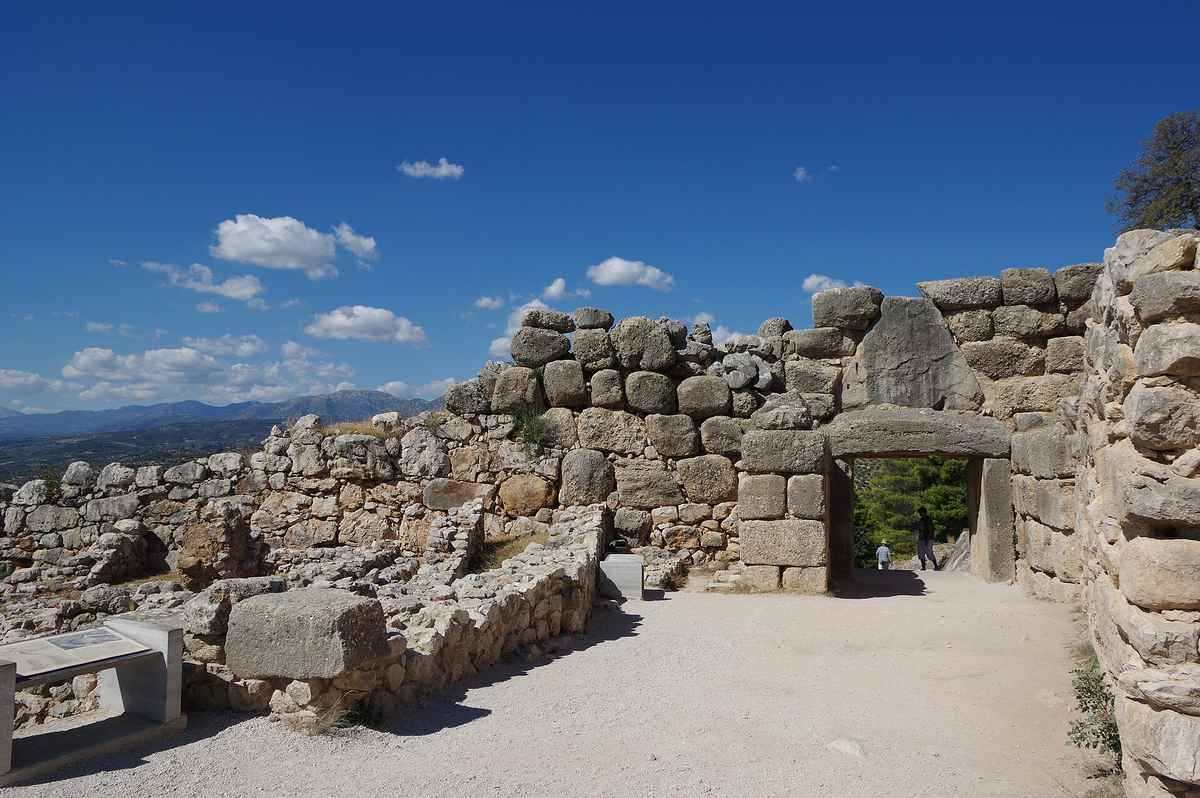
The Mycenaeans, by contrast, were a more warlike and militaristic people. They built massive fortified citadels with cyclopean walls, were ruled by warrior kings, buried their dead with weapons and gold masks, and are remembered for conquest and the legends of the Trojan War. Their art, while influenced by the Minoans, includes far more scenes of war and hunting. This contrast between the artistic, sea-trading Minoans and the warlike, fortress-building Mycenaeans is one of the most striking in the ancient world. The next section covers their art and writing.
How did Minoan and Mycenaean art and writing compare?
Mycenaean art and writing were heavily influenced by the Minoans, who came first. The Mycenaeans adopted Minoan artistic styles and adapted the Minoan Linear A script into Linear B to write Greek.
Art and writing flowed from Crete. The Minoans led the way. The Mycenaeans followed. The influence shows.
Minoan style spread north. Frescoes inspired the mainland. Techniques crossed the sea. The Mycenaeans absorbed them.
Writing passed between them. Linear A was Minoan. Linear B adapted it. Greek was written at last.
War crept into the art. The Mycenaeans painted battle. Hunting scenes spread. The tone hardened.
In art and writing, the Mycenaeans owed a great deal to the Minoans, who were the more advanced and earlier civilisation. The Mycenaeans adopted and adapted Minoan artistic styles, techniques and motifs, so that much Mycenaean fresco painting, pottery, metalwork and jewellery shows clear Minoan influence, the result of contact, trade and eventually Mycenaean control of Crete.
The most important borrowing was writing. The Minoans used a script known as Linear A, which remains undeciphered, to write their own language. The Mycenaeans adapted this script into Linear B, modifying its signs to write an early form of Greek, and it is Linear B tablets, found at Knossos and mainland sites, that record the Mycenaean world. While the Mycenaeans absorbed Minoan elegance, their own art leaned more toward themes of war, hunting and the warrior aristocracy. Our guide to Linear B at Knossos covers the scripts, and the next section covers the Mycenaean takeover of Knossos.
How did the Mycenaeans take over Knossos?
The Mycenaeans took control of Knossos in the later Bronze Age, as shown by the Linear B tablets written in Greek found at the palace.
The Mycenaeans gained Knossos. The mainland Greeks arrived. They took the palace. The Minoans yielded.
Linear B proves their rule. The tablets record Greek. The script names Greek gods. The masters were Mycenaean.
A weakened Crete invited them. Earthquakes and the volcano had struck. The Minoans faltered. The Greeks moved in.
Conquest or takeover, scholars debate. The power shifted north to south. The era turned. The Minoans declined.
A pivotal moment in the relationship between the two civilisations was the Mycenaean takeover of Knossos in the later Bronze Age. The decisive evidence is the archive of Linear B tablets found at the palace, written in an early form of Greek, which shows that in its final period Knossos was administered by Greek-speaking Mycenaeans rather than the earlier Minoans.
Scholars debate exactly how this came about. One view is that the Mycenaeans conquered a Minoan Crete already weakened by earthquakes and the effects of the Thera volcanic eruption; another is that they came to dominate it more gradually through trade, influence and alliance. Either way, the Mycenaean control of Knossos marked the end of independent Minoan power and the absorption of Crete into the Mycenaean Greek world. Our guide to the fall of Knossos covers this decline, and the next section covers how the two were linked.
How were the Minoans and Mycenaeans linked?
The Minoans and Mycenaeans were linked through trade, cultural influence and eventually Mycenaean rule over Crete.
The two cultures were intertwined. Trade connected them. Influence flowed between. Rule united them at last.
Contact began with trade. Goods crossed the sea. Ideas travelled too. The cultures met.
The Mycenaeans learned from Crete. They borrowed art and writing. They absorbed the older ways. The legacy passed on.
Together they shaped Greece. The Bronze Age laid the ground. The myths remembered them. The classical age followed.
Far from being entirely separate, the Minoans and Mycenaeans were closely linked through centuries of contact. They traded with each other across the Aegean, and the Mycenaeans absorbed a great deal from the older, more sophisticated Minoan civilisation, in art, writing, religion and palace administration, before eventually coming to rule Crete and Knossos themselves. The relationship moved from influence to domination.
Together, the Minoans and Mycenaeans form the great Bronze Age background to ancient Greece. The memory of these lost civilisations, the powerful sea-king Minos at Knossos and the warrior kings of Mycenae, survived in the myths and legends, from the Minotaur and the labyrinth to the heroes of the Trojan War, that the later classical Greeks inherited. Understanding the two and their connection brings the deep history of Knossos and Greece to life. Our guide to King Minos covers the legendary link. Plan your visit and tours through our Palace of Knossos guide.
Understanding the Minoans and Mycenaeans is, in a sense, the key to unlocking Knossos. What you walk through is not just one lost world but two: the elegant, sea-trading Minoans who built and decorated the palace, and the warlike Mycenaean Greeks who later took it over and left their Linear B records in its ruins. Together these two Bronze Age civilisations laid the foundations of ancient Greece and seeded its greatest legends, from the labyrinth of Minos to the heroes of Troy. To see Knossos with both peoples in mind is to grasp the deep, layered history of the place, and the long road from the Bronze Age to the classical Greece that followed.
Frequently Asked Questions
What is the difference between the Minoans and the Mycenaeans?
The Minoans and Mycenaeans were the two great Bronze Age civilisations of Greece. The Minoans came first, a sophisticated, relatively peaceful and artistic sea-trading civilisation based on Crete with their palace at Knossos, regarded as the first advanced society in Europe; their unfortified palaces and nature-loving art suggest a secure, outward-looking culture. The Mycenaeans were a later, more warlike civilisation of the Greek mainland, based on fortified citadels like Mycenae, ruled by warrior kings and remembered for the legends of the Trojan War. The Mycenaeans were deeply influenced by the Minoans, adopting their art and adapting their script into Linear B to write Greek, and eventually took control of Crete and Knossos.
Did the Mycenaeans conquer the Minoans?
The Mycenaeans came to control Knossos and Crete in the later Bronze Age, ending independent Minoan power, but whether this was an outright conquest is debated. The decisive evidence is the Linear B tablets found at Knossos, written in an early form of Greek, which show that in its final period the palace was administered by Greek-speaking Mycenaeans rather than the earlier Minoans. One view is that the Mycenaeans conquered a Minoan Crete already weakened by earthquakes and the effects of the Thera volcanic eruption; another is that they gained control more gradually through trade, influence and alliance. Either way, Mycenaean rule marked the absorption of Minoan Crete into the Mycenaean Greek world.
Were the Minoans Greek?
The Minoans were not Greek in the way the Mycenaeans were. They were the earlier civilisation of Bronze Age Crete and spoke their own, non-Greek language, written in the still-undeciphered Linear A script, so their origins and language remain uncertain and a subject of study. The Mycenaeans, by contrast, were Greek-speaking, and adapted the Minoan script into Linear B to write an early form of Greek. When the Mycenaeans took control of Knossos in its later period, Greek speakers ruled the palace, as the Linear B tablets show. So while the Mycenaeans were early Greeks, the Minoans were a distinct, earlier people whose language and origins are not fully known.