
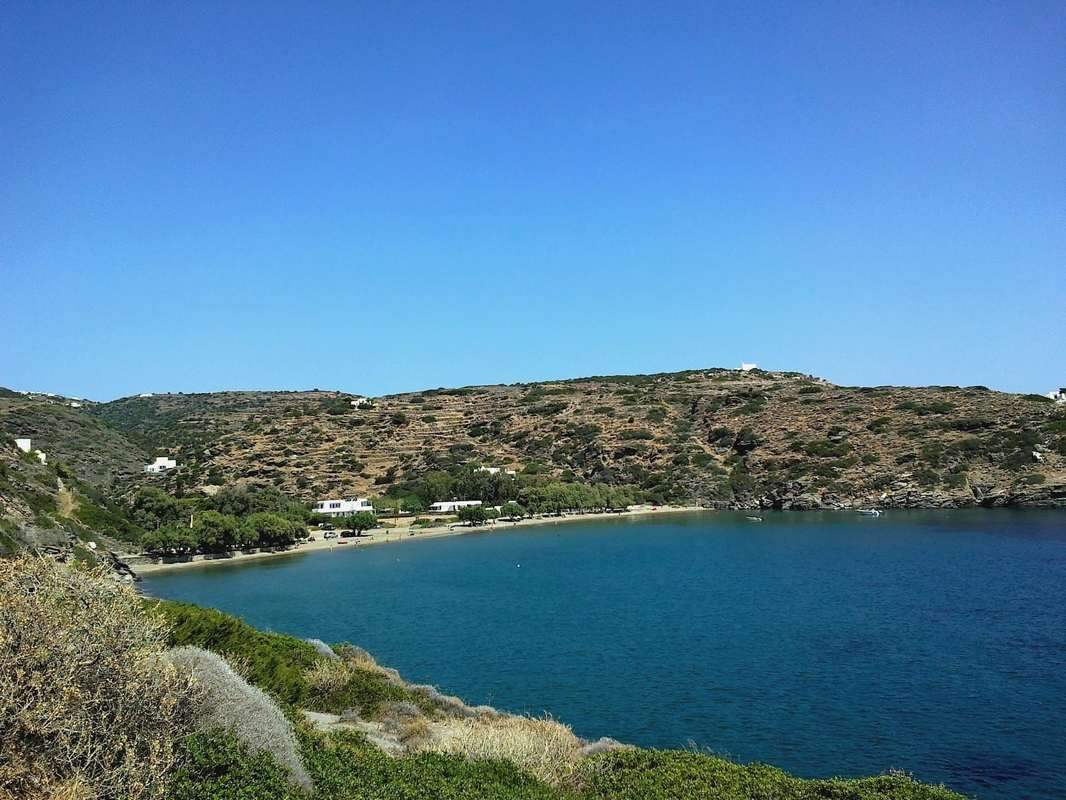
Choosing between Milos and Skopelos pits volcanic Cycladic beaches against the pine-clad green coves of the Sporades. Plan island tours and tickets through My Greece Tours.
This comparison is a common question in the Milos travel guide. The sections below compare the landscapes, the beaches, the vibe, the access and which island suits you best.
Which is better, Milos or Skopelos?
Milos is better for dramatic volcanic beaches, sea caves and a bare Cycladic look, while Skopelos is better for pine forests, green coves and lush scenery. Choose Milos for colour and geology, Skopelos for verdant nature and quiet woodland charm.
Each island delivers a distinct holiday. Milos leans volcanic and bare. Skopelos leans green and forested. The decision turns on taste.
Pick Milos for colour. Coloured cliffs and caves define it. Sarakiniko glows white. The geology stuns.
Pick Skopelos for green. Pine forest blankets the hills. Coves hide in the trees. The shade soothes.
Both stay relaxed and Greek. Neither chases loud nightlife. Both reward calm. The scenery splits them.
Milos and Skopelos sit in different worlds despite both being beautiful Greek islands. Milos, in the western Cyclades, is a volcanic island of bare hills, coloured cliffs and a coastline carved into more than 70 dramatic coves, from the lunar white of Sarakiniko to the sea caves of Kleftiko. It is an island of stark, sun-baked geology, where the appeal lies in the spectacle of the rock and the clarity of the water.
Skopelos, in the Sporades off the northeast coast, could hardly be more different. It is one of the greenest islands in Greece, blanketed in dense pine forest that runs down to small coves and a pretty harbour town of white houses and blue shutters. The choice comes down to landscape: choose Milos for volcanic colour, moonscapes and boat-trip drama, and Skopelos for forested hills, shaded coves and a lush, green calm. The next section compares the landscapes in detail.
How do the landscapes of Milos and Skopelos compare?
Milos has a dry, volcanic landscape of coloured cliffs, white rock and bare hills, while Skopelos is densely forested with pine running to the sea. One is a sculpted Cycladic moonscape, the other a green Sporadic island of woodland and shade.
The two landscapes sit at opposite poles. Milos runs bare and bright. Skopelos runs green and shaded. Geology drives the gap.
Milos owes its look to fire. Volcanic rock paints the coast. Cliffs glow red and white. Hot springs warm the shore.
Skopelos owes its look to forest. Pine cloaks the slopes. Green meets the blue sea. The air smells of resin.
The contrast shapes the day. Milos dazzles with rock. Skopelos soothes with trees. Both frame the camera.
The landscapes of these two islands tell opposite stories. Milos is the product of its volcanic past, with eruptions and hydrothermal activity that painted the coast in extraordinary colours and sculpted it into white moonscapes, coloured cliffs and sea caves. The hills are largely bare and sun-baked, the light is sharp, and the drama lies in the rock itself, a stark, otherworldly beauty that defines the western Cyclades.
Skopelos turns the palette to green. As one of the most forested islands in the Aegean, it is cloaked almost entirely in dense pine that tumbles down steep slopes to meet the sea, with the scent of resin in the air and shade where Milos has none. Its beauty is soft and verdant rather than stark and sculpted. A traveller drawn to coloured geology and lunar rock will warm to Milos, while one who loves green hills, forest and shade will lean toward Skopelos. The next section compares the beaches.
Which has better beaches, Milos or Skopelos?
Milos has better beaches for variety and drama, with over 70 colourful volcanic coves and sea caves, while Skopelos has fewer beaches, often pebbly and framed by pine. Milos wins for those chasing scenery, Skopelos for shaded, green-backed swimming.
The beach gap favours Milos. Its coves run into the dozens. Skopelos counts far fewer. Colour tips the scale.
Milos wins on variety. Over 70 coves line the coast. Each shows a different hue. The boat-only ones astonish.
Skopelos wins on setting. Pine frames the pebbles. Green meets the turquoise. The shade cools the swim.
The choice depends on taste. Milos craves the camera. Skopelos craves the calm. Both deliver clear water.
On beaches, Milos is in a league of its own for variety and spectacle. The island ranges over more than 70 coves in a striking spread of colours and forms, from the bleached lunar shelf of Sarakiniko to the rust-red cliffs of Paleochori and the cave-riddled white rock of Kleftiko, a large share reachable only by boat. For a traveller who treats the beach as the main event, this wealth of dramatic, photogenic swimming is hard to match anywhere in Greece.
Skopelos plays a quieter, greener game. Its beaches are fewer and often pebbly, but their charm lies in the setting, with pine forest running right down to the turquoise water and shade close at hand, something the bare coves of Milos cannot offer. Stafilos, Panormos and Kastani are framed by green rather than coloured rock. So the choice is clear: Milos for variety, colour and boat-trip drama, Skopelos for shaded, forest-backed coves. The next section compares the vibe.
How do the vibe and atmosphere of Milos and Skopelos compare?
Both Milos and Skopelos are relaxed, scenic islands without heavy nightlife, but Milos has a chic Cycladic buzz and a foodie scene, while Skopelos feels quieter, greener and more traditional, with a famously pretty Chora and a slow, family-friendly pace.
Both islands keep a calm mood. Neither chases wild nightlife. Both reward the slow traveller. The accents differ.
Milos carries a Cycladic buzz. Whitewashed villages charm. The food scene shines. The chic crowd grows.
Skopelos feels green and quiet. The forested calm soothes. Tradition runs deep. The pace stays gentle.
Chora crowns Skopelos. White houses climb the hill. Churches dot the lanes. The harbour glows at dusk.
In atmosphere, the two islands share a relaxed, scenery-led character but strike different notes. Milos has grown into a chic yet down-to-earth Cycladic destination, with whitewashed villages like Plaka, a celebrated food scene, and a quietly stylish crowd drawn by the beaches and boat trips, all without the loud nightlife of the bigger islands. Its mood is active and varied, built around exploring a coast full of colour.
Skopelos is quieter, greener and more traditional. Its beautiful Chora, a cascade of white houses, blue shutters and little churches above the harbour, ranks among the prettiest in Greece, and the island’s forested calm and slow pace make it a favourite for families and travellers seeking peace. Where Milos buzzes gently with foodie energy and beach adventure, Skopelos soothes with woodland tranquillity and timeless village charm. The next section helps you choose between them.
Should you choose Milos or Skopelos?
Choose Milos for volcanic beaches, sea caves, boat trips and a chic Cycladic scene, and Skopelos for pine forests, green coves, a pretty Chora and a quiet, family-friendly pace. They lie in different island groups, so most travellers pick one as a focus.
The verdict rests on scenery. Milos sells colour and caves. Skopelos sells forest and calm. One island wins your trip.
Choose Milos for the coast. Volcanic beaches headline it. Boat trips seal the deal. The food rewards the evening.
Choose Skopelos for the green. Pine coves define it. The Chora charms. The pace slows right down.
They sit far apart. Milos anchors the Cyclades. Skopelos anchors the Sporades. One trip rarely fits both.
The decision comes down to the kind of island you want. Choose Milos for a volcanic coast of more than 70 coloured coves, sea caves, hot springs and boat trips, paired with a chic but relaxed Cycladic scene and an excellent food culture. It rewards travellers who chase dramatic scenery, varied beaches and a sense of discovery across a sun-baked island of remarkable geology.
Choose Skopelos for one of the greenest islands in Greece, a place of pine forest, shaded coves, a famously pretty Chora and a slow, traditional, family-friendly pace. The two sit in different island groups, Milos in the western Cyclades and Skopelos in the Sporades, so they do not pair easily on a single trip, and most travellers choose one as a focus. Plan your route through our things to do in Milos guide once the choice is made.
Food and culture add another layer to the choice. Milos has built a reputation for its dining, with creative tavernas, fresh seafood and local specialities that have made it a quietly celebrated foodie island, alongside ancient sites such as the catacombs and the spot where the Venus de Milo was found. Skopelos answers with its own traditions, from the famous cheese pie spun into a spiral to a landscape of old monasteries and the cliff-top church made famous by a hit musical film. One island leans toward refined Cycladic dining and archaeology, the other toward rustic Sporadic cooking and a green, monastery-dotted interior, so your appetite and curiosity can tip the decision as much as the beaches.
How do dining and food compare on Milos and Skopelos?
Milos serves a compact, seafood-led island food scene of harbour tavernas and Cycladic cooking, while Skopelos offers a green-island cuisine built on plums, cheese pies and produce from its forested hills.
Milos concentrates its kitchens around Adamas and Pollonia, where tavernas grill the day’s catch and plate octopus, caper-leaf salads and Cycladic cheese pies. The volcanic soil grows capers and tomatoes that anchor the table, and dinner leans on the short distance between the boat and the plate.
Skopelos draws its food from the forest and the orchard. The island is known for its spiral cheese pie fried in olive oil, and its plum groves feed a tradition of dried and cooked plums that appears across the menus. Pine forest and fertile ground give the cooking a green, produce-led character that sets it apart from the bare Cyclades.
The gap reflects the two landscapes. Milos rewards a traveller who wants island seafood within walking distance of the harbour. Skopelos rewards one who wants the produce of a green island, from the plum-based sweets to the famous fried cheese pie.
Which has more to do beyond the beach, Milos or Skopelos?
Milos offers boat trips, hot springs, an ancient theatre and catacombs, while Skopelos offers forest walks, hilltop monasteries, a Chora of churches and the filming locations that drew film fans to the island.
Milos keeps its activities close to the coast. The boat trip to Kleftiko headlines the itinerary, the Roman theatre and the early Christian catacombs add culture, and the site of the Venus de Milo draws visitors to Tripiti. Kayaking, snorkelling and the thermal springs fill a beach-led week.
Skopelos leans on its green interior and its town. The Chora climbs the hill in a maze of churches and blue-shuttered houses, forest trails link monasteries and viewpoints, and the clifftop chapel of Agios Ioannis draws visitors who know it from the screen. Boat trips also reach the marine park around neighbouring Alonissos.
The two suit different days. Milos rewards a traveller who wants coves, boat trips and a dose of ancient history. Skopelos rewards one who wants forest walks, a photogenic Chora and the quiet charm of a green Sporades island.
How do access and getting around compare for Milos and Skopelos?
Milos is reached by ferry from Piraeus or a short flight into its airport, while Skopelos has no airport and is reached by ferry from Volos or Agios Konstantinos, often via the airport on nearby Skiathos.
Milos sits in the western Cyclades, linked to Piraeus by ferry and to Athens by a short domestic flight into its small airport. The island stays compact, so a rental car or scooter reaches the coves within short drives, and boat trips cover the caves that roads cannot.
Skopelos lies in the Sporades and has no airport of its own, so travellers arrive by ferry from Volos or Agios Konstantinos on the mainland, or fly into Skiathos and hop across by boat. A rental car or the island bus links the Chora with the forested beaches, since the coves spread along a green, hilly coast.
The practical takeaway favours different routes. Milos suits a traveller who wants a direct sail or flight from Athens. Skopelos suits one happy to route through the mainland or Skiathos for a quieter, greener Sporades island reached by boat.
Is Milos or Skopelos cheaper for a holiday?
Skopelos is often a touch cheaper, with lower Sporades room and dining prices, while Milos carries higher Cycladic premiums in peak summer for accommodation, boat trips and the ferry out to the western islands.
Milos prices track the wider Cyclades, where summer demand lifts the cost of rooms, ferry tickets and popular boat trips. Spring and autumn ease the rates, yet July and August place the island in the mid-to-upper tier, with the ferry or flight adding to the spend.
Skopelos sits in the quieter Sporades, where hotels, guesthouses and tavernas price a little below their Cycladic equivalents. The mainland ferry keeps transport costs modest for travellers routing through Volos, and the green island’s relaxed profile keeps peak-season demand gentler than the headline Cyclades.
The value verdict follows the trip style. Skopelos offers an economical, green-island stay with a calm pace. Milos costs more for a dramatic volcanic coast and its boat trips, and the premium buys spectacle rather than woodland calm.
Frequently Asked Questions
Is Milos or Skopelos better for beaches?
Milos is better for beaches if you want variety, colour and drama, with more than 70 volcanic coves, sea caves and moonscapes, a large share reachable only by boat. Skopelos has fewer beaches, often pebbly, but they are beautifully framed by pine forest running down to turquoise water, with welcome shade. Choose Milos for spectacular, photogenic swimming and boat-trip coves like Kleftiko, and Skopelos for quieter, green-backed beaches such as Kastani and Panormos in a forested setting.
Are Milos and Skopelos far apart?
Yes, Milos and Skopelos are far apart and in different island groups, so combining them on one trip is difficult. Milos lies in the western Cyclades, south of Athens and reached from the port of Piraeus or by domestic flight, while Skopelos sits in the Sporades off the northeast mainland, reached via the ports of Volos or Agios Konstantinos and the nearby Skiathos airport. The two are not linked by direct ferry, so most travellers choose one island as the focus of a holiday.
Is Milos or Skopelos better for a quiet holiday?
Both Milos and Skopelos suit a quiet holiday, as neither has the loud nightlife of the bigger Greek islands, but Skopelos is the more peaceful and traditional of the two. Its forested hills, shaded coves, pretty Chora and slow pace make it a favourite for families and travellers seeking calm. Milos is also relaxed but has a livelier, chic Cycladic energy and a busy summer beach scene. For deep tranquillity choose Skopelos, and for a calm yet active beach holiday choose Milos.
Is Milos or Skopelos better for families?
Both suit families, in different ways. Skopelos works for a shaded, green break, with pine-backed coves that cool the afternoon, a walkable Chora and a calm pace that suits younger children. Milos suits families ready for a beach-led island week, with sheltered coves for swimming, a boat trip as the highlight and short drives between beaches. A family after leafy calm will lean to Skopelos, while one after dramatic coves and boat days will get more from Milos.
How many days do you need for Milos versus Skopelos?
Milos rewards four to six days, enough to reach the main coves, take a boat trip to Kleftiko and settle into the island rhythm from one base. Skopelos suits four to six days as well, enough to explore the Chora, walk the forest trails and reach the green coves along the coast. Both work as a focused island week, though Skopelos often pairs with Skiathos or Alonissos for a Sporades hop, while Milos links onward to Sifnos and Folegandros in the Cyclades.
When is the best time to visit Milos or Skopelos?
Late spring and early autumn suit both islands best, with warm sea, calm weather and lighter crowds than the peak of summer. Milos peaks in July and August, when the boat trips run daily and the coves fill, so June and September reward travellers who want the sea warm and the beaches quieter. Skopelos stays green and shaded through summer, and its forest trails feel most comfortable in the milder shoulder months. A visit outside the peak weeks brings the best of either island, with reliable ferries still running and prices below the August high.