
Milos in summer brings hot, dry weather, the warmest sea, the meltemi wind and peak crowds. Plan summer tours and tickets through My Greece Tours.
Summer is the high season in the Milos travel guide. The sections below cover the weather, the heat, the crowds, the best beaches and what to know for a summer trip.
What is summer like on Milos?
Summer on Milos runs from June to September, with hot, dry, sunny weather, a warm sea and the seasonal meltemi wind.
Summer fills June to September. The weather turns hot, dry and sunny. The sea warms to its best. The island buzzes with life.
The season peaks for beaches. Every service runs at full tilt. Boat trips sail at full frequency. The coves shine in the sun.
The meltemi shapes the days. The northern wind blows through summer. It cools the heat and stirs the sea. It steers the beach choice.
Summer is the classic Milos trip. It blends heat, sea and energy. Our guide to Milos weather covers the seasons. The next section covers the heat.
Summer is when Milos comes fully alive, running from June through September with hot, dry, reliably sunny weather. It is the peak season, when every hotel, taverna, rental and boat operator is open, and the island’s beaches, sea caves and villages are at their best. The warm sea and long days make it the ideal time for swimming, snorkelling and the full-day boat trip to Kleftiko. The energy is high, the ports buzz into the night, and the island feels at its most vibrant.
The defining feature of a Milos summer is the meltemi, a dry northerly wind that typically blows across June, July and August, easing by early September. On meltemi days, the sea gets choppier on exposed coasts, and you may need to switch beaches from the north to the calmer south. The same wind keeps the strong heat comfortable, taking the edge off the midday sun. Understanding the meltemi, and planning each day’s beach around it, is the key to a smooth summer trip.
What is the weather like on Milos in summer?
Milos summer weather is hot, dry and sunny, with daytime highs around 28 to 32°C, warm nights, minimal rain and long, cloudless days from June through September.
Milos delivers reliable summer weather across all three peak months. June opens the season with pleasant highs near 27 to 29°C and comfortable evenings. July and August push daytime temperatures to 30°C and above, holding the year’s strongest sun. September eases back toward 27 to 28°C while keeping the sea warm.
Rain almost never interrupts a Milos summer. The Cyclades sit in a dry summer climate, so July and August pass with cloudless skies and near-zero rainfall. This dependable sunshine anchors beach planning, letting travellers book boat trips and beach days without a weather backup plan.
Sea temperatures climb steadily alongside the air. The water reads around 22 to 23°C in June, warms to 24 to 25°C through July and August, and stays swimmable into September and October. This long warm-water window ranks among the strongest reasons to visit Milos in summer rather than the cooler spring months.
How hot does Milos get in summer?
Milos in summer is hot, with temperatures often in the low to mid-30s°C, peaking in July and August. The coastal breeze and the meltemi wind keep it comfortable, while the sea warms to around 24 to 25°C.
The heat builds through summer. Temperatures often climb into the low to mid-30s. July and August run hottest. The sun blazes all day.
The breeze tempers the heat. The coastal wind keeps it bearable. The meltemi cools the worst days. The dry air eases the evenings.
The sea warms nicely. Water temperatures reach 24 to 25°C. Long swims feel effortless. The dip soothes the heat.
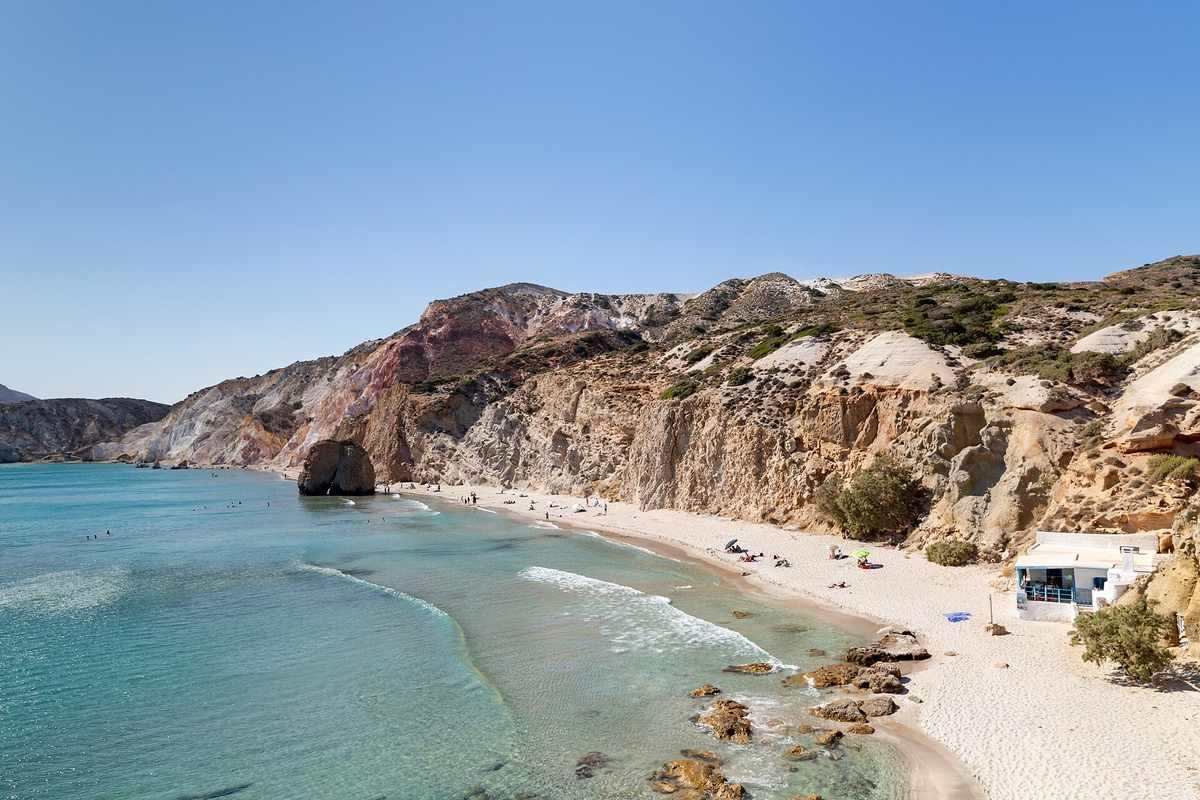
The heat suits the beach. The warm sea favours long days. The colourful Paleochori beach warms in summer. The next section covers the crowds.
Milos summers are hot, with daytime temperatures frequently climbing into the low to mid-30s Celsius, and occasionally higher, peaking in July and August. The saving grace is the wind: the coastal breeze and the seasonal meltemi keep the heat far more comfortable than the numbers suggest, especially near the water. The nights stay warm and balmy, perfect for late dinners outdoors. Strong sun protection, a hat and plenty of water are essential through the hottest months.
The sea is one of the great rewards of a Milos summer. The water warms steadily through the season, reaching around 24 to 25°C in the peak months, ideal for long swims and snorkelling in the clear, colourful coves. June offers a slightly cooler but exceptionally clear sea, while August holds the warmest water of the year. Whatever the month, a swim in the volcanic coves is the perfect way to cool off from the summer heat across the island.
The sea is one of the great rewards of a Milos summer. The water warms steadily through the season, reaching around 24 to 25°C in the peak months, ideal for long swims and snorkelling in the clear, colourful coves. June offers a slightly cooler but exceptionally clear sea, while August holds the warmest water of the year. A swim in the volcanic coves is the perfect way to cool off from the strong summer heat, and the clarity rewards a mask and snorkel. Whatever the month, the warm summer sea is at the heart of the island’s appeal.
Is the meltemi wind a problem in summer?
The meltemi is manageable, not a dealbreaker. This dry northerly wind blows strongest in July and August, ruffling north-facing coasts while south-facing beaches stay sheltered and swimmable.
The meltemi, also called the etesian wind, defines the Cyclades summer. It arrives from the north and blows in multi-day spells, peaking through mid-July and August. Wind strength varies day to day, so a gusty afternoon often follows a calm morning.
Beach choice neutralises most meltemi days. North-facing Sarakiniko, Firopotamos and Pollonia catch the wind and turn choppy, while south-facing Paleochori, Firiplaka, Tsigrado and Agia Kyriaki stay flat and protected. Matching the coast to the forecast keeps swimming comfortable through the windiest weeks.
The wind carries a hidden benefit. Meltemi gusts scrub away humidity and knock the edge off midday heat, making a 32°C day feel far more bearable near the water. A boat trip to the sheltered western coves, including Kleftiko, offers calm swimming even when the north coast churns.
How crowded is Milos in summer?
Milos in summer is busiest in July and August, when crowds and prices peak. June and September are calmer, with great weather and fewer people. Even in peak season, early starts at popular beaches like Sarakiniko beat the crowds.
July and August draw the crowds. The peak months fill the island. Beaches and ferries get busy. Prices climb to their highest.
June and September stay calmer. The shoulder months thin the crowds. The weather stays warm and fine. The value improves either side.
Early starts beat the rush. Sarakiniko fills from nine onward. A dawn visit finds it quiet. The timing makes the difference.
Remote coves stay peaceful. The far beaches escape the crowds. The wider Milos beaches offer quiet corners. The next section covers the best beaches.
Milos in summer is at its busiest in July and August, the peak of the season, when crowds, prices and demand all reach their height. Rooms book out well ahead, the popular beaches fill from mid-morning, and the ports buzz late into the night. June and September are the calmer, smarter choices, offering warm weather, a warm sea and noticeably thinner crowds, plus lower prices either side of the peak. For warmth without the crush, the shoulder edges of summer win.
Even in peak August, the crowds are easy to manage with a little planning. An early start is the simplest trick: Sarakiniko, the island’s most popular beach, is quiet at sunrise and fills only from around nine, when the tour boats and cruise crowds arrive. Parking and good spots go to the early risers. The island’s size also helps, with remote coves and the boat-access-only west coast staying peaceful even when the headline beaches are busy.
What should you pack for a Milos summer trip?
Pack for heat, sun and rocky coves: light breathable clothing, strong sun protection, a hat, water shoes, a reusable water bottle and a light layer for breezy evening ferries.
Sun protection tops the summer packing list. High-SPF sunscreen, a wide-brimmed hat, sunglasses and a rash guard for long snorkelling sessions guard against the strong Cyclades sun. Reapplying often matters most on exposed boat trips, where reflected light doubles the exposure.
Water shoes rank as the single most useful item on Milos. Many beaches feature pebbles, volcanic rock or steep entries, and Tsigrado demands a ladder-and-rope scramble. Sturdy water shoes protect feet at Sarakiniko, Kleftiko and the pebbly coves alike.
Practical gear rounds out the bag. A reusable water bottle handles the heat, a light windbreaker suits breezy evening ferries and open-deck cruises, and a dry bag protects phones on boat trips. A snorkel mask unlocks the clear volcanic water at nearly every south-coast beach.
What are the best beaches in Milos in summer?
The best summer beaches on Milos depend on the wind. When the meltemi blows, the south-coast beaches like Paleochori, Firiplaka and Agia Kyriaki stay calm, while Sarakiniko and the north turn choppy. A boat trip reaches the clearest, most sheltered western coves.
The wind picks the beach. The meltemi blows from the north. South-coast beaches stay calm. The choice follows the forecast.
The south shelters from the wind. Paleochori and Firiplaka stay flat. Agia Kyriaki sits quiet and shallow. The calm coves reward a meltemi day.
The north turns choppy in the wind. Sarakiniko exposes to the meltemi. Calm days favour the moonscape. The wind decides each morning.
The boat opens the west. Kleftiko and the western coves shelter. The famous Kleftiko sea caves crown a cruise. The next section covers what to know.
Choosing the right beach for the wind is the secret to a great summer day on Milos. When the meltemi blows from the north, the south-coast beaches stay calm and swimmable: the warm, steaming sands of Paleochori, the coloured cliffs of Firiplaka and the quiet, shallow Agia Kyriaki all shelter from the wind. On calm days, the lunar Sarakiniko and the northern coves are at their best. Checking the forecast each morning and matching the coast to the wind keeps every beach day smooth.
Summer also rewards travellers who seek out the quieter spots. The remote Kastanas, a long drive from Adamas, stays peaceful even in August, while the boat-access-only west coast, including Kleftiko, escapes the crowds entirely. A full-day boat trip is the best way to reach the clearest, most sheltered water and the sea caves, away from the road-served beaches. Between the wind-savvy south-coast choices and a boat trip to the west, summer offers a perfect beach for every day and every mood.
Summer also rewards travellers who seek out the quieter spots. The remote Kastanas, a long drive from Adamas, stays peaceful even in August, while the boat-access-only west coast, including Kleftiko, escapes the crowds entirely. A full-day boat trip is the best way to reach the clearest, most sheltered water and the sea caves, away from the road-served beaches. Between the wind-savvy south-coast choices on a meltemi day and a boat trip to the west, summer offers a perfect beach for every day and every mood, balancing the busy headline spots with calm, hidden corners.
What are the best things to do in Milos in summer?
Summer suits swimming, a full-day Kleftiko boat cruise, snorkelling the volcanic coves, sunset drinks in Plaka and evening walks through the fishing villages of Klima and Mandrakia.
A boat cruise headlines any Milos summer. The full-day trip circles the west coast to the sea caves and towering white cliffs of Kleftiko, reachable only by water. Kayak tours, catamaran cruises and speedboat runs all reach the same sheltered turquoise bays for swimming and snorkelling.
Beach-hopping fills the daylight hours. The warm sea rewards long swims at Firiplaka beach and the geothermally warmed sands of Paleochori beach, while Sarakiniko beach draws early risers to its white volcanic moonscape. A mask and snorkel reveal clear water and rocky reefs across the south coast.
Evenings shift to the villages. Plaka’s hilltop lanes frame the island’s best sunset, the whitewashed alleys glowing gold over the caldera. Waterside dinners at the fishing hamlets of Klima, Mandrakia and Pollonia round out the day with fresh seafood beside the boat garages. Our things to do in Milos guide covers the full list.
How many days should you spend on Milos in summer?
Plan four to five days for Milos in summer. That span covers a full-day boat trip, the top south and north beaches, a Plaka sunset and a village dinner without rushing between the wind-shifted coasts.
Four days form the practical minimum. That window fits one full-day Kleftiko cruise, two or three beach days split between the sheltered south and the calm-morning north, and an evening in Plaka. The meltemi’s daily shifts reward the buffer, letting travellers move beaches when the wind turns.
Five to six days open the quieter corners. The extra time reaches remote Kastanas, the Papafragas sea caves, a Kimolos day trip by ferry from Pollonia and the ancient theatre and catacombs near Trypiti. This slower pace suits travellers who want the island’s history alongside its beaches.
Shorter stops still work as part of a Cyclades hop. Two or three days deliver a boat trip and the headline beaches, though the pace tightens and wind days leave less room to reshuffle. A longer stay always pays off in a summer where the wind dictates the daily plan.
Where should you stay on Milos in summer?
Adamas suits first-time visitors as the ferry port and dining hub, Pollonia offers a calmer beach base with Kimolos ferries, and Plaka and Triovasalos deliver hilltop views and sunset access.
Adamas anchors most summer stays. The main port holds the widest choice of rooms, tavernas, car rentals and boat-trip departures, and its central position shortens the drive to every coast. First-time visitors gain the most from basing here, close to ferries and nightlife.
Pollonia offers a quieter alternative in the north. This small fishing village pairs a sheltered swimming beach with seafront dining and the ferry link to Kimolos. It suits couples and returning visitors who prefer calm evenings over the busier port scene.
The hilltop villages reward view-seekers. Plaka and neighbouring Triovasalos sit above the bay, delivering the island’s famous sunsets and a traditional Cycladic atmosphere of white lanes and small squares. Rooms here book out fast in July and August, so early reservations matter most at the peak.
Are there festivals and events on Milos in summer?
Summer brings religious panigiria, saint’s-day feasts and open-air village celebrations to Milos, alongside the everyday buzz of full tavernas, live music and busy fishing harbours across the peak months.
Traditional panigiria mark the summer calendar. These religious festivals honour village saints with open-air feasts, folk music and dancing in the squares, drawing locals and visitors to shared tables. The mid-August celebrations rank among the liveliest, tied to one of the country’s major religious dates.
Village life peaks alongside the feasts. Tavernas in Adamas, Pollonia and Plaka fill every evening through July and August, and waterside hamlets like Klima and Mandrakia hum with late seafood dinners. This nightly rhythm of long meals and harbourside strolls defines the summer atmosphere as much as any single event.
Boat trips and swimming stay the main draw. The events layer atmosphere onto a summer that already centres on the sea, the beaches and the Kleftiko cruise. Travellers who time a stay around a local feast gain a window into the island’s traditions between beach days.
How do you handle the summer heat on Milos?
Handle Milos summer heat with early beach starts, a shaded midday break, steady hydration, strong sun protection and evening activity once the fierce afternoon sun eases off the coast.
Timing beats the worst of the heat. An early beach arrival secures parking and calm water before the midday sun peaks, and a shaded break through the hottest afternoon hours protects against overexposure. Activity resumes comfortably in the cooler late afternoon and evening.
Hydration and shade carry the day. Frequent water, a wide-brimmed hat and repeated sunscreen guard against the strong Cyclades sun, while a beach umbrella or a taverna terrace supplies midday cover. The dry heat dehydrates faster than the sea breeze suggests, so steady drinking matters most.
The wind and water offer natural relief. The meltemi breeze cools exposed coasts, and a swim in the 24 to 25°C sea resets body temperature through the afternoon. Balmy evenings then open the villages for late dinners, when the heat finally softens across the island.
Is summer the best time to visit Milos?
Summer offers the warmest sea, liveliest atmosphere and full boat schedules, but June and September deliver the same warm water with thinner crowds and lower prices, making the shoulder edges the smartest choice.
Peak summer wins on energy and water temperature. July and August hold the warmest sea, the fullest boat-trip calendar and the liveliest ports, and every taverna, rental and hotel runs at full capacity. Travellers who want the buzzing high-season feel find it at its strongest here.
The shoulder edges of summer trade crowds for calm. June and September keep the warm sea and reliable sun while thinning the beaches, easing the prices and softening the meltemi. These months reward travellers who prioritise space and value over peak-season energy.
The right choice follows the traveller. Families tied to school holidays and visitors chasing the warmest August water favour the peak, while couples and beach purists lean toward June and September. Whatever the month, the volcanic coves and warm Aegean anchor a strong Milos trip across the whole summer.
What should you know for summer in Milos?
For summer on Milos, book rooms, rentals and the Kleftiko boat trip well ahead, start beach days early to beat the heat and crowds, and plan around the meltemi wind.
Booking ahead is essential. Rooms and rentals fill fast. The boat trip sells out early. Summer demands early planning.
Early starts beat the heat. A dawn beach avoids the crowds. The midday sun favours a break. The timing eases the day.
The meltemi shapes the plan. A sheltered cove answers the wind. The forecast guides each morning. The flexibility pays off.
The gear matters in the heat. Water shoes handle the rocky coves. Sun protection and water are vital. Compare wheels in our Milos ATV rental guide.
Frequently Asked Questions
What is summer like on Milos?
Summer on Milos runs from June to September, with hot, dry, reliably sunny weather, a warm sea and the seasonal meltemi wind. It is the peak season, when every hotel, taverna, rental and boat operator is open, and the beaches, sea caves and villages are at their best. Daytime temperatures often climb into the low to mid-30s Celsius, eased by the coastal breeze and the meltemi, while the sea warms to around 24 to 25°C. The island is at its liveliest, with busy ports and full-frequency boat trips, especially in the peak months of July and August.
How crowded is Milos in summer?
Milos in summer is busiest in July and August, when crowds, prices and demand peak. Rooms book out well ahead, popular beaches fill from mid-morning, and the ports buzz late into the night. June and September are calmer and smarter choices, with warm weather, a warm sea and noticeably thinner crowds. Even in peak season, an early start beats the crowds, as Sarakiniko is quiet at sunrise and fills only from around nine. The island’s remote coves and the boat-access-only west coast also stay peaceful, so quiet beaches are always within reach.
What are the best beaches in Milos in summer?
The best summer beaches on Milos depend on the wind. When the meltemi blows from the north, the south-coast beaches stay calm and swimmable, including the warm, steaming Paleochori, the coloured cliffs of Firiplaka and the quiet, shallow Agia Kyriaki. On calm days, the lunar Sarakiniko and the northern coves are at their best. A full-day boat trip reaches the clearest, most sheltered western water and the sea caves of Kleftiko, away from the crowds. Checking the forecast each morning and matching the coast to the wind keeps every summer beach day smooth.
How hot does Milos get in summer?
Milos summers are hot, with daytime highs around 28 to 32°C and occasional spikes higher, peaking in July and August. The coastal breeze and the meltemi wind keep the heat more comfortable than the numbers suggest, especially near the water, while the nights stay warm and balmy for late outdoor dinners. The sea warms to around 24 to 25°C in the peak months, offering an easy way to cool off. Strong sun protection, a hat and plenty of water are essential through the hottest weeks.
Does the meltemi wind ruin a Milos beach holiday?
The meltemi does not ruin a Milos holiday, though it shapes each day’s plan. This dry northerly wind blows strongest in July and August, turning north-facing beaches like Sarakiniko and Firopotamos choppy while south-facing Paleochori, Firiplaka, Tsigrado and Agia Kyriaki stay sheltered and swimmable. Checking the forecast each morning and matching the coast to the wind keeps swimming comfortable. A full-day boat trip reaches the calm western coves even on windy days, so a sheltered swim is always within reach.
What should you pack for Milos in summer?
Pack for heat, strong sun and rocky coves. Light breathable clothing, high-SPF sunscreen, a wide-brimmed hat and sunglasses handle the strong Cyclades sun, while water shoes protect feet on the pebbly and volcanic beaches and the ladder scramble at Tsigrado. A reusable water bottle, a light windbreaker for breezy evening ferries and a snorkel mask round out the bag. A dry bag keeps phones safe on the full-day boat trips to Kleftiko.
How many days do you need on Milos in summer?
Four to five days suit a summer trip to Milos. That span covers a full-day Kleftiko boat cruise, two or three beach days split between the sheltered south and the calm-morning north, a Plaka sunset and a village dinner. Five or six days open the quieter corners, reaching remote Kastanas, the Papafragas caves, a Kimolos day trip and the ancient theatre and catacombs near Trypiti. The daily meltemi shifts reward the extra buffer, letting travellers move beaches when the wind turns.
Is June or September a good time to visit Milos?
June and September rank among the best times to visit Milos. Both shoulder months keep the warm sea and reliable sunshine of high summer while thinning the crowds, easing the prices and softening the meltemi wind. September holds the warmest water of the whole season after months of heat, and June offers an exceptionally clear, calm sea. Travellers who prioritise space and value over peak-season energy find these edges of summer the smartest choice.
Do you need to book Milos accommodation early for summer?
Booking Milos accommodation early for the summer is strongly advised, above all for July and August. The island is small, and its rooms, studios and boutique hotels fill fast once the peak weeks arrive. Prices climb steeply for late bookings, and the best-placed stays in Adamas, Pollonia and Plaka sell out first. Securing a room several months ahead locks in both choice and a fairer rate. Ferry tickets and car hire deserve the same early attention, since vehicles on Milos run short in the peak of the season and the sought-after crossings book out well before departure.