
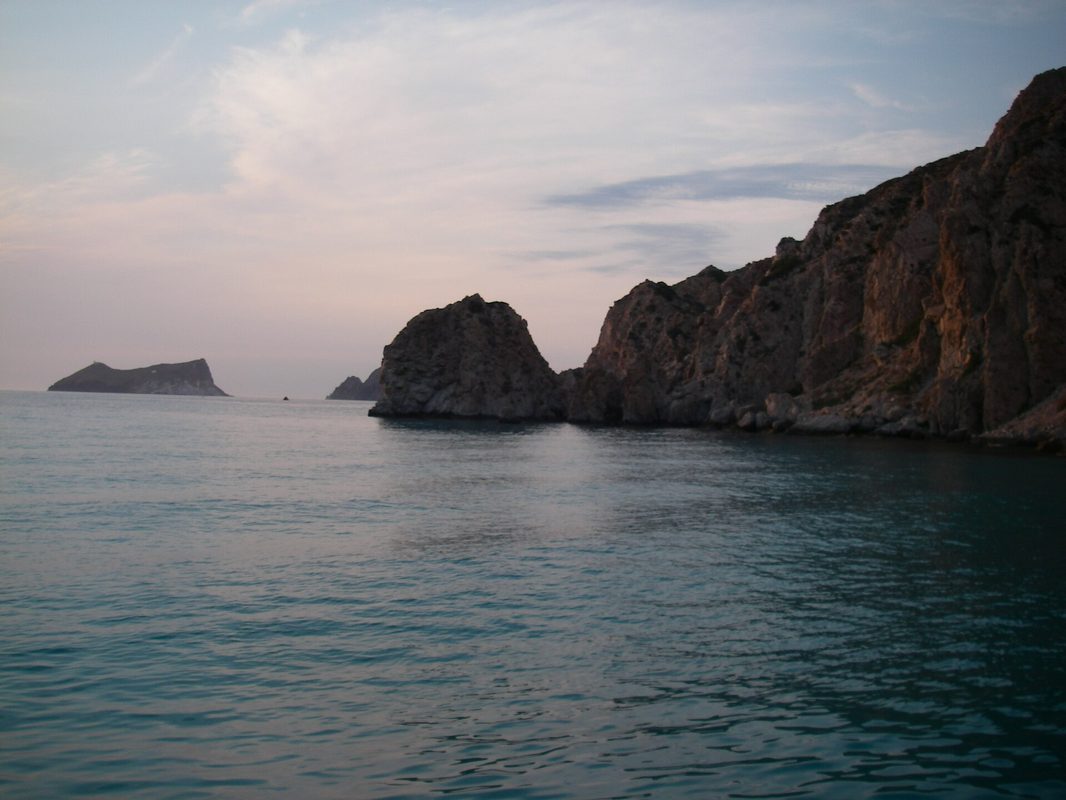
Milos vs Rhodes pits a small, quiet Cycladic island of volcanic beaches against a large Dodecanese island of medieval history and big resorts. Plan island tours and tickets through My Greece Tours.
Choosing between the two is a common question in the Milos travel guide. The sections below compare the size, the beaches, the sights and which island suits you best.
Milos vs Rhodes: which island is better?
Milos is the small, quiet Cycladic island, while Rhodes is the large, lively Dodecanese one. Choose Milos for colourful volcanic beaches, sea caves and calm, or Rhodes for medieval history, big resorts, nightlife and easy international access.
The two islands suit very different travellers. Milos offers quiet beaches and scenery. Rhodes offers history, resorts and buzz. Each delivers a distinct holiday.
Milos is the calm, scenic choice. The volcanic coast gives colourful beaches and caves. The small island stays uncrowded. It rewards couples and explorers.
Rhodes is the lively, historic choice. The large island holds a medieval old town. Big resorts and nightlife fill the coast. It suits a varied, busy trip.
The decision comes down to your priorities. Pick Milos for quiet, colourful beaches. Pick Rhodes for history and resorts. The sections below compare each side across the things to do in Milos. The next section covers the size.
The two islands sit in different groups and feel worlds apart. Milos is a small island in the western Cyclades, with a strong, low-key Cycladic character and thin crowds even in August, ideal for calm, alternative holidays. Rhodes is one of the largest Dodecanese islands, far to the southeast, developed and busy with package holidaymakers. The contrast is stark. Milos rewards travellers after quiet and natural beauty, while Rhodes suits those who want history, amenities and a livelier scene.
Access marks an early difference. Rhodes has a major international airport with direct flights from across Europe, making it easy to reach for a package or a city-and-beach break. Milos relies mainly on ferries from Piraeus and a small domestic airport with flights from Athens, so it takes more effort to reach. That extra journey is part of why Milos stays quieter, while Rhodes draws the larger crowds that its easy access and big resorts support.
How do the size and atmosphere of Milos and Rhodes compare?
Milos is small, quiet and authentically Cycladic, with thin crowds and a relaxed pace. Rhodes is large, developed and busy, with big resorts, nightlife and a strong package-holiday scene. Milos wins on calm, while Rhodes wins on variety and amenities.
Milos covers roughly 160 square kilometres and holds about 5,000 residents. The compact island keeps a slow pace. Few tourists crowd its beaches. The Cycladic charm runs deep.
Rhodes covers roughly 1,400 square kilometres and holds about 115,000 residents. The big island spreads wide. Resorts and nightlife fill the coast. The crowds gather in summer.
The scale shapes the feel. Milos rewards a quiet, intimate trip. Rhodes offers variety and amenities. The two pace very differently.
The atmosphere marks the divide. Milos leans peaceful and authentic. Rhodes leans lively and developed. Our guide to Milos history tells its quieter story. The next section covers the beaches.
Milos keeps the intimate, unspoiled feel of a small Cycladic island, with whitewashed villages, a relaxed pace and beaches that rarely feel crowded. The island draws a quieter, more independent kind of traveller, and it suits calm, romantic and alternative holidays. The absence of big resorts and mass tourism is central to its charm, leaving the focus on the natural scenery and the local way of life rather than packaged entertainment.
Rhodes offers the opposite: a large, well-developed island with a wide draw. Big beach resorts, a lively nightlife scene, water parks and broad amenities make it popular with families and package holidaymakers. Parts of the coast are heavily built up, while others stay quieter and more authentic. The trade-off is clear. Rhodes provides variety, convenience and energy, while Milos provides calm, space and a stronger sense of unspoiled Greek island character.
Rhodes packs a range of bases into one island. The capital sits on the north tip, the resort strip of Faliraki lies down the east coast, and the medieval hilltop of Lindos anchors the middle. Milos, by contrast, orbits two hubs. The port town of Adamas holds the arrivals, ferries and dive shops, while the hilltop capital of Plaka holds the sunset views and the winding lanes. The smaller footprint means shorter drives and a tighter sense of place on Milos.
How do you get to Milos and Rhodes?
Rhodes has a major international airport with direct European flights and long-haul ferries from Piraeus. Milos is reached by ferry from Piraeus, roughly 3 to 7 hours depending on the ferry, or by a small domestic flight from Athens of about 40 minutes.
Rhodes wins on ease of arrival. The international airport at Paradisi handles direct flights from across Europe. Seasonal charters land package travellers straight onto the island. No mainland transfer is needed.
Milos takes more planning. The most common route is the ferry from Piraeus, the port of Athens. High-speed ferries cover the crossing in about 3 hours, while conventional ferries take closer to 5 to 7 hours. A small domestic airport near Adamas also takes flights from Athens of roughly 40 minutes.
The two ferry systems differ in style. High-speed catamarans move quickly but cost more and cancel in strong Meltemi winds. Conventional Blue Star ferries run slower, cost less and hold their schedule better in rough weather. Milos travellers weigh speed against reliability when they book.
Rhodes also carries a long-haul ferry link from Piraeus. That crossing runs overnight and takes far longer than the flight, so most visitors fly. The choice on Rhodes is flight convenience against ferry cost, while the choice on Milos is which ferry class fits the budget and the sea. Book Milos tickets and tours ahead in July and August, when both ferries and flights fill fast.
Which has better beaches, Milos or Rhodes?
Milos has more dramatic and varied beaches, with over 70 coloured volcanic coves, sea caves and the lunar Sarakiniko. Rhodes has long, developed sandy beaches with resorts and water sports. Milos wins on natural drama, Rhodes on facilities and choice of resort beaches.
Milos wins on colour and drama. The varied volcanic coast earns the Island of Colours name. Beaches glow red, grey and snow-white. The best of the west open only by boat.
The signature beaches are unique. Sarakiniko offers a lunar white landscape. Firiplaka and Paleochori streak the cliffs with colour. Kleftiko hides behind the sea.
Rhodes keeps it long and developed. Sandy resort beaches line the coast. Sunbeds and water sports fill the front. The facilities suit a resort holiday.
The choice depends on your taste. Milos rewards dramatic, natural scenery. Rhodes suits serviced resort beaches. The lunar Sarakiniko beach shows the Milos style. The next section covers the sights.
Milos builds its whole appeal around its coast. The volcanic geology gives more than 70 beaches in a range of colours and forms, from the white moonscape of Sarakiniko to the red cliffs of Paleochori and the sea caves of Kleftiko, most reached only by boat. The beaches stay wild and natural rather than developed, with sparse facilities, rewarding travellers who chase scenery and a sense of discovery over sunbeds and bars.
Rhodes offers a conventional beach experience on a grand scale. Its long sandy and pebbly beaches often sit backed by resorts, with sunbeds, tavernas, water sports and easy access. They suit families and resort holidays, with organised fun and amenities close at hand. The choice comes down to style. Milos wins decisively on natural drama and variety, while Rhodes wins on developed, serviced beaches with facilities and a wider choice of resort bases.
The named beaches tell the contrast well. Milos counts Sarakiniko, Kleftiko, Firiplaka, Paleochori, Tsigrado and Kalogries among its stars, each shaped by volcanic rock and reached on foot, by scramble or by boat. Rhodes counts Faliraki, Anthony Quinn Bay, Tsambika, Lindos and Prasonisi among its draws, most lined with loungers, umbrellas and beach bars. The Kleftiko sea caves mark the far end of the wild-versus-serviced spectrum. Prasonisi, a windswept sandbar at the southern tip of Rhodes, marks the other, drawing windsurfers and kitesurfers to its twin bays.
How do the sights and history of Milos and Rhodes compare?
Rhodes has a wealth of historical sights, led by its medieval Old Town, a walled UNESCO site. Milos has a quieter heritage of the catacombs, the Roman theatre and the Venus de Milo. Rhodes wins on grand history, Milos on intimate sites.
Rhodes leads on grand history. The medieval Old Town fills its capital. The walled city ranks as a UNESCO site. The Knights of St John left their mark.
The island holds ancient sites too. Lindos crowns a hill with an acropolis. Ruins dot the large island. The history runs deep and varied.
Milos keeps a quieter heritage. The catacombs and Roman theatre tell its past. The Venus de Milo came from here. The geology adds its own story.
The two histories differ in scale. Rhodes offers grand, medieval monuments. Milos offers intimate, ancient sites. The famous Kleftiko caves crown a Milos cruise. The next section covers costs.
Rhodes is a heavyweight for history. Its medieval Old Town, a walled UNESCO World Heritage site built by the Knights of St John, ranks among the finest in the Mediterranean, with cobbled lanes, the Palace of the Grand Master and centuries of layered history. The island also held the Colossus, one of the ancient Seven Wonders, and holds further sites like the acropolis of Lindos and the Valley of the Butterflies. For grand, walkable history, Rhodes is hard to beat.
Milos offers a quieter, more intimate heritage rooted in the ancient and early-Christian world. The catacombs rank among the most important early-Christian monuments in Greece, and the Roman theatre overlooks the gulf near the spot where the Venus de Milo was found. The island’s volcanic geology and long mining history add a further layer, told in its museums. Rhodes wins on the scale and grandeur of its monuments, while Milos rewards travellers who prefer smaller, atmospheric sites set in dramatic natural scenery.
The set-piece attractions widen the gap. Rhodes fills a full day inside the Old Town walls, then adds Lindos, Anthony Quinn Bay and the Valley of the Butterflies as day trips across the island. Milos fills its heritage day with the catacombs, the ancient theatre, the fishing hamlet of Klima and the museum in Plaka. Read the wider Milos history guide for the island’s ancient and mining past. The contrast is one of quantity against intimacy.
Which island is cheaper, Milos or Rhodes?
Rhodes is generally cheaper overall, thanks to its wide range of budget package deals, big hotels and direct flights that spread costs. Milos runs pricier for accommodation and food, as its small size, boutique stays and ferry supply chain push prices up in peak summer.
Rhodes spreads costs wide. The large island holds hotels across every price band, from budget package rooms to five-star resorts. Direct flights and package deals cut the total. Competition keeps prices in check.
Milos runs at a premium. The small island holds fewer beds, and many are boutique studios rather than big hotels. Peak-summer demand outstrips supply. Prices climb through July and August.
Food follows the same pattern. Rhodes offers a broad spread of tavernas, fast food and resort dining at competitive prices. Milos leans toward smaller family tavernas and seafood spots, where fresh fish and a limited supply chain lift the bill. The island’s calm comes at a cost.
The verdict favours budget travellers on Rhodes. Rhodes generally offers a wider range of budget package options, cheaper flights and more mid-range hotels. Milos suits travellers who accept a higher spend for quiet, scenery and space. Weigh the Milos travel guide against your budget before you book the peak weeks.
Milos and Rhodes cost comparison at a glance
| Cost factor | Milos | Rhodes |
|---|---|---|
| Getting there | Ferry from Piraeus or short flight via Athens | Direct European flights, budget-friendly |
| Accommodation | Boutique studios, higher peak rates | Wide range, budget to luxury |
| Dining | Family tavernas, fresh seafood, pricier | Broad choice, competitive prices |
| Overall value | Premium for calm and scenery | Lower total for package holidays |
How many days do you need on Milos and Rhodes?
Milos suits a stay of 4 to 5 days, enough for the top beaches, a Kleftiko boat trip and Plaka. Rhodes suits 5 to 7 days, as the large island holds the Old Town, Lindos, beaches and day trips.
Milos fits a compact trip. Four to five days cover the main beaches, a Kleftiko boat tour and the villages. The small footprint keeps drives short. Travellers rarely feel rushed on this plan.
Rhodes needs more time. The large island spreads its sights across long distances. Five to seven days let you cover the Old Town, Lindos and the resort beaches. A shorter stay leaves parts of the island unseen.
The pace differs by island. Milos rewards a slow, beach-focused rhythm, with a boat trip as the highlight. Rhodes rewards a fuller itinerary, mixing history, beaches and day trips. The larger island simply holds more ground to cover.
The right length depends on your style. A first-time visitor to Milos gets the essentials in a long weekend plus a day. A first-time visitor to Rhodes wants a full week to do the island justice. Plan the things to do in Milos around one boat day and two beach days.
How do you get around Milos and Rhodes?
Milos is best explored by rental car or ATV, with boat trips reaching the beaches that roads cannot. Rhodes has a wider road network, a public bus service linking the resorts and the Old Town, plus rental cars and organised excursions across the larger island.
Milos rewards your own wheels. A rental car or ATV reaches most beaches and villages. Rough tracks lead to some coves, so a small car suits the roads. Boat trips cover the beaches that roads cannot, led by Kleftiko.
Rhodes carries a fuller transport network. Public buses link the capital, Faliraki, Lindos and the resort strip. Rental cars reach the quieter south and the inland sights. Organised excursions cover the island for those without a car.
The islands differ in scale of travel. Milos keeps drives short, with the far beaches a boat ride away rather than a long road. Rhodes involves longer road distances, so a car or the bus network earns its keep. The larger island rewards planning around drive times.
Boat travel defines the Milos experience. A full-day cruise from Adamas reaches Kleftiko, Sykia and the sea caves that no road touches. Rhodes keeps its highlights road-accessible, with boat trips as an optional extra. Book a Kleftiko boat trip as the centrepiece of a Milos stay.
Parking and driving conditions differ too. Milos roads narrow near the coast, and several beach approaches end in dirt tracks that suit a compact car or an ATV. Rhodes carries wider roads and a coastal highway that links the resorts, so a standard car handles the distances with ease. Drivers on Milos plan around short hops and rough final stretches, while drivers on Rhodes plan around longer, smoother routes between the capital, Lindos and the south.
Which island is better for couples, Milos or Rhodes?
Milos is the stronger choice for couples, with quiet volcanic coves, sunset views from Plaka and a calm, romantic pace. Rhodes suits couples who want history, dining variety and resort comfort, especially those basing themselves in the atmospheric Old Town or hilltop Lindos.
Milos leans romantic by nature. The quiet coves and sea caves create private moments. Sunset over Plaka draws couples each evening. The calm pace suits a slow, shared trip.
Rhodes offers a different romance. The medieval Old Town holds candlelit tavernas and cobbled lanes. Lindos crowns a hill with whitewashed houses and sea views. The island mixes history with resort comfort.
The two moods contrast clearly. Milos delivers intimacy, scenery and space, ideal for a honeymoon or a quiet escape. Rhodes delivers atmosphere, dining and variety, ideal for couples who want more to do. The choice tracks your idea of a romantic trip.
Couples seeking calm favour Milos. The boat trips, the volcanic beaches and the whitewashed hilltop villages set a gentle rhythm. Couples seeking history and buzz favour Rhodes. Base a Milos honeymoon around Plaka and a Kleftiko cruise for the classic Cycladic mix of scenery and quiet.
Which island is better for families, Milos or Rhodes?
Rhodes is the stronger family choice, with big resorts, water parks, sandy beaches with shallow water and plenty of organised activities. Milos suits older children and active families who enjoy boat trips and swimming, though rough tracks and cliff-edge beaches call for care.
Rhodes fits families well. The large resorts hold kids’ clubs, pools and water parks. Sandy beaches with shallow water suit young children. Organised excursions keep every age busy.
Milos suits active families. The boat trips and swimming spots reward older children who love the sea. The volcanic beaches thrill teenagers with cliffs and caves. Younger children need supervision on the steeper coves.
The islands differ in convenience. Rhodes packs family amenities close together, from water sports to theme attractions. Milos spreads its appeal across beaches that need a car or a boat to reach. The larger island keeps entertainment on tap.
Families weighing comfort favour Rhodes. The resort infrastructure, shallow beaches and organised fun match a family holiday. Families seeking adventure favour Milos, where a Kleftiko cruise and colourful coves reward children who swim and explore. Match the island to your children’s ages and energy.
Which island has better nightlife, Milos or Rhodes?
Rhodes has far livelier nightlife, led by the bars and clubs of Faliraki and the Old Town’s evening scene. Milos keeps its nights low-key, with seaside tavernas, a handful of bars in Adamas and Pollonia, and a calm, relaxed evening pace.
Rhodes leads on nightlife. Faliraki holds a strip of bars and clubs that run late. The Old Town fills with evening diners and cocktail spots. The island suits travellers who want a buzzing night out.
Milos keeps it quiet. Seaside tavernas and a few bars in Adamas and Pollonia set the tone. Evenings centre on long dinners by the water. The island rewards those who prefer calm to clubs.
The contrast is sharp after dark. Rhodes delivers energy, choice and late nights, especially for younger travellers and groups. Milos delivers relaxed dinners and a starlit calm. The two islands part ways once the sun goes down.
Nightlife seekers favour Rhodes. The Faliraki clubs and the Old Town bars anchor a lively scene. Travellers after a peaceful evening favour Milos, where a waterfront taverna in Pollonia is the classic close to a day. The choice tracks how you like to spend your nights.
The venues differ in scale and hours. Rhodes runs beach clubs, cocktail bars and dance floors that stay open into the early hours through the summer. Milos closes earlier, with the last drinks served at a harbour bar in Adamas rather than a club. The northern strip of Rhodes concentrates the late-night energy, while Milos spreads a handful of low-key bars between Adamas, Pollonia and Plaka.
How does the food compare on Milos and Rhodes?
Milos food centres on fresh seafood, family tavernas and local specialities like pitarakia cheese pies. Rhodes offers a broader spread, from Dodecanese dishes and mezze to resort dining and international menus, reflecting its larger size and busier tourist scene.
Milos keeps its food local and fresh. Family tavernas serve the day’s catch by the water. Local specialities include pitarakia, small fried cheese pies. The island leans toward seafood and simple Cycladic cooking.
Rhodes spreads a wider table. Dodecanese dishes, mezze platters and grilled meats fill the tavernas. Resort areas add international menus and fast food. The larger island covers every taste and budget.
The dining styles reflect the islands. Milos offers intimate seaside dinners in villages like Klima and Mandrakia, where the fish lands a few metres away. Rhodes offers range, from Old Town fine dining to beachfront resort buffets. Quality against variety marks the split.
Food-focused travellers find rewards on both. Milos delivers authenticity and seafood in small settings. Rhodes delivers choice and price range across a busy island. Pair a Milos dinner in Klima with a sunset in Plaka for the classic evening on the island.
The signature dishes differ by island group. Milos plates octopus, grilled fish and pitarakia cheese pies, with capers and local cheese in the mix. Rhodes plates pitaroudia chickpea fritters, melekouni sesame bars and Dodecanese mezze alongside grilled meats. The wine lists follow suit, with Cycladic labels on Milos and Rhodian vineyards on Rhodes. Each island’s table reflects its own produce and traditions.
When is the best time to visit Milos and Rhodes?
Milos and Rhodes both peak from June to September for beach weather. Late May, early June and September bring warm seas with thinner crowds and lower prices. Rhodes stretches its season later into October thanks to its southern position and warmer autumn.
Both islands shine in high summer. June to September brings hot days, calm seas and full beaches. July and August draw the biggest crowds and the highest prices. The weather stays reliable across the peak.
The shoulder months reward planners. Late May, early June and September keep warm seas with fewer people. Prices ease off the peak. The Meltemi wind blows strongest in July and August, more felt on exposed Cycladic Milos than on sheltered Rhodes.
Rhodes holds a longer season. Its far-southeast position keeps autumn warm, so beach days stretch into October. Milos winds down earlier as ferries thin out after September. The southern Dodecanese simply runs hotter later.
The best window balances weather and crowds. Milos suits June and September for calm seas and space. Rhodes adds October to that list for a late-season break. Book the Milos ferries and stays early for the peak weeks, when both fill fast.
Which island is better for first-timers, Milos or Rhodes?
Rhodes is easier for first-time visitors to Greece, thanks to direct flights, a wide hotel range and a mix of history, beaches and amenities in one place. Milos suits first-timers who want a quieter, scenery-led trip.
Rhodes lowers the barrier for newcomers. Direct flights remove the need for a mainland transfer. The broad hotel range and organised excursions simplify planning. First-timers get history, beaches and comfort together.
Milos asks a little more. The ferry or connecting flight from Athens adds a step. The island rewards travellers who research beaches and boat trips in advance. First-timers who want calm find the effort worthwhile.
The two suit different first trips. Rhodes fits a classic first Greek holiday, with everything in one accessible package. Milos fits a first trip for those who prize scenery and quiet over convenience. The right pick tracks how much you value ease of access.
Travellers new to the Cyclades often start with Milos for its beaches and character. Travellers new to Greece overall lean toward Rhodes for its accessibility. Compare the wider Milos vs Crete guide if you want a large island with the range of Rhodes but a different feel.
Can you combine Milos and Rhodes on one trip?
Combining Milos and Rhodes is difficult, as they sit far apart in different island groups with no quick direct ferry. Pairing them means flying via Athens or a long multi-leg ferry, so most travellers pick one island.
The two islands sit in separate groups. Milos lies in the western Cyclades. Rhodes rides the far southeast Dodecanese. No fast, direct ferry links them.
Pairing them costs real time. The realistic route flies via Athens, connecting two separate island systems. A ferry alternative runs long and multi-leg, eating days of travel. The distance rules out an easy combined trip.
Island-hopping works better within each group. Milos pairs neatly with Sifnos, Serifos and Kimolos in the western Cyclades. Rhodes pairs with Symi, Kos and Halki in the Dodecanese. Each island anchors a themed hopping route with its neighbours.
Most travellers choose one island as the focus. Milos anchors a calm Cycladic route of volcanic beaches. Rhodes anchors a Dodecanese route of history and resorts. Plan your route with the Milos vs Crete guide if you want to compare Milos against another large island.
Which island is better for solo travellers, Milos or Rhodes?
Rhodes suits solo travellers who want an easy social scene, with hostels, bars and organised excursions to meet people. Milos suits independent solo travellers who prize quiet, scenery and boat trips over a busy social calendar and nightlife.
Rhodes carries a social pulse. Hostels, bars and group excursions bring travellers together. Faliraki and the Old Town draw a younger crowd. Solo visitors find company with little effort.
Milos leans toward independence. The island rewards a solo trip built around beaches, walks and a boat cruise. The quiet pace suits reflection over socialising. Company comes on shared boat tours rather than in bars.
The two experiences diverge for a lone traveller. Rhodes delivers connection, activity and a low barrier to meeting others. Milos delivers space, scenery and a slower, self-directed rhythm. The right pick tracks whether you want company or calm.
Solo travellers after buzz favour Rhodes. Solo travellers after peace favour Milos, where a day cruise to Kleftiko offers both scenery and easy company. Pair the boat trip with a stay in Adamas for the simplest solo base on the island.
Which island is better for photography and scenery, Milos or Rhodes?
Milos is the stronger island for photography, thanks to its lunar Sarakiniko landscape, coloured volcanic cliffs and sea caves. Rhodes offers rich subjects too, from the medieval Old Town to the hilltop acropolis at Lindos and the sandbar at Prasonisi.
Milos rewards the camera at every turn. The white moonscape of Sarakiniko frames a signature shot. The red cliffs of Paleochori and the sea caves of Kleftiko add colour and drama. The volcanic coast delivers a natural subject.
Rhodes offers built and coastal subjects. The medieval Old Town frames cobbled lanes and grand gates. Lindos crowns a hill with an acropolis above whitewashed houses. Prasonisi draws wide seascapes at the southern tip.
The two islands favour different photographers. Milos suits landscape and seascape work, with geology as the star. Rhodes suits architecture, history and sweeping coast. The contrast is nature against heritage in the frame.
Scenery-led travellers lean toward Milos. The volcanic beaches and sea caves stand among the most distinctive coasts in the Cyclades. Rhodes rewards those drawn to medieval walls and hilltop ruins. A Kleftiko boat trip captures the Milos style in a single afternoon.
Should you choose Milos or Rhodes?
Choose Milos for quiet, colourful volcanic beaches, sea caves and a calm, authentic Cycladic feel. Choose Rhodes for medieval history, big resorts, nightlife and easy international flights. The two sit far apart in different island groups, so most travellers pick one.
Pick Milos for calm and beaches. The volcanic coves and sea caves stand unmatched. The quiet island soothes. It suits couples and explorers.
Pick Rhodes for history and resorts. The medieval Old Town defines it. The big resorts and nightlife buzz. It suits a varied, lively trip.
The two sit far apart. Milos lies in the western Cyclades. Rhodes rides the far southeast Dodecanese. They do not pair on one trip.
Most travellers choose one as a focus. Milos pairs with the western Cyclades. Rhodes pairs with the Dodecanese. Compare the wider Milos vs Crete guide to plan your route.
Frequently Asked Questions
Is Milos or Rhodes better?
Milos is the small, quiet Cycladic island, while Rhodes is the large, lively Dodecanese one. Choose Milos for its colourful volcanic beaches like Sarakiniko, sea caves, boat trips and a calm, authentic atmosphere with thin crowds. Choose Rhodes for its medieval Old Town, ancient history, big beach resorts, nightlife and easy international flights. Milos wins on natural beauty, quiet and unspoiled Cycladic character, while Rhodes wins on grand history, amenities, variety and accessibility. The right choice depends on whether you want a peaceful, scenic escape or a livelier, history-rich resort holiday.
Which has better beaches, Milos or Rhodes?
Milos has the more dramatic and varied beaches, with over 70 coloured volcanic coves, sea caves and the lunar white Sarakiniko, most reached only by boat and largely undeveloped. Rhodes has long sandy and pebbly beaches, often backed by resorts with sunbeds, tavernas and water sports. Milos wins decisively on natural drama, colour and a sense of discovery, while Rhodes wins on developed, serviced beaches with facilities and a wide choice of resort bases. The choice comes down to wild, scenic coves versus organised, amenity-rich resort beaches.
Can you visit both Milos and Rhodes?
Visiting both Milos and Rhodes on one trip is difficult, as they sit far apart in different island groups, Milos in the western Cyclades and Rhodes in the far southeastern Dodecanese, with no quick or direct ferry between them. Pairing them usually means flying via Athens or a long, multi-leg ferry journey, which costs significant time. Most travellers therefore choose one island as the focus of a trip, combining Milos with its western Cyclades neighbours like Sifnos and Serifos, and Rhodes with the Dodecanese islands such as Symi and Kos.
How do you get to Milos?
Milos is reached from Athens by ferry or by a short domestic flight. Ferries leave from Piraeus, the port of Athens, with high-speed catamarans taking about 3 hours and conventional ferries taking closer to 5 to 7 hours. A small domestic airport near Adamas takes flights from Athens of roughly 40 minutes. Rhodes, by contrast, has a major international airport with direct flights from across Europe, so it needs no mainland transfer. The extra effort of reaching Milos is part of why it stays quieter than Rhodes.
Which island is cheaper, Milos or Rhodes?
Rhodes is generally the cheaper island overall, thanks to its wide range of budget package deals, big hotels and direct flights that spread costs across many visitors. Milos runs pricier for accommodation and food, as its small size, boutique studios and ferry supply chain push prices up in peak summer. Budget travellers find better value on Rhodes, especially with a package that bundles flights and a hotel. Travellers who accept a higher spend for quiet, scenery and space find Milos worth the premium in July and August.
How many days do you need on each island?
Milos suits a stay of 4 to 5 days, enough to see the top beaches, take a boat trip to Kleftiko and explore Plaka and the villages. Rhodes suits 5 to 7 days, as the larger island holds the Old Town, Lindos, several beaches and day trips that need more time to cover. A first-time visitor gets the essentials of Milos in a long weekend plus a day, while Rhodes rewards a full week to do the island justice across its history and coast.
Which island is better for families?
Rhodes is the stronger family choice, with big resorts, water parks, sandy beaches with shallow water and organised activities that keep every age busy. Milos suits older children and active families who enjoy boat trips, swimming and exploring volcanic coves, though rough tracks and cliff-edge beaches call for care with younger children. Families who want convenience and amenities on tap favour Rhodes, while families seeking adventure and scenery, with a Kleftiko cruise as the highlight, favour Milos. Match the island to your children’s ages and energy.
Which island is better for couples?
Milos is the stronger choice for couples and honeymooners, with quiet volcanic coves, sunset views from Plaka and a calm, romantic pace. Rhodes suits couples who want history, dining variety and resort comfort, especially those basing themselves in the atmospheric medieval Old Town or the hilltop village of Lindos. Milos delivers intimacy, scenery and space, ideal for a quiet escape, while Rhodes delivers atmosphere, dining and variety for couples who want more to do. The choice tracks your idea of a romantic trip.