
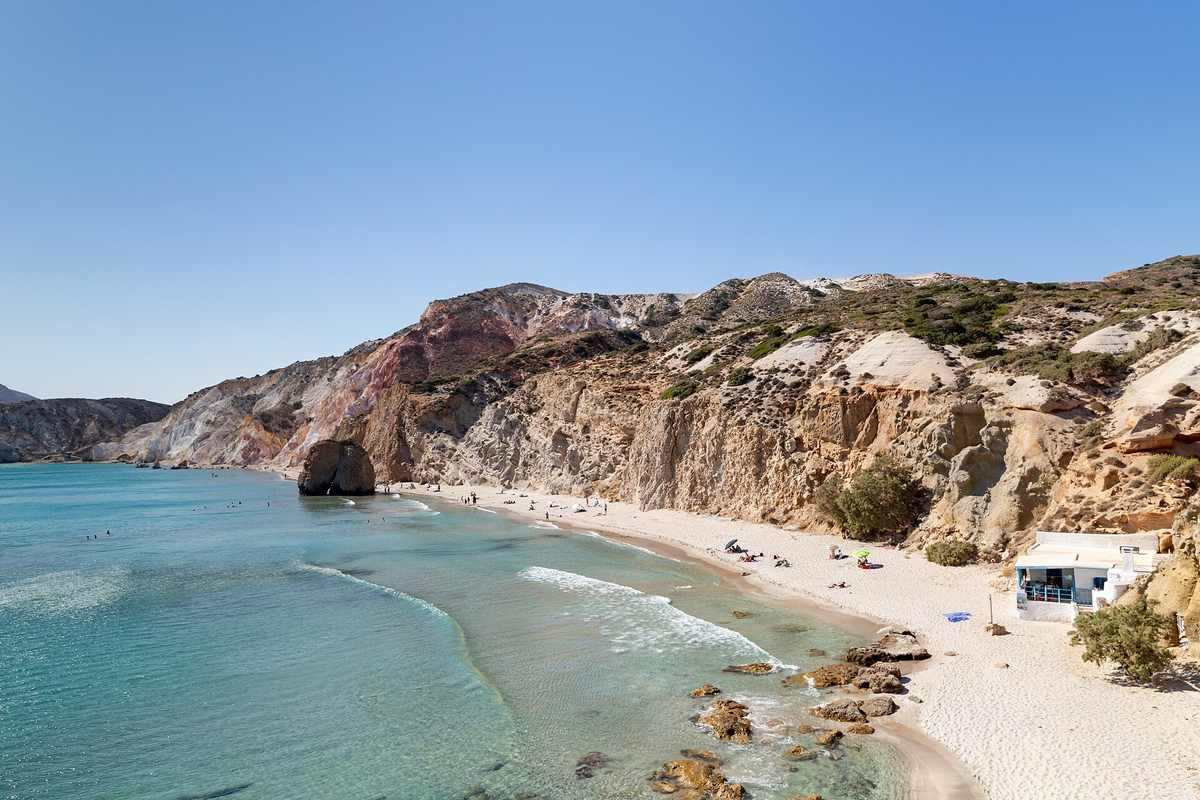
A Milos 6 day itinerary blends a Kleftiko boat trip, the colourful beaches, the villages of Plaka and Klima, the catacombs and a day trip to Kimolos. Plan a six-day trip and tours through My Greece Tours.
Six days is a generous slice of the Milos travel guide. The sections below cover whether six days suits the island, the best itinerary, how to split the days, a day trip and what to know.
Is six days a good length for Milos?
Yes, six days is an excellent length for Milos. It gives time for a Kleftiko boat trip, the colourful beaches, the villages, the catacombs and a day trip to Kimolos, all at a relaxed pace, without the rush of a shorter visit.
Six days hits a sweet spot for Milos, long enough to see the island properly yet short enough to stay focused. A shorter visit forces hard choices between the boat trip, the beaches and the villages, while six days fits them all with room to spare. The extra days allow a relaxed rhythm, alternating active sightseeing with lazy beach afternoons. They also leave space for a day trip to neighbouring Kimolos, a slow exploration of the fishing villages, and time to revisit a favourite beach.
The length suits the way Milos rewards travellers. The island’s beauty unfolds across more than 70 beaches and a string of villages, which a rushed trip cannot cover. Six days lets the highlights breathe: a full day at sea on the Kleftiko cruise, separate days for the coloured beaches, the historic centre and the hilltop sunsets. It is enough to feel like a holiday rather than a checklist, while still covering everything that makes the island special across the Cyclades.
The relaxed pace is the real draw of a six-day stay. Beach days alternate with sightseeing, and the schedule leaves room to breathe rather than march. Our guide to the things to do in Milos sets the scene for the week. The day-by-day plan below turns that length into a workable route.
What is the best six-day Milos itinerary?
The best six-day Milos itinerary mixes a Kleftiko boat trip, beach days at Sarakiniko, Firiplaka and Paleochori, a village and history day around Plaka, Trypiti and Klima, a day trip to Kimolos, and a final relaxed day to revisit favourites.
A balanced six-day plan spreads the highlights without backtracking. One day goes to the full Kleftiko boat trip, the island’s signature experience, reaching the sea caves and western coves by water. Two or three days cover the beaches, grouping them by area to cut driving: the lunar Sarakiniko and the north, then the coloured cliffs of Firiplaka and Paleochori in the south. A village and history day ties together Plaka, the Kastro, the catacombs, the Roman theatre and the painted houses of Klima.
The remaining days add variety and rest. A day trip to neighbouring Kimolos, a short ferry across the strait, offers a quieter, more authentic island for contrast. A final relaxed day revisits a favourite beach, lingers over a long lunch in Pollonia, and catches a last sunset from Plaka or the Kastro. The plan keeps the pace easy, alternating active days with restful ones, so the week feels like a holiday rather than a race around the island.
The wider Milos beaches fill any gaps between the fixed anchors. The full day-by-day breakdown below assigns each highlight to a day, and the day-splitting section explains why the regional grouping works.
What does a day-by-day six-day Milos plan look like?
Day 1 is Adamas and a Plaka sunset, Day 2 the north around Sarakiniko and Pollonia, Day 3 the Kleftiko boat cruise, Day 4 the south beaches, Day 5 a Kimolos day trip, and Day 6 the villages, catacombs and departure.
Day 1 eases you in around Adamas, the port town where the ferry arrives. Drop bags, collect a rental car or quad, and stroll the harbour with its tavernas and mining museum. The drive to Plaka, the hilltop capital, takes about 5 minutes, and its lanes climb to the Kastro for the island’s classic first sunset. A short first day beats the beach and lets you find your bearings.
Day 2 covers the north and its lunar coast. Sarakiniko, the white volcanic moonscape, sits about 10 minutes from Adamas and rewards an early start before the crowds. The route carries on to Firopotamos and Mandrakia for a swim and a fish lunch, then finishes in Pollonia, about 15 minutes from Adamas, for dinner by the water. Grouping these northern stops keeps the driving short.
Day 3 belongs to the sea. The full-day Kleftiko boat cruise leaves from Adamas or Pollonia and rounds the west coast to the white sea caves, reachable only by water. The trip typically weaves in swim stops at coves like Gerakas and Sykia, with lunch aboard. No car day competes with the boat day, so the whole day stays on the water.
Day 4 turns south to the coloured beaches. Firiplaka shows off striped cliffs, Paleochori warms its sand from geothermal heat under the seabed, and Tsigrado hides below a cliff reached by a rope-and-ladder scramble. These three cluster together in the south, so a single loop by car links them with minimal backtracking and long swim breaks between each.
Day 5 crosses to Kimolos. A short ferry from Pollonia reaches the quiet sister island in well under an hour, opening whitewashed lanes, the Prassa beach and a slower pace. Lunch in the Chorio and a swim fill the day before the afternoon boat back. The strait is narrow, so the crossing feels like a hop rather than a voyage.
Day 6 saves the villages and history for the finish. Klima’s painted boathouses, the Christian catacombs near Trypiti, the ancient Roman theatre and the Venus de Milo find spot sit close together above the bay. Mandrakia and Firopotamos add photogenic harbours, and the Adamas mining museum caps the culture before the departure ferry. Our Pollonia guide helps if you base in the north instead.
How should you split the days on Milos?
Split the six days into a Kleftiko boat day, two beach days grouped by area, a village and history day, a day trip to Kimolos, and a final relaxed day. Grouping beaches by region cuts driving and keeps each day unhurried across the island.
Grouping the days by region is the secret to an unhurried week. Milos is large and the roads wind, so bouncing between the north and south each day wastes time. Instead, a day in the north links Sarakiniko, Firopotamos and Pollonia, while a southern day strings together Firiplaka, Tsigrado and Paleochori. The boat day covers the western coves that no road reaches. This regional approach keeps the driving short and leaves more time for swimming, lunch and the scenery.
The pacing matters as much as the route. Alternating an active day with a restful one prevents the week from feeling like a march. A boat day or a long beach day pairs well with a slower village and sunset day. Leaving the final day loose allows for weather, a missed favourite or simply a lazy morning. With six days, there is no need to cram, so a relaxed split that follows the island’s geography delivers the fullest and most enjoyable trip.
The short drive times make the split easy to picture. Adamas to Plaka runs about 5 minutes, Adamas to Sarakiniko about 10 minutes, and Adamas to Pollonia about 15 minutes on the main road. Our day trips from Milos guide covers the Kimolos leg, and the day-trip section below weighs it against a Polyaigos boat outing.
How do you get around Milos for six days?
Rent a car or quad in Adamas for the whole stay, since the beaches lie far apart and the bus runs too rarely. Add one boat day for Kleftiko and one short ferry from Pollonia to Kimolos, which together reach the spots no road serves.
A rental car or quad is close to essential for a six-day Milos trip. The beaches scatter across the island, and the public bus links only the main towns on a thin timetable that eats into beach hours. Collecting a vehicle at Adamas on arrival unlocks the north, the south and the villages on your own schedule. A quad suits couples and warm weather, while a small car handles luggage, dust and the odd rough track to a cove.
The water covers what the roads cannot. The Kleftiko sea caves sit on the roadless west coast, so a boat day is the only way to reach them, and the cruise doubles as the scenic highlight of the week. The Kimolos ferry leaves from Pollonia in the north and crosses the narrow strait in well under an hour, turning a day trip into a short hop. Booking the boat day early in high summer secures a seat.
Parking and fuel round out the logistics. Adamas has the main filling stations and the biggest car parks, so top up there rather than in the villages. Popular beaches like Sarakiniko fill their small lots by mid-morning, which is another reason to start early. Our where to stay in Milos guide helps you pick a base that shortens the daily drives.
Which beaches should you see over six days on Milos?
See Sarakiniko in the north for its white lunar rock, Firiplaka and Paleochori in the south for striped cliffs and warm sand, and Tsigrado for its ladder access. The Kleftiko coves and Kimolos beaches round out a full six-day beach list.
Sarakiniko leads any Milos beach list. The wind-carved white volcanic rock rolls down to the sea like a moonscape, with no shade and clear water for swimming and cliff jumping. It photographs best at sunrise or sunset, when the crowds thin and the pale stone glows. The 10-minute drive from Adamas makes it an easy first or last beach of the day.
The south holds the coloured beaches. Firiplaka spreads pale sand below striped volcanic cliffs and offers calmer, family-friendly water. Paleochori runs warm even underfoot, heated by geothermal activity below the seabed, and a taverna cooks food in the volcanic sand. Tsigrado hides in a cove reached by squeezing through rocks and down a rope-and-ladder, which keeps it quiet and rewards the effort with turquoise water.
The boat and the day trip finish the collection. Kleftiko’s coves, reached only by the western cruise, offer swimming beneath white sea-cave arches and pirate-legend rock formations. On Kimolos, Prassa shows off white sand and shallow turquoise shallows a short ferry away. These water-access beaches balance the road-side coves and give the six days a full spread of colour and character.
Should you take a day trip during six days on Milos?
Yes, a day trip fits neatly into six days on Milos. Neighbouring Kimolos sits a short ferry across the strait, offering quiet beaches and an authentic feel, while a boat trip to Polyaigos reaches some of the clearest water in the Cyclades.
A day trip is one of the joys of a longer Milos stay, and Kimolos is the natural choice. The tiny sister island sits a short ferry across the strait, offering whitewashed lanes, quiet beaches like Prassa and a slower, more authentic pace than Milos. It makes an easy, rewarding contrast to a beach-and-boat week. The short crossing means a relaxed day rather than a rushed one, with time to swim, lunch and wander before the afternoon ferry back.
For travellers drawn to the water, a boat trip to Polyaigos offers an alternative day out. The uninhabited islet, between Milos and Kimolos, holds some of the clearest, most luminous water in the Cyclades, reached on a cruise from the port. It pairs well with the wider beach focus of a Milos week. Either trip adds depth to six days, breaking up the island routine and showing a quieter corner of this western Cyclades cluster without straying far from base.
The Pollonia base makes the Kimolos leg simplest. The ferry runs from Pollonia in the north, so a day trip from there skips the longer drive to a distant port. Plan the crossing through our Kimolos day trip from Milos guide, and treat Polyaigos as the boat-lover’s alternative when calm seas allow the cruise.
Where should you stay for six days on Milos?
Base in Adamas for the central port and the ferries, or Pollonia in the north for a quiet, stylish stay near the Kimolos boat. Plaka suits sunset lovers and Triovasalos offers value, and all four shorten different parts of the daily drive.
Adamas is the practical default for a six-day stay. The port town sits central to the island, close to the ferry dock, the bus stop, the rental offices and the mining museum, with a lively strip of tavernas along the harbour. Basing here keeps every corner of Milos within a manageable drive and puts arrival and departure logistics at your doorstep. It suits first-time visitors who want everything close.
Pollonia in the north offers the quieter, more stylish alternative. The fishing village fronts a sheltered bay with good beaches nearby, a cluster of well-regarded seafood tavernas, and the ferry to Kimolos on its doorstep. The 15-minute drive to Adamas keeps the port within reach while trading bustle for calm. It rewards couples and returning visitors who value a slower base.
Plaka and Triovasalos fill out the choices. Hilltop Plaka, the capital, wins for sunset access at the Kastro and traditional lanes, though its beaches sit below by car. Triovasalos, just above Adamas, offers a residential, better-value stay a few minutes from the port. Compare all of them in our where to stay in Milos guide before booking the week.
Where should you eat during six days on Milos?
Eat at the seafood tavernas of Pollonia, the harbour spots in Adamas, and the traditional kitchens around Plaka and Triovasalos. Try local dishes like pitarakia cheese pies, karpouzopita watermelon pie and fresh grilled fish, plus a taverna meal cooked in Paleochori’s warm sand.
Pollonia is the island’s seafood hub. The village lines its bay with tavernas serving the day’s catch, grilled octopus and Milos specialities, and a slow dinner here caps a northern beach day well. Booking ahead in high summer helps at the busiest tables. The waterfront setting turns a meal into part of the sightseeing.
Adamas covers the everyday eating. The harbour strip mixes classic tavernas, gyros counters and bakeries, handy for a quick lunch between drives or a relaxed dinner near the ferry. Local sweets like the koufeto almond-and-honey treat and fresh bakery pies suit a grab-and-go beach picnic. The central location makes it the default for arrival and departure meals.
The villages and the south add character to the food. Traditional kitchens around Plaka and Triovasalos serve pitarakia cheese pies and slow-cooked dishes in stone-walled settings. At Paleochori, a beach taverna cooks food in the naturally warm volcanic sand, a Milos ritual worth timing a lunch around. Sampling across these areas spreads the eating over the whole island.
What can you add with extra time on Milos?
Add sea kayaking or diving along the volcanic coast, a hike between the fishing villages, a visit to the ancient Roman theatre and catacombs, and extra sunset spots beyond Plaka. These fill any spare hours in a relaxed six-day plan.
The water opens up with spare time. Sea kayaking traces the volcanic cliffs and hidden coves at a slower pace than a boat cruise, and diving explores the clear water and underwater rock formations off the coast. Both suit an active traveller who wants more than beach lounging. They add a fresh angle on the same dramatic coastline the Kleftiko trip skims.
The land holds quieter extras. A coastal walk links the fishing villages of Klima, Mandrakia and Firopotamos, passing painted boathouses cut into the rock. The ancient Roman theatre above Klima and the Christian catacombs near Trypiti deepen the history, and the nearby spot where the Venus de Milo was unearthed ties the island to the Louvre statue. These sights reward a slower afternoon.
Sunsets earn a second look with extra evenings. Plaka and its Kastro give the classic view, but the western coast, Sarakiniko’s pale rock and a harbour dinner in Pollonia each offer a different last light. Our things to do in Milos guide lists more options for filling the loose hours a relaxed week leaves open.
What should you know for a six-day Milos trip?
For a six-day Milos trip, rent a car or quad for the spread-out beaches, book the Kleftiko boat trip and rooms ahead in summer, and base in Adamas or Pollonia. Pack water shoes for the rocky coves and plan around the meltemi wind.
A few practical choices make a six-day trip run smoothly. A rental car or quad is close to essential, since the beaches lie far apart and the bus is too slow to cover them. Booking the Kleftiko boat trip and the accommodation well ahead matters in the busy summer months, when both fill fast. Basing in Adamas keeps you central to the ferries, the bus and the rentals, while Pollonia offers a quieter, more stylish stay near good beaches in the north.
Packing and timing round out the planning. Water shoes are essential for the rocky, pebbly coves, and sun protection handles the strong Cycladic light. The meltemi wind shapes each day, steering swimmers toward sheltered beaches when it blows, so a little flexibility helps. Spreading the days by region cuts the driving, and leaving the final day loose allows for the weather. With these basics in place, six days delivers a relaxed, full and rewarding holiday on the island.
Frequently Asked Questions
Is six days enough for Milos?
Six days is more than enough for Milos and an excellent length for the island. It gives time for the full Kleftiko boat trip, separate days for the coloured beaches grouped by region, a day for the villages and historic sites around Plaka and Trypiti, a day trip to neighbouring Kimolos, and a final relaxed day to revisit a favourite. The pace stays unhurried, alternating active days with restful ones, so the trip feels like a holiday rather than a checklist. It covers everything that makes the island special without any rush.
How do you split six days on Milos?
The best way to split six days on Milos is to group the activities by region to cut driving. Devote one day to the Kleftiko boat trip, which reaches the western coves by sea. Spend two days on beaches, one in the north around Sarakiniko and Firopotamos, one in the south around Firiplaka and Paleochori. Give a day to the villages and history of Plaka, the Kastro, the catacombs and Klima. Add a day trip to Kimolos, and keep the final day loose to revisit a favourite beach and catch a last sunset.
How do you get around Milos without a car?
Getting around Milos without a car is possible but limiting over six days. The public bus links Adamas with Plaka, Pollonia, Sarakiniko and a few southern beaches, but the timetable is thin and misses the remote coves. Taxis are few and fill fast in summer. The Kleftiko sea caves and Kimolos need a boat or ferry regardless. Most visitors rent a car or quad in Adamas for at least part of the week to reach the spread-out beaches on their own schedule, then rely on the bus only for the main towns.
Should you take a day trip during six days on Milos?
Yes, a day trip fits neatly into a six-day Milos itinerary and adds welcome variety. The easiest and most rewarding option is neighbouring Kimolos, a short ferry across the strait from Pollonia, offering quiet beaches such as Prassa, whitewashed lanes and a slower, more authentic pace. Alternatively, a boat trip to the uninhabited islet of Polyaigos reaches some of the clearest, most luminous water in the Cyclades. Either trip breaks up the island routine and showcases a quieter corner of the western Cyclades, all within an easy day from your Milos base.
Where is the best base for six days on Milos?
The best base for six days on Milos is Adamas for most visitors, as the central port town sits close to the ferry dock, the rentals, the bus and a lively taverna strip, keeping every corner of the island within a manageable drive. Pollonia in the north makes a quieter, more stylish alternative, with good beaches, seafood tavernas and the Kimolos ferry on its doorstep, about 15 minutes from Adamas. Plaka suits travellers who prioritise sunset access at the Kastro, while Triovasalos offers a residential, better-value stay a few minutes above the port.
When is the best time for a six-day Milos trip?
The best time for a six-day Milos trip is late spring through early autumn, when the sea is warm enough for swimming and the boat trips run reliably. The shoulder months either side of high summer bring fewer crowds, easier parking and cooler village walks, while midsummer delivers the warmest water and the fullest ferry and cruise schedules alongside the strongest meltemi wind. The wind shapes each day whenever it blows, steering swimmers toward sheltered beaches, so a flexible plan that groups beaches by region handles the weather across any of these months.