
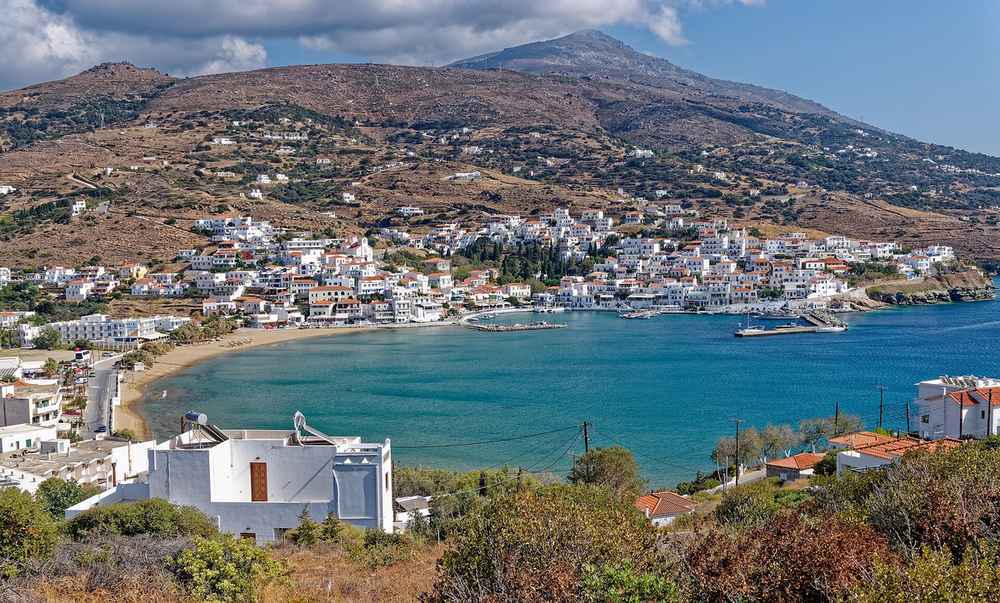
Milos vs Andros pits a dry, volcanic island of colourful beaches and boat trips against a green, lush island of springs, waterfalls and hiking trails. Plan island tours and tickets through My Greece Tours.
Choosing between the two is a common question in the Milos travel guide. The sections below compare the landscapes, the beaches, the vibe and which island suits you best.
Milos vs Andros: which island is better?
Milos is the dry, volcanic beach island, while Andros is the green, lush hiking one. Choose Milos for colourful beaches, sea caves and boat trips, or Andros for springs, waterfalls, mountain trails and an elegant, shipowner heritage.
The two islands sit at opposite ends of the Cyclades. Milos anchors the southwest of the group. Andros rides the far north. Each delivers a distinct kind of holiday.
Milos is the beach and boat-trip choice. The volcanic coast gives colourful beaches and caves. Cruises reach the hidden western coves. It rewards beach lovers and explorers.
Andros is the green, walking choice. Springs, streams and waterfalls cross the land. Long mountain trails reward hikers. It suits walkers and lovers of lush scenery.
The decision comes down to your priorities. Pick Milos for colourful beaches and boat trips. Pick Andros for hiking and green scenery. The sections below compare each side across the things to do in Milos. The next section covers the landscapes.
The two islands break the usual Cycladic mould in opposite directions. Milos takes the dry, sun-baked template and colours it with volcanic rock and sea caves. Andros breaks it entirely, with green valleys, running water and waterfalls rare in the Aegean. Both stay quieter than the party islands, drawing travellers after nature over nightlife. The choice tends to settle fast: beach-and-boat travellers lean toward Milos, while hikers and lovers of green, watered landscapes lean toward Andros and its long network of marked trails.
Access pulls the two islands apart from the start. Milos has an airport and ferries on the western Cyclades line from Piraeus. Andros lies in the far north and is usually reached by ferry from Rafina near Athens. That puts them on opposite sides of the Cyclades and on separate routes. Milos suits a western loop with Sifnos and Serifos, while Andros suits a northern loop with Tinos and Mykonos. The split makes each a natural anchor for its own trip rather than an easy pair.
How do the landscapes of Milos and Andros compare?
Milos is dry and volcanic, with coloured cliffs, white moonscapes and sea caves. Andros is green and lush, with mountains, springs, streams and waterfalls rare in the Cyclades. Milos wins on coastal colour, while Andros wins on green, watered scenery.
Milos is a volcanic showpiece. Eruptions and hydrothermal water painted its coast. Beaches glow red, grey, beige and snow-white. The geology drives the spectacle.
Andros breaks the Cycladic mould. Green valleys and streams cross the island. Waterfalls and springs feed the land. The look is lush and unusual.
The two differ at a glance. Milos is bare, bright and volcanic. Andros is green, watered and mountainous. The contrast is among the sharpest in the group.
Both reward the outdoor lover. Milos shows it across coloured coves and white rock. Andros shows it in valleys, peaks and waterfalls. The moonscape of Sarakiniko beach headlines Milos. The next section covers the beaches.
Water shapes the difference between the two. Andros carries natural springs and streams that keep its valleys green long into summer, a rarity in the Aegean. Milos owes its drama to fire rather than water, with volcanic rock and hydrothermal colour along its coast. That gives Andros lush, shaded walks inland and Milos bright, exposed coastlines. A traveller who loves green hiking country will warm to Andros, while one drawn to coloured cliffs, white moonscapes and sea caves will favour the volcanic coast of Milos.
Water versus fire shapes the scenery. Andros carries springs and streams that keep its valleys green deep into summer, a rarity in the dry Aegean. Milos owes its drama to volcanic fire, with coloured rock and hydrothermal hues along an exposed coast. That gives Andros lush, shaded inland walks and Milos bright, open coastlines of cliff and cove. A traveller who loves green hiking country will warm to Andros, while one drawn to coloured cliffs, white moonscapes and sea caves will favour Milos.
Which has better beaches, Milos or Andros?
Milos has more dramatic and varied beaches, with over 70 coloured volcanic coves, sea caves and the lunar Sarakiniko. Andros has lovely long sandy beaches like Golden Beach and Batsi, gentler and greener. Milos wins on drama, while Andros wins on long golden sand.
Milos wins on colour and drama. The varied volcanic coast earns the Island of Colours name. Beaches glow red, grey, beige and snow-white. The best of the west open only by boat.
The signature beaches are unique. Sarakiniko offers a lunar white landscape. Firiplaka and Paleochori streak the cliffs with colour. Kleftiko hides behind the sea.
Andros keeps it long and golden. Golden Beach and Batsi draw relaxed swimmers. The sandy bays suit easy beach days. They sit greener than the Milos coves.
The choice depends on your taste. Milos rewards dramatic scenery and boat trips. Andros suits long, sandy beach days. The wider Milos beaches outnumber those of Andros. The next section covers the vibe.
The two coasts feel very different underfoot. Milos delivers compact, dramatic coves of coloured rock, with the finest reached only by boat. Andros spreads longer, sandier beaches between green headlands, often backed by a stream or a small village. Milos rewards a boat trip and a sense of discovery, while Andros rewards an easy walk down to a broad strand. A beach-variety hunter will find more on Milos, while a traveller after long golden sand within a green setting may prefer Andros.
The beaches read very differently. Milos delivers compact, dramatic coves of coloured rock, with the finest reached only by boat to Kleftiko and the western shore. Andros spreads longer, sandier strands like Golden Beach and Batsi between green headlands, often backed by a stream or village. Milos rewards a boat trip and a sense of discovery, while Andros rewards an easy walk down to a broad beach. A beach-variety hunter finds more on Milos, while a fan of long golden sand in a green setting leans toward Andros.
How do the vibe and things to do compare?
Milos offers boat trips, beaches, museums and ancient sites, reached by air or ferry. Andros offers hiking, an elegant Chora, modern-art museums and a quiet, shipowner heritage. Milos suits beach lovers, while Andros suits hikers and culture seekers.
Milos leans into beaches and boat trips. The volcanic coves and caves fill the days. Museums and ancient sites add depth. The airport eases the journey.
Andros leans into hiking and culture. Marked trails cross the green island. An elegant Chora reflects its shipowner past. A modern-art museum draws visitors.
Both stay quiet by Cycladic standards. Milos draws beach-focused summer visitors. Andros draws hikers and Greek families. The mood on each stays relaxed.
Each island suits a different trip. Milos suits scenery and active beach days. Andros suits walking and culture. Plan outings through our day trips from Milos guide. The next section covers the verdict.
Andros wears its heritage with quiet elegance. Generations of wealthy shipowners shaped its grand Chora, its mansions and its respected modern-art museum. The island is a walker’s favourite, laced with a long marked route through valleys and old stone paths. Milos answers with raw natural drama and a fuller beach programme, plus boat trips to its sea caves. The choice rests on how you want to spend the day. Andros fills it with trails and culture, while Milos fills it with beaches, boat trips and volcanic scenery.
Both islands stay quiet, but spend the day apart. Milos fills the hours with beaches, boat trips, museums and ancient sites, then a relaxed evening in Adamas and Plaka. Andros fills them with marked trails, an elegant Chora shaped by its shipowner past and a respected modern-art museum. Neither chases nightlife, which suits both sets of visitors. The real divide is the daytime focus, scenery and sea on Milos against hiking and culture on Andros, two distinct ways to enjoy the Cyclades.
Should you choose Milos or Andros?
Choose Milos for colourful volcanic beaches, sea caves and boat trips. Choose Andros for green hiking trails, waterfalls and an elegant Chora. The two sit far apart in the Cyclades, so most travellers pick one as the focus of a trip.
Pick Milos for beaches and boat trips. The volcanic coves and sea caves are unmatched. The airport eases the journey from Athens. It suits a scenic, active holiday.
Pick Andros for hiking and green scenery. The trails and waterfalls reward walkers. The elegant Chora rewards a slow visit. It suits a walking, cultural trip.
The two sit far apart in the Cyclades. Milos lies in the southwest near Sifnos. Andros rides the far north near Tinos. They do not pair as easily as closer islands.
Most travellers choose one as a focus. Milos pairs with the western Cyclades line. Andros pairs with Tinos and Mykonos. Compare the wider Milos vs Tinos guide to plan your route.
Route logic seals the decision. Milos and Andros sit far apart and rarely share a direct ferry, so pairing them costs a long connection through the mainland or another island. The smarter plan builds a trip around one island and its neighbours. Choose Milos for colourful volcanic beaches and boat trips on the western line, or Andros for green hiking trails, waterfalls and culture in the north. Most travellers settle on one as the clear focus rather than splitting a short holiday between the two.
How do you get to Milos and Andros?
Andros is reached by ferry from Rafina near Athens in the northern Cyclades. Milos is reached by ferry from Piraeus or by a short domestic flight into its airport in the western Cyclades. The two lie apart, so combining them takes planning.
Andros sits on the Rafina ferry line. Boats leave the port near Athens. The crossing lands travellers in the northern Cyclades. Tinos and Mykonos share the same route.
Milos sits on the western Cyclades line from Piraeus. An airport near Adamas adds a flight option from Athens. The plane cuts the journey to a short hop. Ferries link Milos to Sifnos and Serifos.
Access divides the two islands from the first step of the trip. Andros ties into the Rafina route with Tinos and Mykonos, drawing travellers toward the northern Cyclades. Milos ties into the Piraeus route with Sifnos and Serifos, and its airport gives a quick flight from Athens that Andros lacks. The two ports and lines rarely meet, which keeps each island on its own loop. A traveller planning a single base finds the transport clean, and the guide on how to get to Milos maps the western options in full.
Which island suits hiking, Milos or Andros?
Andros suits dedicated hiking, with a green mountainous interior, marked trails and springs. Milos suits coastal walking, with volcanic landscapes and sea-cave scenery near the shore. Andros wins on long inland trails, while Milos wins on dramatic coastal paths.
Andros carries a long marked trail network. Paths climb through green valleys and old stone routes. Springs and streams line the way. The interior stays shaded and lush.
Milos offers coastal walking over volcanic ground. Short paths reach coloured cliffs and viewpoints. Boat trips open the sea caves that walkers cannot. The scenery stays bright and exposed.
Walking styles split cleanly between the two islands. Andros rewards the committed hiker with mountain trails, waterfalls and springs that keep the ground green deep into summer. Milos rewards the walker who wants short coastal routes over volcanic rock, with coloured cliffs and sea-cave views rather than forest paths. The northern island gives distance and shade, while the western island gives colour and coastline. A hiker after long marked routes leans toward Andros, and a walker who prefers scenic seaside trails can plan them through the Milos hiking guide.
Frequently Asked Questions
Is Milos or Andros better?
Milos is the dry, volcanic beach island, while Andros is the green, lush hiking one. Choose Milos for its colourful beaches like Sarakiniko, sea caves, boat trips, museums and an airport link to Athens. Choose Andros for its springs, waterfalls, long mountain trails, elegant Chora and shipowner heritage. Milos wins on beach drama and variety, while Andros wins on green scenery, hiking and culture, so the right choice depends on whether you favour the coast and boat trips or the trails and lush landscapes.
Which has better beaches, Milos or Andros?
Milos has the more dramatic and varied beaches, with over 70 coloured volcanic coves, sea caves and the lunar white Sarakiniko, many reached only by boat. Andros has lovely long sandy beaches such as Golden Beach and Batsi that are gentler and set against green headlands. Milos wins on number, colour and drama, while Andros offers broad golden sand within a leafy setting, so the choice comes down to dramatic volcanic variety versus long, easy beaches in a greener landscape.
Can you visit both Milos and Andros?
It is possible but awkward, as the two islands sit at opposite ends of the Cyclades and rarely share a direct ferry. Milos belongs to the western Cyclades line from Piraeus, while Andros lies in the far north and is usually reached from Rafina near Athens. Pairing them means a connection through the mainland or another island, which costs time. Most travellers choose one as a focus, combining Milos with Sifnos or Serifos, and Andros with Tinos or Mykonos, rather than visiting both on a single trip.
Is Milos or Andros better for families?
Milos suits families after beach days, with sheltered sandy bays, easy swimming and boat trips that thrill children along the volcanic coast. Andros suits families who enjoy the outdoors, with long golden beaches, green valleys and gentle walks near villages and springs. Milos leans toward the coast and the sea, while Andros leans toward green space and easy strolls. The airport on Milos shortens the journey from Athens for young travellers, and the calm mood on both islands keeps them clear of loud nightlife. The right pick rests on whether the family favours beaches and boats or green scenery and walks.
Can you visit both Milos and Andros on one trip?
Visiting both is possible but awkward, as the two islands sit at opposite ends of the Cyclades and rarely share a direct ferry. Andros ties into the Rafina line in the north with Tinos and Mykonos, while Milos ties into the Piraeus line in the west with Sifnos and Serifos. Pairing them means a connection through the mainland or a second island, which costs a full day of travel. Most travellers build a trip around one island and its neighbours rather than crossing the group. The airport on Milos helps a traveller who wants both, cutting one leg to a short flight from Athens.