
Milos vs Kythnos pits a dramatic volcanic island of colourful beaches and boat trips against a quiet, off-the-map island of thermal springs and the famous Kolona sandbar. Plan island tours and tickets through My Greece Tours.
Choosing between the two is a common question in the Milos travel guide. The sections below compare the landscapes, the beaches, the vibe and which island suits you best.
Milos vs Kythnos: which island is better?
Milos is the dramatic, beach-rich island, while Kythnos is the quiet, off-the-map one. Choose Milos for colourful volcanic beaches, sea caves and boat trips, or Kythnos for thermal springs, the Kolona sandbar and a calm, untouristy escape.
The two islands share the western Cyclades yet differ in feel. Milos is dramatic and beach-rich. Kythnos is quiet and low-key. Each delivers a distinct kind of holiday.
Milos is the dramatic, active choice. The volcanic coast gives colourful beaches and caves. Boat trips reach the hidden western coves. It rewards explorers and beach lovers.
Kythnos is the quiet, authentic choice. The island stays off the main tourist map. Thermal springs and the Kolona sandbar define it. It suits travellers after calm and local life.
The decision comes down to your priorities. Pick Milos for dramatic beaches and boat trips. Pick Kythnos for thermal springs and calm. The sections below compare each side across the things to do in Milos. The next section covers the landscapes.
Both islands sit on the same western Cyclades ferry line from Piraeus. That makes them an easy theoretical pair, though they pull different crowds. Milos ranks among the most visited islands in the group, drawing beach lovers from across the world. Kythnos stays largely off the tourist map, popular mainly with Greek weekenders and those after thermal springs and quiet. The short ferry hop between them means a traveller can sample both, balancing the drama of Milos with the calm, local feel of Kythnos.
The shared ferry line makes these two an easy match. Both sit on the western Cyclades route from Piraeus, with a short hop between them. Milos adds an airport for a quick link to Athens, while Kythnos relies on the boat. That convenience helps explain the crowds. Milos ranks among the most visited islands in the group, while Kythnos stays largely off the tourist map, popular with Greek weekenders. The proximity lets a traveller sample both, balancing the drama of Milos with the calm of Kythnos.
How do the landscapes of Milos and Kythnos compare?
Milos is volcanic, with coloured cliffs, white moonscapes and sea caves. Kythnos is a drier, rolling island of low hills, stone walls and quiet coves. Milos wins on dramatic coastal colour, while Kythnos offers a gentler, rural Cycladic scene.
Milos is a volcanic showpiece. Eruptions and hydrothermal water painted its coast. Beaches glow red, grey, beige and snow-white. The geology drives the spectacle.
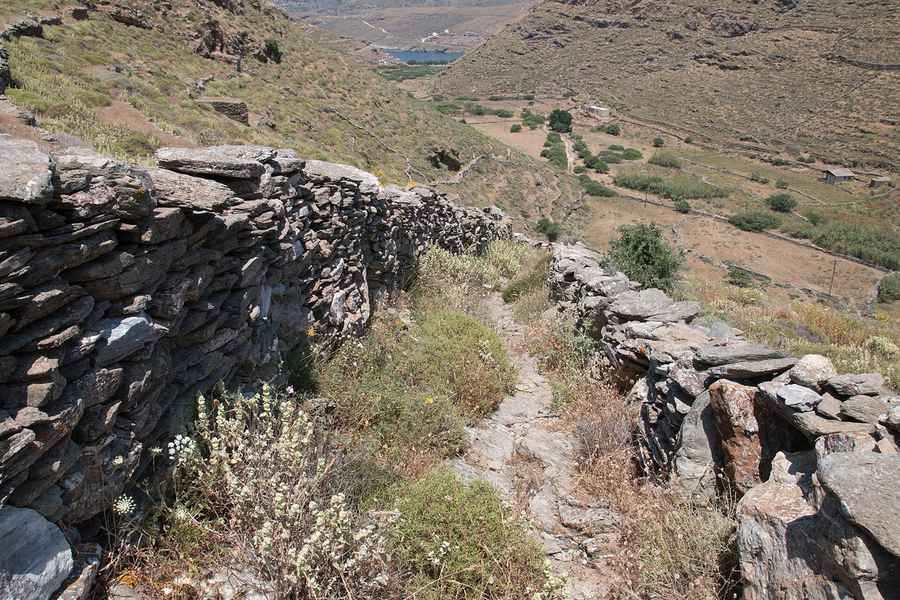
Kythnos rolls in low, dry hills. Stone walls and terraces cross the land. Quiet coves notch the long coastline. The look is gentle and rural.
The two differ in their drama. Milos packs surreal, coloured coastlines into a small island. Kythnos keeps a softer, pastoral scene. The variety sets Milos apart.
Both share a Cycladic calm. Milos shows it across coloured coves and white rock. Kythnos shows it in quiet hills and beaches. The moonscape of Sarakiniko beach headlines Milos. The next section covers the beaches.
Kythnos counts a long list of beaches, though many sit at the end of rough tracks. The island is known for thermal springs at Loutra, where hot water meets the sea. Milos answers with its own volcanic warmth, in hot springs and steaming sand at beaches like Paleochori. Both islands owe their character to geology, but in different ways. Milos turns its volcanic past into colour and sea caves, while Kythnos turns its into thermal water and a quieter, rural landscape that rewards slow exploring.
Geology shapes each island’s signature. Milos turns its volcanic past into colour, with red, grey and white rock and steaming sand at Paleochori. Kythnos turns its into thermal water, with the hot springs at Loutra meeting the sea. Both owe their character to the earth’s heat, expressed in different ways. Milos wears it on a bright, dramatic coast of cliffs and caves, while Kythnos wears it in a gentler, rural landscape of low hills, stone walls and a famous thermal spa town.
Which has better beaches, Milos or Kythnos?
Milos has more dramatic and varied beaches, with over 70 coloured volcanic coves, sea caves and the lunar Sarakiniko. Kythnos has the famous double-sided Kolona sandbar and quiet coves. Milos wins on drama, while Kythnos wins on the unique Kolona.
Milos wins on variety and drama. The varied volcanic coast earns the Island of Colours name. Beaches glow red, grey, beige and snow-white. The best of the west open only by boat.
The signature beaches are unique. Sarakiniko offers a lunar white landscape. Firiplaka and Paleochori streak the cliffs with colour. Kleftiko hides behind the sea.
Kythnos answers with the Kolona sandbar. A thin ribbon of sand joins two coasts. Sea laps both sides of the strip. The double-sided beach is its signature.
The choice depends on your taste. Milos rewards beach variety and boat trips. Kythnos suits the unique Kolona and calm coves. The wider Milos beaches outnumber those of Kythnos. The next section covers the vibe.
Kolona is the beach that draws visitors to Kythnos, a striking sandbar best seen from above or by boat. It is the island’s answer to a single dramatic image. Milos counters with dozens of dramatic beaches rather than one, from white moonscapes to coloured cliffs and hidden sea caves. A traveller after variety and boat trips will find far more on Milos, while one drawn to the singular Kolona and a quieter coast may favour Kythnos for a relaxed, low-key beach holiday.
One beach defines Kythnos, while dozens define Milos. Kolona, a thin sandbar with sea on both sides, is the image that draws visitors to Kythnos, best seen from above or by boat. Milos counters with a long list of dramatic beaches, from white moonscapes to coloured cliffs and hidden sea caves reached on a cruise. A traveller after variety and boat trips finds far more on Milos, while one drawn to the singular Kolona and a quieter coast leans toward Kythnos for a low-key beach holiday.
How do the vibe and things to do compare?
Milos offers boat trips, museums, ancient sites and easy beach days, reached by air or ferry. Kythnos offers thermal springs, quiet villages and a relaxed, untouristy pace, popular with Greeks. Milos suits variety, while Kythnos suits calm and local life.
Milos leans into variety and ease. Boat trips, museums and ancient sites fill the days. The airport adds a quick link to Athens. The island balances activity with calm.
Kythnos leans into calm and tradition. Thermal springs at Loutra draw visitors. Quiet villages like Dryopida charm walkers. The pace stays slow and local.
The crowds differ in character. Milos draws beach lovers from across the world. Kythnos draws mostly Greek weekenders. The mood on each reflects its draw.
Each island suits a different trip. Milos suits scenery and active beach days. Kythnos suits calm and thermal soaking. Compare the warmth in our Milos hot springs guide. The next section covers the verdict.
The thermal springs give Kythnos a distinct, restful identity. The hot water at Loutra has drawn bathers for generations, and a small spa makes the most of it. The island stays quiet even in summer, which is the heart of its appeal. Milos offers a fuller, more active programme, with boat trips, museums and a long beach list, plus the ease of an airport. The decision rests on pace. Kythnos suits a slow, soaking, off-the-map escape, while Milos suits a varied, scenic and busier island holiday.
The pace of each island sets the tone. Milos balances activity with calm, offering boat trips, museums, ancient sites and an easy airport link. Kythnos leans fully into quiet, with thermal soaking at Loutra, traditional villages like Dryopida and a coast that stays uncrowded even in summer. The crowds reflect the difference, Milos drawing visitors from across the world and Kythnos drawing mostly Greeks. The decision rests on whether you want a varied, busier island or a restful, off-the-map escape.
Should you choose Milos or Kythnos?
Choose Milos for dramatic volcanic beaches, sea caves and boat trips. Choose Kythnos for thermal springs, the Kolona sandbar and a quiet, untouristy escape. The two pair well, as both sit on the same western Cyclades ferry route from Piraeus.
Pick Milos for variety and scenery. The volcanic beaches and boat trips are unmatched. The activities fill the days. It suits explorers and beach lovers.
Pick Kythnos for calm and springs. The thermal water and Kolona define it. The off-map quiet rewards a slow visit. It suits a relaxed escape.
The two make an easy pair. Both sit on the western Cyclades ferry line. The mainline route from Piraeus links them. A short hop joins the islands.
Many travellers visit both islands. Pairing dramatic Milos with quiet Kythnos balances a trip. Plan the legs through our Milos to Kythnos guide and the wider Milos vs Serifos comparison.
Pairing the islands is the clever move here. Because both ride the same western Cyclades line, a single loop can take in dramatic Milos and quiet Kythnos with ease, often with Serifos or Sifnos between them. The legs stay short and frequent through summer. Booking the sailings ahead secures seats in peak weeks. The combination balances a busy, scenic island with a calm, thermal one, a popular answer for travellers who want both spectacle and downtime in one western Cyclades trip.
How do you travel between Milos and Kythnos?
You travel between Milos and Kythnos by ferry on the western Cyclades mainline route from Piraeus, which calls at both islands. Sailings run more often in summer, and many pass through Serifos or Sifnos on the way.
The shared mainline route is the link. Ferries from Piraeus serve the western Cyclades chain of Kythnos, Serifos, Sifnos and Milos, so the two islands sit on the same line rather than needing a special connection. Sailings are more frequent in the summer season and thin out over winter, which makes a warm-month trip the easiest time to combine them.
Direction and season shape the plan. Some legs run direct while others stop at Serifos or Sifnos between the two, so journey times vary with the routing and the vessel. Milos also has an airport with flights to Athens, giving it an air link that Kythnos lacks, while Kythnos relies entirely on the boat. Checking the live timetable and booking ahead in peak weeks secures a seat on the sailing you want.
Where do you stay on Milos versus Kythnos?
On Milos you stay in Adamas or Pollonia for a wide choice of hotels, tavernas and boat tours, while on Kythnos you stay in the spa town of Loutra, the port of Merichas or the hilltop villages of Chora and Dryopida.
Milos offers the fuller range of bases. Adamas keeps you beside the port, the buses and the cruises, Pollonia adds a chic seafront with good seafood, and hilltop Plaka and waterfront Klima bring character and sunset views. The spread of hotels, studios and syrmata suits trips of anything from a couple of nights to a week.
Kythnos keeps its lodging quieter and more local. Loutra draws visitors for its thermal springs and seafront rooms, the port of Merichas offers handy access near Kolona, and the inland villages of Chora and Dryopida give a traditional Cycladic stay. Choices are fewer than on Milos and lean toward small studios and guesthouses, which fits the island’s calm, off-the-map character.
When is the best time to visit Milos and Kythnos?
The best time to visit both Milos and Kythnos is late spring to early autumn, with May, June, September and early October offering warm seas, thinner crowds and full ferry schedules. July and August bring the hottest, busiest peak.
Shoulder season suits a two-island trip. Warm settled weather, a sea that holds its heat and thinner crowds make May to June and September to early October the sweet spot for pairing the islands. Ferry frequency stays high enough to link them easily, and room and car prices ease off either side of the August peak.
The seasons hit each island differently. Milos runs its full programme of boat tours and rentals across the summer, so its highlights depend on warm-month schedules. Kythnos stays quiet even in high summer, and its thermal springs make even a breezy shoulder-season day rewarding. Winter thins the ferries and closes many services on both islands, so late spring through autumn is the window for a combined visit.
Frequently Asked Questions
Is Milos or Kythnos better?
Milos is the dramatic, beach-rich island, while Kythnos is the quiet, off-the-map one. Choose Milos for its colourful volcanic beaches like Sarakiniko, sea caves, boat trips, museums and an airport link to Athens. Choose Kythnos for its thermal springs at Loutra, the famous double-sided Kolona sandbar and a calm, largely untouristy escape popular with Greeks. Milos wins on beach drama and variety, while Kythnos wins on thermal soaking and quiet, so the right choice depends on whether you want a busy, scenic island or a restful one.
Which has better beaches, Milos or Kythnos?
Milos has the more dramatic and varied beaches, with over 70 coloured volcanic coves, sea caves and the lunar white Sarakiniko, many reached only by boat. Kythnos answers with the unique double-sided Kolona sandbar, a thin ribbon of sand with sea on both sides, plus quiet coves around its coast. Milos wins on number, colour and drama, while Kythnos offers the singular Kolona and a calmer shoreline, so the choice comes down to dramatic variety versus one standout beach and a low-key coast.
Can you visit both Milos and Kythnos?
Yes. Milos and Kythnos pair easily, as both sit on the same western Cyclades mainline ferry route to and from Piraeus, with a short hop between them. Pairing the two balances the dramatic volcanic beaches, sea caves and boat trips of Milos with the thermal springs, Kolona sandbar and quiet, untouristy feel of Kythnos. They also combine well with Serifos and Sifnos on the same route. Booking the legs in advance secures seats on the summer sailings between the islands.
How do you get from Milos to Kythnos by ferry?
You get from Milos to Kythnos by ferry on the western Cyclades mainline route that links both islands with Piraeus. Some sailings run more directly while others call at Serifos or Sifnos in between, so the routing and the vessel affect how long the leg takes. Services are more frequent in the summer season, so a warm-month trip makes the hop easiest. Check the live timetable and book ahead in peak weeks, as schedules and availability change through the year.
Which island is quieter, Milos or Kythnos?
Kythnos is the quieter of the two islands. It stays largely off the tourist map, drawing mostly Greek weekenders and visitors after its thermal springs, and it keeps a calm, rural feel even in high summer. Milos is livelier and among the most visited islands in the western Cyclades, with busier ports and a long list of beaches and boat tours, though its wilder western coves still offer plenty of peaceful corners for travellers who seek them out.