
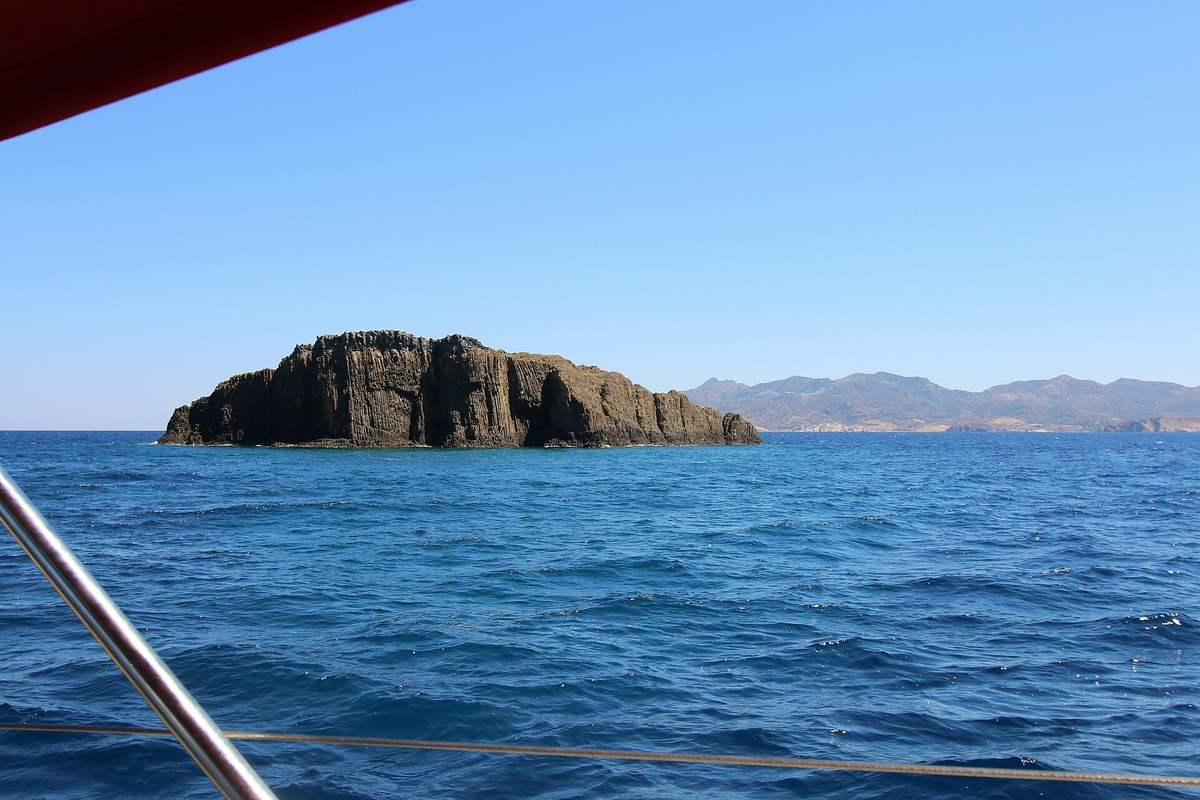
Glaronisia on Milos are three uninhabited volcanic islets of hexagonal basalt columns off the north coast, reachable only by boat. Book a cruise to the islets and tickets through My Greece Tours.
Glaronisia is one of the rarest natural sights in the Milos travel guide. The sections below cover what the islets are, why they have basalt columns, how to visit, what to do there and the best time to go.
What is Glaronisia on Milos?
Glaronisia are three small uninhabited volcanic islets off the north coast of Milos. Their name means Seagull Islands, and they are famous for striking hexagonal basalt columns that rise straight from the deep blue sea.
Glaronisia sit just off the north coast. The three small islets rise from the sea near Pollonia and Mandrakia. They are uninhabited, with no docks and no beaches. The deep blue water surrounds them on every side.
The name comes from the seagulls. Glaronisia means Seagull Islands in Greek. Birds nest on the bare rock and wheel above the sea. The islets carry the name of their winged residents.
The basalt columns are the great draw. Tall hexagonal rods of stone stack together like a natural puzzle. The geometric shapes rise straight from the water. The effect is unlike anything else on the coast.
Glaronisia rank among the rarest sights in the Aegean. The columns form one of the rarest geological wonders in the Aegean. The islets stay wild and untouched, reached only from the water. They feature on many a things to do in Milos list. The next section covers the geology.
The islets stand apart from anything on the coast. Three small rocks rise from the deep blue sea off the north shore. Tall hexagonal columns of basalt stack up their flanks. The geometric shapes look carved by hand rather than nature. Seagulls nest on the bare stone and give the islets their name. No buildings, docks or beaches break the wild scene. The deep water surrounds them on every side. Boats approach from Pollonia, Adamas and Mandrakia for a look. The rare columns make Glaronisia one of the most unusual geological sights in the whole Aegean Sea off Milos.
Why does Glaronisia have basalt columns?
Glaronisia has basalt columns because molten lava cooled and solidified slowly millions of years ago. As the lava contracted, it cracked into tall, six-sided rods of stone, creating the rare hexagonal columns that define the islets.
The islets are born of the volcano. Glaronisia formed from volcanic activity millions of years ago. Molten lava welled up and met the cooler air and sea. The slow cooling set the stage for the columns.
The cooling cracked the stone into shapes. As the lava cooled, it shrank and split into regular cracks. The cracks ran in a six-sided pattern through the rock. The result was tall columns of hexagonal basalt.
The columns stack like a natural puzzle. Long stone rods rise side by side from the water. They look perfectly fitted together by hand. The geometric pattern is the signature of cooled basalt.
The phenomenon is incredibly rare. A handful of sites worldwide show such basalt columns. Glaronisia is one of the few in the Aegean Sea. The volcanic story that shaped Sarakiniko and the cliffs also built these islets off Milos. The next section covers how to visit.
The geology behind Glaronisia is genuinely rare. The islets formed from volcanic eruptions millions of years ago. Molten lava welled up and cooled slowly in place. As it shrank, the rock cracked into regular six-sided columns. The pattern is the signature of cooled basalt worldwide. A handful of sites across the globe show the effect. Glaronisia is one of the few in the Aegean Sea. The same volcanic forces that built the white cliffs and the moonscape shaped these columns. The islets put the island’s fiery origin on striking display, a natural wonder rising straight from the water off Milos.
How do you visit Glaronisia on Milos?
You reach Glaronisia only by boat. The islets have no docks or beaches, so the single way to see them is a boat tour. Shared and private trips depart from the ports of Adamas, Pollonia and Mandrakia on the north coast.
A boat is the only way in. The uninhabited islets have no landing place. No road and no path can reach them. A boat trip is the single route to the columns.
Tours leave from several north-coast ports. Boats depart from Pollonia, the main port of Adamas, and the village of Mandrakia. The short distance from Pollonia makes it a quick hop. Many cruises include Glaronisia on their route.
You can choose the boat that suits you. Shared catamarans and sailing trips carry larger groups. Private boats and RIBs reach the islets faster and closer. Both kinds pause at the columns for a look and a swim.
Many trips pair Glaronisia with other sights. A full cruise links the islets with the caves and beaches of the north. A Milos boat tour from Pollonia often reaches Glaronisia and Kimolos. The next section covers what waits at the islets.
Reaching Glaronisia is half the experience. The uninhabited islets have no landing place at all. A boat trip is the single way to see the columns. Shared catamarans and sailing trips run from the northern ports. Private boats and fast RIBs reach the rocks more closely. The short distance from Pollonia makes a quick hop. Many cruises pair the islets with Kimolos or the north-coast caves. The approach by sea builds the anticipation of the columns. Rounding the headland, the geometric rock rises ahead. The boat journey turns a simple visit into a memorable outing on the water off Milos.
What can you see and do at Glaronisia?
At Glaronisia you can marvel at the hexagonal basalt columns up close, snorkel in the clear water and explore the small sea caves. The deep blue sea around the islets is ideal for a swim from the boat.
The columns are the main spectacle. The boat glides close to the tall basalt rods. You see the six-sided shapes rising straight from the water. The scale and the pattern impress at close range.
The sea caves invite exploration. The islets hide a handful of small caves at the waterline. Boats and swimmers approach the openings in calm water. The caves add a sense of discovery to the trip.
The clear water rewards snorkellers. The deep blue sea around the islets runs clean and bright. Fish gather around the rock bases below the surface. A mask reveals the columns reaching down into the water.
A swim from the boat completes the visit. Some trips pause for a dip in the crystal-clear sea. Floating beside the basalt columns is a rare thrill. Glaronisia rewards photographers among the Milos photography spots. The next section covers the best time to go.
The islets reward a close, curious look. The boat glides near the tall basalt rods at the waterline. The six-sided shapes impress at close range. Small sea caves hide at the base of the rocks. Boats and swimmers approach the openings on calm days. The deep blue water runs clean and clear around the islets. Snorkellers spot fish gathered around the submerged stone. A swim from the boat beside the columns is a rare thrill. Photographers frame the geometric rock against the open sea. Glaronisia delivers a wild, geological spectacle few visitors to Milos expect from a short boat trip.
When is the best time to visit Glaronisia?
The best time to visit Glaronisia is late afternoon, when the setting sun lights the basalt columns in golden hues. Calm summer days give the smoothest sea, and the shoulder months bring fewer boats and gentle water.
Late afternoon brings the finest light. The low sun warms the basalt to a golden glow. The columns deepen in colour as the day fades. That hour rewards photographers and admirers alike.
Calm seas give the best trips. The north coast faces the meltemi wind in summer. Captains visit the islets on the calmest days. Smooth water lets boats approach the columns and caves.
The shoulder months suit a quieter visit. Spring and autumn bring warm sea and gentle winds. Fewer boats reach the islets then. The calm water and thin crowds make the columns feel wild.
Timing the trip pays off. A late-afternoon cruise on a calm day is ideal. The golden light and smooth sea show Glaronisia at its best. Plan around the calm through the best time to visit Milos and the moonscape of Sarakiniko beach.
The light and the sea decide the finest visit. Late afternoon warms the basalt to a golden glow. The columns deepen in colour as the sun drops. That hour rewards photographers and admirers alike. Calm days give the smoothest sea for the approach. The north coast faces the meltemi wind in high summer. Captains visit the islets when the water lies flat. The shoulder months bring warm sea and thinner crowds. A late-afternoon cruise on a calm day shows Glaronisia at its best. Timing the trip to the light and the wind makes the basalt islets the highlight of a day off Milos.
The islets crown a north-coast boat day on Milos. A cruise from Pollonia reaches the columns in minutes. The same trip often links Glaronisia with Kimolos or the coast. The white moonscape of Sarakiniko lies along the same shore. Calm summer mornings give the smoothest approach to the rocks. Late afternoon light turns the basalt a warm gold. Snorkellers swim in the clear water beside the columns. Photographers frame the geometric stone against the sea. The rare formation rewards the short hop from the north ports. Glaronisia is a wild geological highlight of a day on the water off Milos.
Frequently Asked Questions
What are the Glaronisia islets on Milos?
Glaronisia are three small uninhabited volcanic islets off the north coast of Milos, near Pollonia. Their name means Seagull Islands, and they are famous for striking hexagonal basalt columns that rise straight from the deep blue sea. The columns formed millions of years ago as molten lava cooled and cracked into six-sided rods of stone. The islets are one of the rarest geological sites in the Aegean and can be reached only by boat.
How do you get to Glaronisia?
You reach Glaronisia only by boat, since the islets are uninhabited with no docks or beaches. Shared catamaran and sailing trips, along with private boats and RIBs, depart from the ports of Adamas, Pollonia and Mandrakia on the north coast of Milos. The short distance from Pollonia makes it a quick hop. Many boat cruises include Glaronisia on their route, often paired with the caves and beaches of the north coast or a stop at Kimolos.
Why is Glaronisia famous?
Glaronisia is famous for its rare hexagonal basalt columns, which rise straight from the sea like a natural puzzle of stacked stone rods. The columns formed millions of years ago when molten lava cooled slowly and cracked into six-sided shapes. This six-sided rock pattern is extremely rare, ranking Glaronisia among the most singular geological wonders of the Aegean. The uninhabited islets also hide small sea caves and clear water ideal for snorkelling from a boat.