
The Propylaea is the grand monumental gateway to the Acropolis, begun in 437 BC by the architect Mnesicles, blending Doric and Ionic orders in gleaming Pentelic marble to create a majestic sense of arrival. Walk through this ancient entrance with skip-the-line tickets and expert guided tours from My Greece Tours for a deeper, queue-free visit.
The Propylaea is the gateway through which every visit begins in the Acropolis tickets and tours guide. The sections below cover its history, architecture and legacy in full.
What is the Propylaea?
The Propylaea is the monumental marble gateway that forms the grand entrance to the Athenian Acropolis. Built in the 5th century BC as part of Pericles’ programme, it channelled pilgrims and processions onto the sacred rock, marking the symbolic threshold between the everyday city and the holy precinct of the gods. It blends Doric and Ionic architecture.
The Propylaea is the magnificent gateway to the Acropolis, the structure through which every visitor, ancient and modern, passes to reach the summit. The word propylaea, or propylaia, means a monumental gate or entranceway leading to a sacred space, and the Athenian Propylaea is the grandest and most influential example ever built. Constructed of fine Pentelic marble during the Golden Age of Athens, it was designed to impress and to manage the flow of visitors, dignitaries, worshippers and great processions onto the holy rock. More than a practical entrance, the Propylaea served a powerful symbolic role, marking the transition from the bustling secular city below to the sacred religious precinct of Athena and the gods above, preparing the visitor’s mind for the wonders ahead. Its imposing columned porches and clever design made arriving at the Acropolis a ceremonial experience in itself. It remains the dramatic first act of any visit, framing the first view of the Parthenon beyond, set out alongside the guide to the Acropolis monuments. Its construction was ambitious but interrupted.
When and why was the Propylaea built?
The Propylaea was built from 437 BC under the architect Mnesicles, as part of Pericles’ programme to rebuild the Acropolis after the Persian destruction and to celebrate Athenian power. Construction was halted by the start of the Peloponnesian War in 431 BC and the gateway was never fully completed, though most of it was finished.
The Propylaea was a key part of the great 5th-century BC transformation of the Acropolis led by the statesman Pericles. After the Athenians defeated the Persian Empire in the Greco-Persian Wars and grew rich and confident at the head of the Delian League, they embarked on a magnificent building programme to celebrate their victory and showcase their cultural and political achievements. Following the construction of the Parthenon, work on the new monumental gateway began in 437 BC under the direction of the brilliant architect Mnesicles, who devised an ambitious and complex design. However, the building was never entirely completed: construction was interrupted by the start of the Peloponnesian War in 431 BC, which drained Athens’ resources, and although work resumed and most of the structure was finished by around 410 BC, some planned elements were left unbuilt, with unfinished surfaces and projecting blocks still visible. The gateway’s purpose was to provide a grand, fitting entrance to the sacred rock and to proclaim the glory of Athens. Its grandeur survives despite being unfinished, set out alongside the guide to the history. Its architecture was innovative.
What is the architecture of the Propylaea?
The Propylaea is built of Pentelic marble and ingeniously combines the Doric and Ionic orders. It has a central gateway block, with a Doric facade outside and inside, flanked by two wings, and a row of tall Ionic columns lining the central passage. Its design created a majestic, processional sense of arrival onto the Acropolis.
The Propylaea is a masterpiece of architectural ingenuity, celebrated for combining grandeur with a clever response to its difficult sloping site. Built from the same gleaming white Pentelic marble used for the Parthenon, lending the Acropolis a unified appearance, the gateway is famous for blending the two main Classical orders. Its imposing outer and inner facades are in the sturdy Doric order, with monumental Doric columns, while the central passageway is lined with two rows of taller, more slender Ionic columns, an elegant combination that guided visitors through. The structure consists of a central gateway building, pierced by five doorways of graduating size, flanked by two projecting wings to north and south, creating a symmetrical, welcoming form. Mnesicles cleverly handled the steep change in ground level between the city side and the higher sacred precinct using steps and split levels. The whole design was conceived to create a majestic, processional experience, building anticipation as visitors climbed through the porches toward the temples beyond. This sophisticated design influenced architecture for millennia, set out alongside the guide to the Parthenon. One wing held a famous art gallery.
What was the Pinakotheke in the Propylaea?
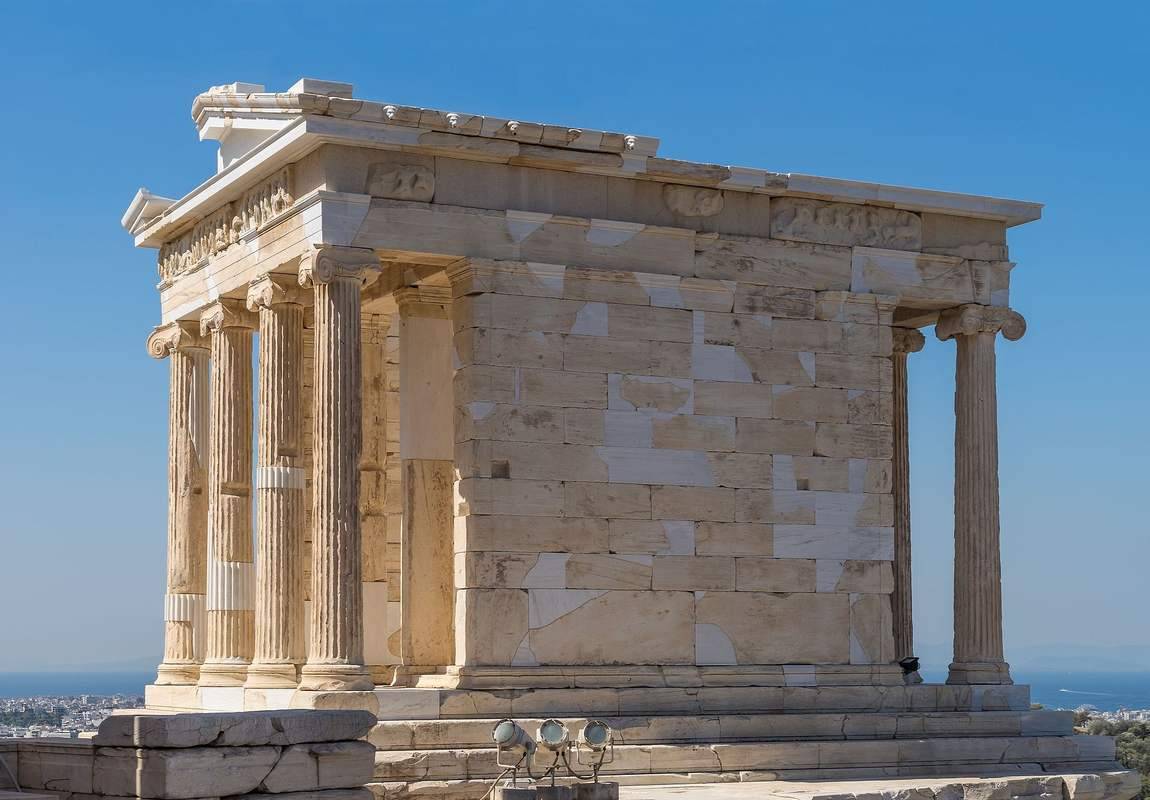
The Pinakotheke was the north wing of the Propylaea, which served as a picture gallery, one of the earliest known art galleries in history. It displayed painted panels and artworks for visitors entering the Acropolis. The south wing was smaller and irregular, shaped to avoid encroaching on the sacred precinct of the nearby Temple of Athena Nike.
One of the most intriguing features of the Propylaea is its north wing, known as the Pinakotheke, which gives a glimpse of how the gateway was used beyond simply being an entrance. The Pinakotheke functioned as a picture gallery, displaying painted wooden panels and works of art, and is often cited as one of the earliest public art galleries known from the ancient world. Visitors arriving at the Acropolis could pause here to view paintings, adding a cultural dimension to the grand entrance and reflecting the Athenian love of art. The two wings of the Propylaea were deliberately unequal: the north wing housing the Pinakotheke was larger and more complete, while the south wing was made smaller and irregular in shape. This asymmetry was not a flaw but a respectful design choice, as the south side had to avoid encroaching on the adjacent sacred ground of the Temple of Athena Nike and its bastion, showing how the architect balanced grandeur with religious sensitivity. The Pinakotheke highlights the sophistication of the design, set out alongside the guide to the Temple of Athena Nike. Its influence echoes through history.
What is the legacy of the Propylaea and how do you visit it?
The Propylaea ranks among the first monumental gateways in history and influenced architecture for over two thousand years, inspiring Roman, Byzantine and Neoclassical designs, most famously the Brandenburg Gate in Berlin. Today you walk through the Propylaea to enter the Acropolis summit, climbing its steps and columns, with your ticket; you cannot linger long inside as visitors flow through.
The Propylaea’s influence has rippled across the centuries, making it one of the most consequential gateways ever built. As one of the first grand monumental entrances in architectural history, its basic form of a central gateway flanked by wings inspired countless later structures across the Roman, Byzantine and Neoclassical worlds. Its most direct and famous descendant is the Brandenburg Gate in Berlin, built in the late 18th century, which closely echoes the Propylaea’s design, and its DNA can be seen in grand gateways, museums and civic buildings around the world. For the modern visitor, experiencing the Propylaea is wonderfully direct: it is the actual route by which you enter the Acropolis, so after passing the Temple of Athena Nike you climb the steps and walk up through its towering marble columns and porches, just as the ancient Athenians did, emerging onto the summit with the Parthenon suddenly revealed before you. Because visitors flow through continuously, you pass through rather than dwell inside, but pausing on the approach to admire it is worthwhile. A guide brings its grandeur and history alive. The Propylaea is a thrilling entrance, set out alongside the guides to guided tours and skipping the lines. The questions below cover the points visitors ask most.
What can you see of the Propylaea today and tips for visiting?
Today you can see the Propylaea’s towering Doric columns, its central gateway and the surviving north wing that housed the Pinakotheke art gallery, as you climb through it to the summit. Unfinished surfaces and projecting blocks reveal where work stopped. Go early or late to avoid the crowds bottlenecking at the entrance, and pause on the approach to admire it.
The Propylaea remains an imposing and evocative monument, and as the gateway to the Acropolis it is impossible to miss. Climbing up to the summit, you pass directly through it, between and beneath its tall, fluted marble columns and porches, experiencing the grand processional approach much as the ancient Athenians did, with the Parthenon dramatically revealed as you emerge at the top. You can see the central gateway block with its doorways, the surviving wings, including the north wing that once held the Pinakotheke picture gallery, and the combination of Doric and Ionic columns. Look out for the unfinished surfaces, rough bosses and projecting lifting-blocks on the masonry, which were never smoothed away when construction stopped during the Peloponnesian War, a fascinating record of an ancient building site frozen in time. For visiting tips, be aware that the Propylaea is a natural bottleneck where crowds bunch up at the entrance, so arriving early at opening or in the late afternoon helps you avoid the worst congestion on the steps. Wear sturdy shoes, as the marble here is especially worn and slippery, and pause on the approach below to take in the full grandeur of the gateway before joining the flow up through it. A guide adds rich context as you climb. The Propylaea is a thrilling threshold, set out alongside the guide to skipping the lines. The questions below cover the points visitors ask most.
Frequently Asked Questions
What is the Propylaea of the Acropolis?
The Propylaea is the monumental marble gateway forming the grand entrance to the Athenian Acropolis, built in the 5th century BC under the architect Mnesicles as part of Pericles’ programme. It channelled pilgrims and processions onto the sacred rock, marking the symbolic threshold between the city and the holy precinct, and blends Doric and Ionic architecture.
Who built the Propylaea and when?
The Propylaea was designed by the architect Mnesicles and begun in 437 BC, as part of the statesman Pericles’ programme to rebuild the Acropolis. Construction was interrupted by the start of the Peloponnesian War in 431 BC, and although most of the gateway was finished, some planned parts were never completed.
Can you walk through the Propylaea?
Yes, the Propylaea is the actual entrance to the Acropolis summit, so you walk up through its marble columns and porches to reach the Parthenon and the other monuments, just as the ancient Athenians did. Visitors flow through continuously, so you pass through rather than linger, but you can admire it on the approach.