
The Mykonos Folklore Museum preserves the island’s traditional way of life across several historic sites, the main collection in a 16th-century captain’s residence in the Kastro quarter, the charming Lena’s House, and the Bonis windmill agricultural museum. This guide covers the exhibits, the houses, the windmill, hours and how to visit.
The museum offers a window into traditional island life in the Mykonos travel guide, away from the beaches and nightlife. The sections below cover it in full.
What is the Mykonos Folklore Museum?
The Mykonos Folklore Museum preserves the island’s traditional culture and daily life, with its main collection in a 16th-century captain’s residence in the Kastro quarter of Mykonos Town. Opened, it displays textiles, furniture, ceramics, tools and maritime items, and spans several sites including Lena’s House and the Bonis windmill.
The Mykonos Folklore Museum is one of the island’s most rewarding cultural attractions, dedicated to preserving and showing the traditional way of life, crafts and history of Mykonos. Formally opened to the public, its main collection occupies a lovely 16th-century sea-captain’s residence in the historic Kastro district of Mykonos Town, near the famous Paraportiani church, an atmospheric setting that is part of the experience. Inside, the museum gathers the heart of the Folklore Collection of Mykonos, a rich array of objects from everyday island life. Importantly, the museum is really several sites in one, comprising the main Kastro house, the charming Lena’s House recreating a 19th-century home, and the Bonis windmill, which serves as an agricultural museum, giving a fuller picture of traditional Mykonian life across town and countryside. Compact and free or inexpensive, it offers a calm, cultural counterpoint to the beaches and nightlife, set out alongside the guide to the Aegean Maritime Museum. Its exhibits are varied and rich.
What can you see in the museum?
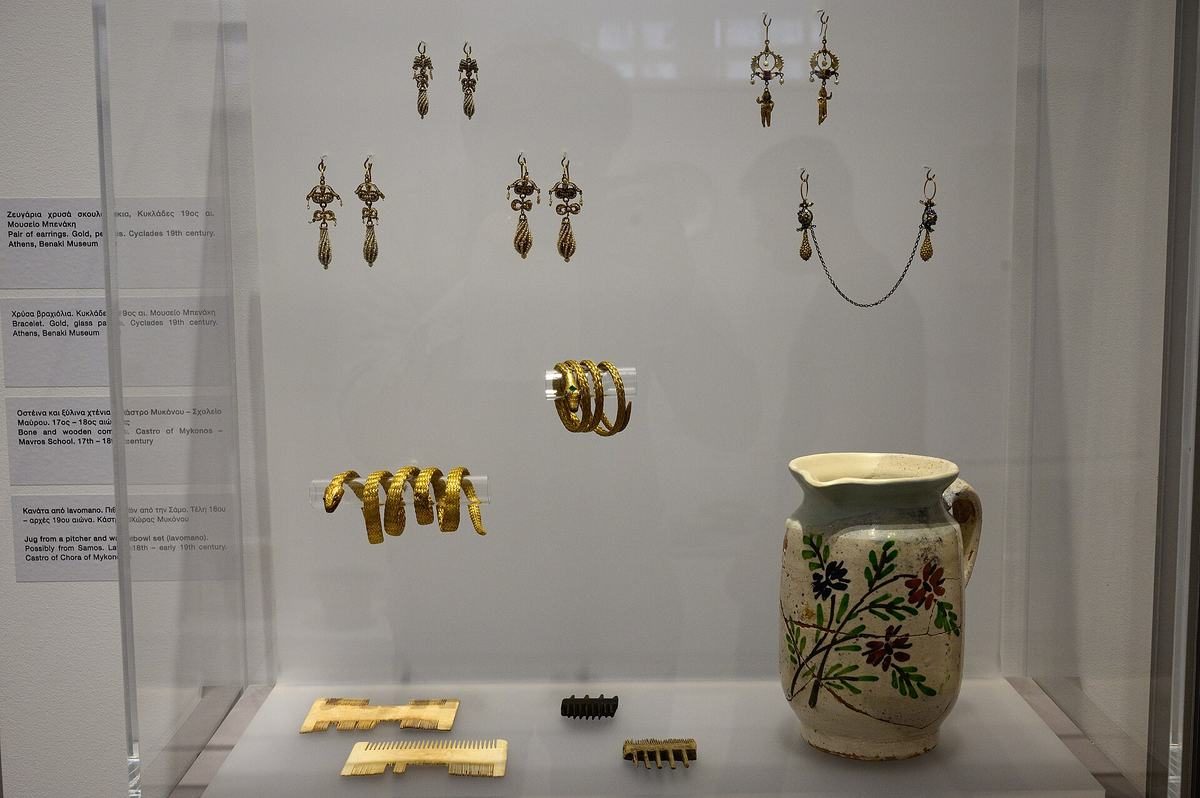
The Folklore Museum displays rare textiles, embroidery, traditional furniture, ceramics and painted plates, keys and locks, old weights and measures, Cycladic sculptures, lighting devices and maritime equipment, along with paintings and recreated period rooms, giving a vivid picture of traditional Mykonian domestic, rural and seafaring life.
The collection in the main Kastro house is wonderfully varied, evoking the texture of old island life through everyday and decorative objects. Among the highlights are rare collections of textiles and exquisite embroidered works, for which Mykonos was known, alongside traditional carved furniture, ceramics, painted plates and household utensils. There are fascinating collections of keys and locks, old weights and measures, handwoven tapestries, traditional Cycladic sculptures, and lighting devices that trace the evolution from ancient oil lamps to kerosene lamps. A fine collection of paintings adds artistic interest, and the museum recreates period interiors, including a quintessential 19th-century middle-class sitting room, a bedroom and a kitchen, furnished as they would have been, so you can picture daily life as it was lived. Maritime pieces of equipment reflect the island’s seafaring heritage. Together these exhibits paint a vivid, intimate portrait of traditional Mykonian domestic, rural and nautical life, set out alongside the guide to things to do. Lena’s House brings the period to life.
What is Lena’s House?
Known as Lena’s House, this is a perfectly preserved 19th-century middle-class Mykonian townhouse, part of the Folklore Museum, kept with all its original furnishings to show how a well-off island family lived. It also displays an important collection of embroidery and traditional dresses, offering an intimate glimpse into period domestic life.
One of the most charming parts of the Folklore Museum is Lena’s House, a separate site that recreates an authentic 19th-century Mykonian home. It is a typical middle-class townhouse of the period, preserved complete with all its original furnishings, decorations and household objects exactly as they would have been, so that stepping inside feels like entering the home of a well-off Mykonian family of the 1800s, frozen in time. Named after its last resident, the house lets you wander through its rooms and see the furniture, ornaments, mirrors, beds and everyday items in place, giving an intimate, lived-in sense of period domestic life that the displays of objects elsewhere cannot quite match. Lena’s House also holds an important collection of fine embroidery, for which Mykonian women were renowned, along with traditional dresses and costumes, beautifully showing the island’s textile crafts and dress. This atmospheric, immersive house is a highlight for many visitors, set out alongside the guide to Mykonos Town. The Bonis windmill completes the picture.
What is the Bonis windmill agricultural museum?
The Bonis windmill is a restored traditional windmill that forms part of the Folklore Museum as an agricultural museum, showing how Mykonos once ground its grain and farmed the land. It displays old farming tools, a wine press and rural equipment, linking the island’s famous windmills to its agricultural past.
The third main site of the Folklore Museum is the Bonis windmill, which serves as an agricultural museum and connects the island’s iconic windmills to the rural life that once sustained it. The windmills that crown Mykonos Town are among its most famous symbols, and the restored Bonis windmill lets you see how these mills actually worked to grind the island’s grain into flour, a vital industry in the days before imports, with its mechanism and millstones on display. Around it, the agricultural museum gathers old farming tools, a traditional wine press and other rural and agricultural equipment, illustrating how Mykonians farmed the land, harvested grapes and produced their food and wine in earlier centuries. This site rounds out the picture of traditional island life given by the town houses, adding the rural and working dimension to the domestic and craft displays elsewhere. Together with the Kastro house and Lena’s House, the windmill makes the Folklore Museum a comprehensive look at old Mykonos, set out alongside the guide to the windmills. Visiting the sites is easy and central.
How do you visit the Folklore Museum?
The main Folklore Museum is in the Kastro quarter of Mykonos Town near Paraportiani church, with Lena’s House and the Bonis windmill at separate nearby sites. It is open seasonally, often late afternoon and evening, with free or low-cost entry. Check current hours, as they vary, and the sites can be seen on a short walk.
Visiting the Folklore Museum is easy, as its sites are within or close to Mykonos Town and cost little or nothing. The main museum sits in the historic Kastro quarter on the western edge of the Chora, right by the famous Paraportiani church and near Little Venice, reached on foot through the old town’s lanes. Lena’s House lies nearby in the Tria Pigadia area, and the Bonis windmill stands close to the town, so the three sites can be combined on a short walking tour of the old town and its edge. The museum generally opens through the main season from spring to autumn, often in the late afternoon and evening hours, with admission either free or for a small fee, making it very accessible. Because exact opening times vary by site and season and can change from year to year, it is sensible to check the current hours before you go. Compact and central, the museum fits neatly into a day of exploring town, set out alongside the guides to Paraportiani church and a Mykonos itinerary. It is well worth including.
Why visit the Folklore Museum?
The Folklore Museum is worth visiting for an authentic glimpse of traditional Mykonian life beyond the beaches and parties, set in atmospheric historic houses. Compact, central and free or cheap, it is ideal for a cultural break, a windy day or an early evening, and adds depth and context to a Mykonos trip.
The Folklore Museum offers something different from the beaches, beach clubs and nightlife that dominate a typical Mykonos visit, revealing the island’s authentic history and traditional culture. Through its textiles, furniture, ceramics, tools, recreated rooms and the immersive Lena’s House and Bonis windmill, it shows how Mykonians lived, worked, dressed and farmed before tourism transformed the island, adding real depth and context to your trip and a richer appreciation of the place. Its compact size, central location in the old town and free or low-cost entry make it an easy, low-commitment addition to a day of sightseeing, and it makes an ideal cultural break, a rewarding refuge on a windy day when the beaches are blustery, or a pleasant early-evening visit before dinner. For families, it offers children a tangible sense of old island life, and for anyone curious about the real Mykonos behind the glamour, it is a small gem. Combining it with the nearby Paraportiani church and Aegean Maritime Museum makes a fine cultural afternoon, set out alongside the guide to Mykonos with kids. The questions below cover the points travellers ask most.
Is the Folklore Museum good for families and how long do you need?
The Folklore Museum is good for families, giving children a tangible sense of old island life through traditional rooms, tools and costumes, and you need only about 30 to 60 minutes per site. Compact, central and free or cheap, it is an easy, low-commitment cultural stop suitable for all ages.
The Folklore Museum suits families well and fits easily into a day in town, making it an accessible cultural option for all ages. For children, the recreated period rooms, the traditional furniture, tools, costumes, keys and locks and the immersive Lena’s House bring old Mykonian life to life in a tangible, visual way that is more engaging than rows of labelled objects, while the Bonis windmill, with its mechanism for grinding grain, appeals to curious young minds and links to the famous windmills they will see around town. Because each of the museum’s sites is small, you need only around 30 to 60 minutes at each, so a visit never feels long or overwhelming and can be slotted between other activities or used as a cool, calm break from the midday heat or a windy beach day. The free or low-cost entry makes it a low-commitment outing, and the central locations in and around the old town mean little travel. For families wanting to give children a sense of the island’s heritage, or for anyone seeking a short, rewarding cultural stop, the Folklore Museum is an easy and worthwhile choice, set out alongside the guides to Mykonos with kids and the windmills. Pairing it with the neighbouring Paraportiani church, the windmills and the Aegean Maritime Museum makes a rewarding cultural afternoon in the old town, giving real depth to a holiday that might otherwise revolve only around the beaches and bars, and a richer sense of the island’s heritage and traditions. Few attractions on the island offer so genuine a window into traditional life for so little time and money, which is exactly why it stands out among the cultural sights. For curious travellers and families alike, it is a small, memorable highlight that adds real texture to a Mykonos holiday. Its compact size and central setting make it an easy yes.
Frequently Asked Questions
What can you see at the Mykonos Folklore Museum?
The Folklore Museum displays rare textiles, embroidery, traditional furniture, ceramics, keys and locks, old weights and measures, Cycladic sculptures, lighting devices, maritime equipment and paintings, along with recreated period rooms, giving a vivid picture of traditional Mykonian domestic, rural and seafaring life.
What is Lena’s House in Mykonos?
Lena’s House, part of the Folklore Museum, is a perfectly preserved 19th-century middle-class Mykonian townhouse, kept with all its original furnishings to show how a well-off island family lived. It also displays an important collection of embroidery and traditional dresses, offering an intimate glimpse of period life.
Where is the Mykonos Folklore Museum?
The main Folklore Museum is in the Kastro quarter of Mykonos Town near the Paraportiani church, set in a 16th-century captain’s residence, with Lena’s House and the Bonis windmill at separate nearby sites. The three can be seen on a short walk, with free or low-cost entry and seasonal hours.