
Fira Santorini is the island’s lively capital, perched dramatically on the caldera cliffs, with a famous cable car down to the Old Port, museums, shopping, restaurants and the island’s best nightlife. This guide covers what to do in Fira, the cable car, the caldera views and how to visit the central hub of Santorini.
Fira is the practical and social heart of the island, central to the wider Santorini travel guide. It sits midway along the caldera’s east rim. The sections below cover the capital.
What is Fira like?
Fira is Santorini’s bustling capital, perched atop the caldera cliffs, with white cobblestone streets, caldera-view cafés and restaurants, jewellery and souvenir shops, museums and the island’s liveliest nightlife. It is the central hub from which buses reach the whole island.
Fira is the energetic centre of Santorini. Spread along the edge of the caldera at the island’s heart, the capital pairs clifftop views with a busy, commercial buzz. Its white cobbled lanes are lined with caldera-view restaurants and cafés, jewellery and gift shops, hotels and bars.
By day it hums with shoppers, cruise visitors and bus travellers; by night it has the island’s best nightlife. As the hub of the public bus network, it is also the most convenient base for exploring, with Oia, the beaches, Akrotiri and the airport all easily reached, set within the wider where to stay in Santorini. The cable car is its signature ride.
What is the Santorini cable car?
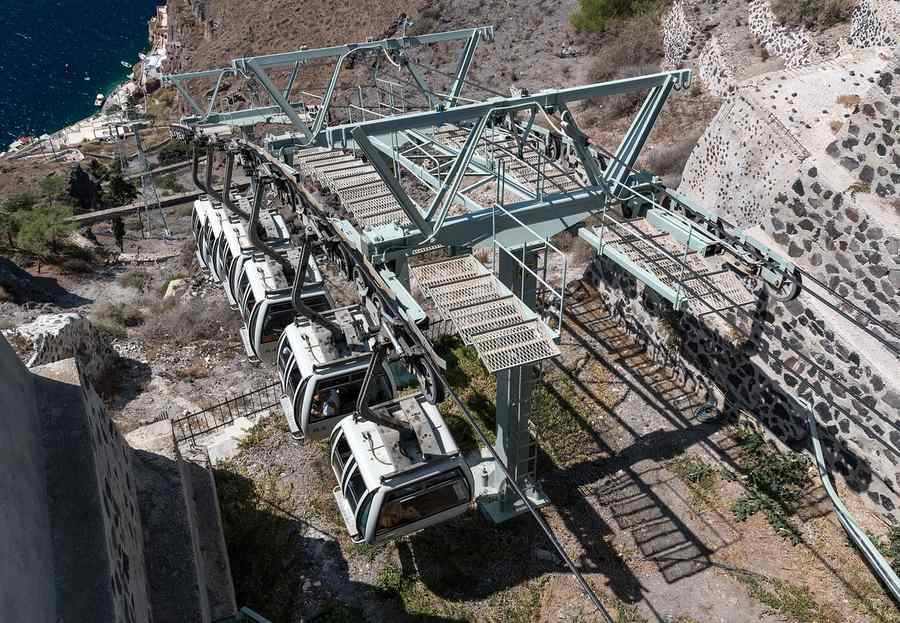
The Santorini cable car links Fira with the Old Port 220 metres below, rising the cliff in about three minutes with Aegean views. A one-way ticket costs around 10 euros for adults and 5 for children. Booking ahead avoids queues on cruise days.
The cable car is the fastest and most scenic way between Fira and the sea. It runs from the cliff edge in town down to the Old Port some 220 metres below. The cabins make the journey in about three minutes, with sweeping views of the caldera, the volcano and the whitewashed town above.
A one-way ticket is around 10 euros for adults and 5 for children aged 6 to 12, with under-6s free. Tickets are bought online in advance or at the window, and advance booking is sensible on busy cruise days when queues build. The alternatives are the steep zig-zag donkey path or walking, set out alongside the guide to how to get to Santorini and its ports. The town holds plenty to see.
What are the best things to do in Fira?
The best things to do in Fira are walking the caldera-edge path, visiting the Museum of Prehistoric Thera for the Akrotiri frescoes, seeing the two cathedrals, browsing the shops and enjoying the sunset and nightlife. The cliff path leads on to Oia.
Fira offers more than its views. Strolling the caldera-edge promenade past clifftop cafés gives constant panoramas over the volcano. Continuing north leads through Firostefani and Imerovigli toward Oia on the famous cliff hike.
Culture lovers should visit the Museum of Prehistoric Thera, which displays the finds and frescoes from nearby Akrotiri, along with the Archaeological Museum and the heritage collection at Megaro Gizi. The grand Orthodox Metropolitan Cathedral and the Catholic cathedral crown the town. The shopping, dining and bars keep visitors busy into the night, set out alongside the guides to Akrotiri and the sunset. The views and nightlife define the evenings.
What are the views and nightlife like?
Fira has fine caldera and sunset views from its cliff-edge cafés and terraces, less crowded than Oia, plus the island’s liveliest nightlife of bars and clubs around the centre. It is the best base for both the scenery and a night out.
Fira combines scenery with energy after dark. Its west-facing cliff terraces and rooftop bars give caldera and sunset views that rival Oia’s with far smaller crowds. The outlook is at its finest over a cocktail or dinner as the light fades.
The capital comes alive after dark with the island’s most varied nightlife. Relaxed wine and cocktail bars sit alongside late-night clubs clustered around the centre, drawing a younger crowd as well as couples. This mix of views, dining and nightlife in one walkable town is why Fira suits first-time visitors, set out alongside the guide to Santorini food. Getting there and around is easy.
How do you get to and around Fira?
Fira is the hub of the KTEL bus network, with frequent buses to Oia, the beaches, Akrotiri and the airport for a couple of euros. It sits about 8 kilometres from Athinios port and the airport, and the compact centre is explored on foot.
Fira’s central position makes it the easiest place to base and get around. The main KTEL bus station in town is the heart of the island’s public transport, with frequent, cheap services to Oia, Perissa, Kamari, Akrotiri and the airport, so a car is not essential.
Fira lies roughly 8 kilometres from the main ferry port at Athinios and a similar distance from the airport. Both are reached by bus, taxi or a pre-booked transfer, while the Old Port below is linked by the cable car. The compact, pedestrianised centre is best explored on foot, with comfortable shoes for the cobbles and steps, set out alongside the guides to a Santorini itinerary and Oia. The questions below cover the points travellers ask most.
What are the cable car timings and the donkey path?
The Fira cable car runs from early morning until late evening in summer, with cabins every 20 minutes and more often on cruise days. The alternative is 588 steps on the donkey path, walkable in about 20 minutes down, though the climb up is hard.
The cable car keeps long hours in the season. Cabins depart at short intervals from the early morning through to late in the evening, running more frequently when cruise ships crowd the Old Port. The 220-metre rise takes about three minutes, and the last departures let evening visitors return from a harbour meal.
The old donkey path is the on-foot alternative. Its 588 zig-zag steps drop from the town to the Old Port and take around 20 minutes downhill. The steps are shared with donkeys and can be slippery and pungent, and the climb back up in the heat is steep, so most visitors ride the cable car at least one way.
Where should you stay and eat in Fira?
Stay on the caldera rim for the views or a street back for lower prices, with quieter Firostefani and Imerovigli a short walk north. Eat at caldera-view tavernas for the setting and the backstreets for value, sampling fish, fava and tomato fritters.
Accommodation in Fira spans the budget range. The caldera-edge hotels and cave suites command the best views and the highest prices, while rooms a street or two back cost far less and stay within a short walk of everything. Firostefani and Imerovigli, joined to Fira by the cliff path, offer the same views in a calmer setting.
Dining follows the same split. The cliff-edge restaurants trade on the caldera panorama and sunset, ideal for a special dinner, while the tavernas in the backstreets serve the same Cycladic dishes at gentler prices. Local plates such as grilled fish, fava purée, tomato fritters and white aubergine show the island’s kitchen at its best, set out alongside the guide to Santorini restaurants.
Why is Fira a good base for day trips?
Fira is the best base for day trips because every bus route starts there, putting Oia, the beaches, Akrotiri and the boat tours within reach. From the Old Port below, caldera cruises sail to the volcano and hot springs.
The bus hub is the key. With nearly every KTEL route beginning in Fira, a visitor based here reaches Oia, Perissa, Kamari, Akrotiri and Monolithos without a car, changing buses in the town’s own station. This turns the capital into a springboard for exploring the whole island on a budget.
The Old Port adds sea trips. Caldera boat tours to the volcanic islets of Nea Kameni, the hot springs and Thirasia depart from the harbour below Fira, reached by the cable car, so a day on the water starts a few minutes from the centre. The mix of bus routes and boat departures makes Fira the most flexible base on the island, set out alongside the guide to Santorini day trips.
What museums are in Fira?
Fira holds the Museum of Prehistoric Thera, with the Akrotiri frescoes and Bronze Age finds, the Archaeological Museum of Thera for later antiquities, and the Megaro Gizi cultural centre. The prehistoric museum is the highlight, pairing well with a visit to the Akrotiri site itself.
The Museum of Prehistoric Thera is the star. It gathers the wall paintings, pottery and gold from the Bronze Age town of Akrotiri, buried by the volcanic eruption and preserved beneath the ash. The delicate frescoes of blue monkeys and gathering scenes make it one of the finest small museums in the Cyclades.
Two more collections round out the town. The Archaeological Museum of Thera displays sculpture and ceramics from the later Greek and Roman periods of the island, while Megaro Gizi occupies a restored mansion with historic engravings and photographs of Santorini. Together they give the context for the frescoes and the island’s long past, set out alongside the guide to the Museum of Prehistoric Thera.
When is the best time to visit Fira?
Visit Fira from late April through June or in September and October for warm weather and thinner crowds. July and August are hottest and busiest, packed on cruise days. The shoulder months give the caldera views and dining with an easier pace and lower prices.
The shoulder seasons suit Fira best. Late spring, from the end of April into June, brings warm days, open restaurants and manageable crowds, while September and October keep the sea warm for swimming with fewer visitors. Prices for rooms and tours ease outside the peak, and the caldera walks are comfortable in the milder heat.
High summer is the busiest window. July and August deliver the hottest weather and the fullest streets, and cruise days can pack the centre and the cable car queue by midday. Early mornings and later evenings stay pleasant even then, so peak-season visitors do well to time the sights and the sunset around the crowds, set out alongside the guide to the best time to visit Santorini.
What is shopping like in Fira?
Fira has the island’s widest shopping, from jewellery and Greek designer boutiques to art galleries, wine shops and souvenir stores along the cobbled lanes. The gold and gemstone jewellers are a local specialty, and the caldera-edge shops stay open late into the evening.
Shopping is one of Fira’s daytime draws. The narrow streets running back from the caldera edge are lined with stores selling gold and silver jewellery, leather goods, ceramics and locally made art. The island has a long jewellery-making tradition, and the gemstone and gold pieces are a common purchase.
The range goes beyond souvenirs. Wine shops sell Assyrtiko and Vinsanto to take home, galleries show work by Greek artists, and boutiques stock clothing and design pieces. The shops cluster along the pedestrian lanes and stay open into the evening, so browsing pairs naturally with a sunset drink and dinner in the town, set out alongside the guide to Santorini shopping.
Frequently Asked Questions
What is Fira Santorini known for?
Fira is known as Santorini’s lively capital on the caldera cliffs, famous for the cable car down to the Old Port, its caldera views, museums displaying the Akrotiri frescoes, shopping and the island’s best nightlife. It is the central hub of the bus network.
How much is the Santorini cable car?
The Santorini cable car costs around 10 euros one way for adults and 5 euros for children aged 6 to 12, with under-6s free. It links Fira with the Old Port 220 metres below in about three minutes, and booking online ahead helps avoid queues on busy cruise days.
Is Fira a good base in Santorini?
Fira is the best all-round base for first-time visitors, as the hub of the bus network with easy access to Oia, the beaches, Akrotiri and the airport, plus the widest choice of restaurants, shops and nightlife. It is busy and commercial but very convenient.
How do you get from Fira to the Old Port?
The cable car links Fira with the Old Port 220 metres below in about three minutes for around 10 euros one way. The alternative is the 588-step donkey path, walkable in about 20 minutes downhill. The cable car is far easier, especially for the climb back up in the heat.
Is Fira or Oia better to stay in?
Fira suits first-time visitors who want the bus hub, nightlife and value, while Oia suits couples after the quieter, most scenic sunset village. Fira has more restaurants and transport links; Oia has the famous blue domes. Many visitors split a stay between the two.