
Despotiko is a small, uninhabited islet off the west coast of Antiparos, home to a great ancient Sanctuary of Apollo that some archaeologists rank alongside, or even above, the famous sanctuary on Delos. Reached by a short boat trip, it offers a rare, peaceful encounter with classical Greece. This guide covers its history, the sanctuary, the excavations and how to visit. Plan the whole trip with Greece Tours.
The islet is a remarkable archaeological highlight off Paros and Antiparos, set within the wider Antiparos day trip from Paros. It sits across a narrow channel from Antiparos. The sections below cover the visit.
What is the islet?
Despotiko is a small, uninhabited islet just west of Antiparos, once joined to it by a natural causeway. Today reached by a short boat ride, it holds one of the most important ancient sanctuaries in the Cyclades, set in a wild, peaceful landscape.
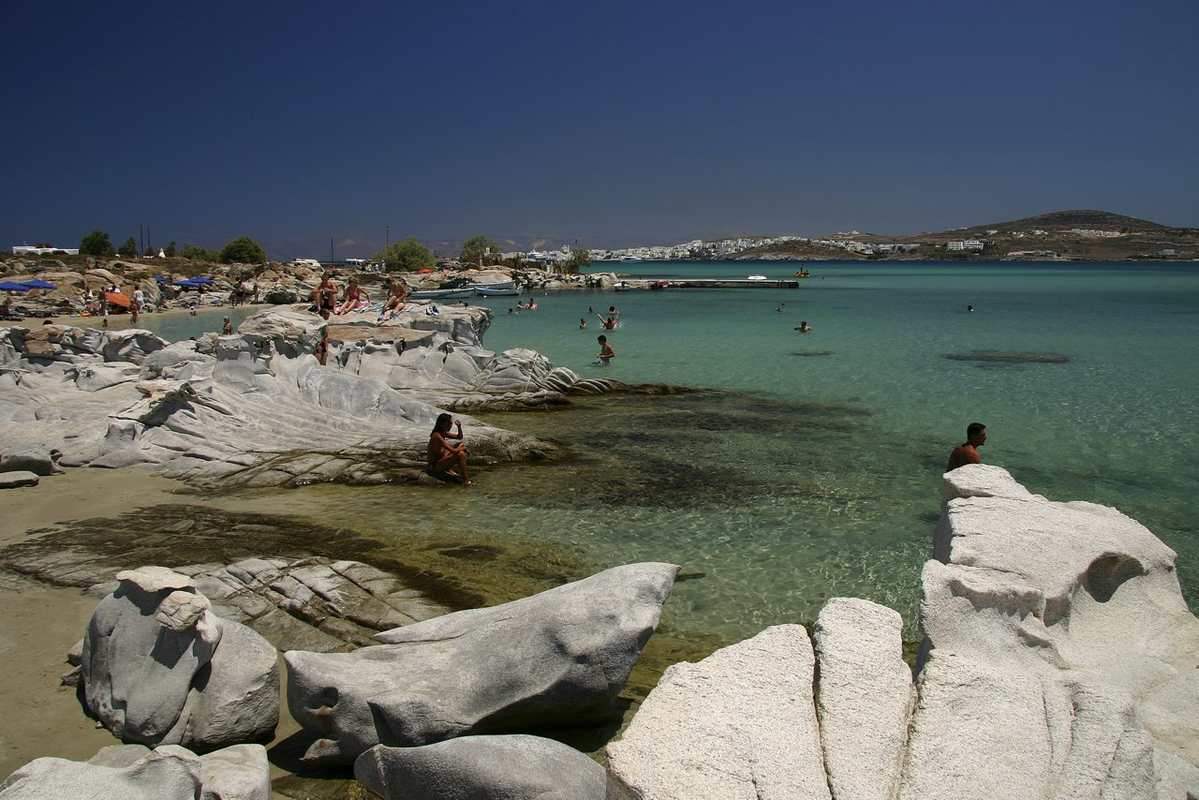
The islet is a quiet fragment of the ancient Cyclades. Lying just off the west coast of Antiparos, it was connected to it in antiquity by a natural land bridge, and is now a short boat hop across the channel. Uninhabited and undeveloped, it is covered in low scrub and ringed by clear water, with the ruins of its great sanctuary spread across a peninsula. The combination of significant archaeology and untouched calm makes it a special place to visit, set within the wider guide to the Antiparos day trip from Paros. Its sanctuary is the reason it matters.
What is the Sanctuary of Apollo?
The Sanctuary of Apollo is a great Archaic-to-Hellenistic religious complex on the islet’s north-eastern peninsula, dedicated to the god Apollo. Its temples, altars and marble buildings made it one of the richest sanctuaries in the Cyclades.
The sanctuary is the islet’s treasure. Founded in the Archaic period and active into the Hellenistic age, the great complex dedicated to Apollo spread across the north-eastern peninsula, with temples, altars and marble buildings. A large, multi-room structure on its western side held a stone altar and pottery fragments inscribed with Apollo’s name, confirming the dedication. In its architectural richness and its offerings, the sanctuary rivalled the famous one on the sacred island of Delos, set within the island’s deep marble and sculpture heritage in the guide to Parian marble. Its importance is still being uncovered.
Why is it compared to Delos?
It is compared to Delos because its Sanctuary of Apollo proved almost as rich as the famous one on the sacred island, in both architecture and dedications. Some archaeologists argue it may have been even more important in its time.
The comparison with Delos reflects the sanctuary’s scale. As systematic excavation has revealed its temples, altars and marble buildings, archaeologists have found a complex almost as developed and richly endowed as the great sanctuary on Delos, the most sacred site in the Cyclades. Some now argue that Despotiko may have rivalled or even surpassed Delos in importance during parts of antiquity, a striking claim for so small and quiet an islet. This growing significance makes it one of the most exciting archaeological sites in the islands, set within the wider things to do in Paros. Its story reaches far back in time.
How old is the site?
The earliest traces of habitation on the islet date to the Early Cycladic period in the third millennium BC, while the great Sanctuary of Apollo was founded in the Archaic period and operated until Hellenistic times, spanning much of ancient Greek history.
The islet’s history runs very deep. The first signs of human presence date to the Early Cycladic period, around the third millennium BC, placing it among the long-inhabited islands of the Aegean. The great sanctuary itself was founded in the Archaic period, from around the seventh and sixth centuries BC, and remained in use into the Hellenistic age, a span of several centuries at the heart of ancient Greek religion. Excavations since continue to reveal new buildings and finds each season, set within the ancient story told in the guide to Panagia Ekatontapyliani and the island’s heritage. Visiting takes a short boat trip.
How do you visit the islet?
You visit the islet by small boat from Antiparos, a short crossing of the channel, or on a boat tour from Paros that includes a stop. There are no facilities, so bring water, sun protection and sturdy shoes for the rough ground.
Reaching the islet is part of its appeal. Small boats and water taxis cross from Antiparos, especially from the beach areas near the channel, in a few minutes, while some boat tours from Paros and Antiparos include a stop at the islet alongside swimming in the Blue Lagoon, set out in the guide to Paros boat tours. The islet is uninhabited with no shops, cafés or shade, so visitors bring water, a hat, sunscreen and sturdy shoes for the uneven archaeological ground. Respecting the excavation site keeps it preserved. A visit rewards the curious. The questions below cover the points travellers ask most.
Frequently Asked Questions
What is Despotiko known for?
Despotiko is known for its great ancient Sanctuary of Apollo, an Archaic-to-Hellenistic complex that some archaeologists rank alongside or above the famous sanctuary on Delos. The uninhabited islet sits just off the west coast of Antiparos.
How do you visit Despotiko?
You visit Despotiko by small boat or water taxi from Antiparos, a short crossing of the channel, or on a boat tour from Paros that stops there. The islet has no facilities, so bring water, sun protection and sturdy shoes.
Is Despotiko worth visiting?
Despotiko is well worth visiting for those interested in ancient history and quiet, unspoilt nature. Its important Sanctuary of Apollo, peaceful setting and the short boat trip make it a rewarding addition to an Antiparos or Paros boat day.