
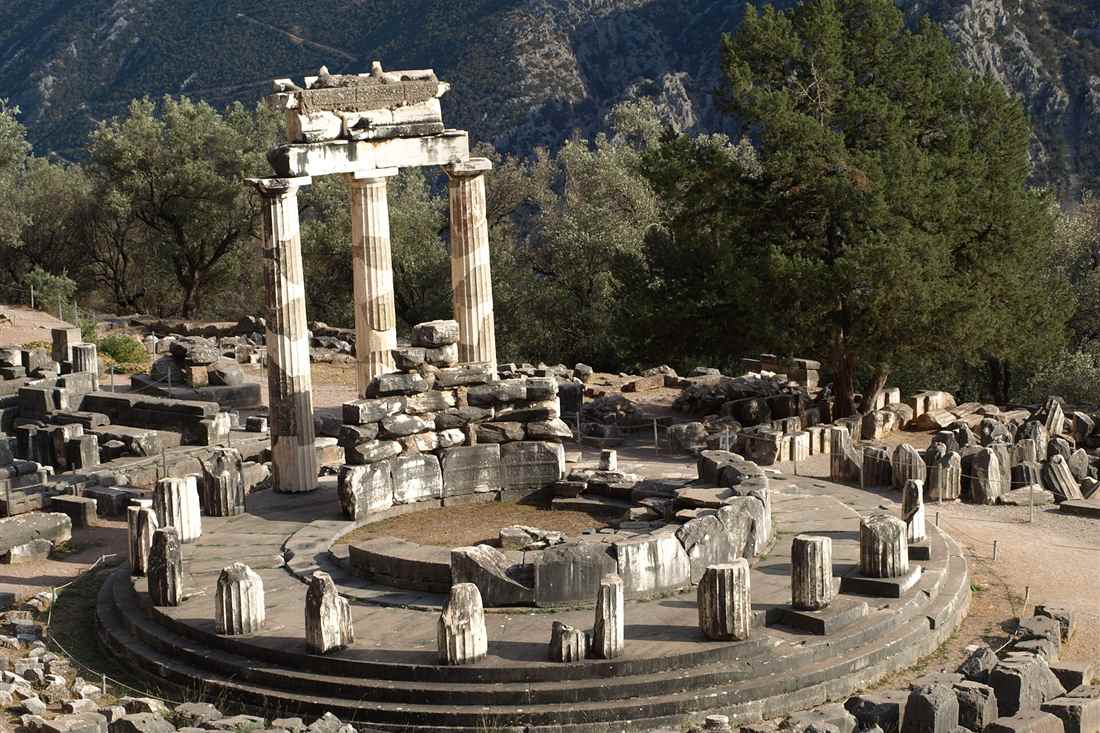
The 3-day ancient Greek archaeological sites tour from Athens is a carbon-neutral trip to Mycenae, Olympia and Delphi, three key sites of classical Greece. Tours across the rest of the country are listed on Greece Tours.
The sections below cover what the ancient Greek archaeological sites tour includes, carbon-neutral travel, the comparison with the four-day route, the three sites, season and booking, with links into the Delphi pages. The tours shown are checked on GetYourGuide and Viator.
What is the 3-day ancient Greek archaeological sites tour?
The 3-day ancient Greek archaeological sites tour starts in Athens and visits three sites. They are Mycenae and Olympia in the Peloponnese, plus Delphi in central Greece. The listing calls the trip a carbon-neutral tour of the key archaeological sites of classical Greece.
Mycenae stands on a rocky hill above the Argolid plain in the northeast Peloponnese. Homer named its king, Agamemnon, as leader of the Greek army at Troy. The city gave its name to the Mycenaean civilisation, the first Greek-speaking culture known from written records.
The listing calls Delphi the centre of the ancient world. Greeks marked that spot with the omphalos, a carved stone navel set in the sanctuary of Apollo. On the 3-day ancient Greek archaeological sites tour, only Delphi sits north of the Gulf of Corinth. Its terraces climb the southwest slopes of Mount Parnassus.
Olympia appears in the listing as the birthplace of the Olympic Games. Athletes met there every four years from the 8th century BC, in honour of Zeus. The sanctuary lies in the Alpheios river valley of Elis, in the western Peloponnese.
UNESCO lists all three sites as World Heritage properties. Delphi and Olympia stand alone, while Mycenae shares its listing with nearby Tiryns. That gives the 3-day ancient Greek archaeological sites tour three inscribed properties on one route. Each site also has its own archaeological museum beside the ruins.
What does the tour include, and what does carbon-neutral mean?
Besides Athens and the three sites, the listing names one feature: carbon-neutral status. On the 3-day ancient Greek archaeological sites tour, that label means net greenhouse gas emissions of zero. Measurement, cuts and certified offsets reach that balance.
Carbon-neutral travel follows three steps. First, a company measures the emissions of its vehicles and hotels in tonnes of carbon dioxide equivalent. Second, it cuts what it can, for example with fuller vehicles or cleaner engines. Third, it offsets the remainder by funding projects that remove or avoid the same tonnage.
An offset counts only when an independent standard certifies it. Gold Standard and the Verified Carbon Standard, run by Verra, are two such schemes. Each certified credit equals one tonne of carbon dioxide avoided or removed. Wind farms, efficient cookstoves and forest protection are common project types.
The listing does not explain how the 3-day ancient Greek archaeological sites tour reaches its carbon-neutral status. It names no offset standard and no vehicle type. Travellers can ask the operator for its emissions figures and the registry behind its credits.
The listing for this ancient Greek archaeological sites tour names no meal plan and no day-by-day order. The points below split its named items from the costs to plan for separately.
- Named: a start in Athens
- Named: three days of touring
- Named: visits to Mycenae, Delphi and Olympia
- Named: carbon-neutral status
- Plan separately: entry tickets to the three sites and their museums
- Plan separately: meals and drinks
How does it compare with the 4-day Peloponnese, Delphi and Meteora tour?
The 3-day ancient Greek archaeological sites tour covers three sites in three days. The 4-day route stretches from the Corinth Canal to Meteora and adds a fourth day. It also names its hotel towns and meals, which the shorter listing leaves out.
The 4-day Peloponnese, Delphi and Meteora tour also leaves from Athens, led by history-loving guides. It shares Mycenae, Olympia and Delphi with the 3-day ancient Greek archaeological sites tour. The longer route continues to Meteora in Thessaly, about 230 km north of Delphi by road.
Epidaurus adds a theatre from the 4th century BC that seats about 14,000 people. Its acoustics carry a voice from the stage to the top row. The Corinth Canal adds a 6.4 km cut through the isthmus, opened in the 19th century. Neither stop is named on the 3-day ancient Greek archaeological sites tour.
Meteora holds six active Eastern Orthodox monasteries on rock pillars above Kalambaka. Monks built them between the 14th and 16th centuries, long after the classical age. That stop moves the 4-day route into late Byzantine and Ottoman times. The 3-day ancient Greek archaeological sites tour stays with Bronze Age and classical ground.
- Length: 3 days on the shorter tour, 4 days on the longer one
- Sites, 3-day tour: Mycenae, Olympia and Delphi
- Sites, 4-day tour: Corinth Canal, Mycenae, Epidaurus, Olympia, Delphi and two Meteora monasteries
- Overnight towns, 3-day tour: not named on the listing
- Overnight towns, 4-day tour: Olympia, Delphi and Kalambaka, with breakfasts and dinners

Why do Mycenae, Olympia and Delphi make a three-site route?
Mycenae, Olympia and Delphi span about a thousand years of Greek history. They run from Bronze Age kings to the Archaic and Classical sanctuaries. The 3-day ancient Greek archaeological sites tour links a royal citadel with the shrines of Zeus and Apollo.
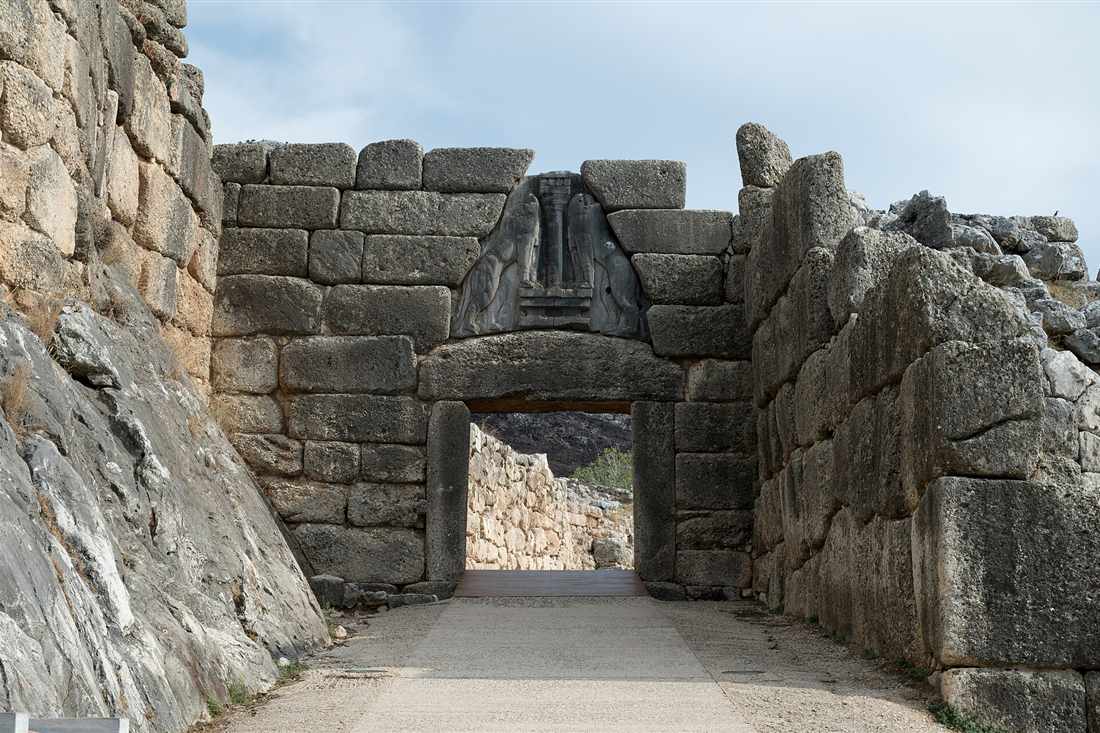
Mycenae reached its peak in the Late Bronze Age, in the 14th and 13th centuries BC. Its rulers ringed the citadel with limestone walls so massive that later Greeks credited them to the Cyclopes. The Mycenae citadel also holds Grave Circle A, where excavators found gold death masks.
Olympia shows the Archaic and Classical periods on the 3-day ancient Greek archaeological sites tour. The Temple of Hera dates to the early 6th century BC. The Temple of Zeus followed in the 5th century BC and held a gold-and-ivory statue by Phidias. The ancient Olympia site also keeps a stadium track about 192 m long.
Delphi’s sanctuary of Apollo rose in the same Archaic and Classical centuries. The Temple of Apollo seen today dates to the 4th century BC. Above it sits a theatre for about 5,000 spectators. The bronze Charioteer of Delphi, cast in the 5th century BC, stands in the site museum.
Road distances between the three sites stay moderate. Mycenae lies about 120 km from Athens, and Olympia about 200 km from Mycenae. Olympia and Delphi sit about 240 km apart, linked by the Rio–Antirrio Bridge over the Gulf of Corinth. Delphi lies about 180 km northwest of Athens, the starting city of this ancient Greek archaeological sites tour.
- Mycenae: clay tablets in Linear B, the earliest written form of Greek, were found at the site
- Olympia: the site museum holds the marble Hermes attributed to Praxiteles, from the 4th century BC
- Delphi: the marble Athenian Treasury, rebuilt from its original blocks in the early 20th century

Which season suits the 3-day ancient Greek archaeological sites tour?
Late spring and September suit the 3-day ancient Greek archaeological sites tour. Daytime highs then sit between 20 °C and 30 °C at Argos and Pyrgos. Both months also fall inside the summer opening hours of Greek state sites.
Mycenae lies in the Argolid, and Argos holds the nearest weather station. Argos receives 471 mm of rain a year, with a peak of 82.5 mm in November. June is the driest month there, at 8.9 mm. Summer visitors to Mycenae on the 3-day ancient Greek archaeological sites tour face dry paths and strong sun.
Olympia lies about 20 km east of Pyrgos, the capital of Elis in the western Peloponnese. Pyrgos collects 890 mm of rain a year, close to double the Argos total. November is the wettest month at 177.6 mm, and December follows with 164 mm. July is the driest month, at 3.6 mm.
Delphi sits on the slopes of Mount Parnassus, and the modern town stands at 632 metres. Arachova lies 968 metres up, just east of Delphi, and snow falls there in winter. The Parnassos Ski Centre sits to the north of Arachova. A Delphi day trip from Athens meets the same mountain air as this ancient Greek archaeological sites tour.
- Spring: April highs reach 21.3 °C at Argos and 20 °C at Pyrgos, with lows near 7 °C.
- Summer: Argos peaks at 34 °C in July, and Pyrgos reaches 32.2 °C in August.
- Autumn: October highs hold near 25 °C in both towns, and Pyrgos gets 102 mm of rain.
- Winter: Argos highs stay near 15 °C, while Arachova averages 5.9 °C in January.
Greek state archaeological sites follow summer opening hours from 1 April to 31 October. Winter hours apply from 1 November to 31 March, with earlier closing times. In December, the sun sets at Olympia around 17:15, against 21:00 in late June.
Closure days fall on 1 January, 25 March, Easter Sunday and Labour Day. The sites also close on 25 and 26 December. Orthodox Easter moves each year. A departure date for the ancient Greek archaeological sites tour needs a check against these closures.

How do you book and cancel the ancient Greek archaeological sites tour?
Booking runs online through the GetYourGuide website or app. The 3-day ancient Greek archaeological sites tour shows its cancellation terms on the booking page. Listings with the free cancellation label allow a full refund up to 24 hours before the start.
GetYourGuide handles the booking of the 3-day ancient Greek archaeological sites tour in five steps. The steps below follow the order of the booking page, from the date to the payment.
- Open the tour page and pick a start date in the calendar.
- Enter the number of travellers and press Check availability.
- Read the cancellation terms shown for the chosen date.
- Add the lead traveller’s name, email address and phone number.
- Pay online and keep the voucher in the GetYourGuide app.
Cancellation runs from the Bookings tab of the GetYourGuide app or website. The refund returns to the original payment method. Inside the final 24 hours, the listing terms set any refund on this ancient Greek archaeological sites tour.
Each of the three sites sells one ticket for its ruins and its museum. At Mycenae, that ticket also covers the Treasury of Atreus. The Olympia ticket includes the site and the Archaeological Museum of Olympia. The Delphi ticket covers the site and the Delphi Archaeological Museum.
Frequently Asked Questions
How long does the archaeological tour last?
GetYourGuide sets the 3-day ancient Greek archaeological sites tour at three days. The booking page shows the start time once a date is chosen. The listing gives no day order for the three sites. Three days leave room for the road drives between the Argolid, Phocis and Elis.
Which three sites does the tour visit?
Mycenae, Delphi and Olympia make up the stops of the 3-day ancient Greek archaeological sites tour. All three appear on the UNESCO World Heritage List. Mycenae shares its listing with Tiryns, and Olympia lies beside the Alfeios river. Delphi overlooks the Pleistos gorge.
Is Epidaurus part of the tour?
Epidaurus does not appear on the listing, which names three other sites. Its theatre and the Sanctuary of Asklepios stand in the Argolid, east of Nafplio. The theatre holds up to 14,000 spectators. A visit there needs a separate tour or a separate trip from Nafplio.
What does carbon-neutral mean on this tour?
Carbon-neutral means the carbon dioxide from an activity is measured and then balanced to net zero. Balancing comes from emission cuts or from certified offset projects, such as forest planting or renewable energy. On the 3-day ancient Greek archaeological sites tour, the label covers the tour’s own emissions.
Are entry tickets part of the tour?
Entry tickets are not named on the listing of this tour. The hhticket.gr website sells official e-tickets for Greek state archaeological sites. Ticket desks at each entrance also sell tickets on the day. An e-ticket on a phone screen works at the entrance gate.
Where does the tour start?
Athens is the start point of the 3-day ancient Greek archaeological sites tour. The exact meeting point appears on the booking page and in the voucher. Metro Line 3 links Athens airport with Syntagma Square in the city centre in about 40 minutes.
What clothing suits the three sites?
Closed walking shoes with grip handle the worn stone paths at all three sites. Mycenae sits on an open hill with little shade, so a sun hat and sunscreen help. Delphi’s path climbs to the stadium at the top of the sanctuary. A water bottle helps on each climb.
How does this tour differ from a single-day Delphi trip?
A single-day Delphi trip covers Delphi alone and returns to Athens on the same day. The 3-day ancient Greek archaeological sites tour adds Mycenae and Olympia to Delphi. Those two sites sit in the Peloponnese, across the Corinth Canal from Athens. The canal cuts the isthmus for 6.4 km.