
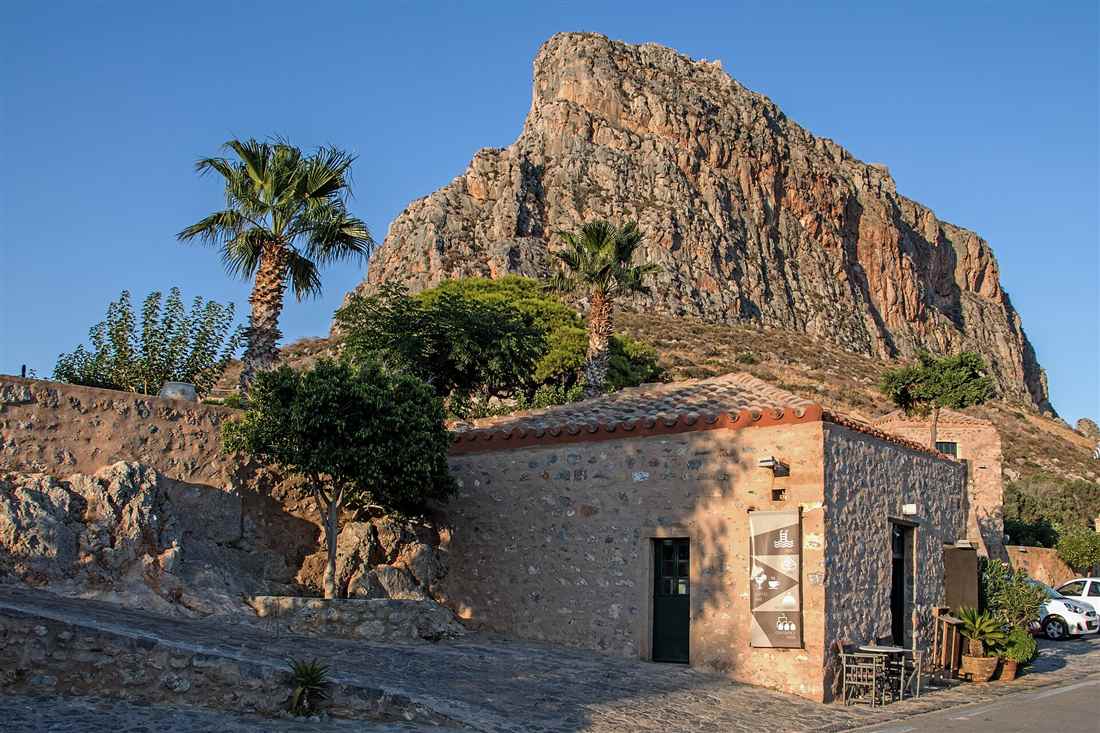
The private 3-day trip to Sparta from Athens adds a night in Monemvasia, the Byzantine town of Mystras and a boat ride through the Diros water caves. Tours across the rest of the country are listed on Greece Tours.
The sections below cover what the 3-day trip to Sparta includes, Sparta, Mystras, Monemvasia, Malvasia wine, the Diros caves, season and booking, with links into the Sparta tours pages. The tours shown are checked on GetYourGuide and Viator.
What is the 3-day trip to Sparta, Monemvasia and the Diros Caves?
This private 3-day trip to Sparta from Athens connects Sparta, Mystras, Monemvasia, Gytheio and the Diros Caves. The plan combines archaeological sites, a medieval settlement and a coastal town. It also includes a boat visit inside the caves and overnight stays.
The 3-day trip to Sparta begins from Athens and runs for three days. Its listed route crosses Laconia in the southeastern Peloponnese, linking inland archaeological sites with the coast and Mani. The sequence moves from east-coast stone walls to the southern peninsula and then inland.
Day one includes Monemvasia and an overnight stay there. The town stands on a rock connected to the mainland by a narrow causeway. Its pedestrian lower settlement sits beneath the upper fortress.
Day two includes the Diros Caves and an overnight stay in Gytheio. The listing describes boarding a small boat at the caves. It then places time in Gytheio, a port town on the Laconian Gulf.
Day three combines Sparti and Mystras. A later visit reaches the archaeological site of Sparta and its museum. Mystras lies above Sparta on the Taygetos slope and forms a separate stop from the modern city.
What does the 3-day trip to Sparta include?
The 3-day trip to Sparta lists an air-conditioned nine-seat van, pickup, lunch and a soft drink. It includes accommodation for days one and two. It also lists tickets for the Diros Caves, Mystras and the Sparti museum. Children receive reduced tickets.
A 3-day trip to Sparta is booked per group of up to four people. The listing labels it as a private group experience, while its small-group label describes the limited group format.
- Air-conditioned nine-seat van transport.
- Pickup service, where available.
- Lunch and a soft drink.
- Accommodation on the first and second nights.
- Diros Caves, Mystras and Sparti museum tickets.
The listed admission items cover the Diros Caves, the Mystras archaeological site and the Sparti museum. The page also states that children receive reduced tickets. Transport and the two overnight stays connect these inclusions into one continuous itinerary.
The booking page displays skip-the-line access and free cancellation up to 24 hours before the start. It also lists an English host or greeter. Starting times require availability checking, and advance booking is required at least 10 hours before departure.
Which places does the 3-day trip to Sparta visit?
The 3-day trip to Sparta visits Monemvasia, the Diros Caves and Gytheio. It then reaches Sparti, Mystras, the archaeological site of Sparta and its museum. Stops range from a rock settlement and port town to Byzantine ruins and an underground water route.
- Monemvasia and its lived-in medieval castle town.
- Diros Caves and their small-boat route.
- Gytheio on the Laconian coast.
- Mystras, including the Palace of the Despots.
- Sparti and the archaeological site of Sparta.
- The Sparti museum.
The 3-day trip to Sparta presents Monemvasia as a castle town that remains lived in. Its lower town follows narrow streets inside the walls, while the rock rises above the surrounding sea.
Mystras is a fortified Byzantine town above Sparta. The listed visit names the Palace of the Despots, Saint Dimitrios Cathedral, Pantanassa Monastery and Perivleptos Monastery.
The Diros Caves stop includes a small-boat crossing through the water-filled cave system. The route also reaches Gytheio, where the listing mentions the waterfront, nearby beaches, Cranae Island and museums.
For wider regional context, the Mani day trip from Athens covers the peninsula as a separate route. This itinerary instead places Diros between Monemvasia and the Sparta area.
How does it differ from a Mani or Monemvasia day trip from Athens?
A 3-day trip to Sparta uses two nights to connect inland Laconia with Monemvasia, Gytheio and Diros. A day trip follows a shorter route. This itinerary gives separate days to the coast, caves, Mystras and Sparta.
A Monemvasia day trip from Athens centres on one castle town and a return to Athens. This itinerary adds an overnight in Monemvasia. The settlement becomes the first stage rather than the entire excursion.
A Mani day trip from Athens can focus on the peninsula’s villages, coast and landscape. Here, the Diros Caves form one stop within a longer circuit. The circuit continues to Gytheio, Sparti and Mystras.
The overnight pattern creates two bases: Monemvasia on day one and Gytheio on day two. The van then continues inland for the final day, covering Mystras and the Sparta archaeological area.
That scope separates this route from a single coastal outing. The Monemvasia day trip from Athens returns after one destination. The six-day private Peloponnese tour with Meteora expands beyond Laconia. This plan keeps two nights, seven named stops and one compact circuit between Athens and southern Greece.
What do you see in modern Sparta?
Modern Sparta is a provincial town in Laconia and the seat of the regional administration. A 3-day trip to Sparta connects the present town with nearby archaeological remains and museum collections. Its modern identity rests beside layers of ancient history.
The modern town grew after residents left Mystras during the nineteenth century. New Sparta was built east of the medieval settlement. This location links Laconia’s current centre with its Byzantine past. A 3-day trip to Sparta also places this modern town beside Mystras.
The Archaeological Museum of Sparti occupies a building designed by Danish architect Theophilus Hansen. Built in 1874, it presents finds from Lakedemona and wider Laconia. The collection spans the Neolithic age to Late Roman times. For a 3-day trip to Sparta, the museum anchors the ancient story in objects.
The museum gives a 3-day trip to Sparta a useful indoor stop beside the open archaeological landscape. Objects from the great Spartan sanctuaries form a central part of its displays. The visit adds religious history to the city’s military reputation.
The ancient site lies near the modern town, where visitors meet the physical setting of the old polis. A Sparta day trip from Athens can place the museum and archaeological remains within one historical route.
Who were the ancient Spartans?
The ancient Spartans formed a highly organised Greek society in Laconia, centred on the Evrotas valley. A 3-day trip to Sparta introduces a polis shaped by citizenship, military training, and social ranking. Its system also controlled land and labour, placing civic status above private life.
Sparta rose as a major land power during the seventh century BC. Its army retained that position until defeat at Leuctra in the fourth century BC. Theban power expanded afterward, and Messenia escaped Spartan rule. A 3-day trip to Sparta also reveals how military power shaped regional history.
- Spartiates held full citizenship rights.
- Perioikoi were free residents without full citizenship.
- Helots were state-owned enslaved local people.
- Spartiate boys entered the agoge training system.
- Spartan women held wider legal rights than women in other Greek cities.
The agoge trained Spartiate boys for communal military life and physical discipline. This system supported the Spartan phalanx, while helot labour supported the citizen class and created deep social tension.
Ancient Sparta also had two kings and a distinctive political constitution linked in tradition to Lycurgus. Its social order separated citizens, free non-citizens, and helots, making status central to daily life.
What is Mystras and its Palace of the Despots?
Mystras is a fortified Byzantine town on the slopes of Mount Taygetus above ancient Sparta. A 3-day trip to Sparta reaches a hillside city. The Palace of the Despots stands among churches, houses, streets, and defensive walls.
A Frankish prince built the hilltop fortress in 1249. The settlement developed around it, with upper and lower zones shaped by steep ground. Footpaths replace practical wheeled routes across parts of the archaeological site.
- The Palace of the Despots occupies a broad terrace.
- Saint Demetrios served as the city’s cathedral.
- Hagia Sophia reflects late Byzantine church architecture.
- Pantanassa remains a living monastic site.
- Peribleptos preserves important painted decoration.
The Palace expanded through the fourteenth and fifteenth centuries. Its final main building had three stories. An audience hall stood above apartments and storerooms. A 3-day trip to Sparta shows the Palace as a court building, not only ruins.
The churches preserve frescoes connected with the Palaeologan Renaissance. Their decoration records the artistic life of the late Byzantine court. The Mystras historical route helps place the Palace, monasteries, residences, and museum within one late Byzantine urban setting.
Why did Mystras become a Byzantine capital?
Mystras became a centre of Byzantine power after its fortress passed to the Byzantines in the thirteenth century. A 3-day trip to Sparta shows how warfare, administration, court residence, and intellectual life transformed this hillside settlement.
In 1262, the Byzantines received Mystras after William of Villehardouin surrendered the fortress. The town became the seat of the governor of Byzantine territories in the Morea. Residents moved uphill from exposed Lacedaemon during continuing warfare.
Mystras became a royal capital in 1349 when Manuel Kantakouzenos became the first despot of the Morea. Until Ottoman surrender in 1460, the town served as the residence of rulers over the Byzantine Morea.
The court attracted administrators, artists, architects, and scholars. Gemistos Plethon taught Neoplatonic philosophy there. Churches, libraries, palaces, and houses expressed the city’s political and cultural importance. A 3-day trip to Sparta therefore connects political authority with learning and art.
The Mystras visit from Athens adds context to the final Byzantine period. Constantine XI Palaiologos served as despot at Mystras before becoming the last Byzantine emperor. This link joins the site with Constantinople’s final defence.


Why stay overnight in Monemvasia?
Staying overnight in Monemvasia places the first night inside a fortified medieval settlement on a sea rock. In a 3-day trip to Sparta, this stop gives time to walk its stone lanes. It also shows the town as a living community.
The tour listing places the first overnight stay in Monemvasia. For this 3-day trip to Sparta, the rock rises beside the Laconian coast. It connects to the mainland by a narrow causeway. A night there keeps the castle town central.
Monemvasia began as a refuge for Laconians in the sixth century. Its steep sides supported defence, while its port helped the settlement grow as a Byzantine trading centre. The Lower Town developed after the ninth century.
Today, the Lower Town remains inhabited. A 3-day trip to Sparta therefore includes a night among stone houses and vaulted passages. It also includes sea-facing streets rather than ruins alone. Residents still use the old settlement.
The Lower Town has tiled roofs, arches, galleries, shops, and restaurants. These details make an evening walk different from a daytime stop. The lanes remain within the fortress walls.
How did Monemvasia get its single entrance?
Monemvasia gained its name from the Greek expression for “single access”. One causeway links the rock with the mainland. During a 3-day trip to Sparta, this approach explains the fortress town’s role. It controlled movement between land and sea.
A 130-metre bridge crosses the causeway. It leads to the rock’s western side, where the Lower Town’s main gate opens into the settlement. The route replaced a land connection after the rock became an island.
A 3-day trip to Sparta reaches a town shaped by this narrow approach. The rock extends about 1.5 kilometres and reaches 600 metres at its widest point. Cliffs rise almost 200 metres above the water.
The Lower Town is protected by walls on its western, southern, and eastern sides. Its main street continues from the west gate through the settlement. The same street once served shops and travellers.
The Upper Town has a separate fortified gate. A winding, cobbled path climbs from the Lower Town. An older northern entrance was sealed during the first Ottoman occupation. The upper gate controlled the route for travellers and defenders.
What do you see in the lower and upper town of Monemvasia?
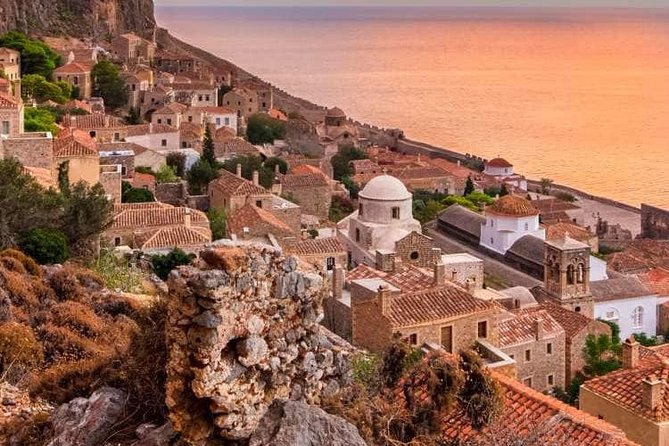
The Lower Town offers inhabited lanes, churches, squares, and sea walls. The Upper Town holds ruins and open views from the plateau. A 3-day trip to Sparta can place these contrasting spaces within one walk across the same fortified rock.
The Lower Town sits below the southern wall of the plateau. Its narrow stone-paved streets pass houses with tiled roofs, arches, galleries, and coats of arms. Sea walls, vaulted passages, and small squares shape the walk.
- Christos Elkomenos Church stands in the central square.
- The portello gate opens through the sea wall.
- Agora shops line Middle Street.
- Hagia Sophia stands near the Upper Town cliff edge.
- Old walls and Ottoman baths mark the Upper Town.
The square around Christos Elkomenos includes the metropolitan church, a former mosque, and the former episcopal palace. The portello leads toward the sea. The church began in the early Christian period.
A 3-day trip to Sparta also reaches the Upper Town by a steep, winding route. The plateau contains the acropolis, a rectangular fortress, cisterns, church remains, and walls. Its open ground differs from the occupied Lower Town.
Hagia Sophia dates from Byzantine times and follows a cross-in-square plan. From the upper plateau, its ruins and cliffs open views across the sea. The church stands close to the rock’s edge.

What is Malvasia wine?
Malvasia is a family of grape varieties linked to Monemvasia through medieval wine trade. For a 3-day trip to Sparta, the name adds a historical food-and-drink thread. It does not turn the castle town into a single wine story.
The name Malvasia comes from the Italian form of Monemvasia. In English, Malvasia-based wines were also called Malmsey. Venetian wine shops were known as malvasie across medieval Mediterranean markets and ports.
A 3-day trip to Sparta passes through the region connected with this trade. The trade linked the wine with the eastern Peloponnese, the Cyclades, and Venetian merchants. Monemvasia’s port moved wine beyond the region.
Malvasia is a group of varieties rather than one single grape. The family produces white, red, dessert, and fortified wines in different regions across wine regions.
Ampelographers place the family’s origin in Crete. Monemvasia’s importance came from its port and trading role. The name reflects commercial history as well as local geography through its trading network.
After a 3-day trip to Sparta, the Monemvasia wine tasting page offers a separate tasting reference. Further route details appear on Monemvasia tours after the castle walk and overnight stay.
What are the Diros water caves?
The Diros water caves are the Vlychada Cave route on Mani’s western coast. A 3-day trip to Sparta includes a small-boat passage through the lake section. A short walk on land follows.
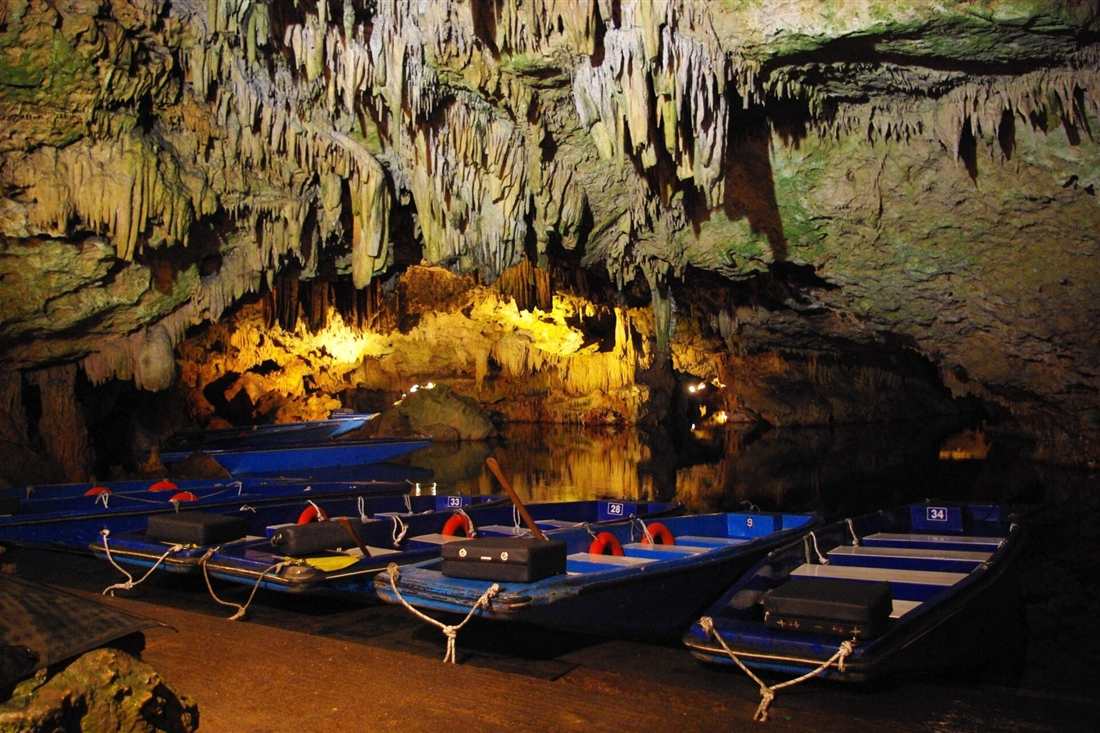
Vlychada Cave lies beside Diros Bay on the west coast of the Laconian Peninsula. The visitor route measures 1,500 metres, with 1,200 metres crossed by boat. The organised tour lasts about 25 minutes.
Water shaped the limestone into stalactites and stalagmites over thousands of years. A 3-day trip to Sparta reaches this route after open-air stops. The passage runs below sea level through narrow passages, quiet water and stone formations.
- The cave lies near Pyrgos Dirou in the Mani area.
- The mapped cave system extends beyond the visitor route.
- The tourist route combines a boat section with walking.
- Fossilised animal bones and prehistoric human traces occur inside the caves.
The nearby Alepotrypa Cave is a separate archaeological site with Neolithic evidence. A 3-day trip to Sparta passes through the wider Mani region. Diros also has a Museum of Neolithic Culture for visitors interested in communities.
For route details before departure, read the Diros Caves in Mani. The tour listing includes the Diros cave ticket, while the cave operator sells tickets at the arrival office.

Which season suits the 3-day trip to Sparta?
Late spring and autumn give comfortable conditions for walking, boat travel and outdoor stops. The cave on the 3-day trip to Sparta keeps steady underground conditions. The season mainly affects the daylight stops.
Late spring brings longer daylight for the route between Athens, Sparta, Monemvasia, Gytheio and Mystras. The itinerary includes walks at Monemvasia and Mystras, so breathable layers and firm shoes suit both sites.
Summer has stronger heat across the Peloponnese. The Diros cave remains below ground, but the approach, boat queue and visits to archaeological places happen outdoors.
Autumn offers cooler walking conditions around the medieval castle town and the Mystras archaeological site. A light layer also helps during the cave visit, where water and stone create a cooler setting.
Winter has shorter daylight and weather changes on the road. Review starting times, pickup details and operating arrangements before selecting a date for the 3-day trip to Sparta. Operating hours vary by season. See Mani tour options for other regional itineraries.
How do you book and cancel the 3-day trip to Sparta?
Booking requires a group reservation through the tour listing, with pickup and availability shown for the selected date. The 3-day trip to Sparta offers cancellation up to 24 hours before the start for a full refund.
- Select the three-day tour and check the available starting time.
- Enter one reservation for a group of up to four people.
- Review pickup availability and the private-group or small-group label.
- Reserve at least 10 hours before the planned start.
- Cancel at least 24 hours before the start for a full refund.
The package uses an air-conditioned nine-seat van. It lists accommodation for days one and two, lunch and soft drinks. It also lists the Diros, Mystras and Sparti museum tickets. The 3-day trip to Sparta includes these items.
The listed route begins from Athens and covers three days. A 3-day trip to Sparta uses pickup when shown for the selected booking. The activity is marked as suitable for private groups.
Read the cancellation deadline beside the selected date before completing the reservation. Availability, pickup details and starting times appear during the booking process.
Frequently Asked Questions
How long does the tour last?
The itinerary lasts three days and starts from Athens. Day one includes the overnight stay in Monemvasia. Day two includes Diros and an overnight stay in Gytheio. Day three covers Mystras and Sparta’s archaeological site and museum before the route concludes.
How large is the group?
The reservation covers a group of up to four people. The listing identifies the activity as a private group and also displays a small-group label. Transport uses an air-conditioned van with nine seats, while the booking remains priced and arranged per group.
Where is the overnight stay?
The itinerary lists accommodation on days one and two. The first overnight stay is in Monemvasia, and the second is in Gytheio. The listing does not name the hotels. The booking details give the accommodation information.
Does the tour include the Diros boat ride?
The route visits Diros water caves and includes the Diros cave ticket. Inside Vlychada Cave, the visitor route crosses 1,200 metres by boat, then continues on land. The organised route measures 1,500 metres in total.
How does the listing show its reviews?
The listing shows one review so far. The tour details state the duration, the Athens start, the overnight stays, the cave visit and the inclusions. The review count can change as new customers submit feedback.