
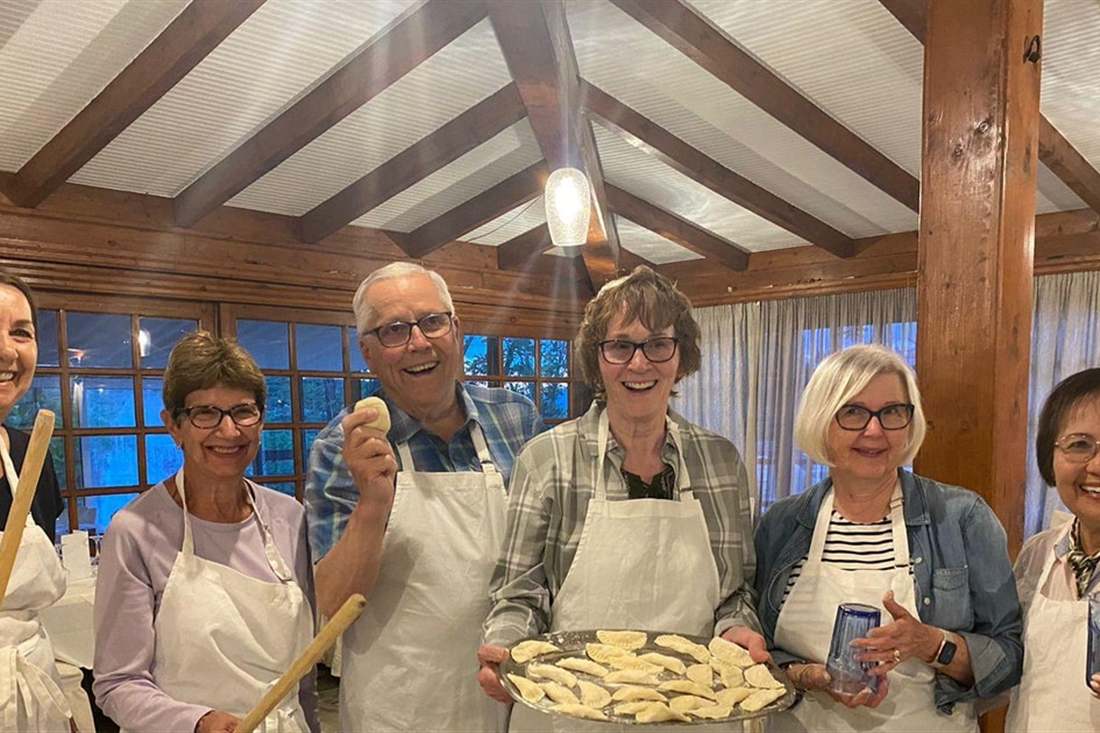
A Delphi cooking class is a hands-on lesson in Greek home cooking near Delphi. Delphi is the ancient sanctuary on the slopes of Mount Parnassos. Guests roll dough, fill pies and share the meal they cook. Tours across the rest of the country are listed on Greece Tours.
The sections below cover the hosts, the dishes, the local olives and cheese, the drinks and who it suits. They also cover timing around the ancient site, getting there, nearby villages, the season and booking, with links into the Delphi pages. The class shown is checked on GetYourGuide.
What is a Delphi cooking class?
A Delphi cooking class is a hands-on lesson in Greek home cooking, led by a local host. Participants prepare traditional dishes, learn how ingredients come together, then share food. Near Delphi, classes range from a short lesson to a farm-to-table meal.
The lesson offers a closer look at everyday Greek food. Hosts explain each step while participants mix, shape or season ingredients. No advanced cooking skills are needed to follow the recipes.
A Delphi cooking class also gives a different view of the region. Food connects the mountain villages, nearby farms and family kitchens. Read about Delphi village for the setting around the main town.
- Learn recipes by preparing them yourself.
- Use local ingredients in familiar dishes.
- Eat the food prepared during the lesson.
- Meet a host who knows the local cooking.
Each Delphi cooking class has its own style and setting. One takes place at a restaurant garden near Amfissa. Others involve preparing pies in a guesthouse or hotel kitchen.
Where does a Delphi cooking class take place?
A Delphi cooking class takes place in Delphi or nearby villages, depending on the host. Lydia’s listed experience gives Delphi as its activity location, with a meeting point near Amfissa. Other published cooking experiences operate in Eptalofos and Galaxidi.
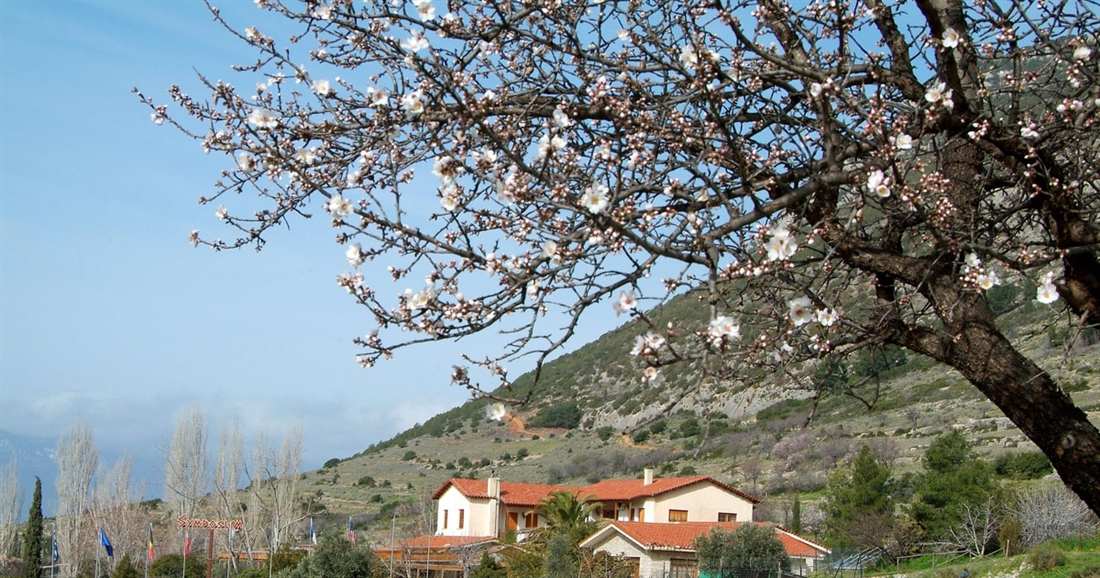
The listing for Cooking with Lydia names Delphi, but gives its meeting point on the Livadia road in Amfissa. The host’s description places the lesson at Villa Symposium, so read the meeting details as part of the location information.
- Cooking with Lydia — Villa Symposium, with the listed meeting point near Amfissa.
- Mavrodimos Guesthouse — Eptalofos, also called Ano Agoriani.
- Ganimede Hotel cooking courses — Galaxidi.
Eptalofos sits in the Parnassos area, outside Delphi village. Mavrodimos describes its guesthouse as about a half-hour drive from Delphi. The Galaxidi course is a coastal option, not a class in Delphi itself.
These settings give a Delphi cooking class a strong sense of place. A village guesthouse, a hotel kitchen and a restaurant garden offer different ways to meet local food traditions.
Travellers planning time in town can use the Delphi guided tour page for details on the archaeological visit. A cooking lesson is a separate activity, with its own host and location.
What happens in the Cooking with Lydia Delphi cooking class?
The Cooking with Lydia Delphi cooking class combines a garden visit, a cooking lesson and a shared meal. The listing describes time in the Apollo Botanical Garden, preparation of tzatziki and cheese pies, a gallery visit, and lunch featuring Greek food.
The experience begins with a welcome drink. The listing then describes a visit to the garden, where herbs, vegetables and fruit grow. Lydia uses garden produce in the hands-on lesson.
Participants prepare tzatziki, a yoghurt and cucumber dip, and cheese pies. They taste the dishes they have made. The listing also includes a traditional Greek lunch and an art exhibition visit.
- Receive a welcome drink.
- Visit the Apollo Botanical Garden.
- Prepare tzatziki and cheese pies with Lydia.
- View paintings in the gallery exhibition.
- Share lunch and taste the food prepared.
The class description presents the garden as a source of fresh ingredients. Its meal brings the lesson to the table, so participants eat food made during the experience alongside a Greek menu.
This Delphi cooking class is a guided sequence, not only a demonstration. The listing frames it as a family-style lesson, with Lydia showing participants how to prepare classic Greek recipes.
The exact dishes in the lunch menu are not fully named in the listing. Its stated cooking tasks are specific: tzatziki and cheese pies. The wider meal is described as traditional Greek food.
Which dishes does a Delphi cooking class teach?
A Delphi cooking class can teach Greek dips, cheese pies and handmade pastries. Lydia’s listing names tzatziki and cheese pies. Her published evening menu adds starters, a seasonal salad, a choice of main courses and orange pie for dessert.
The evening lesson is a separate format described by Lydia. Participants make tzatziki and cheese pies with homemade pastry. Its dinner menu includes bread and olives, spinach pie, courgette fritters and seasonal salad.
- Tzatziki, made with yoghurt and cucumber.
- Cheese pies with homemade pastry.
- Spinach pie with feta and herbs.
- Courgette fritters and seasonal salad.
- Orange pie served with yoghurt sauce.
The evening menu offers a vegetarian main of imam aubergines with onions and fresh tomato. Other listed mains include veal giouvetsi with small pasta and chicken kleftiko with lemon potatoes.
Other nearby hosts focus on different dishes. Mavrodimos Guesthouse describes handmade traditional pies, prepared with guests. Ganimede Hotel in Galaxidi teaches Greek pie, with stuffed onions offered as an additional lesson.
Menus depend on the host and class format. A Delphi cooking class with Lydia centres on named recipes, while the guesthouse and Galaxidi lessons focus on local pie-making traditions.
Which local ingredients does a Delphi cooking class use?
A Delphi cooking class brings regional food traditions into view through fresh ingredients and familiar flavours. Published class details name garden-grown herbs, vegetables and fruit. They do not provide a full ingredient list, so local products offer useful context without implying every item appears in class.
The class description mentions a botanical garden, with herbs, vegetables and fruit growing there. It also describes its ingredients as fresh and farm-to-table. That means they come directly from the garden or nearby sources. It does not name particular herbs or produce.
Delphi’s wider food culture draws on olives, olive oil and fresh local produce. The region also has honey, wine, greens, mushrooms, fruit and cheeses. These products belong to the local table, but published class details do not confirm each one as a class ingredient.
A Delphi cooking class makes more sense when viewed alongside this regional pantry. Local olive oil adds a link to the surrounding groves. Honey and cheeses show the area’s mix of farming and food traditions. The precise selection depends on the session’s published menu.
- Herbs: the class information names herbs growing in its botanical garden, without listing their types.
- Vegetables: garden vegetables appear in the published description as fresh ingredients for cooking.
- Fruit: the garden also grows fruit, though individual varieties are not specified.
- Olives and olive oil: local food sources describe them as key regional products, not confirmed class ingredients.
- Honey and cheese: both feature in the area’s food culture, with no published promise that either enters every session.
For visitors planning one day in Delphi, the local pantry adds a food-focused layer to the visit. It connects fresh produce with the landscape and nearby farming communities. It also gives the class a clear regional setting.
What is the sea of olives below Delphi, and how does it feed a Delphi cooking class?
The olive-green landscape below Delphi is the Amfissa olive grove, a huge, traditional growing area. Its Amfissa olives are a signature local product. They explain the region’s close link between landscape and food, though class details do not confirm that the olives are used.
The grove stretches from Delphi’s slopes towards Kirra, and from Drosochori towards Eratini. Local tourism information counts around 1.2 million olive trees. It describes the grove as Greece’s largest continuous olive grove and as an old, protected part of the traditional landscape.
Amfissa olives are large, round fruits with green or purple colouring and full flesh. Local descriptions say people preserve them whole or cracked, using salt or vinegar. They also appear as table olives, olive paste, and ingredients in regional food products.
The grove gives a Delphi cooking class a strong sense of place, even when a listed menu leaves olives unnamed. Its trees cover a broad area between mountain slopes and the Gulf of Corinth. That landscape helps explain why olives and olive oil hold a central place in local food.
- Grove scale: local figures describe roughly 1.2 million trees across the traditional growing area.
- Local variety: Amfissa olives are recognised for their large size, rounded shape and rich flesh.
- Colour: the fruit ranges from green to purple, according to local product information.
- Preserving: local descriptions name whole or cracked olives preserved with salt or vinegar.
- Food use: the olives are eaten alone, served alongside food, or prepared as a paste.
These details describe the area’s food heritage, not a guaranteed cooking ingredient. The Delphi cooking class listing names garden herbs and produce from the setting. The grove remains an important nearby source of regional identity and local olive products.
What is formaela cheese, and how does a Delphi cooking class use it?
Formaela is a semi-hard cheese linked specifically with Arachova, near Delphi. It is made from local sheep’s milk, goat’s milk, or both. A Delphi cooking class listing does not name formaela, so its role belongs to regional food context, not confirmed class content.
The cheese has a delicate aroma, a chewy texture and a slightly peppery taste. Its flavour changes as it matures. Formaela from Arachova holds European Protected Designation of Origin status. That label protects products whose qualities and production come from a named place.
In Arachova, formaela is traditionally grilled, and local food information also names frying as a cooking method. It can be served with honey or jam, added to salads, or cooked in clay pots. These are ways the cheese appears in regional cuisine.
The available Delphi cooking class details focus on fresh garden ingredients and do not promise a formaela demonstration. Travellers can still understand the cheese’s local significance through its Arachova origin and recognised status. Its link to nearby mountain farming adds another part of the region’s food story.
Formaela is not simply a generic cheese sold under a local name. Its milk must come from animals grazing in the area, and production is tied to Arachova. That close link between food and place echoes the importance of the Amfissa olives below Delphi.
For a regional food experience, the cheese is a useful point of comparison with garden-grown produce. It shows how local ingredients reflect both landscape and farming traditions. The class listing does not state that it is served, cooked or included in the session.
Which wines and drinks come with a Delphi cooking class?
A Delphi cooking class listing describes a welcome drink and drinks during the experience, but names no specific wine, spirit or tea. Its stated format includes a meal, so drinks accompany the session. The published details do not identify drink choices or serving amounts.
The GetYourGuide experience by Lydia includes a welcome drink and “all drinks” as part of its published inclusions. Its listing does not name wine, tsipouro, mountain tea, coffee or any other drink. Those specific choices cannot be treated as confirmed parts of the Delphi cooking class.
Lunch or dinner is offered, with the meal forming part of the experience. The listing also describes the chance to taste the food prepared during the class. This gives the drink service a place around the shared meal, without setting out a pairing menu.
A Delphi cooking class can still introduce visitors to local food customs through its setting and meal. Yet the published drink details remain broad. They do not say whether the welcome drink is alcoholic, whether drinks differ by session, or whether each guest receives the same selection.
Who suits a Delphi cooking class?
A Delphi cooking class suits visitors who enjoy practical food activities and a shared meal. Lydia’s listing includes child booking categories and says the experience is offered in multiple languages. It also mentions vegetarian and vegan options, while giving no published maximum group size.
The GetYourGuide booking frame separates adults aged thirteen to ninety-nine from children aged twelve and younger. This shows that the booking system accepts child places. Families can also explore the list of Delphi activities for children when planning the wider visit.
The activity page describes vegetarian and vegan options. This makes the Delphi cooking class relevant to guests seeking meat-free food. The available page does not explain how each dietary request is handled. It also gives no detailed list of allergens or allergy procedures.
English appears among the languages shown by a copy of the tour listing. Another copy describes multiple languages, without naming every option. Visitors who need a particular teaching language can use the language information shown for their selected session. The published listing does not state a maximum party size.
- Children have a booking category for guests aged twelve and younger.
- Adults appear in a separate booking category, covering ages thirteen to ninety-nine.
- Vegetarian options are mentioned in the experience description for food preferences.
- Vegan options are also mentioned, with no separate menu details published.
- Multiple languages appear in a listing copy, and English is named elsewhere.
- No maximum group number or detailed allergy procedure appears in the published information.
For a family, the activity combines participation with sitting down to eat. It is a food-focused outing, not a children’s-only programme. The available description does not set out age-based tasks, child supervision rules, or a separate menu for younger guests.
Food allergies need clear attention during a cooking activity. The listing does not publish an allergen chart or explain kitchen safeguards. That absence does not confirm whether a particular ingredient can be avoided. Guests with serious allergies need direct information about their own needs.
How does a Delphi cooking class fit around a visit to the archaeological site?
A Delphi cooking class fits neatly after an early visit to the archaeological site, especially when the chosen session serves lunch. The site has seasonal opening hours, and its terrain rewards unhurried time. A dinner session leaves more room for a full daytime visit.
The official visitor information lists daily summer hours from 08:00 to 20:00, from April through October. Winter hours run from 08:30 to 15:30, from November through March. The museum has separate Tuesday hours in summer, opening later and closing earlier.
The local destination page estimates three to four hours for exploring the archaeological site. It also places the site about 400 metres from modern Delphi village. A morning visit can therefore take a substantial part of the day before a lunch session.
For a lunch-time Delphi cooking class, enter the site near opening and keep the visit focused. Allow time for the museum and the walk between monuments. Then travel to the cooking venue with enough space for the session and meal.
- In summer, the site opens at 08:00 and closes at 20:00 daily.
- On summer Tuesdays, the museum opens at 10:00 and closes at 17:00.
- In winter, the listed daily site hours run from 08:30 to 15:30.
- The local tourism page estimates three to four hours for a site visit.
- The archaeological site stands about 400 metres from Delphi village.
- A dinner session leaves the daytime available for a longer site visit.
A dinner-time Delphi cooking class creates a different pace. Visitors can spend the morning and afternoon at the sanctuary and museum. The later meal then offers a clear end to the day, without compressing the archaeological visit into a short morning.
Opening hours change by season, and temporary changes can affect access. The official visitor platform has published a one-day later opening for planned maintenance. Read the current Delphi tickets and visiting information before setting the day’s order.
Keep the class booking time and site closing time in view together. A winter afternoon visit has less time than a summer one. If the cooking session is fixed, arranging the archaeological visit around that commitment makes the day easier to follow.
How do you get to a Delphi cooking class from Athens?
A Delphi cooking class is about 185 kilometres from Athens by road, with a drive taking roughly two and a half hours. KTEL buses also link Athens and Delphi, giving visitors without a car another way to reach the village.
By car, the route from Athens runs north-west towards Delphi. Allow around two and a half hours for the journey, before adding any stops along the way. A car also gives you more freedom to plan an evening return after a class.
KTEL Fokidas runs intercity buses between Athens and Delphi. Services depart from Liosion Bus Station in Athens, and the journey takes about three hours. The bus is a practical choice for a Delphi cooking class when the selected session fits the day’s transport.
The published bus times include morning departures from Athens and afternoon or evening returns from Delphi. Timetables vary by weekday, so the useful combination depends on the date and class session. Read the [link omitted] transport details for the current route and station information.
- By car: allow about two and a half hours for the 185-kilometre journey.
- By bus: KTEL Fokidas connects Athens with Delphi from Liosion Bus Station.
- Morning departure: choose a service that leaves time for the class booking.
- Evening return: match the bus back to the end of the planned session.
- Day trip: plan the outward and return journeys as one linked schedule.
- Overnight stay: leave more room for a class and the journey back.
A same-day visit from Athens needs a clear timetable. The road journey alone takes about five hours there and back. Bus travel also needs suitable outbound and return services, so the class timing matters when building the day.
For a fuller route breakdown, see how to get to Delphi. A Delphi cooking class can fit into an Athens excursion when travel times and the chosen session align. The Delphi day trip from Athens page covers the wider outing.
Can you combine a Delphi cooking class with Arachova or Galaxidi?
Yes, a Delphi cooking class can fit into a trip that also visits Arachova or Galaxidi. Arachova lies about 12 kilometres from Delphi, while Galaxidi is about 34 kilometres away by road.
Arachova is the closer stop, east of Delphi along the mountain road. The short distance makes it a straightforward addition before or after a class. Allow extra time for parking and walking around the village centre.
Galaxidi sits south-west of Delphi, towards the coast. Its road distance is about 34 kilometres, so the drive takes longer than the trip to Arachova. A visit there fits more comfortably into a day with a car and room between plans.
For a Delphi cooking class, the key point is the return journey. Arachova gives a nearby outing, while Galaxidi needs a longer drive each way. Keep the class start and finish times central when arranging either stop.
- Arachova: about 12 kilometres from Delphi, east along the mountain road.
- Galaxidi: about 34 kilometres from Delphi, south-west towards the coast.
The distances make both places possible additions to a Delphi stay, though they create different travel days. Arachova requires less time on the road. Galaxidi calls for a larger travel window, especially when paired with a class on the same day.
Choose the village visit around the class timing and transport available. A car makes it easier to set the order of stops. With buses, the Delphi cooking class and the return connections need to line up with the day’s schedule.
When does a Delphi cooking class run?
The Delphi cooking class listing offers a choice of lunch or dinner, but it does not publish one fixed annual season. Available dates and session times depend on the booking calendar, so the listed options define the schedule.
The lunch-or-dinner format gives visitors two ways to place the class in a Delphi itinerary. A lunch session leaves the evening open. A dinner session suits a day with other plans earlier, provided travel connections allow enough time.
No published seasonal opening dates are stated for this listing. That means there is no verified month range to give as a firm operating season. The calendar shows whether the Delphi cooking class has a session on a particular date.
Season also affects the wider travel plan, including daylight and road conditions. The class listing itself does not promise different menus or hours by season. Use the date-specific session options to choose a lunch or dinner booking.
- Lunch session: select this option when it appears for the intended date.
- Dinner session: choose an evening booking when the calendar lists one.
- Date availability: use the listing calendar to see open booking dates.
- Season details: no fixed annual operating period is published for the class.
- Travel timing: leave space for the journey before and after the session.
- Return planning: align the end of class with the onward transport plan.
For an Athens visit, the departure and return journey can shape the session choice. A bus-based plan needs to match the posted service times. Driving gives more control over the day, but still requires time for both road legs.
A Delphi cooking class is listed as a lunch-or-dinner experience, not as a set morning course. Its calendar is the source for the available dates and times. That keeps the season question tied to actual listed sessions, not assumed opening months.
How long does a Delphi cooking class last, and what is included?
A Delphi cooking class listed by GetYourGuide lasts two and a half hours. The activity combines practical cooking with time in a garden and an art exhibition. The listing also includes a meal, a welcome drink, other drinks, and gifts.
That length gives the session a clear beginning and end. Travellers can plan the rest of their Delphi day around a set activity, instead of allowing an open-ended block of time. The listing gives one total duration for the experience.
Included elements extend beyond the kitchen. The activity description names a visit to the Apollo Botanical Garden and an exhibition of paintings. These visits form part of the experience, not separate archaeological-site admission.
The listing also says guests taste their own work during a traditional meal. Gifts are included, but the description does not name them. This Delphi cooking class therefore has both a shared meal and cultural stops in its stated format.
- Two-and-a-half-hour activity
- Cooking session and tasting
- Botanical garden visit
- Art exhibition visit
- Meal and listed gifts
Where do you stay for a Delphi cooking class?
For a Delphi cooking class, travellers can stay in Delphi village or in nearby Arachova. Delphi village has hotels and guesthouses close to the archaeological area. Arachova has its own hotels and guesthouses, giving visitors another base in the region.
Delphi village puts accommodation near the activity region’s main visitor services. Its hotels line the modern settlement, which sits close to the archaeological site. A night there keeps the stay centred on Delphi itself.
Arachova is a separate mountain town with its own lodging choices. It suits visitors who prefer to sleep outside Delphi village while remaining in the wider area. The town also has hotels and guesthouses listed by local tourism sources.
- Delphi village: hotel and guesthouse options close to the archaeological area.
- Arachova: hotel and guesthouse options in a nearby mountain town.
Choose the overnight base by considering where the rest of the trip takes place. The Delphi accommodation overview covers the two locations in more detail. A seasonal planning page helps place an overnight stop within a wider visit.
How do you book and cancel a Delphi cooking class?
A Delphi cooking class can be reserved through its GetYourGuide activity page. Travellers select a date and participant numbers, then follow the booking steps shown there. The listing advertises free cancellation, while the exact cancellation deadline appears with the selected booking.
Availability is date-based, so the calendar shows the sessions offered for each day. The activity page displays participant categories before checkout. Review the selected date, guest count, and terms together before completing payment.
The listing advertises instant confirmation and a mobile voucher. Keep the confirmation accessible on the phone used during travel. It records the reservation details, while the voucher serves as the activity booking proof.
Cancellation terms can attach to a specific date or ticket option. Read the deadline and conditions shown for the chosen reservation. A Delphi cooking class listed as freely cancellable still has a stated cutoff, so the booking details matter.
- Choose an available date.
- Enter the number of participants.
- Review the booking and cancellation terms.
- Complete the reservation and save the confirmation.
Frequently Asked Questions
Do I need to print the booking voucher?
The activity listing identifies a mobile voucher, so the booking proof is available on a phone. Keep the confirmation easy to open during the visit. A paper printout is not listed as a requirement. A Delphi cooking class reservation remains easier to find when its confirmation is saved before travel.
Does the booking receive instant confirmation?
The listing advertises instant confirmation. This means the booking status is sent after the reservation process, rather than waiting for a separate approval notice. Keep that message with the voucher. The confirmation gives travellers a record to refer to if they need to review their reservation details.
Does the activity listing promise a recipe book?
The included-items list mentions gifts but does not name a recipe book or printed recipe pack. Travellers who want written recipes can ask about them during the session. A Delphi cooking class can still teach useful techniques through hands-on work, even when a take-home recipe booklet is not specified.
Is a completion certificate included?
The activity description does not list a certificate among its inclusions. It presents the session as a food and cultural experience, not as formal professional training. Guests seeking proof of course completion can ask the organiser directly. No certificate is stated as part of the standard booking.
Does the booking include photographs?
The listing does not name professional photography or a photo package as an inclusion. Travellers can bring a phone or camera for personal pictures, subject to the venue’s rules. A Delphi cooking class booking covers the listed activity elements, and photography is not separately promised there.