
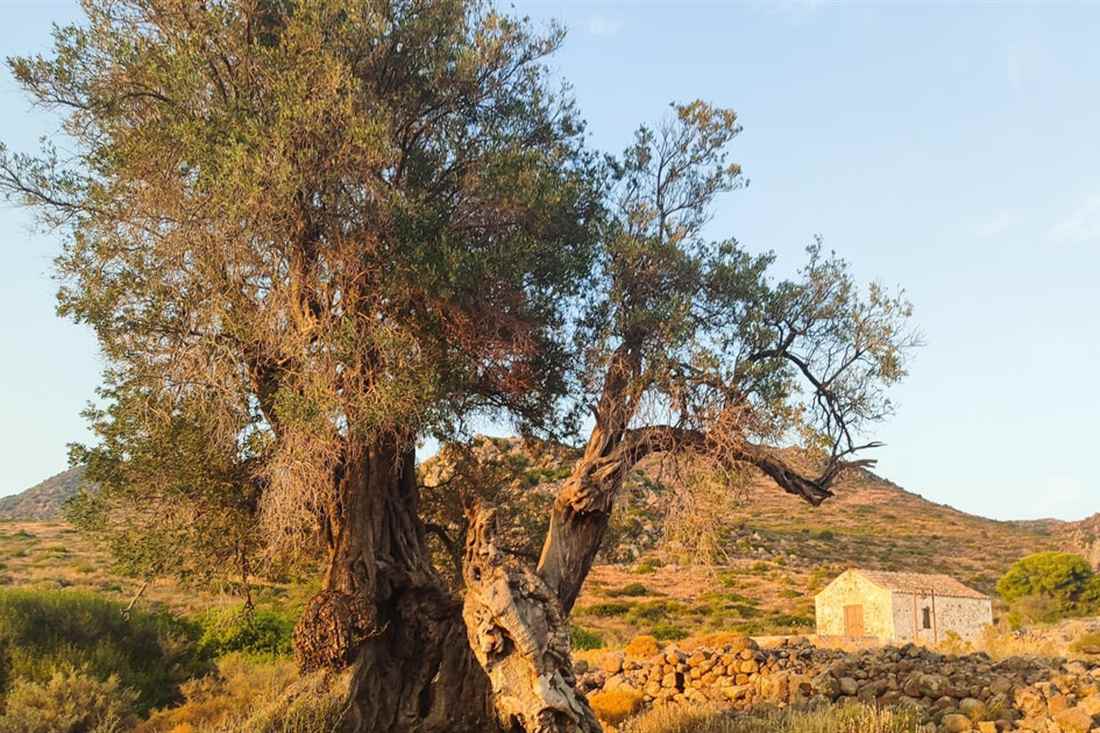
An Aegina olive oil tour is a guided visit to the old olive groves of Aegina. The island lies in the Saronic Gulf, a short ferry ride from Athens. Guests walk among ancient trees and taste local oil. Tours across the rest of the country are listed on Greece Tours.
The sections below cover the tours, the Eleonas grove, the trees, how oil is made and the tasting. They also cover Perdika, local products, the harvest, timing and booking, with links into the Aegina pages. The tour shown is checked on GetYourGuide.
What is an Aegina olive oil tour?
An Aegina olive oil tour links the island’s olive heritage with its rural landscape. It can mean a guided outing to Eleonas and Perdika, or a separate visit to an oil mill for tasting. These are different experiences, with different stops and aims.
The GetYourGuide Aegina olive oil tour visits Eleonas, the island’s ancient olive grove, and the seaside village of Perdika. Its listed focus is scenery and local heritage. It does not describe an oil-mill visit or a tasting session.
A mill tasting follows a different route. Visitors meet local producers, learn how olives become oil, then taste oils and table olives. The experience is shorter and centres on food production, not a drive to the ancient grove.
- Walk among old olive trees at Eleonas.
- Hear about the grove and island countryside.
- Visit the village of Perdika on the guided outing.
- Choose a separate mill visit for olive oil tasting.
For broader island activities, see things to do in Aegina. The Aegina olive oil tour suits visitors who want a focused countryside trip, while a mill tasting gives more attention to oil itself.
Which Aegina olive oil tour can you book?
Two different bookable experiences give visitors an Aegina olive oil tour option. Aeginetes runs a private Eleonas and Perdika outing, while Kiki Rebel Tours offers an oil-mill tasting on Aegina. One explores places; the other explores olive products.
The GetYourGuide listing is called “Aegina: Ancient Olive Grove (Eleonas) & Perdika Village Tour”. It lasts three hours and lists Aeginetes as the operator. The route includes time at the grove and village, with transport arranged from island pickup points.
That Aegina olive oil tour starts from Aegina, with pickup choices listed for Aegina town, Perdika, Agia Marina and Souvala. The outing is private, with a guide speaking English or Greek. Bottled water is included in the listing.
- Aeginetes: a three-hour private grove-and-village outing, starting on Aegina.
- Kiki Rebel Tours: a family oil-mill tasting based on Aegina.
- Kiki’s tasting: about 45 minutes, with olive oils and local table olives.
- Mill visit: includes an explanation of cultivation and cold pressing.
The Kiki Rebel Tours tasting is offered in English and Greek. Its listing describes a visit to a family-run mill, a production introduction, and a guided tasting. The Aegina olive oil tour at Eleonas is not presented as a tasting product.
Those staying in Aegina town can select the town pickup for the Aeginetes outing. The two formats help visitors choose between an island landscape visit and a closer look at oil production.
What is the Eleonas ancient olive grove on an Aegina olive oil tour?
Eleonas is a high inland valley south of Pachia Rachi, where ancient olive trees grow among low hills. An Aegina olive oil tour brings visitors to this quiet landscape, not to a working olive farm or an active oil mill.
The grove lies near the foot of Mount Oros, Aegina’s highest mountain. Local accounts describe a secluded basin, scattered chapels and old paths from nearby villages. Visitors see a rural setting far removed from the island’s busy harbour streets.
Published sources do not give a reliable agreed acreage for Eleonas. They describe a valley or plateau, rather than a measured estate. The grove’s scale is clear from its landscape, but no verified total land area appears in the sources reviewed.
Historical accounts connect much of the land with the Monastery of Chrysoleontissa. The monastery supported shepherds and their livestock in the valley. A local account names Panagiotis Apostolopoulos as its last resident, and describes his stone house near a small chapel.
The Aegina olive oil tour listing presents Eleonas as a heritage and nature stop. Local reporting says its old trees are not used for oil production. For practical island transport details, see getting around Aegina.
How old are the olive trees an Aegina olive oil tour visits?
The age estimates for Eleonas trees vary by source. One local account gives estimates of 1,500 to 2,000 years for older trees, while a Greek gastronomy source reports a scientific estimate of about 400 years.
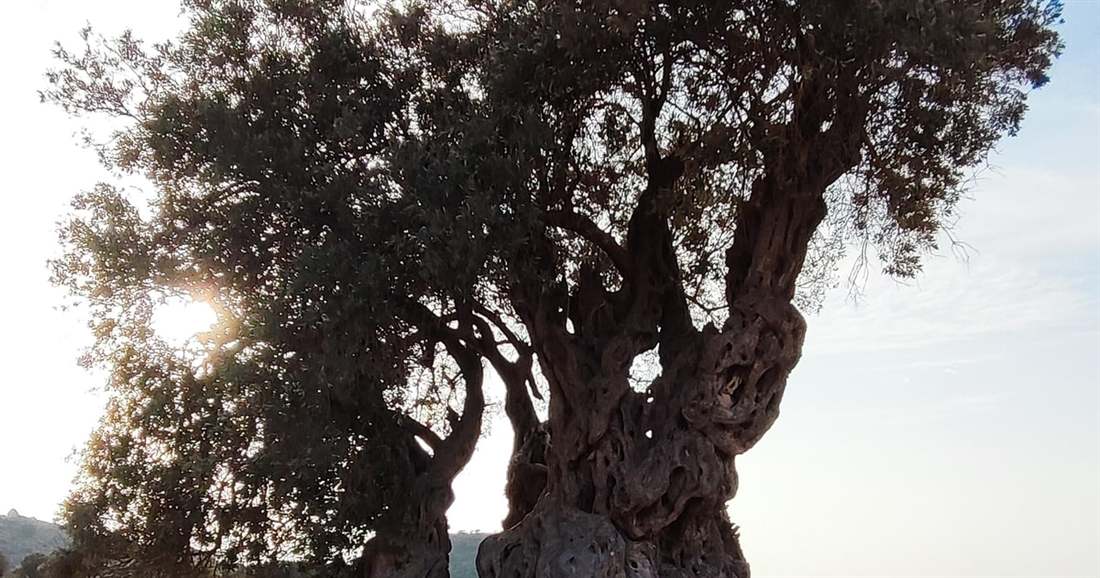
These figures are estimates, not exact birth dates. Olive trunks can grow hollow with age, so counting rings inside them does not always work. A very broad trunk alone cannot prove a tree’s age.
Local descriptions also report a trunk circumference of 13 metres for one large tree. Another source describes a trunk base covering 30 square metres. These measurements show the trees’ unusual size, but do not settle their age.
An Aegina olive oil tour gives visitors a chance to see the trunks close by. Their twisted shapes, deep grooves and hollow spaces make a clear contrast with younger orchard trees. The different age claims are worth treating as estimates, not settled fact.
The uncertainty does not lessen the grove’s heritage value. Eleonas remains a recognised part of Aegina’s rural landscape, with old chapels and paths around its trees. An Aegina olive oil tour offers a direct look at that landscape and its layered local history.
How is olive oil made, as an Aegina olive oil tour explains?
An Aegina olive oil tour can trace each stage, from fruit picking to tasting. Olives are gathered, cleaned, crushed and separated into oil. Careful timing and gentle handling help protect fresh aromas. A guide can explain how each step shapes the oil’s flavour.
Harvest workers place nets beneath trees, then pick or comb fruit from branches. They remove leaves and twigs before taking olives to a mill. Prompt processing limits unwanted changes while the fruit waits.
At the mill, the olives are crushed into a thick paste. The paste is slowly mixed, then spun in a machine called a centrifuge. Spinning separates oil from water and solid fruit matter.
Cold extraction means separating oil below 27°C, without added heat. It is a modern mechanical process, not necessarily traditional pressing. An Aegina olive oil tour can explain this distinction beside the island’s olive-growing landscape.
- Picking loosens ripe olives from their branches.
- Cleaning removes leaves, twigs and other loose matter.
- Crushing breaks the fruit into an olive paste.
- Mixing gathers tiny oil drops into larger drops.
- Spinning separates oil from water and solid remains.
Extra virgin oil is fit to eat as it is. It must meet chemical limits and pass a taste test without defects. Virgin oil also suits eating, but its permitted acidity is higher.
Lampante oil has a fault or high acidity, so it is not sold for direct eating. Refining can make it suitable for other oil blends. These grades describe quality, not colour or how strong an oil tastes.
How does the tasting work on an Aegina olive oil tour?
An Aegina olive oil tour teaches what to notice when tasting, but the Eleonas-and-Perdika listing does not promise an oil tasting. Tasting itself begins with smell, then a small sip. The taster checks fruitiness, bitterness and a peppery feeling.
Pour a little oil into a small glass and warm it in your hand. Cover the glass, swirl it gently, then uncover and smell. Fresh oil can smell grassy, fruity or like herbs.
Take a small sip and let the oil move around your mouth. Draw in a little air to carry its smell towards the nose. An Aegina olive oil tour can explain how this changes the flavours you notice.
Bitterness is a normal taste in oil made from green olives. A peppery tickle in the throat is called pungency. Both can come from natural plant compounds, and neither alone proves an oil’s grade.
Pause between samples and note each oil’s smell and finish. Comparing samples helps reveal how one oil tastes greener or milder. This simple sensory activity also suits a family food stop; see Aegina activities for children.
A formal tasting checks smell and mouthfeel as well as taste. Aegina olive oil tour visitors can use the same steps when sampling local oil elsewhere. The flavour lingers after swallowing, so notice whether the finish feels soft or sharp.
What does the Perdika village stop add to an Aegina olive oil tour?
Perdika adds a coastal village stop to an Aegina olive oil tour, giving the countryside visit a clear contrast. It is a fishing village on Aegina’s southern coast. Its harbour, boats and waterfront show a different side of island life.
The village’s small harbour is the focus of its working seafront. Fishing boats sit alongside places to eat, with views across the water. The stop brings the olive-growing story back to today’s island community.
Moni, a small island off the coast, appears across the water from Perdika. It is a brief landmark in the sea view, not a separate stop on the grove-and-village route.
Time in the village can mean a short walk along the harbour or a meal by the shore. An Aegina olive oil tour connects the rural landscape with this coastal setting. For island dining ideas, see Aegina restaurants.
Perdika’s waterfront also gives visitors a chance to notice local seafood traditions. Fish and other seafood are part of the village’s everyday identity. The stop adds a lived-in setting after time among olive trees.
Which other local products appear on an Aegina olive oil tour?
An Aegina olive oil tour centres on olives, but the island’s food culture includes pistachios, honey and wine. These products offer useful context for tasting local flavours. Their stories link farming, family work and island markets.
- Pistachios: Aegina’s signature nut appears roasted and in sweets; explore Aegina pistachios.
- Honey: Local beekeeping supports the island’s honey production.
- Wine: Aegina retsina is made for local use, with Roditis and Savatiano grapes.
- Olive oil: Island producers package oil for sale at home and abroad.
Aegina olive oil tour guests can compare these products through their different aromas and uses. Pistachio adds a nutty note to sweets, while honey brings floral sweetness. Retsina has a resin flavour that distinguishes it from other wines.
Local products appear in shops and food stalls across the island. Pistachios also feature in ice cream, pasteli and other sweets. Honey is sold alongside them at local festivals and food events.
Olive oil connects these foods through its place in cooking. A drizzle changes the texture and flavour of a meal, while pistachios and honey bring sweetness or crunch. Together, they offer a simple view of Aegina’s local produce.
An Aegina olive oil tour is a starting point for learning how one crop shapes island food. The tasting vocabulary also helps visitors notice differences across local products. Each has its own growing season, way of making and place at the table.
When is the olive harvest, and when does an Aegina olive oil tour run?
An Aegina olive oil tour focused on harvesting fits the island’s olive season, which falls in autumn and winter. Across Greece, harvest starts in October and lasts around two months. Aegina’s advertised olive-picking experience runs in November.
Harvest dates shift with olive type, ripeness and local weather. The national season gives a useful guide, but it does not set every island’s exact picking date. Aegina’s November picking outing is tied to active work in the groves and at the press.
A grove visit is a separate kind of Aegina olive oil tour. It focuses on the landscape and island heritage, not a promise of hands-on harvesting. The listed grove and village trip is three hours, while the picking experience is described as a half-day tour.
Conditions also shape time outdoors. Autumn brings cooler days than high summer, but rain and wind can affect walking or travel. The seasonal overview of Aegina helps place an olive outing within a wider island stay.
- October begins the wider Greek harvest season.
- November is the advertised month for Aegina picking.
- Harvest timing depends on fruit ripeness and variety.
- Rain and wind can alter outdoor plans.
- Grove visits do not require active picking.
- Harvest outings follow work at local presses.
How long does an Aegina olive oil tour last, what is included, and how do you get there?
An Aegina olive oil tour to Eleonas and Perdika lasts about three hours. The listing includes local transport and bottled water, with a guide leading the visit. Travellers reach the island by ferry from Piraeus, then use the arranged pickup.
The listed itinerary allows time for both stops and travel between them. Pickup is offered from selected places around Aegina, including the port area. This makes the outing workable for visitors staying in town and for passengers arriving by boat.
Ferries from Piraeus reach Aegina in about an hour on conventional vessels. Faster boats take around forty minutes. Schedules and crossing times vary by service, and the Athens to Aegina ferry page explains the route and arrival options.
On the island, buses connect Aegina town with key villages and destinations. The tour’s arranged pickup offers another way to get between its stops. A day trip from Athens needs room for the ferry crossing, the outing and the return journey.
- Allow about three hours for the listed outing.
- Local transport is included in the listing.
- Bottled water is included during the tour.
- Ferry travel begins at Piraeus port.
- Conventional crossings take about one hour.
- Faster crossings take around forty minutes.
An Aegina olive oil tour does not include the ferry crossing in its stated inclusions. Plan the port journey and island activity as separate parts of the day. A later return sailing leaves more room for delays between arrival and pickup.
How do you book and cancel an Aegina olive oil tour?
Book an Aegina olive oil tour by selecting a date and party size through its listing. The reservation shows the chosen experience and its terms. For the Eleonas and Perdika listing, free cancellation applies until twenty-four hours before its start.
The booking page presents available dates and starting times. Enter the number of travellers, then complete the reservation details and payment steps shown there. Keep the confirmation message, since it records the booked date and the meeting or pickup information.
Cancellation terms differ between activities, even when their names sound similar. The listed grove outing allows a full refund when cancelled at least twenty-four hours ahead. A late cancellation does not qualify for that refund under the displayed terms.
Weather has a separate rule for this Aegina olive oil tour. If poor conditions force the operator to cancel, the listing offers a different date or a full refund. Keep the booking confirmation available, and follow its instructions for changes or cancellation.
Before choosing an Aegina olive oil tour, compare its date, length, pickup details and cancellation window. Harvest outings have a narrow seasonal schedule, while grove visits follow their own availability. A clear reservation record helps keep the ferry plan and tour appointment aligned.
Frequently Asked Questions
What language does the guide speak?
The listed Eleonas and Perdika outing names English and Greek as guide languages. Language details belong to each individual activity, so they do not automatically apply to every Aegina olive oil tour. The booking confirmation records the selected activity and its listed service details.
Is the Eleonas and Perdika outing private?
Copies of the listing describe the activity as private, meaning the booked group joins without unrelated guests. This arrangement can suit families or friends who prefer travelling together. Group conditions belong to that listing; a different Aegina olive oil tour can use another format.
Does a tour booking include the ferry from Athens?
The listed island activity describes local transport and bottled water, not a sea crossing from Piraeus. Arrange the ferry as a separate journey. This keeps the mainland departure, island arrival and tour appointment clear in the travel plan.
What details belong in the reservation confirmation?
Keep the booked date, start time, traveller count and pickup instructions together. These details help match the correct group with its local transport. Save the operator’s contact information from the confirmation too, so the reservation is easy to find if plans change.