
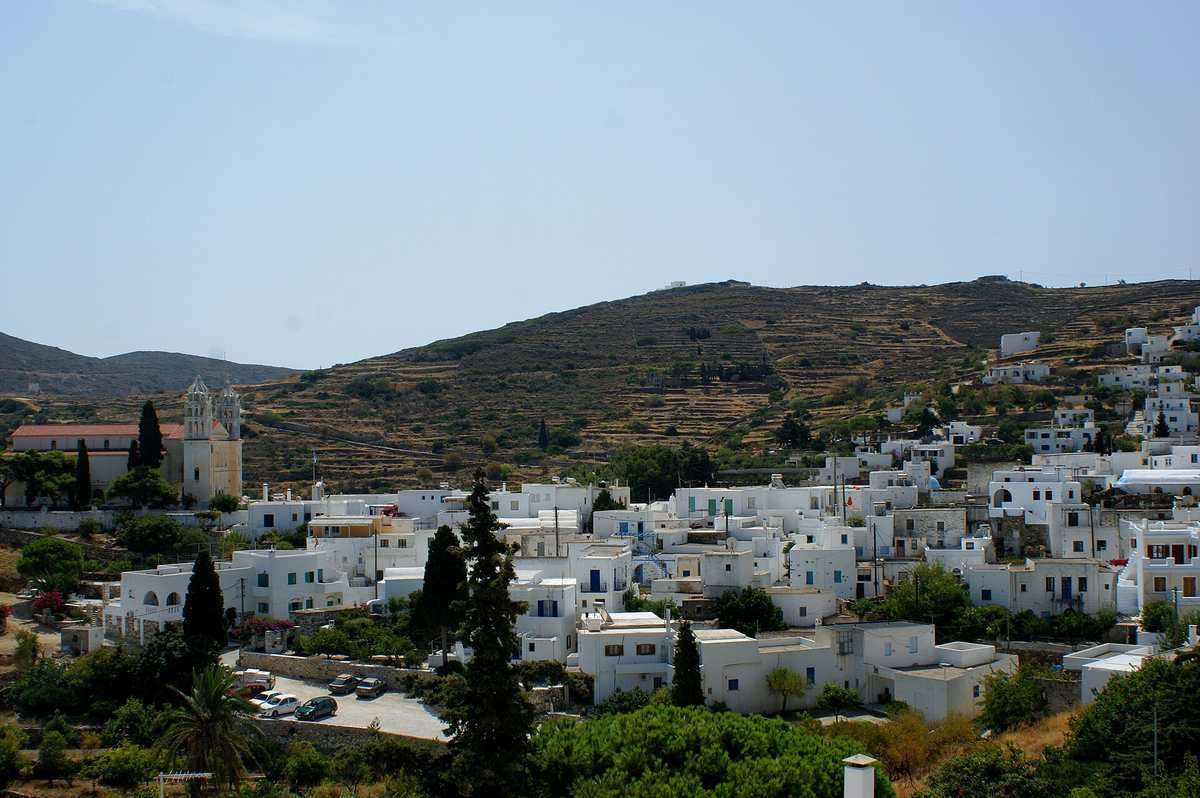
Lefkes Paros is the island’s loveliest mountain village, a medieval settlement high in the hills with whitewashed houses, marble-cobbled lanes, bougainvillea and the ancient Byzantine Road to Prodromos. Cars are banned from its centre, keeping it quiet and timeless. This guide covers what to see, the famous hike and how to visit. Plan the whole trip with Greece Tours.
The village is the jewel of the island’s interior, a highlight in the guide to Paros villages. It sits high among green hills in the centre of the island. The sections below cover the visit.
What is the village like?
The village is a maze of whitewashed houses, white-cobbled lanes and blooming bougainvillea, built high in the hills in the Middle Ages. Cars are banned from the centre, so visitors park on the edge and explore the quiet, car-free streets on foot.
The village is the prettiest in the island’s interior. Built during the Byzantine era, its first inhabitants chose the mountain site for protection from pirate raids, and it keeps that timeless character today. Whitewashed houses tumble down green slopes, threaded by white-cobbled lanes and draped in bougainvillea, with the twin-towered church of Agia Triada at its heart. Cars cannot enter the centre, so visitors leave them in the car parks on the edge and wander on foot. The cool air and quiet make a refreshing change from the coast. Its famous old road is the main draw.
What is the Byzantine Road?
The Byzantine Road is a thousand-year-old marble-paved path linking the village to neighbouring Prodromos, considered the oldest road on Paros. About 4 kilometres long, it makes a gentle, scenic hike of 45 to 60 minutes through olive groves and terraces.
The old marble road is the village’s signature walk. Dating to around the Byzantine era a thousand years ago, it is the oldest road on the island, with long stretches still paved in worn Parian marble slabs. The path runs about 4 kilometres downhill from the village to Prodromos, an easy, well-marked route of 45 to 60 minutes through olive groves, vineyards and terraces, with views over the Aegean and Naxos in the distance. It is one of the island’s best short hikes, set out in the guide to Paros tours. The walk ends in another lovely village.
What is there to see and do?
You can stroll the marble lanes, visit the marble church of Agia Triada, browse small shops and tavernas, and walk the Byzantine Road. The village rewards an unhurried afternoon of wandering, photography and a meal with a view.
The village offers gentle, scenic pleasures. Wandering its car-free lanes leads past flower-filled courtyards, tiny chapels and the grand marble church of Agia Triada, the village’s landmark. Small shops sell local crafts and produce, and tavernas with terraces serve traditional dishes with views over the hills. The Byzantine Road walk to Prodromos starts here, and the surrounding valley offers further trails. An afternoon suits the village well, complementing the wider guide to things to do in Paros. Reaching it is straightforward. A short drive climbs into the hills.
How do you get there?
You get there by car or scooter in about 20 minutes from Parikia, following the inland road over the mountains past the Marathi marble quarries, or by bus. Cars park on the village edge, since the centre is car-free.
The village is an easy drive from the capital. The inland road climbs about 20 minutes from Parikia over the mountains, passing near the ancient marble quarries at Marathi before descending to the village, with public car parks on the outskirts. Buses from Parikia also serve Lefkes through the day. Because the centre bans cars, visitors continue on foot into the lanes. A car or scooter makes it easy to combine with the quarries and the eastern villages, as the guide to how to get to Paros notes. The questions below cover the points travellers ask most.
Why visit the village?
You visit for its timeless mountain charm, cool air and quiet, car-free lanes, a complete contrast to the coast. The marble architecture, the views and the historic Byzantine Road make it one of the most rewarding stops on the island.
The village offers something the beaches cannot. Its hillside setting brings cool air and sweeping views, its car-free lanes a calm rarely found in the busy coastal towns, and its marble streets and churches a sense of history. The Byzantine Road adds a gentle adventure, and the tavernas a relaxed meal away from the crowds. For travellers wanting the island’s traditional, authentic side, it is an essential stop, set out alongside the guide to a Paros itinerary. The questions below cover the points travellers ask most.
What is the church of Agia Triada?
Agia Triada is the grand marble church at the heart of Lefkes, the village’s landmark. Built of local Parian marble with twin bell towers, it dominates the skyline and reflects the village’s wealth and craftsmanship during the Ottoman era.
The church is the village’s crowning sight. Dedicated to the Holy Trinity and built largely of local marble, Agia Triada rises with twin bell towers above the whitewashed houses, visible across the valley. Its scale and fine stonework speak of the village’s prosperity in past centuries, when Lefkes was the island’s capital. Inside, carved marble and icons reward a quiet look, and the terrace outside offers wide views over the hills. The church anchors a wander through the lanes, set within the wider Parian marble heritage. The village has good places to eat.
Where do you eat in the village?
You eat in the village at traditional tavernas with terraces over the hills, serving slow-cooked dishes, local cheeses and village wine. The cooler mountain setting and the views make a relaxed lunch or dinner a highlight of a visit.
Lefkes Paros rewards a long, slow meal. Its tavernas, tucked among the marble lanes or set on terraces overlooking the green valley, serve traditional Cycladic dishes, slow-cooked meat, local graviera and mizithra cheeses and village wine, at gentler prices than the coast. The cool mountain air and the sweeping views make eating here a pleasure, whether a leisurely lunch after the Byzantine Road walk or an early dinner. Local producers also sell honey, sweets and crafts nearby, set out alongside the guide to Paros food and wine. Some travellers choose to stay.
Can you stay in the village?
You can stay in the village in small hotels, guesthouses and rooms, a peaceful, scenic base away from the coast. It suits travellers wanting cool mountain air, quiet and walking, though a car helps reach the beaches and towns.
Lefkes Paros makes a tranquil base for a different kind of stay. Small hotels, guesthouses and rented rooms occupy its traditional houses, offering cool air, quiet nights and sweeping views, a refreshing contrast to the busy coast. It appeals to walkers, couples and travellers seeking calm and authenticity, with the Byzantine Road and hill trails on the doorstep. A car or scooter is useful, since the beaches and the main towns are a drive away, set out in the guide to where to stay in Paros. Timing a visit matters.
When is the best time to visit the village?
The best time to visit is the spring and autumn shoulder months or summer mornings and late afternoons, when the cooler air and soft light suit walking and photography. The village stays pleasant in the heat thanks to its mountain setting.
The village rewards the cooler hours and seasons. Spring and autumn bring ideal walking weather for the Byzantine Road and the hill trails, with wildflowers and green slopes, while in summer the mountain setting keeps it cooler than the coast, best enjoyed in the morning or late afternoon. The soft light of those hours flatters the marble lanes and the views, ideal for photography, and the tavernas are liveliest in the evening. Visiting outside the midday heat gets the best of it, as the guide to the best time to visit Paros notes. The questions below cover the points travellers ask most.
Frequently Asked Questions
What is Lefkes in Paros known for?
Lefkes is known as the island’s loveliest mountain village, with whitewashed houses, marble-cobbled lanes and bougainvillea, built in the Byzantine era. It is also the start of the ancient Byzantine Road, a thousand-year-old marble path to Prodromos.
How long is the Byzantine Road walk from Lefkes?
The Byzantine Road from Lefkes to Prodromos is about 4 kilometres and takes 45 to 60 minutes, an easy downhill walk through olive groves and terraces. The marble-paved path is around a thousand years old, the oldest road on Paros.
How do you get to Lefkes in Paros?
You reach Lefkes by car or scooter in about 20 minutes from Parikia, on the inland road over the mountains past the Marathi quarries, or by bus. Cars park on the village edge, since the centre is car-free.