
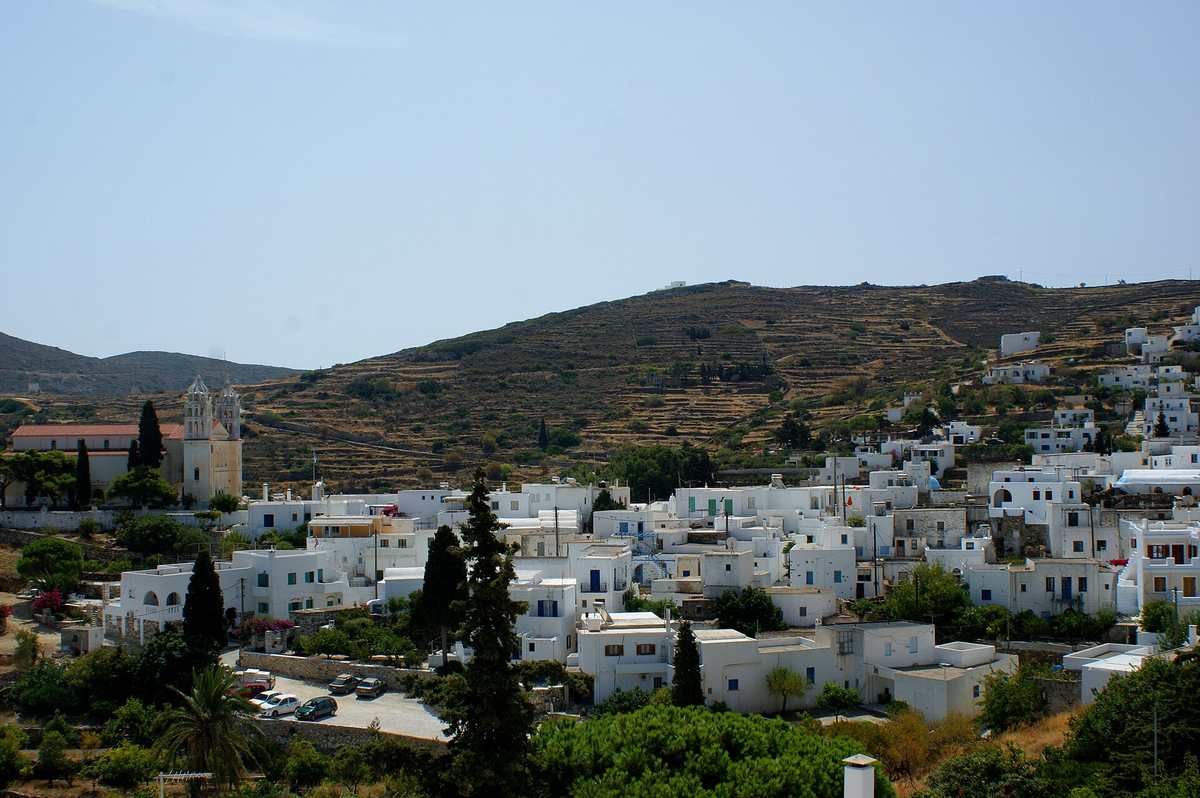
The Paros villages range from the cosmopolitan harbour town of Naoussa and the bustling port capital of Parikia to the green mountain village of Lefkes and the quiet, car-free hamlet of Prodromos. Each offers a different side of the island, from nightlife to slow traditional life. This guide covers the best villages and towns and what each has to offer. Plan the whole trip with Greece Tours.
The villages are among the island’s great pleasures, a key part of the Paros travel guide. They spread from the coast up into the hills. The sections below cover them in turn.
What is Naoussa like?
Naoussa is the island’s prettiest and most cosmopolitan town, set around a working fishing harbour on the north coast. It pairs whitewashed lanes, boutique shops and acclaimed restaurants with a lively bar scene and easy access to the best beaches.
Naoussa is the island’s style capital. A small Venetian fort guards the entrance to a postcard fishing harbour, where caïques still land their catch beside cocktail bars and seafood tavernas. The pedestrianised lanes behind the waterfront hold boutiques, galleries and chapels, busy into the night in summer. The best beaches, including Kolymbithres and Santa Maria, lie minutes away, set out in the guide to Paros beaches. Naoussa suits travellers who want charm with nightlife. The capital offers a different energy.
What is Parikia like?
Parikia is the capital and main port, a lively town of marble lanes, old churches and a Venetian castle behind the busy waterfront. It holds the great Byzantine Church of 100 Doors and serves as the island’s transport hub for buses and ferries.
Parikia mixes everyday island life with deep history. Behind the ferry quay and its cafés lies an old town of marble-paved lanes, whitewashed houses and a kastro built from ancient temple stones. Its centrepiece is the Panagia Ekatontapyliani, one of the oldest churches in Greece, covered in the guide to Panagia Ekatontapyliani. As the port and bus hub, Parikia is where most visitors arrive and a convenient base. It trades some polish for convenience and value. The hills hold quieter villages.
Why visit Lefkes?
You visit Lefkes for its mountain setting, traditional architecture and walking trails, 11 kilometres south-east of Parikia. Among the loveliest mountain villages of the Aegean, it sits among green hills with marble lanes, old churches and the start of the Byzantine road.
Lefkes is the jewel of the interior. Built high in the hills as a refuge from pirates, the village keeps its traditional character, with whitewashed houses tumbling down green slopes, marble-paved lanes and the twin-towered church of Agia Triada. The cooler air and the views make it a refreshing escape from the coast, and the old stone Byzantine road to Prodromos begins here, a classic walk. Lefkes rewards travellers seeking quiet and scenery, set out in the guide to Paros tours. Smaller hamlets complete the picture.
What about the smaller villages?
The smaller villages include car-free Prodromos with its arched white lanes, hillside Marpissa with its chapels, the fishing harbour of Piso Livadi, and quiet, family-friendly Aliki in the south. Each keeps a slow, traditional rhythm away from the crowds.
The island rewards those who explore beyond the main towns. Prodromos, a tiny walled village between Lefkes and Marpissa, bans cars and stays silent even in August, its white lanes covered by arches and blue doors. Marpissa spreads over a hill with traditional houses and lovely chapels, while Piso Livadi makes a relaxed fishing-harbour base near good beaches. Aliki, in the south near the airport, offers quiet, family-friendly swimming. These hamlets suit a slow day, set out alongside the guide to where to stay in Paros. Seeing them takes a little planning. The questions below cover the points travellers ask most.
How do you visit the villages?
You visit the villages by rental car or scooter for the hill hamlets, or by bus for Naoussa, Parikia and Lefkes. A guided tour combines several with a winery and viewpoints, and the Byzantine road links Lefkes to Prodromos on foot.
Reaching the villages is easy with the right transport. Buses link Parikia, Naoussa and Lefkes frequently, while a car or scooter opens up Prodromos, Marpissa and the southern hamlets. A guided village tour ties several together with a winery stop and panoramic views, set out in the guide to Paros tours, while walkers follow the old marble Byzantine road from Lefkes down to Prodromos. Combining a couple of villages with a beach makes a full day. The questions below cover the points travellers ask most.
Which villages are best for food and tavernas?
Naoussa leads for harbour seafood and fine dining, while the inland villages of Lefkes, Marpissa and Prodromos serve traditional home-style cooking at gentler prices. The fishing harbour of Piso Livadi grills the day’s catch by the sea.
Each village offers its own table. Naoussa’s harbour holds the island’s most celebrated seafood restaurants and stylish kitchens, busy every evening, while Parikia mixes waterfront tavernas with old-town courtyards. Inland, Lefkes, Marpissa and car-free Prodromos serve slow-cooked dishes, local cheeses and village wine at lower prices and a slower pace, and Piso Livadi grills fresh fish on the quay. Matching the meal to the village is part of the pleasure, set out in the guide to best restaurants in Paros. Some villages reward the climb with views.
Which villages have the best views?
Lefkes has the finest views, set high among green hills with vistas over the terraces and across to Naxos, while Prodromos and Marpissa look out over the eastern plain. Naoussa and Parikia offer harbour and sunset views over the sea.
The hill villages reward the drive with scenery. Lefkes, perched in the central mountains, gives sweeping views over olive terraces toward the Aegean and Naxos, especially from the start of the Byzantine road. Nearby Prodromos and Marpissa overlook the eastern plain and coast, while the coastal towns of Naoussa and Parikia offer harbour scenes and famous sunsets over the water. The viewpoints make the villages worth a sunset visit, complementing the wider guide to things to do in Paros. The villages also hold the island’s crafts.
Are the villages good for shopping and crafts?
The villages are good for crafts, with Lefkes and Naoussa selling ceramics, weavings, jewellery and local produce, and Pyrgos-style marble work echoing the island’s stone heritage. Parikia adds boutiques, galleries and food shops in its old town.
Village lanes hide the island’s crafts and shops. Lefkes and Naoussa sell handmade ceramics, weavings, jewellery and local food such as honey, capers and wine, often from family workshops, while the marble tradition lives on in carved souvenirs. Parikia’s old town adds boutiques, art galleries and delis among the marble streets. Browsing these makes a relaxed afternoon and yields genuine souvenirs, set out alongside the guide to Parian marble. Timing a village visit improves it.
When is the best time to visit the villages?
The best time to visit the villages is the late afternoon and evening, when the heat eases, the lanes glow and the tavernas open, or the cooler shoulder months of May, June, September and October. Mornings are quiet and good for photography.
Timing shapes a village visit. The late afternoon and early evening are loveliest, as the day cools, the marble lanes catch a golden light and the tavernas and bars come alive, perfect in Lefkes or Naoussa. Early mornings are quiet and ideal for unhurried photography before the day-trippers arrive. The shoulder months bring pleasant walking weather and thinner crowds, while car-free Prodromos stays calm even in August, as the guide to the best time to visit Paros notes. The questions below cover the points travellers ask most.
Frequently Asked Questions
What is the prettiest village in Paros?
Naoussa is widely considered the prettiest town, with its fishing harbour, whitewashed lanes and beaches, while Lefkes is the loveliest mountain village. Tiny car-free Prodromos is the most unspoilt, keeping its arched white lanes quiet even in August.
Which Paros village is best for a quiet stay?
For a quiet stay, the mountain village of Lefkes, the car-free hamlet of Prodromos, or the southern village of Aliki are best. They keep a slow, traditional rhythm away from the busier harbour towns of Naoussa and Parikia.
How do you get around the Paros villages?
You get around by bus to Naoussa, Parikia and Lefkes, and by rental car or scooter for the smaller hill villages. A guided tour links several with a winery and viewpoints, and a marble Byzantine path connects Lefkes to Prodromos on foot.