
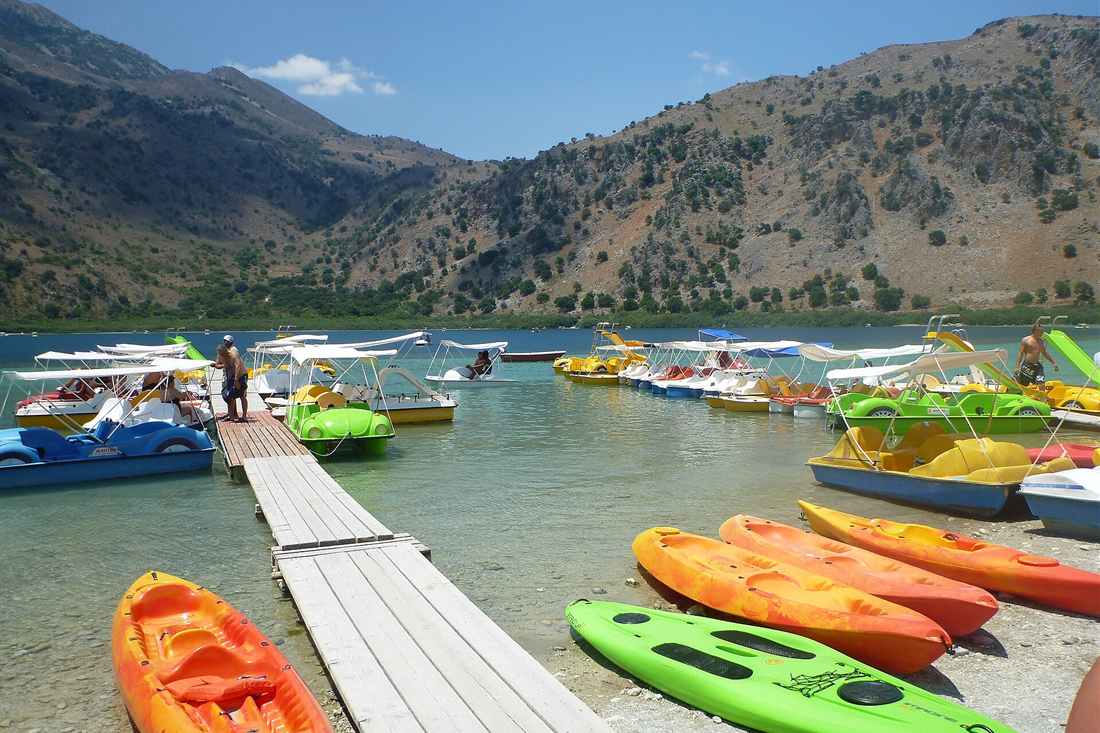
Mykonos Kayak Tour
A Mykonos kayak tour is a guided sea-kayak trip along the rocky coast of Mykonos in the Cyclades, to bays, sea caves and small beaches that roads do not reach. Travellers who book through Greece Tours find two Mykonos kayak tours on sale: a guided sea kayaking trip to the island’s natural bays and a canoe and SUP board rental at Super Paradise Beach.
Sit-on-top sea kayaks are stable and simple to board from the beach, so beginners can join. The summer meltemi wind decides which coast a Mykonos kayak tour uses, and guides keep to the sheltered side of the island. Route, duration and meeting point differ by trip, so check the tour listing before booking a Mykonos kayak tour.
What is a Mykonos kayak tour?
A Mykonos kayak tour is a guided sea-kayak trip along the island’s coast to bays, sea caves and beaches that only a boat or a paddle can reach. Beach water-sports stations also rent kayaks and canoes by the hour.
The guided format puts a group of paddlers in sit-on-top sea kayaks, with a local guide in front. The group paddles close to the shore, stops in coves that have no road access and returns to the launch beach at the end. A Mykonos kayak tour follows the coastline instead of crossing open water, so the paddling stays within sight of the rocks and the seabed. The guide sets the pace, picks the route on the day and gives a short safety and paddling briefing on the beach before launch.
The second format is self-paced rental. Water-sports stations on the busier south-coast beaches rent single kayaks, canoes and stand-up paddle boards by the hour, with a life jacket and a short briefing. Renters paddle along the same beach and the nearby rocks without a guide. Our Mykonos island page places both options inside a wider island plan, next to beach days, boat trips and the old town. Mykonos kayak tours with a guide suit first-time paddlers, while rentals suit confident swimmers who want a short paddle on their own terms.
Which Mykonos kayak tours are on sale?
Two Mykonos kayak tours are on sale: Mykonos: Sea Kayaking to Natural Beauty Bays, a guided trip along the coast, and Super Paradise Beach: Jet Ski, Canoe and SUP Board Rental, an hourly rental from the water-sports station on the beach.
The first listing, Mykonos: Sea Kayaking to Natural Beauty Bays, is the guided Mykonos kayak tour. A guide leads the group by sea kayak to coves and bays along the coast, the natural bays named in the title. The exact route, start time, meeting point and stops sit on the tour listing and change with the wind on the day. This trip suits travellers who want a guided outing on the water without planning the route, the launch beach or the safety side themselves.
The second listing, Super Paradise Beach: Jet Ski, Canoe and SUP Board Rental, is a beach rental. It hands over a canoe, a stand-up paddle board or a jet ski at Super Paradise on the south coast, and the renter paddles or rides the bay without a guide. It gives a short taste of paddling in one bay, while a Mykonos kayak tour covers a longer stretch of coast. The Mykonos water sports page sets out the other activities on the island’s beaches, from windsurfing to snorkelling.
- Guide – the bays trip has a local guide, and the Super Paradise rental has none.
- Craft – the bays trip uses sea kayaks, and the rental offers a canoe, a SUP board or a jet ski.
- Area – the bays trip follows the coast, and the rental stays in the Super Paradise bay.
What does the sea kayaking tour to the natural bays include?
The sea kayaking tour to the natural bays is a guided Mykonos kayak tour along the coast to the bays named in its title. The equipment, the stops and the full list of inclusions appear on the tour listing, so check it before booking.
The title, Mykonos: Sea Kayaking to Natural Beauty Bays, sets the promise of the trip: paddling to bays kept in their natural state, away from sunbeds and beach bars. On a Mykonos kayak tour of this kind the group launches from a beach, follows the rocky shore and pulls into coves along the way. The guide explains the route, the stroke and the safety rules before launch. Swim stops, snorkel breaks and any snack or drink on the beach depend on the listing, so read the inclusions line by line.
Some coves on the Mykonos coast have no road and no path, so the only way in is by water. That is the main difference between a Mykonos kayak tour and a beach day. Travellers who want to reach the same kind of coves with less effort can compare this trip with Mykonos boat tours, which cover longer distances and carry more people. The kayak trip is slower and quieter, and each paddler sets the rhythm of the stroke.
How does kayak, canoe and SUP rental at Super Paradise work?
Rental at Super Paradise runs from the water-sports station on this sheltered south-coast beach. It is a self-guided alternative to a Mykonos kayak tour: renters pick a canoe, a SUP board or a jet ski, book it by the hour and launch from the sand.
Super Paradise sits in a small bay between Paradise and Agrari, with rocky slopes on both sides that block most of the north wind. The water-sports station on the sand runs the rental: staff check the renter in, hand over a life jacket, explain the paddling area and push the craft into the shallows. The listing Super Paradise Beach: Jet Ski, Canoe and SUP Board Rental shows the rental blocks, the minimum age and whether a jet ski needs a licence, so check the listing before arriving.
A canoe or kayak rental is not a Mykonos kayak tour in the guided sense. Nobody leads the way, and the renter stays inside the area that the station marks. That suits a short paddle along the rocks at each end of the beach, a swim off the canoe and a return to the sand. Travellers who want engine power on the same beach can read the Mykonos jet ski page, which covers jet ski trips on the island.
Which coasts and bays does a Mykonos kayak tour explore?
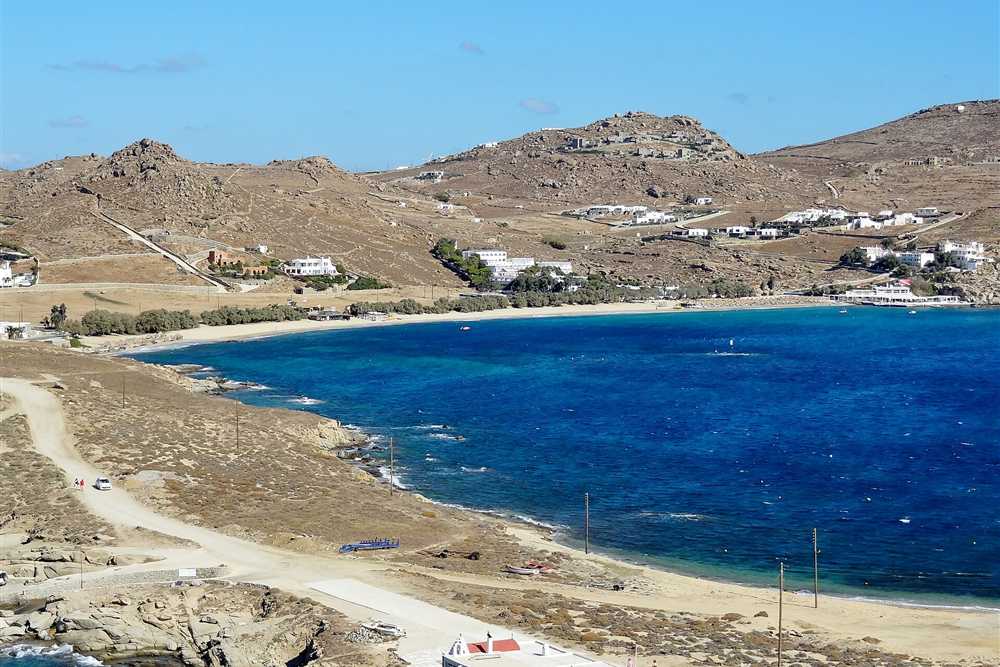
A Mykonos kayak tour explores the sheltered south coast, from Platys Gialos and Paradise to Super Paradise, Agrari, Elia and Kalafatis, and the wilder north-coast bays of Panormos, Agios Sostis, Fokos and Mersini on calm days, all lined with granite rock.
The south coast faces away from the summer north wind, so it holds the calmest water on the island from June to September. Long sandy beaches alternate with rocky headlands, and between them sit small coves with no road. A Mykonos kayak tour on this side links beaches such as Platys Gialos, Paradise, Super Paradise, Agrari and Elia, and further east Kalafatis, where the bay opens wide. The Mykonos beaches page describes each of these beaches from the land side.
The north coast is wilder. Panormos Bay cuts deep into the land, Agios Sostis has no sunbeds and no beach bar, and Fokos and Mersini sit at the end of dirt roads in the north-east. When the meltemi blows, waves break on this side, so a Mykonos kayak tour goes north only on still days, which come most in spring, early summer and autumn. On those days the water is clear to the seabed and the coast is empty.
- South coast – sheltered sandy beaches and rocky coves, calm under the north wind.
- North coast – open bays with no sunbeds, calm only on still days.
- South-east coast – Kalafatis and its wide bay, known for windsurfing.
- Headlands – granite boulders, rock shelves and small sea caves between the beaches.
What do you see from the kayak — caves, rocks and marine life?
On a Mykonos kayak tour you see granite rock formations, small sea caves and clear water over sand and seagrass. Snorkel stops show posidonia meadows, fish such as bream and wrasse, and sea urchins on the rocks. Dolphins are not a promised sight on the trip.
Mykonos is built mostly of granite, and the rock sets the scene at sea level. Wind and salt have rounded the boulders, carved shallow hollows and split the slabs into blocks that slope into the water. On a Mykonos kayak tour the guide steers into narrow gaps between rocks and up to the mouths of small sea caves, where the light turns the water turquoise. Entering a cave depends on the swell, and the guide decides at the entrance.
Snorkel stops add the underwater view. Posidonia oceanica, the Mediterranean seagrass, grows in green meadows on the sandy seabed, and it keeps the water clear by trapping sediment. Over the meadows and the rocks swim small fish such as damselfish, bream, wrasse and saddled bream, while sea urchins and anemones cling to the stone. Mask and snorkel come with some Mykonos kayak tours, and the Mykonos snorkeling page lists more spots for a longer swim from the shore.
How does the meltemi wind shape a Mykonos kayak tour?
The meltemi is a strong, dry north wind that blows across the Aegean in summer, strongest in July and August. It decides the route of a Mykonos kayak tour: guides pick the sheltered south coast, start early and reschedule when the wind is too high.
The meltemi rises when high pressure over the Balkans meets low pressure over Turkey, and it funnels through the Cyclades from the north. On strong days it reaches force 6 or 7 on the Beaufort scale, with whitecaps across the open sea, far beyond the limit of a Mykonos kayak tour. Mykonos sits in its path, which is why the island carries the name island of the winds. The north coast takes the full force, while the south coast lies in the lee of the hills.
Guides plan every Mykonos kayak tour around the forecast. On windy days they launch from a south-coast beach and keep the group close to the shore, where the hills block the gusts. Mornings are calmer, because the meltemi builds through the day and peaks in the afternoon. When the wind passes the safe limit, the operator moves the trip to another day or cancels it, and the listing sets out the rebooking and cancellation terms.
Sailors use the same wind to cross between islands, and the Mykonos sailing page covers yacht and catamaran trips around the island. For paddlers the rule is simple: calm water sits on the side of the island that faces away from the wind. June and September bring calmer spells than July and August. Booking a Mykonos kayak tour in the first days of a trip leaves spare days to reschedule if the meltemi blows.
What kayaks and gear do the tours use?
Mykonos kayak tours use sit-on-top sea kayaks, in single and double versions, with a double-bladed paddle and a life jacket for every paddler. Dry bags protect phones and keys, and snorkel gear comes on some trips, so check the listing.
A sit-on-top kayak has a moulded seat on an open deck, not a closed cockpit. The paddler sits on top of the hull, with the legs out in front and the feet on moulded footrests. Scupper holes drain water back into the sea, so the kayak never fills up. If a paddler slips off, the kayak stays afloat and climbing back on from the water takes a few kicks and a pull across the seat. That design is why a Mykonos kayak tour suits beginners.
Double kayaks carry two paddlers and suit couples, parents with a child and anyone less sure of their balance. Single kayaks give full control of speed and line. The life jacket, or personal flotation device (PFD), stays buckled for the whole paddle. A dry bag clipped to the deck holds a phone, a towel and sunscreen. Mask, snorkel and fins appear on some Mykonos kayak tours and not on others, so check the listing before packing your own.
- Swimwear – worn under light clothes, since every paddler gets wet.
- Sun protection – reef-safe sunscreen, a hat with a strap and sunglasses on a cord.
- Water – one litre per person in a bottle that fits the dry bag.
- Footwear – water shoes or sandals with straps for rocky landings.
How do you paddle a sea kayak for the first time?
Paddling a sea kayak for the first time takes a correct grip, a stroke driven by torso rotation and a few simple steering moves. The guide on a Mykonos kayak tour teaches all three on the beach in a short briefing before launch.
Hold the paddle with both hands a little wider than the shoulders, knuckles in line with the edge of the blade, and keep a light grip. The power comes from the torso, not the arms. Place the blade in the water near the feet, turn the upper body to pull it back to the hip, lift it out and repeat on the other side. Rotating the torso spreads the effort across the back and core, so a Mykonos kayak tour tires the arms far less.
Steering uses the same paddle. A sweep stroke, a wide arc from the bow toward the stern on one side, turns the kayak away from that side. A back stroke slows the kayak or stops it. To board from the beach, float the kayak in knee-deep water, sit on the seat sideways, then swing both legs in. To land, paddle straight at the sand, swing the legs out and stand up in the shallows.
In a double kayak, the front paddler sets the rhythm and the rear paddler matches it, stroke for stroke, so the blades never clash. The rear seat also steers, with sweep strokes when the kayak drifts off line. Pairs who talk through each turn and keep the same pace move faster and tire less. After a first Mykonos kayak tour, the same skills carry over to kayak and canoe rental at any beach station on the island.
Who is a Mykonos kayak tour for, and what fitness does it need?
A Mykonos kayak tour suits beginners, couples, families with older children and confident swimmers. It needs basic fitness: the ability to paddle at an easy pace for short stretches, sit upright on a kayak seat and swim a few strokes in calm water.
Most guests on a Mykonos kayak tour have never paddled a sea kayak before. Guides plan the route in short legs with rests between them, and the group stops at beaches and coves to swim, snorkel and take photos. Sit-on-top sea kayaks are wide and stable, so a first-timer settles into the seat within minutes. The effort comes from the arms, shoulders, back and core, while the legs brace against the footrests.
Couples on a Mykonos kayak tour tend to share a double kayak. The stronger paddler sits in the back and steers, and the front paddler sets the rhythm, so two people with different fitness levels move as one boat. Families with older children use doubles as well, with an adult in the back seat. Minimum age rules differ between operators, so check the listing before booking a Mykonos kayak tour with children.
Swimming ability matters because every stop includes time in the sea, and a capsize, though rare in calm water, puts the paddler in the water for a minute. Weak swimmers keep the life jacket on at every stop and tell the guide at the briefing. Guests with back, shoulder or heart conditions, or who are pregnant, ask the operator before booking. A Mykonos kayak tour is a light workout, not a race, and the group moves at the pace of its slowest paddler.
Is a Mykonos kayak tour safe?
A guided Mykonos kayak tour is a safe activity in calm water. Every paddler wears a life jacket, the guide gives a safety briefing on the beach, the group stays together, and operators cancel or move the trip when the wind rises.
Safety starts on the sand. Before launch, the guide fits each life jacket, checks the buckles and straps, and explains how to hold the paddle, how to get in and out of the kayak, and what to do after a capsize. The briefing also covers hand signals and the rule of staying within sight of the guide. On a Mykonos kayak tour, the life jacket stays on from launch to landing, including the short paddles between swim stops.
Wind is the main hazard in the Cyclades. Operators read the forecast on the morning of the trip and pick a stretch of coast in the lee of the wind, which on Mykonos means the south coast when the north wind blows. When the sea is rough on every side of the island, the operator cancels the Mykonos kayak tour or moves it to another day. The guide keeps the group close to the shore, within easy reach of a beach.
Sun and heat cause more trouble than the sea itself. The water reflects light upward, so sunburn comes fast on shoulders, necks and the tops of the feet. Paddlers drink water before launch and at each stop, and a bottle rides in the kayak. A hat, sunscreen and a covered upper body cut the heat load, and a swim at each beach cools the body down between the paddling legs of the route.
What do you wear and bring on a Mykonos kayak tour?
Wear swimwear under a rash guard or a light long-sleeve top, a hat with a strap and water shoes, and bring reef-safe sunscreen and a dry bag for the phone. Everything on a Mykonos kayak tour gets wet, so pack light.
Clothing on a Mykonos kayak tour follows one rule: expect to get wet. Drips run down the paddle shaft onto the lap, small waves splash over the bow, and every stop includes a swim. Swimwear goes on at the hotel, and a quick-dry layer goes over it. Cotton stays wet and heavy, while synthetic fabric dries in minutes under the Aegean sun. Sunglasses with a cord stay on the face during a swim or a capsize.
Operators supply the kayak, the paddle and the life jacket, and some add a dry bag or a sealed hatch for small items; check the tour listing for the exact kit. Valuables stay at the hotel. A phone rides in a sealed pouch clipped to the kayak, and a towel and dry clothes wait at the meeting point. Snacks and drinking water come with some tours and not others, and the listing states which applies to each Mykonos kayak tour.
- Swimwear and top – swimwear under a rash guard or a light long-sleeve top, for sun cover on the arms and shoulders.
- Hat with a strap – shade for the face and neck that stays on in the wind.
- Reef-safe sunscreen – applied before launch and again at the main swim stop.
- Water shoes – protection for the feet on pebbles, rocks and sea urchins at landings.
- Dry bag – a sealed bag for the phone, keys and cards inside the kayak.
When is the best season and time of day for a Mykonos kayak tour?
The season for a Mykonos kayak tour runs from May to October. The sea is warmest in August and September, mornings bring the calmest water, and the meltemi wind builds on July and August afternoons. Some operators add sunset paddles on calm evenings.
Kayak operators on Mykonos work from May to October, the length of the island’s tourist season. May and June bring long days and cooler water that feels fresh at a swim stop. July and August bring the most visitors, the hottest days and the strongest wind. The sea lags behind the air by about a month and reaches its warmest in August and September, and September adds quieter beaches, which makes it a strong window for a Mykonos kayak tour with plenty of swimming.
Morning is the calmest part of the day. The meltemi, the north wind of the Aegean summer, builds through the late morning and peaks in the afternoon in July and August, so a morning Mykonos kayak tour meets the flattest water and the lowest heat. Some operators run sunset paddles on calm evenings, with the sun dropping into the sea to the west; check the tour listing for the sunset option and the dates it runs.
How do you book a Mykonos kayak tour, and what do you check on the listing?
Book a Mykonos kayak tour online through a tour listing, a few days ahead in July and August. Before confirming, check the meeting point, the pickup, the duration, the group size, the snorkel gear and the cancellation terms for bad weather.
Online listings show each Mykonos kayak tour with its route, start time, reviews and a booking calendar. Summer dates fill first, so booking a few days ahead secures a place in July and August, while dates in May, June and October open up closer to the day. Most listings carry a cancellation window for guests who change plans; the cut-off differs by tour, so check the tour listing before confirming the booking.
The weather clause matters most on Mykonos. The wind shuts down sea activities at short notice, and the operator makes the call on the morning of the trip or the evening before. The listing states what happens when the operator cancels a Mykonos kayak tour for wind: a new date, a refund or both options. Booking the paddle early in the stay leaves spare days for a new date if the first one falls to the weather.
- Meeting point and pickup – the launch beach with its map pin, and whether a hotel transfer is part of the tour.
- Duration – the total time on the trip, split between paddling, swimming and stops.
- Group size – the number of kayaks in the group and the number of guides.
- Snorkel gear – whether masks and snorkels come with the kayak or stay at home.
- Weather cancellation – the terms when the wind cancels the trip on the day.
How does a Mykonos kayak tour compare with a boat tour, jet ski or SUP?
A Mykonos kayak tour is slower, quieter and more active than a boat tour or a jet ski, and it reaches coves too small for boats. A stand-up paddleboard (SUP) is quiet too, but a kayak is steadier and covers more coast.
A boat tour covers more coast in less time. A Mykonos catamaran cruise sails along the south coast beaches and across to Rhenia island with swim stops on board, and it asks no effort from its guests. A Mykonos kayak tour covers a shorter stretch of shore, but it slips into narrow coves and gaps between rocks that a boat passes at a distance, and the paddler moves under their own power the whole way.
A jet ski is fast and loud, and it suits guests who want speed over scenery. A kayak makes no engine noise, so paddlers hear the water, the wind and the gulls on the cliffs. A SUP board gives a high view into clear water but demands balance and gets hard in a light chop, while a sit-on-top kayak stays stable in small waves and carries water and snorkel gear. On land, a Mykonos ATV quad tour follows the island’s roads to beaches and viewpoints, while a Mykonos kayak tour reaches bays with no road at all.
- Pace – slow and steady on a kayak, fast on a boat or a jet ski.
- Access – kayaks land in small bays that boats cannot enter.
- Exercise – kayaks and SUP boards give a workout, boats and jet skis do not.
- Noise – kayaks and SUP boards run silent, boats and jet skis run on engines.
How do you fit a Mykonos kayak tour into a Mykonos day?
Paddle in the morning, rest on a beach in the afternoon, and spend the evening in Little Venice or at the windmills. A Mykonos kayak tour also pairs with snorkelling at the swim stops and with a sunset cruise later the same day.
A morning Mykonos kayak tour fits the rhythm of the island. The group launches on calm water, paddles and swims through the late morning, and lands before the afternoon wind and heat reach their peak. After lunch at a taverna near the launch beach, a sheltered beach on the south coast suits a slow afternoon of swimming and shade. Guests who snorkelled at the stops on the kayak route bring their mask for another session in the shallows, then rinse off the salt and add fresh sunscreen.
Evening belongs to Mykonos Town. Little Venice, the row of houses built right over the water on the west side of town, faces the sunset, and the windmills of Kato Mili stand on the ridge just above it. A Mykonos sunset cruise is the sea-based way to watch the same sky, and a morning Mykonos kayak tour plus an evening cruise fit into one day with time to rest between them.
Where else in Greece can you kayak after Mykonos?
Kayak tours run across the Greek islands and the mainland coast. The main options after Mykonos are the Kleftiko sea caves on Milos, the west coast of Naxos, the volcanic coast of Santorini, the Ionian coves of Lefkada, Rhodes and the Athens Riviera.
Milos is the closest match for a Mykonos kayak tour, with more rock and more caves. Milos sea kayaking routes reach Kleftiko, a cluster of white rock arches and sea caves on the southwest coast that is best reached by sea. Naxos, a short ferry ride from Mykonos, has sea kayak trips along its west coast beaches. On Santorini sea kayaking tours, paddlers follow the volcanic coast below the caldera cliffs, past red and black rock.
In the Ionian Sea, a Lefkada kayak tour explores green coves, white cliffs and turquoise water on a sea with a different wind pattern from the Cyclades. Rhodes, in the Dodecanese, has kayak routes along its east coast bays. Near the capital, kayak trips run on the Athens Riviera south of the city, which suits travellers with a spare day in Athens before or after the islands. Each of these coasts rewards the stroke and the safety habits learned on a Mykonos kayak tour.
Is a Mykonos kayak tour worth it?
Yes, a Mykonos kayak tour is worth it for travellers who want the coast at a slow pace, with swim stops, quiet coves and light exercise. It suits beginners, couples and families, and a morning slot avoids the strongest wind.
Mykonos is known for its beaches and its nightlife, and a Mykonos kayak tour shows a quieter side of the island. From the water, the coast becomes a line of granite headlands, small bays and clear shallows, with no crowds on the rocks and no engine noise. The paddle adds activity to a holiday that otherwise runs between sunbeds, tavernas and bars, and it gives the swim stops a sense of arrival.
The trip works with simple planning. A morning start, basic fitness, a hat, water and a dry bag cover the practical needs, and the guide handles the route and the safety. Checking the listing for the meeting point, pickup, group size and weather terms removes surprises on the day. Travellers who enjoy the paddle take the skill to Milos, Naxos or Santorini on the same trip, and a Mykonos kayak tour becomes the first paddle of a longer Greek journey.
Frequently Asked Questions
Do you need kayaking experience for a Mykonos kayak tour?
No experience is needed for a guided Mykonos kayak tour. Sit-on-top sea kayaks are stable, the guide teaches the grip and the stroke on the beach, and the route stays close to the shore. Basic swimming ability and normal fitness are enough for most paddlers.
Can children join a Mykonos kayak tour?
Children join a Mykonos kayak tour in a double kayak with a parent, who sits in the rear seat and steers. Every child wears a life jacket. The minimum age differs by operator and by trip, so check the tour listing before booking.
What time of day is calmest for kayaking in Mykonos?
Morning is the calmest time for a Mykonos kayak tour. The meltemi builds through the day and peaks in the afternoon, so the sea is flattest after sunrise. Early starts also avoid the midday heat and the busiest hours on the south-coast beaches.
Can you swim during a Mykonos kayak tour?
Yes, when the listing includes swim stops. Guides pull the kayaks onto the sand of a quiet cove or hold them near the rocks while the group swims. Snorkel gear comes on some trips, so check the listing and wear swimwear under light clothes.
What happens if you fall off a sit-on-top kayak?
The life jacket keeps the paddler afloat, and a sit-on-top kayak does not sink or fill with water. Climbing back on takes a few kicks and a pull across the seat from the side. The guide stays close and steadies the kayak during the climb.