
Athens Rock Climbing
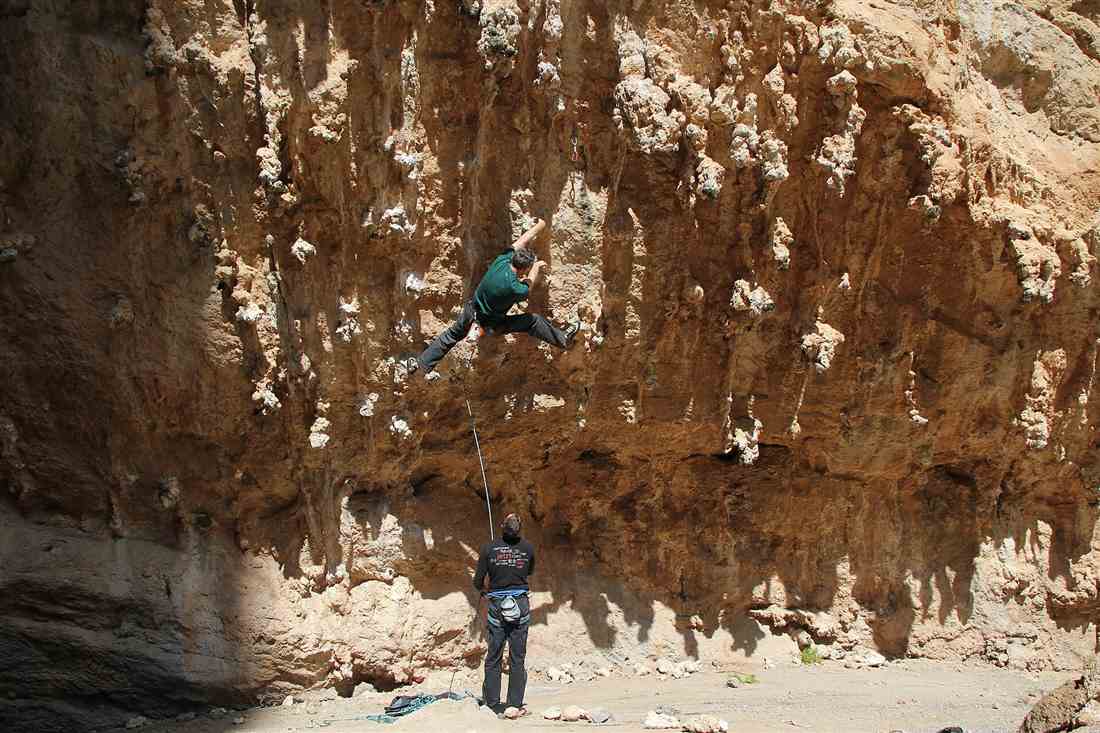
Athens rock climbing is guided outdoor climbing on the limestone hills inside the Greek capital, where a guide sets a top-rope, hands out the gear and coaches beginners up their first routes. The Greece Tours selection covers the two sessions on sale: a climbing experience on Philopappou Hill beside the Acropolis and a private guided climb on the old quarry faces of Tourkovounia.
An Athens rock climbing session needs no experience, only basic fitness and no fear of height. Experienced climbers use a private session to pick harder lines. Athens rock climbing runs best from October to May, with early and late starts on shaded faces in summer.
What is Athens rock climbing?
Athens rock climbing is guided outdoor climbing on the natural limestone of the city’s own hills, where a guide rigs a top-rope, fits each climber with a harness and helmet, and coaches them up short bolted routes.
The capital has its own rock within the city limits. Athens rock climbing uses two hills: Philopappou Hill, the green rise south-west of the Acropolis, and Tourkovounia, a ridge of old limestone quarry faces in the north of the city. Both sit among neighbourhoods, so a climber leaves a central hotel, climbs and is back in a café the same day. The Athens travel hub lists the other outdoor options in the city.
The format is simple. A guide leads the group to the crag, sets the ropes from anchors at the top of the wall and belays each climber from the ground. The climber moves up, reaches the anchor and is lowered back down. On Athens rock climbing sessions, first-timers and experienced climbers share the same set-up: a fixed rope above, a guide below and a route matched to each climber’s level.
Which Athens rock climbing sessions are on sale?
Two Athens rock climbing sessions are on sale: Rock Climbing Experience in Philopappou Hill, beside the Acropolis, and Tourkovounia Rock Climbing Private Guided Experience, a private session on old quarry faces in north-central Athens.
The Philopappou Hill session is the city-centre option, with routes on the natural rock of the hill and the Acropolis in view. The Tourkovounia session is private by title, so the guide works with one booking party only. A private Athens rock climbing session suits couples, families and climbers who want to set their own pace or pick harder grades, while a group format suits travellers who enjoy meeting other climbers.
Booking works online through the listings on this page. Each listing shows the dates, start times, meeting point, group format, gear included and the age limit for children. Spring and autumn weekends are the busiest dates, so booking a few days ahead secures the preferred slot; in summer the early and late starts go first. Check the cancellation terms too, since rain or a heat warning can move Athens rock climbing to another day.
Why does Philopappou Hill work as a climbing spot?
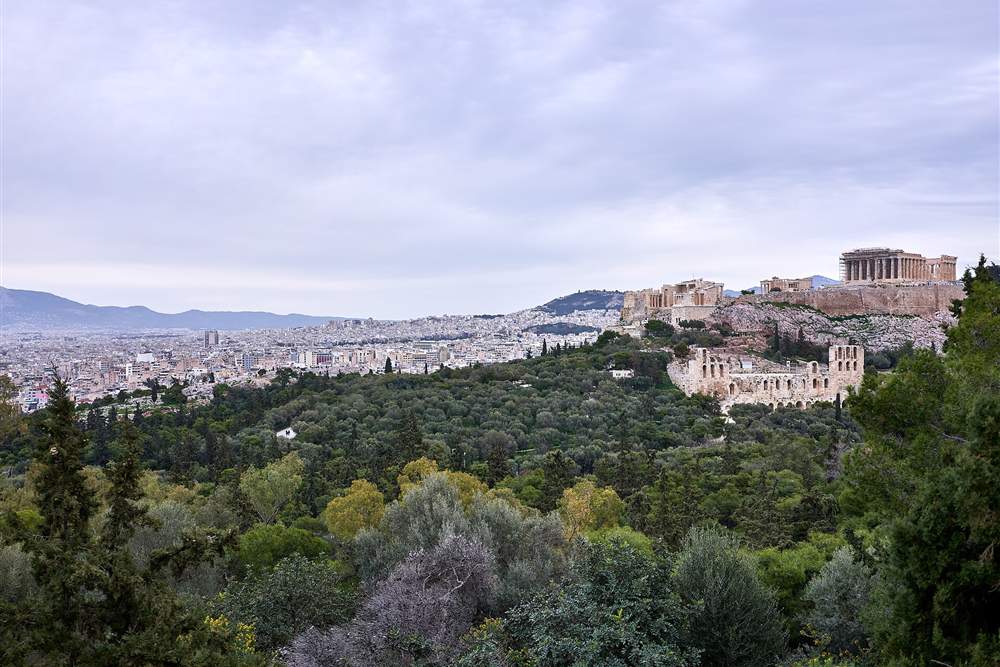
Philopappou Hill works as a climbing spot because it puts natural rock, pine shade and views of the Acropolis and the Saronic Gulf inside the historic centre, so Athens rock climbing here needs no transfer out of the city.
Philopappou Hill is also called the Hill of the Muses. It rises south-west of the Acropolis, and its summit carries the Philopappos Monument, a marble tomb built about 114–116 AD for Gaius Julius Antiochus Philopappos. Pine woods cover the slopes, and the paths lead to viewpoints over the Acropolis, the Athens basin and the Saronic Gulf. For Athens rock climbing, that means real rock a short walk from the old town.
Two neighbouring hills share the same green zone. The Pnyx, where the assembly of ancient Athens met, lies next door, and the Areopagus Hill sits just below the Acropolis. Athens rock climbing here blends sport with history: a climber tops out a route, turns around and sees the Parthenon on its rock. Limestone near the popular paths is polished by walkers and slippery, so the guide picks the sections with the best grip.
Where is Tourkovounia, and what makes it a climbing area?
Tourkovounia is a range of limestone hills in north-central Athens, between Galatsi, Psychiko and Neo Psychiko, and its old quarry faces give steep, solid rock that Athens rock climbing uses as one of the city’s own crags.
Quarrying cut into the Tourkovounia hills and left vertical walls of grey limestone behind. Those walls now serve Athens rock climbing: the rock is solid, the faces are tall enough for roped routes, and the crag sits inside the city grid rather than on a distant mountain. Pine scrub and open viewpoints across the Athens basin mean the rest breaks between climbs come with a wide view of the city and its mountains.
The Tourkovounia session on sale is private, so the guide sets routes for one party and adjusts the plan to its level. A first-timer climbs easy lines on top-rope, while a climber with gym or outdoor experience asks for steeper routes. Tourkovounia draws few tourists, so the rock is quieter than on the central hills. Check the listing for the meeting point, since the crag lies in a residential district.
How does a beginner Athens rock climbing session run?
A beginner Athens rock climbing session runs in a fixed order: meeting the guide, a short approach walk, fitting the harness, shoes and helmet, a safety briefing, then top-rope climbs with the guide belaying and lowering each climber.
Top-rope climbing is the standard format for first-timers. The guide fixes the rope through an anchor at the top, so it runs from the climber’s harness up to the anchor and down to the guide. When the climber rests or slips, the rope holds them in place, a short drop onto a tight rope rather than a fall. So Athens rock climbing works for people who have never touched rock.
Each climb ends the same way. The climber reaches the anchor, calls to the guide, sits back in the harness and walks backwards down the wall while the guide lowers them. Most beginners on an Athens rock climbing session climb a route, rest, watch the others and try again, sometimes on a second line. The guide corrects foot placement between attempts, and those short coaching moments at the base bring the fastest progress.
- Gear up – each climber fits a harness, shoes and a helmet.
- Brief – the guide shows the knot and the commands.
- Climb – each climber takes turns on top-rope routes.
- Lower off – the guide lowers each climber from the anchor.
What gear, clothing and kit does a climb need?
Athens rock climbing needs a harness, climbing shoes, a helmet, chalk and a rope, which guides provide on most sessions, plus the climber’s own clothing, water, sun cream and approach shoes; check the listing for what is included.
The technical kit is the guide’s job. The harness wraps the waist and thighs and carries the rope knot at the front. Climbing shoes are tight, rubber-soled shoes that let the toes stand on small limestone edges. The helmet guards against falling stones, and chalk dries sweaty fingers so they grip better. On Athens rock climbing sessions the guide checks every buckle and knot before a climber leaves the ground.
Clothing matters as much as the kit. Stretchy trousers or shorts allow high steps, and a light top that covers the shoulders protects skin from sun and rope. The approach to the crag crosses rough, stony paths, so trainers or walking shoes with grip beat sandals. Long hair goes in a tie under the helmet, and rings and loose jewellery stay in a bag, because they snag on rock and harness.
- Water – one bottle per person, more on warm days.
- Sun protection – sun cream, a cap and sunglasses.
- Snack – a light bite for the rest breaks.
- Small backpack – a bag for water and a spare layer.
How do rope commands and basic technique work?
Rope commands are short calls between climber and guide, such as “climbing”, “take” and “lower”, and basic technique means weight on the feet, straight arms, hips close to the wall and three points of contact.
Clear commands keep Athens rock climbing safe, because the guide and the climber do not always see each other’s faces. The climber says “climbing” before moving off, and the guide answers once the rope is ready. “Take” asks the guide to pull the rope tight so the climber can rest. “Lower” tells the guide the climber is ready to come down. The guide teaches these words at the base.
Technique beats strength on limestone. Legs are far stronger than arms, so a good climber pushes up with the feet rather than pulling with the hands. Straight arms let the skeleton hold the weight instead of the biceps, which saves energy for the harder moves. Hips close to the wall keep the body weight over the feet. Beginners on an Athens rock climbing session feel the difference within one route.
- Feet first – the climber places each foot before a hand.
- Straight arms – the climber hangs on straight arms.
- Hips in – the climber keeps the hips near the wall.
- Three points – the climber keeps three limbs on the rock.
Which grades and rock type does Athens rock climbing use?
Athens rock climbing uses limestone on bolted sport routes graded on the French scale, where easy routes start around grade 3 to 4 and beginners climb about 4a to 5c; check with the guide for the grades on a given crag.
Greek climbing is mostly limestone sport climbing. Sport climbing means the route has fixed bolts drilled into the rock and an anchor at the top, so the climber carries no removable protection. Limestone forms edges, pockets and flakes that give clear holds for hands and feet, and it dries fast after rain. On Athens rock climbing sessions the guide uses the top anchors of these bolted routes to set the top-rope.
The French scale runs in numbers and letters: 4a is easier than 4c, and 5a is harder than both. A plus sign marks the upper end of a grade. First-timers start in the grade 4 band, where the holds are large and the wall leans back from vertical. Grades differ from wall to wall on the same hill, so check with the guide which Athens rock climbing routes suit the group.
Who is a guided climb for, and what fitness does it need?
A guided climb suits beginners with no experience, gym climbers trying real rock, families, couples and visiting climbers without a partner; it needs basic fitness and no fear of height, and the listing states age limits for children.
No experience is needed for a beginner Athens rock climbing session. The guide teaches everything at the base, and the top-rope set-up keeps a first-timer safe from the first move. Basic fitness means the ability to walk up a stony hill path and climb a long flight of stairs without stopping. Upper-body strength counts for less than most people expect, since footwork carries the body up the rock.
The sessions also serve travellers who climb at home, since a work trip or family holiday rarely includes a rope and a partner. Families climb together, with children roped in under an adult’s care; check the listing for age limits, and see the Athens with kids page for more family days in the city. Athens rock climbing on a private session lets a family set the pace for its youngest climber.
How do climbers stay safe on the rock and on the approach walk?
Climbers stay safe by wearing a helmet against rockfall, running a partner check on knots and harness buckles before every climb, drinking water, avoiding the midday sun and wearing sturdy shoes on the polished limestone of the approach walk.
Top-rope keeps the rope above the climber on every Athens rock climbing session, yet the rock itself brings hazards. Loose stones sit on ledges and get knocked down by climbers or the rope, so every person at the base wears a helmet, and the guide sets the belay spot away from the fall line. Before every climb, climber and guide run a partner check on the knot and the harness buckles.
Heat is the main hazard of summer Athens rock climbing, from June to September. Sun on bare limestone makes the rock hot and drains energy fast, so water, a cap and shaded rests matter. The approach paths on Philopappou and Tourkovounia cross worn limestone, polished smooth by walkers near popular spots. It grips poorly in trainers with worn soles or after rain, so the walk in deserves the same care as the climb.
- Helmet on – every climber and watcher wears one.
- Partner check – knot and buckles checked before each climb.
- Water close – a full bottle stays within reach.
- Grip – shoes with good soles on polished rock.
When is the best season and time of day to climb in Athens?
The best season for Athens rock climbing runs from October to May; from June to September climbers book early morning or late afternoon sessions on shaded faces, because the midday rock gets too hot to hold.
Autumn and spring give the most comfortable conditions. The air is mild, the limestone is cool and grippy, and the light over the Acropolis and the Saronic Gulf is clear. Winter days are short, but dry spells between rain fronts bring crisp, sunny days with good friction on the rock. Rain turns the approach paths muddy and the rock slick, so a session after a storm waits until the wall is dry.
Summer Athens rock climbing depends on shade planning. North-facing walls stay in shade for most of the day, west-facing walls keep their shade through the morning, and east-facing walls fall into shade in the late afternoon. Ask the guide which face the session uses and match the booking to it. An early start also beats the crowds on Philopappou, and a late slot ends with the sunset over the Saronic Gulf.
How does a first climb lead on to sport climbing further afield?
A first climb leads on through repeat top-rope sessions, a belay course and learning to lead on bolts, then to bigger crags: Mount Parnitha and Mount Hymettus near the city, Leonidio, Kalymnos, Meteora and Naxos.
Athens rock climbing is the first step on a clear ladder. After a few top-rope sessions, a climber learns to belay a partner, then to lead: climbing above the last bolt and clipping the rope into each bolt on the way up. Leading turns a guided visitor into an independent sport climber. Most climbers take this step at an indoor wall at home, then return to Greek limestone with a partner.
Near the city, Mount Parnitha and Mount Hymettus rise around the Athens basin. Leonidio in the Peloponnese is a major sport-climbing area about three hours’ drive from Athens. Kalymnos climbing centres on the best-known sport-climbing island in Greece, Meteora rock climbing takes place on conglomerate towers, and Naxos rock climbing adds crags in the Cyclades. An Athens rock climbing session gives the basic skills for a guided day at any of them.
- Top-rope – the climber learns movement with the rope above.
- Belaying – the climber learns to hold and lower a partner.
- Leading – the climber clips bolts on a sport route.
- Trips – the climber travels to big Greek crags.
Do climbing sessions fit into an Athens sightseeing day?
Climbing sessions fit into an Athens sightseeing day, because Philopappou Hill sits beside the Acropolis and Tourkovounia lies inside the city, so a morning of Athens rock climbing pairs with an afternoon of museums or other outdoor activities.
The Philopappou session combines best with the archaeological centre. After the climb, paths across the hill lead to the Pnyx and the Areopagus and on towards the Acropolis and the Ancient Agora. The Philopappos Monument on the summit gives a wide view over the Parthenon and out to the Saronic Gulf, and a late Athens rock climbing slot on the hill ends as the evening light turns the marble gold.
Active travellers stack more outdoor days around Athens rock climbing. The city has guided bike rides through the centre, quad and ATV tours, and hiking on Hymettus and Parnitha. Lycabettus Hill, the highest point in central Athens, gives a second view over the city at dusk. A climb in the morning, a long lunch in Plaka and a museum visit in the afternoon make a full day in the capital.
Is Athens rock climbing worth it?
Athens rock climbing is worth it for travellers who want an active break from museum days, because it puts real limestone, a guide and views of the Acropolis within reach of a central hotel, with no experience needed.
The sessions solve a real problem for climbers on holiday. A traveller without a rope, a partner or local knowledge gets a guide, the gear and a crag in one booking. For first-timers, Athens rock climbing turns a view of the city into a lived experience: limestone under the fingers, the rope above and the Parthenon on the skyline. It is a skill learned on the day, not a show.
The limits are clear too. Midsummer heat restricts climbing to early and late hours, and the city crags are small compared with Kalymnos or Leonidio. For a climber planning a longer trip, an Athens rock climbing session makes a strong first day in Greece. For a traveller with one free morning, it is one of the few ways to stand on real rock in the middle of a European capital.
Frequently Asked Questions
Do beginners need experience for Athens rock climbing?
Beginners need no experience. The guide teaches the harness, the figure-of-eight knot and the rope commands at the base, and the top-rope set-up holds the climber from the first move. Basic fitness is enough.
Is climbing gear provided on the sessions?
Guides provide the harness, climbing shoes, helmet, chalk and rope on most sessions, but the included kit differs by listing, so check the listing before booking. Climbers bring their own water, sun protection, light clothing and sturdy shoes for the approach walk.
When is the best time of day for Athens rock climbing in summer?
The best time for Athens rock climbing in summer is early morning or late afternoon, on shaded faces. From June to September the midday sun heats the limestone until it is too hot to hold, so the first or last slot works best.
Can children join an Athens rock climbing session?
Children climb together with an adult, and the private Tourkovounia session suits families who want the guide to themselves. Age limits differ by listing, so check the listing for the minimum age before booking a family climb.
Where does Athens rock climbing take place?
The two sessions on sale take place on Philopappou Hill, the pine-covered Hill of the Muses south-west of the Acropolis, and on Tourkovounia, a range of limestone hills with old quarry faces between Galatsi, Psychiko and Neo Psychiko in north-central Athens.