
Kalymnos climbing means close to a thousand bolted sport routes on the limestone above Myrties, Masouri and Armeos, with Telendos across the water, a climbing office with a free route list, and a season that runs all year with spring and autumn at its best. Plan the rest of the trip with Greece Tours.
This page covers the climbing: the rock and the routes, the rope and the quickdraws, where to find routes and where to stay, the seasons, Telendos and Emporios, getting around, the island between climbing days and how to plan the trip.
What is Kalymnos climbing?
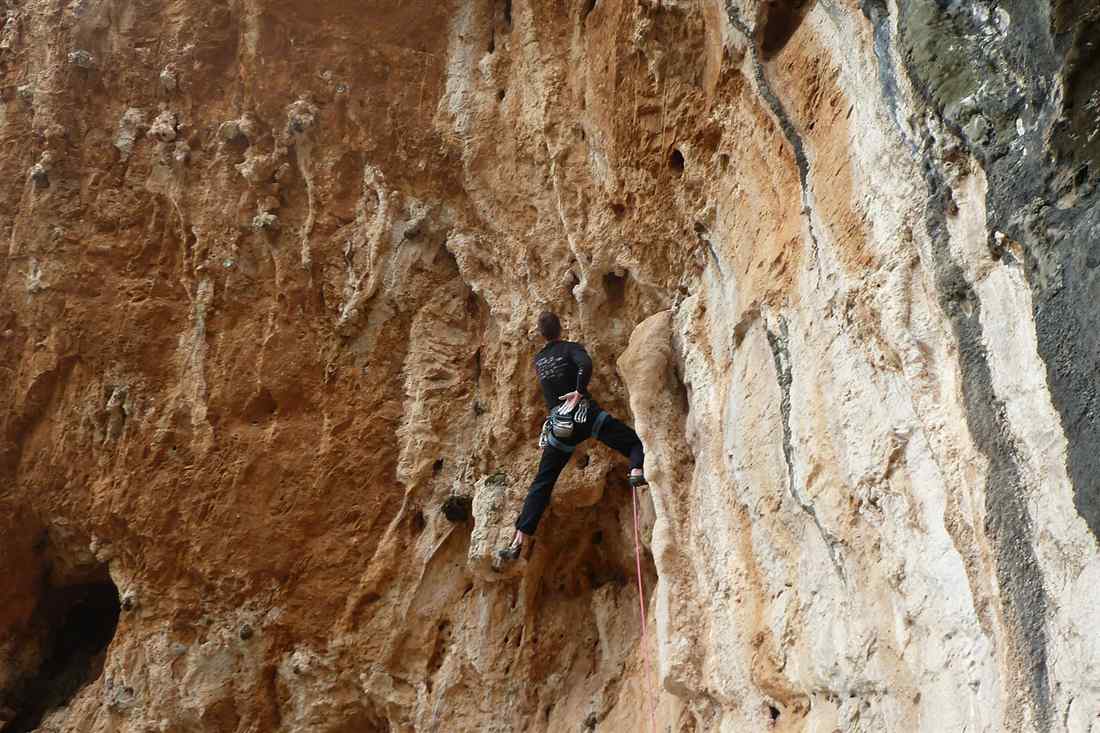
Kalymnos climbing is limestone sport climbing on an island in the Dodecanese next to Kos. The cliffs rise above the sea and rank among the leading rock-climbing destinations in the world. Climbers visit for bolted routes on sharp limestone.
The island sits in the Dodecanese, close to Kos. Dry hillsides drop to the sea near the climbing areas. The approach path kicks up dust in the dry air.
A climber arrives with a rope, quickdraws and a harness. The rock sits close to the water, so the approach path feels steep and dusty. The first view of the cliffs comes soon after leaving the road.
Fixed bolts protect the climbing. A partner belays from the base while the leader clips the first bolt. The belayer remains ready to feed rope or hold a fall.
What does the limestone feel like on Kalymnos climbing routes?
Kalymnos limestone is sharp and textured. A climber holds small edges, pockets and crimps that dig into the fingertips. The rock stays solid, and foot holds are clean but small. Steep walls demand body tension.
The stone has visible pockets where a finger can sit. Some holds have sharp edges that press into the skin. A pocket can accept one or two fingers.
On steep walls, a climber sets a foot, pulls with the fingers and reaches for the next positive hold. The lower body keeps the hips close to the rock.
After a few routes, the fingertips feel hot. Climbers rest, apply tape to worn skin, and return to the wall. Tape on the fingers keeps the skin clean.
How many routes does Kalymnos climbing offer?
Kalymnos holds close to one thousand sport routes across its limestone cliffs. Almost every line is bolted with fixed anchors, and most routes finish at lower-offs. A visiting climber has enough choice for a long trip.
The route count stands close to one thousand. The climbs spread across sectors along the coast and inland valleys. A single trip cannot cover every sector.
Fixed bolts follow each line from the first moves to the top anchor. Each bolt sits inside a tight hole in the rock.
Most routes end at a lower-off. At the top, a climber threads the rope through and lowers to the base. The belayer stays at the base until the rope is through.
How are Kalymnos climbing routes bolted?
Kalymnos climbing routes use fixed bolts placed in the limestone. A climber clips one quickdraw into each bolt while leading. The bolt spacing keeps falls short on steep ground. Fixed metal sits flush in solid rock.
Each route carries a line of fixed bolts from the first moves to the anchor. The first bolt sits close enough for a clip stick from the ground. A clip stick helps reach the first hanger from the ground.
Metal hangers and bolts are fixed into the limestone. A climber checks the hanger before clipping the rope side. The rope side always goes under the metal hanger.
On steep walls, the bolts follow the natural line. The leader reaches from one clip to the next while the rope runs through quickdraws. The quickdraws hang from the harness on both gear loops.
What do anchors and lower-offs mean for Kalymnos climbing?
Anchors are fixed points at the top of a climb. Lower-offs are chain or ring setups that let a climber lower back down. The climber reaches the top, clips the rope through, and descends safely.
Fixed anchors remove the need to build a belay at the top. The climber reaches the chains and prepares to lower. The top anchor stays fixed for the next climber.
A lower-off is a closed loop made from chain, rings or quick links. The climber threads the rope through while the belayer keeps tension. The belayer locks the device and waits for the rope to slide through.
Once the rope is through, the climber leans back and the belayer lowers. The rope slides through the lower-off until the climber stands on the ground. Feet touch the ground again with the rope still under control.
What rope length fits Kalymnos climbing?
A 60-metre rope covers many Kalymnos routes. A growing number of climbs, including well-worn classics, need 70 metres or more. A short rope can stop a climb early, so check the route list before setting off.
Many sport routes work with a 60-metre rope. The climber can lower to the ground without the rope end passing the belay device. The rope coils at the base lie flat before the start.
A growing number of pitches need 70 metres or more. On those routes, a shorter rope leaves the climber unable to lower from the top. A longer rope adds weight but extends the range of possible lines.
Well-worn classics are among the routes that demand extra rope length. A long rope also helps when the start is set back from the base. The route list notes where extra rope length is required.
How many quickdraws does Kalymnos climbing need?
For Kalymnos climbing, bring at least 16 quickdraws on the harness. Long pitches use one draw per bolt, and the anchor needs two draws or its own lower-off. A climber with fewer draws risks stopping short.
Count the quickdraws before leaving the room. Sixteen draws cover most pitches and the top anchor. Harness loops distribute the weight evenly.
On steep walls, each bolt takes one quickdraw. The number of draws clipped grows fast when the line is long and overhanging. The leader grabs the rope side of the draw and clips it to the bolt.
A spare draw on the harness helps when a gate feels stiff or a draw gets dropped. The climber swaps it and keeps moving upward. A quickdraw with a bent gate on bottom speeds up clipping.
Why does a climber knot the rope end in Kalymnos climbing?
A climber knots the rope end every time on Kalymnos. The knot stops the rope from running through the belay device during a lower. The belayer checks it before each route.
Before the first route, the climber ties a knot in the free end of the rope. The belayer watches the rope go into the rope bag. The knot sits inside the rope bag or on the ground.
The knot catches at the belay device when the leader is far up the wall. Without it, the rope end can slip through on a long lower. A long lower without a knot can drop the rope end from view.
This action takes seconds at the base. The climber repeats it before every climbing day and after every rope change. The partner repeats the check before the leader leaves the ground.
How do I find my route at a Kalymnos climbing sector?
Each route has a name painted at its base. A climber walks along the wall, reads the painted name and matches it to the route list. This simple check prevents starting the wrong line.
Route names appear on the rock at the bottom of each line. The paint sits close to the first holds and faces the base path. The paint stays readable from a few steps away.
A climber carries the printed route list and moves along the base. The painted name confirms the right line before tying in. The list shows the next route along the base.
At crowded sectors, the base path passes many starts. A climber stops at the correct painted name and puts down the rope bag. A small daypack keeps the list dry and close at hand.
What is the Kalymnos climbing office?
The Kalymnos climbing office is run by the local athletic association. It stands north of Myrties near the Poets wall and opens in the mornings for route news. It also hands out the free route list.
The office sits north of Myrties, close to the Poets wall. Climbers reach it by the coast road before midday. Morning visits fit the climbing day well.
It opens during the morning. Climbers visit to get current route news before heading to the crags. Route news covers recent rockfall and new lines.
The office keeps route information fresh and answers questions about current conditions. The printed route list is free. Climbers take the list and head to a sector.
What does the free Kalymnos climbing route printout include?
The free Kalymnos climbing route printout includes route names, grades and directions. A climber reads it in the morning and chooses a sector. The paper matches painted names at the crag.
The printout gives the grade for each route. A climber checks the number before starting a line. A higher number means a harder route.
Directions in the list lead from the road to the crag base. The text names turns and paths without needing a phone signal. The path directions say when to turn off the main road.
Printed route names match the names painted at the base of each climb. This keeps a climber from starting a route above the chosen grade. Checking the list before the walk saves time at the wall.
What is staying in Masouri like for Kalymnos climbing?
Masouri is the tourist centre of the west coast. Climbers stay there for shops, tavernas and fast access to the limestone walls above the village. Rooms look up toward the crags.
Climbers stay along the west coast in Myrties, Masouri and Armeos. Masouri has the busiest centre and the most places to eat. A climber can buy water and food close to the room.
From Masouri, a climber can walk to a crag soon after breakfast. The road below the cliffs connects the village to nearby sectors. Morning light hits the crags above the village.
In the evening, climbers sit in Masouri after a day on rock. The village works as a base for rest and supplies. The busiest street stays lively after dark.
What is staying in Myrties like for Kalymnos climbing?
Myrties is a small base for climbers on the same coastal road as Masouri. Rooms and tavernas sit close to the sea, and the road leads toward the cliffs. It feels quieter than the tourist centre.
The village has a slower flow than Masouri. A climber can eat breakfast near the water and walk to the road. The sea air keeps mornings cool.
From Myrties, the coast road connects to other climbing villages. A scooter or a morning walk reaches the nearby sectors. The road curves past small homes and walled fields.
Staying in Myrties puts a climber close to one of the known walls. The approach is short, and the road noise stays low. The known wall stays visible above the rooftops.
What is staying in Armeos like for Kalymnos climbing at the Grande Grotta?
Armeos sits below the Grande Grotta sector, which rises above the village. A room in Armeos puts a climber close to the approach for that cave. The path climbs from the houses to the wall.
The Grande Grotta sector rises above Armeos. From the village, the path heads uphill toward the cave. The cave casts a large shadow over the lower cliff.
Staying in Armeos makes the Grande Grotta a short morning walk. A climber can reach the base before the sun reaches the wall. Morning shade keeps the first pitches cool.
Early arrivals find empty belay spots under the cave. A climber can also see the island from the water with a Kalymnos yacht charter.
Which season suits Kalymnos climbing?
Spring and autumn suit Kalymnos climbing best. The heat is lower and the crags are quieter. Climbing runs all year, but these seasons offer the most comfortable rock. Long days allow more pitches.
Climbing runs all year on Kalymnos. The island climate allows climbing on sunny winter walls and in shaded summer caves. North-facing walls hold shade for longer.
Spring brings lower heat and quiet crags. A climber can move between sectors without waiting for the rock to cool. The cooler rock lets skin survive a longer day.
Autumn is also a popular season. The afternoon shade returns, and the sea keeps the air mild. Climbers stay on the rock until the light fades.
How does the July and August heat affect Kalymnos climbing?
July and August are hot on Kalymnos. The heat builds after sunrise and makes midday climbing hard. A climber follows shade and avoids crags that face the sun. Early starts and late sessions work well.
In July and August, the air warms quickly after dawn. A climber chooses sectors that stay shaded for part of the day. Cave sectors remain coolest during the morning.
The limestone absorbs heat and feels warm under the hands. Chalk dries fast, and finger skin sweats. Liquid chalk helps on sweaty holds.
Midday becomes a time to rest. Climbers return to the rock when the sun drops and the wall falls into shade. A headlamp allows a final route before full dark.
Why does Kalymnos climbing on Telendos feel different from the main island?
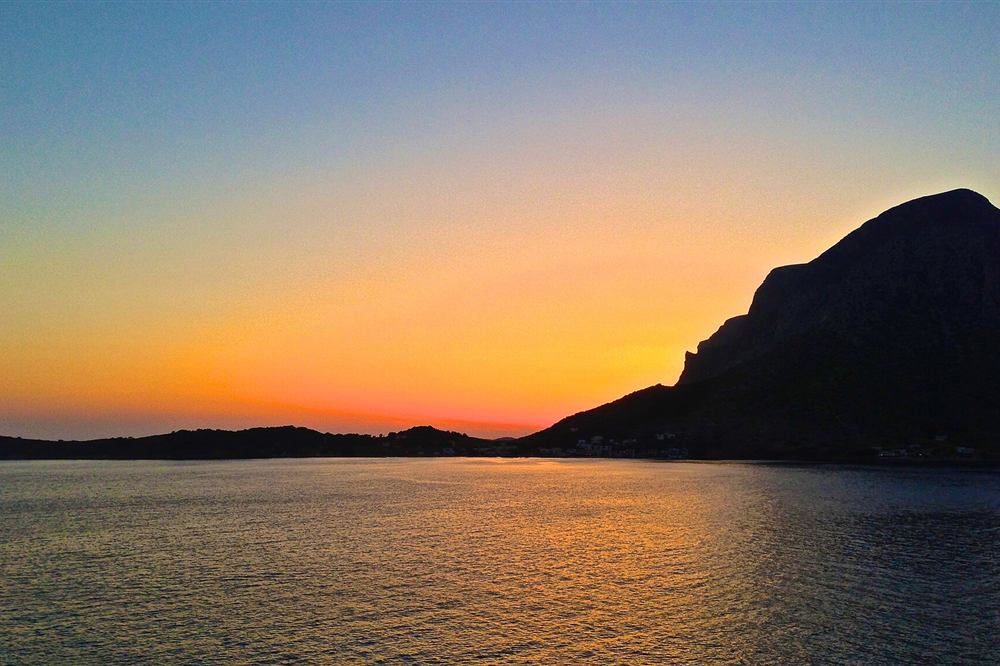
Telendos is a small island facing Myrties and Masouri, reached by a short boat from the pier at Myrties. It has beaches, tavernas, walking trails and quiet rock for climbing. The pace drops as soon as the boat leaves.
A climber steps off the boat and walks straight from the small harbour toward the lower rock. The path is dusty and flat. The water sits behind.
The crag catches morning light. A chalk bag and water bottle are enough for a short session. The rock stays quiet.
After climbing, a swim clears the salt and chalk. A taverna near the beach serves a simple plate. The return boat waits at the pier.
How does the boat across to Telendos fit a Kalymnos climbing day?
The crossing is quick and simple. A climber steps onto the open deck and stands near the rail. The boat moves straight toward a low island. The landing is calm and close to the sand.
At the pier below the village, a small wooden boat idles. The deckhand loops a line. Passengers step across a narrow gap.
The view from the water shows dry hills above the coast. The boat rocks a little. A climber holds the pack strap.
On the other side, the ramp lowers. People walk directly onto the quay. The sound of the engine drops away.
What does a day in Emporios add to Kalymnos climbing?
Emporios is a quiet village at the northern end, with a beach and tavernas. It is reached by road or by boat from Myrties. A climber gets a slow day away from the busier climbing hubs.
The road ends near the beach. A climber can park a scooter on the gravel. The water is flat and clear.
A taverna table faces the sea. The food is simple. The village stays quiet through the middle of the day.
A boat from Myrties arrives and leaves without rush. The cove holds the heat. A swim between climbs resets the skin.
How do buses shape a Kalymnos climbing trip?
Buses run hourly between the villages. A climber can wait at a marked stop and board with a small pack. The coach links the coastal settlements and the inland road. The ride is simple and cool.
The bus stops close to the road. A climber watches for the sign and steps forward when the driver slows.
The view passes through the windscreen. The road follows the shoreline.
A rider gets off near a shop. The walk to the rock starts from the main street. The bus timetable has regular gaps through the day.
Are scooters and taxis practical for Kalymnos climbing?
Scooters and taxis are the other options. A scooter lets a climber leave when ready and park under a tree. A taxi works well for an early start or a tired return in the heat.
A scooter climbs the road with a light buzz. The rider keeps a helmet on. The rack holds a small backpack.
A taxi from Myrties takes the sharp bends without effort. The driver knows the pullouts. The climber watches the sea through an open window.
A scooter or taxi works when the bus does not match an early start. The scooter needs fuel. The taxi needs a phone call.
What is the ferry to Pothia like for a Kalymnos climbing visitor?
Ferries on the Rhodes–Athens line stop at Pothia. The big vessel swings into the harbour and lowers a ramp. A climber walks off into the waterfront streets. The deck rail is warm.
From the deck, the harbour opens wide. The town spreads up the hills. The bow horn sounds.
Passengers roll bags along the concrete pier. The gate opens onto the waterfront road.
A climber arriving by sea needs only a backpack and a plan. The central bus stop sits a short walk from the waterfront.
How do climbers arrive through Kos for Kalymnos climbing?
A fast catamaran runs from Kos town. Visitors also fly to Kos and cross by boat. From the airport, a taxi or bus reaches the harbour. The sea crossing ends at Kalymnos.
A climber lands on Kos and heads to the waterfront. The boat terminal is close to the centre. The luggage goes into the hold.
The catamaran ride is smooth. The blue water slips past the window. Kalymnos appears as a grey ridge.
On arrival, the port is busy with movement. A climber can find a bus or taxi just outside the gate. The climbing pack hangs on a shoulder.
What is Pothia like after Kalymnos climbing?
Pothia is the island’s port and its commercial and civic centre. It has offices, shops and busy streets. A climber can refill supplies and feel the working life of the island.
The waterfront has moored boats and wide pavement. People cross between cafes and municipal buildings. The traffic moves slowly.
A climber walks through the market street to find fruit. The buildings rise in painted blocks. The harbour air carries salt.
The town feels different from the climbing villages. Pothia works all day. The noise and movement bring a change after quiet rock.
Why does the barren landscape shape Kalymnos climbing?
The island is mostly barren rock. The hills are dry and exposed. A climber feels the sun directly on the stone. The rock walls stand above the road without soil or forest.
The ground crunches underfoot. Sparse dry plants cling to cracks. The heat reflects from the rock.
A climber needs water and a hat. There is little shade on the walk. The rock warms the hands.
The open terrain makes the sea visible from high points. The view is clear and raw. The rock feels solid and bare.
How do the valleys of Vathys and Pothia contrast with Kalymnos climbing?
The valleys of Vathys and Pothia hold olives, oranges and vines. They sit apart from the dry rock. A climber can pass through green plots on the way to the coast. The green rows are low and neat.
In Vathys, the road winds between irrigated fields. Leaves shade the ground. The air feels cooler.
In Pothia, small orchards climb behind the buildings. A climber sees citrus trees from the upper road.
The green strips stop at the stony slopes. The contrast makes the rock feel sharper. The climbing areas start where the shade ends.
What is the sponge-diving heritage behind Kalymnos climbing?
Kalymnos is famous for sponge diving. Divers once brought sponges from the seabed. The trade made the island known. The old work shapes local identity. A climber sees its traces in the harbour.
Old diving suits and helmets appear in shop windows. Black-and-white photos line cafe walls. The sea is part of the island memory.
The harbour keeps the tools of that trade. Metal weights and nets sit beside fishing boats. The past feels close.
A climber rests in the shade and watches the boats. The diving tradition still marks the island’s character. The rock and the sea share the same story.
Where can climbers buy sponges after Kalymnos climbing?
Shops in Pothia and Masouri sell natural sponges from barrels. A climber can pick a sponge from a wet barrel and let it dry. The sponge is light and easy to pack.
The barrels stand outside doorways. Water drips from the wooden slats. A sponge smells of salt.
A shopkeeper wraps the sponge in paper. The bundle fits in a backpack pocket. The skin feels soft.
After a climb, a sponge soaks up water from a basin. It dries quickly in the warm air. The porous surface holds soap well.
How is Easter on the island connected to Kalymnos climbing?
Easter is celebrated with dynamite thrown from the hills above the town. The explosions echo across the harbour. A climber hears the sound from the rock and sees smoke rise. The blasts roll over the water.
The rhythm starts from the slopes. Booms echo across the bay. The town gathers below.
A climber on a higher crag hears the blasts before seeing them. The air smells of powder. The sound bounces off the stone.
The celebration is loud and direct. It fills the streets and the hillsides. The island marks the day with fire and noise.
How does a Kalymnos climbing photoshoot work?
A Kalymnos climbing photoshoot with a professional photographer is bookable on GetYourGuide. A climber meets the photographer at the rock. The session captures movement on the stone. The photographer carries a camera and a small bag.
The light shapes the images. The photographer finds a clear angle.
Chalk dust catches the sun. A climber moves on the wall and the shutter clicks.
After the climb, the climber checks the preview on the screen. The photos show steady posture and quiet focus.
What do day cruises from Kos offer a Kalymnos climbing visitor?
Day cruises from Kos stop at Kalymnos and Pserimos. They can be booked on GetYourGuide. A climber can make a relaxed waterborne trip and see the island from the sea. The boat stops in clear water.
A Kos 3 island cruise glides along the coast. The boat drops anchor over pale sand. The swim stop feels cool.
The boat passes the cliffs. A climber sees the rock from the water and understands the scale. The engine hums.
At Pserimos, the beach is small and bright. The boat then returns to Kos. A climber comes back with a new view of the island.
How does Kalymnos climbing fit a Dodecanese trip?
Kalymnos climbing sits easily in a Dodecanese trip. A traveller can combine island ferries, village stays and climbing days. The island adds rock time to a sea-and-sun journey. The pace feels calm.
A ferry from Rhodes or Kos brings a traveller to the port. The climbing areas lie a short ride away. The journey feels connected.
An island-hopping trip can move between Dodecanese islands. Kalymnos offers a pause with chalk and stone. The pace slows.
A climber leaves with chalk marks on the pack. The island stays in the memory. The wider trip gains a strong physical thread.
Can beginners try Kalymnos climbing?
Beginners can try Kalymnos climbing on short vertical routes with large holds if they climb with a patient partner and choose crags with easy access and flat ground. An early outdoor session teaches clipping, lowering and reading limestone shapes without chasing hard grades.
Bring or rent a harness and shoes that fit snug but not tight. Start on routes far below your gym level because outdoor holds hide their shape and footholds feel smaller in direct sun. A loose harness pinches the waist and distracts while you clip.
Warm up on easy slabs before steeper rock. Press your feet onto the stone and let your legs carry most of the weight while your hands steer and your hips stay close.
Lower slowly with a relaxed arm and eyes on the rope. Ask an experienced leader to set up a top rope anchor and lead the route, then follow with a steady pace.
What does a first day of Kalymnos climbing look like?
A first day of Kalymnos climbing begins with an early breakfast, a walk to a crag, and easy warm-up routes. You climb until the sun heats the rock, then rest in shade and swim in cool water.
Pack water, snacks, sunscreen and a small towel in your rucksack. Wear approach shoes with sticky rubber for the rocky trail, and tie the laces before the walk starts.
At the crag, flake the rope on a clean tarp or over a flat stone. Check knots and harness buckles before each pitch, and tap loose flakes with the back of your hand. Chalk from your bag drifts less if you keep it closed.
Finish the session before your forearms feel tight. A slow swim after the crag relaxes muscles and keeps the day pleasant, so do not chase extra routes late in the day.
How do you plan a week of Kalymnos climbing with rest days?
Plan a rhythm of climbing days separated by rest days, with an easy session at the end of the week. A rest day lets skin regrow and finger tendons recover from sharp limestone.
On rest days, take a gentle walk, swim, or stretch on flat ground. Avoid climbing walls and fingerboards during the trip, and let the forearms relax fully between climbing blocks.
Plan harder sessions early in the week when your body feels fresh. Move easier volume sessions to later days when skin is thin and movements feel sandy under the tips. A hot crag with no breeze drains energy faster than a shaded wall.
Write a simple plan each evening before dinner. Change the plan if your skin feels thin or a finger joint feels warm, and pick a cooler crag for the next day.
What do you pack for Kalymnos climbing?
Pack a comfortable harness, well-fitting shoes, a belay device, chalk bag, helmet, and a rope cover or tarp. Bring tape, nail clippers, sunscreen, a water bottle, and a small first aid kit for sharp rock.
Choose soft shoes for steep limestone pockets and a stiffer pair for slabs. Dry shoes in shade, not direct sun, so the glue stays intact and the rubber does not curl.
A brush with stiff bristles cleans chalk and rubber from handholds. Hang it from your harness with a small loop of cord so it does not drop from high up.
Carry a lightweight backpack that fits a water bladder. Keep snacks in a sealed bag because dust and insects move into open food while you climb. Carry a spare chalk refill if you climb for many days.
How does Kalymnos climbing suit non-climbing partners?
A non-climbing partner can enjoy short walks to crags, long swims, reading under shade, and preparing food while the climber ties in. Choose crags with flat bases and easy approaches so the day feels shared.
Agree on a meeting time and a visible spot. A partner can hold the rope bag or take photos from a safe distance without standing under the climber.
Non-climbers need sturdy shoes, water, and a sun hat. They can walk down to the water while the climber finishes a route, then wave when they return to the bag.
Keep climbing blocks short. Return to the partner for lunch and a swim before the day ends, and avoid adding extra pitches after the agreed time. A simple picnic keeps the group together longer.
How do you belay safely on Kalymnos climbing crags?
Belay with a hand on the brake strand at all times and stand close to the rock where the rope drops straight. Watch the leader’s hands and give slack only when the rope runs free from the protection.
Check that the rope runs clean from your device to the lowest piece of protection. Move sideways if the rope crosses a sharp edge, and stand balanced on both feet with the brake hand behind your hip.
Keep the belay area clear of loose rock and bags. A falling stone can distract the brake hand, so place gear behind a solid block or hang small items from a nearby bush. If a rock falls, do not look up until the sound stops.
Lower with a steady speed and call to people below before the climber leans back from the anchor. Watch the rope until the climber stands on the ground and the weight comes off the line.
How do you care for skin and fingers on Kalymnos climbing trips?
Sharp limestone wears skin quickly, so file rough edges after climbing and apply a plain moisturizer at night. Stop when fingertips feel glassy or a flap starts, and tape hot spots before they open.
Wash chalk off with fresh water before a swim so salt and chalk do not dry the skin. Dry hands fully before sleep, and massage the palm at the base of each finger.
Use fine sandpaper on calluses. Leave blisters intact and cover them with padded tape, then trim loose skin with clean clippers before it snags. Tape sticks better to clean dry skin.
Rest fingers by doing slow wrist circles and gentle fingertip stretches between climbing days. Avoid hanging from small edges on rest days, and climb open-hand on sharp pockets.
How does Kalymnos climbing etiquette work at a busy crag?
At a busy Kalymnos crag, wait your turn for a route and keep bags out of the fall zone. Share shade, keep voices low, and do not leave tape or fruit peels on the rock.
If people wait, take an attempt and offer the route. Do not sit on the rope while resting between tries, and step away from the base after lowering.
Ask before playing music. Speak quietly so other climbers can hear their partners, and silence a phone before the climb starts. Wait for silence before giving a partner a rope command.
Brush chalk and rubber marks at the end of a session. Pack out all rubbish, including tape backing and snack wrappers, and check the ground for dropped skin tape.
How do you combine Kalymnos climbing with swimming?
Climb in the morning, rest during the hot middle hours, and swim in the afternoon at a beach or inlet near the crag. Rinse chalk and salt off your gear and skin after the swim.
Keep a small dry bag for a phone and towel. Wet shorts dry fast in the sun if you wring them out, and salt crystals shake off once dry. Rinse sand from your towel before the next swim.
Swim on a rest day or after easy climbing rather than right before a hard project. Cold water stiffens fingers for a short time, so warm them slowly after the sea.
Wear sandals with grip for the walk to the sea. Carry water to rinse sandy feet before putting climbing shoes back on, and dry the soles with a towel.
How do you book a Kalymnos climbing trip?
Book a room with a kitchen and reserve flights early. Look for accommodation near a grocery shop and a drying balcony, then book any equipment rental after confirming your dates.
Read recent reviews that mention water pressure and bed comfort. Confirm the cancellation terms in writing after you reserve, and save the confirmation on your phone. Message the host about a late arrival before the front desk closes.
Pack your harness, shoes, and belay device in carry-on luggage. Ropes and metal gear go in checked bags, and a small repair tape can fix a torn bag.
Book a place with a washing machine or a nearby laundrette if you climb for more than a week. Dry chalky clothes outside, and shake chalk dust off before washing.
Frequently Asked Questions
What rope do you need for Kalymnos climbing?
A 60-metre rope covers many routes; the longer classics need 70 metres or more.
How many quickdraws does Kalymnos climbing need?
At least 16, with a knot tied in the rope end every time.
When is the best season for Kalymnos climbing?
Spring and autumn, when the heat is lower and the crags are quieter.