
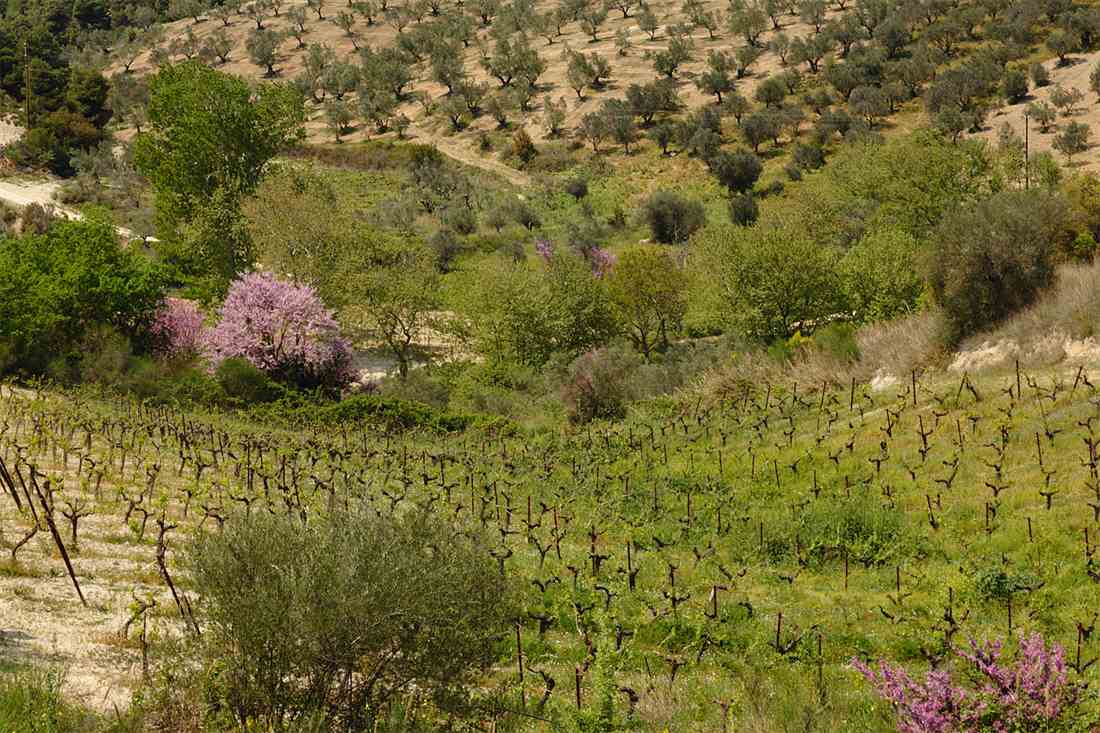
A Samos wine tasting pours the Muscat wine the island has been known for since antiquity, from vineyards spread across the slopes of Mount Ampelos, at wineries, at the Samos Wine Museum and on guided tours from the east of the island. Plan the rest of the trip with Greece Tours.
This page covers the tastings: the Muscat and the vineyards, the museum and the wineries, the guided tours, the villages and the ancient sites around them, and how a tasting fits a day on the island.
What does a Samos wine tasting include?
A Samos wine tasting includes a relaxed seated session with small pours of the island’s Muscat wine. The host explains the colour, aroma and finish of each glass. Visitors smell first, sip slowly and compare dry and sweet styles.
Samos is an island in the north-eastern Aegean, close to the Turkish coast. The sea light falls bright on the tasting table.
The tasting table faces a shaded courtyard or a view of vine rows. A cool draft moves between the glasses and the leaves.
A Samos wine tasting is bookable on GetYourGuide. The booking covers the core seated tasting session and the host’s guidance.
Why is Samos wine tasting built around Muscat?
Samos is known for Muscat because the island’s vineyard-covered landscape and Aegean sun push the grape toward strong aroma and sweetness. A tasting built around Muscat shows the local wine character in every glass.
Much of the island is covered with vineyards. The vine rows run up from the coastal edges toward the hills.
Samos is known for its Muscat wine. The grape gives the island a clear wine identity.
A young Muscat pour smells floral and grapey. A small sip leaves a clean dry or sweet impression on the tongue.
What ancient heritage stands behind a Samos wine tasting?
Ancient Samos was a city-state with vineyards and wine production at the centre of local life. That deep wine culture reaches into the modern glass, giving every Samos wine tasting a link to old island trade and farming.
In antiquity Samos was a city-state known for its vineyards and its wine production. Wine work shaped the local economy.
Visitors see stone terraces on the hillside roads. The terraces mark generations of slope farming and low stone walls.
A cool winery room keeps the wine still before a tasting. The thick wall under the visitor’s hand feels dry and steady.
Where do the vineyards grow on Ampelos for a Samos wine tasting?
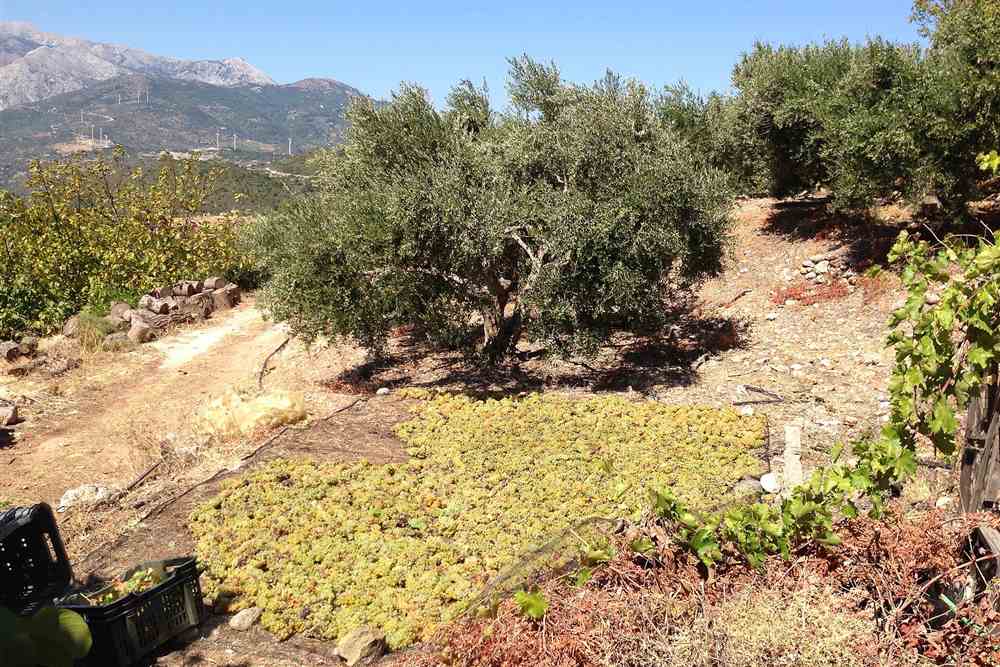
Vineyards for a Samos wine tasting grow on Ampelos, the central mountain of the island. Ampelos is locally called Karvounis and rises to 1,095 metres. Its middle and lower slopes carry the vines through the warm season.
Ampelos is locally called Karvounis. The name sits on the lips of local vintners.
The mountain rises in the centre of the island to 1,095 metres. Vine rows climb its lower and middle slopes.
From a vineyard terrace on Ampelos, a visitor sees the vine rows drop toward the sea. The air above the slope stays clear and warm.
How do the mountains shape a Samos wine tasting?
The mountains shape a Samos wine tasting by giving the island varied slopes and cool moving air. High ground gathers the sun while valleys hold evening coolness, and those changes end up as fresh balance in the wine.
Two mountains dominate the island. Their mass divides the lowlands and the sun.
Kerkis stands in the west and blocks weather from that side. The peak holds a bare rocky face.
A visitor on a hillside tasting sees cloud shadow slide over the central mass. The temperature drops when cloud shadow passes, then the sun returns.
What does the Samos Wine Museum add to a Samos wine tasting?
The Samos Wine Museum adds local context to a Samos wine tasting. Visitors see old wine vessels and tools before they sit down with a glass. The museum turns the tasting into a story about the island’s vineyards.
The island has a Samos Wine Museum. The building guards the island’s wine memory.
Inside, a visitor sees heavy wooden equipment and stained stone. The rooms stay cool out of the sun.
A tasting after the museum feels more grounded. The glass echoes the old equipment in the hall.
Which local wineries open for Samos wine tasting visits?
A Samos wine tasting visit opens the island’s working wine rooms. A family winery and an estate each show the cellar before the host pours a glass, so the taste comes straight from the source.
Local wineries open for visits and tastings include the Vakakis winery and the Hatziioannou estate. Each has its own working rhythm.
At a working winery, a visitor stands beside tanks or barrels. The air carries a faint grape scent from the cellar walls.
The host pours a glass near the tasting table. The wine rests in the glass before the nose.
What happens on the guided winery tour with Samos wine tasting?
A guided winery tour with a Samos wine tasting moves through the vineyard, the press room and the cellar. The guide explains the local grape work, and the visit ends with an authentic tasting at a table in the shade.
GetYourGuide lists a guided winery tour with an authentic tasting. The guided route covers the vine and the cellar.
The tour starts at the vine row or the winery gate. A visitor sees the grape bunches before a pour.
The guide points to the press and the fermentation tanks. Then the group settles at a shaded tasting table.
What does the east Samos wine tasting museum tour with transfers include?
The east Samos wine tasting museum tour includes transport, museum entry and guided tastings in one bookable trip. Pick-up and drop-off remove the need to drive, so guests stay focused on the museum and the wine.
An east Samos wine museum tour with tastings and transfers is bookable on GetYourGuide. The route combines culture and wine.
The transfer brings visitors to the wine museum in the east of Samos. A guide leads the group through the cool rooms.
After the museum, the tasting is set nearby. The host pours Muscat in small glasses and the scent fills the warm air.
How does the island tour combine Samos wine tasting with a pottery workshop?
On this island loop, visitors switch between wet clay and chilled Muscat. The tour stops at a pottery workshop, then continues to a wine session where clay work and wine sit side by side.
GetYourGuide offers an island tour with a wine tasting and a pottery workshop. The day moves between local materials.
At the workshop, a visitor watches wet clay spin under the potter’s hands. The shape rises slowly from the wheel.
The group then moves to a tasting spot. A small sip of wine feels cool after the warm workshop.
Why visit Vourliotes and the northern slopes before a Samos wine tasting?
Vourliotes and the northern slopes add green air and village quiet to a Samos wine tasting day. The village sits beside forests, with a monastery nearby, and the route leads naturally from the cool hills toward the island’s tasting rooms.
The village of Vourliotes lies on the green northern slopes. The road climbs through trees and stone houses.
A monastery stands nearby. Its presence keeps the hillside quiet.
Walking through Vourliotes, a visitor hears the breeze in the trees. The air feels cooler than the lowlands.
What links Pythagoreio, the Heraion and the ancient tunnel to a Samos wine tasting?
A Samos wine tasting gains depth from the south-eastern heritage zone. Visitors meet ancient harbour stones, sacred ruins and a dark water tunnel. Those sights sit close to the modern wine route and give the tasting an extra layer.
Pythagoreio and the Heraion of Samos form a UNESCO World Heritage Site. The coastal ruins hold a deep sense of time.
The site includes the Eupalinian aqueduct, a tunnel cut through a hill in antiquity. Visitors peer into the dark entry.
Samos is the birthplace of the philosopher and mathematician Pythagoras. The town name Pythagoreio carries that memory.
What do Vathy and Karlovasi offer after a Samos wine tasting?
After a Samos wine tasting, the main towns give the day different endings. The capital sits by the north-eastern bay, and the north-western port town climbs toward the hills, leaving another plain for a future route.
Vathy is the capital in the north-east. The bay opens toward the morning sea.
Karlovasi lies in the north-west. Stone buildings step up from the port road.
Marathokampos lies in the south-west. Each plain opens a different route back to the sea.
How do you pair a Samos wine tasting with a day by the sea?
A Samos wine tasting pairs well with a day by the sea. Taste in the early part of the day, then drive to a beach or port. The salt air and cool water stretch the relaxed feeling after the last glass.
A morning tasting leaves the afternoon open for the coast. Wine and salt air make a natural rhythm.
Visitors can add Samos boat trips to reach a cove or a sea cave. The ride gives the body a rest between drinks.
After the boat, the wine’s fruit feels brighter. A final view of the water ends the day.
How can you plan a Samos wine tasting day?
Plan a Samos wine tasting day with a clear route, a booked tasting, and no rushed transfers. Choose the tasting for the cooler part of the day, wear flat shoes, and keep the evening open for a calm meal by the sea.
A full-day guided island bus tour is bookable on GetYourGuide. The route keeps the day simple.
A bus route links the main sights without driving. Travellers can pair the tour with a Samos boat cruise on another day.
The simplest plan keeps the wine stop in the morning. After that, a walk through a coastal town ends the day well.
How does a Samos wine tasting run from glass to glass?
A Samos wine tasting runs from dry to sweet, so the palate moves from the lightest glass to the richest glass. The dry wines open the tasting, and the sweet wines close it. This direction keeps the tasting in order.
Hosts show how to look at colour, smell the glass and taste in small sips. Colour comes before smell, and smell comes before small sips.
Spitting into a bucket is normal at a tasting, so no one has to finish every pour. A guest can leave each glass after a small sip.
Drivers are given water and small plates instead of full pours. Water and small plates replace full pours for drivers. Drivers do not get full pours.
How do you taste and bring bottles home after a Samos wine tasting?
Hosts show how to look at colour, smell the glass and taste in small sips during a Samos wine tasting. Bottles bought at the winery travel well when wrapped in clothing inside checked luggage. This keeps bottles in checked luggage.
Look at the colour before smelling the glass. Colour comes before smell and small sips.
Taste in small sips. Small sips are the way to taste each glass during a Samos wine tasting.
Bottles bought at the winery travel well when wrapped in clothing inside checked luggage. Wrap bottles in clothing inside checked luggage.
Frequently Asked Questions
What wine is Samos known for?
Muscat, made from the vineyards that cover much of the island.
Is there a wine museum on Samos?
Yes. A guided tour from the east of the island visits it with tastings and transfers.
Where do the vineyards grow?
Across the slopes of Mount Ampelos in the centre of the island.