
Zakynthos Horse Riding
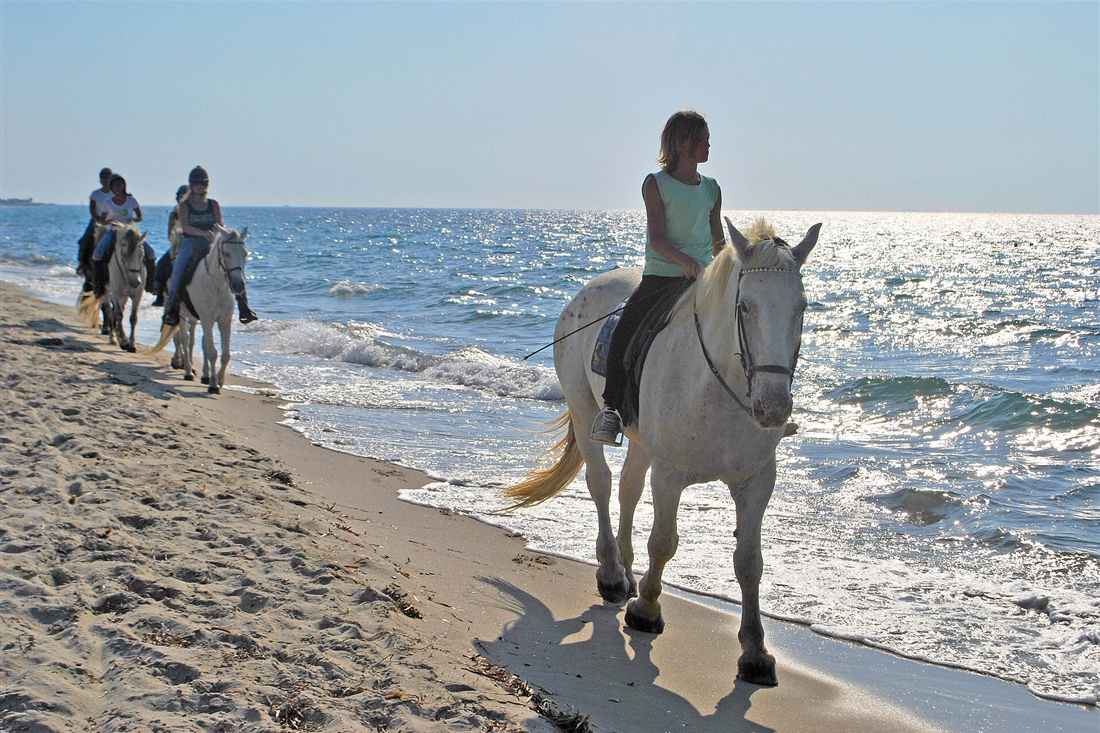
Zakynthos horse riding is a guided ride on calm, trained horses along the beaches, olive groves and hills of Zante, the southernmost of the main Ionian Islands, with some rides wading into the sea. Greece Tours lists the Zakynthos horse riding trips on sale, from beach rides to rides where the horses swim in shallow water.
A guide leads every group at a walking pace, so first-time riders join alongside experienced ones. Rides run from spring to autumn, in the morning and late afternoon, away from the midday heat. Every Zakynthos horse riding route keeps off the loggerhead turtle nesting beaches of the National Marine Park.
What is Zakynthos horse riding?
Zakynthos horse riding is a guided ride on trained horses across the beaches, olive groves and hills of Zante, the southernmost of the main Ionian Islands. Rides move mainly at a walking pace, and some end with the horses swimming in the sea.
The island suits riding because its landscape changes quickly. The south holds Laganas Bay and its long sand, the east coast is flat with wide beaches, and the interior rises through olive groves, vineyards and villages below Mount Vrachionas, the highest point. A Zakynthos horse riding outing uses these settings: soft sand at the water’s edge, dirt tracks between old olive trees and quiet lanes above the coast. The wider island picture sits on the Zakynthos (Zante) travel page.
Every ride follows a guide who sets the pace, picks the route and watches each rider. The tours on sale are built for holidaymakers rather than trained equestrians. Zakynthos horse riding is a sightseeing activity first: the horse carries the rider through places a car cannot reach, such as the shallow edge of the sea or a narrow track through an olive grove. Riders need no equipment of their own, because the stable provides the horse, the saddle and a helmet.
Which ride types do Zakynthos horse riding tours offer?
Zakynthos horse riding tours on sale cover three formats: a horseback ride in the sea, a beach ride combined with swimming, and a riding-and-swimming experience. Stables across the island also run trail rides through olive groves and hills, and sunset rides.
The three listings share one idea: a ride along the shore that ends in the water. On a sea ride, the horses walk from the sand into shallow, calm water, then wade and swim while the riders stay in the saddle. The beach-and-swimming format pairs a ride along the sand with the swim. A Zakynthos horse riding trip of this kind suits summer, when the sea is warm and the water cools horses and riders.
Trail rides leave the coast for dirt tracks through olive groves, past vineyards and up into the hills, where the views open over the sea. Sunset rides run in the last hours of daylight, when the heat drops and the light turns gold over the water. Each Zakynthos horse riding format moves at the pace of the slowest rider, and the route, duration and group size appear on each tour listing.
- Beach walk – a ride along the sand at the water’s edge.
- Sea ride – a ride into shallow water where the horses swim.
- Trail ride – a ride through olive groves, vineyards and hills.
- Sunset ride – a ride timed for the evening light and cooler air.
Where on the island do the rides take place?
Zakynthos horse riding takes place in three main areas: the south around Laganas Bay and Kalamaki, the flatter east coast with its long sandy beaches, and the north around Tsilivi, Planos and Alykes. Each tour listing names its meeting point.
The south draws riders because the main resorts of Laganas Beach and Kalamaki sit on Laganas Bay. Rides here use the countryside behind the bay and the tracks between the villages, since sections of the bay’s sand are protected turtle nesting beaches. The Vasilikos peninsula, with Gerakas at its tip, closes the bay to the east, and Keri, with its sea caves, marks the south-west corner of the island.
The east coast is flatter than the rest of Zakynthos, with long sandy beaches and gentle ground for beginners. The north around Tsilivi, Planos and Alykes combines beaches with farmland and low hills inland. A Zakynthos horse riding route in the north or east moves between sand, olive groves and village lanes. The west coast is a wall of limestone cliffs, home to Navagio, the Shipwreck Beach, which visitors reach by boat.
Can beginners join a ride without experience?
Yes, beginners join Zakynthos horse riding tours without any experience, because a guide leads the group at a walking pace on calm horses. Experienced riders join the same rides and tell the guide their level before the group sets off.
A first ride starts on the ground. The guide gives a safety briefing on how to sit, steer and stop, and each rider receives a helmet. Staff match each rider to a horse and hold it steady while the rider climbs into the saddle. The group sets off at a walk, with the guide at the front. On a first Zakynthos horse riding outing, the horse does most of the work, and the rider sits balanced and relaxed.
Experienced riders tell the guide about their riding background at the start, so the guide pairs them with a horse that suits their level. Any change of pace, such as a trot on open sand, depends on the group, the ground and the guide’s call. A Zakynthos horse riding tour is not a riding lesson, so riders who want training in canter or jumping book a lesson at a riding school.
- Briefing – the guide explains sitting, steering and stopping.
- Helmet – the stable fits a helmet to each rider.
- Mounting – staff hold the horse while the rider climbs on.
- Walking – the group moves in line at a steady walk.
- Leading – the guide goes first and watches the group.
How does riding into the sea with the horses work?
On a Zakynthos horse riding sea ride, the guide leads the horses from the beach into shallow, calm water, where they wade and then swim while the riders stay mounted. Riders keep a light hold on the reins and let the horse move.
The sea section takes place only in calm conditions, because waves unsettle horses and riders. The horses walk in from the sand until the water reaches their chest, and in deeper patches they start to swim with steady strokes of their legs. The rider feels the horse lift and float beneath the saddle. The guide chooses the spot, the depth and the time in the water, and brings the group back to the beach before the horses tire.
Riders on a sea ride get wet to the waist or higher, so a swimsuit under the riding clothes is the base layer. Leggings or light long trousers protect the legs from the saddle even when wet, and closed shoes that handle seawater stay on the feet. Phones go into a sealed waterproof pouch. A towel and a set of dry clothes make the trip back comfortable after a Zakynthos horse riding swim.
What do riders wear and bring?
Riders wear long trousers or leggings, closed shoes and sun protection, with a swimsuit underneath for sea rides, and the stable provides a helmet. Every Zakynthos horse riding tour also calls for a towel, dry clothes, drinking water and a waterproof phone pouch.
Long trousers or leggings stop the saddle and stirrup leathers from rubbing the legs. Closed shoes with a small heel keep the foot from sliding through the stirrup, while sandals leave the toes exposed. A light long-sleeved top guards the arms against sunburn, and high-factor sunscreen covers the face and neck. The helmet goes on over the hair, so a cap stays behind, and sunglasses with a strap stay secure through a Zakynthos horse riding session.
Photos on a Zakynthos horse riding tour come from the rider’s own phone in a waterproof pouch on a lanyard and, on some tours, from the guide, as the listing states. Riders hold the reins with both hands while moving, so photos happen when the group halts on the sand or at a viewpoint in the hills. Jewellery, loose scarves and dangling bags stay behind, since they catch on the tack.
- Clothing – long trousers or leggings and a light top.
- Footwear – closed shoes with a small heel.
- Sea kit – a swimsuit, a towel and dry clothes.
- Sun cover – high-factor sunscreen and strapped sunglasses.
- Phone – a waterproof pouch on a lanyard.
Who can join Zakynthos horse riding, from children to adults?
Zakynthos horse riding suits children, teenagers and adults with basic fitness, but age, weight and fitness limits vary by stable. Each tour listing states its minimum age, maximum rider weight and health conditions, so riders check the tour listing before booking.
Weight limits protect the horses’ backs, and each stable sets its own maximum according to the size of its horses. Riders above the limit do not ride, so an honest weight at booking avoids a refused ride on the day. A Zakynthos horse riding tour needs basic fitness: the rider sits upright, balances in the saddle and grips gently with the legs. Riders with back, hip or knee problems, and pregnant riders, ask the stable before booking.
Families ride together on Zakynthos, with children on calm horses at the walking pace of the group. Minimum ages differ between stables, and each listing states if young children ride their own horse or a horse led by a guide. Parents confirm the age rule, helmet sizes and the sea section before booking. The Zakynthos with kids page lists more family activities that fit around a Zakynthos horse riding morning.
When is the best season and time of day to ride?
The riding season on Zakynthos runs from spring to autumn. In July and August, midday heat climbs above 30°C, so Zakynthos horse riding tours run in the morning and in the late afternoon or at sunset, when the air cools.
Spring brings green fields, wildflowers in the olive groves and mild air, which suits trail rides through the interior. Early summer and September add warm sea water, so sea rides feel pleasant and the beaches are quieter than in August. Autumn keeps warm days and a warm sea into October, before the winter rains return. Outside July and August, a ride fits most hours of daylight, and the trails stay cooler for the horses.
Time of day matters most in July and August. Midday heat above 30°C tires horses and riders, and hot sand adds to the strain. Stables that care for their animals schedule rides in the early morning and in the late afternoon, and sunset rides end the day in cooler air. A morning Zakynthos horse riding slot leaves the rest of the day free, while a sunset slot pairs with dinner in a nearby village.
- Spring – mild air and green trails through the olive groves.
- Early summer – warm sea water and cooler mornings.
- July and August – morning and sunset rides away from midday heat.
- Autumn – warm days and a warm sea after the peak season.
Why do rides keep off the turtle nesting beaches?
Rides keep off the turtle nesting beaches because the National Marine Park of Zakynthos protects the loggerhead sea turtle, Caretta caretta, and its nests in Laganas Bay. Hooves crush nests in the sand, and the protected beaches close at night in the nesting season.
The National Marine Park of Zakynthos covers the nesting beaches of Laganas Bay: Gerakas, Daphni, Sekania, Kalamaki, East Laganas and the islet of Marathonisi. Female turtles come ashore at night through the summer to lay their eggs in the sand, and the hatchlings emerge weeks later and head for the sea. Deep hoof prints trap hatchlings on their way to the water. A Zakynthos horse riding route that respects the park stays off these beaches.
In the nesting season, the protected beaches close to visitors at night, and the rule covers horses too. Stables in the south plan any beach section on sand outside the protected zones and use inland tracks for the rest of the ride. Riders who want to see the turtles join a boat trip on the bay instead. A Zakynthos horse riding tour and a turtle trip together show two sides of the south coast without harm to the nests.
What signs show a stable cares for its horses?
A stable that cares for its horses keeps them in shade with fresh water, rests them between rides, uses calm and healthy animals, and never rides through the peak midday heat. These signs are visible on arrival at any Zakynthos horse riding stable.
Horse welfare starts in the yard. Shade structures or trees over the resting area, full water troughs and clean ground show that the animals are looked after between rides. The horses stand relaxed, with a healthy weight, a clean coat and no sores under the saddle area. A calm horse on a Zakynthos horse riding tour points to good handling, because stressed or tired horses toss their heads, pin their ears back or refuse to move.
The timetable is the second test. A stable that runs rides through the midday heat of July and August puts its horses under strain, while one that rides only in the morning and late afternoon protects them. Rest between rides, a limit on rides per horse each day and a weight limit for riders all point to the same care. Riders who see a thin, lame or overheated horse tell the guide and leave a factual review afterwards.
- Shade – covered resting areas or trees over the horses.
- Water – full, clean troughs within reach of every horse.
- Rest – breaks for the horses between rides.
- Temperament – calm horses that walk on without force.
- Timing – no rides in the peak midday heat.
How do booking and cancellation work for Zakynthos horse riding?
Zakynthos horse riding tours are booked online through the tour listing, which states the meeting point, ride type, rider limits and cancellation terms. Stables cancel or move rides in strong wind, rough sea or extreme heat, and the listing explains what happens next.
Booking a few days ahead secures a morning or sunset slot in July and August, when the cooler times fill first. Riders give the stable their weight, age and riding experience, so horses are matched to the group before the day. The listing confirms if hotel pick-up is part of the ride or if riders make their own way to the stable. Reading the whole listing before booking avoids surprises on the day of a Zakynthos horse riding trip.
Weather decides the final plan. Strong wind raises waves in the bays and makes a sea section unsafe, so stables move the ride to calmer water, switch to a land route or rebook another day. Extreme heat shifts rides to earlier or later hours. Cancellation terms differ by listing, and each tour page states how much notice a cancellation needs. A Zakynthos horse riding booking with flexible terms suits a holiday in which the weather sets the pace.
Which island activities combine well with a ride?
A ride pairs with a boat trip to see the loggerhead turtles, a jeep safari through the mountain villages, or an afternoon on the beaches of the south. Zakynthos horse riding fills one part of the day, so it fits beside a second activity.
The Zakynthos turtle spotting cruise runs in Laganas Bay and shows the loggerheads in the water, which completes the picture after a ride that keeps off the nesting sand. The Keri sea caves at the south-west tip and Navagio on the west coast are reached by boat as well. A Zakynthos horse riding morning followed by a boat trip in the afternoon covers land and sea in one day.
Inland, a Zakynthos jeep safari climbs through olive groves and villages toward Mount Vrachionas and the western cliffs, a route no horse ride covers in one outing. Families add a beach afternoon at Laganas or Tsilivi, while couples finish a sunset ride with dinner at a taverna in a hill village. A Zakynthos horse riding slot in the morning keeps the hottest hours of the day free for swimming, lunch and rest.
Is Zakynthos horse riding worth it?
Yes, Zakynthos horse riding is worth it for travellers who want to see the island’s beaches, olive groves and hills from the saddle and to ride a horse into the sea. The rides suit beginners and families, and the guide handles the route.
The appeal lies in access and feeling. A horse carries riders along the sand and into the water, a combination few other activities offer, and trail rides reach quiet tracks away from the resorts. A Zakynthos horse riding tour also slows the pace of a holiday, with calm movement through olive groves and along the shore. For beginners, the first ride builds confidence around large animals under the eye of a guide.
The ride delivers the most when three conditions are met: a stable with shaded, watered and rested horses, a time slot outside the midday heat, and a route that keeps off the protected turtle beaches. Riders who check these points on the tour listing and on arrival get a safe ride on content horses. A Zakynthos horse riding morning or sunset ride then sits beside the beaches and boat trips as a highlight of a stay on Zante.
Frequently Asked Questions
How long does a Zakynthos horse riding tour last?
The length of a Zakynthos horse riding tour depends on the stable and the ride type, and each tour listing states the exact duration. The time also covers the safety briefing, helmet fitting and mounting, so riders reach the meeting point on time.
Do riders need to swim for the sea section?
On a Zakynthos horse riding sea ride, riders stay mounted while the horses wade and swim in shallow, calm water close to the beach. Basic swimming ability adds confidence in the water, and non-swimmers confirm the sea section with the stable before booking.
Are helmets provided on Zakynthos horse riding tours?
Yes, stables provide helmets on Zakynthos horse riding tours and fit one to each rider before mounting. Riders bring their own clothing and kit: long trousers or leggings, closed shoes, a swimsuit for sea rides, sun protection, a towel and dry clothes.
Is hotel pick-up part of Zakynthos horse riding tours?
Hotel pick-up differs between Zakynthos horse riding tours, and each tour listing states if transport to the stable is included. Riders without pick-up drive or take a taxi to the meeting point in the south, east or north of the island.
Do the horses ride on the turtle nesting beaches?
No, Zakynthos horse riding routes keep off the protected nesting beaches of the National Marine Park in Laganas Bay. These beaches close at night in the nesting season, and stables use unprotected sand and inland tracks through olive groves and hills instead.