
A Nafplio cooking class runs three to five hours in an old-town kitchen, on a smallholding out on the Argolid plain or in a beach kitchen at Karathona, cooking four to six dishes by hand with a local host and eating them at a long table with Nemea wine. Plan the rest of the trip with Greece Tours.
This page covers the class in full: where the kitchens sit, what you cook, the market morning that starts part of them, the price bands, the length and the timings, the wine poured with the meal, how dietary requirements are handled, who it suits, and how to book a Nafplio cooking class in high summer.
What Is a Nafplio Cooking Class?
A Nafplio cooking class is a three to five hour hands-on session with a local host, cooking four to six Argolid dishes by hand in a home kitchen, a farm kitchen or a beach kitchen at Karathona, then eating them at one long table.
The format is fixed and small. Between four and twelve guests stand at a marble or timber worktop, each with a board, a knife and an apron. The host demonstrates one step, then hands the work over. Vine leaves get rolled by the guest, not by the cook. Phyllo gets stretched with a wooden dowel across a floured table until the grain of the wood shows through the sheet. The Nafplio cooking class hosts state this at booking.
Three venue types operate around the town. Houses inside the Venetian walls of Nafplio old town use compact kitchens with a courtyard table under a lemon tree. Smallholdings on the Argolid plain add a walk through olive rows and orange trees before the knives come out. The Karathona beach kitchens, 4 km south of Syntagma Square, cook fish and vegetables under a reed roof 30 metres from the water. A Nafplio cooking class fills first on that count in August.
The meal is not a tasting. Guests sit for 60 to 90 minutes over the full spread, with Agiorgitiko or Moschofilero poured by the host and bread from a Nafplio bakery on the board. Coffee, a spoon sweet of bitter orange or grape, and a small glass of tsipouro close the table. The Nafplio cooking class kitchens are set up for it.
Recipe cards in English go home with every guest. Hosts write quantities in grams and millilitres, because the oral version, a coffee cup of oil and a handful of rice, travels badly to a kitchen in Manchester or Toronto.
Where Do the Classes Take Place Around Nafplio?
Classes run in old town houses inside the Venetian walls, on smallholdings across the Argolid plain towards Mycenae and Tiryns, in the Karathona beach kitchens, and among the citrus groves near Nea Kios, all within 25 minutes of Syntagma Square.
The old town venues sit on the lanes behind Vasileos Konstantinou and Staikopoulou, in stone houses with Ottoman and Venetian bones. Walking time from Syntagma Square runs 3 to 8 minutes. No car is needed, and the class finishes a two-minute walk from the ice cream shops on the waterfront promenade. Every Nafplio cooking class works to that rule.
Farm kitchens sit north and east on the plain. A property near Tiryns is 5 km from town, a 9-minute drive. Kitchens towards Mycenae reach 22 km and 25 minutes, past artichoke fields and orange packing sheds. Nea Kios lies 7 km west, 11 minutes, where the citrus groves run to the edge of the Argolic Gulf and the host cuts leaves and fruit from trees in the yard. The Nafplio cooking class season turns on this.
Karathona sits 4 km south over the Palamidi ridge road, an 8-minute drive or a 45-minute coastal walk from the port. The beach kitchens there work from May to October, with grills for sardines, gopa and sea bream landed at the Yialos fish stalls that morning. A Nafplio cooking class starts with this settled.
Hosts based outside the walls collect guests by car or minibus from a fixed point, normally the bus station on Syngrou or the Syntagma Square corner. Pickup times sit 15 to 20 minutes before the stated start. Parking exists at every farm site for guests driving their own rental from Athens, 140 km away.
What Do You Cook on a Nafplio Cooking Class?
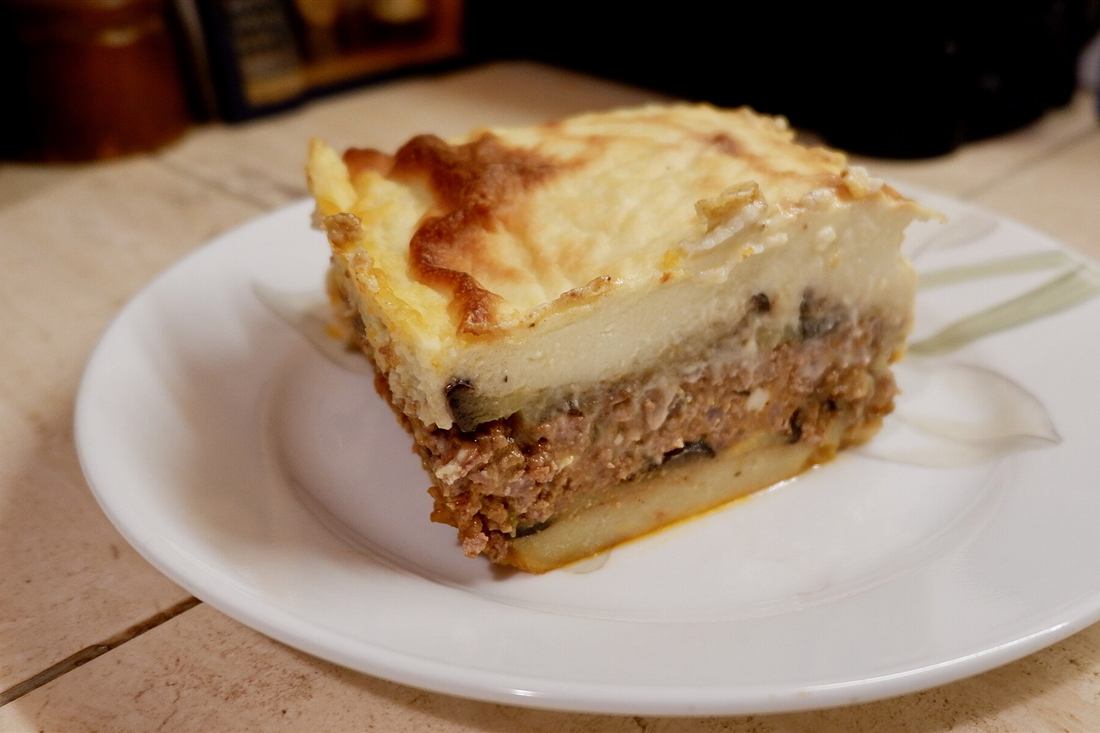
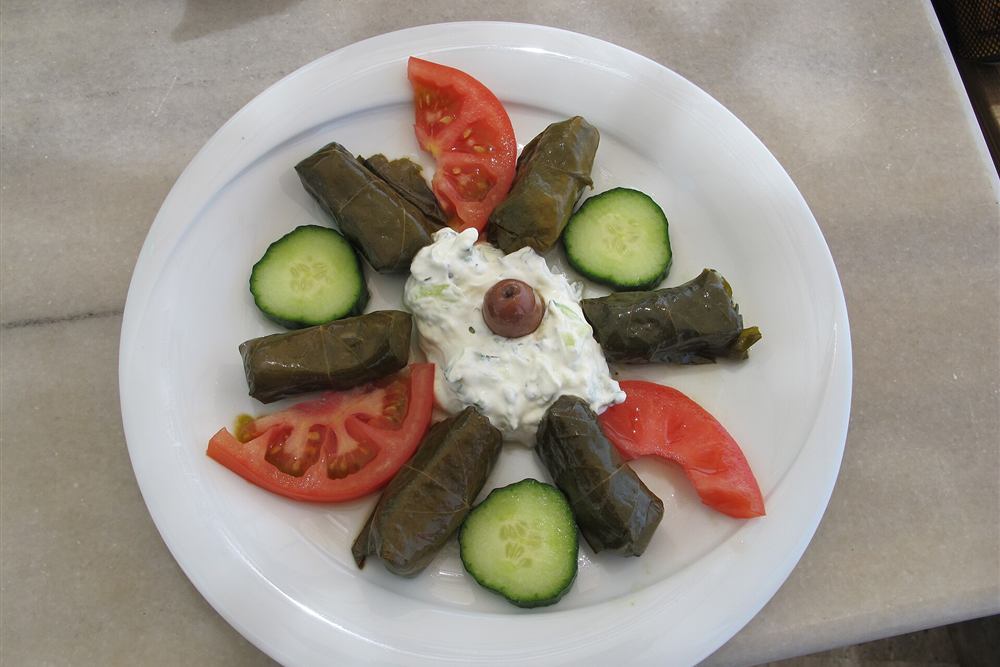
Menus cover dolmades rolled in vine leaves, moussaka layered with aubergine and béchamel, kolokythokeftedes, hand-rolled phyllo for spinach pie, tzatziki, a grilled fish or slow lamb from the oven, and a spoon sweet from the estate’s own citrus.
Dolmades open most sessions because they take the longest. Vine leaves come from the host’s own trellis between May and July, blanched 40 seconds and cooled. The filling holds Carolina rice, dill, mint, spring onion and lemon. Each guest rolls 12 to 20 parcels, packed tight in a wide pot with an inverted plate on top and simmered 45 minutes. A Nafplio cooking class is planned around it.
Phyllo work is the technical hour. Dough of flour, water, olive oil and vinegar rests 30 minutes, then stretches to a sheet thin enough to read newsprint through. Spanakopita takes spinach, wild greens, leeks and feta from Arcadia. Moussaka runs on aubergine fried or roasted, minced beef with cinnamon and clove, and a béchamel finished with kefalotyri. Guests on a Nafplio cooking class meet it in the first hour.
Protein splits by venue. Beach kitchens grill whole fish with ladolemono. Farm kitchens run lamb kleftiko in paper for 2.5 hours, or rooster in tomato with hilopites. Vegetable-led tables build around gemista, briam and fava from Schinoussa. This is the working core of Nafplio food, cooked in the sequence a household uses. The Nafplio cooking class timetable is built on it.
Dessert is short. A spoon sweet of bitter orange peel, quince or grape sits beside strained yogurt, with galaktoboureko as the alternative when the phyllo lesson produces spare sheets.
Does a Nafplio Cooking Class Start at the Market?
Around half the operators open with a 45-minute market walk. Hosts buy on Bouboulinas at the morning stalls, at the Wednesday street market, and from the fishmongers on the Yialos waterfront, adding Argolid olives, cheese and greens before the kitchen work starts.
The Wednesday street market on the Sidiras Merarchias axis runs from 07:00 to 13:30. Producers from Nea Kios, Drepano and Midea sell artichokes in February and March, apricots in June, and grapes in September. Hosts buy by weight, name the grower, and explain the price per kilo out loud so guests read the pricing logic instead of guessing. This is what a Nafplio cooking class delivers at the table.
Fish is bought first because the counter empties. The Yialos stalls hold gopa, sardine, red mullet and cuttlefish landed in the Argolic Gulf. Olives come as Kalamon and green cracked olives in brine. Cheese runs to feta, kefalotyri, and fresh mizithra sold in plastic tubs still weeping whey. The Nafplio cooking class menu is set by it.
The shopping stretch overlaps with a standard Nafplio food tour route, though the purpose differs: everything bought lands in the pot within the hour rather than on a tasting plate. Guests carry the baskets back through Syntagma Square to the kitchen door. That detail separates one Nafplio cooking class from the next.
Classes without a market segment source direct from the farm. On a smallholding near Nea Kios the host cuts chard, picks lemons and pulls onions in a 20-minute walk, which replaces the stall visit and shortens the total session by 30 minutes.
What Does a Nafplio Cooking Class Cost?
A shared nafplio cooking class runs 65 to 95 euros per person including the full meal and wine. Versions adding the market walk or a farm tour reach 110 to 160 euros. A private family class is priced 250 to 400 euros total.
The 65 to 95 euro band covers three to four hours, four to six dishes, all ingredients, aprons, tools, recipe cards, water, wine, coffee and the spoon sweet. Group size sits at four to twelve. Old town kitchens dominate this band because they carry no transport cost and no farm overhead. The Nafplio cooking class kitchens are set up for it.
The 110 to 160 euro band adds either the 45-minute market shop or a farm segment with olive grove and citrus grove walking, plus round-trip transfer from Syntagma Square. Sessions here run four to five hours. Farms near Mycenae and Nea Kios price at the top of the band because the drive adds 40 to 50 minutes of vehicle time. A Nafplio cooking class supplies the gear for it.
Private bookings quote a flat rate. A family of four pays 250 to 320 euros in an old town kitchen and 320 to 400 euros on a farm, with children under twelve counted at half or free depending on the host. Private format allows menu choice, a fixed start time, and a table set only for that group. It decides which Nafplio cooking class to take.
Payment splits between a 20 to 30 percent deposit online and the balance in cash or card on the day. Tips are not built into the price. A nafplio cooking class rarely carries hidden extras, since wine and dessert sit inside the quoted fare.
How Long Does a Class Run and When Does It Start?
Sessions last three to five hours. Morning classes start at 10:00 and finish with lunch near 14:00. Evening classes start at 17:00 and end between 20:30 and 22:00. Operators run all twelve months, with the heaviest demand in July and August.
The clock inside a nafplio cooking class follows the dishes. First 30 minutes: introductions, aprons, a glass of tsipouro or a coffee. Next 90 to 120 minutes: knife work, dolmades, phyllo, assembly. Then 40 to 60 minutes of oven time, used for a courtyard tour, a wine explanation or a walk through the herb beds. Final 60 to 90 minutes: the table. A Nafplio cooking class starts with this settled.
Evening classes suit July and August, when afternoon temperatures on the Argolid plain reach 34 to 38 degrees. The 17:00 start puts the kitchen work in the cooler part of the day and the table under strung lights after sunset. Morning classes dominate from November to March, when the light fades by 17:40. Hosts confirm it by message when a Nafplio cooking class is booked.
Booking windows tighten with the season. From late June to early September, reserve four to seven days ahead, since group classes cap at twelve and cruise arrivals at the port fill seats. From November to March, 48 hours is enough, though hosts confirm a minimum of two guests before running a session. The Nafplio cooking class price reflects it.
Winter menus shift rather than shrink. Cabbage dolmades replace vine leaves, oranges from Nea Kios peak in January, and lamb kleftiko and bean soups take the place of grilled fish.
What Wine Is Poured With the Meal?
Agiorgitiko from Nemea, 30 km north, accompanies lamb, moussaka and beef. Moschofilero from Mantinia, 60 km west in Arcadia, is poured with vegetables, cheese pies and fish. Tsipouro or ouzo opens the session before the table is laid.
Nemea is the largest PDO red zone in Greece, planted to Agiorgitiko across vineyards between 250 and 800 metres. Bottles reaching the table come from Gaia, Skouras, Palivos and smaller village growers around Koutsi and Asprokambos. The wine carries soft tannin and dark cherry weight, which sits well against cinnamon-spiced mince and roast lamb fat. The Nafplio cooking class timetable is built on it.
Moschofilero is a pink-skinned aromatic grape grown on the Mantinia plateau at 650 metres. It pours pale, with rose and citrus aromatics and firm acidity, cutting through fried kolokythokeftedes and salted feta. Hosts serve it at 8 to 10 degrees straight from the fridge in tumblers, not stemware. The Nafplio cooking class hosts state this at booking.
Tsipouro arrives first, distilled from pomace at 40 to 45 percent, in 30 ml glasses with olives and cheese. Ouzo from Plomari appears where the menu leads with fish. Both open the appetite and set the pace before the main pouring. A Nafplio cooking class fills first on that count in August.
Hosts buy from neighbours rather than supermarkets for two reasons: price per litre in bulk from a Nemea cellar runs 4 to 7 euros, and the grower’s name gives the guest something specific to look for later. A nafplio cooking class ends with that label written on the recipe card.
Are Dietary Requirements Handled in a Nafplio Cooking Class?
Vegetarian and vegan menus run as standard with no surcharge. Gluten-free needs 48 hours notice because hand-rolled phyllo is wheat-based. Nut and dairy allergies are managed by ingredient substitution, and the Orthodox Lent repertoire makes plant-based cooking routine.
Greek fasting practice removes meat, fish, dairy and eggs for 48 days before Easter and for shorter periods through the year. That calendar produced a deep vegan repertoire long before the word existed: gemista without cheese, fava with capers and red onion, briam, lentil soup with vinegar, spinach rice, and dolmades bound with rice and herbs alone. That detail separates one Nafplio cooking class from the next.
Dairy is the common substitution. Béchamel rebuilds with olive oil and plant milk, feta swaps for a caper-and-herb filling, and yogurt gives way to tahini in the dessert course. Nut allergies affect only the dessert stage, where walnuts in baklava and karydopita are replaced with sesame or removed. Every Nafplio cooking class works to that rule.
Gluten is the harder request. Phyllo is the lesson most guests come for, and rice flour sheets behave differently under the dowel. Hosts who accept gluten-free bookings run a parallel dish, corn-flour bobota or a crustless vegetable bake, and keep a separate board and rolling surface. Cross-contamination control demands the notice period. The Nafplio cooking class season turns on this.
Details go on the booking form, not to the host at the door. A nafplio cooking class buys ingredients the morning of the session, and a shopping list fixed at 08:00 cannot absorb a request made at 10:00. Coeliac disease, shellfish allergy and pork exclusion are all handled when flagged in advance.
Who Does a Nafplio Cooking Class Suit, and What About Children?
Couples, families with children over six, and small groups of four to twelve fit the format. Children roll dolmades and fill pastry under supervision. The class also works as a wet-weather booking, since the whole session runs indoors.
Children handle the tasks that need patience rather than heat. Rolling vine leaves, spooning filling into phyllo triangles, shaping courgette fritters and stirring the tzatziki all fall to guests aged six and up. Knife work and the fryer stay with adults. Hosts hand children the dowel for the last stretch of the pastry, which is the part they remember. It decides which Nafplio cooking class to take.
Groups above twelve split across two kitchens or book a private slot. Solo travellers join shared sessions without a single supplement in most cases, and the long table format makes the meal social by design. Couples take the 17:00 evening slot most frequently. A Nafplio cooking class is planned around it.
Rain changes the calculation. From November to March the Argolid records 60 to 90 mm of rain per month, and the fortress climb of 913 steps up Palamidi loses appeal in a downpour. A kitchen session covers four hours of that day. Guests planning wider things to do in Nafplio use the class as the fixed indoor anchor of the itinerary. Guests on a Nafplio cooking class meet it in the first hour.
Everyone leaves with printed recipe cards listing quantities, oven temperatures in Celsius and substitution notes for ingredients unavailable outside Greece. Hosts name equivalents for kefalotyri, hilopites and Carolina rice so the dishes rebuild in a home kitchen abroad.


How do you book a Nafplio cooking class and what do you bring?
Reserve four to seven days ahead from late June to early September, and 48 hours from November to March. Confirmations state the pickup point and start time. Free cancellation runs to 24 hours before. Aprons, tools and ingredients are provided.
Booking runs through operator websites, hotel desks and the tourist office. A deposit of 20 to 30 percent secures the seat, with the balance paid on arrival. The confirmation email lists the exact address or the transfer point, normally the Syntagma Square corner or the Syngrou Street bus station, plus a mobile number for the host. The Nafplio cooking class price reflects it.
Cancellation terms are consistent across operators: full refund to 24 hours before start, no refund inside that window, and a free date change when the host has an alternative slot the same week. Sessions run rain or shine, since all cooking happens under cover. This is what a Nafplio cooking class delivers at the table.
Bring an appetite and closed shoes. Farm sessions cross gravel, irrigation channels and olive rows, which rules out sandals. A hat and water matter from June to September on the plain. Aprons, boards, knives, dowels and every ingredient come from the host, so nothing else is needed. The Nafplio cooking class menu is set by it.
Instruction runs in English and Greek, with German, French and Italian available from individual hosts on request. Groups arriving in Nafplio by cruise ship confirm the finish time against the all-aboard call, since a nafplio cooking class ending at 14:00 leaves the port walk of 10 minutes comfortably clear.
Frequently Asked Questions
What does a Nafplio cooking class cost?
From 65 to 95 euros per person for a shared class with the meal and wine, 110 to 160 euros for the versions that add a market visit or a farm walk, and 250 to 400 euros for a private class for a family.
What do you cook on a Nafplio cooking class?
Dolmades rolled in vine leaves, moussaka, courgette fritters, hand-rolled phyllo for a spinach pie, tzatziki, a slow-cooked lamb or a fish from the Yialos quay, and a citrus spoon sweet to finish.
How long does a Nafplio cooking class last?
Three to five hours. Morning classes start at 10:00 and end over lunch; evening classes start at 17:00 and end at the table after dark. The market versions add 45 minutes at the front.