
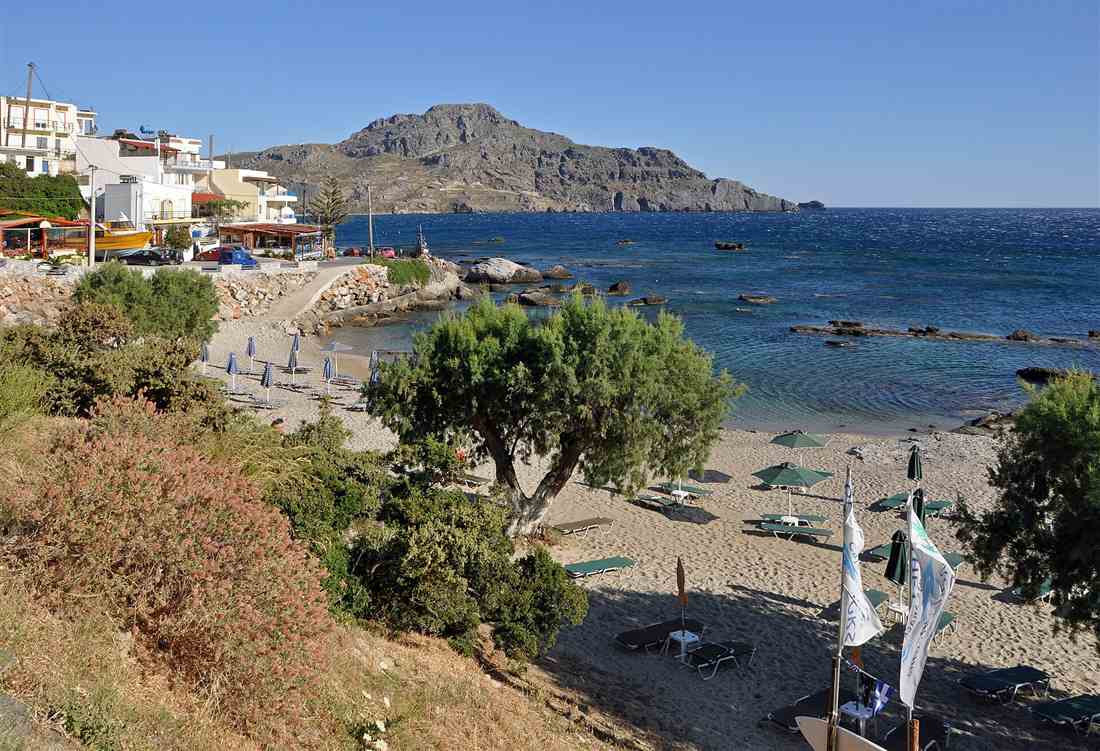
Crete horse riding runs from stables on the south and east coasts, with beach rides along the sand at Plakias, hill trails to the chapel of Saint Paisios, sunset rides over the Libyan Sea and multi-day trails across the Lasithi plateau. Plan the whole trip with Greece Tours.
This guide covers Crete horse riding in full: whether beginners are taken, the beach, hill and sunset rides, the routes near Chania and inland, the horses the centres keep, how long a ride takes, what it costs, what to wear, the weight limit, safety, the season, and how to book.
What is Crete horse riding and what does a ride include?
This trail-riding format is a guided ride on horseback across the island’s coast, olive terraces and hill country, run by a local stable with a mounted guide. A ride includes the horse, saddle and tack, a fitted helmet, a safety briefing and a route matched to the group’s ability.
Crete horse riding passes carob trees, wild thyme and the shepherds’ huts. Crete horse riding is booked ahead for a fixed, agreed price per rider. Stables sit near most of the island’s coastal towns and inland villages, from the beaches south of Rethymno to the foothills below the Lasithi plateau. Riders gather at the yard for a fixed start time, sign a liability waiver, and are matched to a horse before the group sets out together on a route the guide rides on the same ground week after week, with water for horse and rider held at the yard before departure.
Booking Crete horse riding ahead secures the date and the horse. Crete horse riding matches the horse to the rider’s weight and confidence. The route sets a ride apart from a beach walk or a coastal path on foot: from the saddle a rider crosses ground a car cannot reach and a hiker rarely covers in the same hour, olive groves giving way to a dune line or a ridge with a view over the coast. The island’s terrain, covered in full on the Crete destination page, is the backdrop for every trail a stable runs, from a flat beach stretch to a climbing hill track.
Crete horse riding includes the transfer where the centre offers it. At the end of the ride the horse is walked back to the yard, unsaddled and given water and shade, while the rider signs out and is free to leave. The full visit runs longer than the ride time quoted at booking, since the briefing and the mount-up at the start and the unsaddling at the end both add time on either side of the hour in the saddle.
Do you need experience to go Crete horse riding?
No prior experience is required: complete beginners are taken on every route, assessed briefly at the stable, and placed on a calm horse for a walk-only ride, while trot and canter sections stay reserved for riders who declare that experience at booking.
For experienced riders, Crete horse riding opens the trot and the canter. For a first time in the saddle, Crete horse riding starts with the assessment at the stable. The assessment happens on the ground, not in the saddle: the guide asks each rider about time spent on a horse, confidence around a large animal, and any fall or injury history, then pairs a first-timer with a horse known at the yard for a settled, unhurried temperament. The exchange takes minutes and shapes the whole ride that follows.
Crete horse riding ends back at the stable with the horses untacked. The set price on Crete horse riding covers the horse, the guide and the insurance. First-timers stay at walking pace for the entire route on a dedicated beginner trail, with the guide riding close enough to correct a hand position or a rein hold within the first few minutes out of the yard. Trot and canter are opened only to riders who confirm regular time in the saddle, on a straight, open stretch away from other riders or foot traffic; a declared beginner is never placed in a fast-moving line, regardless of how the ride is marketed at booking.
The 1.4 kilometre sand at Plakias is the set piece of Crete horse riding. A helmet is fitted and adjusted before any rider mounts, checked for a snug fit under the chin strap, and swapped for a different size on the spot if it sits loose. The fitting happens at the yard, ahead of the walk to the horse, so no rider climbs into the saddle without the strap already checked.
What is the Plakias beach ride on the south coast?
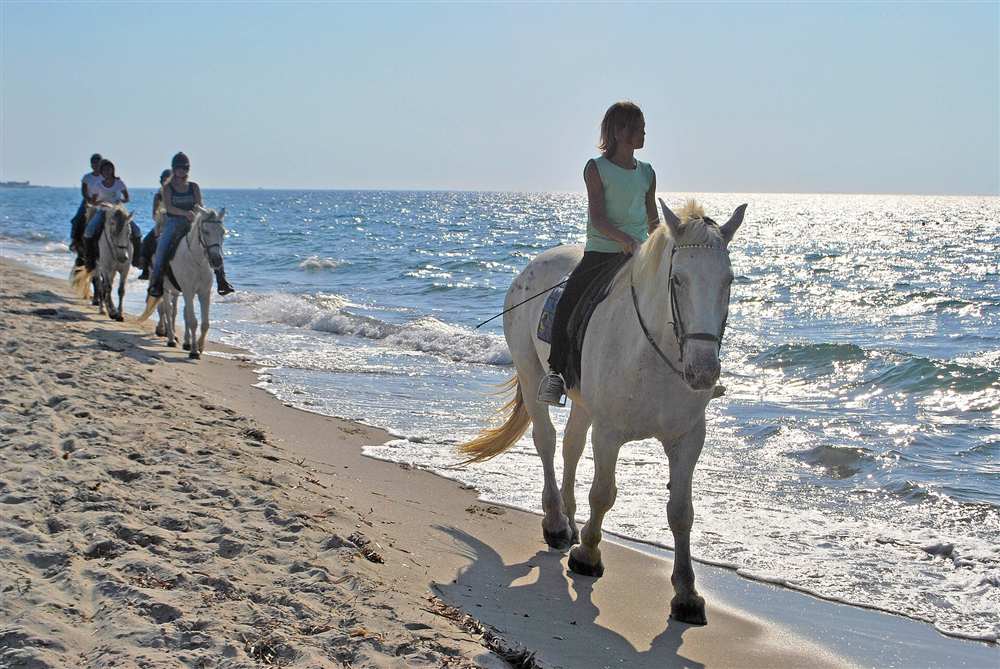
The Plakias beach ride is a south-coast Crete horse riding route that leaves the village centre, crosses olive groves inland, then reaches a 1.4 km sandy beach where experienced riders canter along the shoreline; the format runs close to two hours, in a small group led by one guide.
The helmet is fitted before Crete horse riding begins. The choice of Crete horse riding comes down to the route, the length and the pace. The outbound leg climbs gently away from Plakias through terraced olive groves, the trees old enough to throw real shade over the trail even at midday, before the ground opens onto the dune line above the sand. The change from grove to open beach happens within the first half of the ride, and it is the point where riders first see the full sweep of the bay ahead.
The guide on Crete horse riding rides at the front of the string. Planning Crete horse riding ahead beats the scramble for a summer date. The beach itself runs 1.4 km end to end, hard-packed sand at the waterline giving firm, even footing for a canter, while the loose sand higher up the shore stays reserved for the walk sections. Riders confirmed for canter work are moved to the front of the line for the shoreline stretch, and group size stays small by design, rarely more than a handful of riders per guide, so the line can shift from walk to canter without losing contact between horse and rider.
Every Crete horse riding session starts with the briefing on the aids. The full loop runs close to two hours door to door, including the ride out through the groves, the beach stretch, and the return route back into the village. Rethymno, the nearest larger town, sits within easy reach of Plakias for anyone building the ride into a wider south-coast day.
What is the Saint Paisios hill ride?
The Saint Paisios hill ride climbs inland from Plakias to a hill chapel with a view over the Libyan Sea; the ascent holds to a walking pace on the steeper ground, and the round trip runs close to ninety minutes from the yard back to the yard.
Crete horse riding includes the transfer where the centre offers it. A private Crete horse riding session pairs one guide with one rider. The trail leaves the coastal flat almost immediately and starts to climb, switching between a dirt track and a stone path as it works up the hillside toward the chapel. The gradient is steady rather than sharp, and the horses used on this route are chosen for sure footing on loose stone rather than speed on flat ground.
Crete horse riding passes carob trees, wild thyme and the shepherds’ huts. Crete horse riding is booked ahead for a fixed, agreed price per rider. Saint Paisios sits at the top of the climb, a small whitewashed chapel with open ground around it, and the ride pauses there for riders to dismount, walk the horses to shade, and take in the view before heading back down. From this point the Libyan Sea fills the view south, with Plakias and the coastline laid out below and the ridge line of the south coast running away on either side.
Crete horse riding matches the horse to the rider’s weight and confidence. The pace on the ascent stays a controlled walk throughout, since the loose stone and the gradient rule out trot or canter on the way up; the descent holds to the same pace for the same reason. The full ride, chapel stop included, runs close to ninety minutes.
What is a sunset horse ride on Crete like?
A sunset horse ride on Crete starts in the late afternoon, times the beach or ridge stretch to the last hour of light, and runs close to ninety minutes; the lower sun angle and the drop in heat suit the horses better than a midday slot.
The 1.4 kilometre sand at Plakias is the set piece of Crete horse riding. The sunset slot for Crete horse riding fills first in high season. The start time shifts through the season to keep the ride finishing as the light fades, so a summer booking starts later in the evening than an autumn one. The stable sets the exact start time a day or two ahead once the sunset time for that week is fixed, rather than quoting one start time year-round.
For experienced riders, Crete horse riding opens the trot and the canter. For a first time in the saddle, Crete horse riding starts with the assessment at the stable. Low sun over open water changes the colour of the sea and the sand within minutes, and the guide times the ride so the group reaches the most open stretch of trail, a beach or a ridge with a clear sea view, right as the light turns gold. Heat drops fast once the sun loses height, and horses that work slower and more reluctantly in the midday sun move with more energy once the temperature falls, a change noticeable to a guide who rides the same horses across a full day.
The set price on Crete horse riding covers the horse, the guide and the insurance. The format runs close to ninety minutes, mount-up to dismount, and this Crete horse riding slot is the one most stables sell out first in the high season, since it draws both first-time riders after a beach day and experienced riders who want the shoreline canter in cooler air.
Which horse riding routes run along Crete’s east coast?
The east coast runs a Crete horse riding route that strings beach stretches between low headlands with olive terraces set back from the shore; the format holds to roughly two hours, and stables here keep group sizes small to manage the mixed beach-and-terrace ground.
Every Crete horse riding session starts with the briefing on the aids. Families take Crete horse riding for the lead-rein ponies and the walking pace. The east side of the island trades the dramatic mountain backdrop of the south coast for a gentler, drier landscape, with the trail moving between open beach and terraced groves set just inland from the water. The ground stays flatter here than on the hill routes further west, which suits a longer walk-and-trot format over a single steep climb.
The helmet is fitted before Crete horse riding begins. The choice of Crete horse riding comes down to the route, the length and the pace. Beach stretches on this coast tend to run shorter than the Plakias ride but repeat at intervals along the trail, so the group crosses sand, then a stretch of terrace track, then sand again, rather than one long uninterrupted shoreline. Each beach section gives the stronger riders in the group a short trot or canter before the trail turns back inland.
Planning Crete horse riding ahead beats the scramble for a summer date. Olive terraces line much of the inland stretch, stepped down toward the coast on dry stone walls that are centuries old in places, and the trail threads between the trees rather than around them. The terraces stay in near-constant shade for the middle section of the ride, a contrast to the open beach either side; group size on this route stays small, in line with the mixed terrain, since a beach-to-terrace-to-beach format asks more of the guide’s spacing than a single flat stretch.
Which horse riding stables operate near Chania and the west?
Stables near Chania and the Georgioupoli-Kissamos side of the island run beach rides, riverside tracks along the Kournas area, and inland routes; the standard ride here holds to around two hours from the yard back to the yard.
Crete horse riding matches the horse to the rider’s weight and confidence. Crete horse riding runs from stables at Plakias and along the east coast. Georgioupoli sits at the mouth of a river with a long straight beach either side, and the stables based there build a ride that mixes the open sand with a track running back along the riverbank under eucalyptus trees. The shade from the riverside trees makes this route a common pick for a midday booking in high summer.
Crete horse riding includes the transfer where the centre offers it. A private Crete horse riding session pairs one guide with one rider. Kissamos, further west, gives a quieter and less developed stretch of coast, and the rides based there tend to run longer, flatter beach sections with fewer riders sharing the same stretch of sand. The trail here trades the crowds nearer Chania town for open ground and a wider bay.
Crete horse riding is booked ahead for a fixed, agreed price per rider. The Kournas area, inland from Georgioupoli, sits around the island’s one natural freshwater lake, and stables running this side build a route along tracks skirting the water before climbing gently into the hills behind it. The lake itself stays visible for much of the ride, a contrast to the sea view on the coastal routes, and the standard ride across this side of the island runs close to two hours, matched to the beach, riverside or lake format booked.
What horse riding trails cross the Lasithi plateau and inland Crete?
Inland stables run multi-day trail rides across the Lasithi plateau and the mountain tracks around it, stopping overnight in villages along the route; the terrain sits at altitude, on stone tracks and open farmland, well above the coastal routes elsewhere on the island.
The set price on Crete horse riding covers the horse, the guide and the insurance. The price of Crete horse riding covers the horse, the guide and the helmet. The plateau itself sits ringed by mountains, its floor given over to farmland once irrigated by thousands of windmills, and a trail ride here crosses open, flat ground for stretches that are impossible on the steeper coastal hill routes. The scale of open farmland is the plateau’s defining feature for a rider used to coastal trails.
The 1.4 kilometre sand at Plakias is the set piece of Crete horse riding. The sunset slot for Crete horse riding fills first in high season. Mountain tracks link the plateau to villages on its rim and to routes running further into the interior, climbing on stone and packed earth rather than the sand and dirt of the coast. These tracks demand a sure-footed horse and a guide who knows the exact line to take on loose or wet stone.
For a first time in the saddle, Crete horse riding starts with the assessment at the stable. Village stops break a multi-day route into stages, with riders and horses resting overnight before the next day’s climb, and each stop gives a different view over the plateau or the surrounding peaks. The altitude here sits well above sea level, and the air runs noticeably cooler than the coast even in high summer, a change riders notice within the first climb out of the lowland villages.
What horses do the Crete horse riding centres keep?
These stables keep a mix of Arabian and part-Arabian horses alongside Cretan and other Greek local breeds, chosen for a settled temperament and sure footing on rough ground; each horse is matched to a rider’s weight, confidence and experience before the ride begins.
Planning Crete horse riding ahead beats the scramble for a summer date. Crete horse riding runs as a one-hour taster or a two-hour beach ride. Arabian and part-Arabian horses bring stamina and a light, responsive step that suits longer trail work, and stables lean on this bloodline for routes that mix walk, trot and canter across varied ground. Their build tends toward a leaner frame than a draught type, which keeps them agile on the narrower hill and terrace tracks.
Every Crete horse riding session starts with the briefing on the aids. Families take Crete horse riding for the lead-rein ponies and the walking pace. Cretan and other Greek local breeds bring a smaller frame and a notably calm temperament, developed over generations working the island’s steep, stony ground, and stables favour them for first-timer and family bookings where a settled horse matters more than speed. These horses tend to know a fixed trail well enough to hold the line with minimal input from an inexperienced rider.
The choice of Crete horse riding comes down to the route, the length and the pace. Size across a stable’s string runs from smaller local horses suited to lighter or younger riders up to taller, sturdier animals for heavier or more experienced riders, and the yard staff make the match before mounting rather than leaving riders to pick a horse themselves. Confidence level factors into the match alongside physical size, so a nervous rider is rarely placed on a spirited horse. Tack stays consistent across the string: a trail saddle built for hours in the seat, a simple snaffle bit, and a fitted bridle, with stirrup length adjusted to the rider at the mounting block.
How long does a Crete horse riding ride take?
A trip runs from a one-hour taster up to a half-day or multi-day plateau trail, with the ninety-minute sunset ride and the two-hour beach ride the two most booked formats; time at the stable before and after adds to the ride time itself.
Crete horse riding is booked ahead for a fixed, agreed price per rider. The trail on Crete horse riding crosses olive groves, sand and hill tracks. The one-hour taster suits a first booking or a short window in a wider day, covering a single beach or grove loop at walking pace with a short trot section for confirmed riders, staying close to the yard rather than reaching the furthest points on a longer trail. The ninety-minute sunset ride and the two-hour beach ride sit in the middle of the range, long enough to reach a beach, a hill chapel or a riverside track and back, and these two formats account for the largest share of bookings across the island’s stables.
Crete horse riding matches the horse to the rider’s weight and confidence. Crete horse riding runs from stables at Plakias and along the east coast. A half-day booking, running close to four hours, reaches further into the terrain than the standard formats, covering ground such as the full Saint Paisios climb combined with a beach stretch, or a longer stage of coastline than the two-hour ride allows. Multi-day trail rides on the Lasithi plateau and the mountain routes around it run over multiple days with overnight stops in villages along the way, the longest format on offer.
A private Crete horse riding session pairs one guide with one rider. Time at the stable before and after any booking, for the briefing, the mount-up and the unsaddling, adds roughly half an hour on either side of the quoted ride time, regardless of the format booked.
What does Crete horse riding cost and what is included?
It is priced per person and agreed at booking, covering the horse, a mounted guide, the helmet and tack, and, at stables that offer it, a transfer to and from the yard; basic insurance and a photo package are included at a number of stables and confirmed at booking.
For a first time in the saddle, Crete horse riding starts with the assessment at the stable. Booking Crete horse riding ahead secures the date and the horse. Pricing is set per rider and scales with the length of the format booked, so a one-hour taster costs less than a two-hour beach ride, which in turn costs less than a half-day or multi-day trail. The exact figure is confirmed directly with the stable at booking, not fixed across the island.
The set price on Crete horse riding covers the horse, the guide and the insurance. The price of Crete horse riding covers the horse, the guide and the helmet. The horse, the guide and the tack are included in every booking as standard, along with the helmet fitted at the yard before mounting. A rider does not need to hire separate equipment beyond suitable clothing and footwear, since the stable supplies everything used on the horse.
The sunset slot for Crete horse riding fills first in high season. A transfer to and from the yard is offered by a number of stables, particularly those set slightly outside a town centre, and this is agreed at booking where it carries a separate charge. Basic insurance is built into the price at a number of stables, and a photo package covering the route, shot by a second guide riding ahead of the group, is offered as an add-on at others.
What do you wear for Crete horse riding?
The right clothing is long trousers or fitted leggings, closed shoes with a small heel rather than sandals, a fitted top, sunglasses and sun protection, tied-back hair, and a hat worn under or in place of the helmet where the stable allows it.
The choice of Crete horse riding comes down to the route, the length and the pace. Crete horse riding ends back at the stable with the horses untacked. Long trousers or leggings protect the inner leg from rubbing against the saddle and stirrup leather over an hour or more in the seat, and thin, tight-fitting fabric works better than loose or wide-legged trousers that can bunch under the leg. Shorts leave skin exposed to exactly this rubbing and are turned away at most yards.
Planning Crete horse riding ahead beats the scramble for a summer date. Crete horse riding runs as a one-hour taster or a two-hour beach ride. Closed shoes with a small heel keep the foot from slipping through the stirrup, and the heel itself catches against the stirrup iron to stop the foot sliding forward. Sandals, flip-flops and any open-toe shoe are refused at the mounting block, since an unprotected foot in a stirrup is a genuine injury risk if a horse startles.
Families take Crete horse riding for the lead-rein ponies and the walking pace. A fitted top avoids loose fabric that can flap and startle a horse from behind, and sunglasses plus sun protection matter on every route given the amount of open, shaded-free ground a beach or plateau ride crosses. A hat is worn under the helmet or swapped for the helmet once mounted, hair stays tied back and clear of the helmet strap, and loose scarves are left at the yard, since trailing fabric around the neck carries the same risk as a loose top near a horse’s flank.
Is there a weight limit for Crete horse riding?
Stables set a maximum rider weight for the welfare of the horse, since a horse carrying too much weight over a long ride is at real risk of strain; the limit is declared honestly at booking, and heavier riders are offered a larger horse or a shorter route instead.
A private Crete horse riding session pairs one guide with one rider. The guide on Crete horse riding rides at the front of the string. The limit exists because a horse’s own bodyweight and build set a ceiling on what it can carry over distance without strain on its back and legs, a ceiling that applies regardless of the rider’s fitness or riding ability. Veterinary guidance behind these limits is the same reasoning used across working and trail horses everywhere, not a rule specific to one stable.
Crete horse riding is booked ahead for a fixed, agreed price per rider. The trail on Crete horse riding crosses olive groves, sand and hill tracks. Declaring weight honestly at the point of booking lets the stable match a rider to a horse built to carry that load safely, rather than discovering a mismatch at the mounting block in front of the rest of the group. A stable that asks for weight at booking is following standard welfare practice, not making an intrusive request.
Crete horse riding runs from stables at Plakias and along the east coast. Riders over a stable’s stated limit are offered the largest horse in the string where the extra frame allows it, or a shorter, flatter route that puts less cumulative strain on the horse across the ride. Turning a heavier rider toward a different format rather than a different animal keeps both horse and rider within a safe margin, and it applies the same welfare standard to every booking regardless of season.
Is horse riding in Crete suitable for children?
Horse riding in Crete suits children from a set minimum age upward, with the youngest riders led on a pony on a rein held by staff, matched to a small, calm horse and fitted with a helmet, while a parent walks alongside for reassurance on the ride.
The sunset slot for Crete horse riding fills first in high season. Crete horse riding passes carob trees, wild thyme and the shepherds’ huts. Minimum age varies from one stable to the next, but the youngest bookings accepted sit at an age where a child can hold a basic seat and follow a simple instruction from the guide. Below that age, a stable turns a booking away rather than placing a very young child on a horse unsupervised.
For a first time in the saddle, Crete horse riding starts with the assessment at the stable. Booking Crete horse riding ahead secures the date and the horse. The lead-rein format keeps a staff member holding the rein throughout, controlling the horse’s pace and direction directly rather than leaving a young rider to steer, which lets even a first-time child rider sit on a horse safely and enjoy the walk without managing the animal alone.
The price of Crete horse riding covers the horse, the guide and the helmet. Horse size for a child booking is scaled down from the adult string, favouring the smallest, calmest horses at the yard, chosen specifically for a light, inexperienced rider on their back. A tall, powerful horse is never paired with a young child regardless of how quiet that horse is with an adult rider, and a parent is welcome to walk alongside the lead-rein ride for the full route while the child’s helmet is checked with the same care as an adult one.
How safe is Crete horse riding?
Every ride is run with a fitted helmet on every rider, a briefing on the aids and the emergency stop before mounting, a guide riding at the front of the line and a second rider at the back, and fixed rules on spacing and overtaking that keep the group under control throughout.
Families take Crete horse riding for the lead-rein ponies and the walking pace. For experienced riders, Crete horse riding opens the trot and the canter. Every rider, regardless of experience, is fitted with a helmet at the yard and checked for a snug fit before walking to the horse, and the briefing that follows covers the basic aids for stop, turn and pace change, along with a clear instruction for what to do if a horse startles or breaks stride.
The choice of Crete horse riding comes down to the route, the length and the pace. Crete horse riding ends back at the stable with the horses untacked. The guide leads from the front of the line for the entire route, setting the pace and choosing the exact ground the group crosses, while a second rider positioned at the back watches for a horse falling out of line or a rider losing balance. Horses used on these routes are ridden the same trails on a near-daily basis, so the animal itself knows the ground, the gates and the turns before the rider does, which reduces the chance of a spooked reaction to unfamiliar terrain.
Crete horse riding runs as a one-hour taster or a two-hour beach ride. Spacing and overtaking rules are set out in the briefing and enforced on the trail: riders hold a fixed distance from the horse in front, and overtaking within the line is not permitted without the guide’s direction. These rules keep a fast horse from crowding a slower one and keep the group moving as a single, controlled unit.
When is the best season for Crete horse riding?
The season runs from April through November, with the cooler south-coast mornings and the spring wildflower season the most comfortable riding conditions, early or late slots the way around the peak heat of high summer, and mild winter days still workable for a shorter ride.
Crete horse riding runs from stables at Plakias and along the east coast. The helmet is fitted before Crete horse riding begins. April through November covers the full window most stables keep their strings working, with the shoulder months either side of summer giving the most comfortable air temperature for both horse and rider across a full two-hour route.
A private Crete horse riding session pairs one guide with one rider. The guide on Crete horse riding rides at the front of the string. High summer heat pushes the working day toward its edges, and stables shift bookings to an early-morning or a late-afternoon slot to keep both horse and rider out of the hottest hours in the middle of the day. A midday booking in July or August is the exception rather than the rule at most yards.
The trail on Crete horse riding crosses olive groves, sand and hill tracks. Spring brings a wildflower bloom across the hill and plateau routes, with colour along the trail edges and softer ground underfoot after the winter rains, making a spring hill ride a distinct experience from the same route in high summer. South-coast mornings stay cooler for longer into the season than the more exposed east side, giving an extra window of comfortable riding on routes such as the Plakias beach ride, and mild winter days keep a shorter ride workable outside the main season.
What do you see along a horse riding trail in Crete?
A horse riding trail in Crete passes olive groves, carob trees and wild thyme, goats grazing near shepherds’ huts, a run of sandy or pebble beach, the mouth of a gorge cutting into the hillside, and a mountain backdrop running from the White Mountains in the west to the Dikti range further east.
The price of Crete horse riding covers the horse, the guide and the helmet. Crete horse riding includes the transfer where the centre offers it. Olive groves dominate the lower ground on most routes, the trees old and gnarled in places, underplanted with wild thyme and low scrub that scents the air as the horses brush past on a narrow track. Carob trees appear alongside the olives on drier ground, their long dark pods a familiar sight on the inland stretches of a ride.
Crete horse riding passes carob trees, wild thyme and the shepherds’ huts. Goats are a constant presence across the hill and plateau routes, grazing loose on ground too steep or too dry for anything else, and a shepherd’s hut, no more than a stone shelter with a fenced pen beside it in places, marks the working use of land that otherwise looks empty. Crete beaches along the coastal routes shift between fine sand and coarser pebble depending on the stretch, changing the footing and the sound underfoot from one section of trail to the next.
Booking Crete horse riding ahead secures the date and the horse. A gorge mouth breaks the coastline or the hillside on a number of routes, a sudden opening where a dry riverbed cuts down from the mountains to the sea, and the trail skirts the edge of this opening rather than crossing it directly. The mountain backdrop shifts with the ride’s location: routes on the west side ride under the White Mountains, their peaks holding snow into late spring, while routes further east sit under the lower, drier profile of the Dikti range near the Lasithi plateau.
How does Crete horse riding compare with a jeep safari or a hike?
Riding covers ground at a slower pace than a Crete jeep safari but reaches terrain a vehicle cannot, and it covers more distance for less physical effort than a hike; group sizes stay smaller on horseback, and the seat gives a view over the terrain a jeep or a footpath does not.
Crete horse riding runs as a one-hour taster or a two-hour beach ride. The 1.4 kilometre sand at Plakias is the set piece of Crete horse riding. A jeep safari covers a far greater distance in the same time window, following tracks a horse never uses, and it suits a rider or a family wanting to see multiple villages, viewpoints or gorges in a single day. Horse riding trades that distance for ground a vehicle physically cannot reach, such as a narrow beach dune line, a stepped hill path or a soft riverside track.
For experienced riders, Crete horse riding opens the trot and the canter. Effort on a hike scales directly with the rider’s own fitness and the terrain’s gradient, and a demanding inland climb on foot can take hours longer than the same ground covered from the saddle, since the horse carries the effort while the rider manages balance and direction. Group size also differs sharply: a jeep safari can run multiple vehicles in a single convoy and a hike can run a large group along a wide path, while a horse riding group stays small by necessity, since every additional horse adds spacing the guide has to manage.
Crete horse riding ends back at the stable with the horses untacked. The view from the saddle sits higher than a hiker’s eye level and lower than a jeep’s cab, close enough to the ground to read the texture of a trail underfoot while still clearing the low scrub and stone walls that block a walker’s sightline. The jeep safari wins on ground covered in a day, the hike on cost and control over pace, and Crete horse riding on the closest, quietest contact with terrain the other two miss.
How do you book Crete horse riding and where does it fit in a trip?
Booking is made ahead of the date, since the sunset slot fills first in high season; a booking confirms riding experience and weight honestly, sets the pickup point where a transfer is included, and, run as a two-hour ride, leaves the rest of the day free for a beach or a town visit.
The trail on Crete horse riding crosses olive groves, sand and hill tracks. Every Crete horse riding session starts with the briefing on the aids. Booking ahead matters most for the sunset slot and the peak summer weeks, when a single stable runs a fixed number of horses and guides across a working day, and a late request is turned away once that day’s slots are full.
The helmet is fitted before Crete horse riding begins. Declaring riding experience and weight honestly at booking is what lets the stable match horse to rider correctly before the group ever reaches the mounting block, avoiding a mismatch that surfaces instead in front of the rest of the group. This information shapes the horse assigned, not the price charged, and the same booking confirms the pickup point, whether a hotel, a village square or a car park nearer the yard itself.
The guide on Crete horse riding rides at the front of the string. A two-hour beach or hill ride fits naturally into a single day alongside a beach visit, a town walk or a drive along the coast, since the format starts and finishes within a fixed window and leaves the afternoon or the rest of the morning open. Riders building a longer stay around Rethymno or the wider south coast can pair a two-hour Crete horse riding booking with a beach day on the same stretch of coast without the ride dominating the schedule.
Frequently Asked Questions
Do you need experience for Crete horse riding?
No. The centres take complete beginners, assess every rider at the stable and keep first-timers to a walk. The trot and the canter along the beach are reserved for riders who show the seat for them.
How long is a Crete horse riding ride?
The beach ride at Plakias runs two hours, the sunset ride ninety minutes and the taster one hour. Multi-day trails across the Lasithi plateau run over three to six days with village accommodation between stages.
What do you wear for Crete horse riding?
Long trousers or leggings and closed shoes with a small heel. Sandals are refused. The centre supplies the helmet, and riders tie back long hair and leave loose scarves and jewellery behind.