
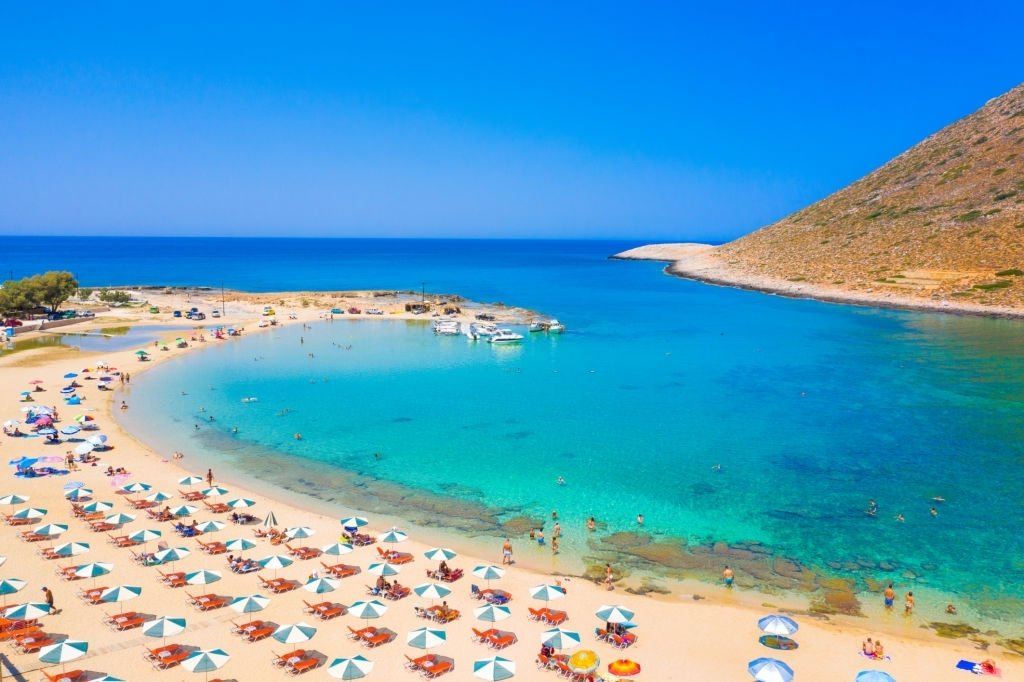
To get from Chania to Stavros, drive north-east onto the Akrotiri peninsula, past the Chania airport, to the beach at the end of the road, about 16 kilometres in 20 to 25 minutes, reaching the calm lagoon under the bare Vardies mountain. The trip from Chania to Stavros ends at the Zorba the Greek filming location. Plan the whole trip with Greece Tours.
This guide covers the trip from Chania to Stavros in full: where it is, how to get there by car and by bus, the near-circular lagoon beach and the sheer mountain that backs the famous sirtaki dance scene, the two beaches, the Akrotiri monasteries of Agia Triada and Gouverneto nearby, and whether this short Akrotiri trip is worth it or a half-day at the beach.
Where is Stavros and how far is it from Chania?
Stavros is a beach and small settlement on the north tip of the Akrotiri peninsula, in the Chania regional unit of western Crete. It sits 16 kilometres north-east of Chania town, at the very end of the peninsula road, a 20 to 25 minute drive from the city centre.
Planning Chania to Stavros by the light and the heat makes the most of the visit. The trip from Chania to Stavros pairs well with the other Akrotiri stops on the same road. Every Akrotiri itinerary that includes Chania to Stavros gains an easy, scenic leg. The Chania to Stavros journey ends at a place that repays an unhurried stay. A car makes Chania to Stavros a simple leg of a west-Crete plan. The drive from Chania to Stavros is direct enough to slot into a wider day out. The Akrotiri peninsula is the broad headland that pushes north from Chania and shelters Souda Bay to its east. Stavros marks its northern extremity, where the land runs out and the road stops at the shore. To the west of the settlement stand the beaches of Kalathas and Tersanas; to the interior sit the historic monasteries of Agia Triada and Gouverneto; and to the south, back toward the city, lies the Chania (Souda) airport. This compact geography puts a working airport, ancient monasteries and a film-famous cove within one peninsula.
The distance is short and the route is direct. From the old harbour of Chania the drive covers 16 kilometres of peninsula road that climbs onto the plateau, passes the airport turn, and descends to the coast at Stavros. There is no ferry, no mountain pass and no long transfer involved. A visitor based in Chania town reaches the sand in the time it takes to finish a coffee.
Stavros belongs firmly to the orbit of Chania rather than to any separate resort zone. It has no large hotels, no strip of clubs and no crowded promenade. The settlement is a scatter of houses, rooms to rent and shoreline tavernas set beneath a bare grey mountain. That mountain, the calm circular bay at its foot, and the low-key half-wild character of the north Akrotiri cape are the reasons people make the trip out from the city.
How do you drive from Chania to Stavros?
Drive north-east out of Chania onto the Akrotiri peninsula, follow the main peninsula road past the Chania (Souda) airport, and continue to Stavros at the end of the road. The route is 16 kilometres and takes 20 to 25 minutes in normal traffic.
The Chania to Stavros journey ends at a place that repays an unhurried stay. A car makes Chania to Stavros a simple leg of a west-Crete plan. The drive from Chania to Stavros is direct enough to slot into a wider day out. For a first visit, the Chania to Stavros drive is the straightforward choice. The time from Chania to Stavros holds steady outside the peak-season traffic. Travellers who plan the trip from Chania to Stavros reach it comfortably in the times given. The road leaves the city near the eastern edge of Chania and climbs onto the Akrotiri plateau. Signposting for the airport carries a driver for much of the way, since the airport sits on the same peninsula and shares the early part of the route. Past the airport junction the road narrows and runs north through low scrub, olive terraces and open goat country toward the coast. The final descent brings the lagoon and the grey face of the mountain into view before the road ends at the shore.
A rental car is the practical way to reach Stavros, and the short distance makes it an easy first drive for a visitor collecting a vehicle at the airport. Parking sits close to both beaches, on the flat ground behind the sand and beside the tavernas. In the peak weeks of July and August the shoreline parking fills by late morning, so an early start secures a space near the water. Outside those weeks the ground stays open through the day.
A taxi from Chania town covers the same 16 kilometres and delivers a visitor to the beach in the same 20 to 25 minutes without the need to drive or park. This suits travellers who want a single afternoon at the cove and a ride back to the city for dinner. Because the trip is so short, Stavros ranks high on any list of day trips from Chania, and it pairs neatly with the Akrotiri monasteries on the same outing since both lie on the one peninsula.
How do you reach Stavros by bus?
A limited KTEL Akrotiri bus service runs from Chania to Stavros on set daily departures. The schedule is thin, so a rental car or a taxi is the practical way to reach the beach, and the drive itself is short at 20 to 25 minutes.
For a first visit, the Chania to Stavros drive is the straightforward choice. The time from Chania to Stavros holds steady outside the peak-season traffic. Travellers who plan the trip from Chania to Stavros reach it comfortably in the times given. The distance from Chania to Stavros is covered on a single, well-built road. Fitting Chania to Stavros into a morning leaves the afternoon free. The route from Chania to Stavros crosses the Akrotiri peninsula on a good road. The public bus that serves the Akrotiri peninsula departs from Chania and threads through the peninsula villages before terminating near the Stavros shore. Departures are fixed to a small daily timetable rather than a frequent shuttle, which means a bus traveller plans the outward and return times in advance and builds the day around them. The journey follows the same peninsula road as a car, past the airport turn, and reaches the coast at the end of the line.
For a traveller without a vehicle, the bus keeps Stavros within reach on a budget, and the single fare is modest. The constraint is frequency, not distance. A missed return departure leaves a long wait, so checking the current KTEL Akrotiri times at the Chania bus station before setting out is the sensible step. Confirming the last bus back to the city matters more than confirming the first bus out.
Because the drive is so short and the bus timetable is sparse, a shared taxi split between two or three people rivals the bus on cost while removing the timetable entirely. A hired car turns the same trip into a flexible half-day that folds in Kalathas beach, the monasteries and a late lunch at Stavros without a clock hanging over the return. The choice comes down to how much freedom the day needs and how the ride is shared.
Organised excursions add a third route for travellers without a car and without the patience for a thin timetable. A driver-guide collects a group from Chania, runs the peninsula loop that ties Stavros to the Agia Triada and Gouverneto monasteries, and returns to the city by evening. This removes both the driving and the parking hunt, and it hands the whole Akrotiri cape to a visitor in a single booked half-day. For a family with young children and beach gear, that convenience outweighs the saving of the public fare.
What is Stavros like, and where was Zorba the Greek filmed?
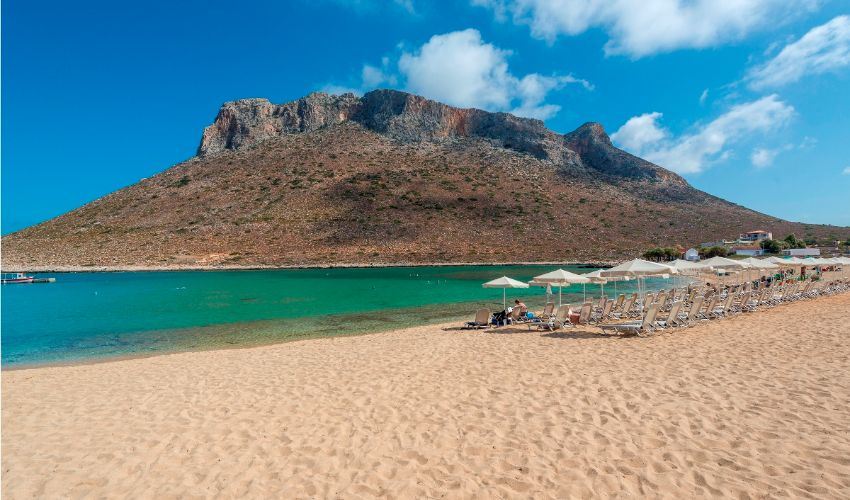
Stavros is a quiet cove beneath a bare, sheer mountain. Its near-circular lagoon of shallow, calm, warm water sits enclosed by a sand spit under the plunging grey face of the Vardies mountain. That mountain dropping straight to the sea is the backdrop of the famous sirtaki dance scene in the film Zorba the Greek.
The distance from Chania to Stavros is covered on a single, well-built road. Fitting Chania to Stavros into a morning leaves the afternoon free. The route from Chania to Stavros crosses the Akrotiri peninsula on a good road. Setting out early on the Chania to Stavros run beats both the heat and the crowds. The road from Chania to Stavros is paved and signed as far as the Akrotiri villages. Anyone weighing the journey from Chania to Stavros finds the distance short by Cretan standards. The lagoon is the heart of the place. A sweep of sand curls out from the shore and almost closes the bay into a ring, so the water inside stays flat, shallow and warm through the day. Above it the Vardies mountain rises in a single bare wall of grey rock, with no trees and no buildings to soften it, and goats pick their way across the lower slopes. The contrast of the still turquoise water against the vertical stone gives Stavros a stark, dramatic character found nowhere else on the Chania coast.
This wall of rock is the reason the cove holds a place in film history. The closing dance of Zorba the Greek, where two characters step out the sirtaki on the sand, was shot at the foot of this mountain, with the sheer face filling the frame behind them. The scene turned a remote Cretan cove into one of the recognised images of the island, and travellers still walk the same strip of sand where the dance was filmed.
Beyond the film connection, the settlement keeps a half-wild, unhurried feel. There is no boardwalk of bars and no high-rise skyline. A short row of tavernas lines the shore, rooms to rent stand back among the rocks, and the cape stretches away empty to the north. Families settle by the calm water, walkers head up the slopes for the view back over the bay, and the pace stays slow from morning to dusk.
What are the two beaches of Stavros?
Stavros has two beaches side by side. The lagoon beach is the near-circular bay of shallow, calm, warm water enclosed by a sand spit under the Vardies mountain. The second, open beach faces the sea with sand and sunbeds. Tavernas line the shore of both.
Setting out early on the Chania to Stavros run beats both the heat and the crowds. The road from Chania to Stavros is paved and signed as far as the Akrotiri villages. Anyone weighing the journey from Chania to Stavros finds the distance short by Cretan standards. The Chania to Stavros route rewards an early start in the summer months. Drivers on the Chania to Stavros route follow the airport road onto the cape. The short run from Chania to Stavros keeps it within easy reach of the city. The lagoon beach is the sheltered one, and its appeal is safety and stillness. The sand spit almost seals the bay, so the water stays shallow far out and holds no waves and no current. This makes it the beach for young children and for swimmers who want warm, calm water rather than surf. The grey mountain rises directly behind the sand, so bathers float in the turquoise shallows with the sheer rock face towering above them. The setting is the draw as much as the swim.
The open beach lies immediately alongside, facing the wider sea rather than the enclosed bay. It carries sand, sunbeds and umbrellas set out for the day, and it takes the breeze and the light swell off the open water. Swimmers who want a longer stretch and a cooler feel choose this side, while families with small children keep to the lagoon. Having the two beaches touching means a group splits its preferences without splitting up.
Tavernas edge both beaches, set just behind the sand where the ground levels off. They serve fresh fish, grilled meat, Cretan salads and cold drinks through the day, and their terraces look straight out over the water and the mountain. A meal at a shoreline table, with the lagoon in front and the grey wall of Vardies behind, is part of the Stavros experience rather than an afterthought. Sunbed rental, showers and shade complete the practical side of a day at the cove.
What is near Stavros on the Akrotiri peninsula?
Stavros sits within easy reach of the Akrotiri highlights: the monasteries of Agia Triada and Gouverneto in the peninsula interior, the beaches of Kalathas and Tersanas on the west coast, the Chania (Souda) airport to the south, and Chania town 16 kilometres back along the road.
The Chania to Stavros route rewards an early start in the summer months. Drivers on the Chania to Stavros route follow the airport road onto the cape. The short run from Chania to Stavros keeps it within easy reach of the city. The Chania to Stavros trip suits a half-day paired with a second Akrotiri stop. The Chania to Stavros trip is one of the more rewarding short runs from the city. On a map, Chania to Stavros traces a clear line across the cape. The monasteries are the cultural anchor of the peninsula. Agia Triada, set among vineyards and olive groves, is a working monastery with an ochre fa\u00e7ade, a stone church and a shop selling its own olive oil and wine. Gouverneto lies deeper toward the north coast, older and more remote, with a path beyond it that leads down toward the ruined Katholiko monastery in a rocky gorge. Both lie on the same peninsula as Stavros, so a single outing takes in the beach and the monasteries in one loop.
On the western side of the peninsula, the beaches of Kalathas and Tersanas offer a gentler, greener alternative to the stark lagoon. Kalathas is a broad, family-friendly sand beach with shallow water and tavernas, and Tersanas is a smaller, quieter cove tucked into the coast nearby. A short drive links them to Stavros, so a beach-hopping day covers the calm lagoon, the open sand and these western coves in turn.
The Chania (Souda) airport sits on the same peninsula between Stavros and the city, which makes the cove a natural first or last stop for a traveller flying in or out of Chania. And the city itself, with its Venetian harbour, covered market and old-town lanes, is 16 kilometres back down the road. This clustering of airport, monasteries, western beaches and old town on one headland is what turns a short drive to Stavros into a full day out.
The peninsula also carries the Tomb of Eleftherios Venizelos, the hilltop grave of the Cretan statesman set on the ridge above Chania with a wide view over the city, the sea and the White Mountains inland. Caf\u00e9s cluster at the viewpoint, and the site draws walkers at sunset. Because it stands on the road between the city and Stavros, it slots into the outward or return leg without a detour, adding a sweeping panorama to a day built around the beach.
Is the trip to Stavros worth it, and when to go?
The trip to Stavros is worth it for the drama of the setting and the ease of the drive: a 16-kilometre run from Chania delivers a film-famous cove, a safe warm lagoon for children and shoreline tavernas. Late May to early October brings the warm, calm swimming season, with June and September the balanced choice.
The Chania to Stavros trip suits a half-day paired with a second Akrotiri stop. The Chania to Stavros trip is one of the more rewarding short runs from the city. On a map, Chania to Stavros traces a clear line across the cape. The Chania to Stavros drive rewards the effort with the sight at the end of it. Planning Chania to Stavros by the light and the heat makes the most of the visit. The trip from Chania to Stavros pairs well with the other Akrotiri stops on the same road. The value of the outing rests on the combination it offers in a short distance. Few beaches near a Cretan city pair a genuine film landmark, a lagoon safe enough for toddlers, an open sea beach and a row of good tavernas in one place, all 20 to 25 minutes from the old harbour. Add the monasteries and the western beaches on the same peninsula, and the trip fills a day without a long transfer or a hard drive. For a visitor weighing the Akrotiri cape against a longer excursion, the effort-to-reward balance falls firmly on Stavros.
Timing shapes the day more than distance does. The swimming season on this coast runs from late May to early October, when the sea is warm and the lagoon holds its calm, bath-like water. July and August bring the strongest heat, the fullest beaches and the busiest parking, so an early arrival before the crowd secures shade and a space near the sand. June and September deliver warm water with thinner crowds and softer light, which makes them the balanced windows for the trip.
Within a single day, morning and late afternoon reward a visitor the most. Early light brings calm water and open parking, and the low sun of late afternoon throws the grey wall of Vardies into sharp relief above the lagoon, the same dramatic face that framed the Zorba dance. A plan that arrives for a morning swim, breaks for a long lunch at a shoreline taverna, and lingers for the afternoon light captures Stavros at its best. Bring water shoes for the rocky edges, sun cover for the treeless shore, and time to sit still under the mountain.
Frequently Asked Questions
How do you get from Chania to Stavros?
From Chania to Stavros, drive north-east onto the Akrotiri peninsula, past the airport, to Stavros at the end of the road, 16 kilometres in 20 to 25 minutes. A limited KTEL Akrotiri bus runs from Chania to Stavros on set departures; a car or taxi is the practical way.
How far is Stavros from Chania?
Stavros lies 16 kilometres north-east of Chania town, on the north tip of the Akrotiri peninsula in the Chania regional unit. The drive from Chania to Stavros across the peninsula takes 20 to 25 minutes.
Is the trip from Chania to Stavros worth it?
The trip from Chania to Stavros rewards visitors with a calm, shallow lagoon safe for children, the dramatic bare mountain of the Zorba the Greek dance scene, and beach tavernas, 20 minutes from the city. The short distance makes Stavros an easy half-day at the beach.