
Diktynna is the ancient sanctuary of the Cretan goddess Diktynna at Menies bay on the remote Rodopou peninsula in Chania, Crete, where Roman temple ruins stand above a wild turquoise cove reached only by boat or a rough track. Plan the whole trip with Greece Tours.
This guide covers Diktynna in full: what and where it is, who the goddess Diktynna was, the Roman-era temple rebuilt in Hadrian’s reign, what survives at the site, the turquoise Menies beach, the swimming and snorkelling, how to reach it by boat from Kolymbari and Kissamos or by 4×4 over the Rodopou peninsula, what to bring, the best time, and whether Diktynna is worth visiting near Balos.
What is Diktynna in Crete?
Diktynna is the ancient sanctuary of the Cretan goddess Diktynna at Menies bay, on the remote Rodopou peninsula in the Chania region of west Crete. Roman temple ruins sit on terraces above a turquoise cove, reached by boat or a rough overland track.
The site pairs archaeology with a wild swimming beach. On the slope above the water stand the foundations, cut blocks and a deep cistern of a Roman-era temple dedicated to Diktynna, the local goddess of hunting, nets and the mountains. Below the ruins the bay opens into a sheltered inlet of clear, deep, blue-green water backed by pebbles and pale rock.
Menies is one of the least-visited destinations in the Chania district precisely because access is hard. The peninsula that holds it is uninhabited scrub and grazing land with no road surface for most of the route and no shop, taverna or shade at the beach. That isolation preserves both the quiet of the ruins and the emptiness of the shore. For the wider region see the Chania hub.
Two things define a Diktynna visit: an ancient sanctuary where a goddess was worshipped through antiquity, and a cove that ranks among the clearest swimming spots in western Crete. Reaching both demands planning, water and either a seaworthy day and a boat ticket or a high-clearance vehicle and a long, dusty crossing.
Where is Diktynna and how do you reach it?
Diktynna lies at the north-eastern tip of the Rodopou (Spatha) peninsula, north of Kolymbari and roughly 30 kilometres north-west of Chania town. Access is by excursion boat from Kissamos or Kolymbari, or by a long unpaved 4×4 track over the headland.
The Rodopou peninsula is the long finger of land that juts north into the sea between Kissamos Bay to the west and the Gulf of Chania to the east. Menies bay, with the sanctuary, sits on the eastern flank near the northern end, well beyond the last village. Kolymbari, at the base of the peninsula on the coast road, is the nearest sizeable settlement and a common launch point.
From Chania town the drive to Kolymbari on the national road takes about 40 minutes. From there the two realistic options diverge: continue north by boat around or up the coast, or turn onto the dirt track that climbs across the peninsula’s spine. The overland route runs roughly 20 kilometres of rough surface each way from the paved road, a slow grind that demands a vehicle with real ground clearance.
There is no bus, no taxi rank and no fuel on the peninsula itself. Every visitor arrives self-sufficient, whether by sea on an organised excursion or overland in a hired 4×4. The remoteness that keeps the crowds away also means a mechanical failure or an empty water bottle turns into a serious problem far from help.
Who was the goddess Diktynna?
Diktynna is an ancient Cretan goddess of hunting, mountains and the sea, identified with the nymph Britomartis and later merged with Artemis. Her name derives from the Greek word for net, tied to the myth of her leap into the sea and rescue by fishermen’s nets.
The myth tells of Britomartis, a Cretan huntress pursued by King Minos. To escape him she fled across the island and threw herself from a cliff into the sea. Fishermen hauled her from the water in their nets, and from that rescue she took the name Diktynna, from diktyon, the net. Sailors and hunters prayed to her for safe passage and a good catch.
Over time worshippers fused Diktynna with Artemis, the Olympian goddess of the hunt and the wild, so classical writers name her Artemis Diktynna. Her cult spread from Crete across the Aegean, yet the Rodopou sanctuary remained her principal shrine, the place where her identity and her landscape of cliff, mountain and sea came together most completely.
The setting fits the goddess exactly. A shrine to a deity of hunters and the wild stands on a barren headland grazed by goats, ringed by cliffs, above a sea that swallows and returns. The pilgrims who sailed here for her festival crossed the same blue water that gives her myth its meaning.
What is the ancient temple of Diktynna?
The temple of Diktynna is a Roman-era sanctuary rebuilt in grand marble form during the emperor Hadrian’s reign, set on stone terraces above Menies bay. Earlier worship on the site reaches back into archaic and classical antiquity, funded through Roman times by the sanctuary’s own treasury.
The sanctuary was wealthy. Ancient sources record that Diktynna’s shrine held a large treasury, and the Roman authorities drew on those funds to build roads and public works across western Crete. The temple that crowned the terraces in the imperial period was a formal marble structure, a peripteral building with columns, approached by cut steps and served by a monumental water system.
Construction on the scale visible today belongs to the reign of the emperor Hadrian, who rebuilt Greek sanctuaries across the provinces during his tour of the eastern provinces. The Roman engineers levelled the sloping ground into terraces, raised retaining walls of squared blocks, and sank a vast plastered cistern to store rainwater for the priests, pilgrims and the animals brought for sacrifice at the goddess’s festival.
Pilgrims reached the sanctuary chiefly by sea, mooring in the sheltered bay below and climbing to the terraces. The temple’s position, invisible from the open water until a vessel rounds into the cove, gave arrival the feel of a threshold crossed, an enclosed sacred bay set apart from the wild coast on either side.
What survives at the Diktynna site today?
Survivors at Diktynna include the cut foundation blocks and terrace walls of the Roman temple, scattered marble architectural fragments, and a large plastered cistern that still holds its vaulted form. The ruins spread across the hillside directly above the turquoise bay.
The most striking upstanding feature is the cistern, a deep rectangular tank lined with waterproof Roman plaster, its walls preserved to a solid height. Around it lie the levelled terraces where the temple stood, defined by lines of squared limestone blocks and the sockets and steps cut into bedrock. Fragments of marble columns, cornices and worked stone rest among the low scrub.
Time, earthquakes and stone-robbing stripped the temple of its standing walls, so the visitor reads a plan on the ground rather than a monument in the air. The reward is not soaring architecture but atmosphere: a sacred precinct laid open on a silent hillside, the sea glittering below, goats picking through the ruins where pilgrims once gathered for the festival of the goddess.
The site is unfenced, unstaffed and free to enter. No ticket booth, no guardrail and no signage board interrupt the ground. That rawness rewards a careful eye and demands respect: the stones are ancient and unprotected, and the terraces reward slow walking over the tumbled blocks.
What is Menies beach at Diktynna like?
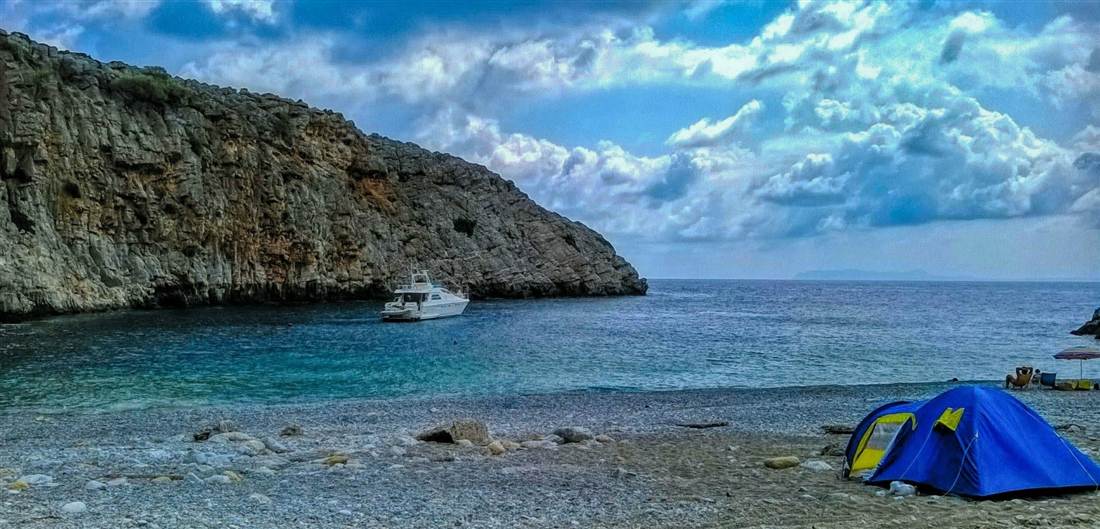
Menies beach is a small sheltered cove of pale pebbles and coarse sand at the foot of the sanctuary, opening onto strikingly clear turquoise water. Low rock arms enclose the bay, the setting is wild and treeless, and there are no facilities of any kind.
The shore is a curve of grey-white pebbles mixed with patches of gritty sand, shelving into water that shifts from pale aquamarine in the shallows to deep blue-green where the seabed drops away. Rocky headlands frame each end of the cove, and the bare hillside of the sanctuary rises directly behind, so the whole scene is stone, scrub and sea with no vegetation to soften it.
Because the bay faces east into a protected inlet, the water is usually glass-calm while the open coast beyond churns. That calm, combined with the absence of any development, gives Menies the feel of a place at the edge of the map. On a quiet day a handful of visitors share the shore; on a windless day the beach is empty save for the arriving boat.
The wildness cuts both ways. There is no taverna, no sunbed, no fresh water and, crucially, no natural shade once the morning sun clears the ridge. The beauty of the cove is inseparable from its exposure, and the visitor who plans for that exposure enjoys one of the most memorable swimming spots on the Rodopou coast. For gentler, serviced options across the district compare the Chania beaches.
Is Diktynna good for swimming and snorkelling?
Diktynna is excellent for swimming and snorkelling. The sheltered bay stays calm and clear, the water deepens quickly into cool blue, and snorkellers glide over submerged blocks of the ancient harbour and a rocky seabed alive with fish along both headlands.
Entry is easy from the pebble shore into water of remarkable clarity, where visibility runs deep enough to read the texture of the bottom far out. Swimmers cross the calm inner bay in flat conditions, and the depth builds fast, so strong swimmers find open, cool water within strokes of the beach. The east-facing inlet shelters the surface from the meltemi wind that roughens the exposed coast.
Snorkelling is the real draw. Along the rocky arms of the cove the seabed drops in ledges and boulders where wrasse, bream and sea urchins gather, and off the ancient mooring the scattered stones of the Roman harbour break the sand. Drifting above worked blocks that once received pilgrim ships joins the archaeology to the swim in a way no fenced ruin allows.
A mask, snorkel and reef shoes transform the visit. The pebbles are firm underfoot but sharp in places, and the rocks near the headlands harbour urchins, so footwear protects the entry and exit. The absence of shade on the water means a rash top guards against sunburn during a long snorkel.
How do you get to Diktynna by boat?
The simplest route to Diktynna is by excursion boat from Kolymbari or Kissamos. Small day boats run up the sheltered eastern coast of the Rodopou peninsula in calm conditions, mooring in Menies bay and giving passengers hours ashore at the beach and the ruins.
From Kolymbari the crossing hugs the peninsula’s eastern shore, a run of about 30 to 45 minutes depending on the vessel and the sea. From Kissamos to the west the boat rounds the northern cape past Cape Spatha before turning into the bay, a longer voyage across more open water. Both approaches deliver the dramatic reveal of the cove opening between its rock arms.
Boat service depends entirely on the weather. Operators sail when the sea is calm and cancel when the wind rises, since the coast offers no alternative shelter and the mooring is open. Booking ahead and confirming on the morning of the trip is the reliable approach, and the calm summer sea gives the steadiest schedule.
The boat option removes the punishing overland drive and its risks, and it arrives from the sea exactly as ancient pilgrims did. For a sense of how west Crete’s boat excursions work, the trip to the lagoon at Balos Lagoon from the same Kissamos harbour follows a comparable pattern of calm-weather sailings.
How do you get to Diktynna by road?
The road route to Diktynna runs along a long unpaved track over the Rodopou peninsula from the coast road near Kolymbari. The surface is rough stone and dust, the drive demands a 4×4 with high clearance, and the final approach crosses grazing land past a military-controlled zone.
From the coast road the track leaves the last paved village and climbs into the treeless interior of the peninsula, winding across bare hills grazed by goats and sheep. The surface is loose rock, ruts and dust for roughly 20 kilometres, with sharp stones that threaten ordinary tyres and steep sections that defeat low-clearance cars. The journey takes well over an hour each way at crawling speed.
A high-clearance 4×4 is the sensible vehicle. Hired saloon cars are wrong for this track, and a puncture or a cracked sump far out on the headland strands the driver in a place with no phone signal, no traffic and no help. Drivers carry a full fuel tank, since there is no station beyond Kolymbari, plus water and basic supplies.
Part of the northern peninsula falls inside a Greek military area, and signs mark where access closes. The route to Menies threads around the controlled ground, so following the established track and respecting the boundary markers matters. Herds of goats wander the road, shepherds move flocks across it, and the driver yields to both.
What is the Rodopou peninsula around Diktynna?
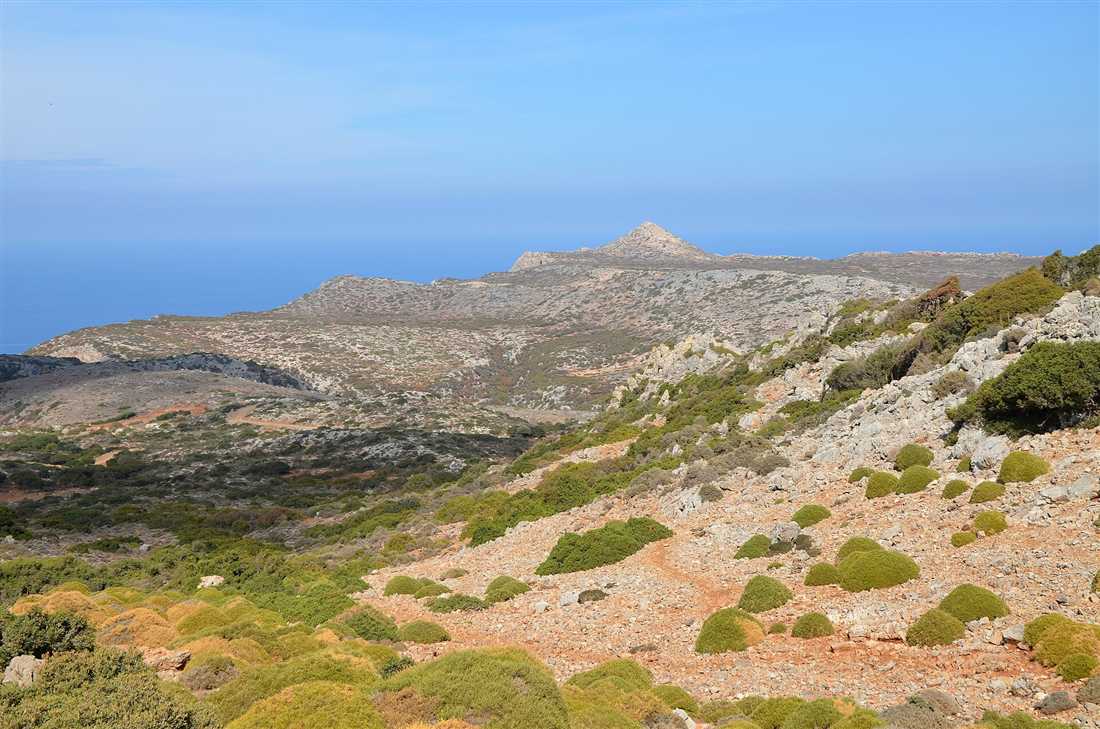
The Rodopou peninsula is a wild, near-uninhabited headland of limestone hills and scrub that stretches north from Kolymbari into the sea. Shepherds graze goats across it, seabirds and raptors ride the cliffs, and remote chapels such as Agios Ioannis Gionis mark the empty interior.
Beyond the small villages clustered at its base, the peninsula empties into a landscape of bare rock, phrygana scrub and grazing terraces with no permanent population. The wind sweeps the ridges, the coast falls away in cliffs on the western side, and the only human presence for long stretches is a shepherd, a flock and a distant white chapel.
The most famous of those chapels is Agios Ioannis Gionis near the northern cape, the focus of a large pilgrimage and animal-brand festival that draws people across the rough tracks to a remote cave church. That gathering echoes, in Orthodox form, the ancient pilgrimages to Diktynna, the same headland drawing worshippers to a sacred point at the edge of the land.
Wildlife thrives in the isolation. Griffon vultures, buzzards and other raptors nest on the cliffs and quarter the ridges, migrating birds pause on the exposed ground, and the scrub shelters hares and reptiles. Crossing the peninsula to Diktynna is a journey through one of the least-developed corners of Crete, a nature reserve in all but name.
What do you bring to Diktynna?
Bring more water than a normal day demands, portable shade, all your food, sturdy closed shoes, and a full tank of fuel if driving. Diktynna has no taverna, no shop, no fresh water, no toilet and no shade, so every visitor arrives fully self-sufficient.
Water tops the list. The sun on the treeless bay is relentless, the swimming is dehydrating, and there is no tap for kilometres, so three litres a person is the baseline. A beach umbrella or a sun tent supplies the only shade at Menies once the morning shadow retreats from the ridge, and it turns a long visit from an ordeal into a pleasure.
Footwear matters at both the ruins and the shore. Sturdy closed shoes protect against the sharp stones of the sanctuary terraces and the loose track, while reef shoes guard the feet on the pebbles and against sea urchins on the entry. A first-aid kit, high-factor sun cream, a hat and a snorkel round out the essentials.
Drivers add fuel, a working spare tyre, a jack and basic tools to the list, since a breakdown far out on the peninsula is a genuine hazard. Every visitor packs out every scrap of rubbish, because there is no bin and no collection, and the beauty of the place depends on leaving no trace.
When is the best time to visit Diktynna?
The best time to visit Diktynna is late spring and early autumn, when the sea is calm enough for the boat and the heat is milder than high summer. Midsummer delivers the steadiest calm for sailing but the fiercest, shadeless sun on the beach.
Access hinges on the sea state. The excursion boats sail only when the water is calm, so a settled forecast is worth more than any date on the calendar. The meltemi wind that rises through the hottest months roughens the open coast and cancels crossings, so a calm-weather window matters more than the season itself.
Late spring brings green hills, wildflowers on the peninsula and comfortable temperatures for the overland drive and the walk around the ruins, with a sea warming into swimmable range. Early autumn holds warm water and thinning crowds after the peak, with cooler air for the exposed hillside. Both shoulder periods spare the visitor the full blast of the midsummer sun on a beach with no shade.
An early start suits any season. Reaching Menies in the morning secures the ridge’s shadow on the shore, the calmest sea of the day before the afternoon wind, and the softest light on the marble ruins, then leaves time for the long return before dusk falls over the trackless peninsula.
What was the festival of Diktynna like in antiquity?
The festival of Diktynna drew pilgrims across the sea to the Rodopou sanctuary to honour the goddess with sacrifices, offerings and rites. The shrine’s treasury funded roads and public works, and worshippers arrived by ship to moor in the sheltered bay below the temple terraces.
The sanctuary functioned as a regional cult centre, its wealth famous enough that ancient authorities tapped its treasury for the upkeep of roads across western Crete. That prosperity flowed from the offerings and dues of pilgrims who sailed to the goddess’s feast, mooring their vessels in Menies bay and climbing the cut steps to the marble temple above.
Sacrifice stood at the heart of the rites. Worshippers brought animals to the altar, the priests presided over the cult of Artemis Diktynna, and the great cistern stored the water that served the crowds, the animals and the maintenance of the precinct. The isolation of the headland, far from any city, heightened the sense of a journey undertaken to reach a sacred edge of the world.
Coins of the ancient Cretan cities carried the image of Diktynna, spreading her cult beyond the peninsula, yet the Rodopou shrine held the goddess’s principal seat. The pilgrimage across open water to a hidden bay gave the festival its distinctive character, an approach by sea to a goddess born of the sea.
How does Diktynna compare with Balos and Falasarna?
Diktynna trades the scale and fame of Balos and Falasarna for solitude and archaeology. Balos and Falasarna draw crowds to broad, celebrated lagoons and sunset strands with easier access, while Diktynna offers a small, empty cove joined to an ancient sanctuary and reached only with real effort.
Balos, on the neighbouring Gramvousa peninsula to the west, is a wide, shallow lagoon of pink-tinged sand famous across Crete and served by regular boats and a walking track from a car park. Falasarna, further down the west coast, spreads long golden sand under sunset skies with tavernas and sunbeds near at hand. Both rank among the island’s marquee beaches and carry the visitor numbers to match.
Diktynna sits at the opposite pole. The cove is compact, the water deep rather than shallow, and the shore backed by ancient stone rather than dunes. There is no infrastructure, no crowd and no easy road, so the experience is quieter, wilder and bound to the ruins of the goddess’s temple. The traveller choosing Diktynna over its famous neighbours chooses isolation and history over spectacle and ease.
The three sit within reach of one another across the far west of the region, so a longer stay in the Kissamos area strings them into a varied run of coast, from the postcard lagoon to the remote sanctuary. Each answers a different mood, and Diktynna answers the mood for the road less travelled.
Is Diktynna suitable for families and less mobile visitors?
Diktynna suits fit, prepared adults and older children far better than young families or less mobile visitors. The overland track is punishing, the beach has no shade or facilities, the water deepens quickly, and the ruins spread over rough, unfenced terraces that demand sure footing.
The journey itself sets the bar. The long, jolting 4×4 track tires small children and strains anyone with back or mobility problems, and the boat crossing exposes passengers to open sea. Neither approach forgives poor preparation, and neither delivers a toilet, a tap or a first-aid point at the far end.
At the beach the deep, fast-shelving water calls for confident swimmers and close supervision of children, and the pebble entry and urchin-lined rocks reward reef shoes over bare feet. The absence of shade turns a hot day punishing without an umbrella, and the walk up to the ruins crosses loose stone and tumbled blocks that unsteady walkers find hard.
Families with strong swimmers, robust older children and a full kit of water, shade and footwear enjoy the adventure, and the boat option softens the hardest part by removing the track. Households with toddlers, or travellers who need level ground and facilities, are better served by the serviced beaches nearer Chania town.
Is Diktynna worth visiting?
Diktynna is worth visiting for travellers who want remote ancient history joined to a wild turquoise cove. The effort of the boat or the rough track buys an empty beach of clear blue water and the atmospheric ruins of a great Cretan sanctuary far from any crowd.
The verdict rests on what a visitor values. For those chasing serviced beaches, tavernas and easy access, Diktynna frustrates at every turn. For those drawn to solitude, archaeology and the sense of arriving somewhere few people reach, it rewards richly, delivering a swim in water of rare clarity above the drowned stones of an ancient harbour and a walk through a temple precinct laid open to the sky.
The combination is the point. Few places in Crete fuse a wild, undeveloped cove with a major ancient shrine in a single sheltered bay, and fewer still guard that fusion behind a barrier of sea and rough track that keeps the numbers low. The isolation that makes Diktynna hard is the same isolation that makes it unforgettable.
Prepared visitors who bring water, shade, fuel and sturdy shoes, and who choose a calm day, come away with one of the standout experiences of western Crete. Diktynna is a destination for the deliberate traveller, and it repays the deliberate traveller in full.
Frequently Asked Questions
What is Diktynna in Crete?
Diktynna is the ancient sanctuary of the Cretan goddess Diktynna at Menies bay on the remote Rodopou peninsula, north of Kolymbari. Roman-era temple ruins stand above a sheltered turquoise cove, reached only by boat or a long rough 4×4 track.
How do you get to Diktynna and Menies beach?
Reach Diktynna by excursion boat from Kolymbari or Kissamos in summer, or by a long unpaved 4×4 track over the Rodopou peninsula. There are no facilities, so visitors bring water, food, shade and fuel for the wild bay.
Is Diktynna worth visiting?
Diktynna rewards visitors after remote ancient history and a wild turquoise cove, pairing the Roman sanctuary ruins with the clear water of Menies bay. The effort of the boat or 4×4 keeps it quiet and unspoilt on the Rodopou peninsula.