
To get to Chania in western Crete, fly into Chania International Airport on the Akrotiri peninsula 14 kilometres from town, sail the overnight ferry from Piraeus to Souda port 7 kilometres east, or drive the coast road from Heraklion. Plan the whole trip with Greece Tours.
This guide covers how to get to Chania in full: the direct and connecting flights to Chania airport, the airport transfer into town, the overnight Piraeus to Souda ferries, the port transfer, the coach and drive from Heraklion and Rethymno, getting around by KTEL bus and car, whether you need a car, the cheapest route, and the best way in for each traveller, with a base in Chania town and the day trips that follow.
How do you get to Chania?
You reach Chania three ways: fly into Chania International Airport (CHQ) on the Akrotiri peninsula 14 km from town, sail an overnight ferry from Piraeus to Souda port 7 km east, or drive and coach across Crete from Heraklion on the E75 highway.
Chania sits on the north-west coast of Crete, the largest Greek island. The town has no rail link and no direct international ferry from outside Greece, so every arrival funnels through one of three gateways. Flying delivers the fastest door-to-door time in the summer season, when charter and scheduled carriers land at CHQ from across Europe. The ferry trades speed for a night’s sleep and a cabin, arriving at Souda by breakfast. Overland travel from Heraklion suits arrivals who fly into the island’s larger airport at HER and continue west by coach or hire car.
The choice hinges on where the journey starts. Travellers coming from Athens weigh a 50-minute flight against a 9-hour overnight crossing. Visitors already on Crete at Heraklion take the KTEL coach or drive the coastal highway in under three hours. Those arriving direct from a European city book a summer flight straight to CHQ and skip the mainland entirely. The Chania gateway network makes the town reachable from Athens and beyond on a single travel day.
Each route lands you within a short transfer of the old Venetian harbour. From CHQ the town centre is a 20-minute drive. From Souda port the centre is a 15-minute drive. From Heraklion the coach and the highway both terminate at the KTEL bus station on the edge of the old town. Book the transfer leg before you travel, because the airport bus and the port bus run to a timetable rather than on demand.
How do you fly to Chania?
You fly to Chania International Airport (CHQ) on the Akrotiri peninsula, 14 km east of the town centre. Summer brings direct flights from London, Manchester, Paris, Berlin, Rome and dozens of other European cities; year-round domestic flights connect Athens in about 50 minutes and Thessaloniki in about 90 minutes.
Chania International Airport, named Ioannis Daskalogiannis after the Cretan revolutionary, is the second-busiest airport on Crete after Heraklion. It shares its runway with a Hellenic Air Force base, so the terminal footprint stays compact and the walk from gate to arrivals hall runs short. Aegean Airlines, Sky Express and Olympic Air operate the domestic Athens route with multiple daily rotations. Ryanair, easyJet, TUI, Jet2 and other carriers add the international network from spring through autumn.
The summer schedule peaks from spring through autumn, when the town’s beaches, gorges and harbour draw the heaviest visitor numbers. Direct European flights thin out in winter, and off-season arrivals route through Athens on a connecting domestic hop. The Athens-Chania sector covers roughly 320 km and takes about 50 minutes wheels-up to wheels-down, making a same-day connection from a European hub through Athens a practical one-ticket itinerary.
Book the domestic leg on the same reservation as the international flight where the schedule allows, because a through-checked bag saves a terminal transfer at Athens. Aegean and its partner Olympic Air share a booking system that protects the connection if the first flight runs late. For the return, the CHQ departures hall opens early for the first Athens rotation, and the security queue moves fastest before the mid-morning charter wave.
How do you get from Chania airport to the town?
You cover the 14 km from CHQ to Chania town by public bus, taxi or hire car. The KTEL airport bus runs to the central station for a low flat fare and takes about 30 minutes. A metered taxi takes about 20 minutes for a fixed airport tariff. Car hire desks sit inside the arrivals hall.
The KTEL bus is the budget route into town. Buses depart from the stop directly outside the terminal and run to the central KTEL station on Kydonias street, a short walk from the old harbour. The service follows a published timetable that thickens in summer and thins in the low season, so check the departure board on arrival rather than assuming a bus waits. The flat fare costs a fraction of the taxi and accepts cash on board.
Taxis line up outside arrivals and run on a set airport-to-town tariff rather than a variable meter, which removes the guesswork for a first-time visitor. The 20-minute run crosses the Akrotiri plateau, drops past the naval bay and enters town from the east. A taxi suits late-night arrivals after the last bus, groups splitting the fare, and travellers with heavy luggage headed to a harbour hotel where the bus stops short of the pedestrian lanes.
Car hire makes sense for a visitor who plans to reach the beaches west of town, the Samaria gorge trailhead, or the villages of the Apokoronas. The rental desks stand inside the compact arrivals hall, and the collection car park sits a two-minute walk away. Pick up the car at the airport and you skip a return trip to a downtown depot. For where to base yourself once you arrive, see the guide to where to stay in Chania.
How do you get to Chania by ferry?
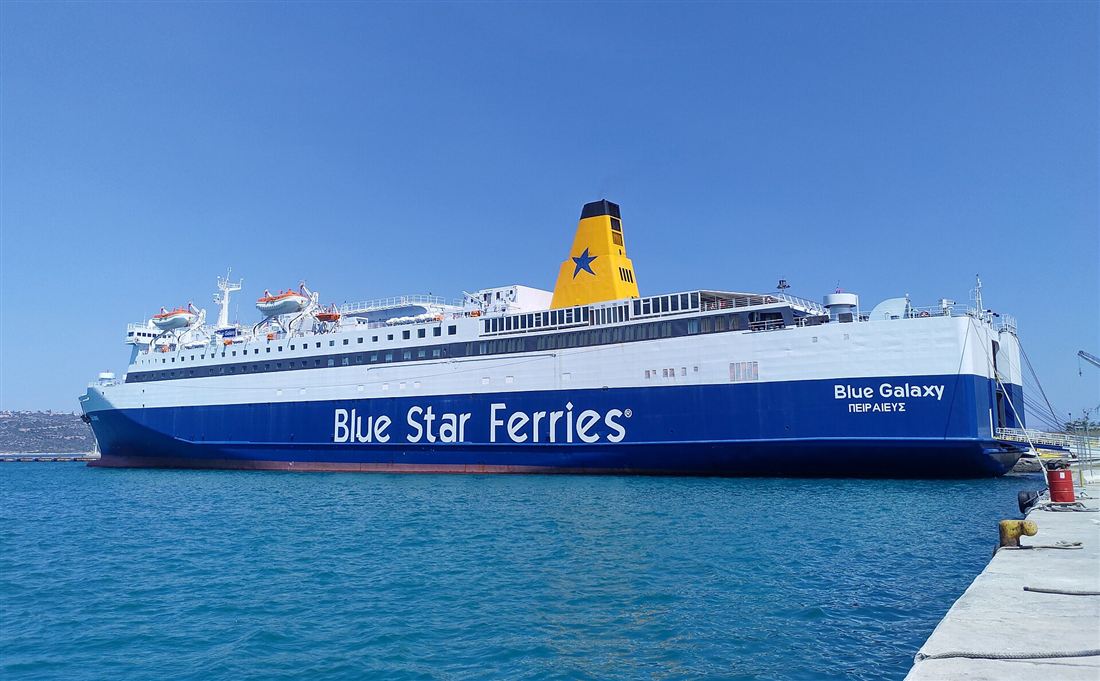
You reach Chania by ferry on the overnight crossing from Piraeus, the port of Athens, to Souda, Chania’s ferry harbour 7 km east of town. ANEK Lines and Minoan Lines run the route with large car ferries that depart Piraeus in the evening and dock at Souda around dawn after a crossing of about 9 hours.
The Piraeus-Souda ferry is the classic sea route to western Crete. Ships leave the Athens port in the early evening, cross the Aegean and the Sea of Crete through the night, and berth at Souda in the early morning. The 9-hour sailing covers roughly 160 nautical miles. Booking a cabin turns the crossing into a night’s accommodation, so you arrive rested and ready to start the day rather than losing daylight hours in transit.
The ferries carry cars, motorcycles and campervans as well as foot passengers, which makes the sea route the practical choice for a road-trip itinerary that starts on the mainland. Deck-class tickets cost the least; reclining aircraft-style seats and private cabins step up in price. In peak summer the vehicle decks fill early, so reserve a car space weeks ahead for a July or August sailing. The vessels run a cafeteria, a bar and a shop, so the overnight passage covers dinner and breakfast.
Souda is a full commercial and naval port, so the ferry berths at a working quay rather than a beach jetty. Arrivals disembark onto the dock, collect vehicles from the car deck, and clear the port gate onto the coast road into Chania. The morning docking time dovetails with hotel check-in later the same day, and it leaves the whole first day free for the harbour, the market and the old town.
How do you get from Souda port to Chania town?
You cover the 7 km from Souda port to Chania town by city bus, taxi or hire car. The blue urban bus meets the ferry and runs to the central market and the KTEL station for a low fare in about 20 minutes. A taxi covers the run in about 12 minutes on a short metered fare.
The Chania Urban Bus service links Souda with the town centre on a frequent daytime schedule. A bus waits at the port for the morning ferry arrivals and drops passengers near the covered market, the Agora, on the edge of the old town. The fare is a flat urban-route price paid on board, and the ride threads along the coast road past the war cemetery and into the built-up eastern suburbs before reaching the centre.
Taxis queue at the port gate to meet each ferry, and the short 7 km hop runs on the meter for a modest fare. A taxi drops you at the harbour edge, where the pedestrian lanes of the Venetian quarter begin and cars stop. Foot passengers with a downtown hotel booking take the taxi to save hauling luggage from the market square through the old town’s narrow streets. Drivers collecting a hire vehicle continue straight onto the national road, with Chania signposted west and Rethymno and Heraklion signposted east.
How do you get to Chania from Heraklion?
You travel from Heraklion to Chania on the E75 north-coast highway, a 145 km drive of about two hours by car, or on the KTEL intercity coach, which runs hourly through the day and covers the route in about two and a half hours. Heraklion Airport (HER) is the island’s main gateway and the usual overland starting point.
Most visitors land at Heraklion, the largest airport on Crete, because it carries the widest choice of direct European flights. From HER the road west runs along the E75, the national highway that hugs the north coast the length of the island. The drive passes Rethymno at the halfway mark, crosses the flank of the White Mountains, and descends into the Chania plain. Two hours of driving covers the 145 km at highway speed, with a coffee stop at Rethymno a natural break.
The KTEL coach is the no-car alternative. Buses depart the Heraklion KTEL station near the port on an hourly frequency through the day, call at Rethymno, and terminate at the Chania KTEL station on Kydonias street. The two-and-a-half-hour journey runs on comfortable coaches with air conditioning and luggage holds, and the fare undercuts a hire car for a solo traveller or a couple. Buy the ticket at the station counter or online, and arrive early in high summer when the coaches fill.
Drivers who hire a car at Heraklion Airport gain the freedom to stop along the coast: the Venetian fortress at Rethymno, the beach at Georgioupoli, and the coastal viewpoints above Souda Bay all sit on or near the route. The E75 is a fast dual-flow road for most of its length, with a few slower single-lane stretches through the mountains. Fuel stations line the highway, so a top-up before the run west removes any worry on the longer legs.
How do you get to Chania from Athens?
You get to Chania from Athens two ways: fly from Athens International Airport to CHQ in about 50 minutes on Aegean, Sky Express or Olympic Air, or sail the overnight ferry from Piraeus to Souda in about 9 hours. The flight wins on speed; the ferry wins on cost and delivers you rested at dawn.
The flight is the fast option. Multiple daily rotations link Athens with Chania, and the 50-minute sector puts you in western Crete within a couple of hours of leaving central Athens once check-in and the airport transfer are counted. A morning flight lands at CHQ in time for lunch by the old harbour. The domestic terminal at Athens processes the route as a short-haul hop with a light bag allowance on the budget fares, so travel hand-luggage-only to keep the price down.
The ferry is the value option. An evening sailing from Piraeus converts the journey into a night’s sleep in a cabin and lands you at Souda by breakfast, having paid once for transport and accommodation together. The sea route also carries a car, which the plane does not, so a road-trip plan that starts in Athens points to the ferry. The trade-off is time: 9 hours at sea against 50 minutes in the air. Choose the flight for a short break, the ferry for a car-borne tour or a tight budget.
A blended itinerary works well for a longer trip. Sail out to Crete with a hire car loaded aboard, tour the island at your own pace, and fly home from Chania or Heraklion to save the return crossing. The one-way ferry-and-fly plan halves the sea time while keeping the freedom of a vehicle on the island.
How do you get to Chania from Rethymno?
You travel from Rethymno to Chania on the E75 highway, a 60 km drive of about 50 minutes, or on the frequent KTEL coach, which runs through the day and covers the route in about an hour. Rethymno sits halfway between Heraklion and Chania, so it makes a natural stopover on the overland journey west.
The drive from Rethymno to Chania is the shortest of the intercity legs on the north coast. The E75 leaves the Rethymno bypass, tracks the shoreline past Georgioupoli and the long sandy sweep of Kavros, then climbs a low ridge before dropping into the Chania basin. Fifty minutes of steady driving covers the 60 km. The road is fast and well surfaced, and the sea stays in view for much of the run.
KTEL coaches shuttle between the two towns through the day, calling at the Rethymno KTEL station and terminating at the Chania station on Kydonias. The hour-long ride costs a low intercity fare and saves the hire-car cost for a day trip. Travellers basing themselves in Rethymno reach Chania for a morning at the harbour and return the same afternoon on a later coach, no car needed. For ideas on where the road west leads beyond the town, see the guide to day trips from Chania.
How do you get around Chania and the region?
You get around Chania on foot in the old town, by blue Urban Bus in the suburbs and to nearby beaches, by green KTEL coach to regional towns and gorge trailheads, and by taxi for direct point-to-point runs. A hire car unlocks the mountain villages, the west-coast beaches and the Samaria gorge on your own schedule.
The Venetian old town is a walking quarter. The harbour, the market, the museums and most of the guest houses cluster within a compact grid of pedestrian lanes where cars do not go. For the harbour, the lighthouse mole and the back streets of the Splantzia district, your feet are the only transport you need, and a full day on foot covers the historic core comfortably.
The Chania Urban Bus network fans out to the beach suburbs of Nea Chora, Kalamaki and Agioi Apostoloi, to Souda port, and to the airport on the Akrotiri route. Green KTEL intercity coaches reach further afield: Rethymno and Heraklion to the east, Kissamos and Falassarna to the west, Paleochora and Sougia to the south coast, and the Omalos plateau for the Samaria gorge descent. The gorge route runs an early departure timed for hikers, with a return service from the exit at Agia Roumeli linked by ferry to Sougia and Chora Sfakion.
Taxis run on the meter within town and on set tariffs for longer regional hops. For a group heading to a single beach or a mountain taverna, a taxi splits down to a fair per-head cost and removes the parking hunt at the destination. A hire car remains the most flexible option for a base outside town, an itinerary that strings together a run of villages, or an early gorge start ahead of the coach.
Do you need a car in Chania?
You do not need a car to enjoy Chania town, which is compact, walkable and served by frequent buses to the nearest beaches. You need a car to reach the west-coast beaches at Elafonisi, Balos and Falassarna, the White Mountain villages, and the gorge trailheads on your own timetable, where bus service runs sparse.
A visitor whose plan centres on the old town, the harbour, the market and the town beaches manages the whole stay without a car. Everything worth seeing in the historic core sits within walking distance, and the Urban Bus reaches Nea Chora and the eastern beaches for a low fare. Adding the odd taxi for an evening out or a day trip by KTEL coach covers the rest without the cost and parking hassle of a rental.
The calculus flips for the wilder edges of the region. The famous lagoon beaches of Balos and Elafonisi, the pink sand of Falassarna, the stone villages of the Apokoronas and the Sfakia coast, and the pre-dawn start for the Samaria gorge all reward a car. Public buses reach the headline sights but on a thin timetable that ties you to one departure and one return. Hire a car for the days you head into the mountains or along the west coast, and rely on your feet and the bus for the town days. Parking in Chania sits at the edge of the old town, since the Venetian lanes bar vehicles, so factor a short walk from the car park to a harbour hotel.
How long does the journey to Chania take?
The journey to Chania takes about 50 minutes from Athens by air, about 9 hours from Piraeus by overnight ferry, about two hours from Heraklion by car on the E75, and about 50 minutes from Rethymno by road. Add 20 to 30 minutes for the transfer from CHQ airport or Souda port into the town centre.
Timing the door-to-door trip means stacking the legs. A European flyer counts the flight to CHQ plus the 20-minute taxi or 30-minute bus into town. An Athens traveller weighs the 50-minute flight, with airport transfers at both ends, against the 9-hour ferry that runs through the night and returns the sleeping hours as travel time. The ferry’s clock cost drops to near zero once you treat the cabin as the night’s bed.
Overland from Heraklion, the two-hour highway drive or the two-and-a-half-hour KTEL coach sets the pace, with Rethymno a 50-minute waypoint from Chania at the western end. Chain the legs for a mainland-to-town estimate: an Athens flight and airport transfers land you in central Chania within about three hours of leaving your Athens hotel, while the ferry route spans a full evening and morning but crosses in your sleep.
What is the cheapest way to get to Chania?
The cheapest way to get to Chania is the deck-class overnight ferry from Piraeus to Souda, which carries you across for a low fare and doubles as a night’s accommodation. From within Europe, a hand-luggage-only budget flight to CHQ booked well ahead undercuts most other routes in the summer season.
For a journey that starts in Athens, the ferry is the price leader. A deck-class ticket on the Piraeus-Souda overnight crossing costs a fraction of the flight, and because you sleep aboard you save a night’s hotel on top. Travelling as a couple or a family multiplies that saving. The catch is the 9-hour duration and the evening departure, which suit a relaxed schedule rather than a rushed one.
For a journey that starts elsewhere in Europe, a budget carrier flying direct to CHQ in the summer season beats the mainland routes on both time and, booked early, on price. Fares climb steeply for peak dates bought late, so lock in the flight months ahead and travel light to dodge the checked-bag charge. Outside summer, when the direct flights stop, the cheapest path runs through Athens by connecting flight or by the ferry described above. To trim the on-island cost further, use the KTEL coaches rather than a hire car for the intercity legs and rely on the Urban Bus and your feet in town.
How do you reach the Chania beaches and gorges from town?
You reach the near beaches at Nea Chora and Agioi Apostoloi on the Urban Bus in minutes, and the headline sights at Balos, Elafonisi and the Samaria gorge by KTEL coach on an early departure or by hire car. Balos and Elafonisi sit about 55 km west; the Samaria trailhead at Omalos sits about 42 km south.
The town beaches need no car. The Urban Bus runs west to Nea Chora and Kalamaki and east to the Akrotiri coves for a flat fare, and a walk along the seafront reaches the closest sands. For a lazy beach day within the town’s orbit, the bus and your feet cover it.
The famous west-coast lagoons and the White Mountain gorges demand an early start. KTEL runs a dawn coach to Omalos for the Samaria descent and seasonal services to Elafonisi, while Balos combines a drive to Kissamos with a short boat or a rough track. A hire car frees you from the single daily coach and lets you time the trip around the crowds, which is why most visitors rent for the beach-and-gorge days and travel by bus and on foot the rest of the time.
What is the best way to get to Chania?
The best way to get to Chania depends on the traveller. Direct summer flyers take a scheduled or charter flight to CHQ for the fastest door-to-door time. Road-trippers and budget travellers sail the overnight Piraeus-Souda ferry with a car aboard. Visitors already on Crete continue west by KTEL coach or on the E75 from Heraklion.
For a short break from a European city, the direct flight to CHQ is the clear winner. It delivers the shortest transit, lands you 20 minutes from the old harbour, and keeps the whole holiday for Crete rather than for travelling. Book the summer schedule, take the airport bus or a taxi into town, and hire a car only for the days you head out to the beaches and gorges.
For a road trip, a family, or a tight budget starting in Athens, the overnight ferry is the strongest choice. It carries the car, converts the journey into a night’s sleep, and lands you at Souda fresh for a full first day. For a traveller already on Crete after a Heraklion landing, the KTEL coach or a highway drive west along the E75 completes the trip in under three hours through Rethymno. Match the route to the starting point and the style of the trip, and Chania sits within easy reach whichever gateway you choose. The town of Chania rewards the journey with a Venetian harbour, a working market and a mountain-and-sea hinterland that ranks among the finest on the island.
Frequently Asked Questions
What is the easiest way to get to Chania?
The easiest way to get to Chania is a direct flight to Chania International Airport, 14 kilometres from the old town, followed by the airport bus or a taxi. In summer, direct flights link Chania with cities across Europe.
How do you get from Athens to Chania?
From Athens, fly the one-hour hop to Chania airport, or take the overnight ferry from Piraeus to Souda port, a nine-hour crossing that saves a night’s accommodation and carries a car across to Crete.
Do you need a car in Chania?
Chania town is walkable and needs no car, with the old town, market and beaches within reach on foot and by bus. A hire car earns its keep for the beaches, the gorges and the day trips beyond the city.