
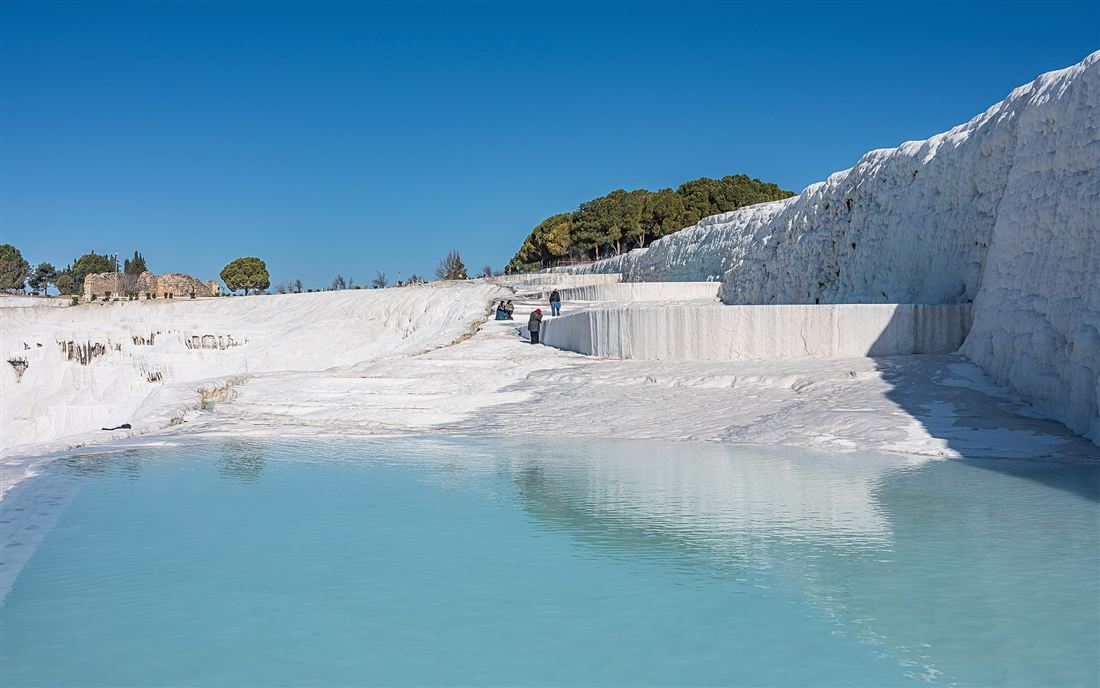
The best time to visit Pamukkale is spring, from April to May, and autumn, from September to October, when the weather is warm but mild and the crowds thin between the peak summer heat and the wet winter. Plan the whole trip with Greece Tours.
This guide covers the best time to visit Pamukkale in full: the ideal seasons, the weather through the year, the best time of day for the white terraces and the sunset, summer and winter, spring and autumn, when the site is least crowded, what to pack by season, and the single best month, with a note on pairing the terraces with Hierapolis.
When is the best time to visit Pamukkale?
The best time to visit Pamukkale is spring, from April to May, and autumn, from September to October. These months deliver warm mild days of 20°C to 28°C, thinner crowds than the summer peak, full water flow across the white travertine terraces, and comfortable walking temperatures on the hot calcium surface.
Spring and autumn frame the summer heatwave on both sides and hand you the two conditions that matter most at Pamukkale: bearable air temperature and a barefoot-friendly terrace. In April, May, September and October the sun warms the white travertines without scorching them, so the mandatory barefoot walk across the calcite pools stays a pleasure rather than a sprint from shade to shade. Daytime highs sit in the low-to-mid twenties Celsius, and the thermal water threading down the terraces feels perfect against warm skin.
These shoulder months also thin the visitor volume. The heaviest coach traffic from the Aegean coast concentrates in July and August, so a May morning or an October afternoon gives you the same brilliant white basins with a fraction of the foot traffic. Pair the terraces with the ancient city above them, and read the full destination guide at Pamukkale to plan the timing of each stop across the site.
The choice between the two windows turns on what you rank first. Spring wins on water and greenery: the terraces run at their fullest after the winter rains, and the hills carry wildflowers. Autumn wins on stability and calm: the days stay warm and dry, and the summer crowd retreats week by week. Both keep the barefoot travertine at a temperature that never punishes bare skin, and both hold the air below the July ceiling that drives midday visitors into the shade.
What is the weather like at Pamukkale through the year?
Pamukkale carries a Mediterranean-continental climate with four distinct seasons: hot dry summers of 32°C to 38°C, cold wet winters of 3°C to 12°C, and mild transitional springs and autumns of 18°C to 28°C. Rainfall concentrates from November to March, while July and August stay almost rain-free.
Summer, from June to August, runs hot and dry. Afternoon highs push past 35°C in July and August, the sky stays clear, and rain almost disappears. The white travertine reflects and holds the heat, so the terrace surface radiates warmth long into the evening. Humidity stays low, which makes the shade bearable, but direct midday sun on the calcite is fierce.
Winter, from December to February, turns cold and damp. Daytime highs hover between 8°C and 12°C, nights drop to freezing, and frost forms on the higher ground. Rain arrives in steady spells, and snow dusts the plateau in the coldest weeks, laying white powder over the white stone. Spring and autumn bridge the two extremes: April, May, September and October deliver highs of 18°C to 28°C, light rainfall tapering through spring and returning through autumn, and long stretches of clear sunshine. The thermal springs feed water at a constant 35°C to 37°C in every season, so the source heat never changes even as the air around it swings.
Two climate features shape a Pamukkale visit above all others. The first is the low humidity, which keeps even a 36°C July afternoon dry rather than sticky, so shade delivers real relief and the evenings cool fast once the sun drops behind the valley. The second is the reflective travertine itself: the white calcite bounces sunlight and heat back upward, so the terrace surface runs hotter than the surrounding ground in summer and holds a slick, cold film in winter. Both facts push the same conclusion, that the spring and autumn shoulders hand the traveller the gentlest version of the site.
What is the best time of day to visit Pamukkale?
The best time of day to visit Pamukkale is early morning at the 08:00 opening or the late afternoon before sunset. Both windows dodge the midday heat and the mid-day coach crowds, deliver soft raking light on the white terraces, and keep the travertine surface cool enough for the barefoot walk.
Arrive at opening and you get the terraces to yourself for the first hour. The coach tours from Kuşadası, İzmir and the Aegean beach resorts reach the site between 10:00 and 11:00, so an 08:00 start buys two clear hours before the crush. The morning air stays fresh, the low sun rakes across the calcite ridges to pick out every basin edge, and the pools sit like mirrors before the day-trippers stir them.
The late afternoon repeats the trick in reverse. From about 16:00 the coach groups drain back toward the coast, the light turns gold, and the crowds fall away toward the top gate. Midday, from 12:00 to 15:00, brings the worst of both problems at once: peak heat on the reflective white surface and peak visitor density. Skip that middle block, and structure the day around the two soft-light bookends instead.
A gate choice sharpens the plan. The site opens both a lower north entrance beside the terraces and an upper south entrance above the ancient city. An early start through the lower gate walks you up the wet travertine while it stays quiet; a late-afternoon start through the upper gate drops you down the terraces straight into the sunset light. Either way, budget three to four hours for the terraces, the Antique Pool and the ruins, and slot that block into a bookend rather than the searing, crowded middle of the day.
Is Pamukkale good to visit in summer?
Pamukkale rewards a summer visit only with an early-morning or late-afternoon plan. From June to August highs exceed 35°C, the white travertine reflects heat back onto bare feet, and coach crowds peak. Beat both by arriving at the 08:00 opening or after 16:00, and carry water and sun protection.
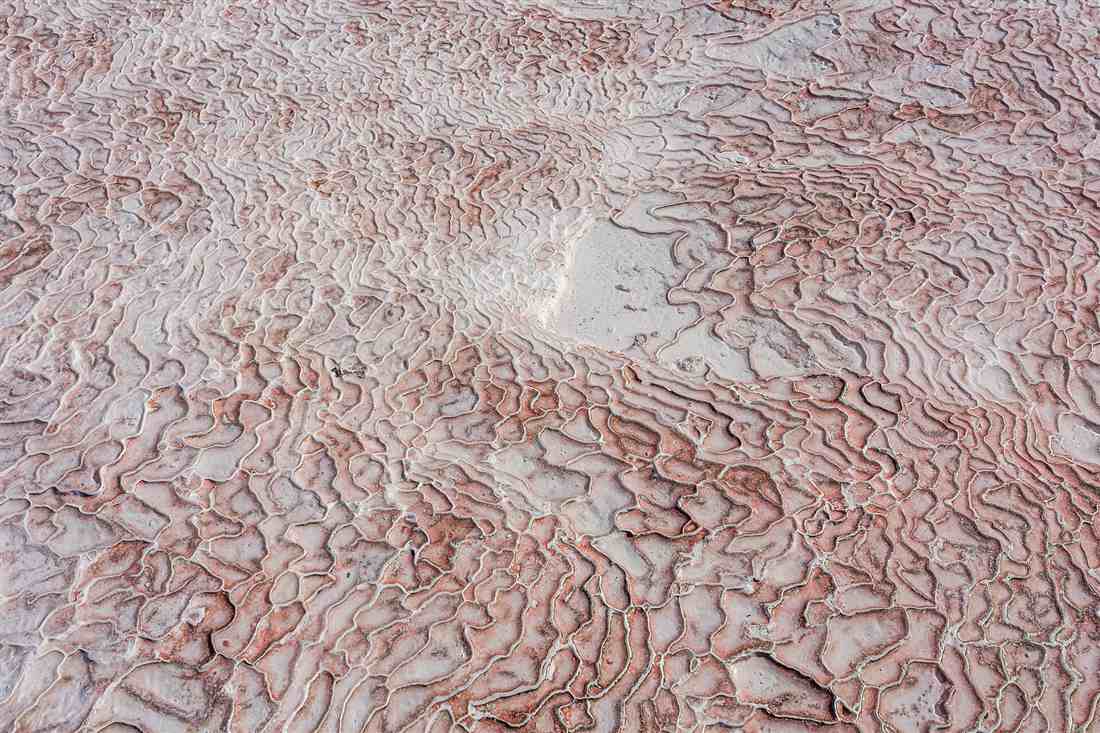
Summer at Pamukkale is a study in extremes. The upside is guaranteed weather: cloudless skies, zero rain risk, and the terraces glowing at their brightest white under strong sun. The thermal water threading across the calcite feels cool and welcome against skin baked by the July air, and the Antique Pool, where you swim among submerged Roman columns, becomes the highlight of the day.
The downsides are heat and volume. Midday surface temperatures on the barefoot travertine turn punishing, and the reflected glare doubles the sun load on skin and eyes. July and August also draw the year’s largest crowds off the Aegean coast, filling the terraces between 11:00 and 15:00. The fix is timing, not avoidance: enter at opening, walk the terraces and the ancient city before the heat builds, retreat to shade or the pool through the middle of the day, and return to the upper travertines for the cooler golden hour.
Hydration and shade planning turn a summer visit from an ordeal into a highlight. The terraces carry almost no natural shade, so the ancient city above them, with its trees and colonnades, becomes the midday refuge. Carry water, top up at the site, and treat the Antique Pool as the built-in cooling break rather than an afterthought. Handled this way, summer delivers the brightest terraces of the year and the warmest, most inviting swim, with the heat pushed to the margins of the day where it does the least harm.
Is Pamukkale worth visiting in winter?
Pamukkale rewards a winter visit for solitude and the rare sight of snow on white stone. From December to February highs sit at 8°C to 12°C, crowds thin to a trickle, and the constant 35°C thermal water steams in the cold air. Wrap up warm and pack swimwear for the heated pool.
Winter strips Pamukkale back to its quietest state. The coach tours slow to a handful, weekdays leave the terraces near-empty, and the site takes on a stillness the summer never allows. When snow settles, the white travertine and the white powder merge into a single luminous field, a sight reserved for the coldest weeks. The 35°C spring water keeps flowing across the calcite the whole time, sending up ribbons of steam that hang over the terraces in the chilled air.
The trade-off is cold and rain. Daytime highs stay in single figures or the low teens, nights freeze, and wet spells arrive through the season, so the terrace surface turns slippery underfoot. The reward for enduring the chill is the Antique Pool at its best: sliding into constant thermal warmth while cold air bites at your shoulders and steam rises around the sunken columns. Dress in a warm coat, keep swimwear in the bag, and treat winter as the season for the traveller who prizes quiet over warmth.
Winter also shifts the daily rhythm. The site closes earlier as daylight shortens, so the visiting window tightens to the middle of the day when the air warms toward its 12°C peak. The upside is that even a midday winter arrival meets thin crowds, so the timing pressure that governs summer falls away entirely. Steady footwear matters most in this season: the wet calcite grows genuinely slick, and the barefoot walk demands care on the cold, streaming stone.
What is spring like at Pamukkale?
Spring at Pamukkale, from April to May, delivers mild days of 18°C to 26°C, wildflowers across the surrounding hills, and the fullest water flow of the year as winter rains recharge the springs. The travertine surface warms to a comfortable barefoot temperature, and crowds stay well below the summer peak.
April and May are the reward for the wet winter. The rains that soaked the plateau feed the terraces at full volume, so the calcite basins brim with bright turquoise water and spill in continuous sheets down the slope. The white stone gleams against green hillsides stitched with red poppies and wild spring blooms, and the mineral pools hold their water at a depth the parched summer never matches.
The air sits in the sweet spot. Daytime highs in the low-to-mid twenties Celsius keep the barefoot walk pleasant, the sun warms without scorching, and the light stays clear through long days. Morning arrivals catch cool travertine and quiet terraces before the day builds. Spring pairs the terraces with the ancient city above them at its greenest, and the ruins of Hierapolis stand out sharply against the fresh growth of the season.
What is autumn like at Pamukkale?
Autumn at Pamukkale, from September to October, brings warm dry days of 22°C to 28°C, the thinning crowds of the post-summer drop, and a low golden harvest light that sculpts the white terraces. The travertine stays warm underfoot, and the summer coach traffic falls away week by week.
September holds onto summer’s warmth without its ferocity. Highs settle in the mid-to-high twenties Celsius, the sky stays dry and clear, and the terrace surface warms to an easy barefoot temperature through the middle of the day. As the month turns to October, the crowds that packed the site in August drain away, and the terraces open up to unhurried walking even in the afternoon.
The autumn light is the season’s signature. The sun tracks lower across the sky, and its warm raking angle throws every basin rim and calcite ridge into sharp relief, especially in the late afternoon. The surrounding Menderes valley slides into its harvest colours, framing the white terraces against golden fields. Warm water still flows across the travertine, and the Antique Pool stays a fine swim as the air cools. Autumn matches spring for balance while adding the extra draw of a crowd in steady retreat.
The one point to watch is the calendar’s tail. Late October marks the turn toward the wet season, so the dry warm stability of September and early October gives way to the first autumn rain spells and cooler nights as November nears. Front-load an autumn visit into September or the first half of October to lock in the warm dry window, and you gain the harvest light and the emptying terraces without the cold, damp edge that arrives with the deep autumn.
When is Pamukkale least crowded?
Pamukkale is least crowded in the shoulder seasons of spring and autumn, on weekdays, and in the first two hours after the 08:00 opening before the coach tours from the coast arrive. December to February empties the site further, trading the crowds for winter cold.
The crowd pattern at Pamukkale runs on two clocks: the calendar and the day. On the calendar, July and August pack the terraces with coach groups off the Aegean resorts, while April, May, September and October cut that volume sharply. Deep winter, from December to February, empties the site almost entirely, leaving weekday visitors near-alone on the terraces in exchange for enduring the cold and the rain.
On the daily clock, the coaches set the rhythm. Tour buses from Kuşadası, İzmir, Fethiye and the beach resorts reach the ticket gates between 10:00 and 11:00 and clear out by late afternoon. Enter at the 08:00 opening and you walk the terraces in near-silence for the first hour; return after 16:00 and you catch the emptying tail of the day. Stack the odds by combining a shoulder-season weekday with an early start, and the white travertines open up almost to yourself.
Weekends and public holidays add a domestic layer to the international coach traffic, so a Tuesday or a Wednesday in the shoulder season marks the low-water point for crowds. The pattern rewards the traveller who controls both dials at once: pick the month for the calendar, pick the day of the week for the local rhythm, and pick the hour for the coaches. Match all three, and Pamukkale trades its reputation for queues and heat for wide-open white terraces under a clear sky.
When is the best time to see the Pamukkale sunset?
The best time to see the Pamukkale sunset is the final hour before dusk, when the low sun turns the white travertine gold, the terrace pools mirror the colour-shifting sky, and the day’s coach crowds have drained away. Enter the upper south gate by mid-afternoon to reach the terraces for the golden hour.
Sunset transforms the terraces. As the sun drops toward the Menderes valley, its light warms from white to amber to rose, and the pale calcite drinks in every shift of colour. The still pools on the upper terraces hold the sky as flat mirrors, doubling the glow, and the low angle rakes across the basin rims to carve out shadow and texture the flat midday light erases.
Timing and position make the shot. Reach the terraces through the upper south gate above the ancient city, walk down to the mid-slope basins where the water sits shallow and reflective, and hold your ground as the light softens through the last hour. The crowds thin as the golden hour arrives, so the reflections stay undisturbed. Barefoot on warm stone, with the whole plateau turning gold, the Pamukkale sunset ranks among the finest light shows in western Turkey.
What do you pack for Pamukkale by season?
Pack swimwear year-round for the thermal pool. Add strong sun protection, a hat and extra water for the summer heat; light layers for the mild swings of spring and autumn; and a warm waterproof coat with grippy shoes for the cold, wet, slippery winter terraces.
One item stays constant across every season: swimwear. The Antique Pool and the terrace basins hold their 35°C thermal warmth in January and July alike, so a swim rewards the traveller in any month. Alongside it, the barefoot rule across the travertine means you carry your shoes in hand, so a small bag or backpack earns its place in the kit list all year.
Then dress for the season. Summer, June to August, demands a wide-brimmed hat, high-factor sun cream, sunglasses against the white glare, and at least a litre of water per person, because the reflective terrace doubles the sun load and shade is scarce. Spring and autumn swing between a cool morning and a warm afternoon, so pack light layers you shed and add through the day. Winter, December to February, calls for a warm waterproof coat, a jumper, and shoes with grip for the wet, slick calcite, with the swimwear underneath for the steaming pool.
A short shared list rounds out the kit in every month. A quick-dry towel serves the pool and the terrace pools alike, a dry bag protects a phone or camera from the flowing water, and a light pair of sandals waits at the terrace exit for the walk back to the car park. With swimwear as the constant and the seasonal layer on top, the packing question at Pamukkale reduces to one rule: match the coat to the calendar, and never leave the swim kit behind.
What is the best month to visit Pamukkale overall?
The best months to visit Pamukkale overall are May and September. Both sit at the heart of the shoulder seasons with mild dry days of 24°C to 28°C, moderate crowds well below the summer peak, warm barefoot-friendly travertine, and strong flowing water across the terraces.
May and September are the two sweet spots because each combines every favourable condition without a single serious drawback. Temperatures land in the mid-to-high twenties Celsius, warm enough for comfortable swimming and a pleasant barefoot walk, cool enough to escape the July furnace. Rainfall stays low in both months, so clear skies dominate and the white terraces show at their brightest. The thermal pools flow strongly, especially in May on the back of the spring recharge.
Crowds settle at a workable level in both months. May sits before the summer coach wave builds, and September sits just after it breaks, so the terraces stay walkable through the day and empty at the bookend hours. Choose May for wildflowers and the fullest water, or September for warm harvest light and a crowd already retreating. Between them, these two months hand the traveller the finest all-round conditions Pamukkale offers.
April and October run a close second and extend the sweet spot into a four-month window at the edges of summer. April carries cooler mornings and the peak of the spring bloom, while October trades a degree or two of warmth for the quietest terraces of the shoulder season. Line up any of these four months with a weekday and an early or late-afternoon arrival, and every lever that governs a Pamukkale visit points the same way: mild air, warm barefoot stone, flowing turquoise water, and room to walk.
Frequently Asked Questions
What is the best time to visit Pamukkale?
The best time to visit Pamukkale is spring, April to May, and autumn, September to October. These shoulder seasons bring warm, mild weather in the low to mid-twenties Celsius and far thinner crowds than the hot, busy summer.
What is the best time of day to visit Pamukkale?
Enter Pamukkale at opening in the early morning or in the late afternoon for sunset. The white travertines carry no shade, so the cooler hours avoid the midday heat and the coach crowds that fill the terraces by late morning.
What is the best month to visit Pamukkale?
May and September are the best months to visit Pamukkale: warm, dry days in the low twenties Celsius, full water in the terraces and moderate crowds, sitting between the spring rains and the summer heat.