
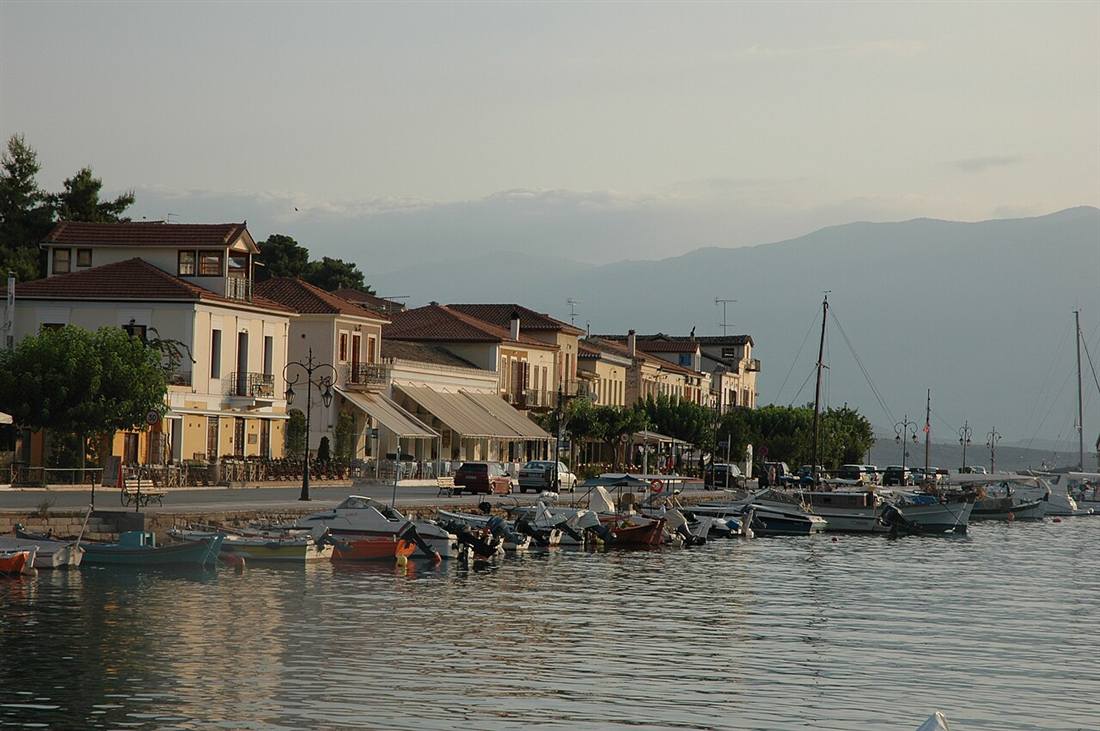
Galaxidi, Greece
Galaxidi is a seaside captains’ town on the north shore of the Gulf of Corinth, a quiet and elegant place of neoclassical sea-captains’ mansions ranged around two natural harbours. It sits about thirty-five kilometres down the mountain from Delphi, and its maritime past, harbourside fish tavernas, and pine-fringed coves make it the coastal counterpart to the ancient sanctuary above. Plan the whole trip with Greece Tours.
The town divides between two natural basins, the busy main harbour lined with tavernas and the quieter shipyard inlet of Chirolakas, with the stone captains’ quarter rising behind them and the church of Agios Nikolaos crowning the rise. A pine-clad peninsula shelters the coves to the south, the Gulf of Corinth stretches away to the mountains of the Peloponnese, and the whole place keeps the unhurried air of a working port that once ran a merchant fleet across the Mediterranean. It is the coastal counterweight to the mountain sanctuary above.
This guide covers Galaxidi in full: what the town is and why to visit, how to get there, its history in the great age of sail, the top things to do, the beaches nearby, the food it is known for, the sights around it, where to stay in its restored mansions, and the best time to visit, including its famous flour-war Carnival.
What is Galaxidi, and why visit it?
Galaxidi is a seaside captains’ town on the north shore of the Gulf of Corinth, an elegant place of neoclassical sea-captains’ mansions set around two natural harbours, and a relaxed base for exploring Delphi, thirty-five kilometres up the mountain.
The town occupies a low peninsula of grey stone and cypress that pushes into the gulf, splitting the waterfront into two sheltered inlets. Fishing boats and yachts moor along the quay, and the streets behind it climb in tiers of stone houses toward the churches of Agios Nikolaos and Agios Georgios. The scale stays small and the pace stays slow, and the town keeps the character of a nineteenth-century maritime settlement rather than a modern resort.
Galaxidi draws travellers for three linked reasons: its architecture, its water, and its position. The captains who grew rich in the age of sail built tall mansions of dressed stone with wrought-iron balconies and painted ceilings, and rows of these houses line the harbour and the lanes above it. The two bays give calm swimming and quiet evening walks along the sea. The town sits close enough to the sanctuary of Delphi to serve as a coastal alternative to sleeping in the mountain villages.
Visitors use Galaxidi for a mix of activities across a stay:
- Wander the harbourfront and the stone lanes among the captains’ mansions.
- Eat fresh fish and seafood at the tavernas ranged along both quays.
- Swim from the pine-backed coves and pebble beaches on the peninsula.
- Visit the Nautical and Historical Museum for the town’s seafaring record.
- Drive up to Delphi and the archaeological site as a half-day trip.
The combination makes Galaxidi a place to settle for two or three nights rather than pass through. Athens day-trippers reach Delphi and turn back, and the coast below the sanctuary stays uncrowded because of it. A traveller who bases in Galaxidi trades the bustle of the mountain road for a working harbour, a table by the water, and a short morning drive to the ruins.
Where is Galaxidi, and how do you get there?
Galaxidi lies in the region of Phocis on the north shore of the Corinthian Gulf, below Delphi and just west of the port of Itea. It sits about 210 kilometres and three hours from Athens by car, or by KTEL bus through Itea.
The town anchors the coastal edge of Phocis, the mountainous region that holds Delphi and Mount Parnassus. From Athens the road runs west toward Thebes and Livadeia, then climbs through the mountains and drops down to the coast at Itea, the small port that serves Delphi. Galaxidi sits a short distance west of Itea along the shoreline, reached by the coastal road that skirts the gulf. The final approach crosses the olive plain of Amfissa, a dense sweep of silver-leaved trees that fills the valley floor between the mountains and the sea.
Driving gives the most direct route and the most freedom once you arrive. The car road from Athens takes about three hours, passing Delphi on the way down, so many travellers stop at the sanctuary first and continue to the coast to sleep. The descent from Delphi to the gulf drops fast through switchbacks, with the olive plain and the blue water of the gulf opening below. Parking sits along the harbour and in the streets behind it.
Public transport reaches Galaxidi through the KTEL intercity bus network. Buses run from the Athens terminal toward Delphi, Itea, and Amfissa, and the coastal service links Itea with Galaxidi along the shore. Travellers without a car ride to Delphi or Itea and transfer for the last stretch to the town. The bus route follows the same mountain road and the same descent to the coast.
The location also makes Galaxidi easy to fold into a wider itinerary. A Delphi day trip from Athens covers the sanctuary and returns the same evening, while an overnight in Galaxidi extends the same corridor to the sea. From the town the road continues west along the gulf toward Nafpaktos and the Rio-Antirrio bridge, linking Phocis to the western mainland and the Peloponnese.
What is the history of Galaxidi?
Galaxidi grew rich in the great age of sail, when its fleet of wooden merchant ships traded across the Mediterranean and the captains built neoclassical mansions from the profits. Steam power ended that trade, the town declined, and the Nautical and Historical Museum now keeps the record.
Seafaring shaped Galaxidi from its foundation. The two natural harbours gave the town shelter and a base for shipbuilding, and generations of Galaxidiots turned to the sea for their living. In the last century of sail the town assembled one of the largest merchant fleets on the Greek mainland, with hundreds of wooden vessels built on its own slipways and crewed by its own men. These ships carried grain, timber, and goods between the ports of the eastern and western Mediterranean, and the wealth they earned flowed back to the peninsula.
That wealth built the town that stands today. The captains and shipowners raised tall houses of cut stone in the neoclassical style, with symmetrical façades, high ceilings, iron balconies, and painted interiors. Rows of these mansions line the harbour and climb the lanes behind it, and their scale records the money that sail once brought. The churches, the captains’ school, and the stone quays date from the same prosperous period, when Galaxidi ranked among the leading maritime towns of the young Greek state.
The shift from sail to steam broke the town’s fortune. Iron steamships needed engines, coal, and shipyards that Galaxidi’s wooden-hull tradition did not match, and the trade that had filled the harbours moved to larger steam ports. The fleet shrank, the shipwrights lost their work, and many families left for Athens, Piraeus, and abroad. The mansions stayed, but the commerce that paid for them drained away, and Galaxidi settled into the quiet it keeps now.
The Nautical and Historical Museum preserves what the age of sail left behind. Its rooms hold ship models, navigation instruments, figureheads, portraits of captains, ships’ papers, and painted panels of the vessels that carried the town’s flag across the sea. The collection sets out the full arc of the story, from the shipyards and the trading routes to the decline under steam, and it fixes Galaxidi’s place in the maritime history of Greece for the travellers who walk its stone streets.
What are the top things to do in Galaxidi?
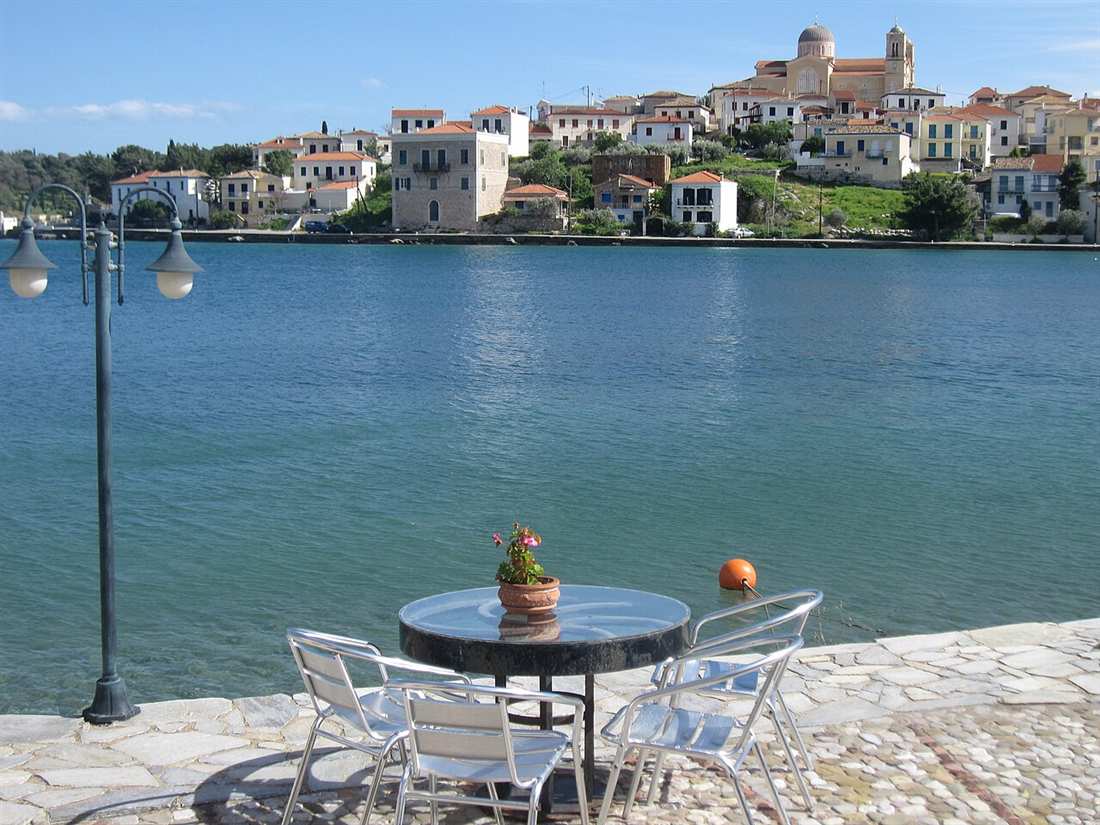
The top things to do in Galaxidi are strolling the twin harbours, watching the boats at Chirolakas and the main quay, visiting the Nautical and Historical Museum, climbing to the church of Agios Nikolaos, and walking the pine-forested peninsula that shades the coves.
The town wraps around two natural harbours that face each other across a narrow neck of land. Chirolakas, the northern basin, holds the wooden fishing caiques and the workshops where crews still repair hulls and mend nets. The main quay on the southern side lines up the tavernas, the cafes, and the moored yachts. Walking the loop between the two harbours takes in every captain’s mansion, stone stairway, and bougainvillea-draped courtyard the town keeps behind its waterfront.
The Nautical and Historical Museum of Galaxidi sits a short walk uphill from the main harbour. It gathers ships’ figureheads, painted portraits of Galaxidiot merchant vessels, navigation instruments, and log books from the age of sail, when the town owned one of the largest merchant fleets in the country. The collection also holds prehistoric finds from the surrounding gulf shore, tracing settlement here back thousands of years.
The peninsula that closes off the southern harbour carries a dense stand of Aleppo pines down to the water. A footpath runs the length of it, passing the war memorial, the small chapels, and viewpoints that open across the Corinthian Gulf to the mountains of the Peloponnese. Galaxidi pairs naturally with the sanctuary inland: read the best time to visit Delphi and time a coastal stay against the ancient site above.
What are the beaches near Galaxidi?
The beaches near Galaxidi are small pebble coves ringed by pines within walking distance of the town, the quiet bays below the pine peninsula, and the swimming spots strung along the gulf shore, all fronting the clear, deep water of the Corinthian Gulf.
Galaxidi trades wide sand for intimate coves. The pine peninsula on the southern side of town shelters a run of pebble beaches where the trees reach the shoreline and throw shade across the shingle through the afternoon. Swimmers reach these bays on foot from the harbour along the peninsula path, and the water drops away quickly to a clear blue that suits snorkelling over the rocks.
North and east of the town, the gulf shore holds further swimming spots reached by the coast road toward Itea and the pebble stretches around the bays. The Corinthian Gulf here is sheltered and calm, screened from the open sea by the Peloponnese across the water, so the surface stays flat and the visibility runs deep. These are the beaches that define a Galaxidi day for families who want a swim close to their base.
Several coves reward the walk with their quiet. The parallel options make it easy to match a beach to the day:
- The pine-shaded pebble coves on the southern peninsula, a few minutes on foot from the harbour.
- The bays below the peninsula path, screened by trees and open to the gulf.
- The coast-road swimming spots toward Itea, backed by olive groves.
- The rocky inlets around the headlands, suited to snorkelling in clear water.
None of the coves carry heavy development, so the shore stays natural and the water stays clean. Bring shoes for the pebbles and shade for the middle of the day, and the peninsula beaches serve as a swim between a morning on the water and an evening at the tavernas.
From the sea, a Galaxidi boat tour with a skipper reaches hidden beaches, the seven islets of the Gulf of Itea and Trizonia island, with sunset trips from Itea.
What food is Galaxidi known for?
Galaxidi is known for fresh fish and seafood landed in the Corinthian Gulf and served at the tavernas along the quay, grilled whole fish, octopus, and the olive oil of the Amfissa plain, all delivered by the harbourside dining that defines an evening in the town.
The fishing caiques at Chirolakas work the gulf, and their catch reaches the tavernas on the main quay the same day. Grilled whole fish, dressed with olive oil and lemon, anchors the menus. Octopus hangs to dry near the harbour before it goes on the grill, and plates of small fried fish, sea urchin, and shellfish fill the meze table. The gulf’s sheltered water keeps the supply steady through the year.
The olive groves of the Amfissa plain climb the slopes just inland from the coast, and their oil dresses every table. Galaxidi cooking leans on that oil, on wild greens gathered from the hillsides, and on the vegetables of the surrounding farmland. The tavernas pair the fish with a local white or a carafe of retsina, and the meal runs long into the evening at tables set out along the water.
Dinner on the quay is the fixed point of a Galaxidi day. The tables line the harbour edge, the boats sit a few metres off, and the lights of the town reflect on the still water. A coastal evening here rounds out an inland day trip: plan one day in Delphi above the gulf, then descend to Galaxidi for grilled fish and olive oil as the sun drops behind the Peloponnese.
What is there to see near Galaxidi?
Galaxidi sits at the centre of a compact circuit of sights: the sanctuary of Delphi up the mountain, the port town of Itea a short drive east, the mountain village of Arachova beyond Delphi, Nafpaktos with its Venetian harbour west along the coast, and the olive plain of Amfissa.
The sanctuary of Delphi rises on the slopes of Mount Parnassus, a twenty-five minute drive north of Galaxidi. The archaeological site holds the Temple of Apollo, the theatre, the stadium and the museum with the bronze Charioteer. Drivers reach it through Itea and Chryso, climbing from sea level to the terraces of the oracle in under half an hour.
Itea lies six kilometres east, a working port on the same gulf, with a long pebble seafront and ferry links across the water. Amfissa spreads inland behind Itea across a plain of silver olive trees, the largest continuous olive grove in Greece, crowned by a Frankish castle. West of Galaxidi the coast road runs to Nafpaktos, a harbour town wrapped in Venetian walls, its round port guarded by twin stone towers.
Higher up, past Delphi, the road reaches Arachova, a stone village on the flank of Parnassus known for its weaving, its formaela cheese and the ski centre above it. The five destinations form a loop that starts and ends at the Galaxidi waterfront, each within an hour’s drive.
Where do you stay in Galaxidi?
Galaxidi offers three types of lodging: restored neoclassical captains’ mansions turned into boutique guesthouses, small waterfront hotels around the two harbours, and quiet rented rooms in the stone lanes behind the port. The mansion stay carries the town’s seafaring character that a resort does not.
The captains’ mansions date from the age of sail, when Galaxidi’s shipowners built tall stone houses with carved lintels, walled gardens and painted ceilings. Owners have converted many into guesthouses of a handful of rooms each, keeping the original staircases, fireplaces and courtyards. A room in one of these houses places a guest inside the town’s maritime history rather than beside it.
The waterfront hotels ring the inner harbour of Hirolakas and the main port, putting the fishing boats, the tavernas and the sunset over the gulf within a few steps. These are family-run properties of modest scale, with balconies over the water and breakfast served on the quay. The rented rooms sit deeper in the lanes, stone-built and quiet, a shorter walk from the churches than from the sea.
The choice between a mansion and a resort defines the visit. The mansions are woven into the old town, walkable to every harbour and taverna, furnished with the town’s own past. Travellers who base themselves in Galaxidi and range out to the oracle also compare notes on where to stay in Delphi for a night closer to the site.
When is the best time to visit Galaxidi, and what is its famous Carnival?
Galaxidi rewards a visit in every season, kept mild through winter by the Corinthian Gulf. Its signature event is the Alevromoutzouromata, the flour-war carnival held on Clean Monday at the start of Orthodox Lent, when crowds pelt each other with coloured flour across the waterfront.
Spring and autumn bring warm days, calm water and empty lanes, the conditions for walking the harbours and driving up to Delphi without heat or crowds. Summer fills the tavernas and warms the swimming coves along the peninsula. Winter stays gentle at sea level, and the town keeps its tavernas and guesthouses open through the cold months, making it a year-round base for the wider region.
The Alevromoutzouromata is the town’s defining festival. On Clean Monday, the Monday that opens Orthodox Lent, residents and visitors gather on the seafront and hurl handfuls of flour dyed in bright colours until faces, clothes and the quay turn every shade at once. The custom traces to the sailors of the town and marks the passage from Carnival into the fasting weeks before Easter.
Plan the calendar around the mood of the trip:
- Spring: mild air, wildflowers on Parnassus, quiet sites.
- Summer: warm sea, swimming coves, full tavernas.
- Autumn: soft light, olive harvest on the Amfissa plain, calm gulf.
- Clean Monday: the Alevromoutzouromata flour war on the waterfront.
The flour war draws crowds from across central Greece, and rooms in the mansions and harbour hotels fill for that week. Booking ahead secures a bed within walking distance of the seafront where the coloured flour flies, and keeps the drive to Delphi and Arachova short for the rest of the stay.
How do you spend a day in Galaxidi?
Start with a morning coffee by the water, walk both harbours, visit the Nautical and Historical Museum, eat a seafood lunch on the quay, swim in a pine-shaded cove in the afternoon, and end with a sunset over the Gulf of Corinth and dinner beside the sea.
The morning belongs to the two harbours. Order a Greek coffee at a kafeneio on the main quay and watch the fishing boats unload before the heat rises. Walk the paved waterfront that curves around the inner port, then cross to the quieter basin of Chirolakas, where the reflections of the stone houses sit still on the water. The circuit is flat and short, and it takes in the whole seafront in under an hour.
Mid-morning is the time for the Nautical and Historical Museum. It sits a few streets back from the harbour and holds ships’ figureheads, painted portraits of Galaxidi’s brigs and schooners, navigation instruments, and ledgers from the captains who sailed to the Black Sea and the western Mediterranean. The collection explains why a small town on the Gulf of Corinth built one of the largest merchant fleets in the country, and it sets up everything you see outside on the lanes afterward.
Lunch is seafood on the quay: grilled octopus, fried gavros, a plate of shrimp saganaki, and a carafe of local white. Take the early afternoon slow, then drive or walk to one of the pine-shaded coves south of town for a swim in clear, sheltered water. Return for the part of the day the town is known for. The sun drops behind the mountains across the gulf, the water turns copper, and the tavernas fill for dinner beside the sea. A day trip from here pairs naturally with the ancient site inland, and a Delphi guided tour fits into the same stretch of coast.
What are the old town, the mansions, and the churches of Galaxidi?
The old captains’ quarter climbs from the harbour in stone lanes, lined with neoclassical mansions that carry carved doorways and walled gardens; the church of Agios Nikolaos stands above the port with a carved wooden screen, and the old shipyard inlet of Chirolakas anchors the town’s second harbour.
Behind the waterfront the streets rise in tiers of grey stone. This is the quarter the sea captains built at the height of the sailing trade, and the houses show the wealth that the fleet carried home. Doorways are framed in dressed stone, lintels carry carved dates and rosettes, and iron balconies overlook narrow lanes paved with slabs. Gardens sit behind high walls, screened by cypress and bougainvillea. Walking uphill from the port, the lanes open onto small squares where the mansions face one another across the paving.
The neoclassical houses are the town’s signature. Many are two-storey ashlar buildings with symmetrical windows, painted shutters, and pediments over the entrance. Owners have restored a number of them as family homes and guest houses, and the stonework, the tall doors, and the tiled roofs keep the streetscape intact. The mansions read as a record of the captains who commissioned them, each one built from the profits of a working ship.
The churches complete the picture. Agios Nikolaos, dedicated to the patron of sailors, crowns the rise above the harbour, and its interior holds a carved wooden iconostasis, gilded icons, and votive models of ships hung by families who prayed for a safe return. Below, the inlet of Chirolakas served as the town’s shipyard, where hulls were laid down and launched, and its calm second basin still shelters small boats today. Together the quarter, the mansions, and the churches make the walk uphill the heart of any visit.
Is Galaxidi good for families, couples, and sailing?
Galaxidi suits all three: a calm, walkable, low-traffic town for families; quiet elegance and mansion guest houses for couples; and a sheltered gulf with two harbours for sailing and boating, where yachts tie up along the town quay.
Families find the town easy. The centre is compact and flat along the water, cars stay to the edges, and the harbourside gives children room to walk, watch the boats, and reach an ice-cream shop without crossing traffic. The nearby coves have shallow, clear entry points for swimming, and the tavernas serve early. The pace is slow, the distances are short, and parents keep everything in view.
Couples get a different side of the same town. Galaxidi trades the crowds for quiet, and its restored mansions run as small guest houses with stone walls, wooden floors, and gardens. An evening here follows a set rhythm worth planning around:
- A walk around Chirolakas as the light softens on the water
- Dinner at a taverna table set on the quay
- A slow glass of local wine as the fishing boats settle for the night
- A sunset over the Gulf of Corinth from the seafront
Sailing is the town’s oldest strength. The Gulf of Corinth is enclosed and sheltered, the winds are steady rather than fierce, and the inner harbour and the Chirolakas basin give boats calm water to lie in. Cruising yachts call at the town quay through the season, tie up alongside the tavernas, and take on supplies before continuing along the coast. The same protected water that built the merchant fleet now serves the boats that pass through, and the town remains a working port. Visitors who base here often add the ancient site inland to the trip, and the question of whether Delphi is worth visiting answers itself once Galaxidi becomes the coastal base for the region.
Frequently Asked Questions
Is Galaxidi worth visiting?
Yes. Galaxidi is one of the most elegant towns on the Corinthian Gulf, a quiet harbour of neoclassical captains’ mansions, seafood tavernas, and pine-shaded coves, thirty-five kilometres below Delphi. It makes a relaxed seaside base for the sanctuary and the coast.
How far is Galaxidi from Delphi?
Galaxidi lies about thirty-five kilometres from Delphi, roughly forty minutes by car down the mountain through the olive plain and the port of Itea. The drive pairs the ancient sanctuary with a seaside evening in one day.
What is Galaxidi famous for?
Galaxidi is famous for its seafaring history in the age of sail, its neoclassical captains’ mansions and maritime museum, its quiet twin harbours and fish tavernas, and the Alevromoutzouromata, the flour-war Carnival held on Clean Monday.
How do you get from Delphi to Galaxidi?
From Delphi the road drops west through Chrisso to the port of Itea, then follows the shore road to Galaxidi, about thirty-five kilometres and forty minutes by car. KTEL buses also link Delphi, Itea and Galaxidi on a daily timetable for travellers without a car.
Are there beaches in Galaxidi?
Galaxidi has small pebble coves rather than a long sandy beach. The pine-shaded bays on the peninsula south of the town give clear, sheltered swimming in the Gulf of Corinth a short walk or drive from the harbour, and the calm water suits an easy afternoon swim close to the waterfront tavernas.
Is Galaxidi better as a day trip or an overnight?
Galaxidi works as both. As a day trip it pairs with Delphi, the sanctuary in the morning and the coast for a seafood lunch and a swim. As an overnight it rewards a slower stay, with a mansion guesthouse, a harbour dinner, a sunset over the gulf, and a quiet morning walk around the two harbours before the day-trippers arrive.