
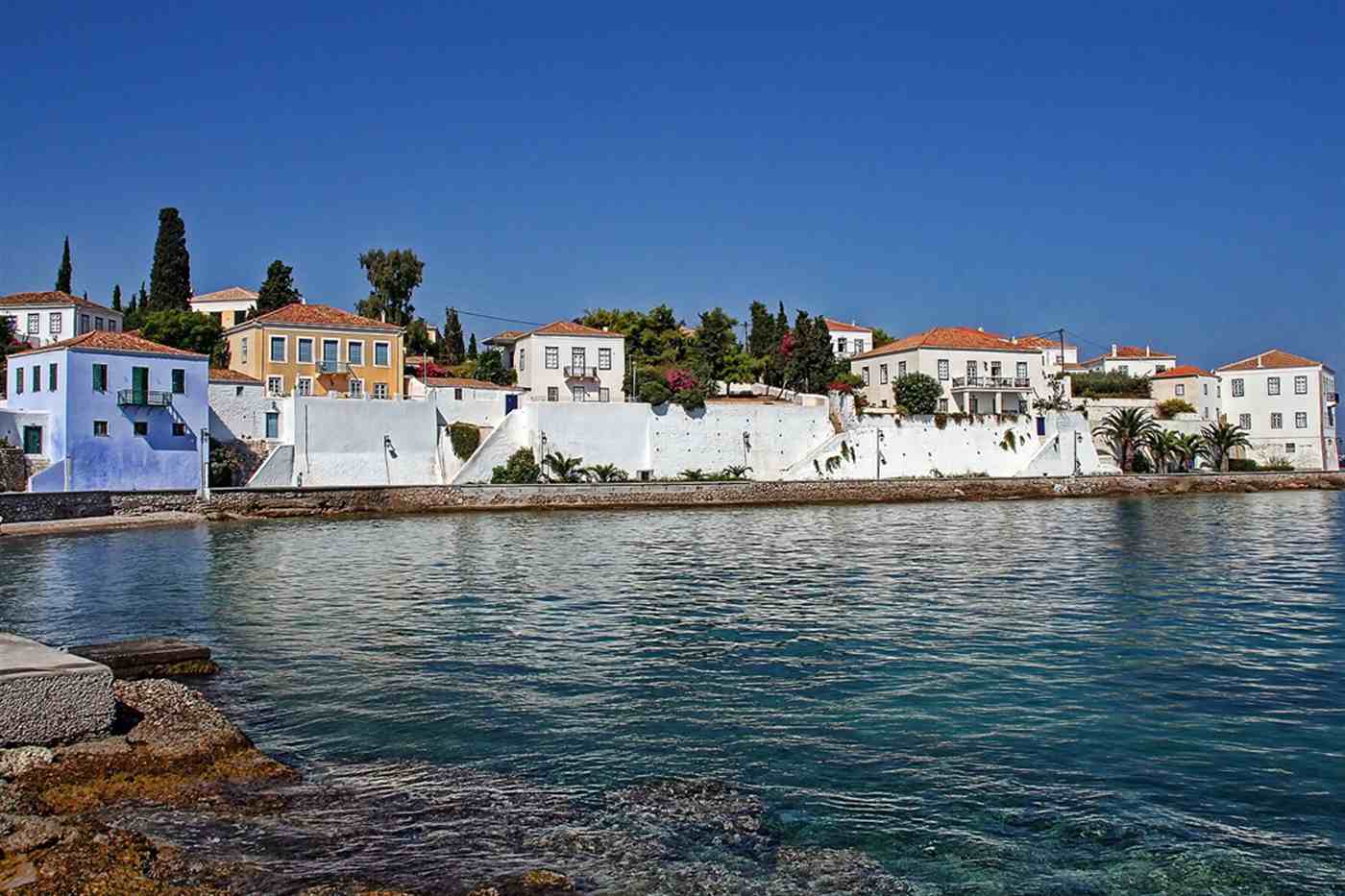
Spetses travel guide: Practical tips on getting there, best beaches, boutique hotels, sample itineraries, and local tips to plan a romantic island escape.
Spetses Travel Guide: Explore Spetses Island, Greece
Spetses is one of those Greek islands that quietly steals your heart before you even step off the boat. Close to the Peloponnese and just a short hop from Athens, this pine-scented isle mixes aristocratic mansions, car-free streets, dramatic sunsets, and crystalline bays.
In this Spetses travel guide, we’ll walk you through everything we wish we’d known before our first visit: how to get here, where to stay, the best beaches and boat trips, can’t-miss restaurants, and sample itineraries that help you make the most of your time. Whether you’re planning a romantic escape, a sailing stop on an island-hopping route, or a slow weekend of swimming and seafood, this guide gives locally tested tips and practical advice to plan your perfect Spetses trip.
The tours below sail to Spetses from Porto Heli, walk its pine forest and the Armata grove at night, and explore its coast by kaiki.
Quick Facts At A Glance
Location: Saronic Gulf, off the east coast of the Peloponnese, about 2 hours from Athens by hydrofoil.
Size & Population: Roughly 20 square miles and a population of around 4,000 (varies seasonally).
Language: Greek (English is widely spoken in tourism areas).
Currency: Euro (EUR).
Getting There: Fast ferries/hydrofoils from Piraeus, passenger ferries from Kosta and Porto Heli, private boats, and occasional seasonal flights to nearby islands.
Best for: Couples and honeymooners, boutique-hotel seekers, boaters, history buffs, and travelers who prefer a peaceful, car-light island with upscale dining and charming harbors.
Must-Know: Cars are limited on Spetses; motos, bicycles, and the traditional horse-drawn carriage (kaiki or ‘karavaki’) set the pace. Bring comfortable shoes: many streets are cobbled.
Why Visit Spetses: What Makes The Island Special
Spetses has a distinct personality among the Saronic islands: it’s elegant without being pretentious, quietly cosmopolitan yet unmistakably Greek. In the 19th century, the island was a maritime power, and its wealthy shipowners built neoclassical villas and financed the Greek War of Independence. Today, those mansions line shaded streets and create an atmosphere of graceful nostalgia.
We love Spetses for several reasons: the complete absence of cars in the main town (which makes evening promenade strolls pure bliss), the accessibility from Athens for quick escapes, the mix of lively harbors and secret coves reachable by short boat rides, and a food scene that blends fresh seafood with island-grown produce and modern Greek cooking. If you’re interested in history, sailing, romantic sunsets, and beaches that feel private even in high season, Spetses delivers.
Because Spetses is compact, it’s also easy to combine relaxation with activity: you can swim in the morning, visit a museum and a traditional village in the afternoon, and still catch a sunset cruise before dinner.
Where is Spetses, and how is the island shaped?
Spetses lies beside the entrance of the Argolic Gulf, 6 km south of Porto Heli and across the strait from Kosta. The oval island covers 22.5 km², peaks at 245 m on Profitis Ilias, and the municipality counted 3,748 residents at the 2021 census.
The coastline of Spetses runs for 11 miles. The island measures 4 miles at its longest point and 2.5 miles at its widest. Ridges cross the interior. The mainland coast of Ermionida sits 1.5 miles away, and Piraeus lies 50 miles off. Around 8000 BC, an isthmus joined the island to the Argolid mainland at the spot now called Kosta. That early chapter opens the longer history of Spetses.
The town of Spetses is the only large settlement on the island. Ligoneri, Agioi Anargyroi, Kouzounos and the convent of Agioi Pantes make up the smaller ones. A ring road of 25 km circles the island, and trails add 25 to 30 km of paths. Dapia is the main port and the point where ferries arrive. Old cannons still stand on its front pier, near the church of Agios Antonios from 1815 and the Kapodistrian House. The Old Harbour keeps working wooden boatyards, the karnagia, below the Monastery of Agios Nikolaos and the pine-covered lighthouse area.
- Spetsopoula: This islet of about 2 km² lies southeast of Spetses. Its ancient name was Aristera. Shipowner Stavros Niarchos bought it in 1962, and his descendants still own it.
- Outer islets: Falkonera and Velopoula also belong to the municipality, which covers about 27.1 km² in total. Velopoula lies 21.5 nautical miles southeast of Cape Brakitsi on Spetsopoula.
- Capes: Sourbouti marks the northeast, Kavo Fanari the east, Mavrokavos the southeast, Zastano the south and Bourbouthi the northwest.
- Pine forest: The ancient name Pityussa means “abounding in pine trees”. Sotirios Anargyros had pine seedlings planted on the hills and restored the forest of Spetses.
- Vehicle rules: A 1967 decision by the Prefect of Piraeus restricted traffic, and Council of State ruling 4433/1976 upheld it. Cars and heavy vehicles need a special permit, held by taxis and KTEL buses, and the historic centre bans every vehicle.
The population of Spetses peaked at 8,843 in 1861 and fell to its lowest point, 3,166, in 1951. It grew again from 1961 to 2011 and then dropped at the 2021 census.
What role did Spetses play in the Greek War of Independence?
Spetses was the first island to raise the flag of revolution, on 3 April 1821. Its merchant fleet joined the sieges of Nafplion and Monemvasia, Laskarina Bouboulina sailed the 18-cannon Agamemnon, and in September 1822 its ships helped repel an Ottoman fleet of 84 vessels.
Dates here follow the Old Style (O.S.) calendar. A ceremony with cannon fire marked the raising of the flag, and the blessing for the revolt took place at the Monastery of Agios Nikolaos on 3 April 1821. Hydra and Psara followed straight after. Ships from Spetses later fought at Samos in 1824 and at Kafireas in 1825.
The fleet was made up of merchant ships owned by island families. The Golden Age of the shipowners ran from 1770 to 1821, and their stone captains’ houses survive in the town today. Captains of Spetses, like those of Hydra, hoarded gold in wells, and that money paid for the war. Hatzigiannis Mexis (1754–1844), shipowner and first Governor of Spetses, led the island. His mansion has housed the Spetses Museum since 1938, and its last room shows the revolutionary flag and the chest of Bouboulina.
- Early life: Laskarina Bouboulina was born in Constantinople in 1771 and moved to Spetses at age four. Her second husband, shipowner Dimitrios Bouboulis, drowned in 1811 in a battle with Algerian pirates off Lampedusa, and she took over his fortune.
- Agamemnon: She ordered a ship larger than Ottoman rules allowed. Armed with 18 cannons, it became the first warship of modern Greece.
- Blockades: On 4 April 1821 the Agamemnon, under her son Yiannis Yiannouzas, blockaded Nafplion. She then blockaded Monemvasia, whose garrison surrendered on 25 July 1821.
- Honours: The Greek Navy named her Rear Admiral in 2018. Natalia Mela sculpted her bronze statue, unveiled on 3 March 1985 in the square in front of the Poseidonion.
The naval battle of 1822 is known as the Battle of Spetses or the Battle of Nauplia. It ran from 8 to 13 September. Kara Mehmet Pasha led 84 Ottoman vessels to relieve the besieged garrison of Nafplion and sailed in between Trikeri and Spetsopoula. Historian Chatzianargyros counts more than 140 ships in the fight. Admiral Andreas Miaoulis split 56 ships and 16 fireships into three squadrons. Local historian Anastasios Orlandos credits the fireship of Kosmas Barbatsis (1792–1887), which drove off the Ottoman flagship. The Ottoman fleet withdrew, and Nafplion surrendered in December.
Islanders built the chapel of Panagia Armata near the lighthouse to mark the victory. The Armata festival recalls the battle on the second weekend of September each year. Theatre, exhibitions and music lead up to a re-enactment in front of the new port, where the Ottoman flagship is set alight. Spetses is one of nine European cities in the European Network of Historical Reconstructions.
The Bouboulina Museum in Spetses occupies the Bouboulis family mansion, built in the 17th century. Bouboulina lived there with her family until 1825, when she was shot during a family feud. Her descendant Philippos Demertzis-Bouboulis restored the house, and it has run as a museum and cultural centre since 1991. Four rooms on the first floor hold family heirlooms. The Great Hall has a carved wooden ceiling in Florentine style and a collection of 1821 weapons, among them the pistol of Bouboulina.
What do the Anargyrios and Korgialenios School and the Poseidonion tell about modern Spetses?
They show how Sotirios Anargyros (1849–1928), a tobacco magnate who returned from America, turned Spetses into a resort. His Poseidonion Grand Hotel opened in 1914 with 55 rooms, and the Anargyrios and Korgialenios School opened in 1927 and closed in 1983.
Anargyros was born on Spetses in 1849 into an old shipping family. He emigrated to the United States in 1868, when the island was declining as a maritime centre, and came back in 1899 rich from tobacco. He finished a neoclassical mansion in the town centre in 1904. In 1907 he built the first aqueduct of Spetses at his own expense. In 1913–14 he opened ring roads around the island and built the Poseidonion.
Architect Panagiotis Zizilas took on the Poseidonion in 1911. The design follows French Riviera hotels, above all the Carlton in Cannes and the Negresco in Nice. The older mansion of Dimitrios Goudis became the west wing, which gives the building its asymmetry. Prime Minister Eleftherios Venizelos attended the opening in the summer of 1914. It was the first hotel in Greece to offer spa treatments, with four small pools of warm water and sulphur. From 1928, Spetses served as a regional base of the British Navy, and its officers joined the hotel’s guests. The hotel stands on the waterfront of the new port of Spetses, a short walk from Dapia. A five-year renovation ended with a reopening in 2009, adding an annex of 17 rooms to the 38 rooms of the historic wing.
- Founders: Sotirios Anargyros and Marinos Korgialenis funded the school. Anargyros announced the gift in October 1918.
- Opening: Prime Minister Eleftherios Venizelos opened the school on 1 October 1927. Its first headmaster was the Englishman Eric Sloman.
- Model: The school followed the model of Eton College and ran as a boarding school for boys. It stands in front of Ligoneri beach, beside the settlement of the same name.
- Pupils: Composer Iannis Xenakis studied there with his brothers Kosmas and Iason, as did later Prime Minister Georgios Rallis.
- Today: Since 1983 the campus has served as a conference centre. Building E houses the Spetses Lyceum, and a music academy has met there since 2021.
John Fowles became an English master at the school in 1951. In 1953 he and the other masters were dismissed for trying to bring in reforms. He drew on those two years for The Magus, published in 1965 and revised in 1977. Its working title was The Godgame. In the novel, Spetses becomes the island of Phraxos and the school becomes the Lord Byron School. The Villa Bourani of the book stands on the south side of the island, above a public beach. More on the campus appears on the Anargyrios and Korgialenios School of Spetses page.
When To Go: Best Time And Weather
Peak season on Spetses runs from mid-June to early September. Expect hot, dry weather with temperatures commonly between 28–34°C (82–93°F). This is when the island is most vibrant, restaurants and hotels are fully open, and boat tours are frequent.
Shoulder seasons (late April–June and September–mid-October) are our favorite times to visit. The sea is warm enough for swimming, wildflowers bloom in spring, and crowds are thinner. Many boutique hotels offer lower rates, and you’ll find a more local feel.
Winter is quiet: most tourist facilities close, but the island has a calm beauty in the off-season. If you don’t mind limited services and want to experience local life, late fall or early spring can be rewarding.
Weather tips: Meltemi winds can arrive in July–August, making some boat trips choppier. Always check local forecasts and book flexible tours if you’re traveling in high summer.
How To Get To Spetses And Get Around
Spetses is easy to reach from the Peloponnese and Athens. Below, we explain the practical routes and the best ways to move around once you arrive.
Where To Stay: Neighborhoods, Boutique Hotels, And Accommodation Tips
Spetses offers an elegant but intimate hotel scene, think neoclassical villas turned into boutique hotels, seaside B&Bs, and a few luxury properties. Where you stay shapes the trip: choose proximity to the harbor for nightlife and restaurants, or a quiet beachside location for relaxation.
Travellers based in Nafplio drive south to Kosta and cross by boat: the Spetses day trip from Nafplio page covers the road, the crossing, Bouboulina, the Old Harbour, the Armata and the beaches.
Neighborhoods to consider:
- Chora (Old Harbor): The heart of activity, with cafes, restaurants, and the famous promenade. Perfect if you want to be in the middle of the action.
- Agioi Anargyroi & Dapia: Short walk from Chora: slightly quieter but still convenient.
- Kaiki & Aghioi Anargyroi Coast: Best for beach access and family-friendly hotels.
- Vrellos & Kounoupitsa: For a more secluded, natural setting.
Accommodation tips: Book early for summer weekends. Spetses is small, and rooms fill fast. If you want a romantic stay, prioritize boutique hotels with sea-view terraces or restored mansions near the Old Harbor. If you’re traveling on a budget, search for family-run guesthouses away from the waterfront.
Best Beaches And Swimming Spots
Spetses’ beaches vary from organized sandy strands to small pebbly coves. Popular choices include:
- Agia Marina: A long sandy beach with sunbeds, shallow water, great for families.
- Kaiki (Kalamaki): Close to the town, with good facilities and tavernas nearby.
- Agioi Anargyroi: A mix of sand and pebbles, pretty and accessible on foot.
- Monastiri Beach: Rocky coves and crystal water, quieter and more scenic.
We recommend renting a small boat or joining a boat tour to access secluded spots that can’t be reached by road.
Romantic Hotels And Quiet Beach Options
For romance, look for small hotels that offer private terraces, in-room breakfast service, and easy sunset views. Many restored mansions in Chora have just a handful of rooms and personalized service. On the quieter side, pick properties near Monastiri or Kounoupitsa for more privacy and nature walks.
Top Things To Do On Spetses
Spetses packs a surprising variety of activities into a compact footprint. Below are the highlights we recommend: historical exploration, water-based adventures, hikes, local cuisine, and evening delights.
Suggested Itineraries: 1‑Day, 2‑Day, And 4‑Day Plans
We’ll outline day-by-day plans so you can pick the pace that suits you: whirlwind, balanced, or slow and immersive.
1‑Day Itinerary (Best for a day trip from Athens):
- Morning: Early hydrofoil from Piraeus. Walk the Old Harbor, coffee at a waterfront kafeneio.
- Late morning: Visit the Bouboulina Museum and neighboring naval exhibits.
- Lunch: Fresh fish at a harbor taverna.
- Afternoon: Swim at Agia Marina or join a short boat trip to a nearby cove.
- Evening: Sunset stroll on the promenade, dinner in Chora, return to Athens if timing allows.
2‑Day Itinerary (Weekend escape):
Day 1: Arrive mid-morning, check in, relax on Agia Marina. Afternoon walking tour and museum visit. Sunset cruise and dinner on the promenade.
Day 2: Morning bike ride to Monastiri and snorkeling. Lunch in a seaside taverna. Late afternoon ferry to Porto Heli or return to Athens.
4‑Day Itinerary (Relaxed, activity, and dining focus):
Day 1: Arrival, waterfront stroll, museum visit, relaxed dinner.
Day 2: Full-day private boat trip, swimming, snorkeling, and a picnic on a secluded beach.
Day 3: Rent e-bikes and ride interior trails, visit traditional settlements and small beaches, sunset at a viewpoint, and a romantic dinner.
Day 4: Morning market or bakery visit, last swim, check-out, and departure.
We recommend keeping one flexible afternoon for unexpected discoveries: a local festival, a pop-up market, or a last-minute boat opportunity.
Day Trips And Island Hopping From Spetses
Spetses is well-placed for short island-hopping routes. Popular day trips include:
- Hydra: Classic and cosmopolitan: no cars, stone mansions, and excellent dining. Hydrofoil connections are seasonal but frequent in summer.
- Poros: A short hop away, known for its pine-lined harbor and relaxed cafés.
- Peloponnese coast (Porto Heli/Kosta): Combine Spetses with mainland luxury resorts and archaeological sites.
Private sailing charters can stitch together multiple islands in a day, letting you swim in quieter bays and visit local tavernas ashore. If you’re on a multi-island itinerary, consider Spetses as a two-night stop to enjoy both on-land charm and nearby sea excursions.
Practical Travel Tips And Cost Guide
Spetses feels upscale in parts, but you can tailor your budget. Below are practical tips and a rough cost guide to plan expenses.
Costs (approximate, summer prices):
- Hydrofoil Piraeus–Spetses: €25–€40 one way per person (seasonal and variable).
- Mid-range hotel: €100–€250 per night (doubles).
- Boutique/romantic hotel: €200–€450+ per night.
- Restaurant meal (mid-range): €18–€35 per person: fine dining higher.
- Boat half-day charter: €200–€600+, depending on size and season.
- Bike rental: €10–€30 per day.
Tips to save or upgrade:
- Travel shoulder season for lower rates and gentler crowds.
- Share private boat costs with other travelers if possible.
- Book waterfront restaurants for at least one special dinner: other meals at family tavernas can be very reasonably priced.
Safety, Accessibility, And Health Considerations
Spetses is generally safe. Standard travel precautions apply: keep valuables secure, use sun protection, and hydrate. If you have mobility issues, check with hotels about room accessibility; many historic buildings have stairs and limited elevator access.
Across the strait on the mainland, the Porto Heli boat trip page covers the cruises from Porto Heli to the coves, sunken Halieis and Spetses.
Health: Pharmacies are available in Chora. For serious concerns, the nearby Peloponnese mainland has more comprehensive medical facilities. Travel insurance that covers water activities is wise if you plan to dive or charter boats.
Packing List And Seasonal Essentials
Summer essentials:
- Lightweight clothing, swimsuit, reef-safe sunscreen, hat, and sunglasses.
- Comfortable walking shoes for cobbled streets and viewpoints.
- Waterproof bag for boat trips and a light windbreaker for cooler evenings or breezy afternoons.
Spring/Autumn additions: a light jacket and layers, especially for evenings. If you’re visiting in the shoulder seasons, prepare for occasional rain and fewer late-night services.
How Many Days To Stay: Planning Your Ideal Trip Length
How long should you stay? It depends on your priorities.
- Day trip (1 day): Works well if you have limited time or are doing a broader Greece itinerary. You’ll see highlights, but it feels rushed.
- Short break (2–3 days): Ideal for a romantic weekend or a restful escape from Athens. You can enjoy beaches, a museum, and a relaxed evening itinerary.
- Extended stay (4–7 days): Best for combining hikes, boat charters to hidden coves, leisurely dining, and possibly day trips to nearby islands. If you’re a swimmer, snorkeler, or want to really unwind, add extra days.
We usually recommend at least two nights to feel the island’s rhythm. Three to four nights lets you slow down, discover off-the-beaten-path coves, and savor local food without hurrying.
Conclusion
Spetses is a small island with a big heart: elegant history, memorable sunsets, and waterside dining that make it an excellent choice for romance, relaxed activity, and authentic Greek island life. In this Spetses travel guide, we aimed to give you the practical directions and local tips that turn a good trip into a great one, from choosing where to stay and how to get around, to picking the best beaches, boat trips, and restaurants.
Our final advice: travel with an open schedule, leave room for spontaneous boat trips and seaside meals, and let the island’s unhurried pace set the mood. If you want local-led experiences, our team at Greece Tours can connect you with guided walks, private boat charters, and curated dining recommendations that reveal Spetses beyond the postcard, true insider access that makes all the difference.
Frequently Asked Questions about Spetses
How do I get to Spetses from Athens?
The fastest way is a hydrofoil from Piraeus (about 2 hours). You can also take passenger ferries from Kosta or Porto Heli, or arrive by private boat. Seasonal connections vary, so book tickets in advance during summer and check schedules for hydrofoils and ferries.
When is the best time to visit Spetses for good weather and fewer crowds?
Shoulder seasons—late April to June and September to mid‑October—are ideal: warm sea temperatures, blooming landscapes, and fewer crowds. Peak season (mid‑June to early September) offers full services but hotter weather and more visitors; winter is quiet with limited tourist facilities.
How many days should I plan for a Spetses trip?
Two nights is recommended to feel the island’s rhythm; three to four nights lets you explore beaches, take boat trips, and enjoy relaxed dining. One day works as a rushed highlights trip, while four to seven days suits swimmers, snorkelers, and those wanting a slow pace.
Is Spetses car‑free, and how do visitors get around the island?
The main town of Chora is essentially car‑free: transport is by motos, bicycles, taxis, and traditional horse‑drawn carriages. Many visitors walk the cobbled streets; rent a bike or e‑bike for interior trails, and use short boat rides to reach secluded coves and beaches not accessible by road.
Which beaches on Spetses are best for families, and which are quieter for couples?
Agia Marina is a sandy, family‑friendly beach with sunbeds and shallow water. Kaiki (Kalamaki) is convenient and serviced. For quieter, romantic spots, choose Monastiri, Kounoupitsa, or privately accessed coves reached by boat—ideal for snorkeling and peaceful swims.
Are there medical services and pharmacies on Spetses in case of emergencies?
Spetses has pharmacies in Chora and basic medical services, but for serious emergencies, the Peloponnese mainland offers more comprehensive facilities. Travel insurance that covers water activities and emergency evacuation is recommended, and confirm hotel access to local medical contacts before you travel.
Find more experiences in My Greece Tours:
- Lesbos
- Meteora Greece: Explore Meteora Monasteries & Unforgettable Meteora Tours
- Milos Travel: The Ultimate Guide to Milos, Greece
- Mycenae Tours: Experience Legendary Archaeological Site
- Mykonos Greece: The Absolute Guide To Survive
- Mystras Tours: Uncover the Mysteries of Mystras with a Byzantine Castle Tour
- Naxos Greece: The Ulitmate Guide & Incredible Things to Do
- Paros Greece Travel Guide: Things to Do in Paros, Explore Paros Island