
Chios holds a set of museums out of proportion to its size, the legacy of an island that grew rich on mastic and shipping and was ruled in turn by Byzantines, Genoese and Ottomans. The capital gathers a Byzantine collection in a former mosque, an archaeological museum, a folklore museum above one of the oldest libraries in Greece, and a maritime museum, while the south holds a modern museum devoted to the island’s famous resin and the Kampos plain a museum of its citrus. Plan the whole trip with Greece Tours.
This guide covers the museums of Chios one by one: what each holds, where it stands, and which are worth your time, from the Byzantine Museum on Vounaki square to the Chios Mastic Museum outside Pyrgi and the Nautical Museum on the satellite island of Oinousses. Read it beside the guide to Chios Town and the full Chios travel guide.
What museums does Chios have?
Chios has the Byzantine Museum, the Archaeological Museum, the Koraes Library with the Argenti Folklore Museum, and the Maritime Museum in Chios Town, the Giustiniani Palace in the castle, the Chios Mastic Museum near Pyrgi, the Citrus Museum in Kampos, and the Nautical Museum on Oinousses.
The capital holds the core group. Within a short walk of Vounaki square and the Kastro stand the Byzantine, Archaeological, folklore and maritime collections, along with the Koraes Library, so a single morning on foot can take in most of the town’s museums. Each is small, and the four together fill about half a day.
The rest of the island adds two purpose-built museums. The Chios Mastic Museum outside Pyrgi tells the story of the island’s defining crop in a modern building among the mastic groves, and the Citrus Museum in a working Kampos estate records the mandarin and lemon trade of the walled plain south of the capital.
The satellite island contributes one more. The Nautical Museum of Oinousses, a short ferry hop from Chios Town, holds the archives and models of the shipping dynasties that came from that tiny island, a maritime collection that ranks among the better ones in the Aegean and rewards the day trip.
What is the Byzantine Museum of Chios?
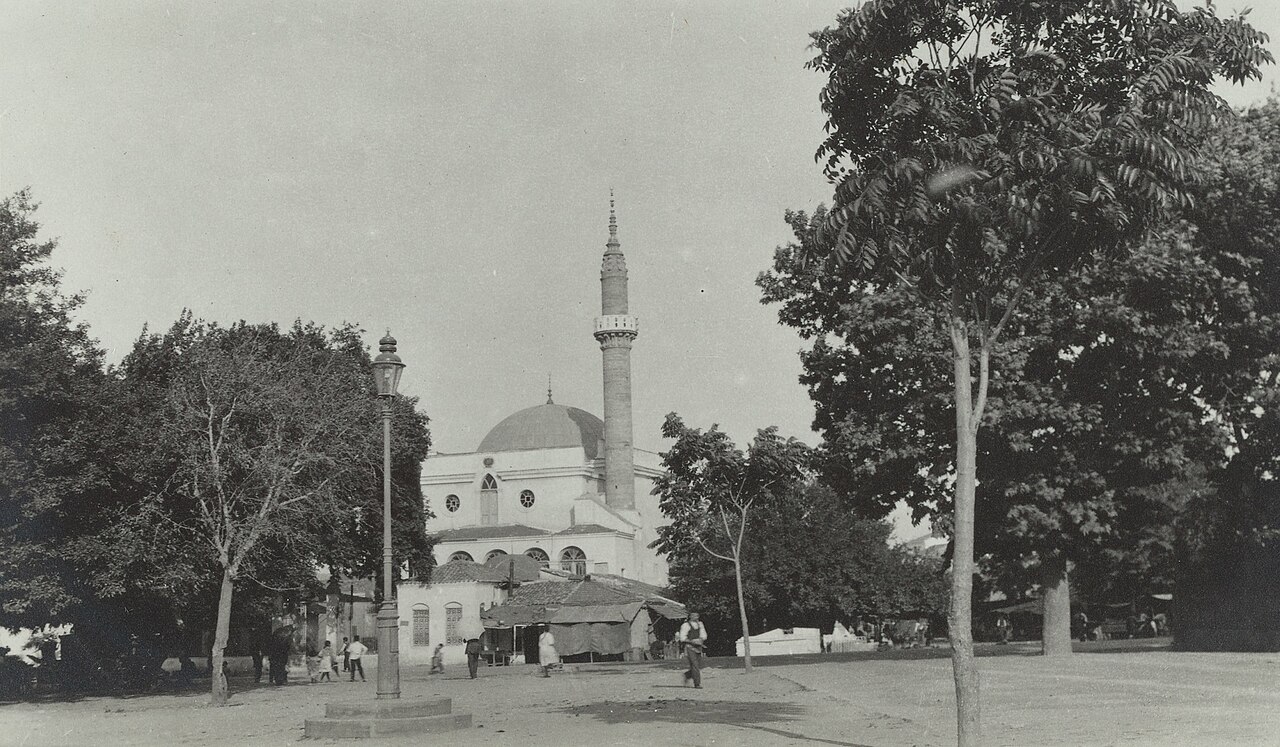
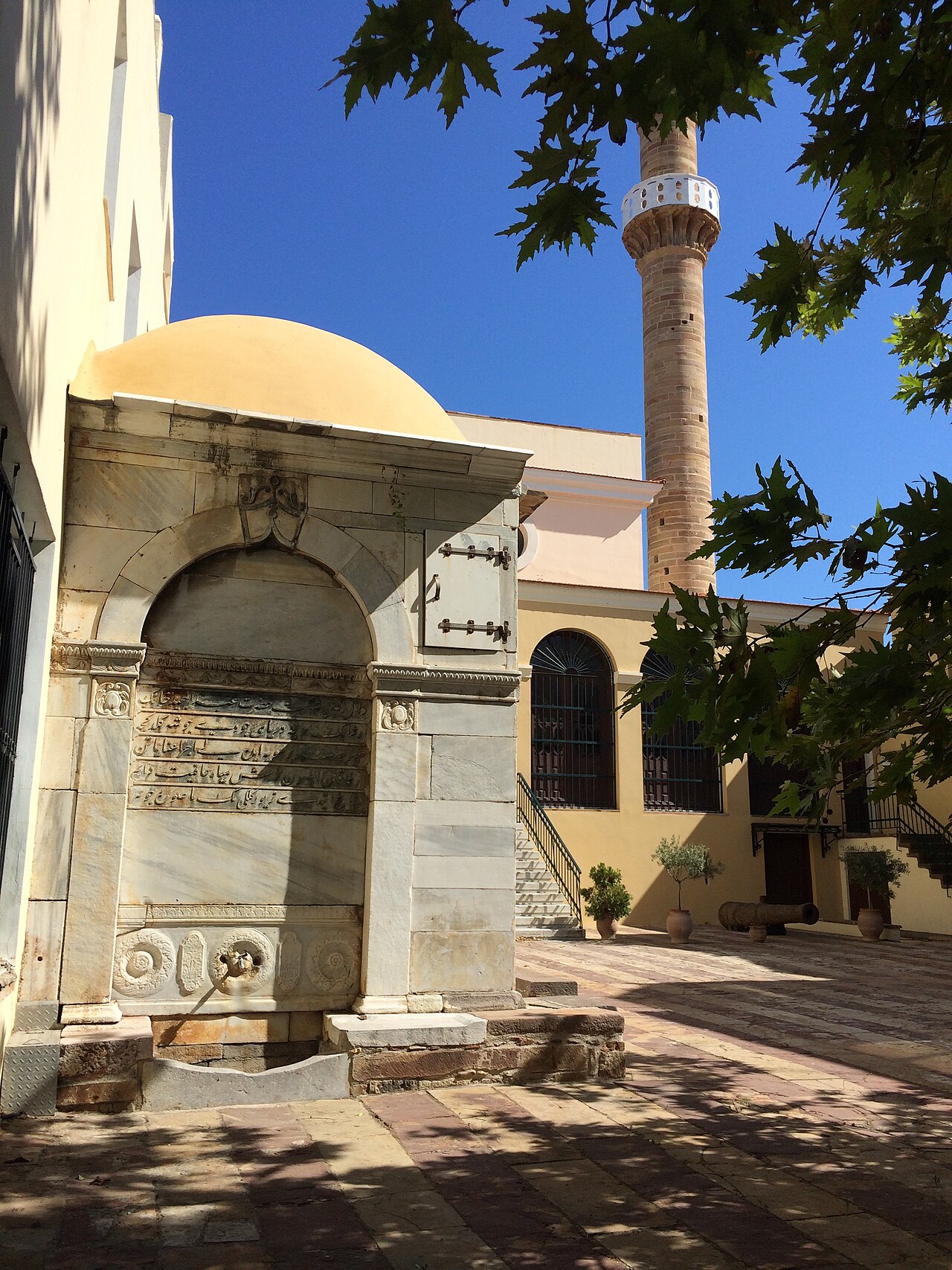
The Byzantine Museum of Chios occupies the Mecidiye mosque, the last standing Ottoman mosque in the town, on Vounaki square. It displays early Christian and Byzantine sculpture, post-Byzantine frescoes and icons, with Genoese, Ottoman and Jewish gravestones in its courtyard.
The building is as much the exhibit as the contents. The Mecidiye mosque, raised in the middle of the nineteenth century, is the only mosque left standing in Chios Town, and its minaret and prayer hall now shelter the island’s Byzantine collection, a striking reuse that reflects the layered history of the island itself.
The collection spans the island’s Christian centuries. Early Christian and Byzantine sculpture, post-Byzantine frescoes lifted from ruined churches, icons, miniatures and wood-carved objects fill the hall, while the courtyard gathers marble carvings and gravestones from the Genoese and Ottoman periods and Jewish tombstones, a summary in stone of who ruled and lived on Chios.
The museum stands at the heart of the town. On Vounaki square, among the cafés and a short walk from the Kastro, it fits easily into a morning of sightseeing, and it is the natural first museum to enter for a sense of the island’s Byzantine and medieval past, as the guide to Chios Town describes.
What is in the Archaeological Museum of Chios?
The Archaeological Museum of Chios holds finds from the island’s ancient sites, from the Neolithic to the Roman period, including material from Emporio, Agio Gala, Fana and Rizari excavated by the British School and Greek archaeologists, with sculpture, pottery, coins and inscriptions.
The museum gathers the island’s deep past. Built in the 1960s and reopened after refurbishment, it displays finds spanning the Neolithic through the Archaic, Classical and Roman eras, drawn from the excavations at Emporio in the south, the cave sanctuary at Agio Gala, the temple of Apollo at Fana and the town of Chios itself.
Its highlights reward a closer look. The prehistoric and Archaic material from Emporio, the sculpture and pottery, the coins struck by the ancient city, and the inscriptions, including one recording a letter from Alexander the Great to the people of Chios, place the island firmly in the classical Greek world.
The building sits south of the centre. A short walk from the waterfront, it complements the Byzantine Museum by carrying the island’s story back before the Christian centuries, and the two together give the fullest sweep of Chian history under one set of roofs in the capital.
What are the Koraes Library and the Argenti Museum?
The Koraes Library in Chios Town is one of the oldest and largest libraries in Greece, holding around 135,000 volumes. Above it, the Filippos Argentis Folklore Museum displays the costumes, textiles, household objects and family portraits of the island’s history.
The library is the town’s quiet treasure. Founded around the scholar Adamantios Korais, whose name it carries, it holds roughly 135,000 volumes along with rare manuscripts, archives and old maps, ranking among the oldest and largest libraries in the country, and its reading rooms and collections are open to visitors.
The Argenti Museum sits above it. Endowed by the historian Filippos Argentis, it gathers the folklore of Chios: traditional costumes, embroidery and textiles, agricultural and household tools, and portraits of the island’s merchant families, along with copies of Delacroix’s painting of the massacre of Chios that fixed the island in the European imagination.
The two share one building and one visit. Standing in the centre of the town, they combine a serious library with a vivid museum of everyday island life, and they add the human and domestic side of Chios to the sculpture and icons of the other collections.
What is the Chios Mastic Museum?
The Chios Mastic Museum stands outside Pyrgi in the south, a modern museum devoted to mastic, the resin unique to the island. It explains the cultivation, harvest and trade of the crop through exhibits, tools and film, set among the mastic groves it describes.
The museum tells the story of the island’s one irreplaceable product. Run by the Piraeus Bank Group Cultural Foundation, it lays out the whole cycle of mastic, from the cutting of the trees and the collection of the tears to the cleaning, sorting and export that made the island’s fortune, a tradition on UNESCO’s list of intangible cultural heritage.
Its setting is part of the exhibit. Built on a hillside among the mastic trees between Pyrgi and Mesta, with views over the groves and the sea, the modern building lets visitors step from the displays to the living landscape they describe, which no town museum can match.
It is the natural anchor of a southern day. Combining the Mastic Museum with the villages of Pyrgi and Mesta and a beach at Mavra Volia makes a full and coherent day in the south, and it deepens the story told in the guide to the Chios mastic villages.
What is the Maritime Museum of Chios?
The Maritime Museum of Chios, in a neoclassical mansion in the town, records the island’s long seafaring tradition with ship models, paintings, nautical instruments and the archives of the shipowning families that made Chios one of Greece’s great maritime centres.
The museum reflects an island built on the sea. Chios, with Oinousses and the northern villages, produced a remarkable share of the Greek merchant fleet’s captains and shipowners, and the Maritime Museum gathers the models, portraits, flags and instruments of that history in a handsome town mansion endowed by shipping money.
Its collection suits anyone drawn to ships and trade. Detailed models of sailing vessels and steamers, marine paintings, navigation tools and the papers of the great Chian shipping houses trace the island’s rise from local seafaring to a global merchant marine, a story that continues in the families still prominent in Greek shipping today.
It pairs naturally with Oinousses. The town’s maritime collection and the Nautical Museum on the shipowners’ island of Oinousses tell two halves of the same story, and seeing both gives the fullest picture of the sea’s central place in the life of Chios.
What is the Giustiniani Palace in the castle?
The Giustiniani Palace stands inside the Kastro of Chios Town, a Genoese building named for the family that governed the island. It houses a small museum of Byzantine frescoes and wall paintings, and forms one of the set-piece sights of the castle quarter.
The palace belongs to the Genoese centuries. Named for the Giustiniani, the Genoese family whose company ran Chios on the mastic trade from the fourteenth century, the building sits just inside the castle gate and now serves as an exhibition space within the fortified quarter.
Its collection is small but fitting. Byzantine and post-Byzantine frescoes and wall paintings, some lifted from churches around the island, are displayed in the medieval interior, so the setting and the art belong to the same era, unlike the reused mosque of the Byzantine Museum.
It is best seen as part of the Kastro. Combined with a walk through the castle’s lanes, the Ottoman hamam, the Turkish cemetery and the small castle museum, the Giustiniani Palace rounds out a visit to the fortified quarter that is the heart of old Chios Town.
What is the Citrus Museum in Kampos?
The Citrus Museum stands in a working estate in the Kampos plain south of Chios Town, in the Perivoli or Perleas estate. It records the growing, packing and export of the mandarins and lemons of the walled Kampos gardens, set among the orchards it describes.
The museum sits inside the landscape it explains. Housed in one of the historic walled estates of Kampos, among the orchards of mandarin, orange and lemon, it tells how the merchant families of the plain grew, packed and shipped their citrus across the Mediterranean, a trade that shaped the plain as much as mastic shaped the south.
Its displays combine the practical and the atmospheric. The old packing tools, labels and photographs, the irrigation wheels and cisterns of the estate, and the gardens themselves let visitors see a whole agricultural world preserved, with a café and shop offering the estate’s own citrus products.
It fits a gentle day near the town. Only a few kilometres from the centre on flat ground, the Citrus Museum pairs a walk or cycle through the walled lanes of Kampos with the story of its citrus, a quiet contrast to the busier sights, as the guide to the villages of Chios notes.
What is the Nautical Museum of Oinousses?
The Nautical Museum of Oinousses stands on the small shipowning island of Oinousses, a short ferry from Chios Town. It holds ship models, navigation instruments, paintings and the archives of the shipping dynasties that came from the island, one of the finer maritime collections in Greece.
The museum honours a tiny island’s outsized role. Oinousses, a single harbour village in the strait between Chios and Turkey, produced many of the families who built the modern Greek merchant fleet, and its Nautical Museum gathers the models, instruments, paintings and papers of that seafaring aristocracy in a purpose-built collection.
Its holdings reward the crossing. Finely detailed ship models, rare navigation instruments, marine art and the archives of the shipping houses make it a serious museum rather than a village curiosity, and it is the main reason many visitors make the forty-minute ferry trip to the island.
It turns a day trip into a themed outing. Seeing the Nautical Museum of Oinousses alongside the Maritime Museum in Chios Town gives a complete picture of the island group’s seafaring history, and the trip itself is covered in the guide to day trips from Chios.
Which Chios museums are worth visiting, and how do you plan them?
For most visitors the essential Chios museums are the Byzantine Museum and the Chios Mastic Museum, with the Archaeological and Argenti museums close behind. Plan the town museums into one walking morning, and the Mastic and Citrus museums into the southern and Kampos days.
The town museums group into a single morning. The Byzantine Museum, the Archaeological Museum, the Koraes Library with the Argenti collection, and the Maritime Museum all lie within a short walk of one another in Chios Town, so a focused half day on foot covers the essentials, with the Giustiniani Palace added on a walk through the Kastro.
The out-of-town museums belong to their regions. The Chios Mastic Museum fits the southern day among the mastic villages, and the Citrus Museum the gentle Kampos day near the capital, so neither needs a special trip, while the Nautical Museum of Oinousses comes with the ferry day to that island.
Opening hours shape the plan. Museums keep set days and hours and some close through the afternoon or on a particular weekday, so checking times the evening before avoids a shut door, and combining each museum with the sights, villages or beaches around it makes the most of a visit, as the guide to the best things to do in Chios sets out.
Frequently Asked Questions
How many museums are there in Chios?
Chios has around eight museums worth knowing. In Chios Town there are the Byzantine Museum, in the old Mecidiye mosque; the Archaeological Museum; the Koraes Library with the Filippos Argentis Folklore Museum above it; the Maritime Museum; and the Giustiniani Palace inside the castle. Outside the town, the Chios Mastic Museum stands near Pyrgi in the south, and the Citrus Museum in a working estate in the Kampos plain. A short ferry away, the Nautical Museum of Oinousses records the shipping history of that small island. Together they cover the island’s Byzantine and ancient past, its folklore, its maritime tradition, and its two great crops of mastic and citrus, an unusually rich set for a Greek island of this size.
What is the best museum in Chios?
The two standout museums are the Byzantine Museum in Chios Town and the Chios Mastic Museum near Pyrgi. The Byzantine Museum is memorable for its setting in the last surviving Ottoman mosque on the island, and for a collection of early Christian and Byzantine sculpture, frescoes and icons alongside Genoese, Ottoman and Jewish gravestones that sums up the island’s layered history. The Chios Mastic Museum is a modern, well-designed museum set among the mastic groves it describes, explaining the harvest and trade of the resin found nowhere else on earth. If you see only two, choose these; the Archaeological Museum and the Argenti Folklore Museum are the strongest of the rest, and the Nautical Museum of Oinousses rewards anyone making the ferry trip to that island.
Where is the Chios Mastic Museum?
The Chios Mastic Museum stands on a hillside outside the village of Pyrgi, in the mastic-growing south of the island, between Pyrgi and Mesta and among the mastic groves themselves. It is roughly 25 to 30 kilometres from Chios Town, about a forty-minute drive south on good road, and it is easiest reached by hire car as part of a day touring the mastic villages, though organised coach and taxi tours also include it. The modern building explains the whole cycle of mastic cultivation, harvest, cleaning and trade through exhibits, tools and film, and its setting among the groves lets visitors step straight from the displays to the living landscape. Combining it with Pyrgi, Mesta and the beach at Mavra Volia makes a full southern day.
Do the Chios museums charge admission?
Most of the Chios museums charge a modest admission fee, typically in single figures of euros, with reduced rates for students, seniors and children and free-entry days at certain points in the year for the state museums. The Byzantine and Archaeological museums are run by the Greek state and follow its ticketing and opening pattern, while the Chios Mastic Museum and the Citrus Museum are run by foundations and charge their own entry. Walking the Kastro quarter itself is free, and the Koraes Library can be visited without charge. Opening hours vary by museum and season, and several close through the afternoon or on a set weekday, so it is worth checking current times and prices the evening before a visit to avoid a closed door.