
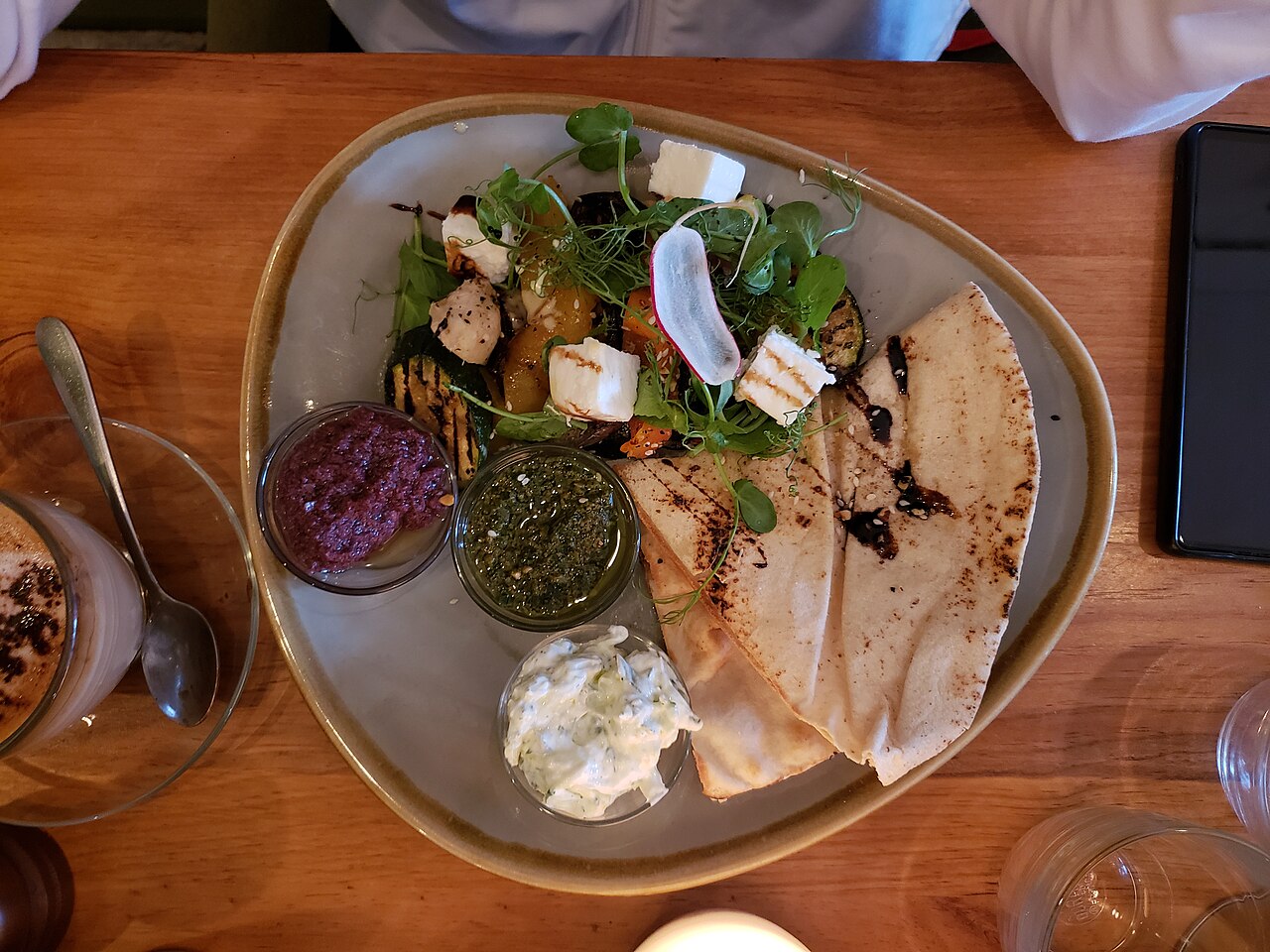
Chios food tastes of one ingredient that grows nowhere else on earth. Mastiha, the aromatic resin bled from the mastic tree, flavours the island’s sweets, its liqueur, its bread and even its cheese. Around that single crop the island has built a cuisine that sits apart from the standard Greek island menu, joined by citrus from the Kampos estates, figs from the south, sheep’s cheese ripened in seawater and a fierce grape spirit called souma. Plan the whole trip with Greece Tours.
This guide sets out what to eat and drink on Chios, dish by dish and product by product: the mastiha specialities, the cheeses, the everyday taverna plates, the sweets, the drinks and the prices you pay for them. It also points you to the tavernas and villages where each is at its best. Read it beside the full Chios travel guide and the guide to the best things to do in Chios.
What food is Chios known for?
Chios is known for mastiha, the resin of the mastic tree, which flavours sweets, liqueur and bread. The island is also known for mastelo cheese ripened with mastiha, sfela and kopanisti cheeses, Kampos citrus, southern figs and souma spirit.
The defining product of Chios is mastiha. Growers cut the bark of the mastic tree in the villages of the south, and the resin bleeds out and hardens into pale tears. The trees produce this resin in commercial quantity only here, on the southern third of one Greek island, which is why the crop shaped the island’s history and still shapes its table.
Around mastiha sit the island’s other signatures. Mastelo is a fresh sheep’s cheese from northern Chios that is baked or grilled and served hot. The Kampos plain south of Chios Town grows mandarins and lemons behind high stone walls. The south dries figs and almonds, and the whole island distils souma, a clear grape spirit poured at the start of a meal.
Everyday cooking on Chios follows the Aegean pattern of vegetables, pulses, fish and slow-braised meat, but the local products keep appearing inside it. Bread comes scented with mastiha. Cheese arrives grilled rather than fried. Dessert is a spoon sweet of citrus or a glass of chilled mastiha liqueur, and the difference from a Cycladic menu is clear within one meal.
What is mastiha and how does Chios cook with it?
Mastiha is the resin of the mastic tree, harvested in southern Chios and sold as crystalline tears. Cooks grind it into bread, biscuits, ice cream, spoon sweets and cheese, and distillers turn it into the liqueur Mastiha and the sweet paste submarino.
The resin arrives as small translucent tears with a pine-and-cedar aroma and a faintly bitter edge. Cooks freeze the tears, grind them with a little sugar to stop them clumping, and add the powder in very small amounts. A pinch flavours a whole tray of biscuits, and too heavy a hand turns a dish medicinal, so restraint is the rule in every Chios kitchen.
The scale of the crop is small. The island’s growers produce on the order of 150 tonnes a year between them, harvested by hand from trees that are cut, cleaned and swept beneath in a cycle that runs from summer into autumn. Chios mastiha carries protected designation of origin status, and the growers’ association controls grading and sale, which is why the price is consistent across the island’s cooperative shops.
The most common forms a visitor meets are sweet. Mastiha ice cream, thick and slightly chewy, is sold across the island. Masourakia are rolled filo pastries with almond and mastiha. Submarino, the “spoon of vanilla”, is a white mastiha paste served on a spoon in a glass of iced water, and it is the traditional welcome offered to guests in Chios homes.
Savoury uses run quieter but real. Bakers scent bread and tsoureki with mastiha, and the resin goes into the brine of mastelo cheese. Distillers produce both the sweet liqueur Mastiha of Chios and drier variants, and the Mastic Museum near Pyrgi explains the whole cycle from tree to table, as the guide to the Chios mastic villages describes.
Which cheeses does Chios produce?
Chios produces mastelo, a fresh sheep’s cheese grilled or baked until it browns; sfela, a firm salty cheese matured in brine; and kopanisti, a sharp peppery spread. Local graviera and myzithra appear on cheese plates across the island.
Mastelo is the cheese to order first. It comes from Kardamyla in the north, made from sheep’s milk and ripened in brine that carries mastiha. Cooked on a griddle or in the oven, it browns on the outside and stays soft within, and it is served hot with a squeeze of lemon. The texture holds its shape rather than melting into a pool.
Sfela is firmer and saltier, matured in brine and cut into slabs for the table or grated over pasta and baked dishes. Kopanisti is the sharp one: a soft, peppery, fermented spread eaten on bread or with a shot of souma. Tavernas in the villages often serve a house version made a few kilometres away, and each has a slightly different bite.
Cheese on Chios is treated as a course rather than a garnish. A table of two orders mastelo, bread, a tomato salad and a carafe of wine, and eats well for a modest sum. Cheese also travels: vacuum-packed mastelo and sfela from a Chios Town dairy shop survive the trip home and cost far less than the same cheese in Athens.
Which dishes define a Chios taverna menu?
A Chios taverna menu is defined by grilled mastelo, kritamo salad of pickled rock samphire, giouvetsi and slow-cooked goat, fresh fish from the east coast, stuffed vegetables from Kampos gardens, and pulses such as fava and chickpeas baked in the oven.
Start with the small plates. Kritamo, rock samphire gathered from the coast and pickled, is the island starter that surprises visitors most, salty and crisp against oil and lemon. Alongside it come pickled caper shoots, taramosalata, kopanisti and a plate of fried courgette. Bread and souma arrive without asking in the older village tavernas.
Main courses follow the seasons and the terrain. Goat and lamb are cooked slowly with tomato and onion, or baked as giouvetsi with orzo. Fish comes from the boats at Chios Town, Langada and Mesta’s port of Limenas, and it is priced by the kilo and grilled whole. Chickpeas baked overnight in a wood oven remain a Sunday dish in the villages.
Named local dishes reward a closer look at the menu. Yiaprakia are vine leaves stuffed with rice and herbs. Gourd pie turns the summer squash into a flat baked pie, and green tomatoes are fried in slices before they ripen. Eggplant pilaf, tomato balls and cheese balls appear as cooked dishes rather than grills, and the northern villages make their own hand-rolled spaghetti, served with grated sfela or a slow meat sauce.
Vegetables carry the Kampos legacy. Stuffed tomatoes and peppers, braised greens, and dishes built on the plain’s citrus turn up through the summer. Restes, tomatoes dried on the roofs of the south, are stored for winter cooking. In autumn the figs of the south and the island’s almonds appear on dessert plates. The pattern rewards ordering three or four shared dishes rather than a single plate each, which is how the island itself eats.
Where do you eat in Chios Town?
Chios Town serves the island’s widest choice of food, with fish tavernas and ouzeri along the harbour and Bounaki square, tsipouradika in the back lanes behind the market, and bakeries and dairy shops selling mastiha sweets and local cheese near the castle quarter.
The harbour front is the obvious first stop, and its restaurants trade on the evening promenade rather than on bargains. The better value sits one street back, in the ouzeri and tsipouradika around the market and the lanes behind the waterfront, where small plates arrive with each round of ouzo or souma and locals fill the tables from nine in the evening.
Fish is the town’s strength, landed at the quay and sold by weight. Ask the price per kilo before ordering, choose from the ice, and pair it with a salad and a carafe of the house white. The distinction between a tourist grill and a working fish taverna shows in the catch on display, not in the frontage.
For food to carry away, the covered market and the shops of the old town sell mastiha in every form, dried figs, almonds, spoon sweets and vacuum-packed cheese. Bakeries near the castle quarter turn out masourakia and mastiha bread through the morning. The town also makes the natural evening base for anyone staying at Karfas, as the guide on where to stay in Chios explains.
Where do you eat in the mastic villages and the south?
In the south, tavernas sit on the central squares of Mesta, Pyrgi and Olympi, and on the shore at Emporios, Komi and Limenas Mesta. They serve village cooking built on goat, pulses, garden vegetables, local cheese and mastiha desserts.
Mesta gives the most complete village meal. Tables fill the vaulted central square beside the church, and the kitchens cook goat, chickpeas, stuffed vegetables and mastiha sweets for a room of villagers and travellers together. Evening is the time to eat here, once the coaches have gone and the lanes empty out into a quiet that the fortified plan of the village makes almost total.
Pyrgi feeds the daytime crowd that comes to see its carved xysta façades, and the square tavernas serve straightforward grills and salads at fair prices. Olympi is quieter than either, with one or two tavernas that open when the village does. Ordering the day’s cooked dishes rather than the grill list gives the better meal in all three.
The southern coast handles fish. Emporios sits above the black volcanic pebbles of Mavra Volia, and its shoreline tavernas serve the catch with a view of the bay. Komi has a sandy beach lined with tavernas that suit families, and Limenas Mesta, the fishing harbour below Mesta, is the quietest of the three. All three pair naturally with a day on the beaches described in the guide to the best beaches in Chios.
Where do you eat seafood on Chios?
Seafood on Chios is eaten in the shore villages: Langada and Vokaria on the east coast north of the capital, Megas Limnionas below Karfas, Komi in the south, and Limenas Mesta. They serve squid, octopus, mussels, shrimp and the day’s grilled catch.
Langada is the name to know. A small fishing harbour about fifteen kilometres north of Chios Town, it has a row of tavernas along the water where the boats tie up in front of the tables, and the town drives out to eat there on summer evenings. Squid, octopus and small fish come straight off the ice, and the setting explains why the village fills before nine.
Vokaria sits nearby on the same stretch of coast and trades on the same catch with fewer tables. Megas Limnionas, just south of Karfas, puts a handful of tavernas on a small bay within a short drive of the capital, which suits anyone based on the east coast. Komi, on the south coast, backs a sandy beach with tavernas that serve families through the day.
Order the way the island does. Kalamaraki, grilled or fried, and octopus hung to dry and then charred over coals are the standard openers, followed by mussels or shrimp and a whole fish shared between two. Fish is priced by the kilo, so confirm the weight and the rate at the ice before it is cooked, and ask whether the fish is line-caught or farmed.
What do you drink on Chios?
Chios drinks souma, a clear grape spirit distilled on the island and served chilled with small plates. It also produces mastiha liqueur, local ouzo, and modest quantities of wine, alongside mahlepi, a chilled milk-and-mahleb drink sold in summer.
Souma is the island’s own spirit, distilled from figs or grapes depending on the village, and it is drunk cold in small glasses with a run of mezedes. It is stronger than it tastes, and Chios drinks it slowly across an evening rather than in rounds. Village distillers still make their own, and the character changes noticeably from one part of the island to another.
Souma is not an industrial product. Roughly 120 small distillers work across the island, most of them producing for their own village and a few tavernas, which is why the glass in Mesta tastes different from the glass in Kardamyla. Distilling season falls in autumn, after the harvest, and a taverna that pours its own souma will usually say so without being asked.
Mastiha liqueur is the sweeter, more familiar bottle, served ice-cold as a digestif and easy to carry home. The island also bottles ouzo flavoured with mastiha, which drinks drier and clouds in water in the usual way, and Apalarina and Stoupaki are the local labels to look for. Chios wine exists in small volumes, and the Ariousios name revives an ancient reputation: the wine of Ariousia in the island’s north-west was among the most prized in the classical Greek world.
Beer has joined the list. A local brewery produces fresh unpasteurised Chios beer that is sold across the island and rarely leaves it, and it appears on taverna lists beside the national labels. Ordering it is the simplest way to drink something the island makes, and it pairs with grilled cheese and fried squid better than the sweeter mastiha bottles do.
The non-alcoholic drink to look for is mahlepi, made from the ground kernel of a wild cherry, thickened, chilled and served with rosewater syrup in high summer. Cafés in Chios Town sell it through the hot months. Coffee follows the Greek pattern, and a freddo espresso on the harbour front is how the island passes the afternoon.
When is each Chios food in season?
The mastiha harvest runs from July into autumn, figs dry in late summer, Kampos citrus ripens from late autumn into winter, souma is distilled after the grape and fig harvest, and mahlepi is sold through the hottest weeks of summer.
Mastic sets the island’s calendar. Growers sweep and level the ground beneath the trees in early summer, cut the bark from July, and collect the hardened tears through August and September before cleaning and sorting them by hand over the following months. Visiting the southern villages in the cutting season shows the whole operation in the groves, and the growers’ cooperative shops sell the new crop from autumn.
Fruit follows its own order. Figs ripen in August and are dried on the roofs and racks of the south through late summer. Almonds come in at the same time. The mandarins, oranges and lemons of the Kampos plain ripen from late autumn into winter, which is when the citrus is at its best and the plain smells of it, while the blossom that scents the lanes arrives in spring.
Drinks and dairy shift too. Distilling season for souma falls in autumn after the harvest, so a village bottle drunk in spring has had months to settle. Mastelo is made through the milking season and is freshest in spring and early summer. Mahlepi appears only when the heat justifies it, sold chilled in the town cafés through July and August and gone by October.
Seasonality also governs whether a taverna is open at all. Chios Town works year-round, and its restaurants and ouzeri keep going through the winter. In the beach villages and parts of the south, kitchens close from late autumn until spring, so a winter visit concentrates on the capital and the larger villages, where the cooked dishes of the day suit the weather better than the grill list does.
What does eating out in Chios cost?
Eating out on Chios costs less than on the Cyclades. A taverna main runs about 9 to 16 euros, mezedes 4 to 8 euros, and fish 45 to 70 euros a kilo. A shared meal with wine lands near 20 to 30 euros a head.
Chios receives far fewer package visitors than Santorini or Mykonos, and its prices reflect that. A village taverna meal of three shared plates, bread, salad and a carafe of wine feeds two people for a modest sum. Harbour-front restaurants in Chios Town charge more for the position, and the gap between them and a back-street ouzeri is easy to see on the bill.
Fresh fish is the one item that moves the total sharply. It is sold by the kilo, and prices vary with the species and the season, so confirm the weight and the rate before the fish goes on the grill. Farmed fish costs markedly less than line-caught, and honest tavernas state which is which on the menu.
Cash remains useful in the villages, where card terminals are less reliable than in town and the nearest ATM is in Chios Town, Pyrgi or Volissos. Portions are generous, so ordering fewer dishes and adding later is the local habit. Service is included, and rounding up the bill is the usual courtesy rather than a fixed percentage.
What food do you take home from Chios?
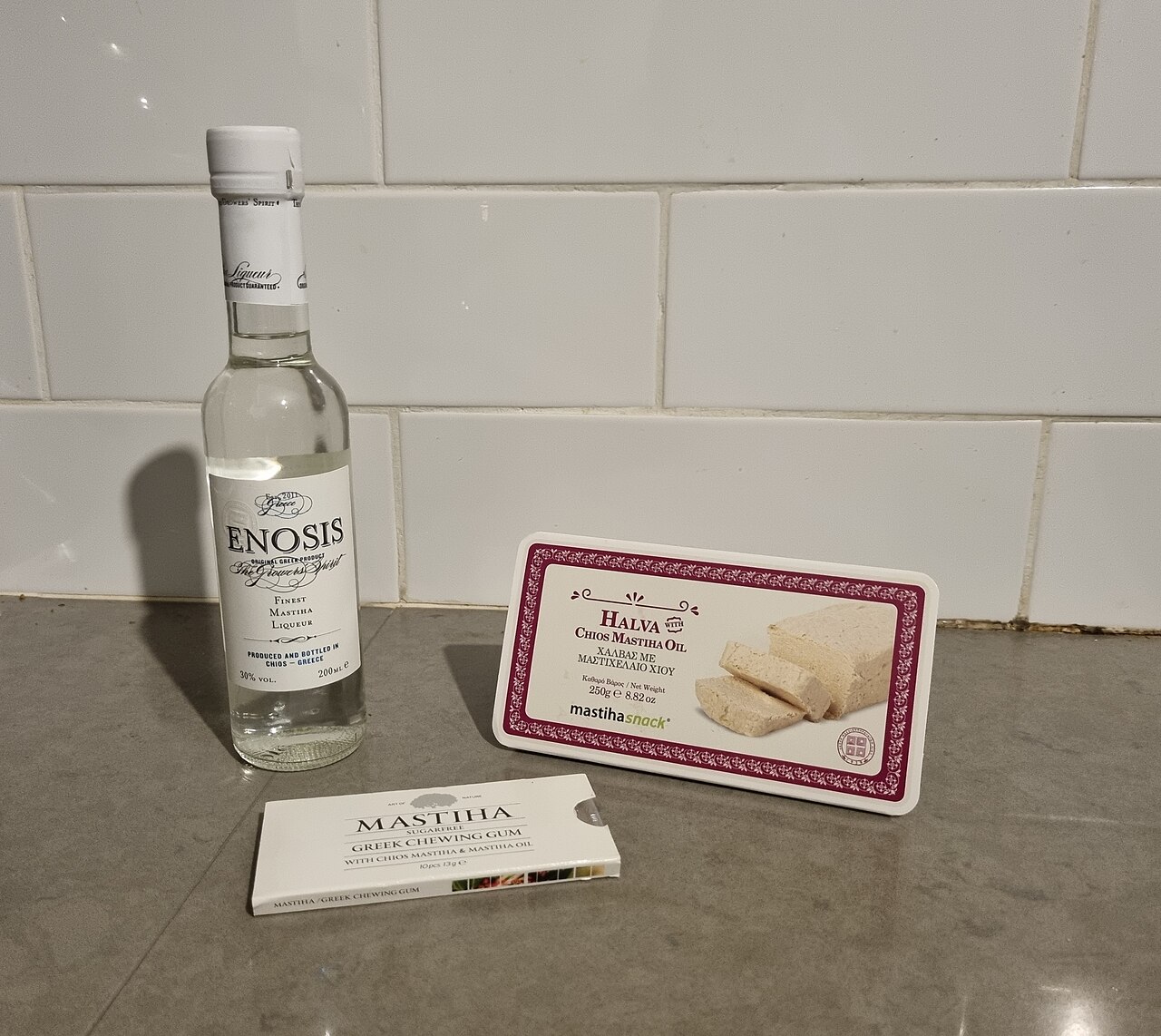
The products to carry home from Chios are mastiha tears and mastiha liqueur, mastelo and sfela cheese vacuum-packed for travel, dried figs and almonds from the south, citrus spoon sweets from Kampos, and mastiha cosmetics and chewing gum.
Mastiha itself travels best. Tears sold in small tins keep for a long time, and the cooperative shops in Chios Town, Pyrgi and Mesta sell graded qualities at fixed prices. The same shops stock mastiha chewing gum, toothpaste, cosmetics and the liqueur. Buying from the growers’ cooperative keeps the price fair and the provenance clear.
Food that needs a cool bag still travels within a day. Dairy shops vacuum-pack mastelo and sfela on request, and figs, almonds, thyme honey and spoon sweets of bitter orange or bergamot need no special handling. The covered market in Chios Town brings all of this together in one street, which suits a last morning before a flight.
The sweet counter holds the rest. Mamoulia are walnut biscuits dusted with sugar, masourakia are rolled filo tubes of almond and mastiha, and loukoumades come hot with honey and cinnamon in the cafés rather than in a box. Jams and marmalades made from Kampos mandarins and bitter oranges travel well, and the plain’s bottled citrus juice is sold across the island under the Kampos name.
Anyone with a deeper interest in the crop visits the Chios Mastic Museum outside Pyrgi, where the harvest, the tools and the trade are laid out in full, and several growers open their groves to visitors in the cutting season. Pairing that visit with a meal in Mesta turns the island’s one irreplaceable product into a full day, as set out in the Chios travel guide.
Frequently Asked Questions
What is Chios famous for eating?
Chios is famous for mastiha, the aromatic resin of the mastic tree, which grows commercially only in the south of the island. It flavours ice cream, biscuits, bread, spoon sweets and the liqueur that carries its name. The island is equally known for mastelo, a fresh sheep’s cheese from Kardamyla that is grilled or baked and served hot with lemon, and for kritamo, pickled rock samphire served as a starter. Kampos citrus, southern figs and almonds, and the clear grape spirit souma complete the list of products that set the Chios table apart from other Greek islands.
What is submarino in Chios?
Submarino, also called vanilla spoon sweet, is a thick white mastiha paste served on a spoon standing in a glass of iced water. The guest lowers the spoon into the water and eats the paste as it firms and softens, then drinks the water. It is the traditional welcome offered to visitors in Chios homes and a fixture in the island’s cafés and sweet shops. The taste is sweet and resinous, with the pine note of mastiha behind it, and one spoon is enough for most people, as the portion is dense.
Is food expensive on Chios?
No. Chios is one of the better-value Greek islands to eat on, because it draws far fewer package tourists than the Cyclades and its tavernas price for a local clientele. A main course in a taverna runs from roughly 9 to 16 euros, mezedes from about 4 to 8 euros, and a shared meal with a carafe of wine lands near 20 to 30 euros a head. Fresh fish is the exception and is charged by the kilo, so agreeing the weight and price in advance keeps the bill predictable. Village tavernas cost less than the Chios Town harbour front.
Is there good vegetarian food on Chios?
Yes. Greek island cooking rests on vegetables and pulses far more than its reputation for grilled meat suggests, and Chios is well suited to vegetarians. Chickpeas baked overnight in a wood oven, fava, braised wild greens, stuffed tomatoes and peppers from the Kampos gardens, gourd pie, fried green tomatoes, eggplant pilaf and tomato balls are all standard cooked dishes rather than special requests. Grilled mastelo cheese, kritamo, taramosalata, kopanisti and fried courgette cover the starter table. Ordering the day’s cooked dishes, listed separately from the grill, is the reliable method, and asking for them without meat stock is understood in most kitchens. Lent brings an extended range of vegan cooking to the menus, since Greek fasting excludes meat, dairy and eggs, and tavernas mark those dishes as nistisima.
Can you take mastiha out of Greece?
Yes. Mastiha tears, mastiha chewing gum, cosmetics, spoon sweets and the mastiha liqueur are all standard products sold for export and travel without restriction within the European Union. Tears keep for a long time in a sealed tin and need no refrigeration. Liqueur and other liquids over 100 millilitres go in checked baggage rather than hand luggage. The growers’ cooperative shops in Chios Town, Pyrgi and Mesta sell graded mastiha at fixed prices and are the most reliable place to buy, and dairy shops vacuum-pack mastelo and sfela cheese for the journey home.