
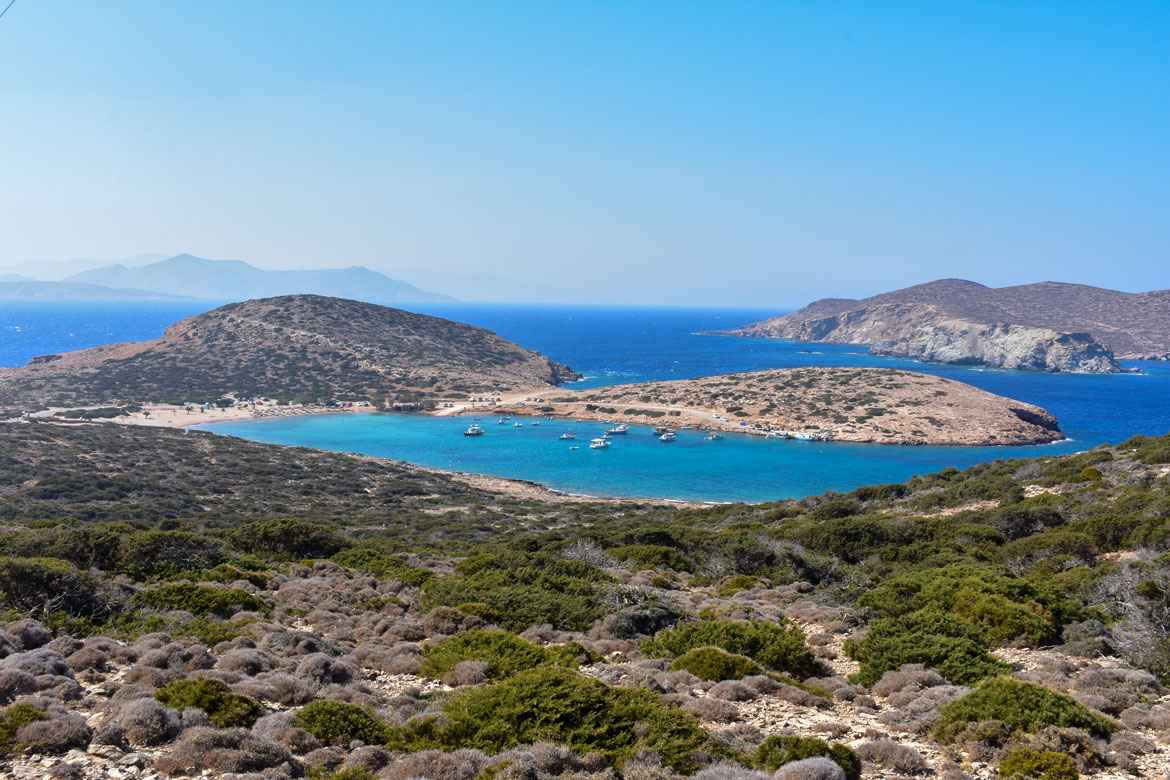
Amorgos has some of the clearest, deepest water in the Cyclades. The sea that Luc Besson chose for The Big Blue. It is one of the finest Greek islands for diving and free-diving. Dramatic underwater walls, caves and reefs. A rich marine life and a dedicated dive centre on the bay of Aegiali make the island a standout for anyone drawn beneath the surface of the famous blue. Plan the whole trip with Greece Tours.
This guide covers diving in Amorgos: why the island is famous for it, the best dive sites, the marine life. The dive centre and courses, free-diving, snorkelling, the water conditions and the best time to dive. Read it beside the guides to Amorgos and The Big Blue and Amorgos boat trips.
Why is Amorgos famous for diving?
Amorgos is famous for diving because Luc Besson chose its exceptionally clear, deep water for The Big Blue, his cult film about free-divers.
The island’s diving fame rests on two things: the extraordinary quality of its water and the legacy of The Big Blue. Amorgos has some of the clearest and deepest sea in the Cyclades. With visibility and drama that few Greek islands match. It was precisely this water that Luc Besson chose as the setting for his film about free-diving.
The film made the island world-famous as the island of the Big Blue and helped establish it as a destination for diving and free-diving. Drawing enthusiasts to experience the water it celebrated. The connection between the film and the island’s diving culture remains strong today.
Beyond the fame, the diving itself is genuinely superb: dramatic underwater walls and caves, ancient wrecks and reefs, and a rich marine life, all in clear, deep water. For anyone drawn beneath the surface, Amorgos is among the most rewarding of the Greek islands, as the guide to The Big Blue describes. Divers return year after year for the mix of clarity, drama and marine life.
What are the best dive sites in Amorgos?
The best dive sites in Amorgos include the Deep Blue Wall, the underwater cave off Nikouria islet near Agios Pavlos, the reefs and walls around the coast, old bauxite mine workings and ancient wrecks, offering dramatic scenery in clear, deep.
Amorgos offers a varied set of dive sites along its dramatic coast. The Deep Blue Wall is among the most celebrated, a sheer underwater wall teeming with life, while the waters around the islet of Nikouria. Off the beach of Agios Pavlos, hold an underwater cave full of colourful sponges and fish, a favourite for its scenery and clarity.
Other sites take in reefs and walls along the coast. The old bauxite mine workings that recall the island’s mining past. Ancient shipwrecks on the seabed, a reminder of the Aegean’s long maritime history. The range means there is diving for beginners and for experienced divers alike, from gentle reefs to deeper walls.
Most sites are reached by boat from the dive centre on the bay of Aegiali, cruising to the reefs, caves and walls of the north coast and around Nikouria. The clear, deep water and the dramatic underwater topography make these dives memorable, living up to the island’s Big Blue reputation. Each site has its own character, from shallow, life-rich reefs ideal for newer divers to sheer walls and caverns that reward the experienced.
What marine life can you see diving in Amorgos?
Diving in Amorgos, you can see moray eels, sea bass, barracuda, damselfish, nudibranchs, corals, sponges and shrimps, and with luck larger visitors such as a Mediterranean monk seal, a dolphin, passing tuna or a loggerhead turtle, in the clear water.
The clear, healthy water of Amorgos supports a rich marine life. On a typical dive you can expect to see moray eels tucked in the rocks, shoals of damselfish, sea bass and barracuda. Colourful nudibranchs, corals, sponges and shrimps among the walls and reefs, a vivid underwater world in excellent visibility.
The island’s waters also hold the chance of larger, rarer encounters. Divers here have seen the endangered Mediterranean monk seal, dolphins, passing tuna and loggerhead sea turtles, though these are never guaranteed and depend on luck and season. The presence of such species reflects the health of the surrounding sea.
This abundance and variety of marine life, set against the dramatic underwater scenery of walls, caves and wrecks, is a large part of what makes diving in Amorgos so rewarding. Even snorkellers in the coves see plenty of fish and colour in the clear water close to shore.
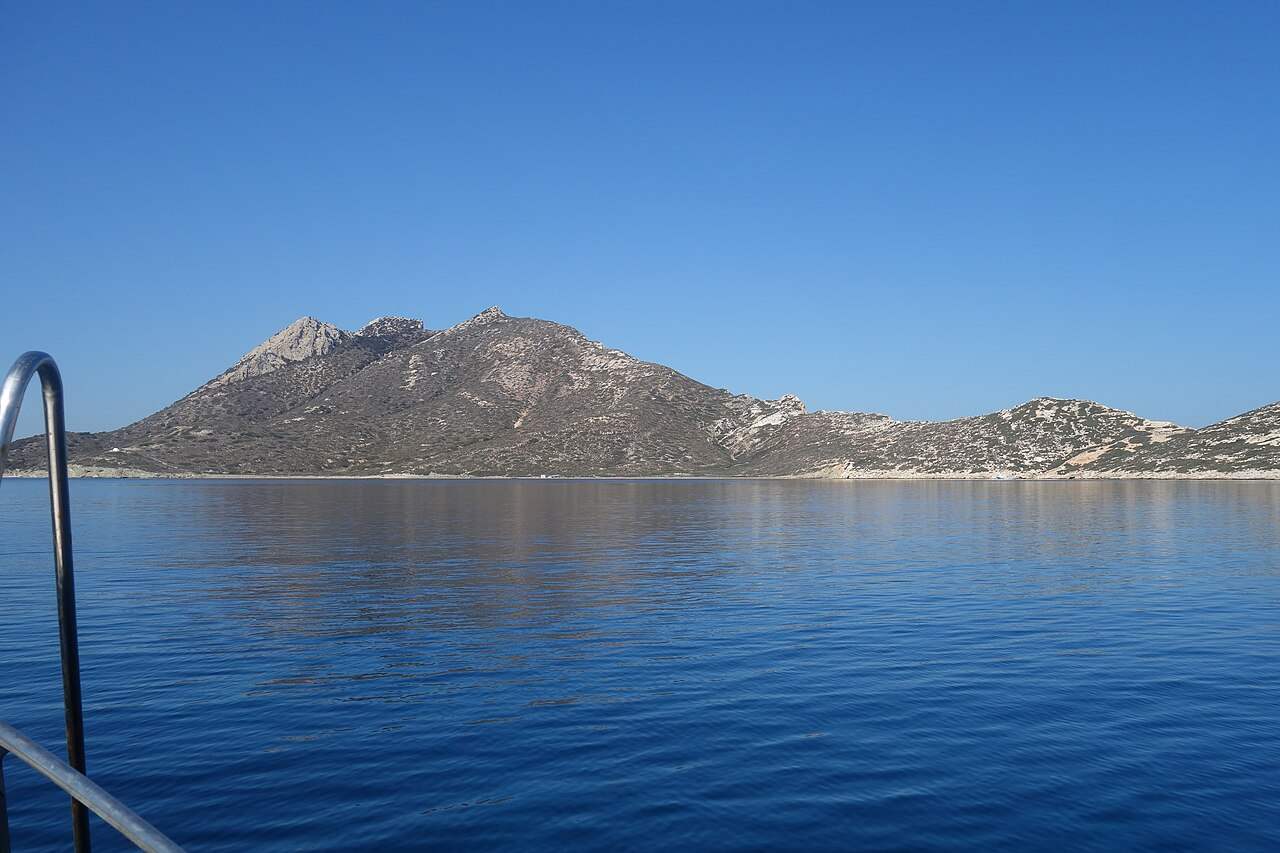
Where is the diving centre in Amorgos?
The main diving centre in Amorgos is based on the beach of Aegiali bay in the north, established in .
Diving on Amorgos centres on the dive school based on the beach at Aegiali bay in the north of the island, established in the mid-2000s. Well placed by the water, it is the hub for the island’s diving, running daily boat trips to the dive sites and offering the full spread of courses and guided dives.
The centre caters to every level. Complete beginners can take a supervised try-scuba dive to sample the sport, while those wanting certification can work through the Scuba Diver and Open Water courses and beyond. Up to professional and instructor levels, along with speciality programmes such as deep diving and underwater photography.
Certified divers can join guided dives to the island’s best sites, and snorkellers are welcome on many of the boat trips too. Basing yourself near Aegiali puts the diving on your doorstep, and the centre handles the logistics, making it easy to dive the clear waters of Amorgos, as the where to stay guide notes.
Can beginners try diving in Amorgos?
Yes. Beginners can take a supervised try-scuba dive in Amorgos, a first taste of diving in shallow water with an instructor, no experience needed.
Amorgos is a welcoming place to start diving. The island’s dive centre offers a try-scuba dive for complete beginners, a supervised introduction in shallow, sheltered water with an instructor. Requiring no prior experience and giving a first, safe taste of breathing underwater in the island’s clear sea.
For those who catch the bug, the centre runs full certification courses. The entry-level Scuba Diver and Open Water Diver courses qualify you to dive to standard recreational depths. The training can continue through advanced. Deep and speciality courses up to professional and instructor levels, all in the fine conditions of Amorgos.
Learning to dive in such clear, dramatic water, in the sea of the Big Blue, is a memorable way to begin. The small. Personal scale of the island’s diving makes it a friendly place for beginners. Families and groups of mixed experience are easily accommodated on the trips.
What is freediving in Amorgos?
Freediving, diving on a single breath, is deeply tied to Amorgos through The Big Blue, a film about free-divers.
Free-diving, the pure form of diving on a single breath without tanks, has a special connection to Amorgos, since The Big Blue, the film that made the island famous, is about free-divers. The island’s clear, deep water is ideal for the sport, and free-diving here carries the spirit of the film that celebrated it.
For visitors wanting to try it, the island’s dive centre runs introductory free-diving sessions. A first course of hours teaching the breathing techniques and relaxation that let you dive to modest depths of metres on one breath. It is an accessible, natural way into the water, needing no heavy equipment.
Free-diving in the sea of the Big Blue is a fitting way to connect with the island’s most famous story and to experience its water in the purest way. The dramatic underwater scenery and the clarity make Amorgos one of the finest Greek islands for this quiet, elemental pursuit.
Can you snorkel instead of diving in Amorgos?
Yes. Snorkelling is superb in Amorgos and needs no more than a mask.
You do not dive to enjoy the underwater world of Amorgos. Snorkelling, with just a mask and fins, opens up the island’s clear coves. The water is so transparent that the rocks. Fish and small caves are easily seen close to shore. It is an easy, free way to experience the famous clarity.
The best snorkelling spots include Agia Anna, the Big Blue cove below the monastery, with its rocks and caves. Cave-backed Mouros in the south. The sheltered beaches of the islet of Nikouria, all offering clear water, marine life and dramatic underwater scenery just off the beach. The dive centre also runs dedicated snorkelling trips.
For families, casual swimmers and anyone not wanting to dive. Snorkelling is a notable way to enjoy the sea of Amorgos. The coves stay calm enough for it even when the open water is choppy. The clear water rewards even a gentle float with a mask, as the beaches guide describes.
What is the water like for diving in Amorgos?
The water around Amorgos is exceptionally clear and deep, with excellent visibility and a dramatic underwater topography of walls, caves and reefs.
The defining quality of the diving is the water itself. Amorgos has some of the clearest, deepest sea in the Cyclades, with the kind of visibility that drew the makers of The Big Blue. A dramatic underwater landscape of sheer walls. Caves, reefs and drop-offs that makes for spectacular diving in the clarity.
In summer the water is warm and inviting, comfortable for diving and snorkelling from June into October, and the sheltered dive sites are calm on most days. The one factor to watch is the meltemi, the strong summer north wind. Which can whip up the exposed coast and lead the dive centre to choose sheltered sites or reschedule.
This combination of clarity, depth and dramatic topography, in warm summer water, is what places Amorgos among the finest diving destinations in Greece. The conditions reward both the experienced diver seeking deep walls and the beginner enjoying a first dive in clear, gentle water. Water temperatures climb from the high teens in spring to the mid-twenties in late summer, so a wetsuit suited to the season keeps dives comfortable.
What is a typical diving day like in Amorgos?
A typical diving day in Amorgos starts at the Aegiali dive centre, where you gear up and board a boat to the day’s sites.
A day’s diving on Amorgos begins at the dive centre on the beach at Aegiali. Where the staff match the sites to the conditions and your experience, fit you with equipment and give a full briefing. You then board the dive boat, which cruises to the chosen reefs, walls or caves along the north coast and around the islet of Nikouria.
A standard trip takes in one or two dives, with a surface interval between them for rest and refreshments while the boat repositions. A guide leads each dive. Pointing out the marine life and the underwater features. Certified divers dive to their level, while beginners and course students are supervised closely throughout.
The boat returns to Aegiali by the early afternoon, leaving the rest of the day for the beach or the mountain villages. The small, personal scale of the operation, the short boat rides to the sites and the clear, dramatic water make for relaxed, rewarding diving days on Amorgos.
What you know before diving in Amorgos?
Bring your certification card and logbook if qualified, be in reasonable health and rested, and allow a no-fly gap before departure. The dive centre provides equipment and guides; travel insurance covering diving is sensible.
A little preparation makes for safe, smooth diving. Certified divers bring their qualification card and, ideally, their logbook, while beginners need only reasonable health and the ability to swim. A brief medical questionnaire is standard, and anyone with relevant health conditions check with a doctor before diving.
Plan the timing around your travel: leave an adequate no-fly interval of at least eighteen to twenty-four hours between your last dive and any flight, which matters on Amorgos given the ferry-and-flight journeys home. Diving is best spread across your stay rather than crammed at the end.
The dive centre provides all the equipment, guides and safety cover. You need bring little beyond swimwear and a towel, though travel insurance that covers diving is a sensible precaution. With these basics in hand, the clear, dramatic water of Amorgos is ready to explore, alongside the island’s boat trips and beaches.
When is the best time to dive in Amorgos?
The best time to dive in Amorgos is from late spring to early autumn, roughly May to October, when the water is warm and the dive centre operates daily.
The diving season on Amorgos runs broadly from late spring to early autumn. Through these months the water is warm and comfortable, the dive centre operates daily. The conditions are at their best. With the sea warming from June and staying pleasant for diving and snorkelling into October.
High summer, in July and August, offers the warmest water and the fullest schedule but also the strongest meltemi wind. Which can affect the exposed sites. The centre responds by choosing sheltered dives or adjusting the timetable, so flexibility helps. The shoulder months of June and September bring warm water with calmer conditions and fewer visitors.
For the best diving, aim for a calm, settled spell in the season and keep the plan flexible for the wind, and the clear, dramatic underwater world of Amorgos is yours to explore, as part of the wider things to do on the island.
How do you book diving in Amorgos?
Diving in Amorgos is booked with the island’s dive centre on the bay of Aegiali, directly, through your accommodation or online. Booking ahead is wise in July and August.
Arranging diving on Amorgos is straightforward. The island’s dive centre, based on the beach at Aegiali, takes bookings directly at its premises, through hotels and accommodation. Or online in advance. Can advise on the right trip or course for your experience and interests.
In the July and August peak, when demand is highest and the island busiest. Booking ahead is advisable to secure a place on the daily trips and courses, while in the quieter shoulder months there is more flexibility. Whether you want a first try-dive, a certification course, a guided dive or a snorkelling trip, the centre can accommodate a range of levels.
Basing yourself near Aegiali, where the diving is centred, makes it easy to fit diving around the beach and the mountain villages. Combining a dive or a free-diving session with the island’s beaches. Boat trips and walks gives a full experience of the sea and land of Amorgos. Many visitors build a short course or a couple of guided dives into a longer island stay, spreading the diving across calm days for the best conditions.
Frequently Asked Questions
Is Amorgos good for diving?
Yes. Amorgos is one of the best Greek islands for diving, thanks to the exceptionally clear, deep water that Luc Besson chose for The Big Blue. Its dive sites include the dramatic Deep Blue Wall, the underwater cave off Nikouria islet, reefs. Old bauxite mine workings and ancient wrecks, set in a rich marine life and excellent visibility. A dive centre on the bay of Aegiali runs trips and courses for all levels, from first-time try-dives to advanced and free-diving.
Do you need experience to dive in Amorgos?
No. Beginners can take a supervised try-scuba dive in Amorgos, a first taste of diving in shallow water with an instructor. Needing no prior experience. The island’s dive centre also runs full certification courses from the Scuba Diver and Open Water levels up to professional grades. Introductory free-diving sessions and snorkelling trips are also available, so divers and non-divers of every level can enjoy the island’s famous clear water.
Where do you go diving in Amorgos?
Diving in Amorgos centres on the dive school based on the beach at Aegiali bay in the north of the island. Which runs daily boat trips to the best dive sites along the coast and around the islet of Nikouria, including the Deep Blue Wall and the Nikouria cave off Agios Pavlos beach. The centre offers guided dives for certified divers, courses for beginners and improvers, free-diving sessions and snorkelling trips, so basing yourself near Aegiali puts the diving on your doorstep.