
The food of Karpathos grew out of a self-sufficient mountain economy, so it leans on grain, goat, cheese, honey and herbs rather than the fish of the ports. At its heart is makarounes, the hand-rolled pasta that appears on every menu. The island’s kitchen runs deeper: soft and salty cheeses. Slow-cooked goat, sweet, tiny shrimp, and honey-soaked sweets baked in wood ovens. Sustainability here is not a fashion but a way of life carried down through generations. Plan the whole trip with Greece Tours.
This guide covers what to eat on Karpathos: the makarounes and how they are made, the local cheeses. The meat and seafood dishes, the honey and the sweets. Where to find the most authentic cooking. Read it beside the wider guide to things to do in Karpathos to weave the island’s food into your days.
What food is Karpathos famous for?
Karpathos is famous for makarounes, a hand-rolled pasta served with fried onion and local cheese. The island’s cuisine also features mountain goat, soft and salty cheeses, honey sweets, and byzantine-era recipes passed down through generations.
The dish that defines Karpathos is makarounes, short twists of hand-rolled pasta topped with sweet fried onion and local cheese. Found on every taverna menu and made fresh in village homes. It is the taste most visitors carry home. It stands for the island’s whole approach to food: simple. Hand-made ingredients from grain, cheese and the mountain kitchen, prepared the way they have been for generations.
Around it sits a cuisine built on self-sufficiency. Because the old villages lived inland and uphill, the food leans on what the mountains provide: goat and lamb reared on the slopes, cheese from their milk, grain for bread and pasta, honey from the thyme-covered hillsides. Wild greens and herbs. Fish and seafood come from the ports, but the heart of Karpathian cooking is the mountain, not the sea.
The result is a distinctive local table, praised beyond the island for its authenticity and its handmade specialities. Recipes reach back to the Byzantine era and beyond. Much of what is eaten is still genuinely produced on the island rather than imported. From the cheese and wine to the honey. The sections below take the key dishes and products in turn.
What are makarounes?
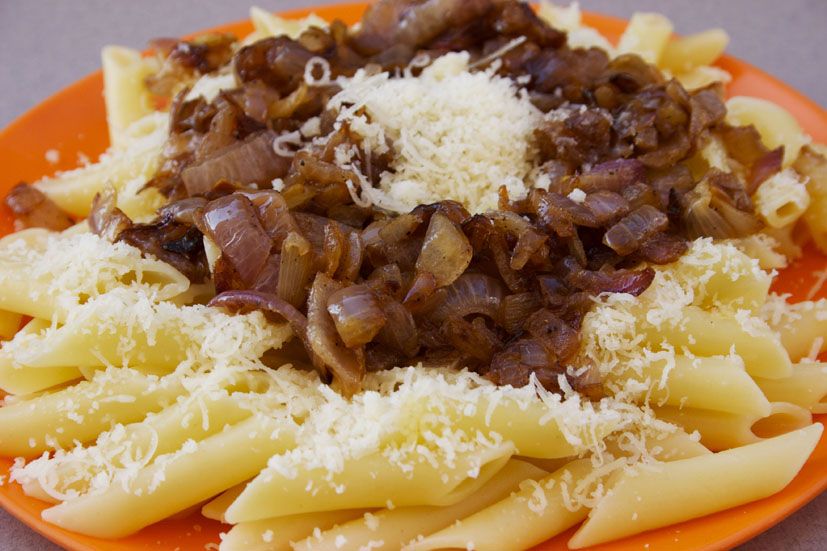
Makarounes are the signature pasta of Karpathos, small pieces of hand-rolled dough of flour and water, boiled and topped with sweet caramelised onions and local cheese. They are often compared to Italian cavatelli.
Makarounes are made from a simple dough of flour and water, which is rolled by hand into short, slender twists. Each piece shaped around a finger or a fork to give the pasta its distinctive curled texture. The technique is unhurried and skilled. Women in the villages still make it by hand every day. Often while sitting in a village home or a seaside taverna, a scene that has become a symbol of the island.
Once boiled, the pasta is dressed the classic Karpathian way: with onions slowly fried until sweet and golden. A generous scattering of local cheese. Often the buttery sitaka or a soft village cheese, sometimes finished with a little marjoram. The combination of the tender pasta, the sweet onion and the salty cheese is rich and comforting. The dish is frequently compared to Italy’s cavatelli for its shape and character.
Makarounes appear on every menu on the island and are the first thing to order for a taste of real Karpathian cooking. Each cook and village has slight variations, in the shape of the pasta. The cheese used or a touch of staka butter stirred through. The dish is worth trying in more than one place. Eaten on a terrace with a view, it is one of the pleasures of a visit.
What cheeses does Karpathos produce?
Karpathos makes distinctive local cheeses from goat’s and sheep’s milk, including the buttery sitaka used on makarounes, the soft manouli, the salty armyrotyri, and myzithra. Many are made in the villages and rarely leave the island.
Cheese is central to Karpathian cooking, and the island produces kinds from the milk of the goats and sheep reared on its slopes. The best known is sitaka, sometimes called staka, a soft, buttery cheese made by slowly cooking the cream. Which is stirred into or spread over dishes and gives makarounes their rich finish. Its richness and its link to the signature pasta make it the island’s defining cheese.
Alongside sitaka come a range of village cheeses. Manouli is a soft, fresh cheese, armyrotyri a firmer, salty one. Myzithra a soft whey cheese used in pies and eaten fresh, while a spicier aged cheese, meriari, turns up on tables. Each village and household makes its own, so the cheeses vary from place to place, and many are produced in small quantities that never leave the island.
These cheeses appear throughout the island’s cooking, melted over pasta, baked into pies such as the cheese-filled myzithropites, or simply served fresh with bread and honey. Buying a piece of village cheese from a shop or a maker, where it can be carried. Is one of the more authentic edible souvenirs of Karpathos, alongside its honey and wine.
What meat and seafood dishes you try in Karpathos?
The key meat dish is mountain goat, free-reared on the slopes and slow-cooked with rice or potatoes. From the sea come large calamari, grilled fish and the small, sweet Karpathian shrimp eaten whole.
Meat means goat above all. The goats reared freely on the mountain slopes give a lean, flavoursome meat that is the pride of the island’s cooking. Slow-cooked with rice, potatoes or wild greens, or roasted for festivals and family celebrations. Lamb appears too, and stewed dishes such as artichoke hearts and other vegetables slow-cooked with meat show the mountain kitchen at its best, rich and unhurried.
From the sea, the ports supply the other half of the table. Calamari are a popular local catch, often of notable size, and are served grilled, stuffed or fried, all of them good. The prize, though, is the Karpathian shrimp, tiny sweet prawns famous across the Dodecanese, eaten whole with their tender shells. Along with grilled fish of the day and octopus dried on the harbour rails and then grilled.
The two sides of the island’s cooking, mountain meat and coastal seafood. Are best sampled in different places: the fish on the Pigadia quay where the boats land. The goat and slow-cooked dishes in the highland village tavernas of Othos, Aperi and Menetes. Together they give a full picture of a cuisine shaped by both the slopes and the sea.
What sweets and honey does Karpathos have?
Honey is a cornerstone of Karpathian sweets, from sousamomelo (sesame and honey) to xerotigana, fried dough strips dipped in honey, and baklava. Thyme honey from the mountain slopes is a prized local product.
Honey runs through the island’s sweets and is a cornerstone of its cuisine. The thyme and wildflower honey gathered on the mountain slopes is dense and aromatic. Used to finish sweets and eaten with cheese and bread. A jar of Karpathian thyme honey is among the best things to take home. Beekeeping is a long tradition on the island, and the honey carries the flavour of the herbs the bees feed on.
The classic sweets lean heavily on it. Sousamomelo, also written sisamomelo, is a confection of sesame and honey, chewy and rich. Xerotigana are thin strips of fried dough coiled and dipped in honey. Made especially for weddings and festivals. And baklava, layered with nuts and honey, is widely loved. These sweets appear at celebrations and in the village bakeries, baked in the same wood ovens as the bread.
Beyond the honey sweets, the wood-oven bakeries turn out rusks, biscuits and almond treats, and the villages sell them fresh to take away. A stop at a bakery in Olympos or Pigadia for a box of sweets, or a jar of honey from a roadside stall. Rounds out any exploration of the island’s food and makes an easy, authentic gift.
Where can you eat traditional food in Karpathos?
The best traditional food is found in the village tavernas of Olympos, Othos, Aperi and Menetes for makarounes and goat, and on the Pigadia harbour front for fresh seafood. The mountain villages keep the oldest recipes.
For the island’s traditional cooking, head for the mountain villages. The tavernas of Othos, Aperi and Menetes serve makarounes, slow-cooked goat and wild-greens pies. Often with their own wine poured from the barrel and cheese and bread made on the premises. In the far north, a terrace taverna in the village of Olympos serves the same mountain dishes from wood ovens with a view over the coast, described in the guide to Olympos village.
For seafood, the place to eat is the Pigadia harbour front, where the fishing boats land their catch and the tavernas serve it simply grilled. Fresh fish, calamari, octopus and the sweet local shrimp are the natural orders, eaten with a view over the moored boats. The capital also has the widest choice of restaurants and cafes on the island for a range of tastes.
Wherever you eat, the island’s food is good value by Greek-island standards, a reflection of how little Karpathos trades on tourism and how much it still feeds itself. Seeking out the village tavernas over the busier coastal spots is the surest way to taste the real Karpathian kitchen, made with local produce and time-honoured recipes.
What local food products can you buy in Karpathos?
The best edible souvenirs from Karpathos are thyme honey, barrel wine from Othos, village cheeses, wild herbs like oregano and thyme, and the honey-and-sesame sweets. Buying from the makers supports the island’s small producers.
Karpathos still makes much of what it sells, so its food products make genuine souvenirs. Thyme and wildflower honey from the mountain slopes travels home well and is dense with the flavour of the herbs, while the dark red wine of Othos, pressed from highland vines, is sold from the barrel in the village tavernas. Both carry the taste of the island’s interior far better than any manufactured trinket.
The village pantry fills out the rest of a bag: wild oregano and thyme cut on the slopes, dried herbs and herbal teas. Village cheeses where they can be carried. The sesame-and-honey sweets sold in the bakeries. Much of this is genuinely gathered or made on the island rather than imported. Buying it directly from the makers and village shops supports the small producers who keep the traditions alive.
The shops along the Pigadia waterfront gather much of it in one place for convenience. The villages sell it fresher and cheaper, and meeting the maker is half the pleasure. A jar of thyme honey, a bottle of Othos wine and a box of honey sweets make a simple, authentic taste of Karpathos to take home, and the wider Karpathos travel guide shows where the villages and markets that sell them fit into a trip.
Frequently Asked Questions
What is the traditional food of Karpathos?
The signature dish of Karpathos is makarounes, a hand-rolled pasta served with sweet caramelised onions and local cheese such as the buttery sitaka. The island’s traditional cuisine also features mountain goat slow-cooked with rice or greens, local cheeses, cheese and greens pies, fresh seafood. Honey-based sweets, all rooted in a self-sufficient mountain kitchen.
What are makarounes?
Makarounes are the signature pasta of Karpathos: small pieces of hand-rolled dough made from flour and water, shaped into curled twists, boiled. Topped with sweet caramelised onions and local cheese. Often compared to Italian cavatelli, they are made fresh in village homes and appear on every taverna menu on the island.
What cheese is used in Karpathos?
The most distinctive cheese of Karpathos is sitaka, sometimes called staka, a soft, buttery cheese made from slowly cooked cream that is used to finish makarounes. Other local cheeses include the soft manouli, the salty armyrotyri, myzithra used in pies, and a spicier aged cheese called meriari. Many are made in the villages and rarely leave the island.
Where you eat in Karpathos?
For traditional cooking, eat in the mountain village tavernas of Olympos, Othos, Aperi and Menetes, which serve makarounes, slow-cooked goat and their own wine. For fresh seafood, eat on the Pigadia harbour front where the fishing boats land their catch. The village tavernas keep the oldest recipes, while Pigadia has the widest choice of restaurants.
What is Karpathos honey?
Karpathos honey is a prized local product, mainly thyme and wildflower honey gathered from the island’s mountain slopes. It is dense and aromatic, carrying the flavour of the herbs the bees feed on, and it is a cornerstone of the island’s sweets such as sousamomelo and baklava. A jar of thyme honey is one of the best edible souvenirs of the island.