
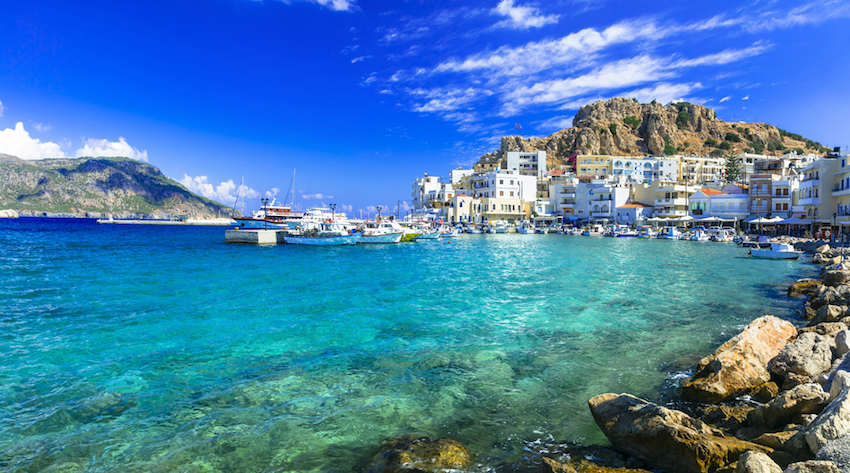
Karpathos travel guide: insider tips on when to go, how to get there, top beaches, hikes, and where to stay for an authentic, effortless Greek island trip.
Karpathos Travel Guide: Discover Karpathos Island, Greece
Karpathos is one of those Aegean islands that feels like a discovery even if it’s been on your radar for years. Nestled between Rhodes and Crete, Karpathos combines dramatic mountain villages, wind-sculpted beaches, deep-blue waters, and fiercely preserved local traditions.
In this Karpathos travel guide, we’ll walk you through when to visit, how to get there, what to do (from secluded coves to sunset cruises), where to stay, and practical tips so your trip feels effortless and authentic. We grew up exploring islands like this, and we’ll share the insider tips that make Karpathos unforgettable.
Quick Snapshot: What Makes Karpathos Special
Karpathos is the second-largest of the Dodecanese islands and carries a character distinct from its flashier neighbors. Here’s why travelers fall for it:
- Untamed landscapes: rugged mountains and narrow valleys give way to long, dramatic coastlines.
- Living tradition: villages like Olympos keep centuries-old dress, music, and dialect alive; visitors often glimpse local women in vibrant costumes.
- Windswept beaches: from Vroukounda to Apella, the beaches mirror the island’s variety, some sheltered and calm, others world-class for wind sports.
- Low-key tourism: Karpathos isn’t overrun: you’ll find boutique hotels and family-run tavernas rather than cruise-ship crowds.
In short, Karpathos is for travelers who want authentic island life, outdoor adventure, and quiet beaches without sacrificing accessibility. This Karpathos travel guide focuses on practical, insider-friendly advice so you get the most from your stay.
When To Visit And Climate By Season
Karpathos enjoys a classic Mediterranean climate with island nuances, dry, hot summers, and mild, wet winters. Here’s a season-by-season breakdown to help plan our trip:
- Spring (April–June): Blooming wildflowers, warming seas, and pleasant daytime temperatures (18–25°C / 64–77°F). Ideal for hiking, village visits, and avoiding peak-season crowds.
- Summer (July–August): High season: sunny, hot (25–33°C / 77–91°F) and reliably windy, perfect for kitesurfers and beachgoers. Ferries and flights fill up: book early.
- Early Autumn (September–October): One of the best times to visit, sea temperatures stay warm, days are still long, and evenings cool just enough for outdoor dining.
- Winter (November–March): Quiet and atmospheric. Some businesses close, and inter-island ferries run less frequently. Not ideal for swimming, but good for low-cost travel and authentic local life.
If we want a mix of great weather and fewer people, late May–early June or September are our sweet spots. For water sports, summer’s Meltemi winds (strong northerly winds) can be a major attraction, especially around Pigadia and Arkasa.
Getting To Karpathos And Getting Around
Reaching Karpathos is straightforward, but planning makes everything smoother. Below we outline the main arrival options and local transport choices.
Flights, Ferries, And Island Hopping Routes
Karpathos has a modern airport (Karpathos National Airport – AOK) with seasonal direct flights from Athens and select European cities. During summer, several carriers add direct routes; book early if we’re traveling in July–August.
Ferries connect Karpathos with Rhodes, Crete, Kos, and other Dodecanese islands. Travel times vary; Rhodes is often a comfortable overnight or day route, while Crete is longer. High-speed ferries run in peak season: they’re faster but subject to cancellation in rough seas.
Popular island-hopping ideas include Karpathos–Kasos (tiny, authentic), Karpathos–Rhodes (historic and transport hub), and Karpathos–Amorgos or Crete for longer itineraries. If we’re planning multiple islands, check combined ferry and flight schedules and leave buffer days for crossings.
Top Things To Do On Karpathos
Karpathos is a mosaic of activities, beach days, cultural immersion, active adventures, and slow island life. Below, we break down the must-dos for a balanced visit.
Where To Stay: Neighborhoods, Boutique Hotels, And Quiet Retreats
Karpathos offers accommodations for every type of traveler, from family-run guesthouses to boutique hideaways. Below, we outline the best neighborhoods and types of stays.
Suggested Itineraries (By Length And Interest)
A few practical itineraries help shape expectations. We’ve organized options by length and interest so you can pick what suits your travel rhythm.
Tours, Excursions, And How To Book Like A Local
Booking local experiences elevates our trip from touristy to meaningful. Here’s how we source authentic tours and excursions.
Practical Travel Tips And Local Customs
A few down-to-earth tips help us stay safe, comfortable, and respectful on Karpathos.
Where is Karpathos located?
Karpathos lies in the southern Aegean Sea, in the Dodecanese, between Rhodes and Crete. The second-largest island of the Dodecanese, it covers about 325 square kilometres, with a population of around 6,500 and a highest peak, Kali Limni, of about 1,215 metres.
The island sits in one of the remotest corners of the Aegean, far from the Greek mainland and roughly midway between Rhodes to the north-east and Crete to the west. This isolation has shaped its character, keeping mass tourism at bay and preserving old traditions, dialects and customs that have faded elsewhere. Together with the neighbouring islet of Saria to the north and nearby Kasos, Karpathos forms a small, proud corner of the Dodecanese with a strong identity of its own.
Long and narrow, Karpathos runs roughly north to south, with a rugged mountain spine dividing a wild, steep west coast from a gentler south and east. Pine forests cloak parts of the interior, terraced hillsides climb to old villages, and the coastline is indented with dozens of bays and beaches. The dramatic landscape, from bare northern peaks to green valleys and turquoise coves, gives the island a raw, unspoilt beauty rare in the modern Aegean.
How do you get to Karpathos?
Karpathos has its own airport in the south, with flights from Athens and Rhodes. Ferries also reach the island from the Athens port of Piraeus, a long crossing of about 18 to 20 hours, and from Rhodes, Crete and other Aegean islands.
The quickest way to reach Karpathos is to fly. The island’s airport, near Afiartis in the south, receives domestic flights from Athens, taking roughly an hour, and short hops from Rhodes, along with seasonal charter flights from parts of Europe in summer. Flying spares travellers the very long sea journey and is the choice of most visitors coming from abroad or short on time.
By sea, Karpathos is one of the furthest islands from mainland Greece, so ferries are infrequent and slow. Boats sail from Piraeus on a crossing of about 18 to 20 hours, usually overnight, and connect the island with Rhodes, Crete, Kasos and other Dodecanese and Aegean islands. The remoteness that makes the ferry a commitment is exactly what keeps Karpathos quiet, and it fits well into a wider Greek island-hopping route through the Dodecanese.
What is the best time to visit Karpathos?
The best time to visit Karpathos is from May to October, when the weather is warm and the sea swimmable. June and September bring warm seas and thinner crowds, while July and August are the hottest and windiest months, the peak season for windsurfing.
Late spring and early autumn are ideal for most visitors. In May, June, September and October the island enjoys warm, sunny weather without the intense heat and strong winds of high summer, the sea is pleasant for swimming, and the beaches and villages are calm. Spring adds green hillsides and wildflowers, while autumn keeps a sea warmed by the long summer, making both seasons rewarding for beaches, walking and exploring.
July and August bring the hottest weather and the strongest meltemi winds, which sweep the island from the north. For windsurfers and kitesurfers this is the finest time of all, but on exposed beaches the wind can be brisk, so sheltered eastern coves are more comfortable. Winter is very quiet, cool and green, with limited services, suiting only travellers seeking deep peace rather than a beach holiday.

What are the best beaches in Karpathos?
The best beaches in Karpathos are Apella and Kyra Panagia on the east coast, ranked among the finest in the Aegean, along with Amopi in the south, and Achata, Kato Lakos, Diakoftis and Lefkos. All offer clear turquoise water and fine sand or pebbles.
Apella is the island’s most celebrated beach, a curve of white pebbles and sand backed by pines and cliffs, with deep, crystal-clear turquoise water. Nearby Kyra Panagia, reached by a steep road or by boat, is a sheltered cove of clear water beside a little red-domed chapel that gives it its name. Both lie on the green east coast north of Pigadia and are regularly rated among the most beautiful beaches in the whole Aegean.
In the south, Amopi, about ten minutes from the town, is the most developed and family-friendly beach area, a series of small sandy coves with tavernas and rooms. Diakoftis, near the airport, has brilliant white sand and shallow water, while Achata and Kato Lakos are quieter east-coast bays, and Lefkos on the west coast offers a cluster of sandy coves. Together they give Karpathos a wealth of beaches for every taste.
Why is Karpathos famous for windsurfing?
Karpathos is one of the top windsurfing and kitesurfing destinations in Greece, thanks to strong, reliable meltemi winds. The beaches of Afiartis in the south, including Devil’s Bay and Chicken Bay, host surf stations and international competitions.
The island’s position and the powerful northerly meltemi that funnels down its coasts create some of the most consistent summer wind conditions in the Mediterranean. The flat, shallow water of Afiartis in the south, near the airport, is the heart of the scene, with organised surf stations offering equipment, storage and lessons. Beginners learn in the gentle water of Chicken Bay, while stronger riders head to the waves and gusts of Devil’s Bay and the open coast.
This reliability has made Karpathos a magnet for windsurfers and kitesurfers from across Europe, and the island has hosted world-class competitions on the Afiartis beaches. From June to September the wind blows almost daily, so surfers plan their trips around the high-summer meltemi, the very season that suits the sport best. For active visitors, the wind is one of the island’s great draws.
Why should you visit Olympos village?
Olympos is one of the most remarkable villages in Greece, built along a mountain ridge in the north of Karpathos. Its people preserve traditional embroidered costumes, an old dialect, working windmills and ancient customs, making it a living ethnographic treasure.
Perched high on a windswept ridge in the wild north, Olympos is a cascade of brightly painted houses, blue-shuttered and flower-decked, clinging to the mountainside above the sea. Old stone windmills stand along the crest, some still grinding grain, and the narrow lanes lead to a church, bakeries turning out bread in wood ovens, and workshops. The setting alone, high above deep valleys and distant water, is unforgettable.
What makes Olympos extraordinary is its living tradition. Many of the older women still wear the elaborate embroidered costumes and leather boots of the village every day, the community speaks a dialect that preserves elements of ancient Greek, and old festivals, music and crafts endure. Long cut off by its remote location and reached by a winding road or by boat from Diafani, the village kept customs that vanished elsewhere, and a visit feels like stepping back in time.

What is Pigadia, the capital of Karpathos?
Pigadia, also called Karpathos town, is the capital and main port, set on a wide bay in the south-east. Home to about half the island’s people, it has a lively waterfront of tavernas and cafes, hotels, shops and the island’s main services.
Pigadia is the beating heart of the island, a working port and market town rather than a museum piece. Its curving waterfront is lined with tavernas, cafes, bars and shops, busy with locals and visitors in the evening, and the harbour handles the ferries and fishing boats. Behind the front, everyday streets hold bakeries, markets and the offices and services that make it the practical base for a stay in the south.
The long sandy beach of Vronti stretches beside the town, within easy reach on foot, and the surrounding area holds early Christian remains and archaeological finds from the ancient town. With the widest choice of accommodation, dining and nightlife on the island, and good road links to the southern beaches and windsurfing bays, Pigadia is where most first-time visitors base themselves and from where they explore the rest of Karpathos on day trips by car or boat.
What villages should you explore in Karpathos?
Beyond Olympos, explore the mountain villages of Aperi, the old capital, Othos, the highest village, Volada, Piles and Menetes, and the western villages of Arkasa, with its ancient ruins, along with Mesochori, Spoa and Lefkos, each with its own character.
The green hills above Pigadia hold a cluster of traditional villages worth a day’s touring. Aperi, the former capital, is known for its grand houses built by emigrants who prospered abroad; Othos, the highest village on the island, has a folk museum and a strong wine tradition; and Volada, Piles and Menetes charm with balconied houses, churches and views. Their cool mountain air and authentic life contrast with the coast.
On the west side, Arkasa stands on the site of ancient Arkesia, where the ruins of the early Christian basilica of Agia Sofia preserve mosaic floors above the sea. Mesochori spills down a slope amid springs and chapels, Spoa guards the road north, and Lefkos gathers around its sandy coves. Diafani, the small northern port, is the gateway to Olympos. Exploring these villages reveals the deep tradition and scenery of Karpathos.
What can you do in Karpathos besides the beaches?
Besides its beaches, Karpathos offers hiking on old stone paths, boat trips to the uninhabited islet of Saria in the north, visits to Byzantine churches and ancient sites, exploring the traditional mountain villages, and windsurfing and watersports along the coast.
Karpathos is a fine island for walking, laced with old cobbled paths, or kalderimia, that link villages, chapels and coves across its mountains and forests. A celebrated route runs between Olympos and the port of Diafani in the north, and trails climb the pine-clad slopes and the highest peaks of Kali Limni and Profitis Ilias. The wild interior, gorges and springs reward hikers with scenery and solitude, best enjoyed in the cooler months of spring and autumn.
By sea, summer boat trips run from Diafani and Pigadia to the uninhabited islet of Saria, off the northern tip, with its ancient ruins, quiet beaches and old settlement at Palatia. On land, the island rewards lovers of history and culture with Byzantine churches, the mosaics of ancient Arkasa, and the folk traditions of Olympos, so that beaches are only one part of what Karpathos offers.
How do you get around Karpathos?
You get around Karpathos best by hire car, as the island is large and its roads long and winding, especially to the mountainous north. Buses and taxis are limited, and a summer boat links Pigadia and Diafani for reaching the north and Olympos.
Karpathos is big and its attractions spread far apart, so a hire car, scooter or quad bike is close to essential for exploring freely. Car hire is available in Pigadia and at the airport, and having your own transport opens up the beaches of the east and south, the windsurfing bays and the mountain villages. Distances are longer than on a small island, so a vehicle saves a great deal of time.
The road to the far north and Olympos is spectacular but long, steep and winding, and parts of the northern network are rough, so careful, unhurried driving is wise. Public buses connect the main southern villages and beaches but run infrequently, and taxis are few. A popular alternative for reaching Olympos is the summer boat from Pigadia to Diafani, from where a local bus climbs to the village, sparing the long mountain drive.
Where should you stay in Karpathos?
Stay in Pigadia for services and nightlife, at Amopi for family beaches, at Afiartis for windsurfing near the airport, or at Lefkos and Arkasa on the quieter west coast. For tradition, base yourself at Diafani or Olympos in the mountainous north.
Pigadia, the capital, is the most convenient base, with the widest choice of hotels, studios and apartments, along with dining, shops and easy access to the southern beaches. Amopi, a short drive south, is the main beach-resort area, with a cluster of sandy coves and family-friendly accommodation, while the windsurfing crowd gathers at Afiartis near the airport, close to the surf stations and consistent wind.
For a quieter, more scenic stay, the west-coast villages of Lefkos and Arkasa offer relaxed seaside bases among coves and traditional life, and the green mountain villages provide cool retreats. The remote north, around Diafani and Olympos, suits travellers seeking authenticity and tradition above all, though it lies far from the airport and the southern beaches, so many split their stay between the south and a night or two in the north.
What food is Karpathos known for?
Karpathos is known for makarounes, handmade pasta served with fried onions and local cheese, along with its cheeses, honey, wine and byzantina sweets. Tavernas in Pigadia and the villages serve fresh seafood, grilled meats and hearty Dodecanese dishes.
The island’s signature dish is makarounes, small handmade pasta twists boiled and topped with sweet fried onions and grated local cheese, a comforting speciality found on menus across the island. Karpathos also produces its own cheeses, including a soft matured cheese, along with fine honey from mountain herbs, wine from the vineyards around Othos and Volada, and traditional sweets served at festivals and weddings.
Everyday eating centres on the tavernas of Pigadia and the villages, where fresh seafood, grilled goat and lamb, wild greens, stuffed vegetables and Dodecanese dishes are served in generous style. The mountain villages are the best places to taste the most traditional cooking, often using produce from the surrounding terraces, and a meal of makarounes with local cheese and wine is an essential experience of Karpathos.
How many days do you need in Karpathos?
You need about five to seven days in Karpathos to see the island well, because it is large and its sights are spread far apart. A week allows time for the southern beaches, the windsurfing bays, the mountain villages and a full day trip north to Olympos and Diafani.
Karpathos is not an island to rush. Its size and long, winding roads mean that reaching the north takes time, and the variety of beaches, villages and activities rewards a relaxed pace. With five to seven days you can enjoy the beaches around Pigadia and Amopi, tour the green mountain villages, try windsurfing or a boat trip, and still devote a full day to the remote north and the village of Olympos.
Travellers on a shorter trip of three or four days can focus on the south and centre, basing themselves in Pigadia and taking in the best beaches, a village tour and the boat to Olympos, though the long drive north is better as a full day. For those wanting to walk the trails, explore Saria and truly unwind in the island’s calm, ten days or more never feel wasted on Karpathos.
Is Karpathos good for families?
Karpathos is good for families, thanks to sheltered sandy beaches such as Amopi and Diakoftis with shallow, calm water, a relaxed and safe atmosphere, and family-friendly accommodation. The strong summer winds on exposed beaches are the main thing for families to plan around.
The south of the island suits families best. Amopi, close to Pigadia, is a cluster of small sandy coves with gentle, shallow water, tavernas and family accommodation, ideal for children, while Diakoftis near the airport has soft white sand and calm shallows. The unhurried, traditional atmosphere of Karpathos, far from crowds and rowdy nightlife, makes it a safe and easy destination for a family holiday.
The one consideration is the wind. In high summer the meltemi can make the exposed southern and western beaches breezy, so families with young children tend to choose the sheltered eastern coves and bays on windy days. With a little planning around the weather, and a hire car to reach the calmest beaches, Karpathos offers families beautiful, safe swimming and a genuine taste of island life.
What ancient sites and history does Karpathos have?
Karpathos has a long history reaching back to antiquity, with the ancient towns of Arkesia and Vrykous, the early Christian basilica of Agia Sofia at Arkasa with its mosaics, and remains at Pigadia and on the islet of Saria, reflecting its Dorian, Roman and Byzantine past.
Settled since ancient times and named in Homer, Karpathos was home to several ancient city-states, including Arkesia on the west coast, near modern Arkasa, and Vrykous in the north. At Arkasa, the ruins of the early Christian basilica of Agia Sofia preserve fine mosaic floors on a headland above the sea, one of the most rewarding archaeological sites on the island.
The island’s remote position kept it a little apart from the great powers, yet it passed through Dorian, Roman, Byzantine, Venetian and Ottoman hands, each leaving traces in its churches, castles and customs. Byzantine chapels dot the countryside, the northern islet of Saria holds ancient and medieval ruins at Palatia, and the living traditions of Olympos themselves preserve echoes of a deep past, making the island’s history part of its enduring appeal.
Is Karpathos worth visiting?
Karpathos is well worth visiting for travellers seeking an authentic, unspoilt Greek island of wild beauty. Its superb beaches, traditional villages, windsurfing, hiking and living folk culture, far from mass tourism, make it one of the most rewarding islands in the Aegean.
For visitors tired of crowded, heavily developed islands, Karpathos offers a genuine escape. Its remoteness has preserved a way of life and a landscape that feel authentic and unhurried, from the costumed traditions of Olympos to the empty mountain trails and the uncommercial villages. The island rewards those who take the time to reach it with a real sense of discovery rather than a packaged resort experience.
At the same time, Karpathos delivers on the essentials of a Greek island holiday, with some of the finest beaches in the Aegean, warm clear seas, good food and world-class windsurfing. This combination of natural beauty, living tradition, outdoor adventure and unspoilt calm makes Karpathos a destination that stays with travellers, and one of the most distinctive islands in Greece. Those who make the long journey to reach it are rewarded with an island that still feels genuinely its own, where costumed villagers, empty beaches and wind-swept mountains offer a Greece that has largely disappeared elsewhere, and few visitors leave without planning a return.
Conclusion
Karpathos feels like a well-kept secret that’s ready to be discovered. If you value dramatic scenery, authentic culture, and quiet beaches, it’s a perfect island to add to your Greek itinerary. In this Karpathos travel guide, we covered the essentials: when to go, how to get around, top things to do, where to stay, and practical tips to travel responsibly. Whether we’re island hopping from Rhodes, booking a private boat to a hidden cove, or savoring grilled fish as the sun sets, Karpathos rewards travelers who slow down and look closely. If you’d like help turning this guide into a personalized itinerary, we’re happy to craft one with local contacts and vetted tours from Greece Tours, so your trip is both authentic and effortless.
Which Karpathos tours can you book, and how long do they last?
Karpathos tours cover the village of Olympos with a driver-guide, the southern villages with lunch, guided walks and hikes from Pigadia, creative workshops, boat trips to the northern beaches and Saria, and the day to Kasos. They run from 45-minute boat trips to full days.
The southern villages tour lasts six hours, the Olympos tour about six, and the Saria cruise more than eight.
Guided walks last two to four and a half hours. A weekly walking programme starts at 08:30.
The crossing to Kasos takes about an hour each way.
How does the Olympos tour on Karpathos run?
The Olympos tour leaves Pigadia in a small group of up to six people, drives an hour and a half up the east coast with photo stops, walks the village with a guide, and ends with a lunch of makarounes, the local pasta, in a village taverna.
The guide leads the group through the lanes and introduces village craftsmen, including a shoemaker who still makes boots by hand.
Olympos is car-free, and loads move by donkey. Women still wear traditional dress, and the dialect keeps old Doric words.
The tour suits first-time visitors, because the village rewards context. Our Olympos page covers the village.
How do you reach Olympos and Diafani on Karpathos?
Olympos lies 43 kilometres north of Pigadia, an hour to an hour and a half by car. Buses run from Pigadia three times a day, and in summer boats sail from Pigadia to Diafani, the northern port, with a bus up to the village.
The road north joins the two coastal roads south of Spoa and continues as one route to Olympos and Diafani.
There are no filling stations north of Aperi, so fill the tank before the trip. Open stretches of the road are windy.
Diafani is the best base for the north. Our Diafani page covers the port village.
What does the southern villages tour of Karpathos include?
The southern villages tour runs six hours from Pigadia with hotel pickup. It visits the Agia Fotini chapel, Menetes, the harbour of Finiki, Pyles, Othos, Volada and the archaeological site of Arkesia at Arkasa, with lunch in Othos.
Arkesia was the ancient capital of the island. Its Basilica of Agia Anastasia keeps an early Christian mosaic floor, and the guide leads the way to it.
Menetes is built around a church square on a hilltop above Pigadia. Finiki is a working fishing harbour on the west coast.
The tour suits visitors interested in history and families with older children. Our Arkasa page covers the village.
Why do Karpathos tours stop in Othos?
Othos, at 508 metres, is the highest village on Karpathos and one of the most mountainous in the Dodecanese. It lies 12 kilometres from Pigadia on the slopes of Mount Meloura, and southern tours stop there for lunch and the view.
Its traditional houses look out over the east coast and the Aegean.
The village has one restaurant, a mini-market and a small folklore museum. A daily bus runs from Pigadia.
A guided mountain walk from Othos covers the herbs and plants along the path and ends with a Greek lunch.
Which guided walks start from Pigadia on Karpathos?
Two guided walks start from Pigadia: the valley walk, three and a half hours along goat paths and olive fields to the Cave of Poseidon and a chapel near Menetes, and the Agia Kyriaki walk, two hours up to a hilltop chapel with coffee and raki.
The valley walk returns along a riverbed where fossil shells sit in the limestone. The guide serves herbal tea at the chapel.
The Agia Kyriaki walk climbs through olive groves and pine forest, with views over the south coast and the inland villages.
Hotel pickup from central Pigadia is the easy option, because the meeting points are hard to find. Wear closed shoes and carry water.
Which mountain hikes run on Karpathos?
Mountain hikes on Karpathos include the Lastos hike off the beaten track, the mountain villages walk with lunch, the Pini to Stes hike, the Profitis Ilias summit hike and, on request, the Limniotis cave hike, in easy, moderate and challenging grades.
The Lastos hike follows unpaved paths with short climbs and ends with raki.
The Profitis Ilias hike reaches the summit in three hours, with stories of the island on the way.
Spring and autumn suit walking best. Our Karpathos hiking page covers the trails for walkers who go alone.
Which creative workshops run on Karpathos?
Creative workshops on Karpathos include botanical clay plates made in a vineyard above Pigadia, mosaic workshops, ancient Greek pebble mosaics in the village of Volada, and a seven-day mosaic retreat. No experience is needed, and participants take their work home.
The botanical clay workshop in the vineyard above Pigadia is covered in full on the Karpathos pottery class page.
In the clay workshop, participants press leaves, herbs and plants from the garden into clay slabs to make plates. The session lasts three hours, in a working vineyard with herb gardens and goats.
The pebble mosaic workshop lasts two hours.
Transport from Pigadia can be arranged, and small groups keep the sessions personal. Winter art retreats run from November to April.
What does ecotourism on Karpathos offer?
Ecotourism on Karpathos offers small-group activities with local guides: a traditional cooking class, a guided tour of Olympos, hiking in the protected area, birdwatching, beekeeping, a botany walk, a food tour and a hike with an overnight stay at the Tristomo gulf.
Visitors forage with shepherds, cook in family kitchens and dance at village festivals.
The programmes include beach cleaning and wildlife and botanical tours.
The trails lead to wild orchids and the rare plants and animals of the island’s protected north.
Which boat tours leave Pigadia on Karpathos?
Boat tours leave Pigadia daily in summer: full-day trips to Saria and the northern beaches with stops at Kyra Panagia and Apella, a best-beaches cruise, a short cruise along the northern coast, private cruises, and a glass-bottom boat for 45-minute trips.
The Saria day sails north past the steep east coast. Captains catch fish on the way and cook lunch on board or on the beach.
Operators sell tickets at the port the evening before.
August winds are strong, and boat trips are cancelled on windy days, so confirm on the morning of departure. Our Karpathos boat trips page covers the boats.
What is Saria, north of Karpathos?
Saria is a rocky island north of Karpathos, across a strait just 100 metres wide, with the ruins of the Byzantine settlement at Palatia, cave churches, clear coves and the remains of an ancient city. Only shepherds live there now.
In antiquity, a city called Saros stood on the island and belonged to the Delian League.
Goats and donkeys graze the slopes, and the cliffs are a breeding ground for Eleonora’s falcons.
The snorkelling around Saria, with clear water and limestone caves, is among the best in the Dodecanese.
What does the Kasos day from Karpathos include?
The Kasos day crosses from Karpathos to its quiet southern neighbour in about an hour. Tours include the ferry crossing, a private yacht cruise from Kasos to the islet of Armathia, and a guided day on the island.
Kasos is the southernmost island of the Dodecanese, with about 1,200 residents and very little tourism. Its capital is Fri.
The island covers 49 square kilometres and is very mountainous. Its highest peak reaches 550 metres.
Kasos and Karpathos form one regional unit. Our Kasos from Karpathos page covers the crossing.
Which festivals take place on Karpathos?
The feast of the Virgin on 15 August is the biggest festival on Karpathos, when the island’s population peaks. Olympos celebrates the feast of Saint John on 29 August, and Menetes holds three days of celebration in mid-August.
Visitors travel from around the world for the August feasts and the traditions that survive in them.
Karpathian weddings and Easter in Menetes are among the customs to see.
At village festivals, visitors join the dancing. Book tours and workshops ahead in high season.
What do visitors buy on Karpathos?
Visitors buy local olive oil, honey and sweets, handmade boots from Olympos, jewellery and sea shells. In Olympos, a village shoemaker still makes boots by hand.
Handmade boots are one of the traditional crafts of Olympos.
Village shops sell local produce, and jewellery stores are common in Pigadia.
The creative workshops give visitors their own souvenir: a clay plate or a pebble mosaic made on the island.
Karpathos Travel Guide: Frequently Asked Questions
When is the best time to visit Karpathos for good weather and fewer crowds?
Late May–early June and September are ideal for pleasant temperatures, warm seas, and fewer tourists. Spring (April–June) is great for hiking and villages, while summer (July–August) brings reliable winds for water sports but higher crowds and booked accommodation.
How do I get to Karpathos — flights or ferry, and which routes are common?
Karpathos National Airport (AOK) offers seasonal direct flights from Athens and some European cities; book early for summer. Ferries connect Karpathos with Rhodes, Crete, Kos, and other Dodecanese islands, with high-speed options in peak season and overnight/day crossings to Rhodes.
What are the top things to do on Karpathos for first-time visitors?
Must-dos include exploring mountain villages like Olympos, visiting varied beaches (Apella, Vroukounda), trying wind sports around Pigadia and Arkasa, taking sunset or private-boat cruises to secluded coves, and dining at family-run tavernas to experience local traditions.
Is Karpathos a good island for water sports like kitesurfing and windsurfing?
Yes — summer Meltemi winds make Karpathos a top spot for kitesurfing and windsurfing, especially near Pigadia and Arkasa. Conditions are reliable in July–August; beginners should book lessons with local schools and check daily wind forecasts for safety.
What practical tips should I know about staying and getting around Karpathos?
Rent a car or scooter for flexibility; ferries run less in winter, so plan crossings with buffers. Book accommodation early in high season, carry cash for small tavernas, dress respectfully in traditional villages, and pack sun protection and sturdy shoes for hikes and uneven village streets.
Find more experiences in My Greece Tours:
- Meteora Greece: Explore Meteora Monasteries & Unforgettable Meteora Tours
- Milos Travel: The Ultimate Guide to Milos, Greece
- Mycenae Tours: Experience Legendary Archaeological Site
- Mykonos Greece: The Absolute Guide To Survive
- Mystras Tours: Uncover the Mysteries of Mystras with a Byzantine Castle Tour
- Naxos Greece: The Ulitmate Guide & Incredible Things to Do
- Paros Greece Travel Guide: Things to Do in Paros, Explore Paros Island
- Paxi Antipaxi Tours: Explore Paxos and Antipaxos – Experience Paxos Tours & Antipaxos Tours