
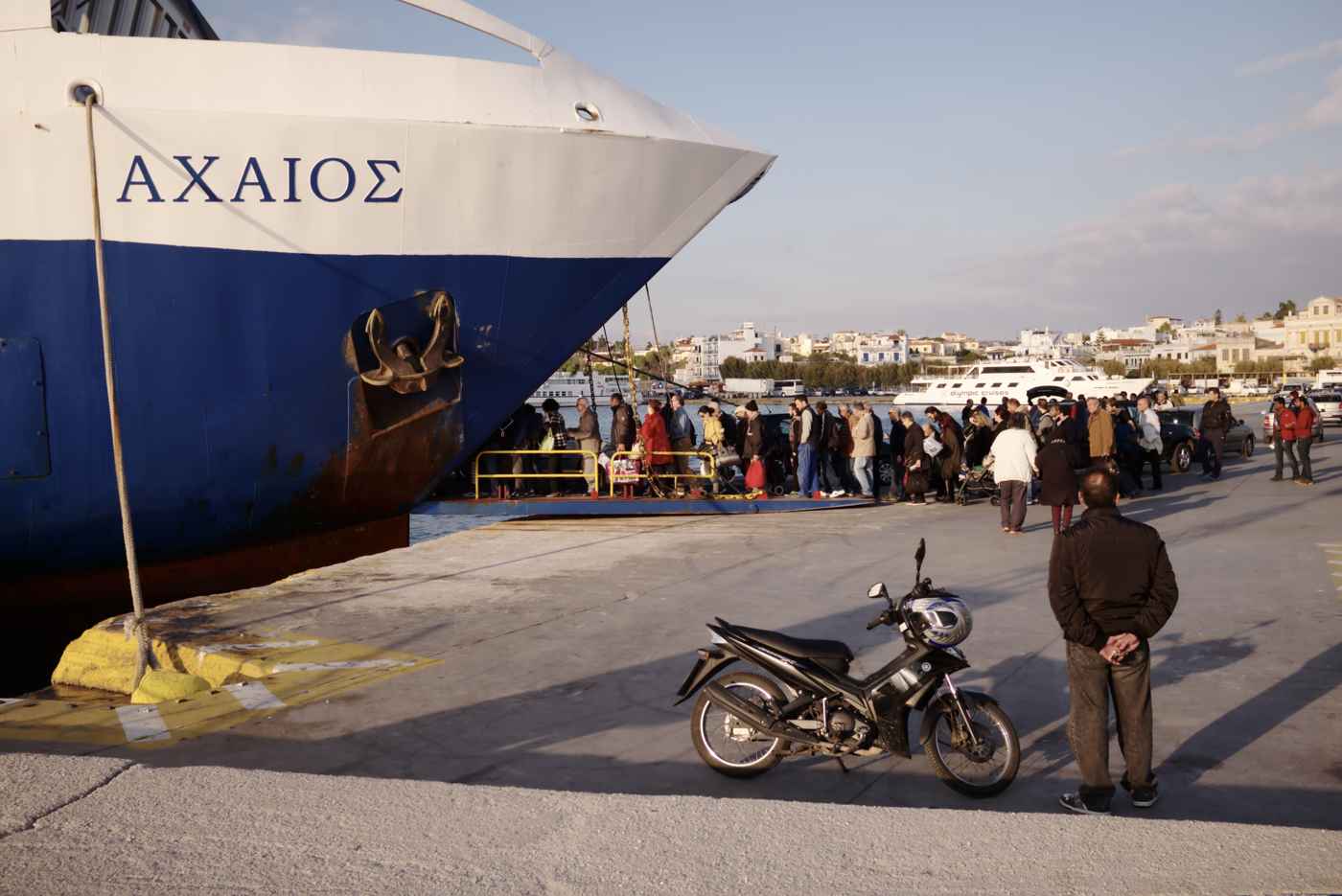
The Athens to Aegina ferry is one of the quickest and easiest boat trips in Greece, linking the capital with its nearest island in as little as forty minutes. All ferries leave from the port of Piraeus, just outside Athens. Sail frequently throughout the day. With a choice of fast catamarans and cheaper conventional car ferries run by companies. Tickets are inexpensive, usually costing between about ten and twenty euros each way, making Aegina a supremely affordable escape. Whether you are planning a day trip or a longer stay, this guide brings together everything you know about the ferry: where it leaves from. How long it takes, what it costs, who operates it. Plan the whole trip with Greece Tours.
How to choose the right boat and book your tickets with confidence.
Below we cover getting to the port of Piraeus, the journey time by fast and conventional ferry, ticket prices, the ferry companies serving the route. The difference between the boat types, how often the ferries run, the three ports on Aegina where boats arrive. Practical tips for a smooth crossing. With this information you can plan your trip to Aegina simply and cheaply, and make the most of your time on the island.
How do you get from Athens to Aegina?
You get from Athens to Aegina by ferry from the port of Piraeus, the main harbour of Athens.
The only way to reach Aegina is by sea, and the journey from Athens hardly be easier. All boats depart from Piraeus, the great port on the southwestern edge of the city. Cross the Saronic Gulf to the island in well under an hour and a half. With the fastest services taking around forty minutes. There is no airport on Aegina, so the ferry is the sole means of getting there.
The whole trip is straightforward even for first-time visitors. You simply make your way to the port, board your boat, and step off at Aegina Town harbour a short time later, ready to explore. This ease of access is a big part of why Aegina is the most popular island day trip from the Greek capital. Many visitors are surprised at how quickly the city gives way to open sea and, before long, the green outline of the island. A transition that makes even the short ferry ride feel like a proper escape from the noise and heat of the city.
Sets the tone for a relaxed day or two away on one of the loveliest and most historic of the Saronic islands, just a short and scenic hop across the open water.
Where do ferries to Aegina leave from in Athens?
Ferries to Aegina leave from the port of Piraeus, southwest of central Athens.
All Aegina ferries sail from Piraeus, the largest passenger port in Greece and the gateway to the Saronic and Aegean islands. Getting there from the centre of Athens is simple: the metro connects the city directly to Piraeus in around twenty to thirty minutes. Buses and taxis are also readily available, so reaching the port poses no difficulty even early in the morning.
Piraeus is a large, busy harbour. It helps to know that the boats for Aegina and the other Saronic islands leave from a particular section of the port. Generally signposted and usually reached by turning towards the Saronic gates on arrival. Allowing extra time to find the right departure gate, buy or collect tickets and board without rushing is wise, especially on your first visit or during the busy summer months.
The station sits right beside the harbour. From there it is a walk of minutes around to the Saronic gates, following the signs for the islands. Taxis and ride-hailing can drop you closer still, which is worth considering if you have luggage or are travelling early. Either way, aiming to reach Piraeus comfortably ahead of your departure, ideally an hour or more in high season, takes the stress out of the start of the journey.
How long does the Athens to Aegina ferry take?
The Athens to Aegina ferry takes about forty minutes on a fast catamaran or hydrofoil, and around an hour to seventy minutes on a slower conventional car ferry.
One of Aegina’s greatest attractions is how quick the crossing is. The fast boats, catamarans and hydrofoils, cover the distance in roughly forty minutes, while the larger conventional car ferries take around an hour to seventy minutes. This makes Aegina the closest and fastest island escape from Athens, ideal even when time is limited.
The short journey means that, catching a morning boat. You can be exploring the island well before midday and still have the whole afternoon and evening before the last ferry back. For a day trip, the fast service maximises your time on the island, while the conventional ferry. Only a little slower, offers a relaxed, scenic sail across the gulf that is pleasant in its own right.
The exact time also depends slightly on the port of arrival, since a boat calling at Souvala or Agia Marina follow a marginally different route from one heading straight to Aegina Town. In practice the differences are small. Whichever service you take. The crossing is short enough that seasickness is rarely an issue and the journey passes quickly, with the island soon rising into view across the water ahead.
How much does the Aegina ferry cost?
The Aegina ferry is inexpensive, with one-way tickets typically costing between about nine and twenty euros per person.
Ferry fares to Aegina are very reasonable, adding to the island’s appeal as a budget-friendly destination. A one-way ticket on a conventional car ferry generally costs somewhere around ten to twelve euros, while the faster catamarans and hydrofoils cost more, often up to around twenty euros for the extra speed and comfort.
Even allowing for the return journey, the total transport cost of a trip to Aegina remains modest, especially compared with organised excursions. Children usually travel at reduced fares, making the island particularly economical for families. Taking a vehicle across on a car ferry costs considerably more, so most day-trippers travel as foot passengers and use local transport once on the island.
Fares can vary slightly between operators and with the season. The difference between the cheapest conventional ferry and the fastest catamaran is really a trade of euros for around half an hour of time. For a day trip that extra speed is often worth paying for, whereas on a relaxed longer stay the cheaper, slower boat makes good sense. Either way, the ferry is one of the smallest costs of a visit to Aegina, far less than a meal or a guided tour on the island.
Which ferry companies run the Athens to Aegina route?
Several ferry companies operate the Athens to Aegina route from Piraeus, running both fast catamarans and conventional car ferries.
The Aegina route is served by a number of ferry companies operating out of Piraeus, offering a mix of fast passenger boats and slower car ferries. This competition and variety is good news for travellers, as it means plentiful departures spread across the day and a choice between speed and economy to suit your plans and budget.
Schedules are combined into a frequent overall service, and tickets can generally be bought from any of them or through booking websites and agents. It is worth comparing the timetables of the different companies when planning, particularly to find a convenient departure and. Importantly, a suitable time for the return crossing at the end of your visit.
You do not be loyal to a single company; what matters is finding a boat that fits your schedule at a fare and speed you are happy with. Booking platforms that show all operators side by side make this easy, letting you compare departure times, journey lengths and prices at a glance. In practice, the combined service is so frequent in summer that there is almost always a suitable boat within an hour or so of when you want to travel.
Should you take the fast ferry or the conventional ferry?
Choose the fast ferry if you want to save time and reach Aegina in around forty minutes, ideal for a day trip.
The main decision when booking is between the fast catamarans and the conventional car ferries. The fast boats are the best choice if maximising your time on the island matters. Cutting the crossing to around forty minutes, which is especially valuable on a day trip when every hour counts. They are comfortable and quick, at a slightly higher fare.
The conventional ferries, by contrast, are cheaper and only a little slower. Many travellers enjoy the more relaxed. Open sailing they offer, with deck space and views across the Saronic Gulf. They are also the option to choose if you bring a car, though for most visitors a day or short break on Aegina is best enjoyed on foot, using the island’s buses, taxis and rental scooters.
In rough weather the larger conventional ferries also tend to be steadier and more reliable than the smaller fast craft. Which can occasionally be affected by strong winds. In the windier shoulder seasons the slower boat is sometimes the safer bet for keeping to your plans. For a family with children, the extra deck space and gentler pace can make the conventional ferry the more comfortable choice. Turning the crossing itself into a pleasant part of the outing rather than just a means to an end.
How often do ferries run from Athens to Aegina?
Ferries from Athens to Aegina run very frequently, with departures throughout the day, especially in summer.
Aegina enjoys one of the most frequent ferry services of any Greek island, thanks to its closeness to Athens and its popularity. Across the companies, boats depart throughout the day. Generally from early in the morning until the evening. There is rarely a long wait for a crossing, and you can plan your day with considerable flexibility.
Departures are most frequent during the summer season and at weekends, when demand is highest, and a little thinner in the quieter winter months, though the route runs year-round. Because timetables vary by season and day of the week, it is always wise to check the current schedules before you travel. In particular to note the time of the last boat back to Athens so you are not caught out.
Which port do you arrive at on Aegina?
Most ferries arrive at the main port of Aegina Town, on the west coast of the island.
Aegina has three ferry ports, and knowing which one your boat serves helps you plan. The great majority of ferries dock at the main harbour of Aegina Town, the island’s lively capital on the west coast, which is the most convenient arrival point, close to the bus terminal, tavernas, shops and the Kolona archaeological site.
A services also call at the smaller ports of Agia Marina, on the east coast beside the popular beach and resort and near the Temple of Aphaia, and Souvala on the north coast. These can be handy if you are heading straight to that part of the island. For most visitors Aegina Town is the natural gateway, so it is worth confirming your boat’s destination port when booking, especially for the return trip.
The calls at Agia Marina and Souvala are more seasonal and less frequent than the main service to Aegina Town, so you cannot always count on them. If you are staying near one of these ports it is worth checking whether a direct boat suits your dates. As a rule planning around the main harbour gives you the widest choice of departures and the easiest connections to the island’s bus network for onward travel to the beaches, villages and ancient sites.
What tips help for taking the Aegina ferry?
For a smooth Aegina ferry trip, book fast-boat and summer tickets in advance, arrive at Piraeus in good time to find the gate and board, travel as a foot passenger for a day trip, and always confirm the time and.
A few simple tips make the journey stress-free. In the busy summer months and at weekends, it is worth booking your tickets in advance. Especially for the faster boats and for your return, to guarantee a place on a convenient departure. Arriving at Piraeus with time to spare lets you find the right gate, collect or validate tickets and board calmly rather than in a rush.
For a day trip, travelling as a foot passenger and using local buses, taxis or a rented scooter on the island is simpler and cheaper than bringing a car. Above all, check the schedules for both legs before you leave, note the time of the last ferry back to Athens. Confirm which port it departs from, so you can enjoy your time on the island without worrying about the journey home. With a little planning, the Aegina ferry is one of the easiest trips in Greece, and a great way to explore the many things to do on Aegina.
It is also worth having a little cash for the port and the island, as smaller kiosks and tavernas not take cards, and keeping your ticket handy for boarding. If you are prone to seasickness, choosing a seat on the lower, more central part of the boat helps, though the crossing is short. With these small preparations in mind, the trip out to Aegina and back becomes an effortless part of the day rather than something to worry about. Leaving you free to focus on the island itself.
Frequently Asked Questions
How long is the ferry from Athens to Aegina?
The ferry from Athens to Aegina takes around forty minutes on a fast catamaran or hydrofoil. Roughly an hour to seventy minutes on a slower conventional car ferry. Depending on the operator and the exact route. All boats depart from the port of Piraeus, just outside central Athens, and cross the Saronic Gulf to the island. This makes Aegina the closest and quickest island escape from the Greek capital, so even the slowest ferry is a short journey by Greek island standards.
For a day trip, the fast boat is the popular choice because it saves time and leaves more of the day free on the island, while the conventional ferry, only a little slower and cheaper, offers a pleasant, relaxed sail. Because Piraeus itself is only around twenty to thirty minutes from central Athens by metro, you can realistically leave the city in the morning and be exploring Aegina Town within about an hour and a half, door to harbour, which is a large part of why the island is such a favourite short trip.
How much is a ferry ticket from Piraeus to Aegina?
A one-way ferry ticket from Piraeus to Aegina typically costs between about nine and twenty euros per person, depending on the type of boat. Conventional car ferries are the cheaper option, usually costing somewhere around ten to twelve euros one-way, while the faster catamarans and hydrofoils cost more, often up to around twenty euros for the extra speed. Children generally travel at reduced fares, which makes the island especially economical for families, and even a return trip therefore remains inexpensive compared with organised tours or excursions. Taking a car across on a conventional ferry costs considerably more than a foot-passenger ticket and usually be booked ahead in summer.
Most day-trippers and short-break visitors travel on foot and rely on the island’s buses. Taxis and rental scooters to get around. Fares can vary a little by season and operator. Tickets can be bought online, through agents, or at the port, so it is worth comparing options when you plan your trip to find the most convenient and affordable crossing.
Do I book Aegina ferry tickets in advance?
For much of the year you can simply buy Aegina ferry tickets on the day at Piraeus, since the route is short and sailings are frequent. In the busy summer season and at weekends it is wise to book in advance, particularly for the faster catamaran services and for your return journey. Booking ahead guarantees you a place on the boat you want and avoids the risk of popular departures selling out. Which can happen on hot summer days when Athenians head to the islands. It also lets you plan your day around fixed times. Tickets can be purchased online through the ferry companies or booking websites, from travel agents. Or at the port itself.
It is sensible to arrive at the harbour with time to spare to collect or validate them and to board without stress. Whether or not you pre-book, always check the latest schedules before you travel, as ferry times vary by season and day. Be sure to confirm the time and the port of your return crossing so you can get back to Athens smoothly at the end of your visit.
Which port on Aegina does the ferry arrive at?
Most ferries from Athens arrive at the main port of Aegina Town, the island’s capital on the west coast. Which is the most convenient arrival point for visitors, close to the bus terminal, tavernas, shops and the Kolona archaeological site. However, Aegina has three ferry ports in total. Some services also call at the smaller harbours of Agia Marina, on the east coast beside the popular beach and near the Temple of Aphaia, and Souvala on the north coast. These secondary ports can be convenient if you are heading directly to that part of the island. For the great majority of trips Aegina Town is the natural gateway and the port you will use.
It is worth checking which port your particular ferry departs from and arrives at when you book. This is especially important for the return journey, so that you go to the correct harbour at the right time for your boat back to Piraeus.