
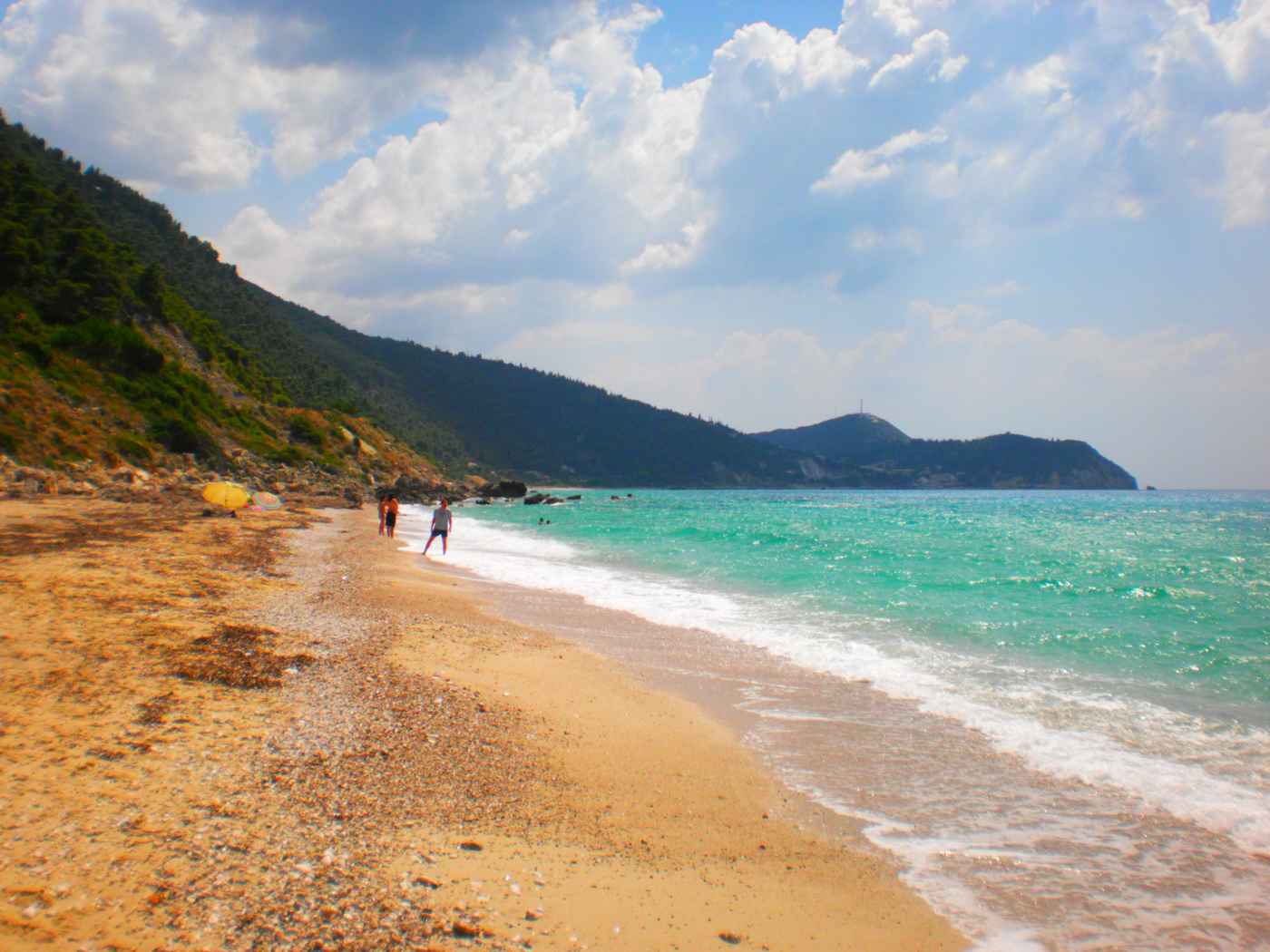
Pefkoulia beach Lefkada sits on the northwest coast of the island, about 10 km southwest of Lefkada Town and roughly 1.5 km north of the village of Agios Nikitas. It ranks among the biggest beaches on the whole island, a wide and long open bay that faces west toward the sea. The shore mixes soft sand with medium pebbles, and the water shelves into clear blue-green depths a short way out. Pine trees run down the slope behind the sand, and their name gives the beach its own: Pefkoulia means little pines. That green backdrop shapes the whole character of this west-facing bay. Plan the whole trip with Greece Tours.
The main road from Lefkada Town toward Agios Nikitas passes on the hillside just above the sand. Reaching Pefkoulia is straightforward and there is roadside and organised parking close by. A limited number of sunbeds and umbrellas line part of the beach. Some watersports operate in season, though the long stretch of shore stays open and uncrowded at the edges. The pines give natural shade at the back, a feature that is unusual across the beaches of Lefkada. Facing open water, the bay catches afternoon wind, lively swell and a full western sunset, making it a rewarding stop for confident swimmers and evening visitors alike.
Where is Pefkoulia beach in Lefkada located?
Pefkoulia lies on the northwest coast of Lefkada, about 10 km southwest of Lefkada Town and roughly 1.5 km north of Agios Nikitas village, facing the open western sea.
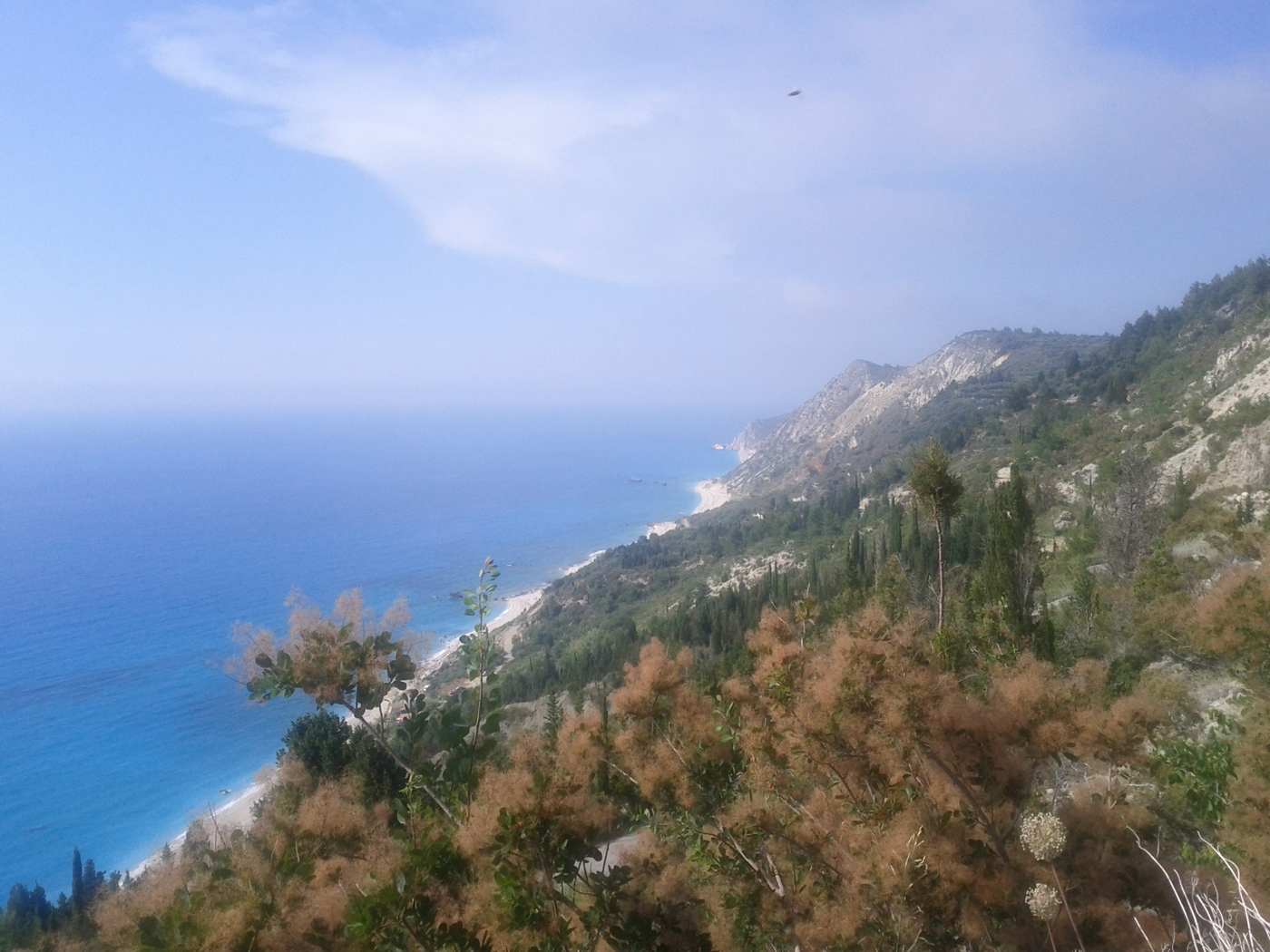
Pefkoulia occupies a long stretch of the northwest coast, set between the hillside road above and the open Ionian Sea below. The bay sits about 10 km southwest of Lefkada Town by road, following the main route that heads down the west side of the island toward Agios Nikitas. From that road the beach appears as a broad pale ribbon of sand curving along the shoreline. Its position on the exposed western flank of the island gives it wide sea views and afternoon light, and it counts among the biggest beaches Lefkada has along this coast. The setting is open, green-backed and framed by low forested slopes.
The village of Agios Nikitas lies about 1.5 km to the south, tucked into its own small cove beyond a low headland. Pefkoulia is the next major bay to the north, so visitors base themselves in the village and travel the short distance to the wider sands. Kathisma beach, another of the coast’s large west-facing bays, sits a little further south along the same road. Together these three form a recognisable cluster on the northwest shore, each with its own character. Pefkoulia stands out for its length, its open aspect and the band of pines running down almost to the sand at the back.
Geographically the beach faces roughly west, looking out across open water with no islands close offshore to break the horizon. That orientation matters, because it exposes the bay to the prevailing afternoon wind and to any swell rolling in from the sea. The land behind rises quickly into pine-clad slopes, and the coastal road threads along the hillside above the beach rather than at sea level. This layout keeps the shoreline itself free of buildings and gives arriving visitors a clear view down over the whole bay before they descend. The natural amphitheatre of green hillside frames the sand and the blue-green water below.
Reaching this part of the island is simple once travellers understand the road network. The single main route down the northwest coast links Lefkada Town, Agios Nikitas, Pefkoulia and Kathisma beach in sequence, so no complicated navigation is required. Signposts mark the turnings, and the descent to the parking areas is short. Because the beach sits on the way to and from the village, it is easy to combine with a stay nearby. Anyone weighing up where to stay in Lefkada often looks first at this stretch of coast, since it puts several of the island’s best-known sandy bays within minutes of each other.
What does the shore at Pefkoulia beach look like?
Pefkoulia has a long, wide shore of soft sand mixed with medium pebbles. Pine trees run down the slope almost to the sand, giving natural shade rarely found on other Lefkada beaches.
The shoreline stretches for a considerable distance, one of the reasons Pefkoulia is described as among the biggest beaches on the island. Underfoot the surface is a blend of soft sand and medium pebbles, coarser than fine grains yet still comfortable for walking and lying out. Nearer the waterline the pebbles become more noticeable, while the drier upper beach holds more sand. This mix gives the bay a pale, bright appearance from above and a clean feel underfoot. The width of the beach means there is room to spread out even when the central section fills, with quieter stretches toward either end of the long curve.
The pines are the defining feature of the back of the beach. They grow on the slope behind and run down almost to the sand, and it is these little pines that give Pefkoulia its name. Their canopy throws natural shade across the rear of the beach through the middle of the day, a comfort that is genuinely unusual along this coast. Most of the beaches of Lefkada offer little natural cover, so the tree line here is prized in high summer. Visitors who arrive early often claim a spot beneath the branches, where the temperature stays cooler and the light filters softly through the needles.
Between the pines and the water the open beach catches full sun for most of the day. The gradient of the sand and pebbles is gentle at the very top, then steepens as it meets the sea. This shape creates a defined shoreline where small waves break and rearrange the pebbles with each set. On calm mornings the beach looks smooth and inviting, while on breezier afternoons the surf line becomes more active. The contrast between the shaded, tree-backed rear and the bright open foreshore gives the bay two distinct zones, letting visitors choose sun or shade according to the hour.
The overall scale of the bay is what people remember. Standing at one end, the far end looks a long way off, and the sweep of pale shore against green hills and blue-green water forms a broad natural composition. Because the beach is long, footfall spreads out and the sand rarely feels packed except at the very centre near the facilities. Walking the length of the shore takes minutes and passes through changing textures, from firmer sand to looser pebble banks. This variety, combined with the pine shade behind, sets Pefkoulia apart from the smaller coves nearby such as the beach at Agios Nikitas.
How clear is the water for swimming at Pefkoulia?
The water is clear and blue-green, deepening fairly quickly a short way from shore. The bay suits confident swimmers, and afternoon wind and swell often make the sea lively.
The sea at Pefkoulia shows the clear blue-green colour typical of the exposed Ionian coast. Over the pale sand and pebble bed the shallows read turquoise, shifting to deeper blue where the seabed drops away. On calm days the clarity lets swimmers see the bottom well out from shore, and the water feels fresh rather than warm because the open aspect keeps it circulating. The absence of harbours or rivers nearby helps keep the bay clean and bright. This clarity, combined with the long shore and green backdrop, is a large part of why the beach draws visitors down from the coastal road above.
The seabed shelves fairly quickly here compared with gently sloping bays elsewhere on the island. A steps from the waterline the depth increases, so swimmers reach water over their heads without wading far. This profile suits confident swimmers who prefer to strike out quickly, and it makes the bay less obviously suited to very young children or nervous paddlers, especially on rougher days. Families with small children often prefer the shallower, more sheltered corners near Agios Nikitas. At Pefkoulia the quick drop is part of the appeal for those who enjoy proper swimming in deep, open water close to the shore.
It takes the afternoon wind and any incoming swell head on. Mornings are frequently calm, with a flat, glassy surface ideal for a long swim. As the day warms, the breeze tends to build and the sea grows livelier, with waves breaking along the pebble line. This daily rhythm is worth planning around: early risers get the calmest water, while afternoon visitors find more movement and energy in the sea. The lively conditions appeal to stronger swimmers and to anyone who enjoys the feel of a working, open coastline rather than a still lagoon.
Safety awareness matters on breezy afternoons. When the wind picks up, the combination of deeper water close in and rolling swell asks for a degree of confidence and caution. Swimmers keep an eye on conditions, stay within their comfort zone, and note that the exposed setting means the sea can change through the day. On the calmer, clearer mornings none of this is a concern, and the water is simply a pleasure to swim in. Understanding the daily pattern of wind and swell is the key to enjoying Pefkoulia. It is one of the practical points that shapes a good visit to this stretch of the beaches of Lefkada.
What facilities and parking does Pefkoulia beach have?
Pefkoulia offers roadside and organised parking, a limited number of sunbeds and umbrellas, and watersports. Facilities are modest, so arriving early in high summer secures a place.
Access to Pefkoulia is one of its practical strengths. The main coastal road passes on the hillside just above the beach, so the descent to the sand is short and the bay never feels remote. Both roadside spaces and a more organised parking area serve visitors arriving by car or scooter, which matters at a beach of this size and popularity. Because the road sits above rather than beside the shore, the beach itself stays free of traffic and buildings. This easy approach, combined with clear signposting from the route between Lefkada Town and Agios Nikitas, makes the bay simple to reach for a half day or a full day.
On the sand a limited number of sunbeds and umbrellas are set out in season, generally across the central section of the beach. This is not a fully developed resort strand. Much of the long shore stays open for those who bring their own mat or towel and seek out the pine shade at the back. The modest scale of the facilities is part of the beach’s relaxed feel, but it also means demand can outstrip supply on the busiest days. Visitors who want a rented sunbed are best placed to arrive early, before the central rows fill and the day’s allocation runs out under the summer sun.
Some watersports operate at Pefkoulia through the peak season, taking advantage of the open water and the afternoon breeze. These add a measure of activity to the bay without dominating it, and they suit the lively conditions that build later in the day. Beyond this, amenities are kept simple in keeping with the natural setting, so visitors planning a long day often bring water, snacks and sun protection with them. Anyone considering where to stay in Lefkada with easy beach days in mind values this balance of good access and light development, which lets the landscape rather than the infrastructure lead the experience.
Timing is the single most useful piece of planning advice for this beach. In high summer Pefkoulia fills through the morning, the central parking tightens and the sunbeds run out, so an early arrival makes a real difference to the day. Those who come down before the main crowd secure shade beneath the pines, a comfortable spot on the sand and an easier park. Later arrivals still find room along the long shore, though the prime central positions and rented seats already be taken. Planning around an early start turns a good beach day here into a smooth one, whatever the season’s crowds.
Why is Pefkoulia beach in Lefkada known for its sunset?
Pefkoulia faces west across open sea, so it looks straight into the setting sun. The clear horizon and long sandy shore make it a natural spot to watch the evening light.
The west-facing aspect that brings afternoon wind also gives Pefkoulia its evening reward. With the bay open to the sea and no land close offshore, the sun drops toward a clean horizon directly ahead of the beach. As the light fades the sky and water take on warm colours, and the pale sand reflects the glow along the length of the shore. This unobstructed western view is not something every beach on the island can offer, since many face other directions or sit enclosed by headlands. At Pefkoulia the geography lines up perfectly with the end of the day.
The evening also brings a change in the beach’s mood. Through the afternoon the wind and swell keep the sea lively, but toward sunset the crowds thin, the light softens and the bay settles into a calmer rhythm. Visitors who have spent the day here often stay on for the show, while others drive down from nearby villages purely for the evening. The long shore gives everyone space to find a spot, whether on the sand, on the pebble banks near the water or beneath the pines at the back. The scale of the beach means the sunset never feels crowded.
Pefkoulia’s evening appeal connects it to the wider stretch of coast. Kathisma beach, a short way south along the same road, is well known for its own sunsets, and the two bays share the open western outlook. Visitors touring the northwest shore sometimes take in more than one viewpoint across an evening, moving between the large sandy bays as the light changes. This makes the area a natural base for anyone who values sunset over sea. It feeds into decisions about where to stay in Lefkada, since these west-coast beaches offer the island’s clearest evening horizons.
Practical points make the sunset easy to enjoy. The parking above the beach means visitors can arrive late in the day and reach the shore quickly, and the descent is short enough to manage in fading light. Because the road runs along the hillside, there are also elevated vantage points on the way down where the whole bay and horizon come into view at once. Bringing a light layer is sensible, as the west wind can carry a cooler edge once the sun is low. With a little timing, an evening at Pefkoulia rounds off a day among the beaches of Lefkada on a quiet, open note.
How do you walk from Pefkoulia over the headland to Mylos beach?
A steep forest path climbs over the headland south of Pefkoulia and takes about forty minutes to reach the small, secluded Mylos beach, which has little road access of its own.
Behind the headland to the south of Pefkoulia lies Mylos, a small and secluded beach reached mainly on foot. A forest path leaves the southern end of the bay area and climbs over the high ground that separates the two shores. The walk takes around forty minutes and is steep in places, passing through pine and scrub with sea views opening up as the path gains height. This route rewards those willing to make the effort with a quieter, more sheltered cove that sees far fewer visitors than the large sandy bays on the main road. Sturdy footwear and water are sensible for the climb.
Mylos itself is much smaller than Pefkoulia and feels tucked away, protected by the headland from the busier coast to the north. Its seclusion comes precisely from that lack of easy road access. The walk over the ridge is the most direct land approach. Some visitors reach it by boat from Agios Nikitas instead. The contrast between the long, open sweep of Pefkoulia and the intimate scale of Mylos is striking. Doing both in a day gives a fuller sense of this corner of the island. The forest path links the two in a single walkable route for those with the time.
The walk is best tackled with the daily rhythm in mind. Setting out earlier avoids the strongest midday heat on the exposed sections of the path, and it also means arriving at Mylos before any afternoon wind builds. The return climb back over the headland takes similar effort, so allowing a comfortable margin of time prevents a rushed finish. Because Mylos has minimal facilities, walkers carry their own water and shade, much as they for a full day at Pefkoulia. Treating the crossing as a small hike rather than a stroll sets the right expectations for the terrain.
For active visitors the Pefkoulia-to-Mylos link is one of the more rewarding short walks on the northwest coast. It combines a proper beach day with a taste of the island’s forested interior and delivers a secluded cove at the far end. The path is a reminder that some of the best spots among the beaches of Lefkada sit just out of reach of the road. Accessible only to those prepared to walk. Anyone planning this outing pairs it naturally with a base near Agios Nikitas, since the village and Pefkoulia both sit close to the start of the route over the headland.
How does Pefkoulia compare with Agios Nikitas and Kathisma beaches?
Pefkoulia is far larger and more open than the small cove at Agios Nikitas, and it shares the long, west-facing sandy character of Kathisma beach a short way south along the same coast.
The three beaches form a natural trio on the northwest coast, each with a distinct feel. Agios Nikitas is really a small village cove, compact and sheltered, close to tavernas and easy for families with young children. Pefkoulia, just north, is a long open bay of sand and pebbles with deeper water and a more exposed aspect. Kathisma beach, to the south, matches Pefkoulia in scale and western outlook but sits within its own setting further along the road. Understanding these differences helps visitors choose the right beach for the day, whether they want shelter, size or a lively open sea.
For swimmers the contrast is clear. The cove at Agios Nikitas offers calmer, shallower water suited to gentle bathing, while Pefkoulia’s quick-shelving, deeper sea rewards stronger swimmers and grows livelier in the afternoon wind. Kathisma beach, similarly west-facing, shares much of Pefkoulia’s open character and can also see swell later in the day. Families often mix and match across a stay, using the sheltered village cove on breezy days and the larger bays when the sea is calm. This flexibility is one of the advantages of basing a visit on this short stretch of the beaches of Lefkada.
Facilities and atmosphere also differ across the three. Agios Nikitas has the village amenities of tavernas, rooms and shops right beside the sand, giving it a busy, sociable feel. Pefkoulia keeps development light, with modest sunbeds, parking above and pine shade behind, so the natural setting leads. Kathisma beach falls somewhere between, being a large bay that has attracted more seasonal facilities over time. Visitors weighing up where to stay in Lefkada often value the mix, choosing a base that puts a lively village. A big natural beach and a well-served sandy bay all within minutes of each other.
Distances between the three are short, which is what makes the cluster so convenient. Pefkoulia sits about 1.5 km north of Agios Nikitas. Kathisma beach is a similarly brief drive to the south, all linked by the single coastal road down from Lefkada Town. A visitor can sample all three in a day, or move between them as wind and mood dictate. This concentration of large, high-quality sandy bays in one small area is a defining feature of the northwest coast. It places Pefkoulia at the heart of one of the most rewarding beach zones on the whole island.




Frequently Asked Questions
How do you get to Pefkoulia beach from Lefkada Town?
Pefkoulia lies about 10 km southwest of Lefkada Town, reached by the main road that runs down the northwest coast toward Agios Nikitas. The drive takes around fifteen to twenty minutes and follows a single clearly signposted route, so navigation is straightforward. The road passes on the hillside just above the beach, and a short descent leads to roadside and organised parking close to the sand. Because the beach sits on the way to and from Agios Nikitas, it is easy to combine with a visit to the village. Most visitors arrive by car or scooter, since this gives the flexibility to move between Pefkoulia, the village cove and Kathisma beach further south.
Arriving early in high summer secures both a parking space and a good spot on the shore.
Is Pefkoulia beach suitable for children?
Pefkoulia suits families with older, confident children better than those with very young ones. The seabed shelves fairly quickly a short way from the shore. The water becomes deep close in. And on breezy afternoons the west-facing bay takes wind and swell that make the sea lively. These conditions favour capable swimmers rather than small paddlers. Families with young children often prefer the calmer, shallower cove at Agios Nikitas, about 1.5 km south, which is more sheltered. That said, on calm mornings Pefkoulia is gentler and its long, open sand gives plenty of room to play well back from the water.
The pine trees at the rear provide natural shade, a real advantage for families keeping out of the midday sun. Watching the daily wind pattern is the key to a comfortable family visit here.
When is the best time to visit Pefkoulia beach?
Early morning is the best time to arrive at Pefkoulia, especially in high summer. The sea is usually calm and glassy at that hour. Ideal for a long swim in the clear blue-green water. The crowd is thinner so parking and sunbeds are easier to secure. As the day warms, the west-facing bay tends to catch the building afternoon breeze, and the sea grows livelier with wind and swell. Later in the day the beach fills and the limited sunbeds run out, so an early start makes a real difference. The evening brings a second highlight, as the open western horizon delivers a clear sunset.
Many visitors either come early for calm water or stay late for the light, planning their day around these two quieter windows at the ends of the day.
Does Pefkoulia beach have sunbeds and umbrellas?
Pefkoulia has a limited number of sunbeds and umbrellas set out across the central part of the beach in season, alongside watersports. It is not a fully developed resort strand, so much of the long shore stays open for visitors who bring their own towel or mat. The pine trees at the back offer natural shade as an alternative to a rented umbrella, which is unusual and welcome on this coast. Because the number of sunbeds is modest and the beach is popular, demand can outstrip supply on busy summer days. Arriving early is the reliable way to secure a rented seat before the central rows fill and the day’s allocation runs out.
Visitors planning a full day often bring water, snacks and sun protection, since amenities on the sand are deliberately kept simple in this natural setting.
Can you walk from Pefkoulia to Mylos beach?
A steep forest path leads from the area south of Pefkoulia over the headland to the small, secluded Mylos beach, taking about forty minutes on foot. The route climbs through pine and scrub, with sea views opening up as it gains height. It is the main land approach to Mylos. Which has little road access of its own. Some visitors reach Mylos by boat from Agios Nikitas instead. The walk is best treated as a short hike: sturdy footwear, water and sun protection are sensible, and setting out earlier avoids the strongest midday heat on the exposed sections. Mylos itself is far smaller and quieter than Pefkoulia, protected by the headland from the busier coast to the north.
The contrast between the long open bay and the intimate cove makes the crossing a rewarding outing for active visitors.
Why is Pefkoulia beach so named?
The name Pefkoulia means little pines, and it comes directly from the pine trees that grow on the slope behind the beach and run down almost to the sand. These trees are the defining feature of the bay. Their canopy throws natural shade across the rear of the beach through the middle of the day. A comfort that is genuinely unusual along the northwest coast, where most beaches offer little natural cover. Visitors who arrive early often claim a shaded spot beneath the branches, where the temperature stays cooler and the light filters softly through the needles.
The green backdrop of pines against the pale sand and clear blue-green water gives Pefkoulia its distinctive character and sets it apart from the more open, treeless bays nearby. The little pines that name the beach are also the reason many people choose it over its neighbours in high summer.