
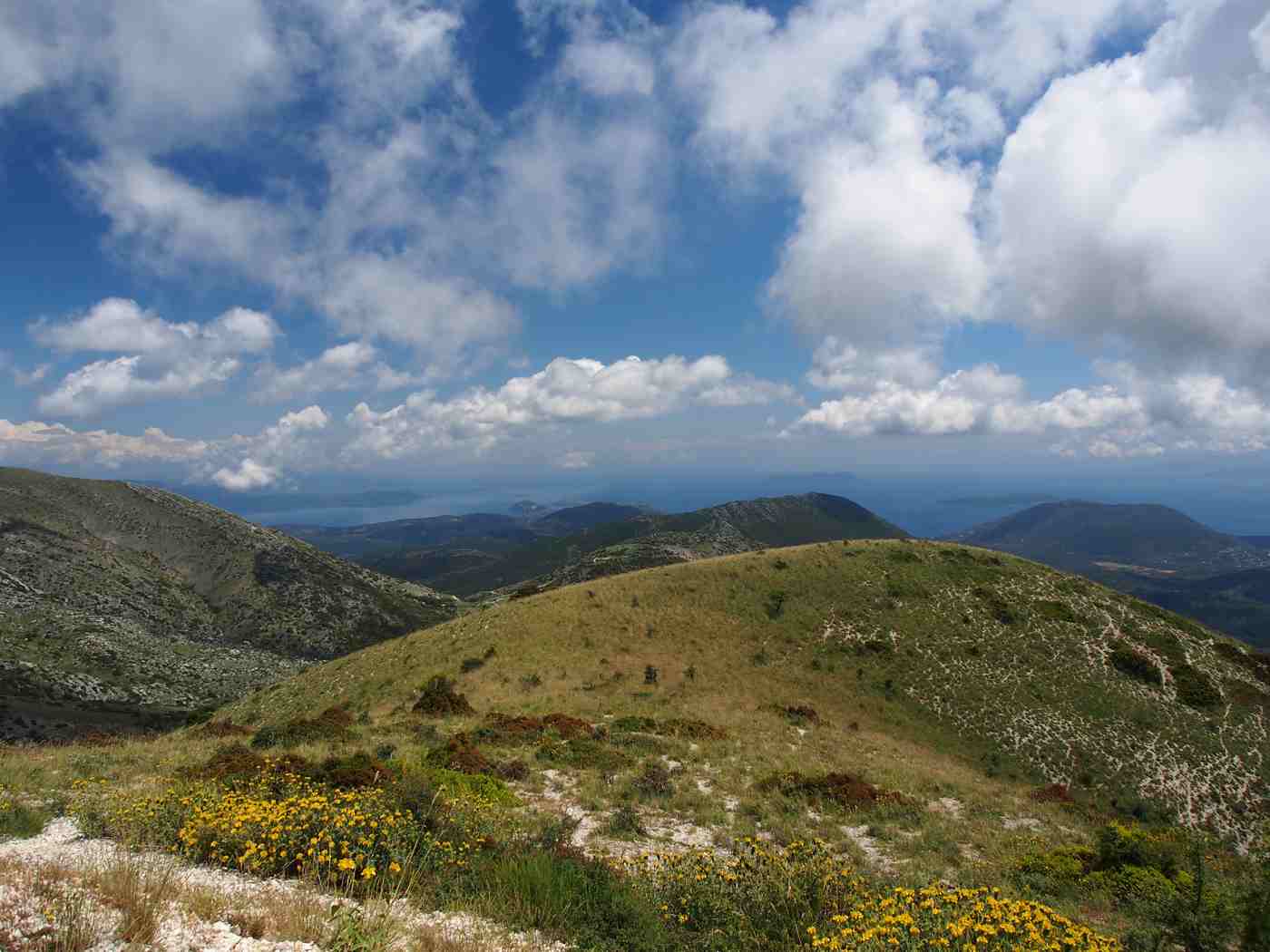
A hire car ranks as close to essential on Lefkada, an Ionian island where the finest beaches and mountain villages sit far beyond the reach of public transport. Local buses run on limited timetables, and they serve the west coast and the mountainous interior poorly. Independent travel by road opens the whole island, from the sandy bays of the sheltered east to the dramatic cliffs of the wild west. This guide explains where to collect a car, the documents and age rules that apply, and the driving conditions across the island. It also covers parking, fuel and the practical checks that make a self-drive holiday run smoothly from start to finish. Plan the whole trip with Greece Tours.
Lefkada has no airport of its own, so most visitors reach the island by road across the causeway that links it to the mainland. The nearest arrival point is Aktion National Airport near Preveza, about thirty minutes away, where a row of hire firms keeps desks inside the terminal. Others collect their vehicles in Lefkada Town, Nydri or Vasiliki, closer to their eventual base. Rates fall in the quieter shoulder months and climb through July and August, when stock runs short across the island. Early booking secures a car at a fair price and guarantees the category a group needs, particularly one of the scarce automatics that sell out first.
Why do you need a car in Lefkada?
A car unlocks Lefkada because buses run on thin timetables and skip the best west-coast beaches and inland villages. Independent transport turns scattered highlights into an easy day’s driving.
Public transport on the island covers only the main routes. Buses link Lefkada Town with Nydri, Vasiliki and a handful of larger villages, yet the timetable thins outside the summer peak and stops early in the evening. The famous west-coast bays lie at the end of steep side roads that no service reaches. A traveller without a car depends on taxis or organised excursions, both of which limit flexibility and add cost across a week. A hire vehicle removes those constraints and places the whole island within a comfortable day trip. From the northern causeway to the southern tip at Vasiliki. It turns wasted transfer time into exploration.
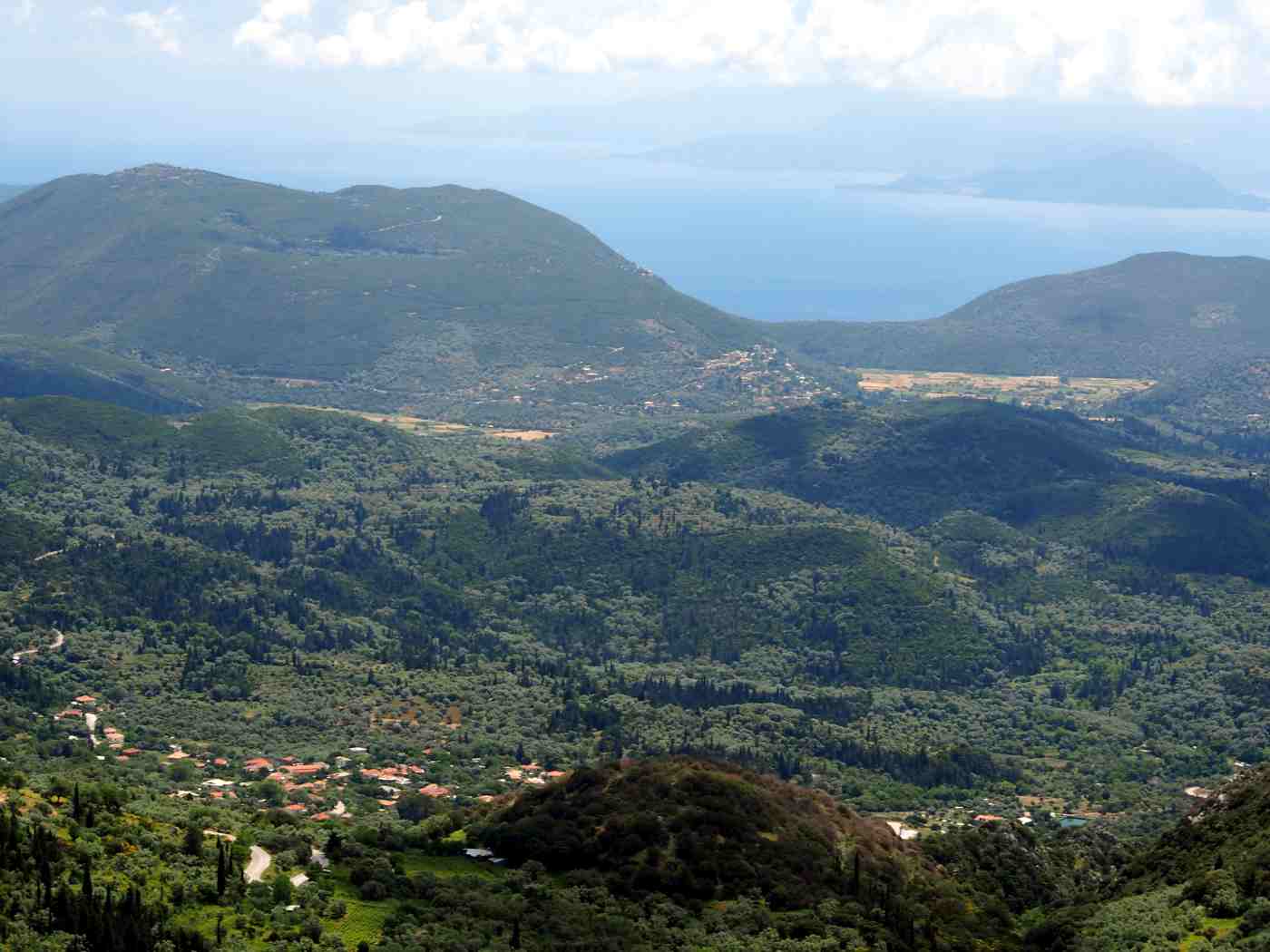
The geography of the island rewards drivers above all others. Many of the beaches of Lefkada, including the celebrated stretches of the west coast, sit below sheer cliffs reached only by narrow descents from the ridge. The interior hides stone villages, olive groves and mountain viewpoints far from any bus stop. With a car, a visitor chases morning light on one coast and sunset on the other without a second thought. The freedom to stop at a roadside taverna or a quiet cove defines the whole experience. Road travel, more than any ferry or organised tour, matches the island’s scattered and vertical layout.
Families gain the most from a hire car. Carrying beach gear, cool boxes and young children across the island by bus proves impractical, and the walk from the nearest stop to the sand often runs long and hot. A compact car handles the narrow lanes and the tight car parks near the coast, and it sips fuel across the short island distances. Couples value the same independence for exploring at their own pace and reaching a quiet beach before the crowds. Groups spread the daily rate across travellers, which keeps the cost per person modest even in the busiest weeks of the summer season.
The scale of the island suits self-drive perfectly. Lefkada measures barely thirty-five kilometres from north to south, so no journey lasts long, and a full day allows several unhurried stops. A driver breakfasts in Lefkada Town, swims on the west coast by late morning and reaches a southern beach by the afternoon. Distances that daunt on foot shrink behind the wheel to gentle drives of about half an hour or less. This compact geography, paired with light traffic outside the town centre, makes a hire car the single most useful decision a visitor takes. Every corner of the island falls within easy reach of a single base.
Where can you pick up a hire car for Lefkada?
Most visitors collect a car at Aktion National Airport near Preveza, about thirty minutes away, where firms keep terminal desks. Others rent in Lefkada Town, Nydri or Vasiliki.
The island carries no airport of its own, a fact that shapes every arrival. Anyone researching how to get to Lefkada quickly finds that the nearest gateway is Aktion National Airport near Preveza, on the mainland to the south. From the terminal the drive to the island takes about thirty minutes and crosses the floating causeway that joins Lefkada to the coast. A row of hire companies keeps desks inside the small terminal, which makes collection on arrival straightforward for most travellers. Booking the same firm for pick-up and drop-off at the airport removes any need for an onward transfer or a taxi to a town office.
Collection points also sit across the island itself. Lefkada Town, the capital at the northern tip, hosts agencies within walking distance of the harbour and the main squares. Nydri, the busy resort halfway down the east coast, and Vasiliki in the south each offer their own rental desks for guests based nearby. Visitors deciding where to stay in Lefkada match the pick-up point to their base and avoid a long first drive on a tiring travel day. A car delivered to the accommodation, offered by firms, spares new arrivals the search for the office altogether and starts the holiday without fuss.
Each pick-up option carries trade-offs worth weighing carefully. The airport desks suit travellers who want a car from the moment they land and plan to explore on the drive north. Renting in a resort town keeps costs down for those who arrive by bus or ferry and need wheels for only days. Prices, stock and opening hours vary between the airport and the town offices, so comparing them ahead of arrival pays off. The causeway carries all traffic onto the island, and the short crossing adds no toll or delay for a hire car, which keeps either choice simple in practice.
Timing the collection matters as much as the location itself. Flights into Aktion cluster at certain hours, and the terminal desks grow busy when several land together, so a little patience helps at the counter. Reserving in advance holds the agreed category and speeds the paperwork on arrival. Return arrangements deserve equal thought, since the drop-off must fit the departure time and the causeway crossing back to the mainland. A firm with a presence at both the airport and in Lefkada Town gives the most flexibility for one-way collection and return across the island. Which suits travellers arriving and leaving by different routes.
What documents and age rules apply to car rental in Lefkada?
Drivers need a full licence held for at least a year plus a passport or identity card. Most categories set a minimum age of about twenty-three, sometimes twenty-one.
The paperwork for a hire car follows a consistent pattern across the island. Every driver presents a full valid driving licence held for at least one year, together with a passport or national identity card for identification. A licence issued outside the European Union sometimes needs an international driving permit to accompany it, so travellers from further afield confirm the requirement before departure. The named driver on the agreement provides the payment card as well, usually in the same person’s name to match the contract. Additional drivers appear on the paperwork in person, each showing the same documents at the desk, and each earns cover only once listed by name.
Age rules shape both eligibility and price together. Most categories set a minimum age of about twenty-three, though firms accept drivers from around twenty-one for the smaller cars. A young-driver surcharge often applies below a set age, and it adds to the daily rate rather than the deposit. Larger vehicles and premium categories frequently carry a higher age floor of their own. An upper limit rarely troubles most visitors, yet older drivers confirm the terms where one exists. Reading the age conditions before booking avoids a refusal at the counter, which leaves a group stranded at the airport with no car and a spoiled first day.
A deposit forms the third pillar of the agreement. The rental firm blocks an amount on the lead driver’s credit card to cover the insurance excess and any damage, and it releases the sum after the car returns intact. A debit card or cash rarely satisfies this requirement, so the lead driver carries a credit card with enough headroom for the hold. The exact figure varies by category and by the level of cover chosen at the desk. Checking that the card holds sufficient available credit prevents an awkward decline at collection, particularly for the larger vehicles that command a higher hold across the peak season.
Cross-border and ferry plans call for early disclosure. A car hired on Lefkada stays on the island and the Greek mainland by default. Taking it on a ferry to a neighbouring Ionian island needs written permission from the firm. The same applies to any crossing of a national border, which most rentals prohibit outright. Declaring such intentions at booking keeps the insurance valid and avoids a breach of the contract. The agreement also names the fuel policy and the mileage terms. Both of which the driver reads in full before signing at the counter, since a hidden clause changes the true cost of the hire.
Should you book an automatic car ahead in Lefkada?
Automatic cars stay scarce on Lefkada and cost more than manuals, so early reservation matters. Booking ahead secures the transmission a driver needs before summer stock runs out.
Manual gearboxes dominate the hire fleets across Greece, and Lefkada follows the pattern closely. The island holds only a small number of automatic cars, and demand from visitors used to two pedals outstrips the supply every summer. An automatic therefore commands a premium over the equivalent manual, both in the daily rate and in sheer availability. A driver comfortable with a clutch finds far more choice and a noticeably lower price. One accustomed only to an automatic treats the booking as a priority rather than an afterthought, since the handful of such cars disappears first from the island’s fleets and rarely returns to stock during the busy weeks.
Booking well ahead solves the scarcity neatly. Reserving an automatic weeks before arrival, especially for July and August, holds one of the few available cars at a fixed rate. Leaving the decision until the desk risks finding every automatic already out, which forces an unwelcome switch to a manual on the island’s demanding roads. The premium for the automatic stays smaller when secured early, before peak demand pushes the rates up. A confirmed reservation also fixes the exact category, so a family needing extra space avoids a downgrade to a cramped car on a busy travel week when nothing better remains.
The choice of transmission carries practical weight on Lefkada. The steep, winding descents to the west-coast beaches demand careful gear control, and a manual allows the engine braking that spares the brakes on the long drops. An automatic handles the same roads, yet the driver relies more on the footbrake and manages the descent with extra caution. For town driving and the one-way streets of the capital, an automatic eases the stop-start crawl through the traffic. Weighing the terrain against personal habit guides the decision, and either transmission serves the island well once the driver adjusts to the gradients and the pace of the local roads.
Confirmation details deserve a second look before travel. A booking marked as automatic carries that guarantee only when the paperwork states it plainly, so the driver checks the confirmation on receipt. A voucher that lists a manual, or leaves the transmission blank, invites a dispute at the desk on a busy morning. Contacting the firm ahead of a peak arrival reconfirms the car and smooths the collection. The same diligence applies to child seats and other extras. Which the island’s smaller fleets stock in limited numbers and allocate to the earliest bookings across the summer season, leaving late requests unmet.
What you check in the rental terms?
Compare offers on unlimited mileage, the insurance excess and whether extra cover reduces it, and round-the-clock roadside assistance. These terms decide the true cost far more than the headline rate.
The headline price tells only part of the story. Unlimited mileage stands as the first term to confirm, because a capped allowance adds a charge for every extra kilometre and quickly erodes any saving on a touring holiday. Even on a small island, days spent crossing between the two coasts stack up the distance faster than a traveller expects. An agreement with no mileage limit lets a driver explore freely without watching the odometer. Most island fleets offer unlimited mileage as standard, yet the wording confirms it beyond doubt. Reading this clause before booking separates a genuine bargain from a rate that grows steadily across a week of driving.
Insurance sits at the heart of every agreement. Basic collision cover carries an excess, the sum the driver pays towards any damage before the policy responds, and that figure often runs high on the standard terms. Additional cover reduces the excess, sometimes to zero, in exchange for a higher daily rate or a separate premium. A driver weighs the cost of that top-up against the size of the deposit held on the card. Tyres, the underbody and the windscreen sometimes fall outside the basic policy. The driver checks which parts the cover excludes before signing for the car, since the rough west-coast lanes threaten exactly those areas.
Roadside support turns a breakdown from a crisis into an inconvenience. Round-the-clock roadside assistance, included in the better agreements, brings help to a stranded driver on a remote west-coast lane at any hour of the day or night. The contract names the number to call and the response the firm provides, whether a repair at the roadside, a recovery or a replacement car. On an island of steep, narrow roads far from a garage, this cover carries real value. Confirming that assistance runs day and night, and across the whole island rather than the towns alone, guards against a long wait in a distant and unfamiliar spot.
Several smaller clauses round out the review. The fuel policy sets whether the car returns full or on some other basis, and a full-to-full arrangement proves the fairest for most drivers. The list of named drivers, the terms for a second driver and any young-driver charge all appear in writing on the contract. A pre-hire inspection records existing scratches and dents on a diagram, which protects the renter from a false damage claim on return. Photographing the car at collection, inside and out, backs up that record and settles any dispute over the deposit calmly. Which matters when a firm inspects the bodywork closely at drop-off.
What are driving conditions like on Lefkada’s roads?
Traffic keeps to the right, and the coastal roads run in good condition. Routes up to the west-coast beaches turn narrow, steep and winding, so engine braking protects the brakes on descents.
Driving standards and rules follow the mainland pattern closely. Traffic keeps to the right across the island, and seat belts stay compulsory for every occupant. The main roads linking Lefkada Town, Nydri and Vasiliki carry a good surface and gentle gradients, so the everyday drives between the resorts pass without difficulty. Signage marks the principal junctions, though some minor turnings rely on local knowledge and a careful map. Speeds stay modest by necessity, since the island holds no fast dual carriageways and the terrain rarely allows a long straight. A calm, unhurried pace suits both the roads and the relaxed rhythm of the island itself.
The west coast presents the real challenge to any driver. Routes climbing to the celebrated beaches turn narrow, steep and sharply winding, with tight hairpins and blind bends that demand full attention throughout. On the long descents the brakes heat quickly under constant use, so engine braking in a lower gear spares them and keeps control on the gradient. A driver holds well to the right on the bends and expects oncoming traffic around every corner. These roads reward patience and a steady speed, and they punish haste, particularly late in the day when tired drivers head back from the sand into the low afternoon sun.
Other road users shape the experience just as much. Quads and scooters travel these roads in large numbers through the summer, and they appear suddenly on the bends and at the junctions. Cyclists and the occasional flock of goats add to the mix on the quieter inland lanes. Farm vehicles move slowly on the rural stretches during the harvest. A defensive style, with a generous following distance and a readiness to slow, handles these encounters safely. Night driving on the unlit mountain roads calls for extra care, since the edges fall away sharply and animals stray onto the tarmac after dark across the island.
Conditions shift with the season and the weather. Summer brings heavy holiday traffic to Lefkada Town and the resort centres, where the pace slows to a crawl at the peak hours. Sudden storms leave the mountain roads slick and wash gravel across the tarmac, so a driver eases off after rain. The bright, low sun of early morning and late afternoon dazzles on the east and west-facing stretches in turn. Fuel stations cluster in the towns and grow sparse in the hills, a point that shapes any longer inland drive. Planning the route around these factors keeps every journey relaxed and free of nasty surprises.
How do parking, fuel and two-wheelers work in Lefkada?
Parking near popular beaches fills early, so an early start secures a space. Petrol stations cluster in the towns, while quads and scooters offer a nimble alternative for short trips.
Parking rewards the early riser above all else. The car parks and verges near the popular beaches fill soon after breakfast in high summer. A late arrival faces a long walk or a hunt for a distant space. Setting off early secures a spot close to the sand and beats the worst of the heat and the crowds. In Lefkada Town the harbour-front parking fills quickly, and the one-way streets of the centre reward a cautious approach. A compact car slots into the tight spaces that defeat a larger vehicle, another firm argument for the smaller category when choosing the hire.
Fuel planning suits the island’s layout well. Petrol stations cluster in and around Lefkada Town, Nydri and Vasiliki, and they grow scarce on the mountain roads and the western coast. A driver keeps the tank comfortably full before a long inland loop rather than trusting to find a station in the hills. Opening hours shorten on Sundays and in the evening, so a top-up during the day beats a late scramble on empty. Paying by card works at the larger stations, though a small rural pump sometimes takes cash alone. Which a careful driver carries as a sensible backup for the quieter corners of the island.
Two wheels offer a nimble alternative for trips. Scooters and quads rent readily in the resort towns, and they thread through the summer traffic and slot into the smallest parking gaps with ease. For a single rider or a couple exploring the nearby coves, they cut both the cost and the parking worry of a car. The open ride suits the warm weather and the short island distances between beaches. A helmet stays compulsory at all times. The same steep, gravel-strewn mountain roads that test a car demand real respect on two wheels, so a rider matches the machine to genuine experience.
A few final habits smooth the whole hire. Carrying water, a paper map as a backup and a phone charger guards against the gaps in mountain signal and the long hot drives inland. An early start, a compact car and a relaxed pace together turn the island’s demanding geography into a genuine pleasure. Returning the car with the agreed fuel level and on time protects the deposit and closes the hire without dispute. With these simple measures, a self-drive holiday opens every corner of Lefkada, from the northern causeway to the southern surf beaches of the far coast, at the traveller’s own pace.


Frequently Asked Questions
Do you really need a car to visit Lefkada?
A car ranks as close to essential for anyone wanting to see the island beyond a single resort. Local buses connect Lefkada Town with Nydri, Vasiliki and a few larger villages, but the timetable runs thin and skips the west-coast beaches and the inland villages entirely. Taxis and organised excursions fill gaps, yet they limit flexibility and add cost across a week. A hire car opens the whole of the island, from the northern causeway to the southern tip, and turns scattered highlights into an easy day’s driving. Families carrying beach gear and children gain the most, while couples value the freedom to stop where they please.
Visitors who stay put in one resort manage without a car, but those who want to explore find road travel the single most useful choice on the island.
Where is the nearest airport for hiring a car for Lefkada?
Lefkada has no airport of its own, so the nearest gateway is Aktion National Airport near Preveza on the mainland to the south. The drive from the terminal to the island takes about thirty minutes and crosses the floating causeway that joins Lefkada to the coast. A row of hire companies keeps desks inside the terminal, which makes collecting a car on arrival straightforward for most visitors. Booking the same firm for pick-up at the airport and drop-off on return removes the need for a separate transfer. Those who arrive by bus or ferry instead collect their cars in Lefkada Town, Nydri or Vasiliki.
Reserving the vehicle ahead holds the agreed category and speeds the paperwork at the desk, which matters most when flights land together and the terminal counters grow busy.
What are the age and licence rules for car rental in Lefkada?
Every driver presents a full valid driving licence held for at least one year, along with a passport or national identity card. A licence issued outside the European Union sometimes needs an international driving permit to accompany it, so travellers from further afield confirm the point before departure. Most categories set a minimum age of about twenty-three, though firms accept drivers from around twenty-one for the smaller cars. Often with a young-driver surcharge added to the daily rate. Larger and premium vehicles frequently carry a higher age floor. The lead driver also provides a credit card in the same name for the deposit.
Which the firm blocks against damage and the insurance excess and releases after the car returns intact. Reading these conditions before booking avoids a refusal at the counter and a spoiled first day.
Are automatic cars available to hire on Lefkada?
Automatic cars exist on the island, but they stay scarce, because manual gearboxes dominate the hire fleets across Greece. The small number of automatics on Lefkada attracts strong demand from visitors used to two pedals, so they command a premium in both price and availability. A driver who needs an automatic treats the booking as a priority and reserves weeks ahead, especially for July and August when stock runs shortest. Leaving the choice until the desk risks finding every automatic already out, which forces a switch to a manual on the island’s demanding roads. Securing the car early holds a fixed rate and a smaller premium before peak demand lifts the prices.
Checking that the confirmation states the transmission plainly guards against a dispute at collection on a busy summer arrival, when nothing else remains free.
What you check before signing a car rental agreement in Lefkada?
Confirm unlimited mileage first, because a capped allowance adds a charge for every extra kilometre and erodes the saving on a touring holiday. Check the insurance excess, the sum paid towards any damage, and weigh whether extra cover to reduce it justifies the higher rate. Confirm that round-the-clock roadside assistance is included and covers the whole island, not the towns alone, since a breakdown on a remote west-coast lane needs help at any hour. Read the fuel policy, where a full-to-full arrangement proves fairest, and note the named drivers and any young-driver charge. A pre-hire inspection records existing scratches on a diagram, and photographs of the car at collection back up that record.
These terms decide the true cost and protect the deposit far more than the headline rate on its own.
What are the roads like for driving on Lefkada?
Traffic keeps to the right, and the main coastal roads between Lefkada Town, Nydri and Vasiliki run in good condition with gentle gradients. The routes climbing to the west-coast beaches turn narrow, steep and sharply winding, with tight hairpins and blind bends that demand full attention. On the long descents the brakes heat quickly, so engine braking in a lower gear spares them and keeps control on the gradient. Quads, scooters and the occasional farm vehicle share these roads through the summer, so a defensive style and a generous following distance help. Lefkada Town adds one-way streets and busy harbour traffic at the peak hours.
Parking near the popular beaches fills soon after breakfast, so an early start secures a space. A compact car and an unhurried pace turn the island’s demanding geography into a pleasure.