
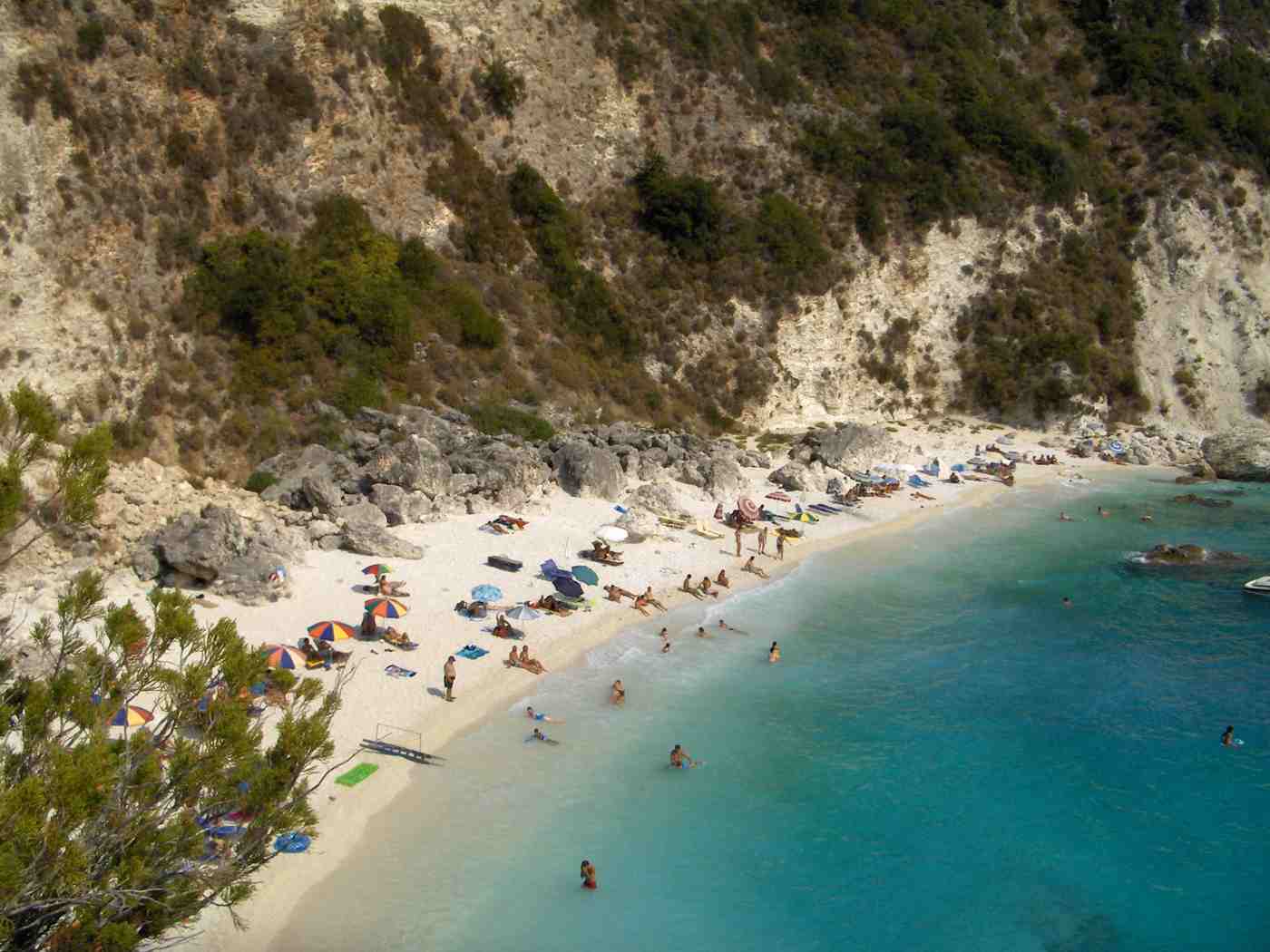
Agiofili is a small hidden cove on the south coast of Lefkada, tucked just around the headland east of the port of Vasiliki. The beach is made of smooth white pebbles that slope into deep, clear turquoise water, and pale cliffs rise behind the sand. A small cave sits at one end, while a chapel on the slope above gives the cove its name. The setting feels sheltered and secluded, cut off from the main road by cliffs and scrub. For visitors it ranks among the most photographed corners of the island, reached either by sea or by a rough track. Plan the whole trip with Greece Tours.
Reaching Agiofili takes a little effort, which keeps the cove quieter than the busy west-coast strands. A taxi boat shuttles from Vasiliki harbour through the day, crossing in about ten to fifteen minutes with a view of the cliffs from the water. The alternative is an unsurfaced track of roughly two and a half kilometres that ends at a paid car park by a gate. From there a short walk leads down to the sand. The cove is partly organised, with sunbeds and a small canteen, though shade is limited. Its calm, south-facing water suits swimmers, snorkellers and anyone seeking a quiet swim.
Where is Agiofili beach in Lefkada?
Agiofili lies on the south coast of Lefkada, just east of Vasiliki port around the first headland. The cove faces south, backed by pale cliffs, a small cave and a hillside chapel.
Agiofili sits on the southern shore of Lefkada, an Ionian island in western Greece. The cove opens just east of the harbour at Vasiliki, tucked behind the first rocky headland that shields it from the village. From the water the beach appears as a pale ribbon of pebbles set beneath tall cliffs, with the small chapel visible on the green slope above. This position, at the sheltered foot of the hills, explains why the cove stays calm on days when the open coast turns rough. The beach is compact, framed by rock on both sides, and reaches only a short way inland before the cliffs begin.
The pebbles at Agiofili are smooth, rounded and pale, almost white where the sun catches them. They shelve quickly into water that runs from bright turquoise near the shore to deep blue further out. Because the seabed drops away within strides, the swimming is deep close to the sand. Pale limestone cliffs enclose the cove on either side and rise well above the beach, giving the place its enclosed, amphitheatre feel. At one end a small cave cuts into the rock, a shaded hollow that draws swimmers and snorkellers. The chapel on the slope behind lends the beach its name.
Agiofili belongs to a stretch of the southern coast that differs from the exposed west of Lefkada. Here the land curves to face south, so the cove looks out towards open sea yet stays protected by its narrow shape and high walls. The nearest settlement is Vasiliki, a village and harbour known across the island for its wind and watersports. From Vasiliki the cove is only a short way by boat or a longer, bumpier drive by road. This closeness makes Agiofili an easy half-day trip for anyone based in the south, and a natural pairing with time spent at Vasiliki itself.
The cove is small, and its scale is part of the appeal. On a busy summer day the beach fills quickly, since the pebbly shore holds only so many people between the cliffs. Arriving early, whether by the first boats or the morning drive, gives the best chance of space near the water. The surrounding rock offers little level ground beyond the beach itself, so there is no sprawling resort behind it. Instead the cove keeps a raw, natural character, with the sea, the pale stone and the chapel above forming the whole scene. Few of the beaches of Lefkada feel this tucked away.
How do you get to Agiofili by taxi boat from Vasiliki?
A taxi boat runs from Vasiliki harbour through the day, crossing to Agiofili in about ten to fifteen minutes. The short trip arrives from the sea with a clear view of the cliffs.
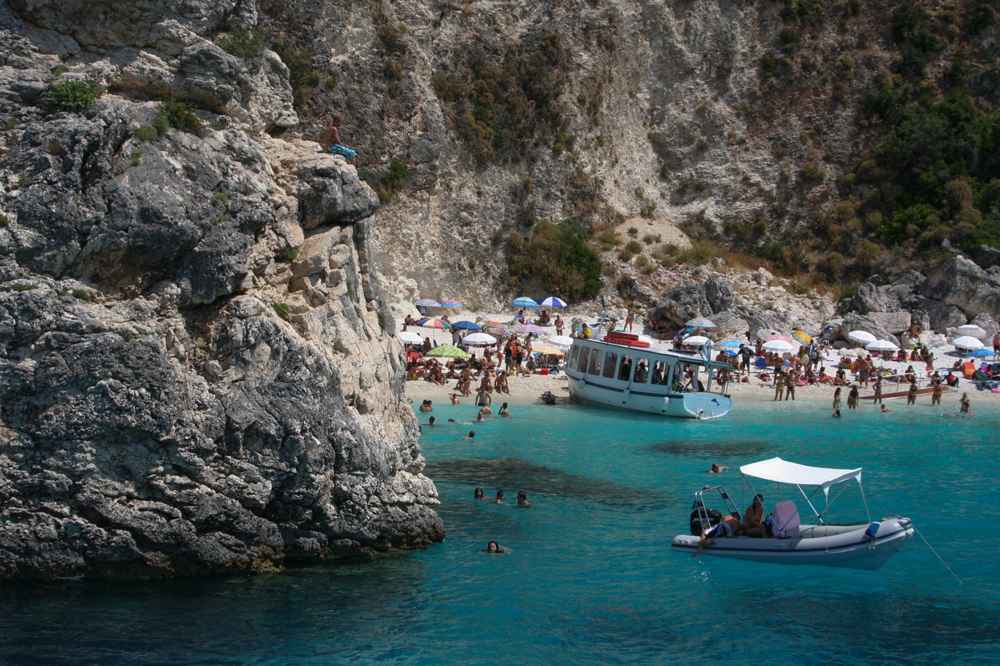
The simplest way to reach Agiofili is the taxi boat that shuttles from Vasiliki harbour. Small boats leave from the waterfront through the day and follow the coast east around the headland to the cove. The crossing takes roughly ten to fifteen minutes, a short hop rather than a long voyage. Arriving by sea gives the finest first view of the beach, as the pale cliffs and turquoise water open up ahead. Passengers step ashore straight onto the pebbles. The boat saves visitors the rough drive and the walk down from the car park, which makes it the popular choice in high summer for a smooth arrival.
Boats run back and forth at intervals through the day, so travellers can pick a return that suits them. It helps to check the time of the last boat before setting off, since missing it means a long way back by land. The service tends to be busiest in the middle of the day, when day-trippers arrive from around the island. Going early or later in the afternoon usually means a quieter crossing and more room on the beach. The boats carry beach bags and light gear without trouble, though space is limited, so it is wise to travel light and keep valuables close during the trip.
The taxi boat suits anyone staying in or near Vasiliki, as the harbour is only a short walk from most of the village. Visitors driving in from elsewhere on Lefkada can park in or around Vasiliki and take the boat from there, avoiding the dirt track altogether. The sea route is also the gentler option for families, older visitors or anyone who prefers not to tackle the rough road. Because the crossing is so short, seasickness is rarely a concern, and the calm southern water keeps the ride smooth. For many, the boat is simply the most enjoyable part of the day out.
Prices and timetables for the boat change through the season, so it is best to confirm details on the Vasiliki waterfront on the day. Tickets are usually bought at the quay before boarding. The last return of the day matters most, as the cove has no road link that is quick or easy after the boats stop. Travellers who plan to drive back instead say so, or simply leave a car at the car park above the beach. Either way, arriving by boat and combining it with a wander around Vasiliki harbour makes for a full and relaxed day on the south coast.
What is the dirt road and car park to Agiofili like?
Agiofili is reached by land on a rough, unsurfaced track of about two and a half kilometres from Vasiliki. The track ends at a paid car park by a gate, with a short walk down to the sand.
The land route to Agiofili leaves Vasiliki and follows an unsurfaced track for roughly two and a half kilometres. The surface is rough, with loose stones, ruts and dust, and it climbs and dips along the hillside above the coast. Cars manage the drive with care, taken slowly and in low gear on the steeper, looser sections. The track is narrow in places, so meeting an oncoming vehicle can mean easing past or reversing to a wider spot. Drivers who are wary of rough ground often prefer the boat instead. For those who press on, the road ends above the cove at a car park.
At the end of the track lies a paid car park set back from the beach by a gate. Visitors leave their vehicle here rather than driving down to the shore, as the final stretch is closed to cars. From the car park a short path leads down towards the sand, a brief walk on foot. The descent is straightforward but uneven in parts, so proper footwear helps, especially when carrying beach gear. The gate marks the boundary between the parking area and the cove itself. Arriving by road gives more freedom over timing than the boat, since there is no last crossing to catch.
Driving to Agiofili appeals to those who want to come and go on their own schedule. It suits visitors staying further along the coast, or anyone touring the south of Lefkada by car who wants to add the cove to a wider day. The rough track deters some, which helps keep the beach quieter than it otherwise be. Space in the car park is finite, so on peak days it fills, and arriving early is again the safer bet. The drive also allows heavier loads, such as a large umbrella, a cool box and plenty of water, which are harder to carry on the boat.
The condition of the track varies through the season and after rain, when ruts deepen and loose stone shifts. Low, small hire cars feel every bump, so a slow, patient approach matters more than the type of vehicle. It is worth checking the fuel and tyres before setting out, as the road is remote and lightly used. Once parked, the walk down rewards the effort with the same pale pebbles and clear water seen by those arriving by boat. For confident drivers the road is a practical choice, and the paid car park removes the worry of finding somewhere to leave the car.
What facilities does Agiofili beach have?
Agiofili is partly organised, with sunbeds and a small canteen near the shore. Shade is limited, so visitors bring an umbrella, water and footwear for the pebbles.
Agiofili offers a modest level of organisation rather than a fully equipped resort beach. Some sunbeds are set out on the pebbles, giving a comfortable base for those who prefer not to sit on the stones. A small canteen serves drinks and light refreshments, useful on a hot day when the sun bears down on the cove. Beyond these, facilities are basic, in keeping with the beach’s remote, natural feel. There is no long row of tavernas or shops behind the sand, only the cliffs and the chapel above. Visitors who want a full lunch usually eat back in Vasiliki before or after their trip.
Shade is the main thing Agiofili lacks. The cliffs rise around the cove, but they give little cover during the hottest hours, and there are no trees on the pebbles. The limited sunbeds and any umbrellas fill quickly on busy days. For this reason visitors carry their own umbrella or sunshade, along with a hat and strong sun protection. Water is the other essential, since the canteen is small and the day is hot, so bringing a full bottle each is sensible. Planning around the shade, or timing a visit for the softer light of late afternoon, makes the cove far more comfortable.
Footwear matters at Agiofili because the beach is pebbles rather than sand. The stones are smooth and rounded, but they can be hard underfoot and hot by midday, and the seabed is stony where swimmers enter the water. A pair of water shoes or sturdy sandals makes walking to the shore and wading in far easier. The same footwear helps on the path down from the car park, which is uneven in places. Packing a light mat or towel to spread over the pebbles adds comfort for lying down. These small preparations turn a rough, wild cove into a relaxed spot for the day.
It is wise to arrive self-sufficient. A cool box with water, snacks and fruit covers the day without relying on the canteen, which can be busy. Sun cream, a hat, an umbrella and swimming gear complete the basics. There are no large facilities for changing or storing belongings, so a simple beach bag kept close is enough. Rubbish leave with each visitor, as the cove is small and its charm rests on staying clean and unspoilt. With a little planning, the sparse facilities become part of the appeal, keeping Agiofili quiet, natural and free of crowds and clutter.
Is the snorkelling and swimming good at Agiofili?
Agiofili has deep, cool and exceptionally clear water that makes for excellent snorkelling and swimming. The sheltered, south-facing cove stays calmer than the exposed west-coast beaches, giving steady, easy conditions.
The water at Agiofili is the cove’s greatest draw. It runs deep, cool and exceptionally clear, so swimmers can see the pebbles and rocks well below the surface. The seabed shelves quickly from the shore, meaning proper swimming begins only strides in. This clarity and depth make the cove a fine place for snorkelling, with good visibility around the rocks at either end and near the small cave. Fish gather in the clear shallows and along the submerged stone. For confident swimmers the deep, calm water is a pleasure, though families with small children keep a close watch, as it deepens fast.
Agiofili faces south and sits tucked behind its headland, which keeps it sheltered from the prevailing winds. On days when the west coast is whipped by wind and swell, this cove often stays calm and swimmable. The protected position makes the water smoother and the entry easier, a clear contrast with the surf that can build on the open beaches. This calm is one reason snorkellers favour Agiofili, since flat water gives the best visibility below. The same shelter that draws windsurfers to nearby Vasiliki, on the other side of the headland, leaves this cove peaceful. The result is reliable, gentle swimming through much of the season.
Snorkellers find plenty to explore within the small cove. The clear water reveals rocky ledges, patches of pebble and the shadowed mouth of the cave, all easy to reach from the shore. Bringing a mask and snorkel is worthwhile, as the visibility rewards even a short swim along the cliffs. The rocks at each end of the beach hold small marine life and offer the most interesting ground to explore. Because the cove is compact and sheltered, snorkellers can move around it without straying into open water or strong currents. A pair of water shoes helps at the stony entry, protecting feet on the pebbled seabed.
The cool temperature of the water is worth noting, as the depth keeps it fresher than shallow, sandy bays. On a hot day this is welcome, offering a bracing swim in clean, clear sea. Because the cove is deep close to shore, it suits capable swimmers more than paddlers, and a float or noodle helps weaker swimmers stay comfortable. The calm surface makes it easy to swim out a little and look back at the pale cliffs and chapel. For many the swimming and snorkelling are the whole point of the trip, and the clarity of the water at Agiofili lingers in the memory.
How does Agiofili compare with the west-coast beaches of Lefkada?
Agiofili is smaller, sheltered and calmer than the famous west-coast beaches of Lefkada. Porto Katsiki and Kathisma beach are larger and more dramatic but face open sea and stronger wind and waves.
The west coast of Lefkada holds the island’s most famous beaches, and they differ sharply from Agiofili. Porto Katsiki is a vast strand at the foot of towering cliffs, wide, bright and open to the sea. Kathisma beach is a long, broad sweep of sand and pebble, busy and well organised, with a lively scene behind it. Both face the open Ionian to the west, where wind and swell build and the water can turn rough. Agiofili, by contrast, is tiny and enclosed, tucked on the sheltered south coast. Where the west-coast beaches impress by scale, this cove appeals through seclusion and calm.
Size is the clearest difference. Porto Katsiki and Kathisma beach can hold large crowds along their long shores, while Agiofili fills after only a modest number arrive. This makes the cove feel more intimate but also more easily crowded on a peak day. The west-coast beaches offer more sunbeds, more places to eat and easier road access with large car parks. Agiofili keeps facilities sparse and reaches the shore by boat or rough track. Visitors seeking amenities and space lean to the west; those after a quiet, hidden swim choose the cove. Many travellers see both during a stay to enjoy the contrast.
Conditions in the water set the two apart as much as size. The west-facing beaches take the brunt of the afternoon wind, so the sea there can be choppy, with waves rolling onto the sand. On such days swimming is livelier and less suited to snorkelling. Agiofili, sheltered and south-facing, usually stays calm and clear when the west coast is rough. This makes the cove the better choice for a peaceful swim or for exploring underwater with a mask. Wind decides much on Lefkada, and knowing which coast is calm on a given day helps in choosing where to spend it.
Scenery gives each its own character. The west coast dazzles with sheer white cliffs, huge horizons and sunsets over open sea, best seen from Porto Katsiki and the viewpoints above it. Agiofili trades that grandeur for a snug, framed setting of pale rock, a small cave and a chapel on the slope. Neither is better; they simply offer different moods. A well-planned trip on Lefkada takes in the sweeping western strands and the hidden southern cove alike. Pairing a windy afternoon on the west coast with a calm morning at Agiofili shows the full range of the beaches of Lefkada in one visit.
Who is Agiofili beach best suited to?
Agiofili suits swimmers, snorkellers and anyone seeking a quiet, scenic cove away from crowds. It rewards those happy to take a short boat trip or a rough drive and to bring their own shade.
Agiofili is best suited to visitors who value a quiet, natural setting over full facilities. The short boat trip or rough drive filters out casual passers-by, so those who make the effort find a cove that feels tucked away. Swimmers drawn to deep, clear water enjoy the beach most, as the sea shelves quickly into fine swimming. Snorkellers likewise find the clarity and the rocky ends rewarding. Photographers appreciate the pale cliffs, the turquoise water and the chapel above. Couples and small groups after a peaceful day come away pleased, provided they arrive prepared with water, shade and footwear for the pebbles.
Families can enjoy Agiofili, but the deep water calls for care with young children. The seabed drops away close to the shore, so the cove suits confident swimmers more than paddlers. Older children who swim well take to the clear water and the snorkelling with ease. The taxi boat from Vasiliki is the gentler way in for families, avoiding the rough track with children and gear. Bringing floats, an umbrella and plenty of water makes the day easier. With sensible supervision, families find the calm, sheltered sea a safer option than the surf of the west coast, as long as they respect the depth.
The cove suits anyone based in or near Vasiliki especially well. A stay in the village puts the harbour and its taxi boats within a short walk, so Agiofili becomes an easy addition to a day. Windsurfers and watersports visitors who come to Vasiliki for the wind can slip round to the cove for a calm swim afterwards. Independent travellers touring Lefkada by car can fold the beach into a wider loop of the south. Those seeking lively resorts, long sandy shores and tavernas prefer the west coast, where the larger beaches offer more of that bustle and choice.
Agiofili rewards the prepared far more than the casual visitor. Those who bring an umbrella, water, snacks and proper footwear, and who plan around the boat times or the state of the track, enjoy the cove at its best. Anyone expecting a large organised beach with ample shade and services is better served elsewhere on the island. For lovers of hidden coves, clear water and a wild, framed setting, spots on Lefkada match it. Combined with time at Vasiliki, whether for windsurfing or a meal by the harbour, a day at Agiofili rounds out a memorable stretch of the south coast.
Frequently Asked Questions
How do you get to Agiofili beach in Lefkada?
Agiofili is reached in two ways. The first is a taxi boat that shuttles from Vasiliki harbour through the day. Crossing to the cove in about ten to fifteen minutes and arriving from the sea with a view of the pale cliffs. The second is an unsurfaced track of roughly two and a half kilometres from Vasiliki, rough with loose stones and best taken slowly by car. This road ends at a paid car park by a gate, from where a short walk on foot leads down to the pebbles. The boat suits those who want an easy, scenic approach without tackling the track, while the drive gives freedom over timing and lets visitors carry heavier gear.
Many staying near Vasiliki simply walk to the harbour and take the boat across.
Is Agiofili beach sandy or pebbly?
Agiofili is a pebble beach, not a sandy one. The shore is made of smooth, rounded pebbles that are pale, almost white where the sun strikes them, and they shelve quickly into deep, clear water. The seabed at the water’s edge is also stony rather than sandy. For this reason a pair of water shoes or sturdy sandals is useful, both for walking across the hot pebbles and for wading into the sea over the stones. A light mat or thick towel spread on the pebbles adds comfort for lying down. While the beach lacks the soft sand of some west-coast strands, the pebbles keep the water exceptionally clear, since there is little fine sediment to cloud it.
The clarity is one of the cove’s defining features and a reward for the stony ground.
Does Agiofili beach have sunbeds and a canteen?
Agiofili is partly organised, so it does have sunbeds and a small canteen near the shore. The sunbeds give a comfortable base above the pebbles, and the canteen serves drinks and light refreshments through the day. However, both are limited, and on busy summer days the sunbeds fill quickly. The canteen is small and cannot replace a proper meal. Many visitors eat in Vasiliki before or after their trip and bring their own water and snacks to the beach. Shade is the main shortfall, as the cliffs give little cover and there are no trees on the pebbles. Carrying an umbrella or sunshade, along with plenty of water and sun protection, makes the day far more comfortable.
The sparse facilities suit the cove’s quiet, natural character rather than a resort-style beach.
Is the water at Agiofili good for snorkelling?
Agiofili offers some of the best snorkelling on this part of Lefkada. The water is deep, cool and exceptionally clear, so visibility below the surface is excellent, and swimmers can see the pebbles, rocks and small marine life well beneath them. The rocky ends of the cove and the small cave give interesting ground to explore, all within easy reach of the shore. Because the beach faces south and sits sheltered behind its headland, the sea usually stays calm, and flat water gives the clearest views underwater. Bringing a mask and snorkel is well worth it, along with water shoes for the stony entry.
The cove is compact, so snorkellers can move around it without straying into open water or strong currents. The clarity of the sea is one of Agiofili’s lasting impressions.
When is the best time to visit Agiofili beach?
Agiofili is best visited in the warmer months, from late spring through early autumn, when the sea is inviting and the taxi boat from Vasiliki runs regularly. Within the day, arriving early or later in the afternoon avoids the midday crowds and the strongest sun, since shade at the cove is limited. Morning boats bring the calmest, quietest conditions, while late afternoon offers softer light on the pale cliffs. The cove fills quickly on peak summer days because it is small, so an early start secures space near the water. The sheltered, south-facing position keeps Agiofili calm even when wind stirs the west coast, making it a reliable choice on breezy days.
Checking the last return boat, or the state of the track if driving, helps in planning a smooth visit.
Can you combine Agiofili with a visit to Vasiliki?
Agiofili pairs naturally with Vasiliki, which lies just around the headland to the west. The village is a well-known windsurfing and watersports base, drawing visitors for its steady afternoon wind, while the cove offers a calm, sheltered swim on the other side of the headland. Many spend a windy morning or afternoon on the water at Vasiliki and then slip round to Agiofili for a peaceful swim and snorkel in clear water. The taxi boat that reaches the cove leaves straight from Vasiliki harbour, so the two sit within easy reach. A meal or drink by the harbour rounds off the day.
Combining the two gives a full taste of the south coast of Lefkada, blending the energy of the village with the seclusion of the hidden cove.