
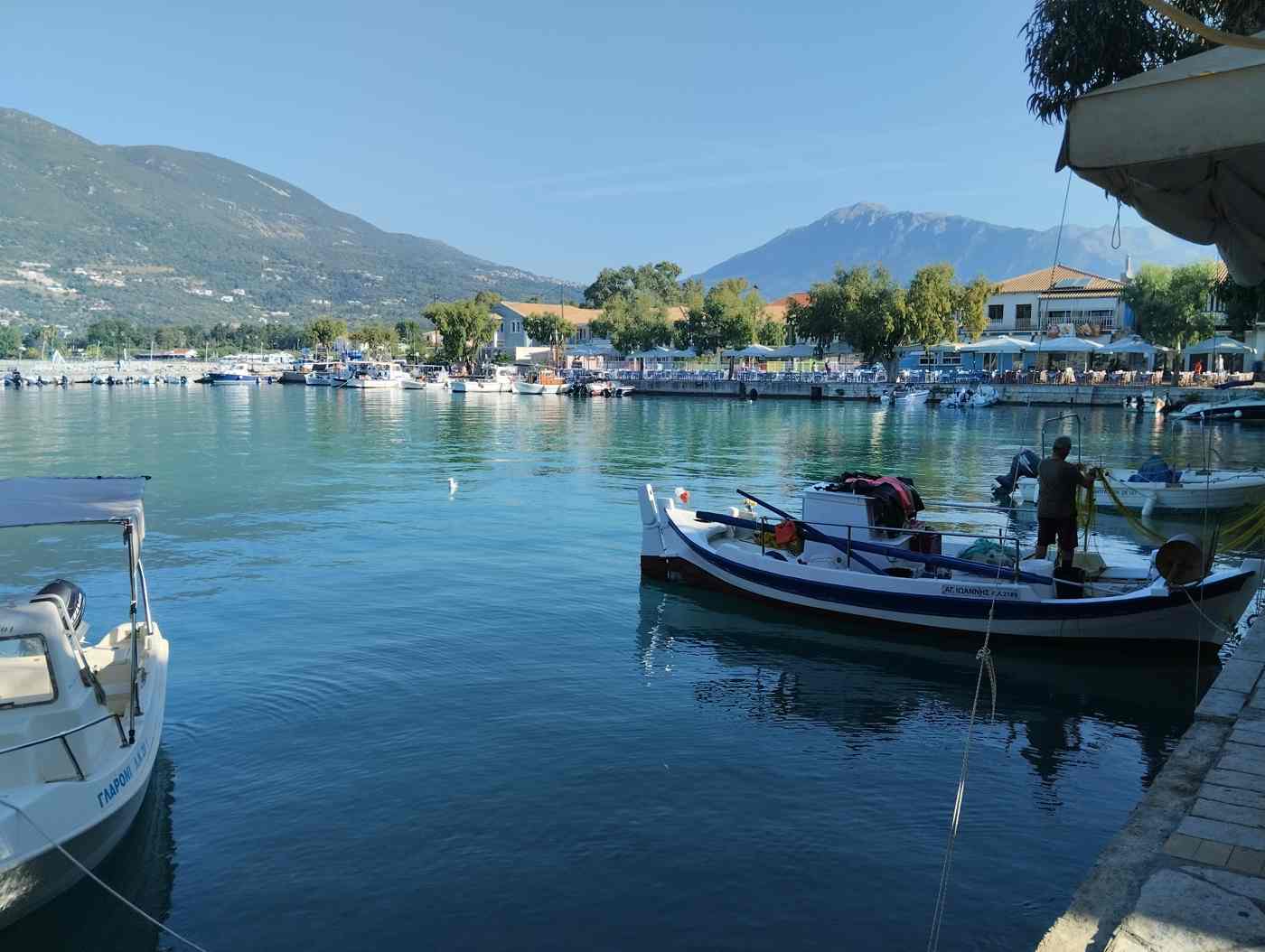
Vasiliki is a village and wide bay on the southern coast of Lefkada, about 40 km from Lefkada Town, and one of the best known windsurfing places in Europe. Its reputation rests on a thermal wind that sailors call Eric, produced by heating over the land combined with the funnel shape of the bay between the mountains. The wind appears from roughly April to October, picks up in the early afternoon and strengthens toward evening, blowing steadily at around force five to six on the Beaufort scale. Mornings stay calm and flat, which shapes the rhythm of the resort and the way its schools plan their days on the water. Plan the whole trip with Greece Tours.
The village keeps a working waterfront of tavernas and cafes behind a long pebble beach, with a harbour that doubles as a ferry port for Kefalonia and Ithaca. That daily wind pattern lets beginners learn in flat morning water and lets experienced sailors ride hard later in the day. Several windsurf, kitesurf, wingfoil and sailing centres offer hire, courses and camps, along with stand-up paddleboards for calmer sessions. Ponti sits at the western end of the bay, while Agiofili hides around the southern headland. Day boats run up the west coast, and the beaches near the cliffs lie about 15 km away by road from the bay.
What and where is Vasiliki in Lefkada?
Vasiliki is a village and wide bay on the southern coast of Lefkada, about 40 km from Lefkada Town. It ranks among the best known windsurfing bays in Europe.
Vasiliki occupies the southern coast of Lefkada, an Ionian island in western Greece reached by a causeway from the mainland. The village lies about 40 km from Lefkada Town, the island capital, at the head of a wide bay that opens toward the sea between steep mountain slopes. The funnel shape of that bay matters, because it channels the afternoon wind and gives Vasiliki its identity as a watersports centre. The settlement itself is compact, built along the shore, with a pebble beach. A harbour and a line of tavernas and cafes facing the water where visitors and sailors gather between sessions on the bay.
The bay faces broadly south and sits sheltered by the high ground that rises behind the village. This position gives Vasiliki calm, glassy mornings, which turn breezy each afternoon as the land heats and the wind builds. The combination of flat early water and reliable later wind is unusual, and it is the reason the village grew around windsurfing rather than around beach tourism. Compared with Nydri on the east coast, Vasiliki keeps a quieter, more purposeful character. Visitors arrive to sail, to learn, or to use the bay as a practical base for exploring the rest of the island by road and by boat.
Vasiliki works as an anchor point for the whole south of the island. The west-coast beaches with their tall cliffs lie about 15 km away by road, so a car or a scooter reaches them in a short drive. Day boats leave the harbour and run up the west coast to the famous cliff beaches, while taxi boats cross to a cove around the southern headland. The ferry port adds links to nearby islands, turning the village into a small transport hub. Few places on the island combine watersports, beach access, boat trips and island-hopping ferries in one modest waterfront the way Vasiliki does.
The village stays busy through the warm season and much quieter outside it, following the pattern of the wind and the schools. Facilities cluster near the shore, with the beach, the tavernas, the watersports centres and the harbour all within walking distance of each other. This concentration suits visitors who want a simple, walkable base rather than a large resort spread over a hillside. Vasiliki rewards those who plan their day around the water and the wind, sailing or swimming in the calm morning. Resting through the strong afternoon breeze. Returning to the waterfront for an evening meal beside the moored boats and the bobbing masts.
Why does the Eric wind make the Vasiliki bay work?
The Eric wind is a thermal breeze created by heating over the land and the funnel shape of the bay. It blows from roughly April to October at around force five to six.
Eric is the name local sailors and visiting windsurfers give to the thermal wind that defines Vasiliki. It forms as the sun heats the land and the surrounding mountains through the day, drawing air in off the sea. The steep, funnel-shaped bay between the ridges concentrates this flow, so the breeze arrives stronger and more focused than the open coast provide. The wind appears from roughly April to October, matching the warm months, and it follows a dependable daily timetable. That predictability, rather than raw strength alone, is what has drawn windsurfers to the bay for decades and built its wide European reputation.
The daily pattern is the key to the whole resort. Mornings stay calm, with flat, glassy water across the bay and little wind to speak of. The breeze usually picks up in the early afternoon as the land warms, then strengthens further toward evening, holding steady at around force five to six on the Beaufort scale. This rising curve means the water changes character through the day rather than switching on and off. Sailors can read the sky and the surface. Judge when the wind will fill in. Time their sessions to match their skill and the equipment they have rigged for the conditions of the day.
The funnel geometry of the bay does more than gather wind. It also gives fairly consistent direction, so the breeze tends to come across the water in a way that sailors can plan around from one day to the next. The high mountains that create the thermal effect also shelter the mornings, keeping them still while the afternoon convection builds. This mix of shelter and acceleration in the same place is what makes the bay work as a natural windsurfing arena. Similar thermal winds occur elsewhere on the Mediterranean, but sites combine the reliability, the safe learning water and the season length that Vasiliki offers.
Understanding the wind helps visitors plan their whole stay, not only their sailing. Anyone hoping for a still, warm swim heads to the water in the morning before the breeze arrives. Those chasing speed and power wait for the afternoon, when the surface roughens and the wind holds strong. Non-sailors learn to expect a breezy waterfront by mid-afternoon, which can suit some and unsettle others who prefer flat calm all day. The Eric wind is the single fact that explains most of what happens in the village. From the timing of lessons to the choice of beach and the rhythm of daily life along the shore.
What watersports and schools operate at Vasiliki?
Vasiliki supports windsurf, kitesurf, wingfoil and sailing centres offering hire, courses and camps, plus stand-up paddleboards. The bay serves beginners and experienced sailors alike across the season.
Windsurfing remains the core activity that built Vasiliki, and centres line the bay offering board and rig hire, tuition and structured camps. Instructors work with the daily wind, teaching in the calmer parts of the bay and moving students out as they progress. Courses typically cover complete beginners through to advanced sailors refining their technique in the stronger afternoon breeze. The long season, from roughly April to October, allows the schools to run extended programmes and to host visiting groups who return year after year for the reliable thermal wind and the shallow. Forgiving water at the western end of the bay near the village.
Alongside windsurfing, the bay has grown to host kitesurfing, wingfoiling and sailing, reflecting how watersports have broadened over the years. Kitesurfers and wingfoilers use the same dependable afternoon wind, working designated areas so that different craft share the water safely. Sailing centres offer dinghy tuition and hire, using the steady breeze to teach handling and racing skills. Stand-up paddleboards fill the calm mornings, when the flat water suits gentle exploration of the shoreline and the bay. This spread of disciplines means a single visitor, or a mixed group, can find ways to spend time on the water across one stay in the village.
The schools structure their teaching around the wind rather than against it. Beginners start in the flat morning water or in the sheltered shallows, building confidence before the breeze fills in. As their skills grow, instructors move them into the livelier afternoon conditions, matching the challenge to the sailor. Camps and multi-day courses use this progression deliberately, so students see steady improvement over a week. Equipment hire lets independent sailors rig their own choice of board and sail size to suit the day, while the centres keep watch over the water and offer support to anyone who needs help returning safely to the shore.
Vasiliki suits a wide range of ability because the bay itself offers different conditions in one place. The shallow, sandy corner gives a safe classroom, while the open water further out provides the power that advanced sailors want. Families often combine lessons for beginners with hire for experienced members, all from the same stretch of shore. The concentration of centres near the beach makes it easy to compare options and to walk between the water, the equipment stores and the tavernas. For anyone whose holiday centres on being on the water, the range of schools and disciplines is the village’s defining practical strength through the season.
Who does Vasiliki in Lefkada suit, given its calm mornings?
Vasiliki suits beginners who learn in flat morning water and experienced sailors who ride the strong afternoon breeze. Swimmers and families also enjoy the still early hours.
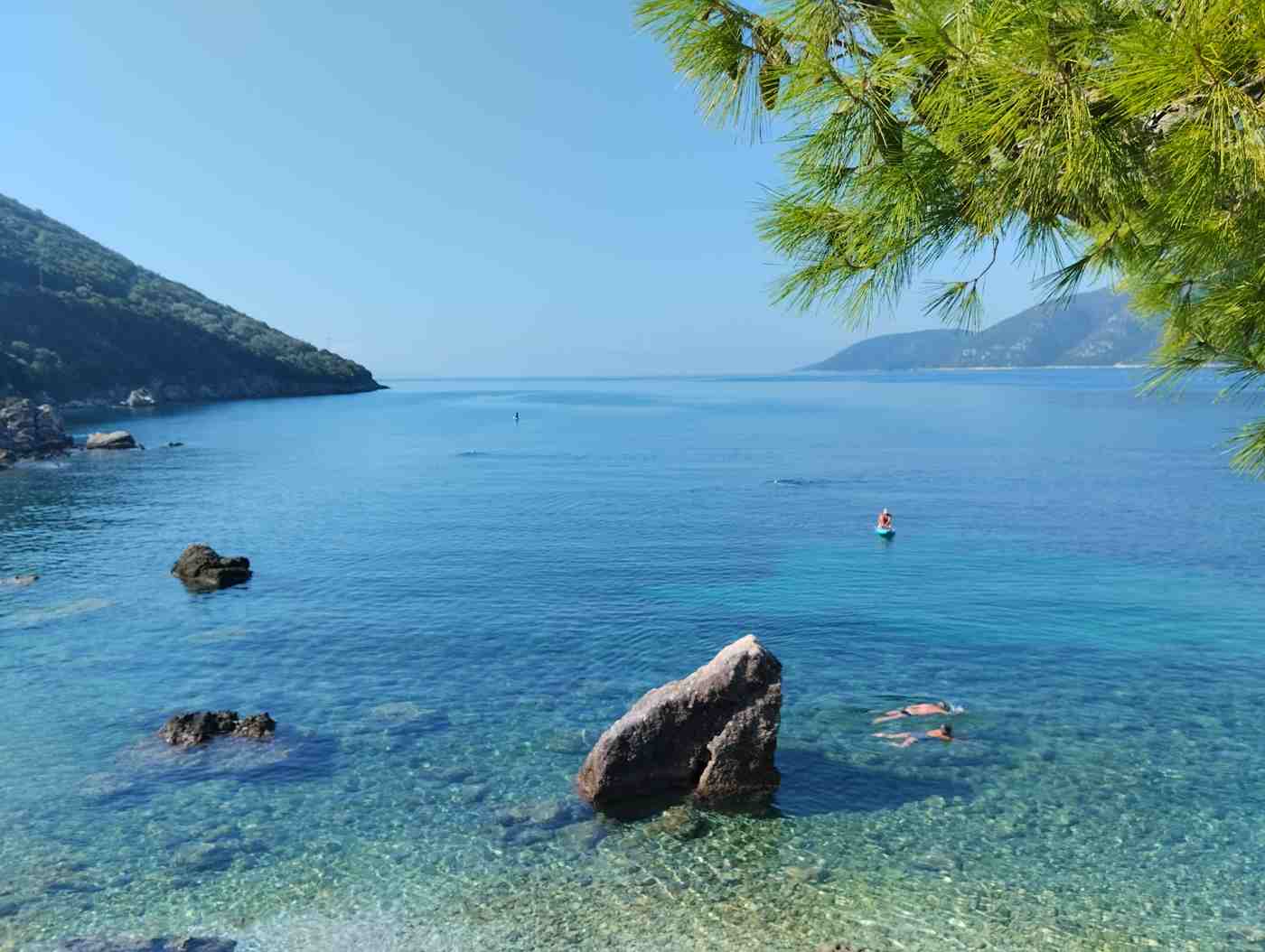
The calm mornings are as important to Vasiliki’s appeal as the afternoon wind. Before the breeze arrives, the bay lies flat and glassy, giving beginners an ideal surface on which to find their balance and learn the basics without being knocked about. Instructors use this window for first lessons, when a still surface removes much of the fear and lets students concentrate on technique. Swimmers and stand-up paddleboarders also favour these hours, gliding across the calm water before the afternoon changes its mood. This split personality, gentle early and lively later, is what lets the bay serve such different people from one shared shore each day.
Experienced sailors are drawn by the afternoon, when the wind holds steady at around force five to six and the water roughens into workable swell. These are the conditions that reward skill, with enough power for fast reaching and jumping once the breeze is fully in. Advanced windsurfers, kitesurfers and wingfoilers plan their days around this reliable afternoon strength, rigging smaller sails as the wind builds. The dependability matters as much as the strength, because sailors can count on the pattern rather than gambling on the forecast. For committed watersports visitors, that consistency across a long season is the main reason to choose Vasiliki over other bays.
Families find the bay workable because it offers something for mixed ability and mixed interest. Children and nervous beginners take lessons in the flat morning shallows, while stronger members hire equipment for the afternoon. Those who do not sail at all can swim early, relax through the breezy afternoon, and enjoy the waterfront in the evening. The village is compact and walkable, so members with different plans can meet easily between the beach and the tavernas. This flexibility makes Vasiliki a practical choice for groups whose members do not all want the same thing from a single day beside the water.
The bay is less suited to visitors who want flat, warm swimming conditions throughout the day, since the afternoon wind reliably stirs the surface. Anyone seeking a sheltered, all-day beach lounging experience prefer the calmer east coast or the sandy west-coast bays. Vasiliki rewards those who accept and plan around its wind, treating the breeze as the point of the place rather than an inconvenience. Understanding that trade-off before arriving prevents disappointment. For the right visitor, the daily rhythm of calm and wind gives structure and variety to a stay that a still, unchanging beach simply cannot match at all.
What is the Vasiliki village, its beach and waterfront like?
Vasiliki keeps a working waterfront of tavernas and cafes behind a long pebble beach. The harbour anchors the village, with moored boats and a lively evening atmosphere.
The heart of Vasiliki is its waterfront, a line of tavernas and cafes set behind a long pebble beach that curves along the head of the bay. The beach shelves into clear water and provides the launching ground for the watersports centres as well as space for swimmers and sunbathers. Because the shore is pebble rather than sand, the water stays clean and clear close in. The village behind is modest in scale, with narrow streets and small shops serving both residents and visitors. This human-sized layout keeps everything within an easy walk and gives the place a relaxed, unhurried feel outside the busy afternoon sailing hours.
The harbour defines the working character of the village. Fishing boats, day-trip vessels and the ferry all use the same stretch of quay, so the waterfront stays active with comings and goings through the day. Yachts moor here too, adding masts to the view and custom to the tavernas. The mix of purposes gives Vasiliki a genuine port atmosphere rather than a purely decorative one. Visitors can watch boats loading and unloading, day-trippers gathering for their trips. Sailors carrying rigs down to the water. All against the backdrop of the mountains that rise steeply behind the settlement and shelter the calm morning bay.
Evenings bring the waterfront to life as the wind drops and people gather to eat beside the moored boats. The tavernas serve fish and Greek dishes, and the cafes fill with sailors comparing notes on the day. The atmosphere is social but low-key, in keeping with a village built around a sport rather than around nightlife. Lights reflect off the calm evening water, and the harbour settles as the day boats return. This gentle close to the day suits the rhythm set by the wind, rewarding a full afternoon on the water with a quiet meal and easy conversation by the shore.
The overall impression of Vasiliki is of a real village that happens to be devoted to watersports, rather than a purpose-built resort. Its buildings serve daily life as well as tourism, and its beach and harbour work for locals as much as for visitors. This authenticity is part of the appeal for those who prefer a genuine Greek waterfront to a manufactured one. The scale stays small and the pace stays gentle, and the mountains and the bay give the setting a strong sense of place. For many returning visitors, the character of the village is as much a draw as the wind that made it famous.
How do the ferries, Ponti and Agiofili connect to Vasiliki?
Vasiliki’s harbour serves ferries to Kefalonia and Ithaca, with seasonal links toward Meganisi. Ponti lies at the western end of the bay and Agiofili sits around the southern headland.
The harbour at Vasiliki doubles as a ferry port, giving the village links to nearby islands that few small resorts can match. Regular services connect it to Kefalonia and Ithaca across the water, turning the village into a practical gateway for island-hopping in the southern Ionian. Seasonal links run toward Meganisi as well, adding a closer hop during the busier months. This ferry role means visitors can base themselves in Vasiliki and reach neighbouring islands directly, without returning to the main port on the far side of the island. The connection widens what a stay in the village can include beyond the bay itself and its wind.
Ponti sits at the western end of the bay and is the shallow, sandy corner where the schools do much of their teaching. The gentle water and forgiving bottom make it a natural classroom for beginners learning to windsurf, sail or paddleboard. Because it lies to the side of the main channel, Ponti often stays calmer and more sheltered than the open bay, which suits first lessons and nervous starters. The schools cluster their beginner activity here, so the corner becomes busy with students and instructors through the day. For anyone starting out, Ponti is the part of Vasiliki they will come to know best over their stay.
Agiofili lies around the headland to the south, a small cove of white pebbles and very clear water. It is reached by taxi boat from the Vasiliki harbour or on foot and by vehicle down a steep, rough track. The taxi boats offer the simplest approach, running across from the port and saving visitors the difficult descent. The reward is a sheltered cove with striking water clarity, separate from the wind of the main bay and popular for swimming and snorkelling. Because access is limited, Agiofili keeps a quieter feel than the village beach, and the short boat ride from the harbour is part of its appeal.
Together these connections make Vasiliki more than a single beach. The ferries open the sea routes to Kefalonia, Ithaca and Meganisi, while Ponti and Agiofili give two contrasting local waters within easy reach of the harbour. A visitor learn in the shallows at Ponti in the morning, take a taxi boat to swim at Agiofili. Board a ferry another day to explore a neighbouring island. This range of short journeys from one small port is central to Vasiliki’s usefulness as a base. The harbour ties the village to the wider Ionian in a way that shapes how many people plan their whole stay.
How does Vasiliki work as a base, and how does it compare with Nydri?
Vasiliki suits visitors who plan around watersports and boat trips, with the west-coast beaches about 15 km away. Compared with Nydri, it stays quieter and more focused on the water.
Vasiliki makes a practical base for exploring the south and west of the island. Day boats run from the harbour up the west coast, and the road journey to the tall cliff beaches takes only a short drive of about 15 km. From the village a visitor can reach several of the beaches of Lefkada without a long transfer, combining watersports days with beach days as the mood suggests. The ferry links add island-hopping to the mix, so a stay here need not be confined to one bay. Few bases on the island offer this blend of the water, the road and the sea routes in one place.
Boat trips are a central part of using Vasiliki as a base. Day boats run up the west coast to the famous cliff beaches, including Porto Katsiki and Egremni beach, which are difficult to reach fully by land. Approaching them from the sea gives a different perspective on the white cliffs and the deep blue water below them. These trips leave from the same harbour that handles the ferries, so booking and boarding are simple. For visitors without a car, the boats are the easiest way to see the dramatic west coast. For those with a car they offer a relaxing alternative to the winding cliff-top roads above the shore.
Compared with Nydri on the east coast, Vasiliki is quieter and built around watersports rather than mass boat tourism. Nydri is the busier resort, with a large marina, extensive day-cruise trade and a livelier commercial strip. Vasiliki keeps a narrower focus, drawing visitors who come chiefly for the wind and the water rather than for a broad resort scene. This makes it calmer in the evenings and more purposeful in its character. Travellers choosing between the two are really choosing between a busy, all-round east-coast resort and a specialised. Wind-driven bay on the south coast with a stronger sense of a single purpose.
The choice of base depends on what a visitor wants from the island. Those set on windsurfing, kitesurfing and a quieter waterfront find Vasiliki the natural home, close to the west-coast beaches and connected to neighbouring islands by ferry. Those who want busier nightlife, larger cruise choices and an east-coast setting prefer Nydri or the towns near it. Both sit on the same island and are linked by road, so a determined traveller can sample either. For anyone whose holiday revolves around being on the water, though, Vasiliki’s combination of wind, boat trips and beach access makes it the more focused and rewarding choice.




Frequently Asked Questions
How far is Vasiliki from Lefkada Town and how do you get there?
Vasiliki lies about 40 km from Lefkada Town on the southern coast of the island. The journey follows the island road south from the capital, crossing the interior toward the bay, and takes roughly under an hour by car depending on traffic and stops. Lefkada itself connects to the mainland by a causeway, so drivers can reach the island and continue to Vasiliki without a sea crossing. Buses also link the main towns, though services are less frequent than a private vehicle.
Many visitors hire a car or a scooter to reach Vasiliki and to explore the surrounding area, since the west-coast beaches and other parts of the island sit within easy driving distance of the bay once you arrive at the village.
What is the Eric wind and when does it blow?
Eric is the name given to the thermal wind that makes Vasiliki famous for windsurfing. It forms as the sun heats the land and the mountains around the bay, drawing air in from the sea, while the funnel shape of the bay concentrates and accelerates that flow. The wind appears from roughly April to October, matching the warm season. Its daily pattern is dependable: mornings stay calm and flat, the breeze picks up in the early afternoon. It strengthens toward evening. Holding steady at around force five to six on the Beaufort scale.
This reliability, rather than extreme strength, is what draws sailors, because they can plan their days around a wind that arrives on a broadly predictable schedule right through the season.
Is Vasiliki suitable for beginner windsurfers?
Vasiliki suits beginners well because of the calm mornings and the sheltered teaching water. Before the afternoon wind arrives, the bay lies flat and glassy, giving new sailors a forgiving surface on which to learn the basics. Ponti, at the western end of the bay, is the shallow sandy corner where the schools teach, and its gentle conditions make it a natural classroom for first lessons. Several centres offer courses and hire aimed at complete beginners, with instructors who time lessons to the wind. As students improve, they can move into the livelier afternoon breeze at their own pace.
This progression, from flat morning shallows to stronger open water, is one reason the bay serves such a wide range of ability in a single place.
Can you reach Porto Katsiki and Egremni from Vasiliki?
Vasiliki works as a practical base for reaching the west-coast beaches, which lie about 15 km away by road. Day boats run from the harbour up the west coast to the tall cliff beaches. Including Porto Katsiki and Egremni beach, offering a sea-level view of the white cliffs and clear water. These boats leave from the same quay used by the ferries, so joining a trip is straightforward. Visitors with a car can also drive to the cliff-top access points and descend to the beaches, though the roads wind and the descents can be steep.
For those without transport, the day boats are the simplest way to see the dramatic western coastline from Vasiliki, combining beaches in one relaxed outing on the water.
How do you get to Agiofili beach?
Agiofili lies around the headland to the south of Vasiliki, a small cove of white pebbles and very clear water. There are two ways to reach it. The easiest is by taxi boat from the Vasiliki harbour, which crosses directly to the cove and saves visitors any effort on land. The alternative is on foot or by vehicle down a steep, rough track that descends to the beach, which requires care and suitable footwear. The cove sits sheltered from the wind of the main bay, so its water stays calm and exceptionally clear, making it popular for swimming and snorkelling.
Agiofili keeps a quieter atmosphere than the village beach, and the short boat ride from the harbour is part of its appeal.
How does Vasiliki compare with Nydri as a place to stay?
Vasiliki and Nydri sit on opposite coasts of Lefkada and offer different experiences. Vasiliki is on the south coast, quieter and built around watersports rather than mass boat tourism, drawing visitors who come mainly for the wind and the water. Nydri, on the east coast, is the busier resort, with a large marina, extensive day-cruise trade and a livelier commercial strip. Choosing between them depends on what you want from a stay. Vasiliki suits windsurfers, kitesurfers and those seeking a calmer, more focused waterfront close to the west-coast beaches and connected to neighbouring islands by ferry. Nydri suits visitors who prefer busier nightlife and a wider choice of cruises.
Both are linked by road, so a traveller can visit either from a base on the same island.