
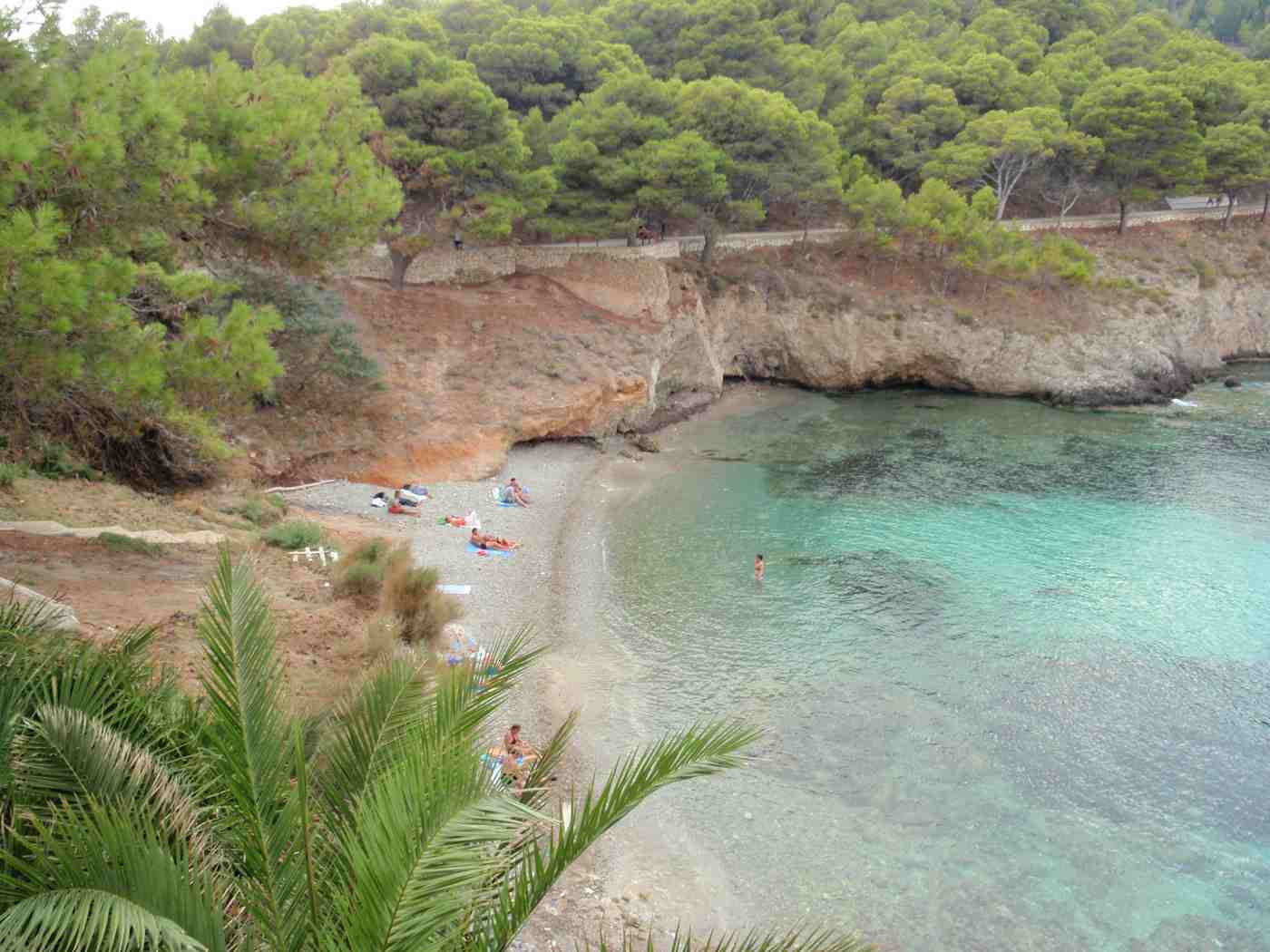
Agia Efimia sits on the east coast of Kefalonia, on a wide bay about 9 km north of Sami and around 30 km from Argostoli. The village grew around a working quay, and that quay still sets the daily rhythm. Yachts running the Ionian circuit tie up stern-to along the front, and masts line the water from June through September. Tavernas and cafes fill the strip behind them, while the ground climbs steeply behind the houses toward the ridge road that runs north to Assos and Fiskardo. Ithaca closes the eastern view across a channel about 5 km wide, its ridges visible from every table on the quay. Plan the whole trip with Greece Tours.
The village stayed small and low after the earthquake flattened most of Kefalonia, and it never turned into a large resort. Agia Efimia holds no broad sandy beach of its own, and the shoreline in front of the houses is a short pebble strip. Better swimming spreads along the coast at Agia Paraskevi, Ellinika and Lithovatis, each within about 3 km of the harbour. That trade suits travellers who want a quiet base rather than an organised beach. Myrtos, Assos and the caves near Sami all sit within a 30-minute drive, and the harbour keeps a working character that the larger southern resorts gave up long ago.
Where is Agia Efimia in Kefalonia and what kind of village is it?
Agia Efimia sits on the east coast of Kefalonia, about 9 km north of Sami and around 30 km from Argostoli. The harbour village occupies a wide bay that looks across the channel to Ithaca.
The village occupies the mouth of a broad bay on the eastern side of the island, where the coast road from Sami runs north toward Divarata. Agia Efimia stands about 9 km from Sami, the island’s second port, and roughly 30 km from Argostoli, the capital on the southwest bay. The bay opens east, so the water in front of the quay stays sheltered from the prevailing summer northwesterly wind. Behind the houses the ground rises quickly into the ridge that carries the road north. Anyone planning a first circuit of Kefalonia finds Agia Efimia sitting almost halfway up the east coast, which shortens most driving days.
The built village runs along a single waterfront strip with a short grid of lanes climbing behind it. Houses stand one or two storeys high, a direct result of the rebuilding that followed the earthquake, when height limits and anti-seismic rules were applied across the island. Pale rendered blocks replaced the older stone architecture, so Agia Efimia reads as plain rather than Venetian in style. The church that gives the village its name sits close to the harbour, a short walk from the moorings. Walking the whole front, from the northern end of the quay to the southern corner, takes about ten minutes and fixes the scale of the place.
Agia Efimia holds a resident population of roughly 500 people, and the number climbs through July and August without ever reaching resort levels. The village supports a bakery, mini markets, a pharmacy and a fuel station, so ordinary life continues outside the sailing season. Fishing boats still work from the northern end of the harbour, tied among the visiting yachts and dinghies. Compare that with Skala or Lassi in the south, where hotel blocks and organised beaches dominate the shoreline, and the difference in character becomes obvious. Agia Efimia trades nightlife for space on the quay and an early-morning quiet that lasts until the first crews start moving.
The village sits at a useful junction on the island’s road network. The coast road from Sami arrives from the south. A second road climbs west toward Divarata and meets the main north-south highway. That road leads to Assos and Fiskardo one way and Argostoli the other. Agia Efimia therefore reaches both coasts without a long drive, which matters on an island of about 773 square kilometres crossed by mountain ridges. The climb out of the village gains height within 2 km and opens views back over the bay and the Ithaca channel. Drivers heading for Myrtos take this road and turn north at Divarata after about 10 km.
What makes the harbour at Agia Efimia a sailing stop?
The harbour offers a long stone quay with stern-to berthing and shelter from the summer northwesterly. Its position halfway along the Ionian sailing circuit puts Agia Efimia on the standard flotilla route between Lefkada, Ithaca and Kefalonia.
The quay wraps the head of the bay in a long stone arc, and yachts berth stern-to against it with anchors laid out into the water. Depths at the outer sections take cruising yachts of about 12 to 15 metres without difficulty, and the inner corner takes smaller craft and local fishing boats. The bay faces east, away from the prevailing summer northwesterly, so the water at the quay stays flat through most afternoons. Crews step straight from the transom onto the promenade, with tavernas within 20 metres of the mooring lines. That directness explains the harbour’s popularity more than any single facility on the waterfront does.
Agia Efimia sits at a convenient point on the standard Ionian sailing week. Boats leaving the charter bases around Lefkada work south through Meganisi and Ithaca, then cross to the Kefalonian coast before turning back north. Kioni and Frikes on Ithaca lie within a crossing of about 6 to 8 nautical miles, and Sami sits roughly 5 nautical miles south along the same shore. Fiskardo, the busiest harbour in the north, sits about 14 nautical miles away around the headlands. Those distances fall inside a single relaxed sailing day, so the village receives boats arriving from three directions through the afternoon. Crews plan the leg over breakfast rather than the night before.
Flotillas built the harbour’s summer profile, and groups of eight to twelve yachts sailing under one lead boat still arrive together on fixed weekly patterns. Charter companies use Agia Efimia as a scheduled overnight stop rather than a base, so the fleet turns over completely every morning. The quay also draws independent cruisers who avoid the tighter, busier moorings at Fiskardo. Water and shore power connections run along the front, and the village shops handle provisioning for a crew of six without a drive elsewhere. Bookings for a berth are not arranged in advance, so arrival time decides position on the quay through July and August.
The daily rhythm on the waterfront follows the boats rather than the clock. Crews leave between 08:00 and 10:00, and by mid-morning the quay stands almost empty, with the promenade given back to residents and to visitors staying ashore. Arrivals begin around 15:00 and build until sunset, when the outer quay fills and later boats raft alongside. Dinner starts late, and the front stays busy until about midnight before the harbour goes quiet again. Travellers who stay a week in the village watch this cycle repeat, with a different set of flags along the quay on each successive evening. The turnover keeps the front feeling new without changing the village at all.
What is life like along the waterfront in Agia Efimia?
Tavernas, cafes and bars line the quay in one continuous strip, with tables set within metres of the moored boats. The waterfront carries most of the village’s activity, from morning coffee through a late dinner, and stays free of clubs.
The promenade runs for roughly 400 metres along the harbour, and the eating and drinking places occupy nearly all of it. Tables sit on the paving between the buildings and the water, so diners look across the transoms of the yachts to the Ithaca ridges beyond. Kitchens serve from about midday until late, with a gap in the early afternoon at the quieter end of the strip. Cafes take the morning trade, and the same tables turn into dinner covers by 20:00. Nothing along the front reaches the scale of a resort strip, and the walk from the first taverna to the last takes under ten minutes.
Fish landed at the harbour appears on menus alongside the standard Kefalonian dishes. Kreatopita, the island’s spiced meat pie, and kefalonitiki riganada turn up on most lists, and grilled fish is priced by weight at the counter rather than by portion. Robola, the white wine grown on the high Omala valley about 35 km southwest, pours by the carafe in most kitchens along the quay. Producers from the same valley supply the village shops as well. Eating on the waterfront costs more than eating inland at a village such as Karavomilos, and the premium buys the harbour view rather than a different kitchen. Portions run large, and two mezedes feed one person.
Daily errands happen within a 300-metre radius of the quay. A bakery opens early for crews leaving on the morning breeze, and mini markets stock groceries and ice. A pharmacy and a fuel station serve the surrounding hamlets as well as the village itself. Boat hire desks, a dive operation and a laundry sit among them on the front and the first lane behind. That mix keeps the village functional through the shoulder months, when the yacht traffic drops away. Residents shop at the same counters as visitors, which keeps opening hours steady rather than seasonal along the main strip. Deliveries reach the village early, so bread and ice run out rarely.
Evenings in Agia Efimia stay low-key by design. Bars on the front play music at conversation volume, and the village holds no clubs, no organised entertainment strips and no beach party venues. Families with young children and older couples make up much of the shore-based crowd, alongside the sailing crews. The last tables clear around midnight, and by 01:00 the loudest sound on the quay is halyards tapping against masts. Travellers looking for late nightlife drive about 30 km to Argostoli or 25 km south to Poros. Most people who choose this village do so precisely to avoid that. Sleep comes easily in rooms facing the lanes behind the front.
Which beaches lie close to Agia Efimia?
Agia Paraskevi sits at the village edge, and the pebble coves of Ellinika and Lithovatis lie within about 3 km along the coast. The village shoreline itself is a short pebble strip rather than a broad sandy beach.
The honest position on swimming comes first: Agia Efimia has no beach of resort proportions. The shore beside the harbour is a narrow pebble and rock margin, backed by the promenade and reached by ladders and steps in places. Swimmers use it for a quick dip rather than for a full beach day with loungers and umbrellas. Travellers who want sand under a sunbed drive 9 km south to Antisamos or about 20 km northwest to Myrtos. Setting that expectation early prevents the disappointment reported by visitors who booked the village on the strength of harbour photographs alone. Photographs of the quay show masts and water, not sunbeds and sand.
Agia Paraskevi lies at the northern edge of the village, about 600 metres from the quay and reachable on foot in ten minutes. The cove holds white pebbles and clear water over a stony bed. A small taverna stands above it, with space for about forty people at the height of the season. The seabed shelves quickly, which suits confident swimmers more than toddlers. Shade is limited to the edges, so an umbrella is worth carrying. The full list of options across the island is set out in the guide to Kefalonia beaches, which covers the sandy stretches further south. Arriving before 10:00 secures a flat spot on the pebbles.
Ellinika sits about 2 km north of the village along the coast road, a long pebble bank with deep blue water and a view straight across to Ithaca. The beach stays undeveloped, with no organised sunbed rows and limited parking on the verge above. Lithovatis lies roughly 3 km further on toward the Katelios headland side of the bay, smaller again and often almost empty in the morning. Both coves face east, so they catch the sun early and fall into shade by late afternoon. Neither has a taverna on the sand, which makes water and food worth bringing from the village shops. Snorkelling over the rocks at either end rewards the walk down.
Distances from Agia Efimia put the island’s famous beaches within a short drive rather than on the doorstep. Antisamos, the pebble bay used as a filming location for Captain Corelli’s Mandolin, sits about 12 km south past Sami and takes 20 minutes by car. Myrtos, the white pebble curve below the cliffs between Divarata and Assos, sits about 20 km northwest and takes around 35 minutes. Emblisi and Foki, near the northern tip, lie about 32 km away. A car turns the village into a base for a different beach each day without any drive exceeding 45 minutes. Fuel costs stay modest because no leg exceeds 35 km each way.
What lies across the water from Agia Efimia and where do boat trips go?
Ithaca fills the eastern horizon across a channel about 5 km wide, its ridges rising directly opposite the quay. Boat trips from the harbour cross to Ithaca’s west coast, and small self-drive boats reach the coves along both shores.
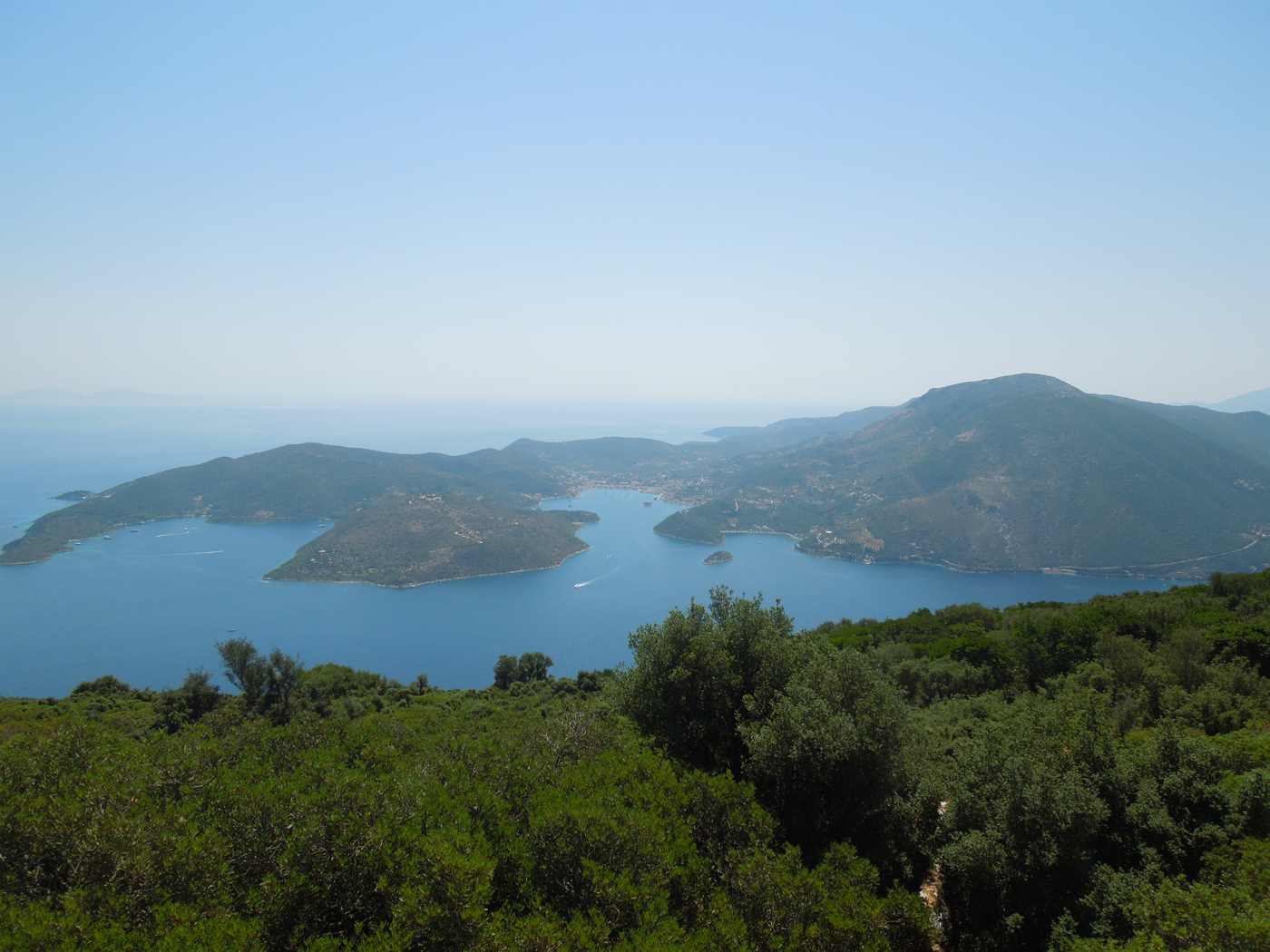
The Ithaca channel gives Agia Efimia its defining outlook. The strait narrows to about 5 km at this point. Houses and church roofs on the far shore stand out in clear morning light. The sun rises over the Ithacan ridges, which makes the quay an early-morning viewpoint rather than a sunset one. Light across the channel shifts through the day, with the far hills flattening into haze by mid-afternoon and sharpening again toward evening. That view is the reason the waterfront tables face east and the reason the promenade fills before dinner rather than after it. Photographers work the quay between 06:30 and 08:00 for that reason.
Self-drive boat hire operates from the harbour through the summer, using small open craft with outboard engines that require no licence within stated power limits. Crews take them along the Kefalonian shore to Ellinika, Lithovatis and the rocky inlets north toward Sami, and stronger boats cross the channel in settled weather. Fuel and safety briefings come from the hire desks on the front. Rental runs by the half day or full day, and the northwesterly usually builds after midday, so morning departures give the flatter water. Boats give access to inlets that the coast road never reaches on either side of the bay. Life jackets come with the boat.
Organised day trips leave the harbour for Ithaca in season, crossing to the bays on the island’s western side. Polis Bay, below the village of Stavros, sits almost directly opposite, and Kioni and Frikes lie a short run north along the same coast. Vathy, the main harbour of Ithaca, sits deeper inside its own long inlet on the eastern side. Trips typically combine a crossing with two swimming stops and three hours ashore. Scheduled passenger ferries to Ithaca run from Sami rather than from Agia Efimia, so the trips from this quay are excursion boats, not transport links. Crossings run in the morning and return by late afternoon.
Diving and snorkelling work well on this coast because the seabed drops steeply and the water stays clear of river silt. A dive operation runs from the village, taking groups to walls, caverns and shallow reefs within a short boat ride of the harbour. Snorkellers reach worthwhile ground straight off the rocks at Agia Paraskevi and Ellinika without a boat at all. Water temperature climbs through the summer and stays comfortable into October, which extends the season past the departure of the last flotillas. Visibility on calm days regularly exceeds 20 metres along this stretch of coast. Wetsuits stay useful in May and early June on this coast.
Does Agia Efimia work as a base for exploring the rest of Kefalonia?
Agia Efimia puts the Melissani and Drogarati caves about 9 km south and Myrtos beach about 20 km northwest. Assos sits about 25 km north and Argostoli about 30 km southwest, covering the island’s main sights within a 45-minute drive.
The two caves near Sami rank among the strongest reasons to base here. Melissani, an underground lake with a collapsed roof, sits about 7 km south of the village. Rowing boats tour it under a shaft of direct light around midday. Drogarati, a stalactite cavern reached by steps, lies about 10 km south on the same road. Both sit close to Sami, so a single morning covers the pair with time for a swim at Antisamos afterwards. Arriving before 11:00 avoids the crowds released by the cruise ships that dock at Sami. Tickets are sold at each cave entrance, and the Melissani boat ride lasts about fifteen minutes.
The north of the island opens up from the ridge road above the village. Myrtos beach lies about 20 km away, with the classic viewpoint on the cliff road before the descent to the sand. Assos, on its narrow isthmus below a Venetian castle, sits roughly 25 km north and rewards an hour’s walk up to the fortress walls. Fiskardo, the pastel harbour that survived the earthquake intact, lies about 32 km north and takes 50 minutes on the winding coast road. Those three destinations combine into one full day out from Agia Efimia without backtracking. Fuel up in Agia Efimia before the northern loop, since stations thin out past Divarata.
Argostoli and the southwest come within reach on a second day. The capital sits about 30 km away by the mountain road through Agia Efimia’s back valley, a drive of roughly 45 minutes. The De Bosset bridge across the lagoon, the Katavothres sea mills and the loggerhead turtles in the harbour make up the standard morning there. The Omala valley, with the Robola winery and the monastery of Agios Gerasimos, lies about 25 km southwest of the village. Lixouri, across the bay on the Paliki peninsula, is reached by the short ferry from Argostoli rather than by the long road around. Parking in Argostoli sits along the lagoon front near the bridge.
Accommodation in the village runs to studios, apartments and small hotels rather than large complexes, most of them within 300 metres of the quay. Sea-view rooms above the front cost more than the units on the lanes behind, and the harbour noise carries to the first row on busy August nights. Booking early matters, because the total stock in the village is modest. The guide to where to stay in Kefalonia compares the east coast against Argostoli, Lassi and the northern villages. It sets out which area suits which kind of trip. Studios with kitchens suit stays of a week, and rates drop sharply in May and October.
How do you reach Agia Efimia and get around once you arrive?
Kefalonia Airport lies about 40 km southwest of Agia Efimia, a drive of around 50 minutes through Argostoli. Ferries land at Sami, 9 km south, from Ithaca and from the mainland ports of Patras and Astakos.
Flights land at Kefalonia Airport, roughly 9 km south of Argostoli on the southwest coast. The drive from there to Agia Efimia covers about 40 km and takes around 50 minutes. The route runs through or past the capital, then over the central ridge toward the east coast. Car hire desks operate at the airport, and pre-booked transfers cover the same route. The road is paved throughout and carries two lanes for most of its length, with tighter bends on the descent to the bay. Arriving after dark adds time, since the mountain sections carry no street lighting. Allow an extra twenty minutes when the flight lands during the afternoon changeover.
Sea arrivals come through Sami, the island’s second port, 9 km south of the village and about 15 minutes by car. Ferries connect Sami with Ithaca and with the mainland at Patras and Astakos, while the crossing from Kyllini serves Poros further south. Cruise ships also dock at Sami through the summer, which briefly fills the caves and Antisamos with day groups. Travellers arriving by ferry with a hire car reach Agia Efimia on a straightforward coastal road. Those arriving on foot arrange a taxi at the port, since the connection north is not covered by a frequent bus. Foot passengers with heavy luggage plan that transfer before boarding.
The island bus network links Argostoli with Sami and runs services along parts of the east coast, but frequencies stay low outside the main routes. Relying on buses limits a stay in Agia Efimia to the village and a single daily trip. A hire car turns the same base into a platform for the whole island. Rental desks operate in the village, at the airport and in Argostoli. Fuel is available in the village itself, which avoids a detour before a long day out. Scooters and quad bikes are also hired locally for short coastal runs. Book the car before arrival in July and August, since local stock sells out.
Movement inside Agia Efimia needs no vehicle at all. The waterfront, the shops, the church and the two nearest coves all sit within a fifteen-minute walk of any point in the village. Parking on the front fills through July and August, and the spaces on the lanes one street back clear the pressure. The coast road north to Ellinika carries light traffic and works for cycling, while the climb west toward Divarata gains height fast and suits stronger riders. Walking remains the practical way to move between mooring, table and bed on any evening in the village. Torches help on the unlit lanes behind the front after midnight.


Frequently Asked Questions
Is Agia Efimia worth visiting if you are not arriving by yacht?
Agia Efimia works well for land-based travellers who want a quiet base with a working harbour rather than a resort. The village puts the Melissani and Drogarati caves about 9 km south and Antisamos about 12 km away. Myrtos lies about 20 km northwest and Argostoli about 30 km southwest, so a hire car reaches the island’s main sights inside 45 minutes. The waterfront gives an evening of watching yachts arrive and berth, which becomes the entertainment in itself. Room stock stays small, prices sit below the southern resorts, and the promenade is walkable end to end in ten minutes.
The trade-off is the lack of a proper beach at the village and the absence of nightlife past midnight. Travellers who want organised sand, water parks or bars open until dawn choose Lassi or Skala instead of this stretch of the east coast.
Does Agia Efimia have a sandy beach?
Agia Efimia has no sandy beach in the village. The shoreline beside the harbour is a narrow strip of pebbles and rock, used for quick swims from the promenade rather than for a full beach day. Agia Paraskevi, about 600 metres north on foot, is the closest proper cove, with white pebbles and clear water shelving quickly from the shore. Ellinika sits about 2 km north along the coast road and Lithovatis roughly 3 km beyond it, both undeveloped pebble bays with limited parking and no taverna on the sand. Sand, in the Kefalonian sense of fine pale grit, starts at Antisamos about 12 km south and at Myrtos about 20 km northwest.
Xi beach on the Paliki peninsula, with its red-orange sand, sits on the far side of the island. Anyone whose holiday centres on sand plans day trips from this base.
How far is Agia Efimia from Sami, Argostoli and Fiskardo?
Agia Efimia sits about 9 km north of Sami, a drive of roughly 15 minutes on the coast road. The ferry port and the two caves are the closest fixed points to the village. Argostoli, the capital, lies about 30 km southwest over the central ridge, a drive of around 45 minutes depending on traffic through the town. Fiskardo, in the far north, sits about 32 km away by the winding coastal route, and the drive takes close to 50 minutes because of the bends above Assos. Myrtos beach lies about 20 km northwest, and Assos about 25 km north, both on the same road. Kefalonia Airport is roughly 40 km southwest, around 50 minutes by car.
Every distance on the island reads short on the map and long on the clock, because the roads climb and turn constantly. Plan island drives by minutes rather than by kilometres.
Can you visit Melissani and Drogarati caves from Agia Efimia?
Melissani and Drogarati both sit within 10 km of Agia Efimia and combine easily into one morning. Melissani, the underground lake with a collapsed roof, lies about 7 km south near Karavomilos, just before Sami, and is toured by rowing boat. Sunlight enters the open roof around midday and turns the water a strong blue, which makes the late-morning slot the one worth targeting. Drogarati, a large stalactite cavern reached by a staircase, sits about 10 km south of the village on the road toward Argostoli. Both charge separate entry, and a combined visit takes around two hours including the drive. Arriving before 11:00 avoids the coaches that run from the cruise ships docking at Sami.
Antisamos beach lies about 4 km beyond Drogarati, so a swim rounds off the same trip without any backtracking along the coast. Photography inside Melissani works best without flash.
Is Agia Efimia suitable for families and older travellers?
Agia Efimia suits families with older children and travellers who want calm evenings, and the flat waterfront is easy to walk. The promenade runs level for about 400 metres with no steep sections, and tables sit close enough to the moorings that children stay entertained by the boats. Noise drops sharply after midnight, and the village holds no clubs or late bars. The main limitation is water access. The shore beside the harbour is rock and pebble, reached by steps and ladders. That does not suit toddlers who need shallow sand. Agia Paraskevi, ten minutes north on foot, shelves steeply as well. Families with small children usually drive 12 km to Antisamos for the day.
Medical basics are covered by a pharmacy in the village, with the hospital in Argostoli about 30 km away over the ridge road. Cots and highchairs are limited, so confirm them at booking.
Do you need a car in Agia Efimia?
A car is close to essential in Agia Efimia for anything beyond the village itself. The island bus network connects Argostoli and Sami. Services along the east coast north of Sami run at low frequency, and no useful link exists to Myrtos, Assos or Fiskardo. Everything inside the village, including the shops, the church, the quay and Agia Paraskevi cove, sits within a fifteen-minute walk, so a car stays parked on days spent locally. Rental desks operate in the village, in Argostoli and at Kefalonia Airport, and fuel is available on the edge of the village itself. Parking on the front fills through July and August, while the lanes one street back keep spaces.
Scooters and quad bikes cover the coastal runs to Ellinika and Sami, though the mountain road west toward Divarata favours a car with reasonable power. Helmets are required by law on both machines.